Search results
Search for "metal nanoparticles" in Full Text gives 212 result(s) in Beilstein Journal of Nanotechnology. Showing first 200.
Manganese oxide phases and morphologies: A study on calcination temperature and atmospheric dependence
Beilstein J. Nanotechnol. 2015, 6, 47–59, doi:10.3762/bjnano.6.6
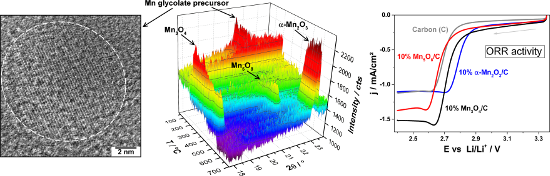
- range of hours (up to 24 h) and subsequent drying processes of up to 2 days [22][23][24][25][26][27]. The synthesis via oxidation of manganese metal nanoparticles by gas condensation must be followed by annealing in O2-containing atmospheres to obtain different manganese oxide species [28]. An advantage






Synthesis and characterization of fluorescence-labelled silica core-shell and noble metal-decorated ceria nanoparticles
Beilstein J. Nanotechnol. 2014, 5, 2413–2423, doi:10.3762/bjnano.5.251
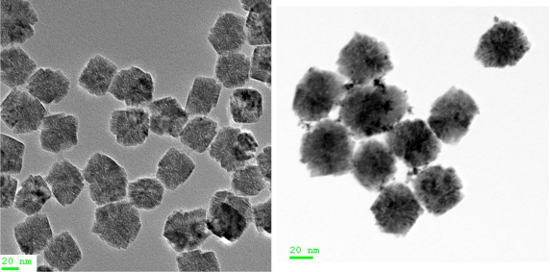
- noble metal nanoparticles (2–5 nm diameter). Fluorescence labelling with ATTO 647N gave the model particles which are now under biophysical investigation. Keywords: fluorescence labelling; noble metal nanoparticles; platinum-decorated ceria nanoparticles; perylene diimide; polyorganosiloxane core


Low-cost plasmonic solar cells prepared by chemical spray pyrolysis
Beilstein J. Nanotechnol. 2014, 5, 2398–2402, doi:10.3762/bjnano.5.249
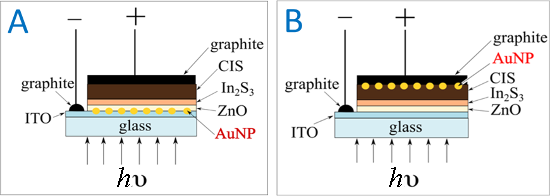
- the smaller absorbing volume. The use of mesoporous TiO2 or ZnO nanorods provides increased surface area of the absorber, while the introduction of metal nanoparticles allows photons to be captured via plasmonic effects [1][2][3][4]. This work attempts to utilize the advantages of the plasmon effect
- , while providing a technologically simple method for solar cell production. Chemical spray pyrolysis (CSP) is a simple method to produce thin semiconductor oxide- and sulphide layers and metal nanoparticles (NPs) via thermal decomposition of metal precursor salts. CuInS2 (CIS) is a semiconductor material


Inorganic Janus particles for biomedical applications
Beilstein J. Nanotechnol. 2014, 5, 2346–2362, doi:10.3762/bjnano.5.244
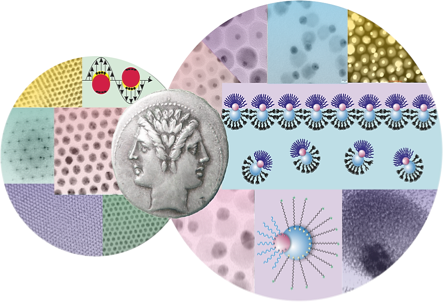
- und the excitation of charge carriers within the photocatalyst [48]. Upon conjugation of semiconductor nanoparticles, such as TiO2 to metal nanoparticles, charge equilibration takes place when the composite material is photoexited (Figure 6c). As a direct consequence, the Fermi level of semiconductor
- interaction at the nano-interface as shown for the exceptionally large T2-relaxation times of Co@Fe2O3 as compared to commonly available iron based MRI agents [59]. The most common metal nanoparticles for optical imaging with a long history are gold nanoparticles owing to their strong surface plasmon







Influence of stabilising agents and pH on the size of SnO2 nanoparticles
Beilstein J. Nanotechnol. 2014, 5, 2192–2201, doi:10.3762/bjnano.5.228
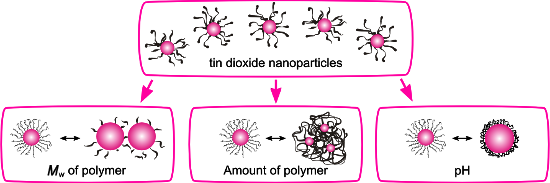
- polyelectrolyte that is protonated in acidic solutions, whereas at pH > 8, it exists in the free alkaline form [23]. PEI is often used as a colloidal metal nanoparticle and metal oxide stabiliser. Studies show that many metal nanoparticles (such as silver, gold, zinc oxide or tin dioxide) synthesised in solutions
- composition, and a non-ionic surfactant. The influence of the individual reactants as well as the solution acidity on the dimensions of the resulting nanoparticles was analysed. The understanding of the interaction between these components of the solution is critical both for the synthesis of metal
- nanoparticles as well as metal oxides with semiconducting properties, including tin dioxide. Results and Discussion Analysis of received SnO2 nanoparticles (basic solution) The aqueous solution in which the precipitation reaction for tin dioxide was carried out contained a tin(IV) chloride precursor


A study on the consequence of swift heavy ion irradiation of Zn–silica nanocomposite thin films: electronic sputtering
Beilstein J. Nanotechnol. 2014, 5, 1691–1698, doi:10.3762/bjnano.5.179
- ; pressure spike; Rutherford backscattering spectrometry; transmission electron microscopy; Introduction Metal nanoparticles are currently receiving broad scientific and technological interest due to their unusual physical properties which are different from the bulk materials. Properties such as surface
- plasmon resonance [1], fast optical response [2], and superparamagnetism [3], strongly depend on shape, size, size distribution and the surrounding environment of the metal nanoparticles [4]. Thus, the properties of nanocomposites can be controlled by the variation of these parameters. Swift heavy ion
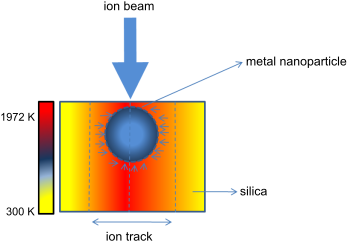
- (SHI) irradiation is an effective tool to engineer the properties of the nanocomposite thin films. SHI produces electronic excitations in a narrow cylindrical volume around its path, leading to a change in size and shape of metal nanoparticles embedded in a matrix [5][6][7][8]. The group at IUAC [5


The influence of molecular mobility on the properties of networks of gold nanoparticles and organic ligands
Beilstein J. Nanotechnol. 2014, 5, 1664–1674, doi:10.3762/bjnano.5.177
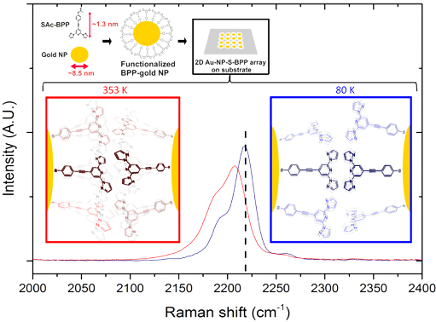
- volume. UV–vis spectroscopy Ultraviolet-visible (UV–vis) spectroscopy is performed to gain insight into the optical properties of these molecule–gold nanoparticle arrays, and specifically to investigate the influence of the S-BPP molecules on the effective dielectric constant. Metal nanoparticles exhibit




Donor–acceptor graphene-based hybrid materials facilitating photo-induced electron-transfer reactions
Beilstein J. Nanotechnol. 2014, 5, 1580–1589, doi:10.3762/bjnano.5.170
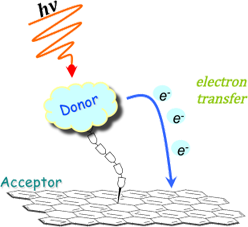
- as a mixture of metallic and semiconducting components, and also sometimes retain significant amounts of metal nanoparticles as impurities, the advantageous character of graphene in the construction of donor–acceptor systems is easily understood. Although the field is in its infancy, a few hybrid


Current state of laser synthesis of metal and alloy nanoparticles as ligand-free reference materials for nano-toxicological assays
Beilstein J. Nanotechnol. 2014, 5, 1523–1541, doi:10.3762/bjnano.5.165
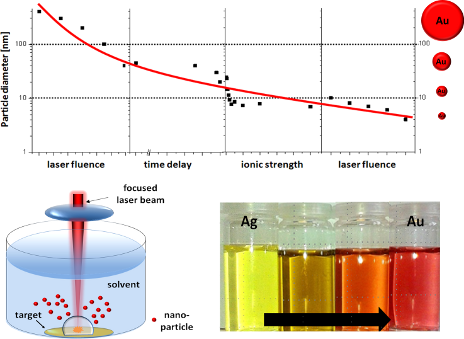
- a defined surface area, inhibiting further growth and coalescence (Figure 5B) [81]. Next to gold nanoparticles, size control of less noble metal nanoparticles like silver or AuAg alloys may also be relevant for toxicological assays, as particle size, which goes along with changes in curvature and


Protein-coated pH-responsive gold nanoparticles: Microwave-assisted synthesis and surface charge-dependent anticancer activity
Beilstein J. Nanotechnol. 2014, 5, 1452–1462, doi:10.3762/bjnano.5.158
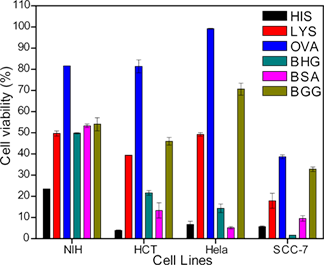
- lower costs and minimal side effects [24]. Because of their biocompatibility, noble metal nanoparticles, particularly AuNPs, are more preferable in various biomedical applications, including highly sensitive diagnostic assays [25], thermal ablation, radiotherapy enhancement [26][27][28], as well as for


Microstructural and plasmonic modifications in Ag–TiO2 and Au–TiO2 nanocomposites through ion beam irradiation
Beilstein J. Nanotechnol. 2014, 5, 1419–1431, doi:10.3762/bjnano.5.154
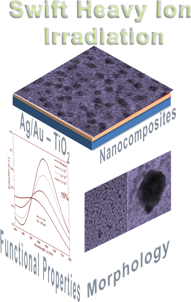
- ion beam induced growth of nanoparticles and structural modifications in the titania matrix. Keywords: noble metal–titania nanocomposite; surface plasmon resonance; swift heavy ions; Introduction Metal nanoparticles embedded in dielectric matrices in the form of nanocomposites have gained
- utilized to fabricate different multifunctional nanocomposites for different applications [7][8][9]. Generally, the main motivation behind the use of an insulating matrix is to maintain the necessary separation between metal nanoparticles (resulting from differences in surface energy of the individual
- semiconducting matrices, such as SnO2 [10], ZnO [11] and CdS [12] for the embedding of noble metal nanoparticles has shown great potential. Thin films and nanostructures of TiO2 are probably one of the most investigated systems for different applications, such as memristors, dye-sensitized solar cells


Synthesis, characterization, and growth simulations of Cu–Pt bimetallic nanoclusters
Beilstein J. Nanotechnol. 2014, 5, 1371–1379, doi:10.3762/bjnano.5.150
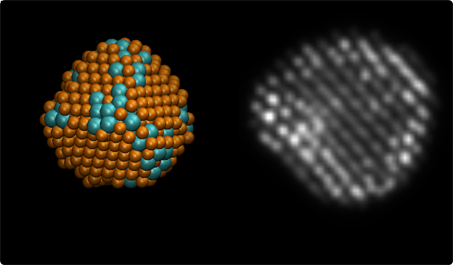
- Institutes of Health The authors would like to acknowledge to the NSF for support with grants DMR-1103730, “Alloys at the Nanoscale: The Case of Nanoparticles Second Phase and PREM: NSF PREM Grant # DMR 0934218; “Oxide and Metal Nanoparticles- The Interface Between Life Sciences and Physical Sciences”. In


Review of nanostructured devices for thermoelectric applications
Beilstein J. Nanotechnol. 2014, 5, 1268–1284, doi:10.3762/bjnano.5.141
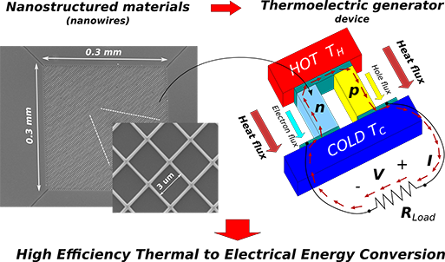
- the initial film thickness and RTA time and temperature [131]. Metal nanoparticles on silicon, suitable for MaCE production of SiNWs, can be also obtained by sinking silicon in an aqueous solution of HF and metal salts, such as AgNO3 [132][133][134][135], for a very short time (galvanic displacement


Effects of palladium on the optical and hydrogen sensing characteristics of Pd-doped ZnO nanoparticles
Beilstein J. Nanotechnol. 2014, 5, 1261–1267, doi:10.3762/bjnano.5.140
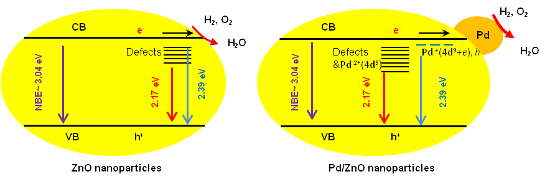
- controls the gas sensing characteristics, have been reported in ZnO films [23]. The sensitivity and selectivity characteristics of the gas sensor are associated with the deep hole-trap states and vacancies on the ZnO surface by the electron transfer mechanism [23][24]. The Pd metal nanoparticles modify the


Purification of ethanol for highly sensitive self-assembly experiments
Beilstein J. Nanotechnol. 2014, 5, 1254–1260, doi:10.3762/bjnano.5.139
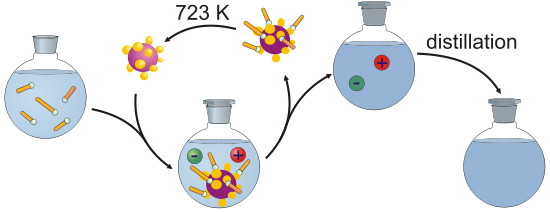
- noble metal nanoparticles onto porous substrates, the most popular being the adsorption and decomposition of a precursor material, such as a salt of the respective noble metal. This technique is widely used to produce catalysts in industry [37]. We decided to use the most common gold compound

Enhanced photocatalytic hydrogen evolution by combining water soluble graphene with cobalt salts
Beilstein J. Nanotechnol. 2014, 5, 1167–1174, doi:10.3762/bjnano.5.128
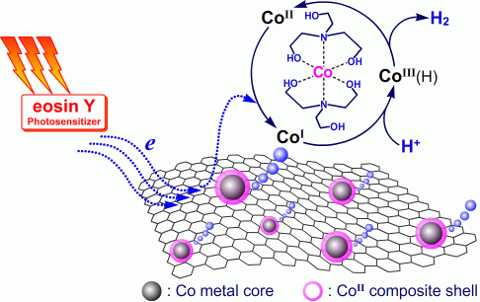
- -SO3 avoids the aggregation of the catalyst to some extent. These results are consistent with the better performance and the higher hydrogen evolution from the system with G-SO3. As mentioned above, the TEM results showed that cobalt metal nanoparticles may form during the process in both cases. XPS
- , corresponding to the Co 2p orbital (Supporting Information File 1, Figure S3). The cobalt lines in the spectra, however, were assigned to cobalt(II) [65], not to cobalt(0). This is different from the TEM results and in contrast to the grown cobalt metal nanoparticles on graphene [66]. ICP-MS measurements were


Nanodiamond-DGEA peptide conjugates for enhanced delivery of doxorubicin to prostate cancer
Beilstein J. Nanotechnol. 2014, 5, 937–945, doi:10.3762/bjnano.5.107
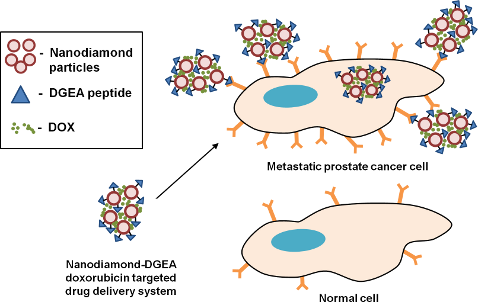
- tumor types [6][7][8][9]. Currently, there are several clinically approved nanoparticle-based cancer drugs using liposomes, nanoparticle albumin-bound (nab) technology, dendrimers, polymeric, carbon, and metal nanoparticles [6][8]. Gold nanorods, iron magnetic nanoparticles, polymer nanospheres, lipids


Gas sensing with gold-decorated vertically aligned carbon nanotubes
Beilstein J. Nanotechnol. 2014, 5, 910–918, doi:10.3762/bjnano.5.104
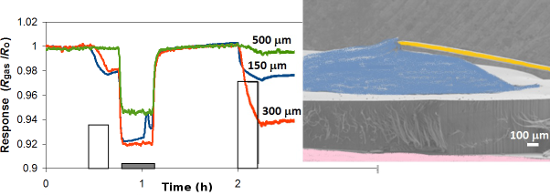
- , regardless of the nanotube length. Keywords: alignment; carbon nanotubes; decoration; gas sensors; metal nanoparticles; thermal CVD; Introduction The interest in gas sensing for reaching a widespread, continuous pollution detection and control has been growing steadily in the last decades due to the
- )-functionalized multi-walled nanotubes randomly arranged was significantly improved for NO2 gas detection [15]. Later, VA-CNTs produced by PECVD were functionalized with nominally 5 nm-thick metal nanoparticles by magnetron sputtering, providing a higher sensitivity to NO2 [16]. Based on these reported results


Resonance of graphene nanoribbons doped with nitrogen and boron: a molecular dynamics study
Beilstein J. Nanotechnol. 2014, 5, 717–725, doi:10.3762/bjnano.5.84
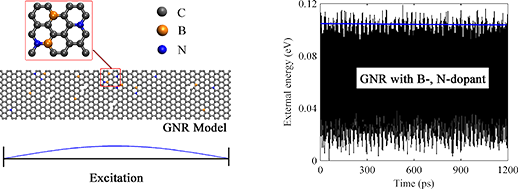
- synthesised through chemical functionalization with hydroxy and methyl groups or hydrogen [10], the decoration with quantum dots [11], noble metal nanoparticles (NPs) [12], or complex biomolecular structures [13][14]. A number of works have been conducted to investigate the properties of graphene derivatives


Nanostructure sensitization of transition metal oxides for visible-light photocatalysis
Beilstein J. Nanotechnol. 2014, 5, 696–710, doi:10.3762/bjnano.5.82
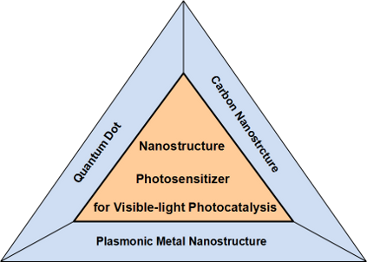
- photosensitization of semiconductors for potential applications in solar cells and photocatalysis. Another interesting phenomenon related to plasmonic metal nanoparticles is that the metal themselve may also be used as a photocatalyst for photo-oxidation or even water splitting. Carbon nanostructure as the




Enhanced photocatalytic activity of Ag–ZnO hybrid plasmonic nanostructures prepared by a facile wet chemical method
Beilstein J. Nanotechnol. 2014, 5, 639–650, doi:10.3762/bjnano.5.75
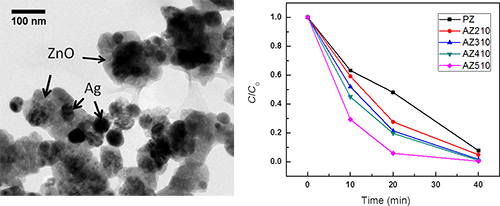
- made to improve the photocatalytic efficiency of ZnO by decreasing the rate of recombination of electrons and holes by surface modification with noble metal nanoparticles [19][20][21][22][23][24]. Surface modification of ZnO nanostructures with noble metal nanoparticles improves the photocatalytic
- of their recombination rate [19]. Secondly, noble metal nanoparticles on ZnO exhibit localized surface plasmon resonance (LSPR) absorption of light which can have significant impact on semiconductor photocatalysis. The LSPR wavelength of noble metal nanoparticles can be tuned from near UV to the
- visible region by controlling their size, shape, inter-particle spacing and surrounding medium [25]. In case of ZnO modified with noble metal nanoparticles, LSPR absorption can lead to enhanced utilization of UV–visible light as compared to pure ZnO [26][27][28]. Silver nanoparticles decorated ZnO


High activity of Ag-doped Cd0.1Zn0.9S photocatalyst prepared by the hydrothermal method for hydrogen production under visible-light irradiation
Beilstein J. Nanotechnol. 2014, 5, 587–595, doi:10.3762/bjnano.5.69
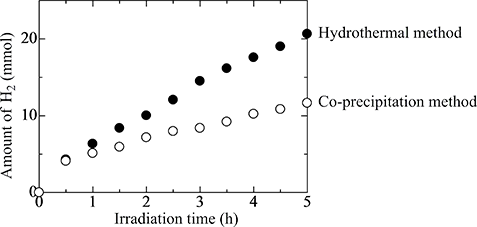
- that the added Ag was not completely doped in the Cd0.1Zn0.9S. The addition of Ag also caused a new absorption appearing at about 295 nm for Ag(0.01)-doped Cd0.1Zn0.9S and Ag(0.03)-doped Cd0.1Zn0.9S (Figure 5b,c), corresponding to the presence of Ag metal nanoparticles [25] that can be formed


One pot synthesis of silver nanoparticles using a cyclodextrin containing polymer as reductant and stabilizer
Beilstein J. Nanotechnol. 2014, 5, 380–385, doi:10.3762/bjnano.5.44
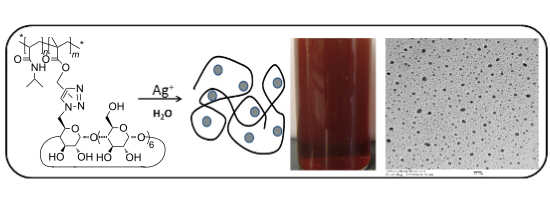
- range of applications including optics, catalysis and biomedical science [1][2][3][4]. Many strategies have been established in the formation of metal nanoparticles, for example chemical or electrochemical reduction, irradiation or thermal decomposoion [5][6][7][8]. Most of these methods require
- ][13]. In the synthesis of metal nanoparticles the use of polymers as external steric or electrosteric stabilizer is an established method to control the particle growth, limit oxidation and stabilize the nanoparticle dispersion [5][14][15][16]. However, there are only a few examples for polymers
- result of surface plasmon resonance of noble metal nanoparticles [22]. UV–vis absorption spectroscopy is an established method to characterize the formation of silver nanoparticles and their shape [23]. Figure 2 shows the UV–vis absorption spectra of the metallopolymer solution 2a. The spectra exhibit


En route to controlled catalytic CVD synthesis of densely packed and vertically aligned nitrogen-doped carbon nanotube arrays
Beilstein J. Nanotechnol. 2014, 5, 219–233, doi:10.3762/bjnano.5.24
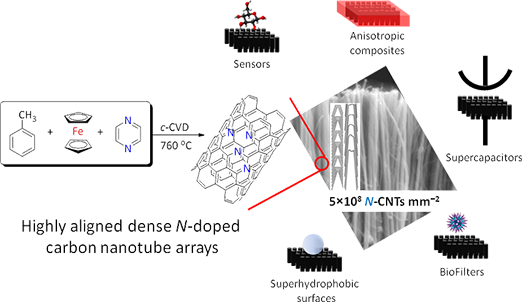
- reported. The field emission characteristics of N-CNTs have also been demonstrated to be superior to that of pristine CNTs [12]. Moreover, N-CNTs emerged as material of an improved capability to anchor metal nanoparticles through nitrogen coupling [13][14] and to form catalytically active centres, e.g
- have iron particles encapsulated inside the core, the channels of the N-CNTs were free from metal nanoparticles suggesting that, for instance, a partial removal of the catalyst residues could occur while removing N-CNTs from the quartz surface. Representative TEM images of N-CNTs from Synthesis VIII


Synthesis of embedded Au nanostructures by ion irradiation: influence of ion induced viscous flow and sputtering
Beilstein J. Nanotechnol. 2014, 5, 105–110, doi:10.3762/bjnano.5.10
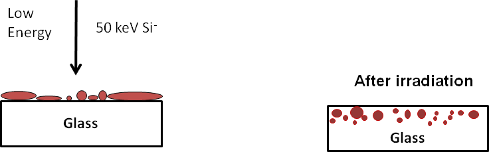
- Au nanoparticles into the glass substrate. Keywords: embedded nanoparticles; ion beam irradiation; recoil implantation; Introduction Noble-metal nanoparticles (NPs) are of great interest due to their large surface-to-volume ratio and their enhanced absorption of visible light. The shape- and size