Search results
Search for "nanocomposites" in Full Text gives 248 result(s) in Beilstein Journal of Nanotechnology. Showing first 200.
Nanocrystalline TiO2/SnO2 heterostructures for gas sensing
Beilstein J. Nanotechnol. 2017, 8, 108–122, doi:10.3762/bjnano.8.12
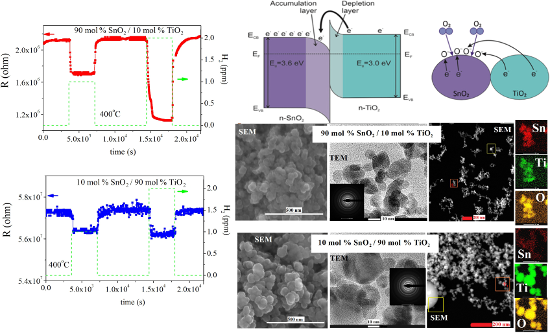
- differences in the positions of the conduction and valence band edges of both oxides (Figure 1). A similar effect was reported in our previous work for 2 mol % TiO2/98 mol % SnO2 nanocomposites working as H2 sensors [4]. In this work, for the first time, based on Figure 5e, we can conclude that the addition




Graphene–polymer coating for the realization of strain sensors
Beilstein J. Nanotechnol. 2017, 8, 21–27, doi:10.3762/bjnano.8.3
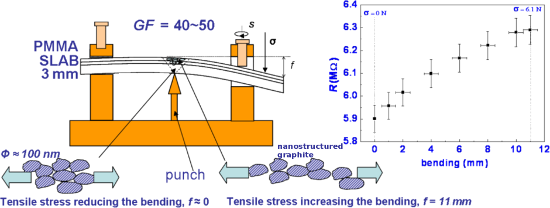
- the IRT measurements performed on the various composite polymer-based systems. A sketch of the setup for the thermographic measurements is shown in Figure 3. The composites under test include: glass-reinforced plastic (GRP), nanocomposites, and PMMA. The nanocomposite sample is made using an epoxy
- the IRT technique is shown. The carbon nanotubes (CNTs) can be used as a filler in the polymer composite system to obtain ultralight structural materials (nanocomposites) with enhanced electrical, thermal and optical characteristics. Glass-reinforced plastic (GRP) is used for the realization of the


A novel electrochemical nanobiosensor for the ultrasensitive and specific detection of femtomolar-level gastric cancer biomarker miRNA-106a
Beilstein J. Nanotechnol. 2016, 7, 2023–2036, doi:10.3762/bjnano.7.193
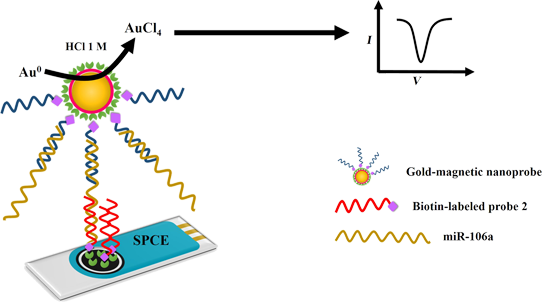
- massively the particle size, which is a common undesirable result from using most other polymers [36][37][38]. In Figure 2A(d), the presence of gold NPs is obvious through the high contrast against other particles and background. The mean diameter of the final nanocomposites has reasonably increased after
- formation of desired gold@TMC@Fe3O4 NPs. In order to verify the successful assembly of TMC-coated Fe3O4 NPs and final gold–magnetic nanocomposites, the TMC polymer, Fe3O4, TMC@Fe3O4, and gold@TMC@Fe3O4 NPs were subjected to FTIR analysis. As Figure S1 (Supporting Information File 1) shows, the FTIR spectrum


Intercalation and structural aspects of macroRAFT agents into MgAl layered double hydroxides
Beilstein J. Nanotechnol. 2016, 7, 2000–2012, doi:10.3762/bjnano.7.191

- fabricating polymer nanocomposites [20][21][22][23]. To favor the dispersion of LDH platelets into polymers, hybrid surfactant (usually dodecyl sulphate)-intercalated LDH were prepared and incorporated into polymer matrices such as polyethylene [24], polypropylene [25], poly(methyl methacrylate) [26


Organoclay hybrid materials as precursors of porous ZnO/silica-clay heterostructures for photocatalytic applications
Beilstein J. Nanotechnol. 2016, 7, 1971–1982, doi:10.3762/bjnano.7.188
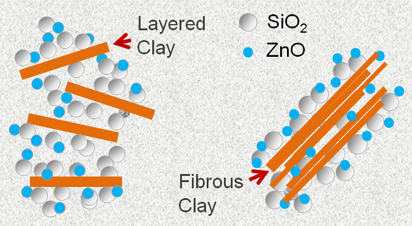
- methodology in which it was possible to reach the delamination of layered silicates previously exchanged with long-chain alkylammonium cations (organoclays) [13]. In this way, organo-smectites and organo-vermiculites have been used to prepare a new type of nanocomposites consisting of delaminated layered
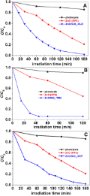
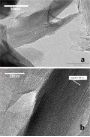
- environmental applications. Results and Discussion ZnO/silica-montmorillonite heterostructures The synthesis of ZnO/silica-clay heterostructures was developed following in part the procedure already reported for the preparation of silica-clay nanocomposites [11][12]. The aim is to produce first silica-clay
- samples containing SiO2 the shoulder shifts to higher wavenumbers and even a second shoulder is observable in the 1180–1200 cm−1 range, as the bands ascribed to vibration modes of the silica network overlap those of the clay substrate, as it was also observed in other SiO2-clay nanocomposites [11]. FE-SEM





Effect of nanostructured carbon coatings on the electrochemical performance of Li1.4Ni0.5Mn0.5O2+x-based cathode materials
Beilstein J. Nanotechnol. 2016, 7, 1960–1970, doi:10.3762/bjnano.7.187
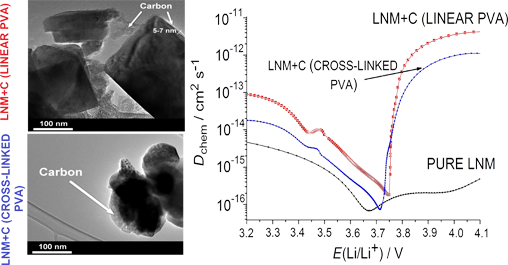
- .7.187 Abstract Nanocomposites of Li1.4Ni0.5Mn0.5O2+x and amorphous carbon were obtained by the pyrolysis of linear and cross-linked poly(vinyl alcohol) (PVA) in presence of Li1.4Ni0.5Mn0.5O2+x. In the case of linear PVA, the formation of nanostructured carbon coatings on Li1.4Ni0.5Mn0.5O2+x particles is
- materials; Li-ion batteries; nanocomposites; nanostructures; Introduction LiNi0.5Mn0.5O2-based electrode materials [1] were proposed as a less expensive alternative to LiCoO2 for high energy density Li-ion batteries containing less toxic elements than cobalt. The reasonable combination of their
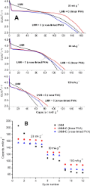
- nanocomposites were studied by cyclic voltammetry (CVA) to estimate the influence of carbon coatings on the lithium intercalation–deintercalation in Li1.4Ni0.5Mn0.5O2+x (Figure 4). Concerning the LNM/C composites, the cathodic peaks are substantially narrower than the ones for pure Li1.4Ni0.5Mn0.5O2+x. In the



Controlled supramolecular structure of guanosine monophosphate in the interlayer space of layered double hydroxide
Beilstein J. Nanotechnol. 2016, 7, 1928–1935, doi:10.3762/bjnano.7.184
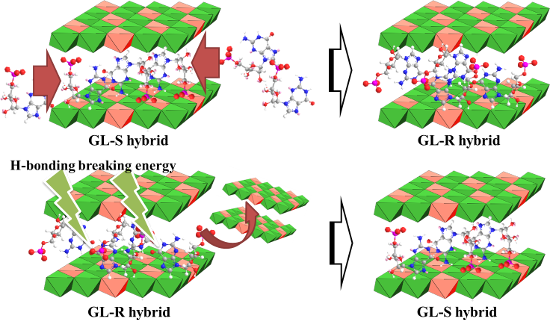
- nanocomposites [5]. Post-synthetic thermal treatment resulted in polymerization of amino acids in LDH. It was also reported that amino acids such as arginine and glutamate were polymerized via peptidic condensation both on the surface and in the interlayer space of clay [6]. In that literature, peptidic


Effective intercalation of zein into Na-montmorillonite: role of the protein components and use of the developed biointerfaces
Beilstein J. Nanotechnol. 2016, 7, 1772–1782, doi:10.3762/bjnano.7.170
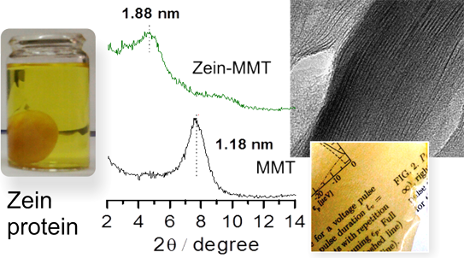
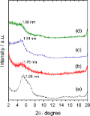
- into the hydrophilic interlayer space of sodium-exchanged montmorillonite. In addition to physicochemical characterization of the resulting materials, these biohybrid interfaces were also evaluated as biofillers in the preparation of diverse ecofriendly nanocomposites. Keywords: biohybrids
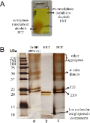
- flexibility and stretchability of the biopolymer matrix. In the bionanocomposite films, a reduced mobility of the zein and starch chains after incorporation of the biofiller can take place, as observed in other clay-reinforced polymer nanocomposites [39]. Although this preliminary study would require




Properties of Ni and Ni–Fe nanowires electrochemically deposited into a porous alumina template
Beilstein J. Nanotechnol. 2016, 7, 1709–1717, doi:10.3762/bjnano.7.163
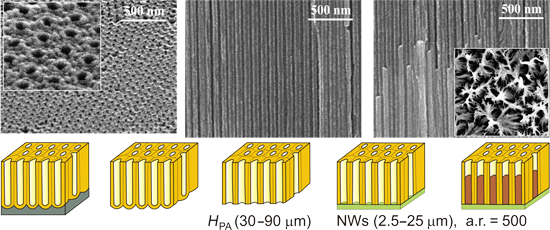
- heights is presented. The structural properties of PA/Ni and PA/Ni–Fe NWs, as well as the temperature dependence of the specific magnetization of these nanocomposites are investigated and discussed. Experimental Preparation of porous alumina template The preparation technique and the thickness of the PA
- electronically measuring galvanostatic/potentiostatic power supply P-5827M (potentiostat). The morphology of PA/Ni and PA/Ni–Fe nanocomposites formed with different alumina template thicknesses and deposition durations was studied by scanning electron microscopy (Philips XL 30 S FEG). The crystal structure of


Role of RGO support and irradiation source on the photocatalytic activity of CdS–ZnO semiconductor nanostructures
Beilstein J. Nanotechnol. 2016, 7, 1684–1697, doi:10.3762/bjnano.7.161
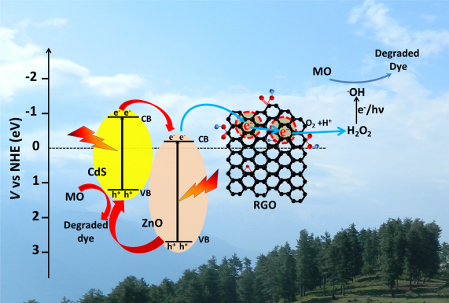
- with other semiconductor materials to form nanocomposites, they turn out be an efficient photocatalyst [25]. Recently, there have been few reports available in literature on CdS–ZnO coupled photocatalytic systems with enhanced activity [26]. On illumination of light, charge transfer takes place from
- conductivity (5000 W·m−1·K−1) [30]. Its optical transmittance is about 97.7% and possesses superior electron mobility (200000 cm2·V−1·s−1), which makes it an ideal material for photocatalyst support [31]. Several semiconductor nanocomposites supported on graphene have been used as photocatalysts for the
- nanocomposites has not been fully explored. Furthermore, the photocatalytic activity is also influenced by the irradiation source. With regard to this, we focused our studies on determining the role of the RGO support and the irradiation source on the photocatalytic activity of CdS–ZnO semiconductor





An efficient recyclable magnetic material for the selective removal of organic pollutants
Beilstein J. Nanotechnol. 2016, 7, 1447–1453, doi:10.3762/bjnano.7.136
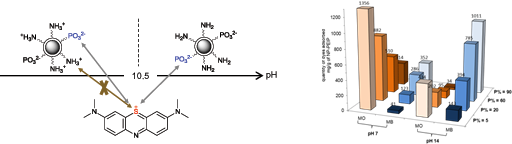
- studied [7][8]. At the same time, the emergence of nanotechnologies has led to a new generation of organic/inorganic nanocomposites with embedded magnetic nanoparticles (NPs) [9][10][11][12][13]. The application of a simple magnetic field is sufficient to collect them, which fosters the development of low


Fracture behaviors of pre-cracked monolayer molybdenum disulfide: A molecular dynamics study
Beilstein J. Nanotechnol. 2016, 7, 1411–1420, doi:10.3762/bjnano.7.132
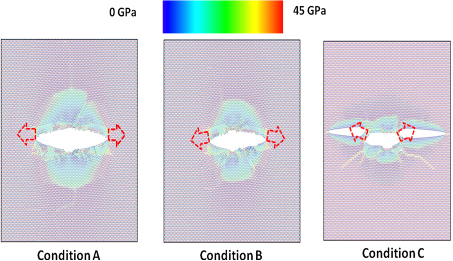
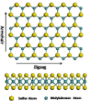
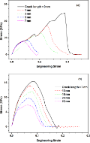
- probe tips, high strength nanocomposites and nanostructures, mechanical devices, and electronics [5][6]. In order to develop MoS2-based nanocomposites and nanostructures with improved their performance, further fundamental and applied research on MoS2 is essential [7]. Since the desired applications
- including high strength nanocomposites and nanostructures require MoS2 to undergo the mechanical loadings such as tension, a thorough understanding of the mechanical behavior of MoS2 under mechanical loading is essential for its applications in nanocomposites and nanostructures. The mechanical properties of




Fabrication and characterization of branched carbon nanostructures
Beilstein J. Nanotechnol. 2016, 7, 1260–1266, doi:10.3762/bjnano.7.116
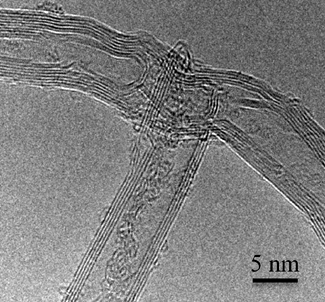
- efficient nanocomposites: a) inhomogeneous dispersion of the filler [10] and (b) insufficient strength of the interphase between the filler and the matrix [11]. However, these issues can be addressed by utilizing branched multiwalled carbon nanotubes (b-MWCNTs). It is known from theory and simulation


Reasons and remedies for the agglomeration of multilayered graphene and carbon nanotubes in polymers
Beilstein J. Nanotechnol. 2016, 7, 1174–1196, doi:10.3762/bjnano.7.109
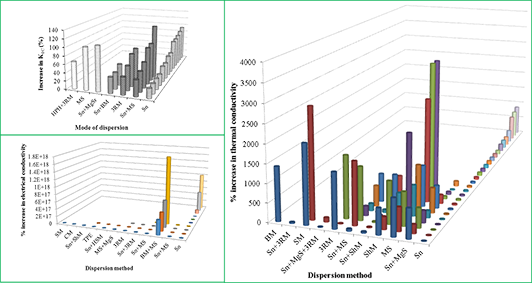
- Rasheed Atif Fawad Inam Northumbria University, Faculty of Engineering and Environment, Department of Mechanical and Construction Engineering, Newcastle upon Tyne NE1 8ST, United Kingdom 10.3762/bjnano.7.109 Abstract One of the main issues in the production of polymer nanocomposites is the
- for both current and prospective researchers in the field of MLG- and CNT-based polymer nanocomposites to achieve maximum enhancement in mechanical, thermal, and electrical properties of produced polymer nanocomposites. Keywords: agglomeration; carbon nanotubes (CNTs); dispersion state; multilayered
- graphene (MLG); polymer nanocomposites; Introduction It has been well known for about hundred years that the addition of nano-fillers to polymers, polymer glasses, and semicrystalline polymers can remarkably improve the performance of polymers [1]. The important structural characteristics of nano-fillers


High antiviral effect of TiO2·PL–DNA nanocomposites targeted to conservative regions of (−)RNA and (+)RNA of influenza A virus in cell culture
Beilstein J. Nanotechnol. 2016, 7, 1166–1173, doi:10.3762/bjnano.7.108

- TiO2·PL–DNA nanocomposite consisting of titanium dioxide nanoparticles and polylysine (PL)-containing oligonucleotides. Results: The TiO2·PL–DNA nanocomposites bearing the DNA fragments targeted to different conservative regions of (−)RNA and (+)RNA of segment 5 of influenza A virus (IAV) were studied
- the most efficient and inhibited the reproduction of different IAV subtypes by 3–4 orders of magnitude. Although to a lesser extent, the DNA fragments targeted at the AUG region of (+)RNA and the corresponding region of (−)RNA were also active. For all studied viral subtypes, the nanocomposites
- bearing the DNA fragments targeted to (−)RNA appeared to be more efficient than those containing fragments aimed at the corresponding (+)RNA regions. Conclusion: The proposed TiO2·PL–DNA nanocomposites can be successfully used for highly efficient and site-specific inhibition of influenza A virus of


Manufacturing and investigation of physical properties of polyacrylonitrile nanofibre composites with SiO2, TiO2 and Bi2O3 nanoparticles
Beilstein J. Nanotechnol. 2016, 7, 1141–1155, doi:10.3762/bjnano.7.106
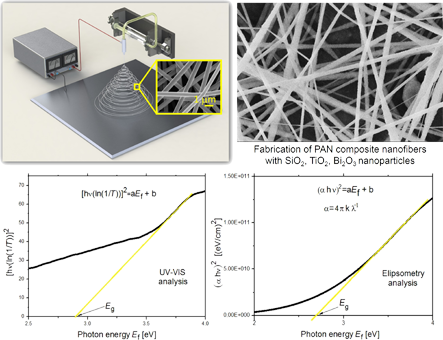
- development of materials from the group of polymer nanocomposites (PNCs), which are a combination of a polymer matrix with inorganic or hybrid nanoparticles. For the currently used types of inorganic fillers, inter alia, the following are included: SiO2 [1], metal oxides (TiO2, Al2O3, Bi2O3, Zn0, CaCO3) [2][3
- ][4][5][6], metals (Au, Ag, Al, Fe) [7][8][9], SiC [10] and clays (saponite, montmorillonite, hectorite) [11][12][13]. In nanocomposites, which use inorganic materials at the nano-scale as reinforcement, there is a significant enhancement of properties with a much lower fraction of the reinforcing
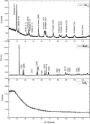
- characterised by numerous structural defects, usually occurring on their surface (Figure 5). In addition, with an increase in the concentration of the used reinforcing phases in the produced nanocomposites an increase of defects and an increased heterogeneity of the fibre morphology was identified. X-ray



Voltammetric determination of polyphenolic content in pomegranate juice using a poly(gallic acid)/multiwalled carbon nanotube modified electrode
Beilstein J. Nanotechnol. 2016, 7, 1104–1112, doi:10.3762/bjnano.7.103
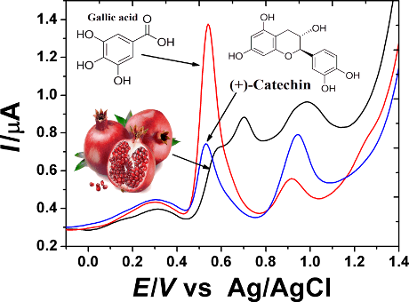
- rectangular indium tin oxide (ITO) coated glass slide (resistivity of 8–12 Ω/□) was examined using SEM (Figure 1). The film is deposited on the ITO with the same experimental conditions as for the GCE. As shown, the nanocomposite has a short, tubular topology with a smooth surface. The nanocomposites are


Photocurrent generation in carbon nanotube/cubic-phase HfO2 nanoparticle hybrid nanocomposites
Beilstein J. Nanotechnol. 2016, 7, 1075–1085, doi:10.3762/bjnano.7.101
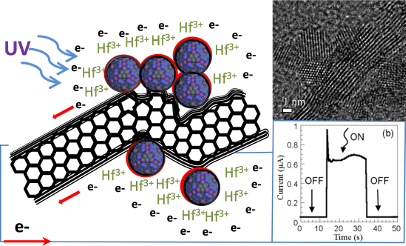
- electronic structure of the C K-edge in the nanocomposites was probed by electron energy loss spectroscopy, highlighting the key role of the MWCNT growth defects in anchoring HfO2 NPs. A combined optical emission and absorption spectroscopy approach illustrated that, in contrast to HfO2 NPs, the metallic
- photoluminescence of the nanocomposites indicates features attributed to combined effects of charge desaturation of HfO2 surface states and charge transfer to the MWCNTs with an overall reduction of radiative recombination. Finally, photocurrent generation under UV–vis illumination suggests that a HfO2 NP/MWCNT
- components for the development of new applications in the field of nanotechnology. It is well known that by combining different classes of materials, one can obtain nanocomposites exhibiting properties of the individual materials along with new characteristics as a result of hybridization. For instance, the


Sandwich-like layer-by-layer assembly of gold nanoparticles with tunable SERS properties
Beilstein J. Nanotechnol. 2016, 7, 1028–1032, doi:10.3762/bjnano.7.95
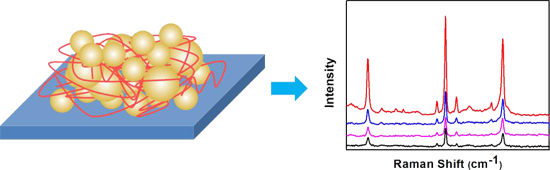
- Zhicheng Liu Lu Bai Guizhe Zhao Yaqing Liu Shanxi Province Key Laboratory of Functional Nanocomposites, School of Materials Science and Engineering, North University of China, Taiyuan 030051, China School of Chemical and Environmental Engineering, North University of China, Taiyuan 030051, China


The influence of phthalocyanine aggregation in complexes with CdSe/ZnS quantum dots on the photophysical properties of the complexes
Beilstein J. Nanotechnol. 2016, 7, 1018–1027, doi:10.3762/bjnano.7.94
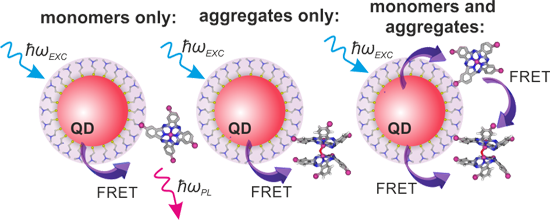
- ][21]. This statement was recently supported by the Nyokong group [22] where FRET efficiencies up to 93% were predicted in nanocomposites based on glutathione-capped CdTe/CdS/ZnS QDs covalently linked with aluminium sulfonated phthalocyanine. However, analysis of donor PL quenching and acceptor PL



Development of highly faceted reduced graphene oxide-coated copper oxide and copper nanoparticles on a copper foil surface
Beilstein J. Nanotechnol. 2016, 7, 1010–1017, doi:10.3762/bjnano.7.93
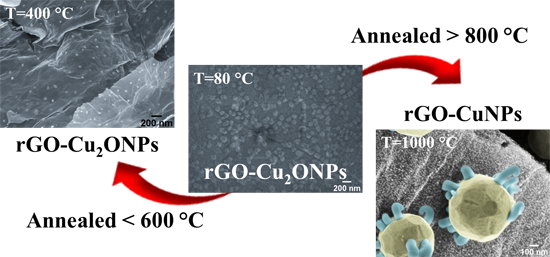
- ; copper(II) oxide; core–shell; reduced graphene oxide; Introduction In the last years, graphene oxide (GO) and reduced graphene oxide (rGO) have emerged as suitable candidates to prepare graphene-based nanocomposites [1][2], including those based on GO/inorganic nanoparticles [3]. The opportunity to
- combine GO with inorganic nanoparticles has led to nanocomposites with multiple functionalities [4][5]. Because of this, nanocomposites based on GO/inorganic nanoparticles are currently of interest for applications in biomedicine, energy production, electronics and environmental remediation [6][7][8]. A


Direct formation of gold nanorods on surfaces using polymer-immobilised gold seeds
Beilstein J. Nanotechnol. 2016, 7, 809–816, doi:10.3762/bjnano.7.72
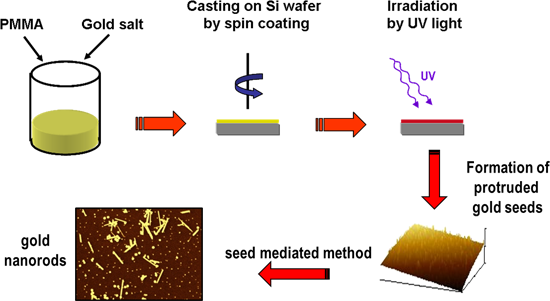
- techniques such as AFM and SEM have been used to support concept of the proposed growth method. Keywords: atomic force microscopy (AFM); direct surface growth; gold nanorods; nanocomposites; poly(methyl methacrylate) (PMMA); Introduction Gold nanorods (GNRs) are among the most interesting noble metal one
- well as the size of the nanoparticles in polymer matrix [30]. The formation of metal–polymer nanocomposites by UV irradiation is a complex process and it was considered to be important to investigate the effect of irradiation time, polymer species as well as the molecular weight of the polymer on the
- by UV irradiation suggest that the role of polymer Mw in the formation of nanoparticles cannot be ignored. Hence, we have fabricated Au–PMMA nanocomposites using UV photoreduction for two different selected Mw of PMMA. The formation of gold nanoparticles in PMMA matrices with low and high Mw with 20


Fabrication and properties of luminescence polymer composites with erbium/ytterbium oxides and gold nanoparticles
Beilstein J. Nanotechnol. 2016, 7, 630–636, doi:10.3762/bjnano.7.55
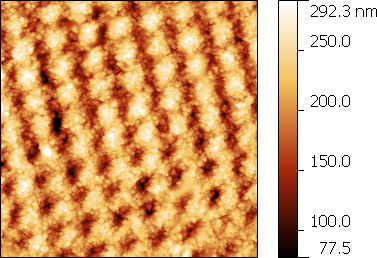
- ; polymer nanocomposites; rare-earth oxide nanoparticles; Introduction Rare-earth (RE) ions are widely investigated and applied, e.g., in photonics, as active materials for optical amplification or as biomarkers. Er-doped materials are important for light sources in optoelectronics, especially for the
- ]. Planar waveguide amplifiers on the basis of Er-containing nanocomposites are actively investigated as well (see for example [2], where a PMMA-based, Yb2O3/Er2O3-containing polymer nanocomposite waveguide optical amplifier was demonstrated). This material ensures the functioning of the amplifier with an
- macroscopic elements. At the same time one of the main disadvantages of nanocomposites is the high level of light scattering, which can be caused by agglomeration of nanoparticles. So the development of low-scattering, transparent nanocomposites is an important challenge nowadays. The method of thermal


Surface coating affects behavior of metallic nanoparticles in a biological environment
Beilstein J. Nanotechnol. 2016, 7, 246–262, doi:10.3762/bjnano.7.23
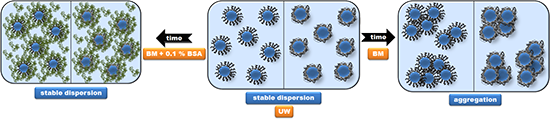
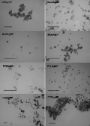
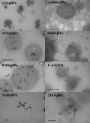
- PLLAgNPs and PVPAgNPs changed in BlPl, but remained unchanged in WhBl (Figure 8). The BSAAgNPs formed square- and rectangular-shaped agglomerates larger than 200 nm in WhBl. Similarly shaped structures were found for PLLAgNPs in BlPl, while PVPAgNPs formed large hexagonal nanocomposites in BlPl (Figure 8
- , where further growth to nanocomposites was accomplished. Thus, our results indicate an in vivo synthesis of metallic nanocrystals in mammalian organisms, similarly to that already described in microorganisms [68]. There are many examples of in vivo formation of nanomaterials (NMs) in biological systems




Synthesis and applications of carbon nanomaterials for energy generation and storage
Beilstein J. Nanotechnol. 2016, 7, 149–196, doi:10.3762/bjnano.7.17