Search results
Search for "nanotube" in Full Text gives 210 result(s) in Beilstein Journal of Nanotechnology. Showing first 200.
Chemi- vs physisorption in the radical functionalization of single-walled carbon nanotubes under microwaves
Beilstein J. Nanotechnol. 2014, 5, 537–545, doi:10.3762/bjnano.5.63
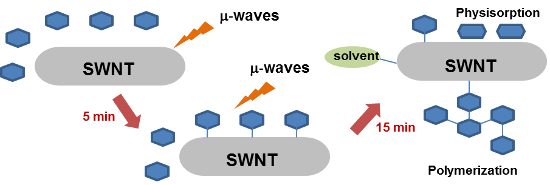
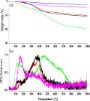
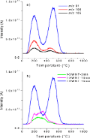
- the functionalization of single-walled carbon nanotubes (SWNTs) by the diazonium method was studied. The usage of a new approach led to the identification of the strength of the interaction (physical or chemical) between the functional groups and the carbon nanotube surface. Moreover, the nature




DNA origami deposition on native and passivated molybdenum disulfide substrates
Beilstein J. Nanotechnol. 2014, 5, 501–506, doi:10.3762/bjnano.5.58
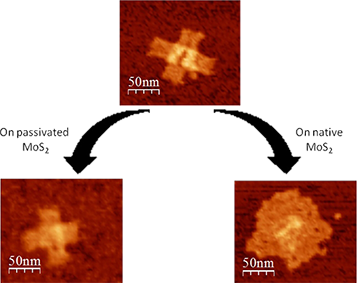
- pyrene 1-pyrenemethylamine has been employed as a linker to bind DNA to graphene and carbon nanotube surfaces [3][22]. Here, we adopted a similar approach by treating the MoS2 surface with 1-pyrenemethylamine, a bifunctional bridging compound, and then exposing the substrate to a solution of DNA origami


Tensile properties of a boron/nitrogen-doped carbon nanotube–graphene hybrid structure
Beilstein J. Nanotechnol. 2014, 5, 329–336, doi:10.3762/bjnano.5.37
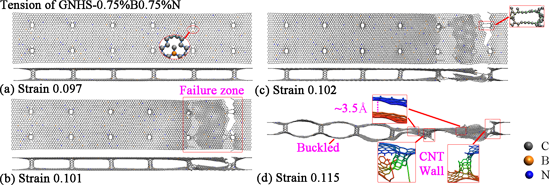
- properties of nanomaterials. Recently, a graphene and carbon nanotube hybrid structure (GNHS) has been reported, which extends the excellent properties of carbon-based materials to three dimensions. In this paper, we carried out a first-time investigation on the tensile properties of the hybrid structures
- residual CNT wall are found to adhere to each other after failure with a distance of about 3.4 Å. This study provides a fundamental understanding of the tensile properties of the doped graphene–nanotube hybrid structures, which will benefit the design and also the applications of graphene-based hybrid
- in the fields of mechanics, photology, electronics and bio-sensing [1][2]. Through the chemical vapor deposition (CVD) method, a graphene–nanotube hybrid structure (GNHS) has been synthesized recently [3][4][5], which evidently demonstrates an improved performance for the application as field


Modeling and optimization of atomic layer deposition processes on vertically aligned carbon nanotubes
Beilstein J. Nanotechnol. 2014, 5, 234–244, doi:10.3762/bjnano.5.25
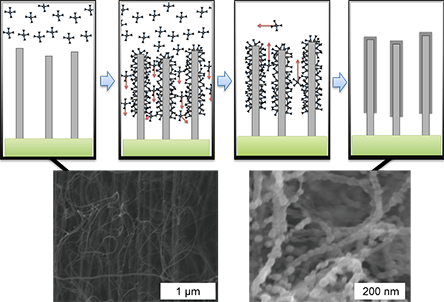
- aligned carbon nanotube (VACNT) arrays have emerged as possible scaffolds to support large surface area ceramic layers. However, obtaining conformal and uniform coatings of ceramics on structures with high aspect ratio morphologies is non-trivial, even with atomic layer deposition (ALD). Here we implement
- it overlaps with ceramic from a neighboring site. In this way, a conformal coating forms on the surface of the nanotube [16][25][26][27]. While the number of cycles required to arrive at a state of complete coverage depends on the density of defect sites, 50–100 cycles are typically sufficient for a



En route to controlled catalytic CVD synthesis of densely packed and vertically aligned nitrogen-doped carbon nanotube arrays
Beilstein J. Nanotechnol. 2014, 5, 219–233, doi:10.3762/bjnano.5.24
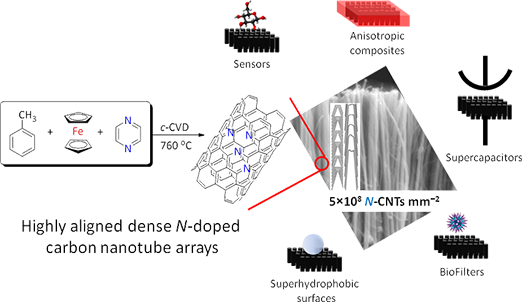
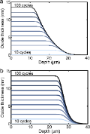
- nanotube arrays, i.e., 5 × 10⁸ nanotubes per mm2 (100 times more than for MWCNTs grown in the absence of nitrogen precursor). In turn, the internal crystallographic order of the N-CNTs was found to be of a ‘bamboo’-like or ‘membrane’-like (multi-compartmental structure) morphology. The nitrogen content in
- the nanotube products, which ranged from 0.0 to 3.0 wt %, was controlled through the concentration of pyrazine in the feedstock. Moreover, as revealed by Raman/FT-IR spectroscopy, the incorporation of nitrogen atoms into the nanotube walls was found to be proportional to the number of deviations from
- ) type as compared to the purely ‘base’-type for undoped MWCNTs. Keywords: carbon nanotubes; catalytic chemical vapour deposition; crystallinity; nitrogen doping; vertically aligned nanotube arrays; Introduction The doping of carbon nanotubes (CNTs) with boron [1][2], nitrogen [3][4] or phosphorus [5


Synthesis of boron nitride nanotubes from unprocessed colemanite
Beilstein J. Nanotechnol. 2013, 4, 843–851, doi:10.3762/bjnano.4.95
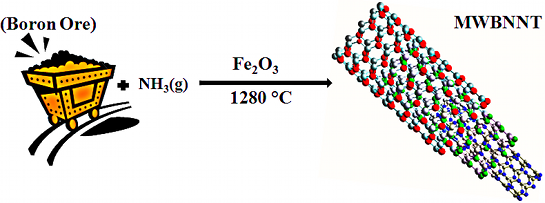
- yield, low cost and pure BNNTs. Keywords: boron nitride nanotube; chemical vapor deposition; colemanite; synthesis; Introduction Colemanite (Ca2B6O11·5H2O) is one of the most important compounds of more than 200 different boron ores. All boron ores include boron oxide (B2O3) at varying percentages in
- used to synthesize boron nitride nanotubes (BNNT)s [3][4]. BNNTs, structural analogoues of carbon nanotube (CNT)s, have superior properties than CNTs due to their robust structure which resists high temperatures and harsh chemical conditions. They also have a high hydrogen storage capacity due to the


Controlled synthesis and tunable properties of ultrathin silica nanotubes through spontaneous polycondensation on polyamine fibrils
Beilstein J. Nanotechnol. 2013, 4, 793–804, doi:10.3762/bjnano.4.90
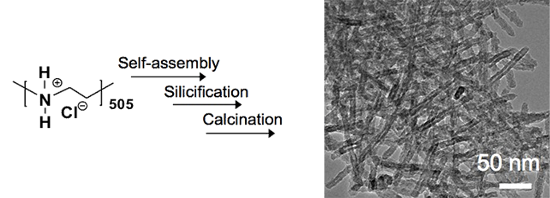
- controlled mineralization of silica, which resulted in hierarchically structured thin coatings composed of LPEI@silica hybrid nanotubes. However, the synthesis of silica nanotube powders through the alkali-induced self-assembly route was not studied systematically. In this paper, we examined the synthesis
- of roughly 3 nm. While self-assembled polypeptides could template the formation of silica nanotubes with uniform diameter, it still remains challenge for the polypeptide template to synthesize stable silica nanotube structures with very small diameters (i.e., 10 nm) [21][22][23][24][25][26][27
- 3.5 nm, which corresponds to the hollow inner of nanotube (Figure 2B) [38][39], which is in good agreement with the TEM observations (Figure 1C). This BET result indicates that our silica nanotubes have an excellent thermal stability compared to the conventional mesoporous silica (i.e., M41S), which


Size-dependent characteristics of electrostatically actuated fluid-conveying carbon nanotubes based on modified couple stress theory
Beilstein J. Nanotechnol. 2013, 4, 771–780, doi:10.3762/bjnano.4.88
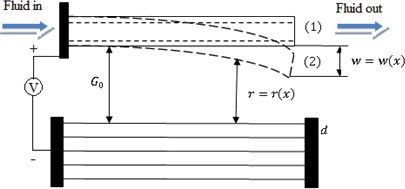
- exceeded a maximum limit, bending and buckling would occur, and the fluid stream that passes through the nanotube would be blocked. In another research, Grujicic et al. applied this concept to boron nitride nanotubes as nanovalves [28]. Chen et al. designed a one-way nanovalve based on a CNT junction and a
- the larger tube can be the movable part of the system as considered in this paper, and the other parts such as graphene sheets and actuation devices can be added to the considered section of the nanotube (Figure 3). Another application of the system is its utilization for feedback control. A control
- the CNT can be applied as control parameters for a desired behavior of the CNT by changing the stiffness and the damping of the system. Application of an external force on a nanotube and its local buckling. Electrostatic actuation of a CNT that conveys a fluid (top: “open”, bottom: “closed


A facile synthesis of a carbon-encapsulated Fe3O4 nanocomposite and its performance as anode in lithium-ion batteries
Beilstein J. Nanotechnol. 2013, 4, 699–704, doi:10.3762/bjnano.4.79
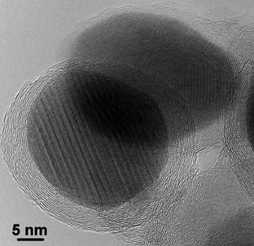
- nanocomposite exhibits well constructed core–shell and nanotube structures, with Fe3O4 cores and graphitic shells/tubes. The as-synthesized material could be used directly as anode in a lithium-ion cell and demonstrated a stable capacity, and good cyclic and rate performances. Keywords: electrochemistry; iron
- was synthesized by a simple one-step pyrolysis of Fe(CO)5. The nanocomposite exhibits well-constructed core–shell and nanotube structures with Fe3O4 cores and graphitic shells/tubes. The nanocomposite electrode exhibits a stable reversible capacity of 920 mAh·g−1 at 93 mA·g−1 in the subsequent 50


Preparation of electrochemically active silicon nanotubes in highly ordered arrays
Beilstein J. Nanotechnol. 2013, 4, 655–664, doi:10.3762/bjnano.4.73
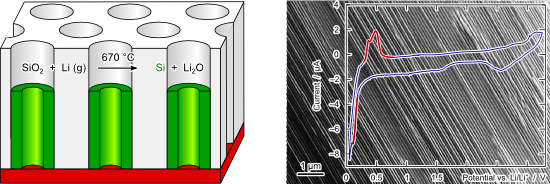
- ). Application of the thermal SiO2 reduction to electrochemically active silicon nanotube arrays When a colorless porous sample, obtained as described above (step (e) of Figure 2), is first dried at 400 °C and then submitted to the same reaction conditions including the subsequent HCl treatment (f,g), its
- demonstrated by ellipsometry, MAS-NMR, and XPS. Finally, cyclic voltammetric investigation of the samples testifies to their function as a negative electrode material for lithium ion batteries. This novel preparative procedure differs from those available to date for making silicon nanotube arrays in three
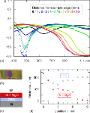
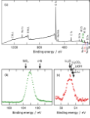
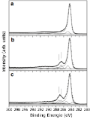
- , respectively). (b) 29Si MAS NMR spectra before and after reduction. (c) 7Li MAS NMR spectrum after reduction. X-ray photoelectron spectrum of a Si nanotube sample at the end of the preparation: (a) survey spectrum, (b) Si 2p peak, and (c) Li 1s peak. The XPS peak positions of reference compounds are given by





Apertureless scanning near-field optical microscopy of sparsely labeled tobacco mosaic viruses and the intermediate filament desmin
Beilstein J. Nanotechnol. 2013, 4, 510–516, doi:10.3762/bjnano.4.60
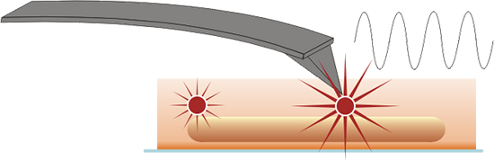
- as the formation of TMV-based semiconductive ZnO composites in field effect transistors [30]. Modifications of the viral shell proteins allow the introduction of target-oriented chemical functionalities on the nanotube surface [31]. By means of fluorescent labeling these modifications can now easily
- single thiol-group on every capsid protein subunit of the virus surface (TMVCys, 2130 coupling sites per viral nanotube), is used [31]. The labeling procedure is performed with a substoichiometric molar ratio of 0.02:1 of Atto740 maleimide (Sigma-Aldrich, München, Germany) to viral capsid protein, in


Functionalization of vertically aligned carbon nanotubes
Beilstein J. Nanotechnol. 2013, 4, 129–152, doi:10.3762/bjnano.4.14
- of the nanotubes determines the majority of their properties. Their symmetry is related to the orientation of the hexagonal lattice with respect to the axis of the tube (chirality). Depending on the chirality, a carbon nanotube shows either metallic or semiconductor behavior [4]. Thus, this allotrope
- were the synthesis on a large scale, the reproducibility, and the control of the diameter and number of walls of the CNTs using different synthesis techniques such as arc discharge, laser ablation or chemical vapor deposition. After these issues had been addressed, the focus in carbon nanotube research
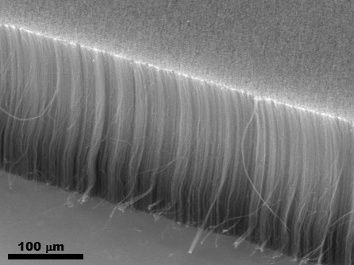
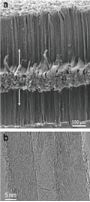
- key achievement was the engineering of vertically oriented CNT-arrays by using CVD of ethylene, size-controlled Fe catalytic particles, and nanotube positioning by substrate patterning. The mechanism of the alignment of the CNTs was proposed to be due to the van der Waals forces where the outer wall








Electronic and transport properties of kinked graphene
Beilstein J. Nanotechnol. 2013, 4, 103–110, doi:10.3762/bjnano.4.12
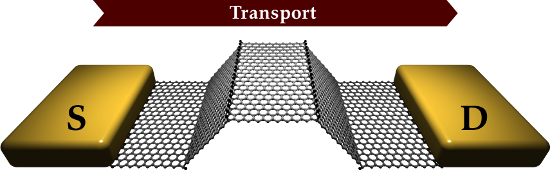
- a (25,25) nanotube. Experiments by Ruffieux et al. [38] compare hydrogen adsorption on C60 molecules, CNTs, and graphite to show that reactivity is increased with curvature. In our case we find that the local electronic density of states changes little for the atoms on the pristine bent graphene


Low-dose patterning of platinum nanoclusters on carbon nanotubes by focused-electron-beam-induced deposition as studied by TEM
Beilstein J. Nanotechnol. 2013, 4, 77–86, doi:10.3762/bjnano.4.9
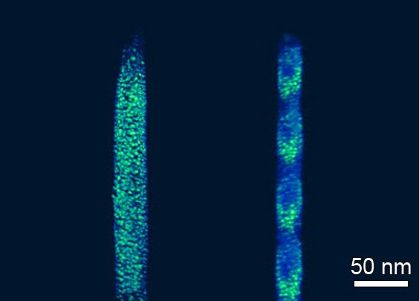
- striped area with lower deposition density. The size distribution of the nanoclusters inside the stripes can be attributed to the regime shift as explained in the previous text. Furthermore, if we imagine a nanotube with a certain inclination angle to the electron beam, we can see that a varying defocus
- value during deposition can lead to a varying pitch in the stripe pattering along the long axis of the nanotube. The ability to pattern the nanostructure with switchable high/low density of nanoclusters provides new potential applications in tunable wetting, adhesion, catalysis and friction properties


Current–voltage characteristics of single-molecule diarylethene junctions measured with adjustable gold electrodes in solution
Beilstein J. Nanotechnol. 2012, 3, 798–808, doi:10.3762/bjnano.3.89
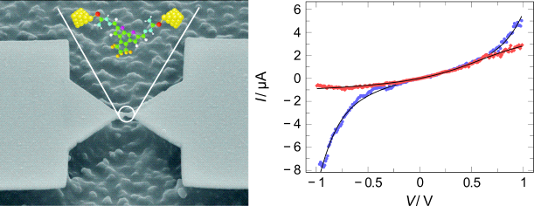
- ], molecular networks with nanoparticle electrodes [18], atomic force microscope (AFM) [22], and carbon-nanotube electrode [23] techniques, as well as structural studies using scanning tunneling microscopy (STM) [24][25] have been performed successfully. In addition, mechanically controlled break-junctions


Towards atomic resolution in sodium titanate nanotubes using near-edge X-ray-absorption fine-structure spectromicroscopy combined with multichannel multiple-scattering calculations
Beilstein J. Nanotechnol. 2012, 3, 789–797, doi:10.3762/bjnano.3.88
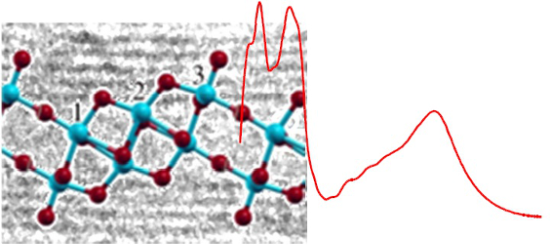
- sodium titanate nanostructures. Figure 1b shows a high-resolution TEM image of several long structures, showing parallel dark contrast, typical for tubular morphology (see Supporting Information File 1). The nanotube edges consist of several layers spaced by 0.75 nm (see Figure 1 insert). Typical high
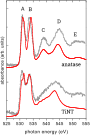
- measurements. NEXAFS spectra at the Ti L-edge recorded on (1) SrTiO3, (2) (Na,H)TiNTs and (3) anatase. The vertical lines indicate the photon energy of the first four X-ray images in Figure 2. The inset shows the pre-edge structures in the nanotube spectrum. (b) Ti L-edge spectra of (1) SrTiO3, (2) (Na,H)TiNTs



Influence of the diameter of single-walled carbon nanotube bundles on the optoelectronic performance of dry-deposited thin films
Beilstein J. Nanotechnol. 2012, 3, 692–702, doi:10.3762/bjnano.3.79
- concentration was monitored at the reactor outlet with a GRIMM Vienna Type differential mobility analyzer (DMA) and a Faraday cup electrometer (SMPS+E). The catalyst source was fixed in a temperature zone in which carbon nanotube growth is known to be possible [23], corresponding to a wall temperature of 700 °C
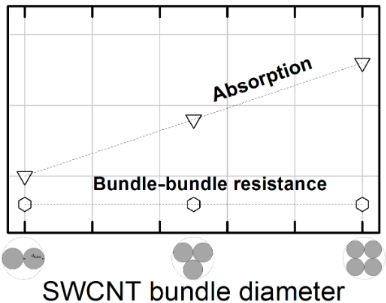
- absorbers in the film (in our case carbon, Ccarbon). In carbon nanotube thin films, the carbon is distributed in the form of carbon nanotubes with an average tube length and diameter (dtube). Due to van der Waals interactions, the carbon nanotubes form regular bundles with an average length (Lbundle) and


Low-temperature synthesis of carbon nanotubes on indium tin oxide electrodes for organic solar cells
Beilstein J. Nanotechnol. 2012, 3, 524–532, doi:10.3762/bjnano.3.60
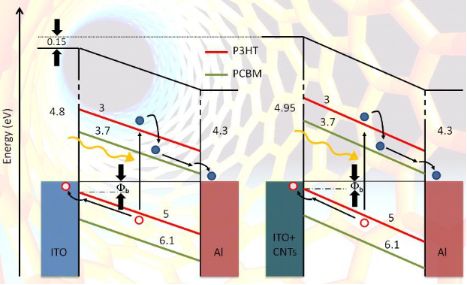
- defective and residual allotropes of carbon, such as diamond-like and amorphous carbon, are found around the nanotube walls (confirmed also by Raman spectroscopy, not shown). In our context, the presence of defects in the tubular structure could be an advantage in terms of conductivity, because it can
- thin film of Fe catalyst on ITO-coated glass. By investigating the effect of the growth temperature on the nanotube yield and on the ITO layer, we have selected the optimal CVD conditions for the use of such substrates as anodes for P3HT:PCBM solar cells. These process conditions address three of the
- nanotube density obtained with an ultrathin (2 nm) layer of catalyst; and (iii) the occurrence of short circuits with the counter electrode is limited by the short length of the CNTs. By using this set of parameters, we built a 3D nanostructured electrode that improved the performance of the cell both in




Conducting composite materials from the biopolymer kappa-carrageenan and carbon nanotubes
Beilstein J. Nanotechnol. 2012, 3, 415–427, doi:10.3762/bjnano.3.48
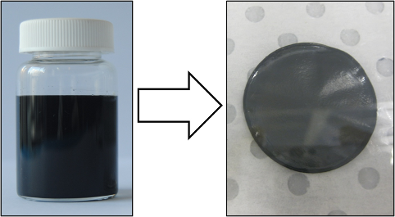
- these CNT networks are contingent on the CNT/dispersant ratio. Increasing the nanotube concentration usually leads to an increase in the electrical conductivity and to mechanical reinforcement [31][32]. Vacuum filtration of dispersions usually results in films, which are generally referred to as
- film prepared by the evaporative-casting method decreased from 7.4 S/cm to 2.9 S/cm through the addition of glycerin. This lowering of the conductivity suggests that glycerin may affect the number of conducting pathways or junctions in the nanotube network. Mechanical properties of films The mechanical


Structural, electronic and photovoltaic characterization of multiwalled carbon nanotubes grown directly on stainless steel
Beilstein J. Nanotechnol. 2012, 3, 360–367, doi:10.3762/bjnano.3.42
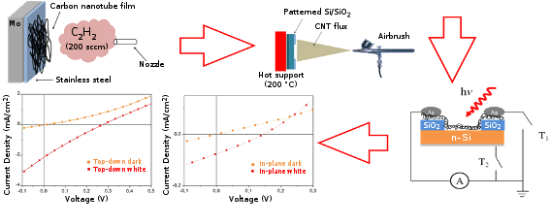
- , dependent on the number of walls in the nanotube structure [14]. Figure 7 shows a 10 × 10 μm2 atomic force microscopy (AFM) image of the as-exfoliated HOPG sample used for spectroscopic characterization. Figure 8 shows the scheme of the two different architectures used to build and test the photovoltaic


Modeling noncontact atomic force microscopy resolution on corrugated surfaces
Beilstein J. Nanotechnol. 2012, 3, 230–237, doi:10.3762/bjnano.3.26
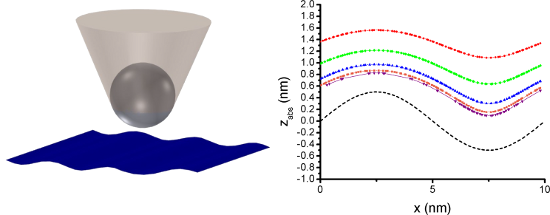
- ], and its anomalous frictional behavior [16]. Beyond graphene, the use of SiO2 is commonplace as a substrate in electronic-device research (carbon-nanotube devices, organic electronics, etc.). While one may readily obtain atomic resolution on certain flat surfaces, such as the well-studied (7 × 7


Current-induced forces in mesoscopic systems: A scattering-matrix approach
Beilstein J. Nanotechnol. 2012, 3, 144–162, doi:10.3762/bjnano.3.15
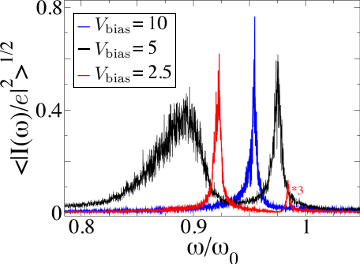
- model can be seen to be inspired by a double dot on a suspended carbon nanotube, or an H2 molecule in a break junction. The model is depicted schematically in Figure 2. The bare dot Hamiltonian corresponds to degenerate electronic states ε0, localized on the left and right atoms or quantum dots, with

![[Graphic 55]](/bjnano/content/inline/2190-4286-3-15-i141.png?max-width=637&scale=1.18182) can be tuned by the bias voltage. We consider...
can be tuned by the bias voltage. We consider...


Surface functionalization of aluminosilicate nanotubes with organic molecules
Beilstein J. Nanotechnol. 2012, 3, 82–100, doi:10.3762/bjnano.3.10
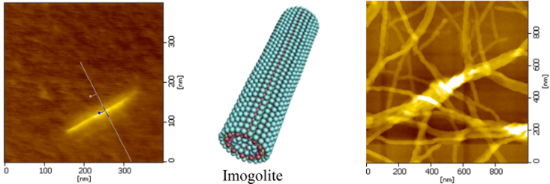
- great research interest due to their one-dimensional structure and reactive surfaces. In this review paper, recent developments in surface functionalization of an aluminosilicate nanotube, “imogolite”, are introduced. The functionalization processes are based on the robust affinity between phosphate
- groups of organic molecules and the aluminol (AlOH) surface of imogolite nanotubes. An aqueous modification process employing a water soluble ammonium salt of alkyl phosphate led to chemisorption of molecules on imogolite at the nanotube level. Polymer-chain-grafted imogolite nanotubes were prepared
- through surface-initiated polymerization. In addition, the assembly of conjugated molecules, 2-(5’’-hexyl-2,2’:5’,2’’-terthiophen-5-yl)ethylphosphonic acid (HT3P) and 2-(5’’-hexyl-2,2’:5’,2’’-terthiophen-5-yl)ethylphosphonic acid 1,1-dioxide (HT3OP), on the imogolite nanotube surface was achieved by


Self-assembled monolayers and titanium dioxide: From surface patterning to potential applications
Beilstein J. Nanotechnol. 2011, 2, 845–861, doi:10.3762/bjnano.2.94
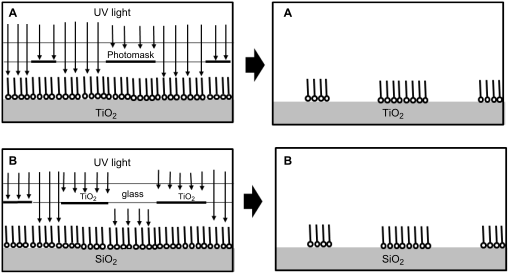
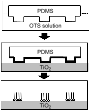
- anodization of titanium in HF. Here, SAMs of 1H,1H,2H,2H-perfluorooctyl-triethoxysilane were chemisorbed on selected areas in the nanotube array and served to selectively protect the nanotubes upon immersion in HF [84]. Electron transfer in SAMs connected to TiO2 Electron transfer through SAMs has been



Current-induced dynamics in carbon atomic contacts
Beilstein J. Nanotechnol. 2011, 2, 814–823, doi:10.3762/bjnano.2.90
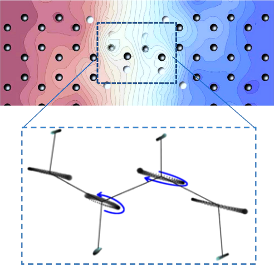
- show how the current-induced effects could be investigated in molecular contacts connecting gated graphene or nanotube electrodes. Graphene is now being explored very extensively due to its outstanding electrical and thermal transport properties [10][11][12]. Besides being highly important in their own
- right, carbon nanotube- or graphene-based nanostructures may offer an interesting test bed for studies of current-induced effects at the atomic scale. For such systems, experiments with atomic resolution, employing for instance state-of-the-art electron microscopes, can be performed in the presence of