


Search results
Search for "noise" in Full Text gives 490 result(s) in Beilstein Journal of Nanotechnology. Showing first 200.
Optimization and performance of nitrogen-doped carbon dots as a color conversion layer for white-LED applications
Beilstein J. Nanotechnol. 2019, 10, 2004–2013, doi:10.3762/bjnano.10.197
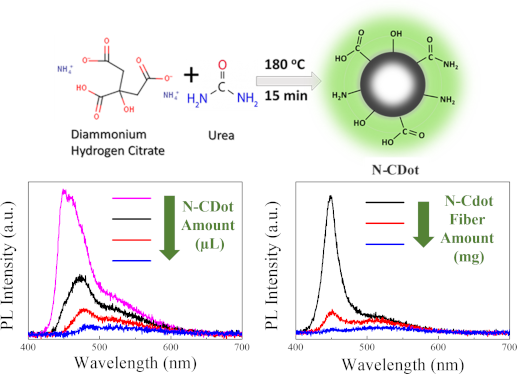
- ratio approaches unity while the overall emission reaches the lowest level, the resulting LER is reduced again to only 196 lm/W. The reason for this decrease may be the very low PL intensity (blue line in Figure 3a), which results in a low signal-to-noise ratio (S/N). The low S/N possibly causes an


Gold-coated plant virus as computed tomography imaging contrast agent
Beilstein J. Nanotechnol. 2019, 10, 1983–1993, doi:10.3762/bjnano.10.195
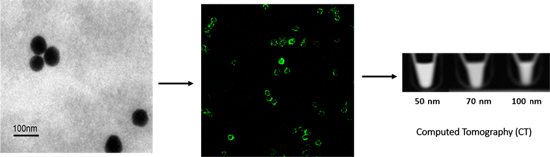
- noise [27]. The accumulation of such concentration of the contrast agent is very difficult [28]. Therefore, the need to develop different forms on nanoparticles that are densely loaded with CT contrast agents for use in clinical settings will be of great value. The work reported here explores the




Magnetic properties of biofunctionalized iron oxide nanoparticles as magnetic resonance imaging contrast agents
Beilstein J. Nanotechnol. 2019, 10, 1964–1972, doi:10.3762/bjnano.10.193
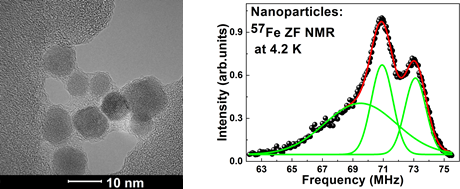
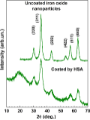
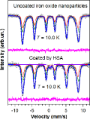
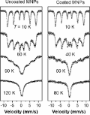
- core–shell structure iron oxide nanoparticles of the same size has already been described and calculated based on magnetic measurements. In the HSA-coated sample, we also succeeded to observe the ZF-NMR signal, despite the very low iron content per unit volume and the resulting low signal-to-noise




Long-term entrapment and temperature-controlled-release of SF6 gas in metal–organic frameworks (MOFs)
Beilstein J. Nanotechnol. 2019, 10, 1851–1859, doi:10.3762/bjnano.10.180
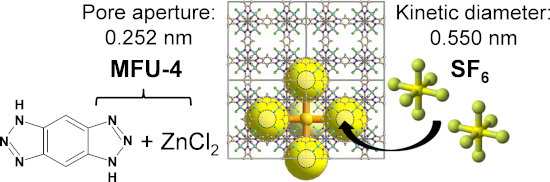
- . The “translation” directive included in GULP was employed for automatizing the SF6 linear transition task in a single run (setting: translate 0.0 0.0 1.0 200 noise 0.05), during which a geometry-constrained linear F–S–F fragment placed along the transition path (as part of SF6) was moved in steps of c


Toxicity and safety study of silver and gold nanoparticles functionalized with cysteine and glutathione
Beilstein J. Nanotechnol. 2019, 10, 1802–1817, doi:10.3762/bjnano.10.175
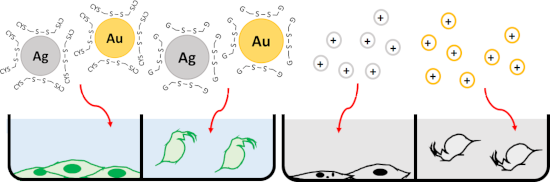
- washing steps of the cells after treatment and before the staining procedures as indicated in the cell protocols. In the case of flow cytometry experiments, the settings on the flow cytometer were carefully established taking into account testing of the correct NP concentration range, system noise, and


Novel hollow titanium dioxide nanospheres with antimicrobial activity against resistant bacteria
Beilstein J. Nanotechnol. 2019, 10, 1716–1725, doi:10.3762/bjnano.10.167
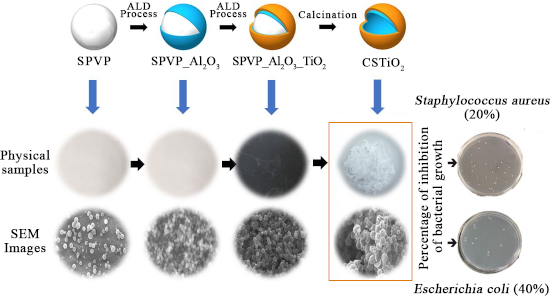
- 5. SPVP diffraction patterns showed a broad band with peak at 2θ equal to 20.3° (solid line) corresponding to the amorphous nature of the PVP polymer [30][31][32][33]. Because they were independent of the samples, the peaks at approximately 11.2, 30 and 40° corresponded to the noise baseline due to


Subsurface imaging of flexible circuits via contact resonance atomic force microscopy
Beilstein J. Nanotechnol. 2019, 10, 1636–1647, doi:10.3762/bjnano.10.159
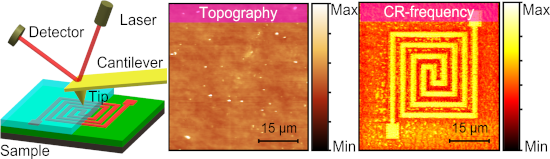
- the second eigenmodes, respectively. The cantilever stiffness and the free resonance frequency were calibrated by utilizing the thermal noise method while others were provided by the respective manufacturers. Multilayer contact model The axisymmetric indentation of a tip contacting with a multilayered
- frequency tracking by using the DART mode, especially when certain oscillation nonlinearity, spurious frequency peaks and large noise are presented in the contact resonance spectra. However, the frequency decrease with increasing normal force is generally not so significant, and the contrast between areas
- softer cantilever is generally better to achieve a higher subsurface contrast for the flexible circuit sample under nearly the same experimental conditions. Although the contrast with a softer cantilever is much better, the imaging noise is also higher as shown in Figure 4d. In practice, choosing an



Development of a new hybrid approach combining AFM and SEM for the nanoparticle dimensional metrology
Beilstein J. Nanotechnol. 2019, 10, 1523–1536, doi:10.3762/bjnano.10.150
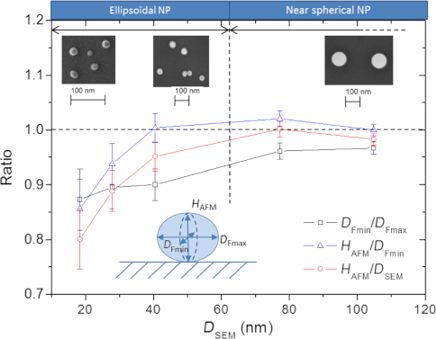
- too strong interactions with the sample and subsequent NP displacements. For vibration considerations, each instrument sits on a massive concrete block decoupled from the building. Furthermore, the AFM instrument is placed in an enclosure to protect it against acoustic noise and installed on an anti
- humidity and temperature are well controlled and stabilized (50 ± 5% relative humidity and 20 ± 0.15 °C for temperature). These precautions combined with the instrument performances make it possible to obtain low drifts and to carry out measurements with low noise. Basic measuring principle and data
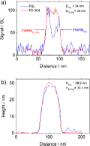
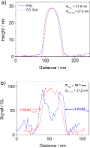
- to take the full width at half maximum (FWHM) [19]. The profile FWHM depends on the accelerating voltage (or EHT) corresponding to the primary electron energy as shown in Figure 1. Above 4 kV, the signal-to-noise ratio, corresponding to the difference in grey level between the NP and the substrate




Energy distribution in an ensemble of nanoparticles and its consequences
Beilstein J. Nanotechnol. 2019, 10, 1452–1457, doi:10.3762/bjnano.10.143
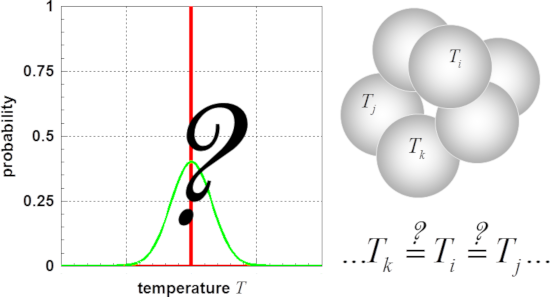
- fit analysis. As the first example for determination of a particle size distribution based on the temperature profile of a physical process, the magnetic noise power of cobalt particles at a frequency of 100 Hz (according to Woods et al. [5]) was selected. In this example, 5 nm cobalt particles were
- scattered on a sheet of silicon oxide. Additionally, these particles were separated by an oleic acid coating of 2 nm. Woods et al. [5] determined the magnetic noise power as a function of temperature during the superparamagnetic transition. For this example, the experimental data obtained from 5 nm
- Figure 3, this assumption does not describe the course of the magnetic noise power properly. There is significant deviation at higher temperatures, representing larger particles. As fitting using a Weibull or a log-normal distribution did not lead to a satisfying result, an approximation using the sum of


Growth of lithium hydride thin films from solutions: Towards solution atomic layer deposition of lithiated films
Beilstein J. Nanotechnol. 2019, 10, 1443–1451, doi:10.3762/bjnano.10.142
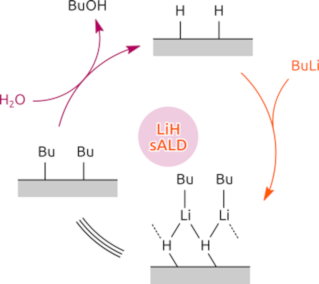
- original film was indeed LiH. Growth behaviour QCM used during the deposition showed a linearly decreasing trend in frequency, clearly distinguishable from background noise (Figure 8). Moreover, the periodical changes also correspond to the changing cycles. The sharp increase in frequency during water


Nanoscale spatial mapping of mechanical properties through dynamic atomic force microscopy
Beilstein J. Nanotechnol. 2019, 10, 1332–1347, doi:10.3762/bjnano.10.132
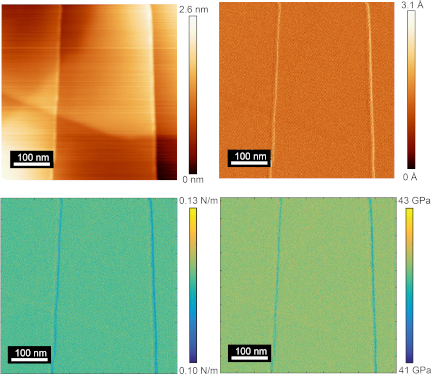
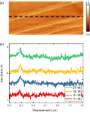
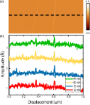
- (Figure 4c). While some contrast was observed in Figure 4d of the phase response, a closer examination of the line profile data in Figure 5b shows that no discernible peak or contrast can be detected from the uncovered or covered step edges in phase, as the noise or measured variation in the phase is the




Fabrication of phase masks from amorphous carbon thin films for electron-beam shaping
Beilstein J. Nanotechnol. 2019, 10, 1290–1302, doi:10.3762/bjnano.10.128
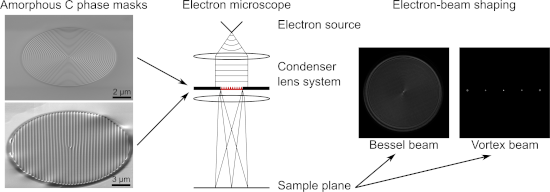
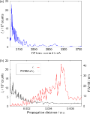
- the central lobe [26]. In practice, this may result in a reduced signal-to-noise ratio and a compromise has to be found between a large kρ and sufficient intensity in the central lobe [25]. While the radial beam profile in form of a Bessel function is preserved upon propagation up to zmax, the



On the relaxation time of interacting superparamagnetic nanoparticles and implications for magnetic fluid hyperthermia
Beilstein J. Nanotechnol. 2019, 10, 1280–1289, doi:10.3762/bjnano.10.127
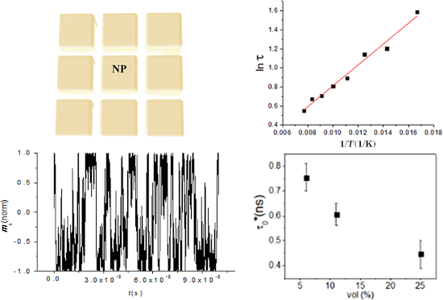
- ) from Figure 4a like dependencies. In this respect, a C++ program has been developed for automatically computing the number of magnetic switching events over a certain period (e.g., during 100 ns) from such time-dependent magnetization curves. Given a noise of 0.2 in Figure 4a like curves, any jump of



Molecular attachment to a microscope tip: inelastic tunneling, Kondo screening, and thermopower
Beilstein J. Nanotechnol. 2019, 10, 1243–1250, doi:10.3762/bjnano.10.124
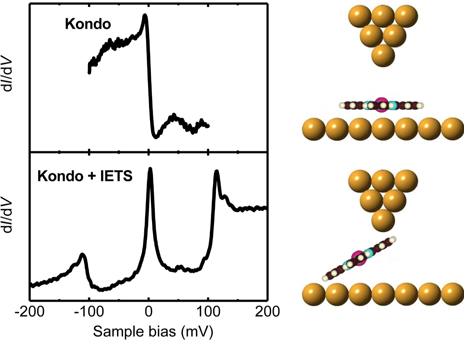
- function of the gap resistance in Figure 4a, is a very sharp effect and corresponds to a sudden configurational change of the molecule in the STM gap. Simultaneously, a telegraphic noise appears at bias voltages larger than the side-peak threshold, which is often regarded as the signature of an unstable


Pure and mixed ordered monolayers of tetracyano-2,6-naphthoquinodimethane and hexathiapentacene on the Ag(100) surface
Beilstein J. Nanotechnol. 2019, 10, 1188–1199, doi:10.3762/bjnano.10.118
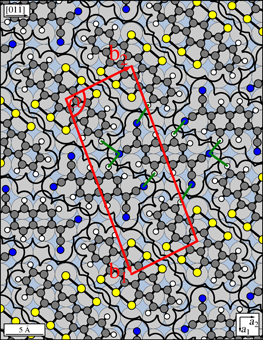
- example. The four symmetry-equivalent domains are marked by A to D. The molecular rows are well visible. The domains exhibit local defects, mostly vacancies, where single molecules are missing. For this structure, STM images of good quality with a low level of noise were obtained easily. We interpret this


A highly efficient porous rod-like Ce-doped ZnO photocatalyst for the degradation of dye contaminants in water
Beilstein J. Nanotechnol. 2019, 10, 1157–1165, doi:10.3762/bjnano.10.115
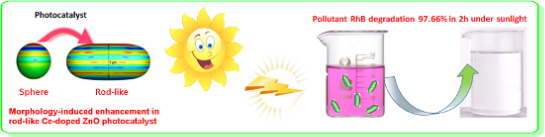
- lattice and substituted into the Zn ion sites [9][11]. XPS spectra of Ce 3d were collected in order to determine the Ce state in CZO-4. All the elements were corrected with C 1s at 284.8 eV. Due to the low percentage of Ce in this catalyst, its signal to noise was low, too. The results are shown in Figure


Fe3O4 nanoparticles as a saturable absorber for giant chirped pulse generation
Beilstein J. Nanotechnol. 2019, 10, 1065–1072, doi:10.3762/bjnano.10.107
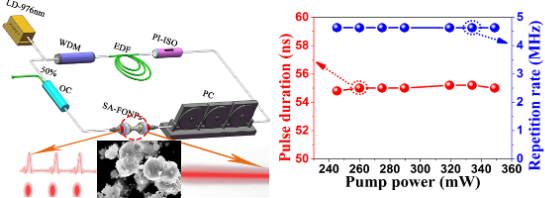
- analyzer (Rohde & Schwarz FSC6) is used to measure the signal-to-noise ratio of the pulse. There are many methods that can be employed for the synthesis of NPs, such as sol–gel, sol–hydrothermal, co-precipitate, or dry methods. Due to the homogeneity and the versatility of the product, a sol–hydrothermal
- smooth shape with a center wavelength of 1560.6 nm and 3 dB bandwidth of 0.8 nm at a pump power of 245.2 mW [41]. As shown in Figure 5b and 5c, the RPR of 4.63 MHz corresponds to a laser cavity length of about 43 m, which is verified by the time interval of the output pulse train. The signal-to-noise
- nonlinear effect in the fiber laser cavities. It was thus demonstrated that the giant-chirp passive mode locking is mainly caused by the FONP SA material [47][48][49][50][51]. The nonlinear polarization evolution effects observed may influence the operation wavelength and add some noise in the experiments


Influence of dielectric layer thickness and roughness on topographic effects in magnetic force microscopy
Beilstein J. Nanotechnol. 2019, 10, 1056–1064, doi:10.3762/bjnano.10.106
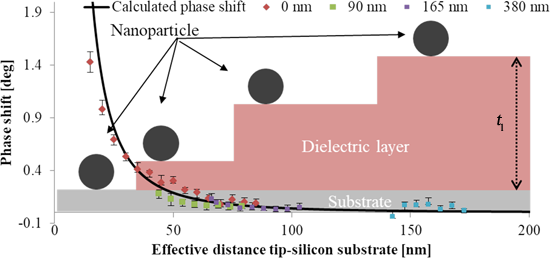
- increase the signal-to-noise ratio. The resolution of the images is 254 measuring points per line, and the scan speed is 0.9 Hz. The force gradient is detected by phase shifts in interleave mode. A magnetic ASYMFM-HM tip was used for all measurements in order to assure a high magnetic sensitivity. The


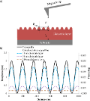


![[Graphic 2]](/bjnano/content/inline/2190-4286-10-106-i7.svg?max-width=637&scale=1.18182) ; black line) and measured phase shift for single nanoparticles with 10 ± 2 nm diameter...
; black line) and measured phase shift for single nanoparticles with 10 ± 2 nm diameter...


Revisiting semicontinuous silver films as surface-enhanced Raman spectroscopy substrates
Beilstein J. Nanotechnol. 2019, 10, 1048–1055, doi:10.3762/bjnano.10.105
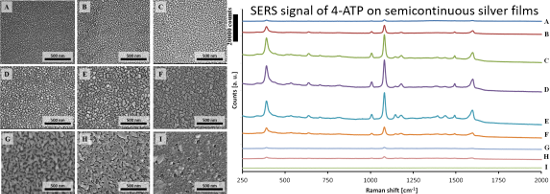
- compared the metal coverage normalized SERS signal of the D sample with the signal of the almost continuous I sample. As no SERS signal was observed on the sample I, we assumed that the upper limit of the signal is the peak-to-peak noise measurement [20]. By dividing the silver coverage corrected signal of
- the Raman band at 1080 cm−1 by the peak-to-peak noise of the measurement on the sample I we obtained a lower limit of the enhancement factor of about 630. Conclusion We have fabricated semicontinuous silver films with various morphologies, ranging from isolated particles, through percolated to almost




Correlation of surface-enhanced Raman scattering (SERS) with the surface density of gold nanoparticles: evaluation of the critical number of SERS tags for a detectable signal
Beilstein J. Nanotechnol. 2019, 10, 1016–1023, doi:10.3762/bjnano.10.102
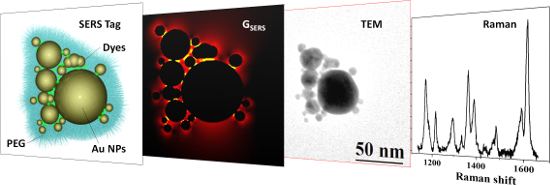
- region using Raman spectroscopy and transmission electron microscopy. In this way, the Raman spectra and the surface density of the SERS tags are correlated directly, showing that 1 tag/µm2 is enough to generate an intense signal above the noise level at 633 nm with an excitation power of only 0.65 mW
- linear response, it was found that 10 SERS AuNTs inside the probed area are required. These findings indicate that a better signal-to-noise ratio requires high-magnification optics, while linearity versus tag number can be improved by using low-magnification optics or a high tag density. In general the
- Scientec Vector calorimeter). The Raman signal was collected on an internal silicon chip which could account for small (less than 5%) intensity fluctuations of the Raman spectrometer and allowed for quantification of the noise intensity in the two measurement conditions. The acquisition time was fixed at


Fabrication of silver nanoisland films by pulsed laser deposition for surface-enhanced Raman spectroscopy
Beilstein J. Nanotechnol. 2019, 10, 882–893, doi:10.3762/bjnano.10.89
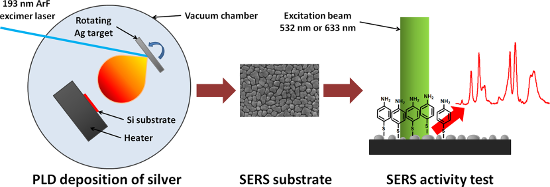
- single point were 1 s, 5 s and 0.5 s for 532 nm, 633 nm, and 785 nm excitation wavelengths, respectively. The measurement parameters were adjusted to different nominal output power values of the lasers to obtain a good signal-to-noise ratio for a single measuring point. SERS measurements were made for
- the EF of the Raman signal, the Raman measurements of the pMA adsorbed on the surface of the platinum film were also done. Compared to SERS substrates, obtaining a spectrum with the appropriate signal-to-noise ratio required increasing the laser power and extended measurement time. For the 532 nm




Outstanding chain-extension effect and high UV resistance of polybutylene succinate containing amino-acid-modified layered double hydroxides
Beilstein J. Nanotechnol. 2019, 10, 684–695, doi:10.3762/bjnano.10.68
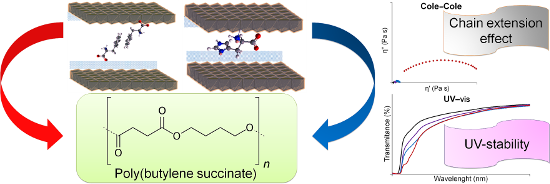
- centred at 350 nm can be observed for interlayered HIS and PHE (the small peak at 382 nm is instrumental noise). This band disappears after 20–40 h, which is in agreement with the decrease in the UV transmittance described above. In the case of the PBS nanocomposite with LDH/PHE, the emission band shifts


Commercial polycarbonate track-etched membranes as substrates for low-cost optical sensors
Beilstein J. Nanotechnol. 2019, 10, 677–683, doi:10.3762/bjnano.10.67
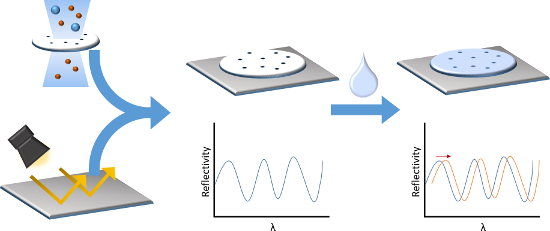
- the spectrum was notably noisy, with a signal-to-noise ratio (SNR) value of 3.52 (see Figure 2b). All these issues are disadvantageous for the future employment of these membranes as optical sensing structures for two reasons. First, the noise can hide tiny displacements of the spectra that could


A carrier velocity model for electrical detection of gas molecules
Beilstein J. Nanotechnol. 2019, 10, 644–653, doi:10.3762/bjnano.10.64
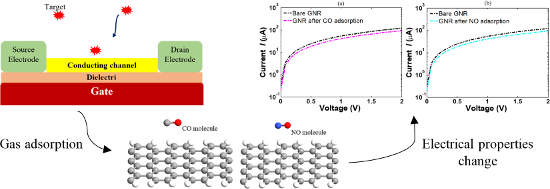
- nanowires and carbon nanotubes, GNRs possess high sensitivity, high electron and hole mobility, chemical stability, low noise, and a large surface-to-volume ratio, properties which are highly desired for gas sensor applications. Electrically, GNRs have shown high sensitivity to their surroundings and




Coexisting spin and Rabi oscillations at intermediate time regimes in electron transport through a photon cavity
Beilstein J. Nanotechnol. 2019, 10, 606–616, doi:10.3762/bjnano.10.61
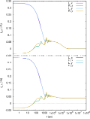
- the transport current have been predicted in the transient regime [16], and current–current noise spectra in the steady state reveal their signs [15]. Figure 4 displays the mean electron and photon numbers over the whole time scale (lower panel) relevant to the present model parameters for the case of
- it like is seen in Figure 8. Interestingly, “pink” or white noise is seen in Sx when current flows through the system. The same type of noise is seen in the Fourier power spectra of the current–current correlation functions, not shown here. The occurrence of pink or white noise is well known in
- central system can be detected in the transport current through them in all of the time regimes characteristic for the corresponding system. Additionally, we observe that the noise spectrum in the steady state depends on whether the system is really open for transport or is in a Coulomb blocking regime


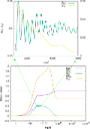
![[Graphic 40]](/bjnano/content/inline/2190-4286-10-61-i49.svg?max-width=637&scale=1.418184) and photon
and photon ![[Graphic 41]](/bjnano/content/inline/2190-4286-10-61-i50.svg?max-width=637&scale=1.418184) content in the open central system as a function of time. In additio...
content in the open central system as a function of time. In additio...
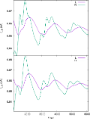
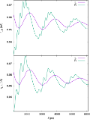
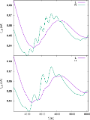

![[Graphic 60]](/bjnano/content/inline/2190-4286-10-61-i69.svg?max-width=637&scale=1.418184)
![[Graphic 61]](/bjnano/content/inline/2190-4286-10-61-i70.svg?max-width=637&scale=1.418184)
![[Graphic 62]](/bjnano/content/inline/2190-4286-10-61-i71.svg?max-width=637&scale=1.418184) and
and ![[Graphic 63]](/bjnano/content/inline/2190-4286-10-61-i72.svg?max-width=637&scale=1.418184) i...
i...
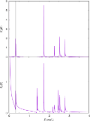
![[Graphic 76]](/bjnano/content/inline/2190-4286-10-61-i85.svg?max-width=637&scale=1.418184) in the steady state. The cavity pho...
in the steady state. The cavity pho...



