


Search results
Search for "reduction" in Full Text gives 1294 result(s) in Beilstein Journal of Nanotechnology. Showing first 200.
Investigation on drag reduction on rotating blade surfaces with microtextures
Beilstein J. Nanotechnol. 2024, 15, 833–853, doi:10.3762/bjnano.15.70
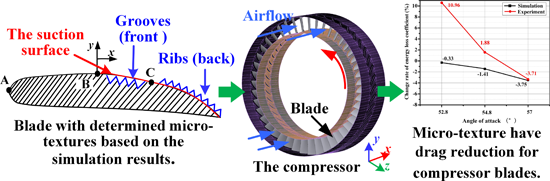
- results. Second, the placement position and geometrical parameters (height, width, and spacing) of microtextures with lower energy loss were determined by our simulation of microtextures on the blade surface, and the drag reduction mechanism was analyzed. Triangular ribs with a height of 0.2 mm, a width
- of 0.3 mm, and a spacing of 0.2 mm exhibited the best drag reduction, reducing the energy loss coefficient and drag by 1.45% and 1.31% for a single blade, respectively. Finally, the blades with the optimal microtexture parameters were tested in the wind tunnel. The experimental results showed that
- the microtexture decreased energy loss by 3.7% for a single blade under 57° angle of attack and 136.24 m/s, which was favorable regarding the drag reduction performance of the impeller with 45 blades. Keywords: blade; drag-reducing microtexture; geometrical parameters; placement position; simulations


Intermixing of MoS2 and WS2 photocatalysts toward methylene blue photodegradation
Beilstein J. Nanotechnol. 2024, 15, 817–829, doi:10.3762/bjnano.15.68
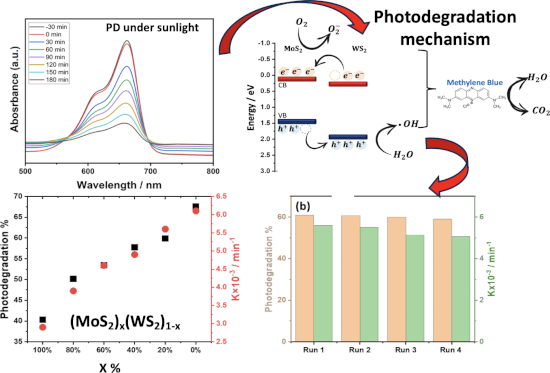
- required to drive photodegradation reaction. Concomitantly, anion groups serve as electron donors, playing a key role in the reduction process [44]. During the reaction, the VB edge potential of the sample is superior to the standard redox potentials of both •OH/OH− and •OH/H2O, suggesting that the holes


Synthesis of silver–palladium Janus nanoparticles using co-sputtering of independent sources: experimental and theorical study
Beilstein J. Nanotechnol. 2024, 15, 808–816, doi:10.3762/bjnano.15.67
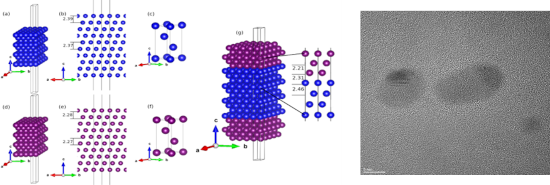
- nanoparticles, by the wet reduction method using palladium and silver hydroxide colloids as precursors, to study hydrogen absorption; the size of these BNPs was 6–7 nm. However, inhomogeneous nanoparticles were obtained because Ag fractions were found on the surface, which were increased by heating the samples




Electrospun polysuccinimide scaffolds containing different salts as potential wound dressing material
Beilstein J. Nanotechnol. 2024, 15, 781–796, doi:10.3762/bjnano.15.65
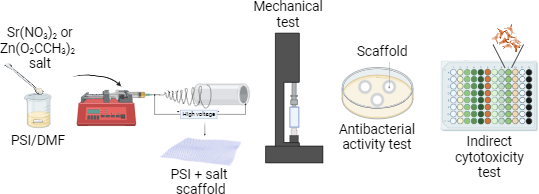
- (Supporting Information File 1, Figure S5). In the case of the Sr(NO3)2 salt, the Young’s modulus was maximum at 7.5% (w/w, Table 4). The Zn(O2CCH3)2 salt (12.2 ± 1.2 MPa) caused a major reduction in the Young’s modulus value compared to that of Sr(NO3)2 salt-containing scaffolds or the pure scaffold
- cytotoxicity assays were performed on the MG-63 tumor cell line derived from the cells of a 14-year-old boy with osteosarcoma [73]. According to the ISO 10993-5:2009 standard, there are various levels of cytotoxicity. If there is no significant reduction in cell count compared to that of the negative control



Exploring surface charge dynamics: implications for AFM height measurements in 2D materials
Beilstein J. Nanotechnol. 2024, 15, 767–780, doi:10.3762/bjnano.15.64
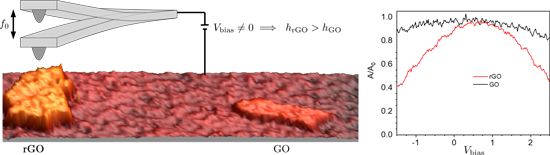
- mechanism arises from the surface conductivity and assumes significance specially in the context of 2D materials on insulating supports. In such scenarios, the oscillating tip induces in-plane charge currents that in many circumstances constitute the main dissipative contribution to amplitude reduction and
- [30]. This issue can be addressed with Kelvin probe force microscopy (KPFM). Under ambient conditions, the most common mode is amplitude modulation (AM-AFM), which uses the oscillation amplitude reduction as the input for the topography feedback. Its main aspects are summarized in [31]. At large free
- the dissipation. In this mode, the amplitude reduction may be due to (i) the tip–sample interaction (conservative or non-conservative), which shifts the resonance frequency and, therefore, makes the excitation go out of resonance, (ii) non-conservative interactions, which dissipate parts of the


Effect of repeating hydrothermal growth processes and rapid thermal annealing on CuO thin film properties
Beilstein J. Nanotechnol. 2024, 15, 743–754, doi:10.3762/bjnano.15.62
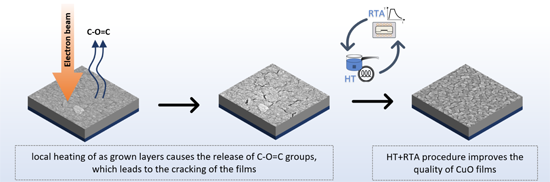
- properties of these layers and to attain the desired parameters in the final product. Controlled thermal treatment serves various purposes, such as enabling crystal structure relaxation, defect reduction, and enhancement of the films’ crystalline arrangement. Furthermore, it can lead to improved electrical
- cracking. This phenomenon was manifested, for example, during SEM measurements, when the sample was locally heated by an electron beam, as shown in Figure 1. Simultaneously, exposing the samples to thermal processing results in a reduction of the content of carbon atoms. On this basis, it is postulated
- using the Scherrer equation [54][55] with sizes ranging from 8.18 nm for the as-grown samples to 12.50, 12.92, and 12.72 nm for the 1×, 2×, and 3× samples, respectively. The other parameters demonstrate an opposite trend, showing a decrease compared to the as-grown films. Reduction of full width at half


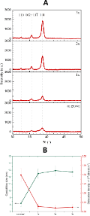


Reduced subthreshold swing in a vertical tunnel FET using a low-work-function live metal strip and a low-k material at the drain
Beilstein J. Nanotechnol. 2024, 15, 713–718, doi:10.3762/bjnano.15.59
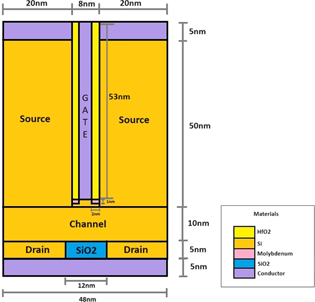
- minimum subthreshold slope and a good Ion/Ioff ratio. The low-k material at the drain reduces the gate-to-drain capacitance. Both the SiO2 layer and the live metal strip show excellent leakage current reduction to 1.4 × 10⁻¹⁷ A/μm. The design provides a subthreshold swing of 5 mV/decade, which is an
- device is shown in Figure 5 for both the on- and the off-state. Compared to the barrier width in the on-state, the distance between valence band of the source and conduction band of the channel is greater in the off-state (Vgs = Vds = 0). In the on-state, Vgs regulates electron motion. A reduction in


Elastic modulus of β-Ga2O3 nanowires measured by resonance and three-point bending techniques
Beilstein J. Nanotechnol. 2024, 15, 704–712, doi:10.3762/bjnano.15.58
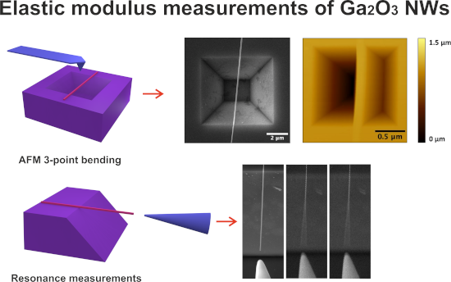
- the average bond length and thus result in a reduction in the elastic modulus [31][32][33]. For example, Wang et al. [34] showed that ZnO NWs with a higher density of oxygen vacancies, inferred from photoluminescence measurements, exhibited significantly (up to 20%) lower Young’s modulus. Wang et al


Enhancing higher-order modal response in multifrequency atomic force microscopy with a coupled cantilever system
Beilstein J. Nanotechnol. 2024, 15, 694–703, doi:10.3762/bjnano.15.57

- reduction negatively impacts detection sensitivity and limits the application of multifrequency AFM. To promote the application of multifrequency techniques, researchers have proposed various methods to improve the higher-order mode response by modifying cantilever beams. For example, researchers have
- , approaching an integer value. This reduction in frequency ratio enhances the high harmonic oscillations and improves the phase contrast during imaging [15]. The macroscale cantilever model (6 × 1 × 0.18 cm) is 266 times the size (within the error range) of the microscale cantilever dimensions. Considering the


Gold nanomakura: nanoarchitectonics and their photothermal response in association with carrageenan hydrogels
Beilstein J. Nanotechnol. 2024, 15, 678–693, doi:10.3762/bjnano.15.56

- introducing ascorbic acid indicated partial reduction of Au3+ to Au+, since ascorbic acid is a weak reducing agent. The introduction of seeds rapidly changed the colourless solution into blue, indicating complete reduction of Au+ to Au0. This was due to diffusion of Au0 atoms toward the {111} facet of the
- (0.01 M) was added, which turned the solution brownish in colour. The appearance of a brownish colour confirmed the reduction of Au3+ to Au0. Step 2: Growth-mediated synthesis of gold nanomakura. In brief, a protocol that combines seed-mediated growth with controlled particle etching was used. The
- synthesis of CTAB-AuNM, MTAB-AuNM, and DTAB-AuNM, a two-step reduction method showing gold (Au) seed preparation and formation of AuNMs in growth medium. (b) Absorption spectra of different surfactant-capped Au seeds over a wavelength range of 300–900 nm. (c) Absorption spectra of CTAB-AuNM, MTAB-AuNM, and






Laser synthesis of nanoparticles in organic solvents – products, reactions, and perspectives
Beilstein J. Nanotechnol. 2024, 15, 638–663, doi:10.3762/bjnano.15.54
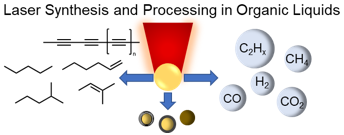
- review also includes findings that are specific to the LSPC method variants laser ablation (LAL), fragmentation (LFL), melting (LML), and reduction (LRL) in organic liquids. A particular focus will be set on permanent gases, liquid hydrocarbons, and solid, carbonaceous species generated, including the
- reduction in liquid (LRL), laser fragmentation in liquid (LFL), and laser melting in liquid (LML), which are schematically shown in Figure 1. Molecular precursors are only required in LRL, whereas the other variants employ a solid as starting material, which is ablated/fragmented/molten in the dispersing
- generation of products that differ from the initial target’s composition [28][29][30][31][32]. Besides LAL, LFL, and LML, where a solid bulk or particulate material is laser-excited, another method to synthesize colloidal nanoparticles is the laser reduction in liquid (LRL), where the liquid contains





Exfoliation of titanium nitride using a non-thermal plasma process
Beilstein J. Nanotechnol. 2024, 15, 631–637, doi:10.3762/bjnano.15.53
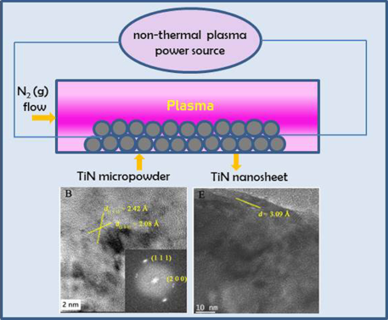
- . Remarkably, the cubic crystal structure of TiN was effectively retained, while the (200) crystal plane d-spacing increased from 2.08 to 3.09 Å, accompanied by a reduction in crystallite size and alterations in Raman vibrational modes. Collectively, these findings provide compelling evidence for the
- ) crystallographic planes, respectively. In contrast, the exfoliated material exhibited FWHM values of 0.30, 0.24, 0.44, 0.43, and 0.41 for the same crystallographic planes. These FWHM results suggest a reduction in the crystallite size for the exfoliated material. Additionally, a slight but noteworthy shift in the



Comparative analysis of the ultrastructure and adhesive secretion pathways of different smooth attachment pads of the stick insect Medauroidea extradentata (Phasmatodea)
Beilstein J. Nanotechnol. 2024, 15, 612–630, doi:10.3762/bjnano.15.52
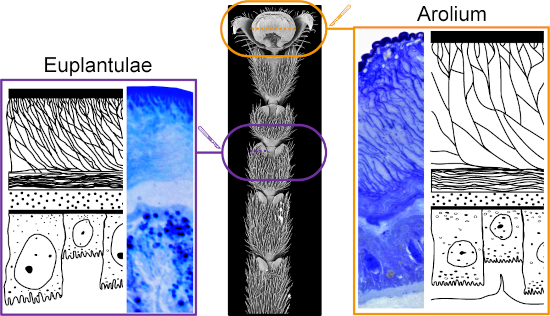
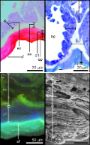
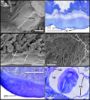
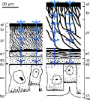
- , Figure 7B) [86]. The hemispherical pattern reduces the contact area between the cuticle and the substrate, thus decreasing contact forces. Similar surface structures were observed in the wax coverage of plants where they decreased the attachment performance of insects [84]. A reduction of the contact




On the additive artificial intelligence-based discovery of nanoparticle neurodegenerative disease drug delivery systems
Beilstein J. Nanotechnol. 2024, 15, 535–555, doi:10.3762/bjnano.15.47
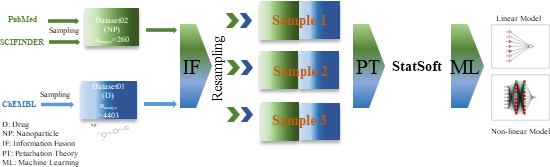
- compound towards the target site with a substantial reduction of toxicity for the adjacent tissues, and help the NDDs to pass physiological barriers, increasing bioavailability without resorting to high dosages [5][11]. Therefore, researchers are studying and developing new treatment approaches that use




Cholesterol nanoarchaeosomes for alendronate targeted delivery as an anti-endothelial dysfunction agent
Beilstein J. Nanotechnol. 2024, 15, 517–534, doi:10.3762/bjnano.15.46
- on HUVECs, human macrophages, and monocytes Despite void nanoARC seemed to slightly reduce HUVEC viability by ≈20%, and nanoARC-Chol by 10%, whereas HSPC-Chol liposomes caused no reduction in cytotoxicity (Figure 2A), no statistically significant differences were found between the formulations and
- caused mitochondrial membrane hyperpolarization (nanoARC(ALN) = nanoARC-Chol(ALN) > HSPC-Chol(ALN)), the same as void nanoARC (Figure 6B). (iii) Only HSPC-Chol(ALN) caused a significant reduction in ATP content (Figure 6C). After ALN-loaded nanovesicles were endocytosed by HUVECs, no increase in nitric
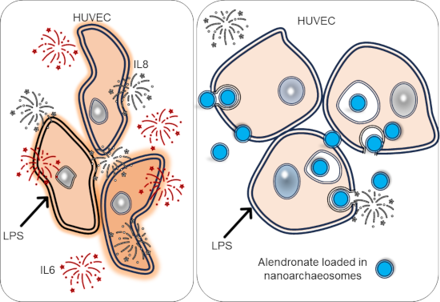
- due to the lower ALN internalization, resulting from the lower ALN/lipid ratio and lower endocytosis of the formulation. In either case, the mechanism of reduction of IL-6/IL-8 of ALN-loaded nanoarchaeosomes would differ from that mediated by the corticosteroid receptor since the corticosteroid





Photocatalytic degradation of methylene blue under visible light by cobalt ferrite nanoparticles/graphene quantum dots
Beilstein J. Nanotechnol. 2024, 15, 475–489, doi:10.3762/bjnano.15.43
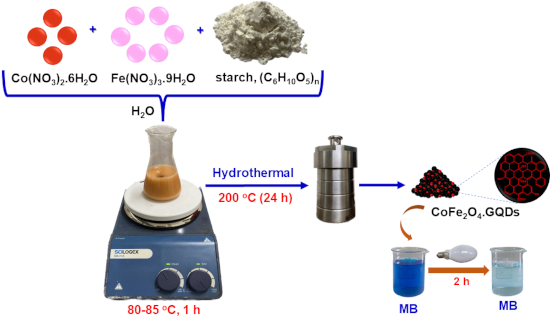
- () capture photoinduced electrons (eCB), which leads to a reduction to form bromide ions [36]. Figure 8a presents the effect of adding an excess of 10 mM KI or 10 mM KBrO3 on the MB degradation. The rate constant decreases to 0.0059 min−1 for KI and 0.0074 min−1 for KBrO3, and the decolourisation efficiency




Superconducting spin valve effect in Co/Pb/Co heterostructures with insulating interlayers
Beilstein J. Nanotechnol. 2024, 15, 457–464, doi:10.3762/bjnano.15.41
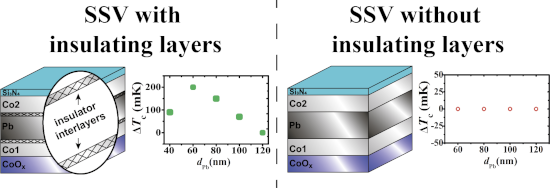
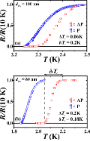
- magnetization vector of the Co1 layer is getting fixed in the direction of the applied field and remains biased by the AF CoOx layer after the reduction of the field strength to its operational value of H0 = 1 kOe, independent of the subsequent direction of the field vector [33][34][48]. At this field value



![[Graphic 6]](/bjnano/content/inline/2190-4286-15-41-i6.svg?max-width=637&scale=1.18182)
Heat-induced morphological changes in silver nanowires deposited on a patterned silicon substrate
Beilstein J. Nanotechnol. 2024, 15, 435–446, doi:10.3762/bjnano.15.39
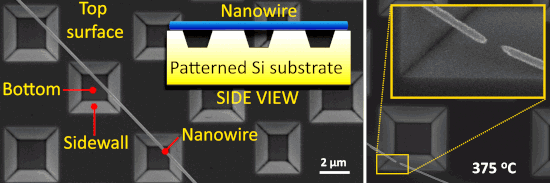
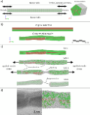
- organics. However, when the size of the structures is reduced to the nanoscale, metals exhibit distinct behavior at elevated temperatures compared to their larger counterparts [20][21]. Generally, a reduction in the melting point occurs as the size and dimensionality of the nanostructures decrease [20][22


Potential of a deep eutectic solvent in silver nanoparticle fabrication for antibiotic residue detection
Beilstein J. Nanotechnol. 2024, 15, 426–434, doi:10.3762/bjnano.15.38
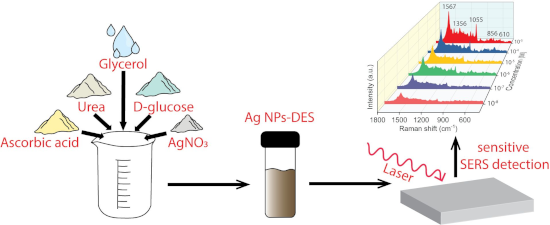
- In this study, we have proposed a novel strategy for Ag NP synthesis in a DES composed of ᴅ-glucose, glycerol, and urea. The Ag NPs-DES sample was prepared successfully through chemical reduction, in which DES acts as solvent and shape-controlling agent. Using NFT and SDZ as probe molecules, the SERS


Unveiling the nature of atomic defects in graphene on a metal surface
Beilstein J. Nanotechnol. 2024, 15, 416–425, doi:10.3762/bjnano.15.37
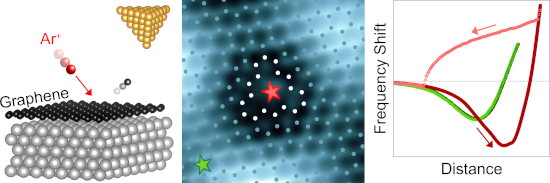
- inversion is induced by the reduction of the tip–graphene separation. As will be shown below, the involved junction currents correspond to a separation that is still larger than, but close to, the point of maximum attractive force. Therefore, a tentative rationale to the observed contrast inversion is the


Classification and application of metal-based nanoantioxidants in medicine and healthcare
Beilstein J. Nanotechnol. 2024, 15, 396–415, doi:10.3762/bjnano.15.36
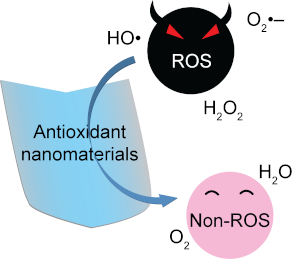
- employ the properties of transition metals and metal oxides (e.g., cobalt, iron, cerium, and gold), which can generate a cycle of reduction and oxidation stages [20][21][22][23]. Among these metal oxides, cerium oxide-based nanomaterials have been deeply studied with regard to the mechanisms of CAT
- reduction in infarction size, TNF-α levels, cardiac fibrosis, and improvement in cardiac systolic function. Gold nanorods serving as surface-enhanced Raman scattering probes have demonstrated sensitivity for the early detection of ICAM-1, a significant signal for screening atherosclerosis, particularly in
- of metal-based nanoantioxidants and the reduction of detrimental effects of these nanomaterials on human health. Surface modification can become an effective method to decrease the toxicity of nanomaterials through coating with biocompatible polymers such as chitosan, polydopamine, and polyethylene


Insect attachment on waxy plant surfaces: the effect of pad contamination by different waxes
Beilstein J. Nanotechnol. 2024, 15, 385–395, doi:10.3762/bjnano.15.35
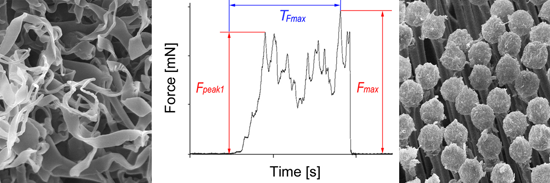
- contamination of insect adhesive pads with three-dimensional epicuticular waxes of different plant species contributes to the reduction of insect attachment. We measured traction forces of tethered Chrysolina fastuosa male beetles having hairy adhesive pads on nine wax-bearing plant surfaces differing in both
- tested insects showed a strong reduction of the maximum traction force on all waxy plant surfaces compared to the reference experiment on glass (gl1). After beetles have walked on waxy plant substrates, their adhesive pads were contaminated with wax material, however, to different extents depending on
- 0.3 and 1 μm rough surfaces, where the range of asperity dimensions corresponded to that of typical plant wax projections [1][14][15][16][17][18][19]. This great reduction in the adhesion force was explained by the strong decrease of the real contact area between the micro/nanorough surface profile




Controllable physicochemical properties of WOx thin films grown under glancing angle
Beilstein J. Nanotechnol. 2024, 15, 350–359, doi:10.3762/bjnano.15.31
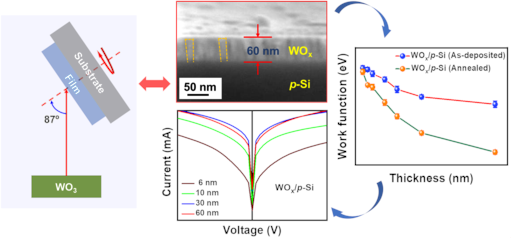
- within the forbidden gap. These states lead to a reduction in bandgap energy and an upward shift of the Fermi level [41][42]. This is the reason behind the observed reduction in bandgap with higher thicknesses (Figure 2b,c) [43]. To probe the Fermi level position, KPFM is a useful tool to acquire
- with increasing film thickness and also due to the post-growth annealing, which corroborates well the KPFM and UV–vis–NIR spectrophotometric analyses showing the reduction in work function and bandgap values. I–V characteristics of WOx/p-Si heterojunctions reveal a nearly symmetric nature in the as


Nanomedicines against Chagas disease: a critical review
Beilstein J. Nanotechnol. 2024, 15, 333–349, doi:10.3762/bjnano.15.30
- cells, BNZ is reduced by oxygen-sensitive nitroreductases. During its anaerobic nitro reduction, primarily in the hepatic microsomal fraction, BNZ generates reactive metabolites that bind to the host’s DNA, proteins, and lipids. The nitro reduction also occurs in fecal matter, with an intensity that
- idiosyncratic adverse drug reactions (ADRs), caused by BNZ reduction products, which are maximal in adults and lead to treatment discontinuation [19]. Typical ADRs include headache, anorexia, weakness and/or lack of energy, skin rash, gastrointestinal complaints, and mild, peripheral neurological effects [20
- nanomedicines capable of increasing the solubility of BNZ (Table 2). Trypomastigotes are known to display high resistance to the trypanocidal effect of BNZ [46][47]; replicative epimastigote and amastigote forms of the parasite, instead, would be sensitive to cumulative doses of BNZ. Arguing that a reduction in

Comparative electron microscopy particle sizing of TiO2 pigments: sample preparation and measurement
Beilstein J. Nanotechnol. 2024, 15, 317–332, doi:10.3762/bjnano.15.29
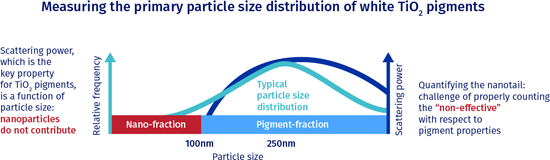
- thresholding. While the former detection methods do not require any pre-processing of the image filtering of the obtained results, the automated detection methods require both noise reduction and contrast–brightness unification prior to the automated grey-value thresholding, and a shape- and grey value-based
- implemented definition. The new software package does not support the previously used watershed transform; instead, a morphological shape separator must be used. The better image quality allows one to reduce the size of the rank filter for noise reduction from five to two pixels. The differences are





