Search results
Search for "reliability" in Full Text gives 192 result(s) in Beilstein Journal of Nanotechnology.
Microstructural and plasmonic modifications in Ag–TiO2 and Au–TiO2 nanocomposites through ion beam irradiation
Beilstein J. Nanotechnol. 2014, 5, 1419–1431, doi:10.3762/bjnano.5.154

- agrees with the simulated results for TiO by using the JEMS software [50]. In spite of the well-known problems of the light elements' quantification by EDX, test measurements on distinct samples (e.g., amorphous TiO2) point to a sufficient reliability of the setup for a semi-quantitative interpretation


The protein corona protects against size- and dose-dependent toxicity of amorphous silica nanoparticles
Beilstein J. Nanotechnol. 2014, 5, 1380–1392, doi:10.3762/bjnano.5.151
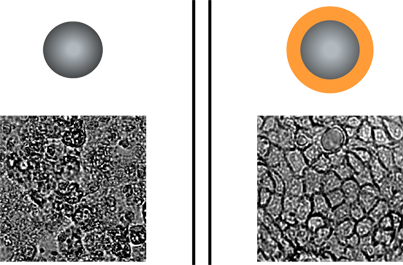
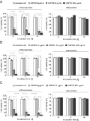
- ASP20 (Figure 3B) or ASP100 (Figure 3C). These results not only confirm the size- and dose-dependent ASP toxicity but also underline the reliability of the microscopy-based morphological assay as a convenient approach to test for nanotoxicity. Currently, high-throughput testing is actively discussed as




Review of nanostructured devices for thermoelectric applications
Beilstein J. Nanotechnol. 2014, 5, 1268–1284, doi:10.3762/bjnano.5.141
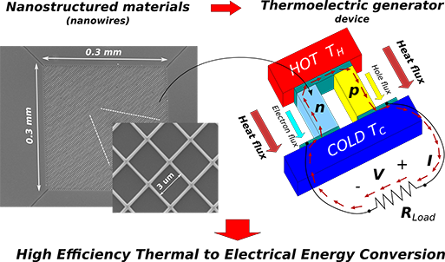
- operation of the device. This high reliability is due to the high level of interconnections (vertical and horizontal branches) of the net. It has been demonstrated [100] that the total top to bottom electrical resistance of the net increases only negligibly for a nanowire failure percentage up to 40%, that
- review of the most innovative technological solutions currently under development for this purpose. Several solutions are very interesting and promising. However, problems of reliability, repeatability on large areas and mechanical stability of very long, and very narrow, silicon nanowires still need to


Surface assembly and nanofabrication of 1,1,1-tris(mercaptomethyl)heptadecane on Au(111) studied with time-lapse atomic force microscopy
Beilstein J. Nanotechnol. 2014, 5, 26–35, doi:10.3762/bjnano.5.3
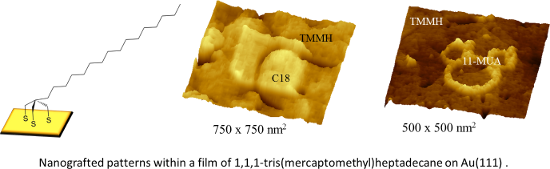
- metal surfaces is a consideration for applications of SAMs, which impacts the reliability and durability of the related products [10][11][12][13][14][15][16][17]. To realize the full potential of patterning surfaces for manufacturing processes, challenges need to be addressed for designing robust


Static analysis of rectangular nanoplates using trigonometric shear deformation theory based on nonlocal elasticity theory
Beilstein J. Nanotechnol. 2013, 4, 968–973, doi:10.3762/bjnano.4.109
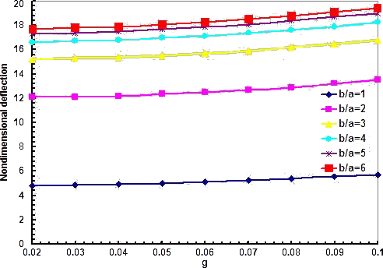
- nondimensional deflections and deflection ratios will be discussed in the next section. Numerical results First of all, to show the reliability and accuracy of the aforementioned equations, our numerical results are compared with those available in literature for simply supported macro plates. In Table 1, the


Cyclic photochemical re-growth of gold nanoparticles: Overcoming the mask-erosion limit during reactive ion etching on the nanoscale
Beilstein J. Nanotechnol. 2013, 4, 886–894, doi:10.3762/bjnano.4.100
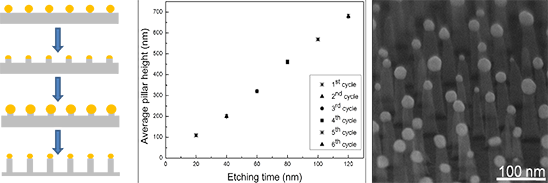
- . For that purpose, the organic matrix is completely removed by exposure to oxygen and hydrogen plasmas while, in parallel, the precursors are reduced into the metallic state to form NP. The reliability of the approach has been demonstrated previously for colloidal [1][2] as well as micellar [3][4][5][6


Dynamic nanoindentation by instrumented nanoindentation and force microscopy: a comparative review
Beilstein J. Nanotechnol. 2013, 4, 815–833, doi:10.3762/bjnano.4.93

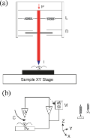
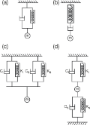
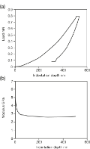
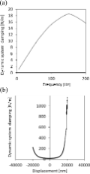
- nanoindentation. The need to develop standard methods in dynamic nanoindentation has been shown to be crucial for the reliability and repeatability of the experiments. Such a standardized method should include a clear protocol for the modulation, the calibration process of the instrument, the reference materials




Atomic force microscopy recognition of protein A on Staphylococcus aureus cell surfaces by labelling with IgG–Au conjugates
Beilstein J. Nanotechnol. 2013, 4, 743–749, doi:10.3762/bjnano.4.84
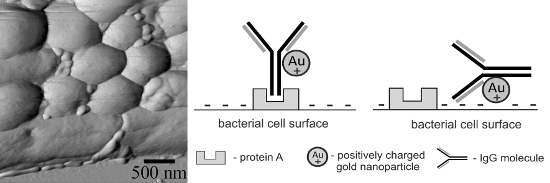
- interactions. These circumstances indicate the relevance of the development of a simple, sensitive and reproducible AFM recognition method that is available both for routine studies and for unambiguous interpretation of the AFM results. In order to increase the reliability of the complex detection on bacterial
- a high reliability (P < 0.0001). Roughness of the cell surface was higher values this time (Rq = 2.60 ± 2.23 nm). An irregular distribution of IgG–Au conjugates on the cellular surfaces was established. We defined three ways of orientation of the IgG–Au labels according to binding area (Figure 2a


Mapping of plasmonic resonances in nanotriangles
Beilstein J. Nanotechnol. 2013, 4, 588–602, doi:10.3762/bjnano.4.66
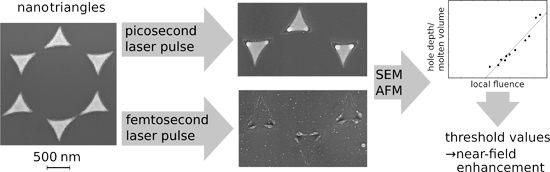
- than the experimental ones, yet of the same magnitude. This sheds light on the reliability of FDTD simulations, for which it is apparently crucial that all the details of the plasmonic structures are taken into account, if one aims at a quantitative prediction of the near fields. Although a similar


Deformation-induced grain growth and twinning in nanocrystalline palladium thin films
Beilstein J. Nanotechnol. 2013, 4, 554–566, doi:10.3762/bjnano.4.64
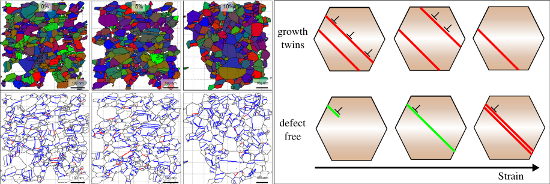
- ductility and suffer from rapid strain localization [2]. Understanding the underlying deformation mechanisms operating in these structures is important, for example to guarantee the reliability of nc materials in next-generation micro- and nano-scale devices. In nc metals, with grain sizes well below 100 nm
- filter of the combined Euler angles. Grain recognition in the orientation maps with an expanded Mtex version 3.3.1 [46]. The chosen disorientation between neighbors for the recognition is 3°. Grain filtering: Removal of grains that contain less than 50% pixel having a combined reliability greater than
- -TEM images of the initial microstructure of ncPd 1 (a) and ncPd 2 (b) with the corresponding selected electron diffraction pattern (SAED) as insets. Orientation maps overlaid with reliability derived from ACOM-TEM of the as deposited sample in a) cross section and b) plane view (insets shows the color


Influence of the solvent on the stability of bis(terpyridine) structures on graphite
Beilstein J. Nanotechnol. 2013, 4, 269–277, doi:10.3762/bjnano.4.29
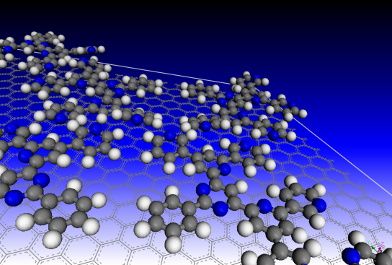
- . In order to validate the reliability of the force fields used in this study, we have considered liquid densities and the solvation energies in water and TCB. In order to be consistent with our scheme to determine the free enthalpies of adsorption, we estimated the solvation energy Esolv from the free


Effect of spherical Au nanoparticles on nanofriction and wear reduction in dry and liquid environments
Beilstein J. Nanotechnol. 2012, 3, 759–772, doi:10.3762/bjnano.3.85
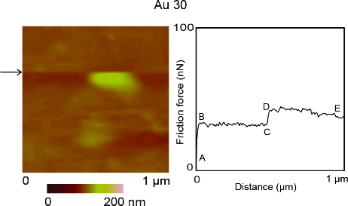
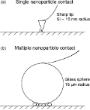
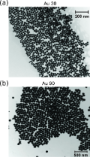
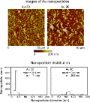
- needed become high, which can hinder device operation and reliability [2]. The choice of a suitable lubricant on these scales becomes crucial. Nano-objects are also used for applications that require controlled manipulation and targeting mechanisms in biomedicine and the oil industry. Applications



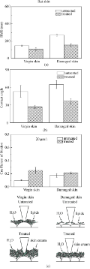
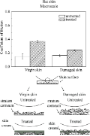
Friction and durability of virgin and damaged skin with and without skin cream treatment using atomic force microscopy
Beilstein J. Nanotechnol. 2012, 3, 731–746, doi:10.3762/bjnano.3.83
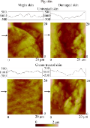
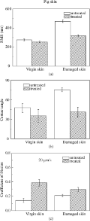
- Bharat Bhushan Si Chen Shirong Ge Nanoprobe Laboratory for Bio- & Nanotechnology and Biomimetics, The Ohio State University, 201 W 19th Ave., Columbus, OH 43210 USA Institute of Tribology and Reliability Engineering, China University of Mining and Technology, Xuzhou, Jiangsu 221116 China 10.3762





The memory effect of nanoscale memristors investigated by conducting scanning probe microscopy methods
Beilstein J. Nanotechnol. 2012, 3, 722–730, doi:10.3762/bjnano.3.82
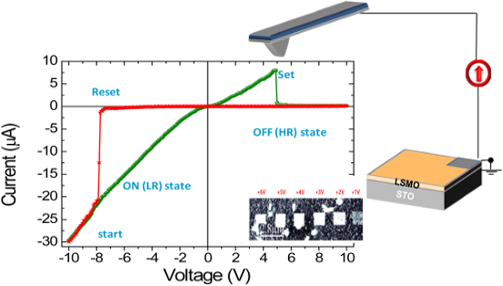
- performance. No measurable changes were observed in the current measured on these nonmodified regions after the whole series of experiments in Figure 5, ensuring the good electrical performance of the tip and the reliability of the measurements. As will be confirmed below and has been previously demonstrated


Probing three-dimensional surface force fields with atomic resolution: Measurement strategies, limitations, and artifact reduction
Beilstein J. Nanotechnol. 2012, 3, 637–650, doi:10.3762/bjnano.3.73
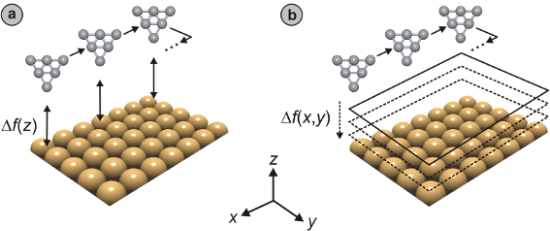
- inability to correct for elastic deformations of the tip apex jeopardizes the reliability of such real-time approaches to drift correction to the extent that it is unclear a priori which approach to drift correction, i.e., real-time or post-acquisition, is superior. The effects of tip asymmetry on simulated




Glassy carbon electrodes modified with multiwalled carbon nanotubes for the determination of ascorbic acid by square-wave voltammetry
Beilstein J. Nanotechnol. 2012, 3, 388–396, doi:10.3762/bjnano.3.45
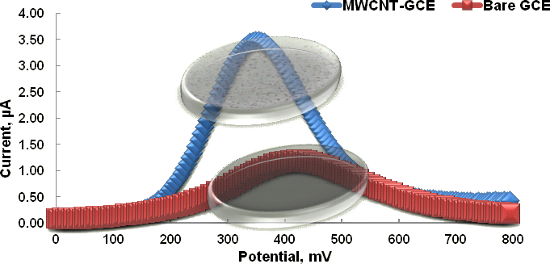
- reliability of the SWV method was validated by conducting parallel experiments based on high-performance liquid chromatography (HPLC) with absorbance detection. The observed mean AA contents of the commercial orange juice samples obtained by the two methods were compared statistically and were found to have
- reports the use of a MWCNT-modified GCE for the direct analysis of ascorbic acid by SWV and the application of the method to the analysis of ascorbic acid in commercial orange-juice products. The reliability of SWV method was validated against HPLC, an independent non-electrochemical analytical technique
- well (96–104%) with the claim on the product label. Recovery test Recovery tests were performed to establish the reliability of the SWV method. The diluted juice samples were spiked with 0.5 mmol AA and analysed. It is seen from Table 2 that, with the exception of juice 3, excellent recoveries of the


An MCBJ case study: The influence of π-conjugation on the single-molecule conductance at a solid/liquid interface
Beilstein J. Nanotechnol. 2011, 2, 699–713, doi:10.3762/bjnano.2.76
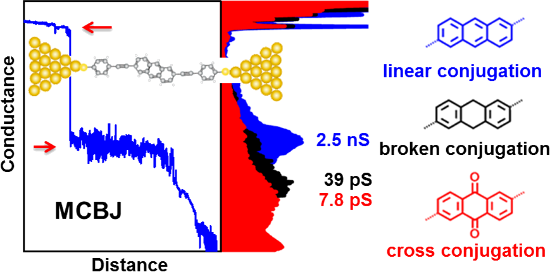
- of the continuous current–distance measurements (Figure 4). The coincidence demonstrates convincingly the reliability of both experimental approaches chosen. Statistical analysis of I–V curves of molecular junctions Thermal vibrations as well as switching events between different configurations and
- conductance of AC trapped between two gold leads, respectively. The good agreement between the results of the three different experimental approaches indicates the reliability of the measurements as well as the independence of the single-molecule conductance values of the present system from the measurement
- in AC molecular bridges [24]. From a technical point of view, the accessibility and reliability of the low conductance data for the AQ molecular junction also illustrates the high sensitivity of our new MCBJ setup. Figure 8C shows the 1-D conductance histogram of the dihydroanthracene wire AH with a