Search results
Search for "sensors" in Full Text gives 611 result(s) in Beilstein Journal of Nanotechnology. Showing first 200.
3D superconducting hollow nanowires with tailored diameters grown by focused He+ beam direct writing
Beilstein J. Nanotechnol. 2020, 11, 1198–1206, doi:10.3762/bjnano.11.104
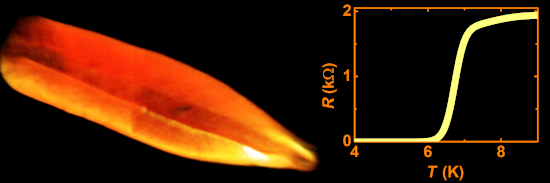
- nano-antennas and sensors, based on 3D superconducting architectures. Keywords: electron tomography; focused ion beam induced deposition (FIBID); helium ion microscope; magneto-transport measurements; nano-superconductors; tungsten carbide (WC); Introduction Superconductors are dissipationless
- carriers of electric current and provide macroscopic, and thus robust, quantum coherence. This allows for a wide range of applications, particularly at the nanometer-scale, where they can be easily integrated in circuits and used as ultrasensitive sensors of magnetic fields, temperature and as key elements
- for quantum computation. The behavior of nanosized superconductors as one-dimensional quantum oscillators [1], Josephson junction arrays [2], electronic transport devices [3][4][5][6][7], very small-scale devices [8][9], micrometer-scale coolers [10], or thermal and spin sensors [11][12] has been



Revealing the local crystallinity of single silicon core–shell nanowires using tip-enhanced Raman spectroscopy
Beilstein J. Nanotechnol. 2020, 11, 1147–1156, doi:10.3762/bjnano.11.99
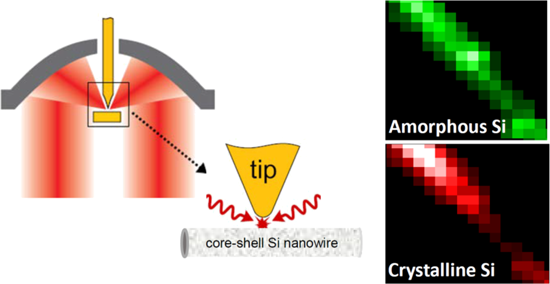
- Marius van den Berg Ardeshir Moeinian Arne Kobald Yu-Ting Chen Anke Horneber Steffen Strehle Alfred J. Meixner Dai Zhang Institute of Physical and Theoretical Chemistry, Eberhard Karls University of Tübingen, Auf der Morgenstelle 15, Tübingen, Germany Center for Light-Matter Interaction, Sensors
- serving as multifunctional platforms for field-effect transistors [4][5][6], photovoltaic devices [7][8][9][10] and miniaturized chemical sensors [5][11][12]. A key element for many of those devices are high-quality nanometer-scale semiconductor junctions, such as pn-junctions that ensure the intended


Vibration analysis and pull-in instability behavior in a multiwalled piezoelectric nanosensor with fluid flow conveyance
Beilstein J. Nanotechnol. 2020, 11, 1072–1081, doi:10.3762/bjnano.11.92
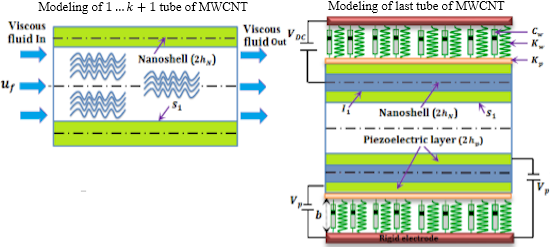
- analysis; surface/interface effect; van der Waals force; viscous fluid velocity; Introduction Nanomechanical sensors and resonators, especially when combined with piezoelectric materials, are widely used in modern engineering, which encompasses numerous, diverse fields of science and technology


![[Graphic 46]](/bjnano/content/inline/2190-4286-11-92-i46.svg?max-width=637&scale=1.18182) on DNF of FC-MWPENS.
on DNF of FC-MWPENS.


![[Graphic 50]](/bjnano/content/inline/2190-4286-11-92-i50.svg?max-width=637&scale=1.18182) on DNF of SS FC-MWPENS.
on DNF of SS FC-MWPENS.


![[Graphic 54]](/bjnano/content/inline/2190-4286-11-92-i54.svg?max-width=637&scale=1.18182) on DNF of SS FC-MWPENS.
on DNF of SS FC-MWPENS.


![[Graphic 59]](/bjnano/content/inline/2190-4286-11-92-i59.svg?max-width=637&scale=1.18182) for fluid velocity
for fluid velocity ![[Graphic 60]](/bjnano/content/inline/2190-4286-11-92-i60.svg?max-width=637&scale=1.18182) on DNF of SS FC-MWPENS.
on DNF of SS FC-MWPENS.

![[Graphic 61]](/bjnano/content/inline/2190-4286-11-92-i61.svg?max-width=637&scale=1.18182) for pull-in voltage on DNF of SS FC-MWPENS.
for pull-in voltage on DNF of SS FC-MWPENS.

![[Graphic 67]](/bjnano/content/inline/2190-4286-11-92-i67.svg?max-width=637&scale=1.18182) for fluid velocity
for fluid velocity ![[Graphic 68]](/bjnano/content/inline/2190-4286-11-92-i68.svg?max-width=637&scale=1.18182) on DNF of SS FC-MWPENS.
on DNF of SS FC-MWPENS.

![[Graphic 69]](/bjnano/content/inline/2190-4286-11-92-i69.svg?max-width=637&scale=1.18182) for pull-in voltage on DNF of SS FC-MWPENS.
for pull-in voltage on DNF of SS FC-MWPENS.

![[Graphic 73]](/bjnano/content/inline/2190-4286-11-92-i73.svg?max-width=637&scale=1.18182) on DNF of SS FC-MWPENS.
on DNF of SS FC-MWPENS.


![[Graphic 75]](/bjnano/content/inline/2190-4286-11-92-i75.svg?max-width=637&scale=1.18182) on DNF of SS FC-MWPENS.
on DNF of SS FC-MWPENS.

A few-layer graphene/chlorin e6 hybrid nanomaterial and its application in photodynamic therapy against Candida albicans
Beilstein J. Nanotechnol. 2020, 11, 1054–1061, doi:10.3762/bjnano.11.90
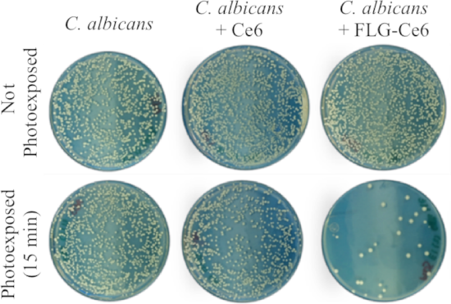
- biological applications, such as biosensors, protein detection, bioimaging and drug delivery [17][18]. In recent years, graphene nanoparticles have been used in many different applications ranging from enhanced spectroscopy techniques, coatings, polymeric composites, sensors, drug delivery systems and others


Highly sensitive detection of estradiol by a SERS sensor based on TiO2 covered with gold nanoparticles
Beilstein J. Nanotechnol. 2020, 11, 1026–1035, doi:10.3762/bjnano.11.87
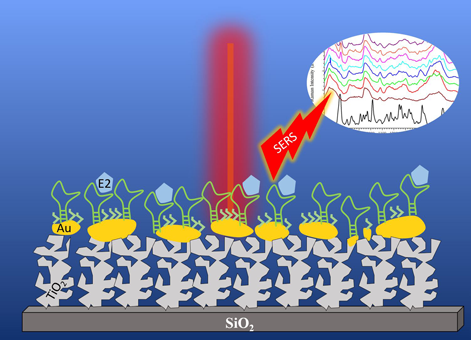
- -enhanced Raman scattering (SERS) sensors for the detection of 17β-estradiol. Gold deposition on top of a TiO2 surface leads to the formation of nanoparticles the plasmonic properties of which fulfil the requirements of a SERS sensor. The morphological and optical properties of the surface were investigated
- possess many of the important qualities required for the functionalization of SERS sensors [18][19][20][21]. Aptamers are single-stranded DNA molecules that are specifically selected to bind to a target molecule. They are relatively cheap and their chemistry is easy to tune so that they can attach to a
- established [26]. They are very specific and very sensitive, however, they are also time-consuming and expensive [27]. SERS sensors are therefore investigated as an alternative as they present the potential for in situ near-real-time analysis. In the following we will present the possibilities of TiO2 porous



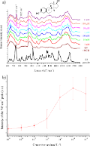
Gas-sensing features of nanostructured tellurium thin films
Beilstein J. Nanotechnol. 2020, 11, 1010–1018, doi:10.3762/bjnano.11.85
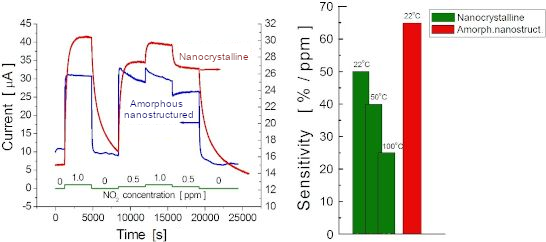
- nanotube-based sensors showed similar (or sometimes lower) numbers regarding sensitivity and response/recovery times in comparison to Te single-crystalline microtube-based gas sensors [7]. An increase in the gas-sensing performance was achieved by growing single-crystal Te-based nanotubes and nanowires via
- hydrothermal recrystallization [23]. The response time range of NH3 gas sensors based on such nanocomponents was 5–18 s but the recovery time ranged between 170–720 s. From comparison with state-of-the-art devices, it can be observed that the physically nanostructured Te thin films exhibit great potential for
- applications in development in advanced gas sensors and, so far, are the only Te-based nanostructured sensors tested with this purpose. Besides, it can also be observed that nanostructuring is mostly performed via phase transformations, such as hydrothermal recrystallization and growth of Te nanocrystals


Transition from freestanding SnO2 nanowires to laterally aligned nanowires with a simulation-based experimental design
Beilstein J. Nanotechnol. 2020, 11, 843–853, doi:10.3762/bjnano.11.69

- result, Choi et al. were able to measure an improved sensitivity for gas sensors made of tin oxide nanowires (SnO2 NWs) in comparison with powder-based SnO2 thin films [9]. For the use of NWs in electronic and sensor devices, freestanding NWs often have to be scratched off of the growth substrate
- transport within the wires and will be analyzed in future experiments. Conclusion Although SnO2 is highly beneficial for applications in sensors, only few systematic studies on the growth of laterally aligned SnO2 NWs have been published. Combining simulations with focused experiments, we were able to show


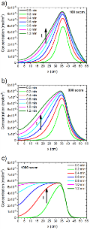
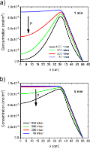



A set of empirical equations describing the observed colours of metal–anodic aluminium oxide–Al nanostructures
Beilstein J. Nanotechnol. 2020, 11, 798–806, doi:10.3762/bjnano.11.64
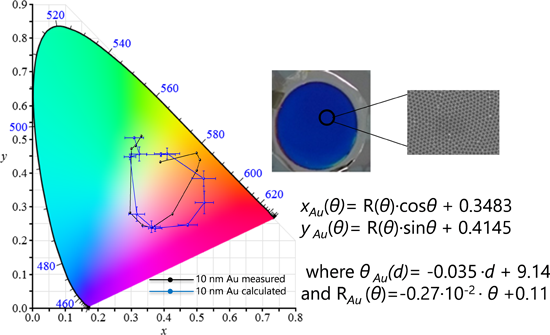
- thickness and porosity of the nanostructures was determined, which describes a gamut of colours. The proposed mathematical model can be applied in different fields, such as wavelength absorbers, RGB (red, green, blue) display devices, as well as chemical or optical sensors. Keywords: anodic aluminium oxide
- [4]. In particular, metal–AAO–Al nanostructures exhibit structural colours that can find applications as wavelength absorbers [5], in RGB display devices [6], and as chemical [7] or optical sensors [8]. It is essential to develop a model that allows for the determination of the colours (RGB or Yxy
- , as well as chemical or optical sensors. Experimental Fabrication of the AAO films Highly ordered anodic aluminium oxide (AAO) films were fabricated using a two-step anodization process [20][21][22] under the same conditions that were reported in previous manuscripts of our group [4][18]. The


Effect of substitutional defects on resonant tunneling diodes based on armchair graphene and boron nitride nanoribbons lateral heterojunctions
Beilstein J. Nanotechnol. 2020, 11, 688–694, doi:10.3762/bjnano.11.56
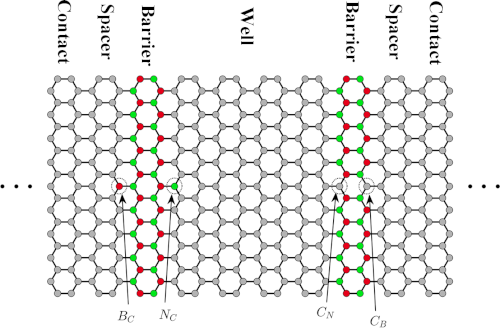
- itself is highly sensitive to the type and position of substitutional defects, the intentional introduction of such defects can be utilized to design nanoscale RTDs with desired NDR characteristic and RTD-based strain or pressure sensors with improved sensitivity. (a) Schematic representation of the



A novel dry-blending method to reduce the coefficient of thermal expansion of polymer templates for OTFT electrodes
Beilstein J. Nanotechnol. 2020, 11, 671–677, doi:10.3762/bjnano.11.53
- -generation large-area, light-weight, flexible, and stretchable optoelectronic applications [1][2], including flexible displays [3], electronic papers [4], sensors [5], and medical applications [6]. Fabricating high-performance OTFTs usually requires that the electrodes on the polymer template are precisely
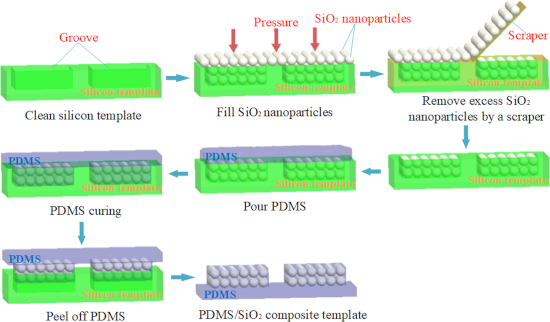
- of flexible displays, electronic papers, sensors, and medical applications, and provide new solutions for constructing large-area, light-weight, flexible, and stretchable optoelectronic applications. The experimental procedure for preparation of the PDMS/SiO2 composite template via dry blending: (a


Exfoliation in a low boiling point solvent and electrochemical applications of MoO3
Beilstein J. Nanotechnol. 2020, 11, 662–670, doi:10.3762/bjnano.11.52

- layered materials, molybdenum oxide (MoO3) has gained special attention because of its numerous applications in electronics, catalysis, electrochemistry, solar cells and gas sensors [6]. Monolayered and few-layered MoO3 has been reported to have better properties than the bulk material [7]. Thus, it is



Observation of unexpected uniaxial magnetic anisotropy in La2/3Sr1/3MnO3 films by a BaTiO3 overlayer in an artificial multiferroic bilayer
Beilstein J. Nanotechnol. 2020, 11, 651–661, doi:10.3762/bjnano.11.51
- ., ferromagnetic (FM) for LSMO and ferroelectric (FE) for BTO, and BTO/LSMO heterostructures have exhibited magnetoelectric coupling (MEC) [6][7][8]. They constitute a type of artificial hybrid multiferroic material that can be employed to build the next-generation sensors, multiple-state memory elements, magnetic



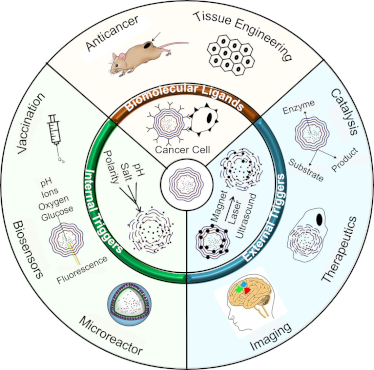
Multilayer capsules made of weak polyelectrolytes: a review on the preparation, functionalization and applications in drug delivery
Beilstein J. Nanotechnol. 2020, 11, 508–532, doi:10.3762/bjnano.11.41



Evolution of Ag nanostructures created from thin films: UV–vis absorption and its theoretical predictions
Beilstein J. Nanotechnol. 2020, 11, 494–507, doi:10.3762/bjnano.11.40
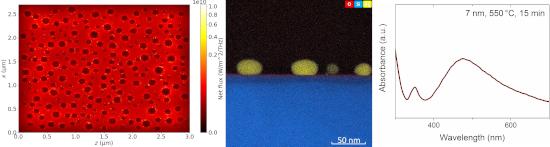
- ][4][5]. The principle of some of these sensors is the resonant enhancement of a local electromagnetic field as well as a sharp spectral absorption, which can be achieved by exploiting localized surface plasmon resonance (LSPR). This phenomenon is based on collective oscillations of free electrons




Atomic-resolution imaging of rutile TiO2(110)-(1 × 2) reconstructed surface by non-contact atomic force microscopy
Beilstein J. Nanotechnol. 2020, 11, 443–449, doi:10.3762/bjnano.11.35
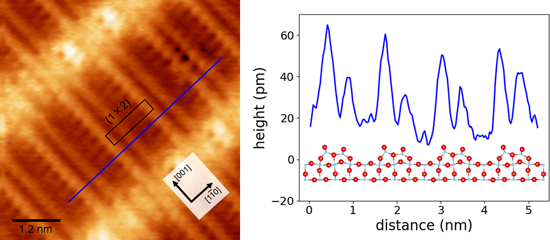
- performed using Pt-coated Si cantilevers (Budget Sensors, ElectriTAP190G). All cantilevers were cleaned by Ar+ sputtering (0.6 keV, Ar partial pressure of 1.0 × 10⁻⁵ Pa, ion current of 0.05 µA, 5 min) before scanning. STM imaging was performed in constant-current mode without cantilever oscillation. NC-AFM


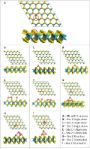
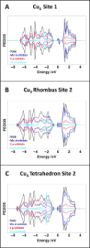
DFT calculations of the structure and stability of copper clusters on MoS2
Beilstein J. Nanotechnol. 2020, 11, 391–406, doi:10.3762/bjnano.11.30
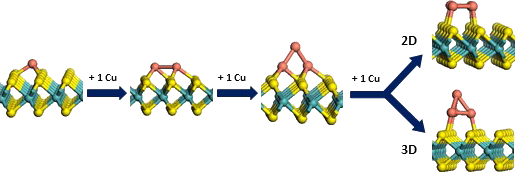
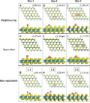
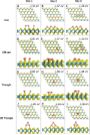
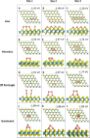
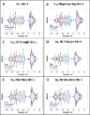
- variety of research areas [1]. These include catalysis [2][3], photonics [4][5], batteries [6], sensors [7][8] and semiconductors and electronics [9][10][11]. More recently, 2D materials have been explored as copper diffusion barriers in CMOS interconnect structures [12][13][14][15]. Furthermore, to
- to alter the surface from semiconducting to metallic. This selective alteration of the electronic properties through functionalisation makes 2D monolayers attractive candidates for various applications, such as photocatalysis, sensors and electronic devices. Other work from Ersan et al. [30] focused
Using gold nanoparticles to detect single-nucleotide polymorphisms: toward liquid biopsy
Beilstein J. Nanotechnol. 2020, 11, 263–284, doi:10.3762/bjnano.11.20
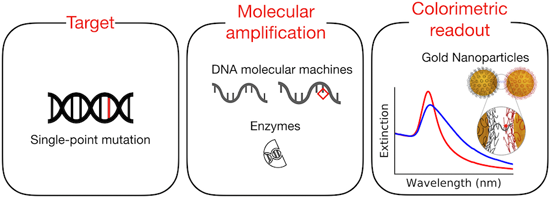
- seconds even at sub-picomolar concentration. Here, we review recent advancements in the development of sensors based on metallic nanoparticles for the detection of mutations in circulating tumor DNA molecules. By introducing the importance of DNA molecules as biomarkers in the field of liquid biopsy and
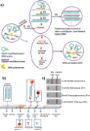
- by discussing current technologies in clinics, we review the performance of recent sensors for single-point mutation in which gold nanoparticles act as signal transducers. We classify the discussed sensors according to whether the underlying mechanisms of detection involve enzymatic reactions or not
- information, cost-efficiency, robustness of the reaction, scalability, high-throughput discrimination and the possibility for automatization with minimal hands-on operation. We will demonstrate in the following sections that the advancement of laboratory-based sensors for SNP discrimination benefits from the




Size effects of graphene nanoplatelets on the properties of high-density polyethylene nanocomposites: morphological, thermal, electrical, and mechanical characterization
Beilstein J. Nanotechnol. 2020, 11, 167–179, doi:10.3762/bjnano.11.14
- composites (PMCs); thermal properties; Introduction In recent years, electrically and thermally conductive polymer nanocomposites have attracted considerable attention because of their potential use in many industrial applications, such as aerospace, electronics, packaging, automotives, sensors, batteries



Molecular architectonics of DNA for functional nanoarchitectures
Beilstein J. Nanotechnol. 2020, 11, 124–140, doi:10.3762/bjnano.11.11

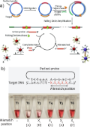
- , sensors, molecular or nanoelectronics, diagnostics, drug delivery, and biomedical sciences. The remarkable molecular fidelity and sequence-specific molecular recognition make DNA the ideal candidate in the scheme of molecular architectonics to design and construct functional DNA nanoarchitectures. In this
- vector and provided efficient sensing of changes in the intracellular acidic pH value. In recent years, DNA thin film-based biosensors received significant interest for the detection of biologically relevant analytes, such has forensic samples [61][62]. The design of active electrochemical DNA sensors
- involves critical optimization of the sensor platforms. The length of the target oligonucleotide sequence and the selective use of dopants significantly dominate the sensing efficacy [63]. In this context, electrochemical DNA sensors were developed by noncovalent layer-by-layer assemblies of phenothiazine


Plasmonic nanosensor based on multiple independently tunable Fano resonances
Beilstein J. Nanotechnol. 2019, 10, 2527–2537, doi:10.3762/bjnano.10.243
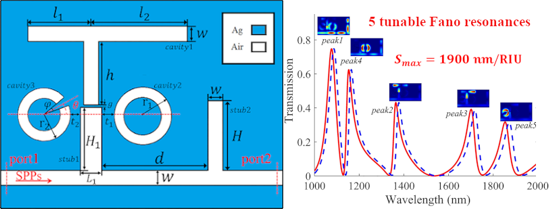
- light within sub-wavelength dimensions. Many plasmonic structures, such as high-sensitivity refractive index sensors [2], enhanced biochemical sensors [3], switches and filters [4], have been designed based on the concept of Fano resonance by utilizing a MDM waveguide [3][5][6]. Due to the interference
- difficulties in obtaining a highly independent tunability [24]. It is also a technical challenge to reduce the size of the structure while also guaranteeing high performance [15]. So far, there have been plenty of reports on dual/triple/quad Fano resonances for refractive index sensors on the basis of MDM
- performance. It is worth mentioning that the sensitivity, defined as S = Δλ/Δn, and figure of merit (FOM) are important parameters for sensors. Here Δn represents the variation of the refractive index in the surrounding environment and Δλ is the wavelength shift caused by the change of refractive index. The




Synthesis and acetone sensing properties of ZnFe2O4/rGO gas sensors
Beilstein J. Nanotechnol. 2019, 10, 2516–2526, doi:10.3762/bjnano.10.242
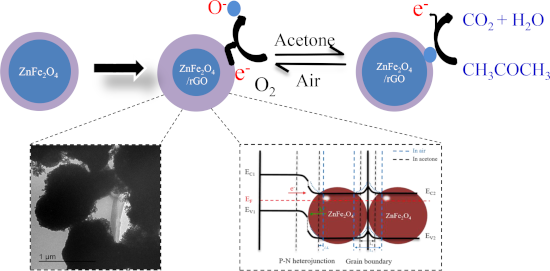
- , it may be possible to diagnose diabetes using a nondestructive testing technology based on sensing acetone. Thus, it is necessary to develop novel micro/nanomaterials, which can be applied as high-performance gas sensors to detect acetone at low concentration or to monitor variations of its
- concentration. Due to their excellent properties and cost efficiency, gas sensors based on metal oxide semiconductors, such as ZnO [5], SnO2 [6], WO3 [7], TiO2 [8], Er-SnO2 [9], Au-In2O3 [10], GO-WO3 [11] and Ni-SnO2/G [12] have been widely studied until now. However, their sensing properties regarding low
- effects in the heterostructures. This will enable corresponding gas sensors to accurately detect and monitor acetone vapor in real-time. In this view, compounding with certain organic or inorganic material could improve the gas sensing properties of ZnFe2O4 [18][19]. As a novel 2D carbon-based material




Evaluation of click chemistry microarrays for immunosensing of alpha-fetoprotein (AFP)
Beilstein J. Nanotechnol. 2019, 10, 2505–2515, doi:10.3762/bjnano.10.241
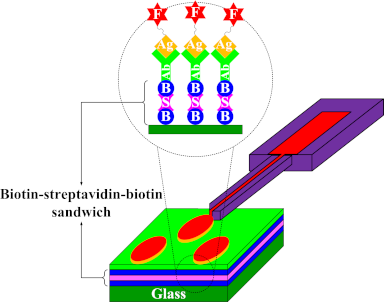
- implementation of a sensitive fluorescent immunosensor for the detection of AFP, which is used as a common cancer-related model protein. We compared the AFP microarray sensors resulting from six different fabrication routes based on different functionalization methods (DBCO-, thiol- and epoxy-termination) and
- corresponding microarray sensors. The sensitivity of the epoxy–amine-based array was evaluated to be 9.8 ± 2.9 µg/mL, providing a rapid and inexpensive screening sensor compared to the more sensitive, but also much more elaborate detection approaches. Moreover, the approach can be extended towards label-free
- chemistry in the building of highly sensitive protein detection sensors needed, for example, in cancer biomarker detection. Experimental Chemicals Table 1 lists the most important materials used in this study. All other materials were of analytical grade and were used as-received without extra purification


Multiple Fano resonances with flexible tunablity based on symmetry-breaking resonators
Beilstein J. Nanotechnol. 2019, 10, 2459–2467, doi:10.3762/bjnano.10.236
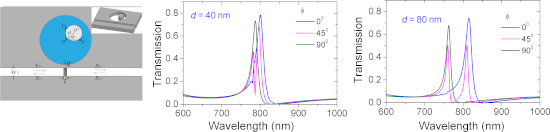
- discrete state and a continuum state [1][2]. Contrary to symmetric Lorentz line shapes, a Fano profile is sharp and asymmetric. Due to this unique line shape and the large induced field enhancements, Fano resonances can potentially applied in sensors [3][4], demultiplexers [5], lasers [6], filters [7], and

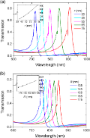


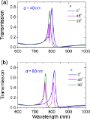
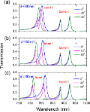
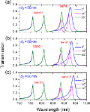

Deterministic placement of ultra-bright near-infrared color centers in arrays of silicon carbide micropillars
Beilstein J. Nanotechnol. 2019, 10, 2383–2395, doi:10.3762/bjnano.10.229
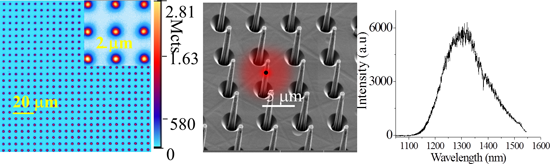
- -photon sources (SPSs) [7][8][9][10], nanoscale magnetic or electric fields sensors, and pressure or temperature sensors [3][11][12][13]. Electrically driven SPSs in SiC have been realized [14][15][16], and the coherent control of electron spin can be achieved up to 500 K [17]. SiC offers an alternative


Multiwalled carbon nanotube based aromatic volatile organic compound sensor: sensitivity enhancement through 1-hexadecanethiol functionalisation
Beilstein J. Nanotechnol. 2019, 10, 2364–2373, doi:10.3762/bjnano.10.227
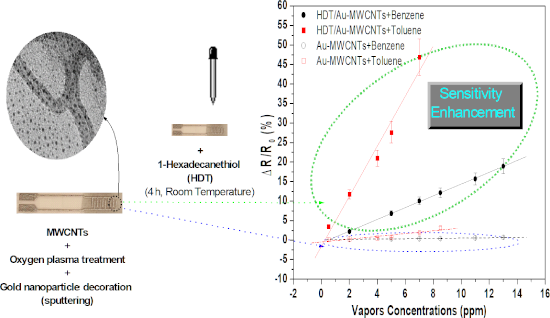
- Tunis University, ENSIT, Avenue Taha Hussein, Montfleury, 1008 Tunis, Tunisia MINOS-EMaS, Universitat Rovira i Virgili, Avda. Països Catalans, 26, 43007 Tarragona, Spain 10.3762/bjnano.10.227 Abstract Aromatic volatile organic compound (VOC) sensors are attracting growing interest as a response to the
- pressing market need for sensitive, fast response, low power consumption and stable sensors. Benzene and toluene detection is subject to several potential applications such as air monitoring in chemical industries or even biosensing of human breath. In this work, we report the fabrication of a room
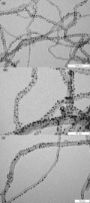
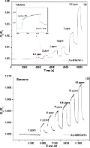
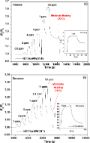
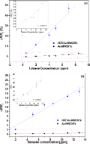
- spectroscopy (FTIR) were performed to characterize the gold nanoparticle decoration and to examine the thiol monolayer bonding to the MWCNTs. The detection of aromatic vapours using Au-MWCNT and HDT/Au-MWCNT sensors down to the ppm range shows that the presence of the self-assembled layer increases the