


Search results
Search for "topography" in Full Text gives 451 result(s) in Beilstein Journal of Nanotechnology. Showing first 200.
The structural and chemical basis of temporary adhesion in the sea star Asterina gibbosa
Beilstein J. Nanotechnol. 2018, 9, 2071–2086, doi:10.3762/bjnano.9.196
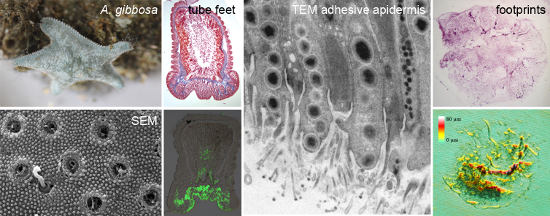
- homogenous granules. The footprints comprised a meshwork on top of a thin layer. This topography was consistently observed using various methods like scanning electron microscopy, 3D confocal interference microscopy, atomic force microscopy, and light microscopy with crystal violet staining. Additionally, we
- mannose in the secreted material. Conclusion: Despite the distant relationship between the two sea star species, the morphology of tube feet and topography of footprints in A. gibbosa shared many features with the previously described findings in A. rubens. These similarities might be due to the
- thin homogeneous film covering the substrate with a sponge-like meshwork on top [11][12][25][26]. This topography is not altered by the release of the de-adhesive substance [26]. In the forcipulatid sea star Asterias rubens, adhesive secretions were investigated in greater detail. In this species, the


Biomimetic and biodegradable cellulose acetate scaffolds loaded with dexamethasone for bone implants
Beilstein J. Nanotechnol. 2018, 9, 1986–1994, doi:10.3762/bjnano.9.189
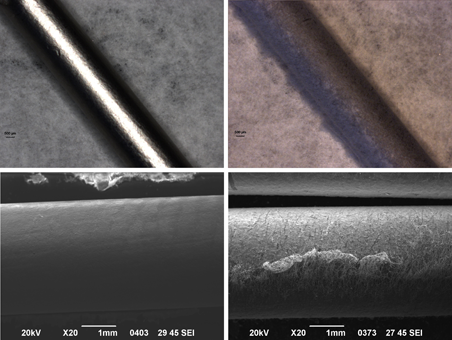
- nanoplatform might be a suitable and helpful candidate to reduce implant-associated acute inflammations and to impede implant failure. (a) Representative SEM micrographs of electrospun CA fibers, (b) AFM topography image of CA scaffolds with root mean square Sq = 135 nm and peak-to- peak Sy = 795 nm. In vitro
- , respectively. (a) Representative SEM micrograph of electrospun CA:dexam fibers, (b) AFM topography image of CA:dexam scaffolds with root mean square Sq = 206 nm and peak-to-peak Sy = 1203 nm. In vitro degradation of CA scaffolds loaded with dexamethasone as function of the time. Representative SEM micrographs


Know your full potential: Quantitative Kelvin probe force microscopy on nanoscale electrical devices
Beilstein J. Nanotechnol. 2018, 9, 1809–1819, doi:10.3762/bjnano.9.172
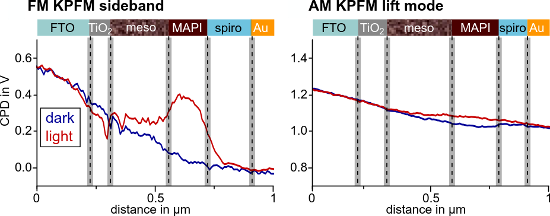
- surface potential measurements are crucial for understanding the operation principles of functional nanostructures in these electronic devices. Nevertheless, KPFM is prone to certain imaging artifacts, such as crosstalk from topography or stray electric fields. Here, we compare different amplitude
- detection. The SNR can be improved by choosing an ωE at one of the cantilever’s eigenmodes. We refer to this mode as AM-KPFM second eigenmode (AM 2 EM), where the topography is measured at the first, and the CPD is measured on the second eigenmode. Finally, in AM-KPFM lift mode (AM Lift mode) the topography
- cantilevers was ≈225 μm, the width ≈35 μm. Tip, tip cone and cantilever are coated with PtIr (work function 5.5 eV [39]) on both sides. The topography feedback was performed with amplitude modulation (AM) on the first eigenmode and the oscillation amplitude was kept to approximately 40 nm for all methods. To


Direct AFM-based nanoscale mapping and tomography of open-circuit voltages for photovoltaics
Beilstein J. Nanotechnol. 2018, 9, 1802–1808, doi:10.3762/bjnano.9.171
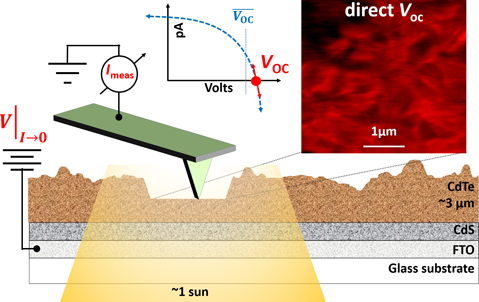
- underpins nearly all AFM topography imaging. Normally, this feedback loop continually updates the AFM probe height in order to maintain a constant AFM tip–sample interaction, which is sensed via the integrated cantilever deflection or amplitude that, of course, changes at surface protrusions or depressions
- . To simultaneously map VOC directly, the topography is tracked in the same manner, but a secondary PID loop is also configured to continually adjust the sample bias in order to maintain a photocurrent of zero. This is akin to Kelvin probe microscopy or scanning surface potential microscopy, in which a
- overlain images of Figure 2a–c, this reveals even more spatially localized variations in photovoltaic performance. As with every study based on scanning probes, it is important to consider any influence of topography on the results. The as-provided surface of the essentially commercial grade


Preparation of micro/nanopatterned gelatins crosslinked with genipin for biocompatible dental implants
Beilstein J. Nanotechnol. 2018, 9, 1735–1754, doi:10.3762/bjnano.9.165
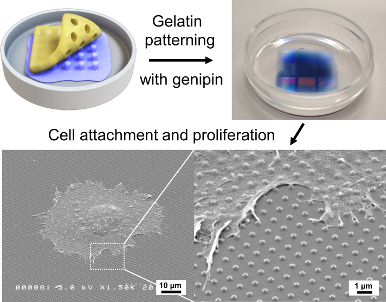
- : Collagen is a basic component of the periodontium and plays an important role in the function of the periodontal unit. Therefore, coating with collagen/gelatin has been applied to enable dental implants to positively interact with peri-implant tissues. Although the micro/nanoscale topography is an
- . Thus, gelatin surfaces patterned using genipin crosslinking are now an available option for biocompatible material patterning. Keywords: cell attachment; cell proliferation; dental implants; gelatin; genipin; nanopatterning; Introduction Topography on the micro- and nanoscale is an important property
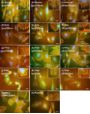
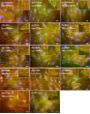
- after 4 days of culture [69]. These studies support the hypothesis that surface topography and chemical composition influence cell proliferation. Furthermore, the spatial arrangement of surface patterns with respect to cell size also appears to be important [59][67]. It has been shown that the amount of






Toward the use of CVD-grown MoS2 nanosheets as field-emission source
Beilstein J. Nanotechnol. 2018, 9, 1686–1694, doi:10.3762/bjnano.9.160
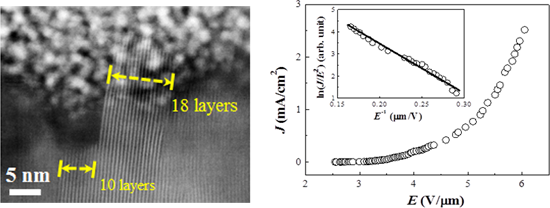
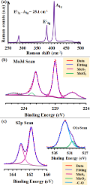
- energy-dispersive spectroscopy (EDS) detector) operating at 200 kV for imaging and elemental characterization. Roughness and topography of the as-grown MoS2 NSs (before transfer) were examined by atomic force microscope (AFM). The AFM scans were recorded in resonant mode (AppNanoTM made cantilever with



Friction force microscopy of tribochemistry and interfacial ageing for the SiOx/Si/Au system
Beilstein J. Nanotechnol. 2018, 9, 1647–1658, doi:10.3762/bjnano.9.157
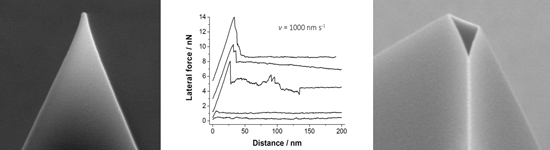
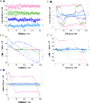
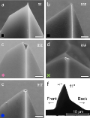
- scanning sequences (Figure 4), surface topography images recorded before and after the sliding sequences (Figure 5), and electron microscopy images of the tips before and after the experiments (Figure 6). In general, the onset of tip activation was evident by a sudden increase in friction (Figure 3a,b
- sliding distance with no material transferred to the tip (Figure 6c). Observing changes of the topography of the reactive Si(100) surface was not possible as the tip adhered strongly to the surface, leading to artifacts in the topography measurement (similar to Figure 5f). The initial friction between a
- friction of about 0.01 nN (blue dots in Figure 3a, section 1) and modification of surface topography by displacement of surface atoms (Figure 5i,j). To compare tribochemical reactions of SiOx/Si and Au/Si tips with the Au(111) surface, a sputter-cleaned Au/Si tip was activated by leaving it in stationary




Nanoscale electrochemical response of lithium-ion cathodes: a combined study using C-AFM and SIMS
Beilstein J. Nanotechnol. 2018, 9, 1623–1628, doi:10.3762/bjnano.9.154
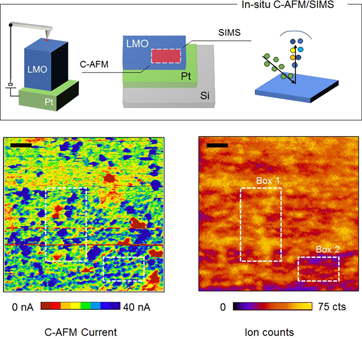
- apply always the bias to the sample (i.e., the metallic Ni/Pt layer) while the C-AFM tip is grounded. By measuring the current (using the tip as a nanoscale electrode) and the tip deflection as a function of the AFM tip position, two-dimensional maps of the local conductivity and the topography can be
- formed. For instance, Figure 1b shows the topography and current distribution map when performing such measurements in the case of the electrodeposited LMO. This basic concept was extended with the development of various scanning probe microscopy (SPM) techniques [8][9][10][11][12] dedicated to probe
- platform is key to unlock the potentials of ASB. C-AFM configuration and study of the influence of an applied voltage stress on MnO2 and LMO. (a) Schematic of the C-AFM setup and sample structure. The tip is grounded while the dc bias is applied to the sample. (b) Topography and current maps as collected


Evaluation of replicas manufactured in a 3D-printed nanoimprint unit
Beilstein J. Nanotechnol. 2018, 9, 1573–1581, doi:10.3762/bjnano.9.149
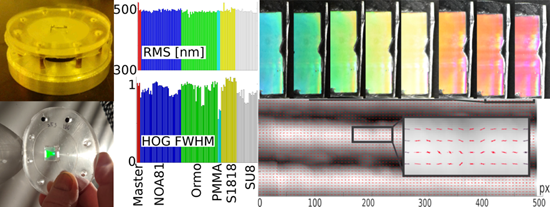
- account the 2D nature of the topography, 2D fast Fourier transform was applied on to obtain the spatial frequency. The pitch value is obtained from the inverse distance between the zeroth order and the first order of the FFT (actually the script takes the distance between the two first orders and divides
- maximum value. It gives an approximate idea of the image scale and is used for certain general calculations within the code. Angles: The saw-tooth pattern is characterized by its pitch and angles. The blazing angle, αblazing, determines the slope of the sawtooth and ultimately the sample topography. The
- image processing. First described a decade ago [11], it is usually employed to detect objects in images, especially pedestrians. Here we propose to apply HOG to quantify the amount of superficial errors of a given topography. The underlying concept is relatively simple: In the 2D mesh of the sample


Correlative electrochemical strain and scanning electron microscopy for local characterization of the solid state electrolyte Li1.3Al0.3Ti1.7(PO4)3
Beilstein J. Nanotechnol. 2018, 9, 1564–1572, doi:10.3762/bjnano.9.148
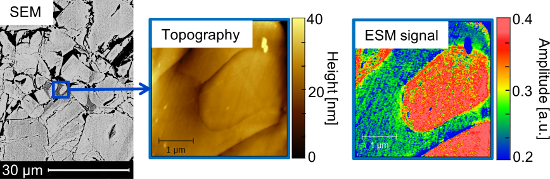
- ]. Information about the behavior of the material as a solid state electrolyte cannot be derived based on SEM and EDX mappings alone, hence we performed ESM. Figure 2 shows correlative images of SEM and AFM topography as well as ESM on identical regions of LATP sintered at 1050 °C. The SEM image (Figure 2a
- two different areas indicated by the blue (1) and red (2) markings in Figure 2a. In the topography images illustrated in Figure 2b,d, minor amounts of residue originating from the polishing procedure are observed in the form of elevated particles. Apart from this, the AFM images reflect the same
- surface features as observed by SEM, providing evidence that both methods can be applied complementary. The same pores as those observed via SEM can be found in the AFM topography image and the topography reveals some preferential etching at the grain boundaries and interfaces. Differentiation between the


Optical near-field mapping of plasmonic nanostructures prepared by nanosphere lithography
Beilstein J. Nanotechnol. 2018, 9, 1536–1543, doi:10.3762/bjnano.9.144
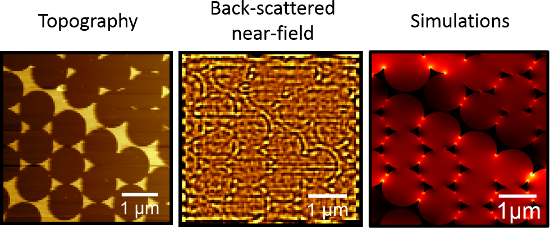
- nm) and two different polarizations. After the processing of the optical images, the distribution of hot spots can be correlated with the topography of the structures, as indicated by the presence of brighter spots at the apexes of the nanostructures. This technique is validated by comparison of the
- origins, such as topography effects [11], tip defects [12], or interferometric effects [11]. Consequently, the resulting high far-field background signal tends to overcast the near-field contribution of the signal. To address these drawbacks, several methods to enhance the near-field contribution have
- with noticeably reduced oscillations is obtained (Figure 2d). This filtered image better displays the near-field contribution of the optical signal. It can be used to directly map the hot spots and to correlate their spatial positions to the topography of the investigated structures. Figure 2d shows




Electrostatically actuated encased cantilevers
Beilstein J. Nanotechnol. 2018, 9, 1381–1389, doi:10.3762/bjnano.9.130
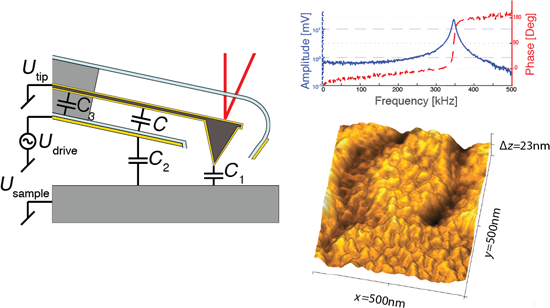
- experimentally determined amplitude can be expressed as = 101 pm V−2|Udc − UCPD|Uac. A comparison with modeled results is given in section Modeling. We demonstrate imaging capability in air using electrostatic excitation in Figure 3c. A 3D rendering of the recorded topography shows copper grains evaporated onto




Interplay between pairing and correlations in spin-polarized bound states
Beilstein J. Nanotechnol. 2018, 9, 1370–1380, doi:10.3762/bjnano.9.129
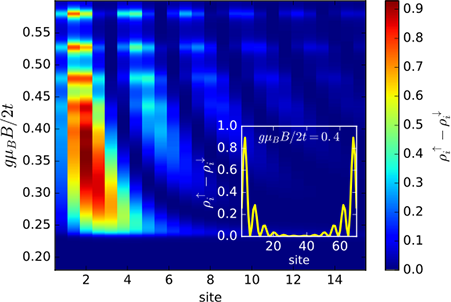
- ][13][14]. In-gap states (appearing in pairs symmetrically around the Fermi level) can be nowadays controlled electrostatically or magnetically [12] whereas their topography, spatial extent and polarization can be precisely inspected by the state-of-art tunneling measurements [15][16]. It has been


![[Graphic 23]](/bjnano/content/inline/2190-4286-9-129-i39.svg?max-width=637&scale=1.18182) obtained for |J| < Jc in the absence of spin–orbit coupling (le...
obtained for |J| < Jc in the absence of spin–orbit coupling (le...

![[Graphic 26]](/bjnano/content/inline/2190-4286-9-129-i42.svg?max-width=637&scale=1.18182) as a function of the r...
as a function of the r...


Formation mechanisms of boron oxide films fabricated by large-area electron beam-induced deposition of trimethyl borate
Beilstein J. Nanotechnol. 2018, 9, 1282–1287, doi:10.3762/bjnano.9.120
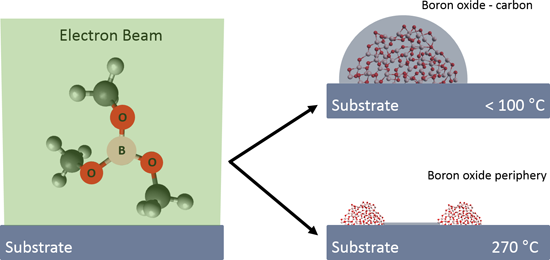
- . The surface topography of the resulting deposits was measured by a Keyence VK-X100 laser scanning confocal microscope [23] (LCSM, specified height measurement resolution of 5 nm and measurement repeatability of 0.02 μm) and analyzed using the VK Analyzer software package (version 3.3.0.0). The



Artifacts in time-resolved Kelvin probe force microscopy
Beilstein J. Nanotechnol. 2018, 9, 1272–1281, doi:10.3762/bjnano.9.119
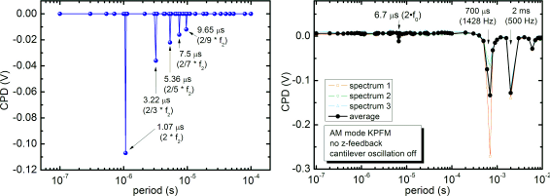
- that corresponds to the contact potential difference (CPD). The topography control (z feedback) was normally realized on the fundamental resonance of the cantilever. However, in some experiments the z feedback and the cantilever oscillation were switched off during the pulse sequences and the tip was
- retracted 50 nm. Control experiments with different tip retractions between 10 and 50 nm showed no dependence of the results on the tip retraction. To allow Kelvin control on the fundamental resonance frequency (by applying the Kelvin ac voltage at f0) the topography control was applied on the second


Heterostuctures of 4-(chloromethyl)phenyltrichlorosilane and 5,10,15,20-tetra(4-pyridyl)-21H,23H-porphine prepared on Si(111) using particle lithography: Nanoscale characterization of the main steps of nanopatterning
Beilstein J. Nanotechnol. 2018, 9, 1211–1219, doi:10.3762/bjnano.9.112
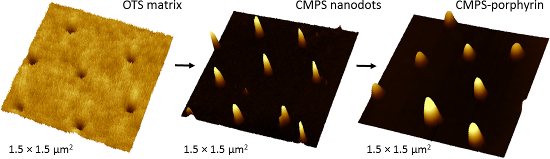
- Figure 3a. The bright spots in Figure 3a are taller than the surrounding OTS matrix. There are about 35 CMPS nanodots visible in the 3 × 3 µm2 topography image in Figure 3a, which matches the surface density of OTS nanoholes. A ball-and-stick model of a CMPS molecule indicates a length of 0.75 nm in
- Figure 3b [38]. A close-up view of three nanodots are shown in zoom-in topography and phase images in Figures 3c and 3d. The heights and sizes of the nanodots are quite similar, without nonspecific attachment of contaminants in surrounding areas of the OTS resist film. There is a dark outline surrounding
- the nanodots that is apparent in the phase image (Figure 3d) which is attributable to differences in tip–surface response at the edges of the features versus the center areas of the nanostructures. The cursor profile in Figure 3e profiles the topography of two individual CMPS nanostructures that are


Electrostatic force spectroscopy revealing the degree of reduction of individual graphene oxide sheets
Beilstein J. Nanotechnol. 2018, 9, 1146–1155, doi:10.3762/bjnano.9.106
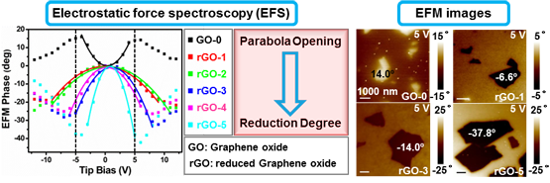
- transparency injury in sample 2 caused by high temperature (450 °C) and oxidation in the atmosphere, no other differences amongst samples 1–5 were observed. In addition, the increased apparent height in the SPFM images compared with the height in the topography images (Figure 1d–n) indicates that the GO sheets
- information (blue arrows marked in Figure 1i,k), indicating the contributions from the polarization force (dielectric properties) and the van der Waals force (topography) between the tip and sample. As we can see in the Figure 1l,m,n, the apparent height of samples 1 and 5 are 19.3 nm (Figure 1n) and 6.9 nm
- of proportionality. The contrast between the phase shifts of probe imaging on mica and sample n can be expressed as: In EFM imaging, the lift mode is used. Topography data recorded during the main pass is used to keep the tip at a constant distance from the surface (lift scan height was 15 nm here


Imaging of viscoelastic soft matter with small indentation using higher eigenmodes in single-eigenmode amplitude-modulation atomic force microscopy
Beilstein J. Nanotechnol. 2018, 9, 1116–1122, doi:10.3762/bjnano.9.103
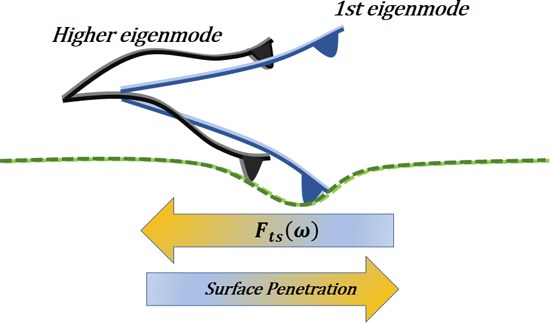
- [4], the first eigenmode of the cantilever is excited using the AM-AFM method and used for measuring topography, while a higher eigenmode (generally the second eigenmode) is simultaneously excited in “open loop” (with constant drive amplitude and frequency) to map the surface properties of the
- . Polystyrene thin-film topography images for AM-AFM using the fundamental eigenmode (a), AM-AFM using the second eigenmode (b), and bimodal AFM using the first two eigenmodes (c); (d) shows the scan line profiles, whereby the color code on the graph is based on the dashed lines in the images. The inset graph
- is the enlarged graph of a portion of the topography in order to show the differences in topography values among the three different experiments. f1 ≈ 45 kHz, f2 ≈ 280 kHz, k1 ≈ 5.80 N/m, k2 ≈ 210 N/m, A1 ≈ 350 nm, A2 ≈ 11 nm, amplitude setpoint (on the controlled amplitude) = 50%. For all the


Magnetic characterization of cobalt nanowires and square nanorings fabricated by focused electron beam induced deposition
Beilstein J. Nanotechnol. 2018, 9, 1040–1049, doi:10.3762/bjnano.9.97
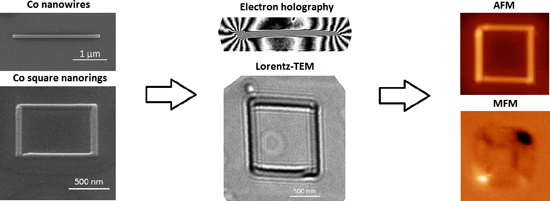
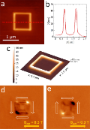
- state is higher than that applied during horseshoe state observation. In order to validate the L-TEM results obtained at remanence and to measure the three-dimensional (3D) topography of the sample, additional analyses were carried out using AFM and MFM. A square nanoring was deposited at 5 keV on a Si
- substrate for MFM analysis. An AFM topography image is shown in Figure 4a, while a height profile taken across the middle of the nanoring is shown in Figure 4b. Both sides have a thickness of ca. 40 nm, a length of 1 μm and a width of ca. 100 nm. A topographic map of the same area is shown in Figure 4c. In
Electro-optical interfacial effects on a graphene/π-conjugated organic semiconductor hybrid system
Beilstein J. Nanotechnol. 2018, 9, 963–974, doi:10.3762/bjnano.9.90
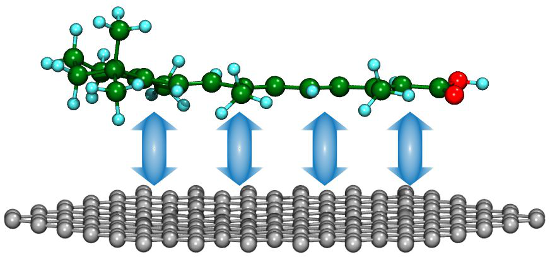
- the same region of a hybrid sample in dark and illuminated conditions, respectively (see Figures S4 and S5 for a topographic AFM image of this region and line profiles (topography and surface potential) extracted near the central region of the images, respectively, Supporting Information File 1). In




Nanoscale mapping of dielectric properties based on surface adhesion force measurements
Beilstein J. Nanotechnol. 2018, 9, 900–906, doi:10.3762/bjnano.9.84
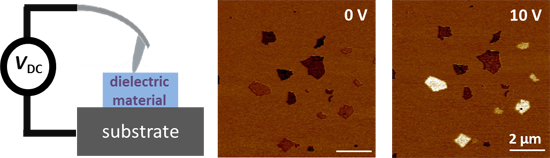
- , the newly-developed PF-QNM mode of AFM made it possible to simultaneously map the adhesion property as well as topography of the sample with high spatial resolution. In PF-QNM mode, force–distance curves between the AFM tip and the sample are measured at each pixel, so the force where the tip finally


Towards the third dimension in direct electron beam writing of silver
Beilstein J. Nanotechnol. 2018, 9, 842–849, doi:10.3762/bjnano.9.78
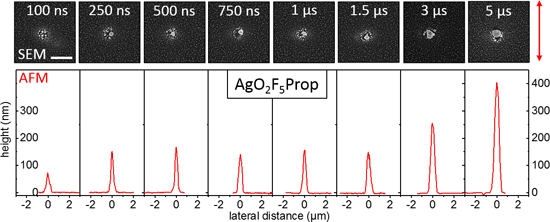
- a reference silver layer. The quantified carbon background of ca. 15 atom % was subtracted to determine the actual deposit composition. The topography of the deposits was monitored using atomic force microscopy (AFM) with an AIST Smart SPM system. Data processing was carried out using the free
- AgO2F5Prop. The red arrow on the right side depicts the direction in which the AFM profiles were taken. This was chosen such, that deposit deformations due to stage drift and beam blanker velocity do not influence the displayed topography below. The AFM profiles are the result of averaging over seven


Synthesis and characterization of two new TiO2-containing benzothiazole-based imine composites for organic device applications
Beilstein J. Nanotechnol. 2018, 9, 721–739, doi:10.3762/bjnano.9.67
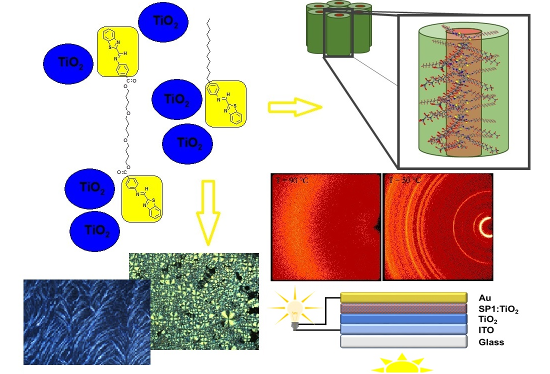
- out to be too rough to be measured with AFM, these samples were prepared with the spin coating technique (1000 rpm, 40 s). As one can see in Figure 10a, the topography of pure SP2 imine and SP2:TiO2 composites in each case reveals quite large crystallites randomly distributed on the glass surface, and
- Jeol ECZ-400 S spectrometer (1H - 400 MHz) with a delay time of 5 s. The measurements were carried out at room temperature on 10–15% (w/v) sample solutions. UV–vis spectra of SP1–SP2 compounds in a chloroform solution were recorded on a Jasco V670 spectrophotometer. AFM imaging of sample topography was
- measured at room temperature with the Agilent 5500 microscope working in non-contact mode. The setpoint and gains were adjusted to each measurement to obtain a clear image without noise. For each sample, topography images were collected at several randomly chosen areas. As described in [52






Combined pulsed laser deposition and non-contact atomic force microscopy system for studies of insulator metal oxide thin films
Beilstein J. Nanotechnol. 2018, 9, 686–692, doi:10.3762/bjnano.9.63
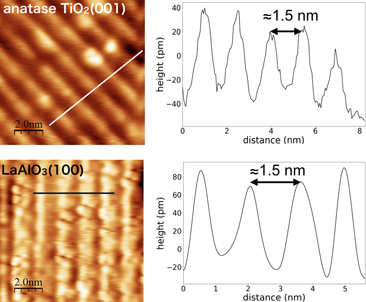
- deposition, a deposited sample was taken out into the ambient atmosphere and its topography was measured with a tapping AFM in air. Although it is difficult to obtain atomic resolution images in tapping mode, the larger scanning area of tapping AFM enabled us to check whether a step-and-terrace surface was


Optimisation of purification techniques for the preparation of large-volume aqueous solar nanoparticle inks for organic photovoltaics
Beilstein J. Nanotechnol. 2018, 9, 649–659, doi:10.3762/bjnano.9.60
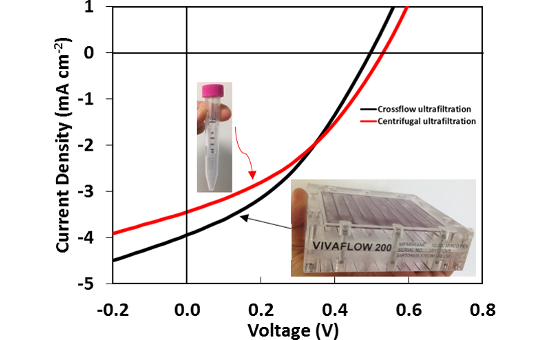
- concentration on the aqueous solar nanoparticle (ASNP) inks was investigated by monitoring the surface morphology/topography of the ASNP films using atomic force microscopy (AFM) and scanning electron microscopy (SEM) and photovoltaic device performance as a function of ultrafiltration (decreasing SDS content
- ). The surface morphology/topography showed, as expected, a decreased number of SDS crystallites on the surface of the ASNP film with increased ultrafiltration steps. The device performance revealed distinct peaks in efficiency with ultrafiltration: centrifuge purified inks reached a maximum efficiency
- reached was 64 and 50 mN m−1 for the centrifugal and the crossflow purifications, respectively. Influence of free-SDS surfactant on the surface morphology/topography of ASNP films Optical microscopy and atomic force microscopy (AFM) were conducted for ASNP films with low, medium and high dilution factors





