


Search results
Search for "van der Waals" in Full Text gives 369 result(s) in Beilstein Journal of Nanotechnology. Showing first 200.
The effect of atmospheric doping on pressure-dependent Raman scattering in supported graphene
Beilstein J. Nanotechnol. 2018, 9, 704–710, doi:10.3762/bjnano.9.65
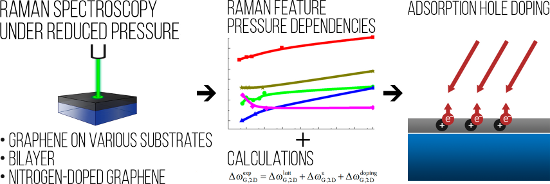
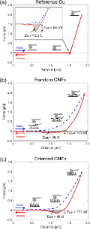
- plots. This observation can be explained by substrate-induced strain in as-grown graphene (leading to greater overall peak positions [14]): The van der Waals graphene–substrate interaction model may not be fully applicable for this case due to the possibility of chemical bonds present between graphene
- close to the case of graphene transferred to Cu. Being a van der Waals structure on the scale of adsorption effects (in terms of interlayer bonding), bilayer graphene is known to have a slightly greater energy barrier for the adsorption process [26]. However, adsorption in this case can also lead to at


Tuning adhesion forces between functionalized gold colloidal nanoparticles and silicon AFM tips: role of ligands and capillary forces
Beilstein J. Nanotechnol. 2018, 9, 660–670, doi:10.3762/bjnano.9.61
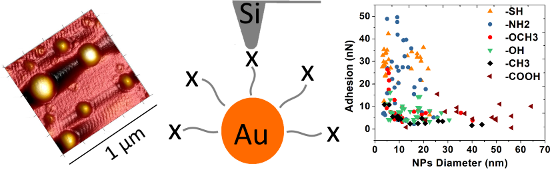
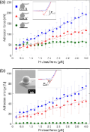
- NPs and silicon tip depending on the nature of the tail functional group. The dependence of the adhesion on ligand density for different thiols with identical functional tail-group was also demonstrated. The calculated contribution of the van der Waals (vdW) forces between particles was in good


Facile phase transfer of gold nanorods and nanospheres stabilized with block copolymers
Beilstein J. Nanotechnol. 2018, 9, 616–627, doi:10.3762/bjnano.9.58
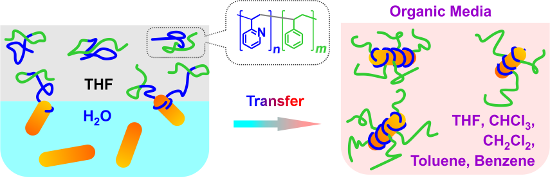
- due to van der Waals interactions, so their stabilization requires the use of bulky surfactant molecules [24][25][26] or polymers with a strongly binding groups via grafting-to [27][28], grafting-from [4] and grafting-around [29] approaches, hyperbranched polymers [30] or polymers with a significant


Sensing behavior of flower-shaped MoS2 nanoflakes: case study with methanol and xylene
Beilstein J. Nanotechnol. 2018, 9, 608–615, doi:10.3762/bjnano.9.57
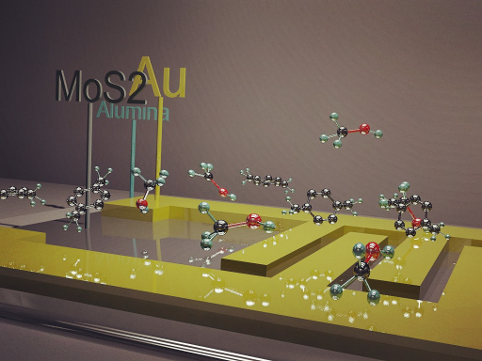
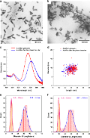
- method was used to model the van der Waals interactions that may occur in the simulation. All calculations are performed using the well-known siesta package [33][34]. Results and Discussion The crystalline structure and phase purity of the dried black MoS2 powder were investigated using XRD. As
- electron-donor gas molecules. This increment in the electron carrier concentration can reduce the resistivity of the device. When the gas leaves the chamber, the molecules which transfer the charge from weak van der Waals interaction leave the MoS2 layer and the concentration of the carrier reduces, hence
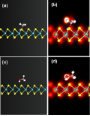
- differences, we performed a simulation study on the pristine monolayer and similar surface with sulfur vacancy of MoS2 in the presence of xylene and methanol molecules. Xylene shows almost no interaction with pristine MoS2 while a van der Waals interaction happens in the case of sulfur vacancy, which leads to


Single-step process to improve the mechanical properties of carbon nanotube yarn
Beilstein J. Nanotechnol. 2018, 9, 545–554, doi:10.3762/bjnano.9.52
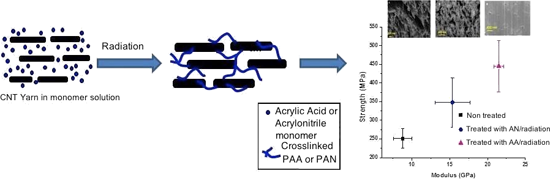
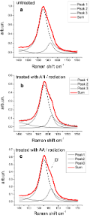
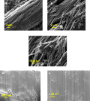
- ). The CNT yarn treated with AN and irradiation showed a rougher surface. The CNT yarn treated with AA exhibited a smoother appearance but wavy extensions protrude from the surface as shown in Figure 6. This is probably related to hydrophobic interactions, van der Waals and capillary force interactions
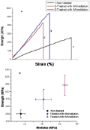
- between the aligned MWCNTs. The main force that keeps them together is van der Waals forces, which is a weak force. On the other hand, the FIB image of the PAN sample (Figure 5d,e) shows a higher density than untreated yarn (Figure 4c,d), which may be attributed to simultaneous grafting and crosslinking




Engineering of oriented carbon nanotubes in composite materials
Beilstein J. Nanotechnol. 2018, 9, 415–435, doi:10.3762/bjnano.9.41
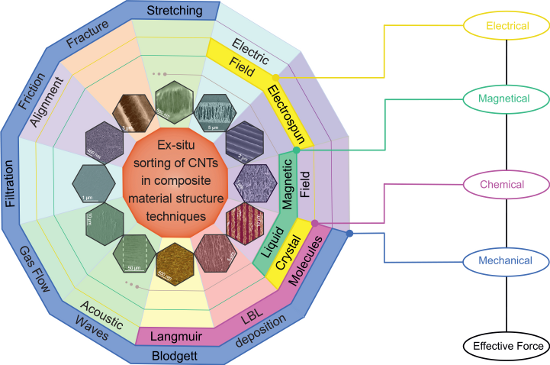
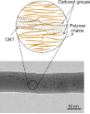
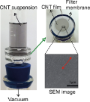
- bonds and hydrophobic interactions and the positively charged PDDA bonds with the PSS/MWCNT layer via electrostatic and van der Waals forces. This scheme is illustrated in Figure 12. Inert gas flow In this method, the CNTs are arranged by flowing a gas along the substrate. The CNT suspension is
- , van der Waals) also plays a decisive role to enhance the uniformity of the CNT dispersion into the polymer matrix [136]. Therefore, to obtain the desired properties of CNT/polymer composites, such as the thermal, mechanical and electrical properties [8][10][137], the characterization of surface








Review: Electrostatically actuated nanobeam-based nanoelectromechanical switches – materials solutions and operational conditions
Beilstein J. Nanotechnol. 2018, 9, 271–300, doi:10.3762/bjnano.9.29
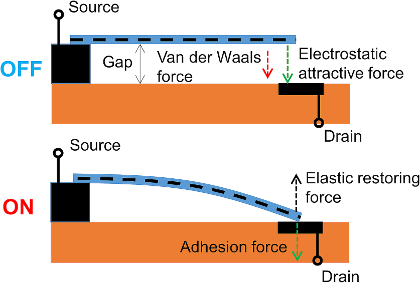
- thousand times larger than forces that are proportional to volume, making inertial forces negligible. At the nanoscale, van der Waals, capillary and electrostatic forces become the governing factors. It is important to note, that with the decrease of the size scale, breakdown of the predictions of
- attractive (van der Waals (FvdW) and electrostatic (Felec)) and repulsive elastic (Felas) forces acting on a movable switching element in single (Figure 1a) or double-clamped (Figure 1c) position, and initially separated from the contact electrode by a distance z. The operation principle of a NEM switch can
- the van der Waals (vdW) energy, Eelas is the elastic energy and Eelec is the electrostatic energy. An example of potential energy diagrams for the switching element–electrode interactions is shown in Figure 2a [13]. At low or no electrostatic field applied between the switching element and electrode


Gas-sensing behaviour of ZnO/diamond nanostructures
Beilstein J. Nanotechnol. 2018, 9, 22–29, doi:10.3762/bjnano.9.4
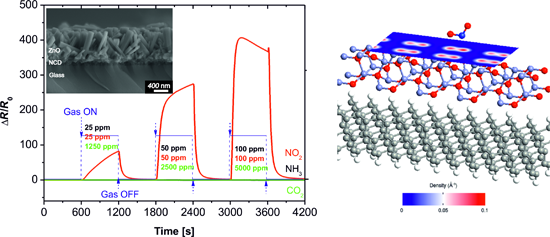
- of X- and Z-axis and the electrostatic stability of the ZnO surface. Moreover, it should be pointed out that the structure was simulated without molecular mechanical calculations. It was found that the NO2 molecule is non-covalently bonded to the metal oxide surface atoms and van der Waals forces
- occur between gas molecule and ZnO surface [40]. Therefore, the distance between NO2 molecule and ZnO layer is set according to the van der Waals radius of the respective atoms. The same approach was applied to the ZnO/diamond interlayer distance. The double-zeta polarized basis set was used for all


The rational design of a Au(I) precursor for focused electron beam induced deposition
Beilstein J. Nanotechnol. 2017, 8, 2753–2765, doi:10.3762/bjnano.8.274
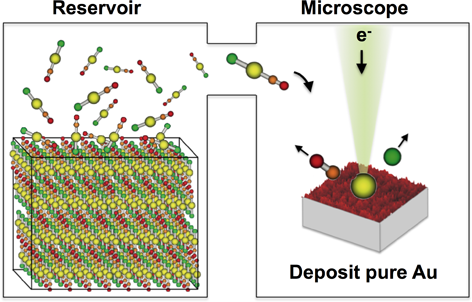
- considered to interact when the Au–Au distance is shorter than 3.7 Å, i.e., twice the van der Waals radius for Au. The aurophilic bond generally displays lengths of circa 3.0–3.4 Å and bond strengths of circa 7–12 kcal/mol [65]. Relativistic effects amount to 28% of the binding energy and originate almost


Dry adhesives from carbon nanofibers grown in an open ethanol flame
Beilstein J. Nanotechnol. 2017, 8, 2719–2728, doi:10.3762/bjnano.8.271
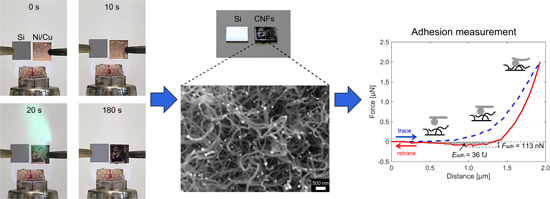
- nearly every surface and adhere to it due to van der Waals forces, allowing the gecko to stick and climb nearly every surface [19][20][21]. Mimicking these nanostructures can lead to high performance dry adhesives with a great range of possible applications in attachment systems of climbing robots [22


Interface conditions of roughness-induced superoleophilic and superoleophobic surfaces immersed in hexadecane and ethylene glycol
Beilstein J. Nanotechnol. 2017, 8, 2504–2514, doi:10.3762/bjnano.8.250
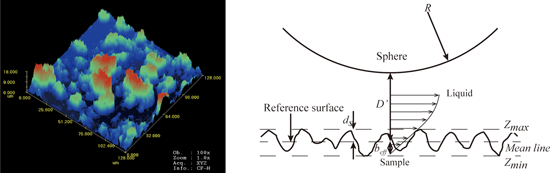
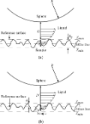
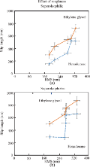
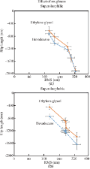
- colloidal AFM tip. Then the probe was driven towards the surface immersed in liquid at a certain driving velocity. By analyzing the force exerted on the probe, which mainly includes hydrodynamic forces, electrostatic forces, van der Waals force and Stokes force, the boundary slip can be calculated [12][18





Adsorption of iron tetraphenylporphyrin on (111) surfaces of coinage metals: a density functional theory study
Beilstein J. Nanotechnol. 2017, 8, 2484–2491, doi:10.3762/bjnano.8.248
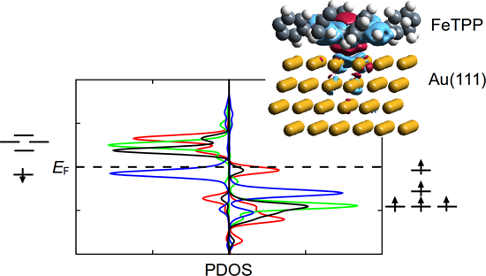
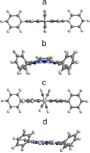
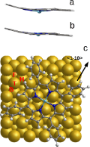
- The adsorption of the iron tetraphenylporphyrin (FeTPP) molecule in its deckchair conformation was investigated on Au(111), Ag(111) and Cu(111) surfaces by performing spin-polarized density functional theory (DFT) calculations taking into account both van der Waals (vdW) interaction and on-site
- gradient approximation [33][34] were employed. The van der Waals dispersive interaction correction according to Grimme's DFT-D2 method [35] was considered for inter- and intra-molecular interactions as well as molecule–surface interactions. The C6 parameter was optimized in a model system on Au(111) in




Involvement of two uptake mechanisms of gold and iron oxide nanoparticles in a co-exposure scenario using mouse macrophages
Beilstein J. Nanotechnol. 2017, 8, 2396–2409, doi:10.3762/bjnano.8.239
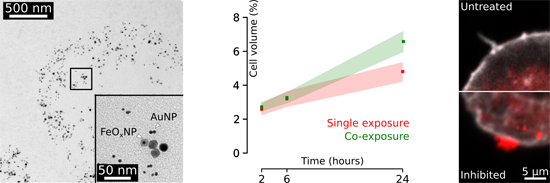
- ]. Therefore, the occurrence of NP diffusion through pores in the membrane as well as passive uptake by van der Waals or steric interactions (subsumed as adhesive interactions) [25] cannot be excluded. The majority of uptake studies were conducted with one defined NP type only. However, since humans are more



Optical contrast and refractive index of natural van der Waals heterostructure nanosheets of franckeite
Beilstein J. Nanotechnol. 2017, 8, 2357–2362, doi:10.3762/bjnano.8.235
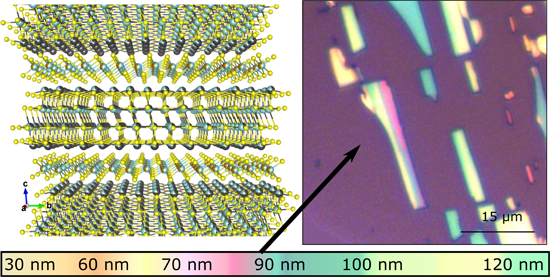
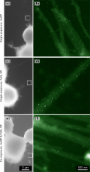
- visible spectrum through a fit of the acquired spectra to a model based on the Fresnel law. Keywords: complex refractive index; franckeite; optical contrast; optical identification; van der Waals heterostructure; Introduction Mechanical exfoliation is a very powerful technique to produce a large variety
- is one of the few known examples of a naturally occurring van der Waals heterostructure (another example of these materials is the cylindrite [19], see Supporting Information File 1). Unlike most of the studied heterostructures (that are manually assembled layer-by-layer) franckeite, in its natural
- form, presents alternating SnS2-like and PbS-like layers stacked on top of each other (Figure 1), overcoming the major drawbacks of synthetic van der Waals heterostructures: the difficulty to align the crystal lattices of the different materials with atomic accuracy and the presence of ambient


Material property analytical relations for the case of an AFM probe tapping a viscoelastic surface containing multiple characteristic times
Beilstein J. Nanotechnol. 2017, 8, 2230–2244, doi:10.3762/bjnano.8.223
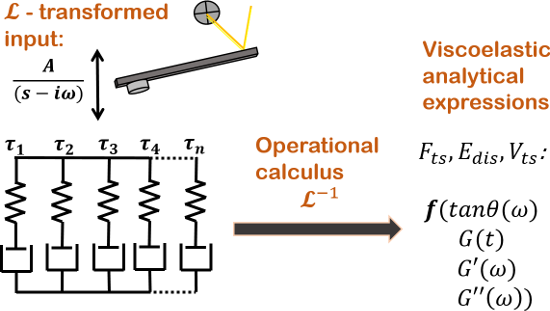
- excitation suddenly imposed during the impact. The third term is the relaxation modulus, and the fourth term is the adhesive portion of the van der Waals (vdW) interaction, in which HA is the Hamaker constant, R is the radius of the cylindrical punch, and a0 is the interatomic distance (ca. 0.2 nm) [39]. In
- method [39]. Here the total attractive van der Waals potential (EvdW) was calculated for the specific case of a flat-end cylindrical punch interacting with a flat semi-infinite half-space, and subsequently the interaction force was obtained through differentiation: For the adhesion portion during


Preparation and characterization of polycarbonate/multiwalled carbon nanotube nanocomposites
Beilstein J. Nanotechnol. 2017, 8, 2026–2031, doi:10.3762/bjnano.8.203
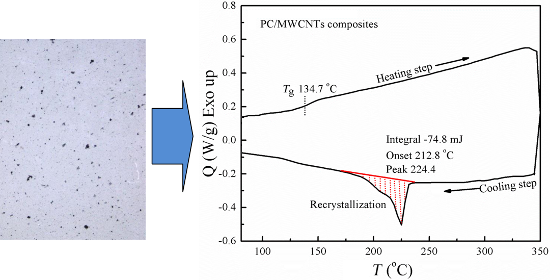
- used p-xylene and dichloromethane solvent to mix MWCNTs and prevent their agglomeration induced by strong van der Waals forces. Previous work carried out on PC/MWCNT composites with focus on the mechanical properties showed an increase in the storage modulus obtained from indentation measurements at
- solvent helps to overcome the van der Waals interaction in the nanotubes, eventually leading to better dispersion. Figure 3 shows the normalized FTIR absorption spectra of principal absorbance bands of the investigated PC/MWCNT nanocomposite films. FTIR spectroscopy demonstrated to be a useful tool to


A systematic study of the controlled generation of crystalline iron oxide nanoparticles on graphene using a chemical etching process
Beilstein J. Nanotechnol. 2017, 8, 2017–2025, doi:10.3762/bjnano.8.202
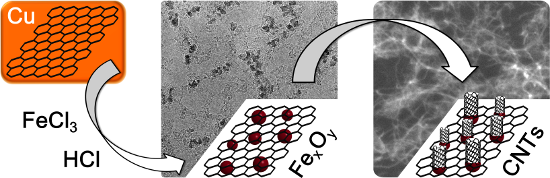
- dense growth of CNTs, yet random areas of VACNTs still exist under these growth conditions (Figure S8, Supporting Information File 1). We speculate that in areas where VACNT growth occurs, the catalyst particle size and density are in the range that a dense growth, supported by van der Waals


Advances and challenges in the field of plasma polymer nanoparticles
Beilstein J. Nanotechnol. 2017, 8, 2002–2014, doi:10.3762/bjnano.8.200
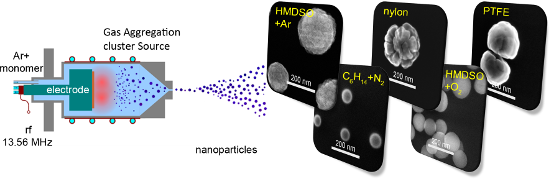
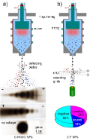
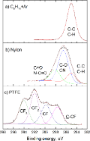
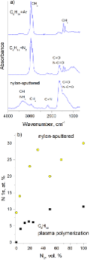
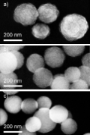
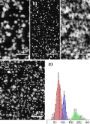
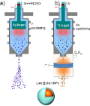
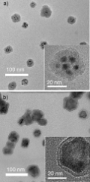
- situation is related to the weak van der Waals forces acting between NPs and substrate so that a NP layer can be easily destroyed by a tiny mechanical impact. This drawback can be overcome by depositing a capping layer that should be sufficiently robust to fix the NPs on the surface yet sufficiently thin so






Imidazolium-based ionic liquids used as additives in the nanolubrication of silicon surfaces
Beilstein J. Nanotechnol. 2017, 8, 1961–1971, doi:10.3762/bjnano.8.197
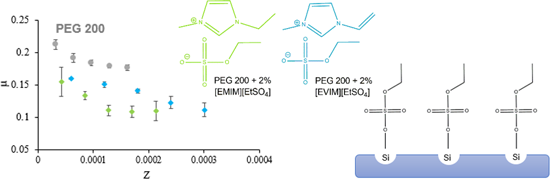
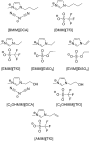
- substrate. Enhanced interactions between the cation and or the anion and the hydrophilic silicon substrate, due to van der Waals forces (long side chains), hydrogen bonding (ethanol functional groups) and, more importantly, chemical bonding involving the hydrophilic sulfate and Si, promote the formation of



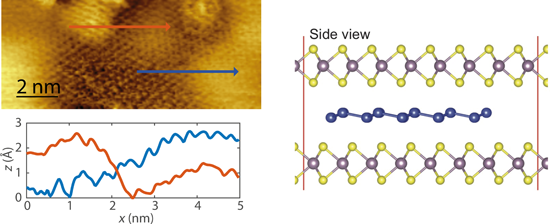
Intercalation of Si between MoS2 layers
Beilstein J. Nanotechnol. 2017, 8, 1952–1960, doi:10.3762/bjnano.8.196
- of silicon was also demonstrated on graphite, a van der Waals material, with the idea to suppress the interaction with the substrate and as such to preserve the Dirac properties [22]. Unfortunately, graphite is metallic, which could also affect the electronic bands of silicene in the vicinity of the
- Fermi level. Van der Waals materials with a band gap do not suffer from this limitation. Molybdenum disulfide (MoS2) is a member of the transition metal dichalcogenide (TMD) family that belongs to the class of van der Waals materials. Bulk MoS2 has a band gap of 1.29 eV, which increases to 1.90 eV for a
- semi-local functionals, such as GGA, fail to describe weakly interacting systems, we also take into account the van der Waals interaction [39][40]. Brillouin-zone integrations for structure relaxations are approximated by using the special k-point sampling of the Monkhorst–Pack scheme with a Γ-centered


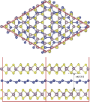
α-Silicene as oxidation-resistant ultra-thin coating material
Beilstein J. Nanotechnol. 2017, 8, 1808–1814, doi:10.3762/bjnano.8.182
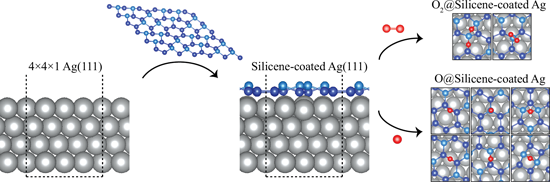
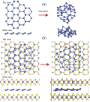
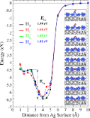
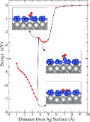
- generalized gradient approximation of the Perdew–Burke–Ernzerhof (GGA-PBE) [26] functional was used in conjunction with a semi-empirical scheme for including van der Waals (vdW) interaction dispersive forces developed by Grimme [27]. The structural relaxations were performed with a plane wave cut-off energy


Non-intuitive clustering of 9,10-phenanthrenequinone on Au(111)
Beilstein J. Nanotechnol. 2017, 8, 1801–1807, doi:10.3762/bjnano.8.181
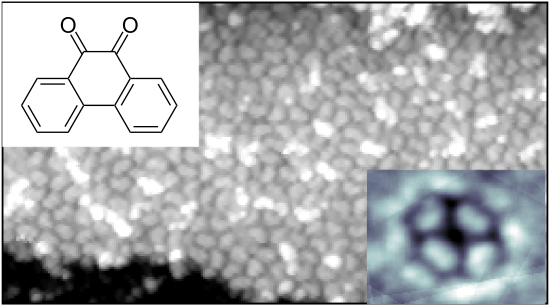
- in dipole–dipole interactions being overwhelmed by stronger intermolecular interactions (i.e., van der Waals forces and hydrogen bonding) during growth processes [32][33][34][35]. However, the arrangement of molecules in the tetramer does not allow for half of the carbonyl groups present to form C–H


Adsorption and diffusion characteristics of lithium on hydrogenated α- and β-silicene
Beilstein J. Nanotechnol. 2017, 8, 1742–1748, doi:10.3762/bjnano.8.175
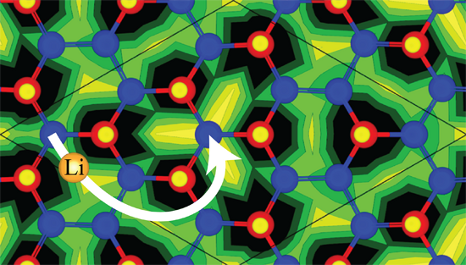
- calculations. The van der Waals (vdW) correction to the GGA functional was included by using the DFT-D2 method of Grimme [50]. To properly simulate the structures, a 3×3-reconstructed hydrogenated silicene phase was placed on top of a 4×4 supercell of a two-layer Ag(111) surface. A 3×3×1 Γ-centered k-point


Group-13 and group-15 doping of germanane
Beilstein J. Nanotechnol. 2017, 8, 1642–1648, doi:10.3762/bjnano.8.164
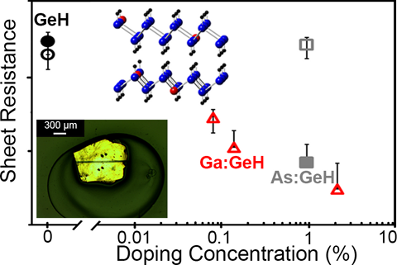
- layered van der Waals materials [20][21][22]. Germanane, a hydrogen-terminated graphane analogue of germanium, has garnered considerable attention in the field of 2D materials on account of its direct band gap [5][23][24], large predicted electron mobility, and the ability to controllably tune the


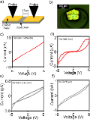

Two-dimensional carbon-based nanocomposites for photocatalytic energy generation and environmental remediation applications
Beilstein J. Nanotechnol. 2017, 8, 1571–1600, doi:10.3762/bjnano.8.159
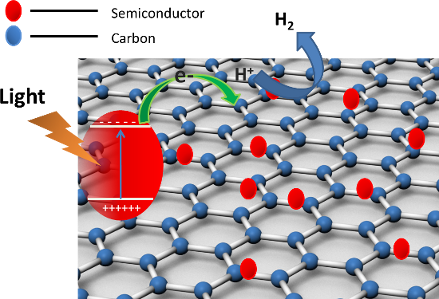
- properties with unsaturated N-atoms for anchoring active sites [69]. Furthermore, the stacked 2D layered structure of g-C3N4 consists of single-layer nitrogen heteroatom-substituted graphite nanosheets, formed through sp2 hybridization of C and N atoms, and various layers are bound together by van der Waals





