


Search results
Search for "zinc" in Full Text gives 265 result(s) in Beilstein Journal of Nanotechnology. Showing first 200.
Role of RGO support and irradiation source on the photocatalytic activity of CdS–ZnO semiconductor nanostructures
Beilstein J. Nanotechnol. 2016, 7, 1684–1697, doi:10.3762/bjnano.7.161
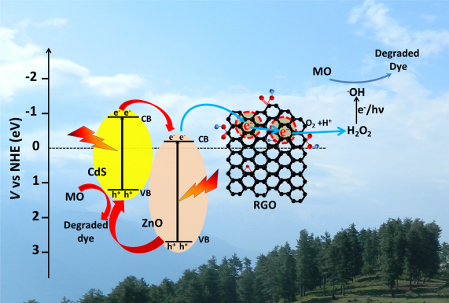
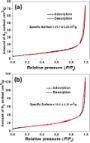
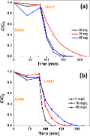
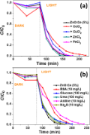
- longer electron life time than TiO2 [14][15][16]. Zinc oxide is a well-known semiconductor with a band gap energy of 3.37 eV and has been widely explored as photocatalytic material due to its non-toxic nature, high exciton binding energy (60 meV), photosensitivity and stability on exposure to high energy
- permanganate (KMnO4) and hydrogen peroxide (H2O2) were purchased from Merck. Zinc chloride (ZnCl2), sodium hydroxide (NaOH), cadmium acetate dihydrate (Cd(OOCCH3)2·2H2O), sodium sulfide (Na2S), ammonia solution and methyl orange were also supplied by Merck. Polyvinyl pyrrolidone (PVP) used in synthesis was
- by vacuum drying overnight at same temperature. Synthesis of ZnO nanorods ZnO nanorods (NR) were synthesized through a previously reported solvothermal method [37]. In brief, 10 mL of 0.2 M zinc chloride (ZnCl2) solution in ethanol was added into 70 mL of 0.5 M sodium hydroxide (NaOH) solution





Sb2S3 grown by ultrasonic spray pyrolysis and its application in a hybrid solar cell
Beilstein J. Nanotechnol. 2016, 7, 1662–1673, doi:10.3762/bjnano.7.158
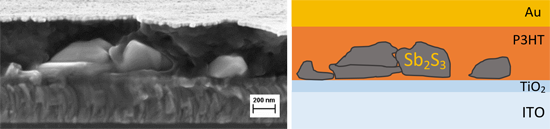
- temperature of 255 °C leads to films that consist of orthorhombic stibnite and a secondary phase that was identified as Sb2O3 [23]. To suppress the formation of oxides, an excess of sulfur source in the precursor solution may be required as indicated by similar studies for indium sulfide [25][26], zinc





Scanning probe microscopy studies on the adsorption of selected molecular dyes on titania
Beilstein J. Nanotechnol. 2016, 7, 1642–1653, doi:10.3762/bjnano.7.156

- the adsorption properties and behaviour of metal-free porphyrins on TiO2(110) surfaces [52][53][54], five study various zinc porphyrins on both the (110) and (011) surfaces [55][56][57][58][59], and just a single report covers copper porphyrins deposited on the (110) face of the rutile [60]. Recently
- , zinc porphyrins have also been used in a heteromolecular system as underlayers for the adsorption of CuPc on TiO2. We will discuss that system in detail in the next section. Let us start by reviewing research published about metal-free porphyrins. Lovat et al. [52] investigated the adsorption of three
- al. [54] suggest that this result reflects the influence of the molecule–substrate interactions, i.e., the interactions between the Ni and/or 2H-TPP molecules and the TiO2 surfaces. It is very intriguing to compare the most recent results obtained for zinc porphyrins [55][56][57][58][59]. In contrast


A composite structure based on reduced graphene oxide and metal oxide nanomaterials for chemical sensors
Beilstein J. Nanotechnol. 2016, 7, 1421–1427, doi:10.3762/bjnano.7.133
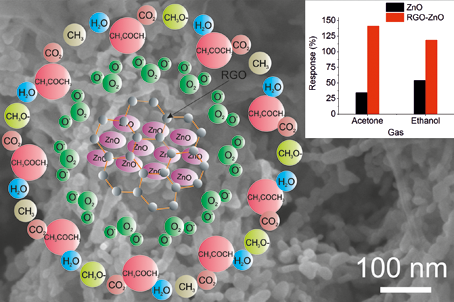
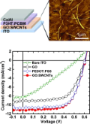
- monitoring of environmental pollutants and for the application of breath tests in assessment of exposure to volatile organic compounds. Keywords: chemical sensors; reduced graphene oxide (RGO); volatile organic compounds; zinc oxide (ZnO); Introduction Hazard analysis of critical control point (HACCP
- (C2H2O4·2H2O) containing ethanol using a two-electrode system. A platinum foil was used as a counter electrode and the anodization process was carried out at room temperature. The obtained structures were zinc oxalate dihydrate (ZnC2O4·2H2O). The as-prepared samples were transformed to crystalline ZnO by
- environmental and health protection. SEM image (a) and Raman spectrum (b) of the GO platelets deposited on SiO2/Si wafer. SEM images of the obtained samples based on graphene and zinc oxide at low (a) and high (b) magnification. (a) EDX spectrum and (b) quantitative analysis of the hybrid structure based on GO


Microwave synthesis of high-quality and uniform 4 nm ZnFe2O4 nanocrystals for application in energy storage and nanomagnetics
Beilstein J. Nanotechnol. 2016, 7, 1350–1360, doi:10.3762/bjnano.7.126
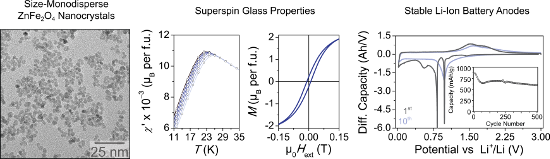
- narrow size distribution hold promise for many applications in different areas ranging from biomedicine to electronics and energy storage. Herein, the microwave-assisted sol–gel synthesis and thorough characterization of size-monodisperse zinc ferrite nanoparticles of spherical shape is reported. X-ray
- galvanostatic charge–discharge tests and ex situ X-ray absorption near edge structure spectroscopy, the as-prepared zinc ferrite nanocrystals can be used as a high-capacity anode material for Li-ion batteries, showing little capacity fade – after activation – over hundreds of cycles. Overall, in addition to the
- good material characteristics, it is remarkable that the microwave-based synthetic route is simple, easily reproducible and scalable. Keywords: 1-phenylethanol route; lithium-ion battery; nanomagnetism; nanoparticles; nonaqueous sol–gel synthesis; zinc ferrite; Introduction Spinel ferrites of the


High performance Ce-doped ZnO nanorods for sunlight-driven photocatalysis
Beilstein J. Nanotechnol. 2016, 7, 1338–1349, doi:10.3762/bjnano.7.125
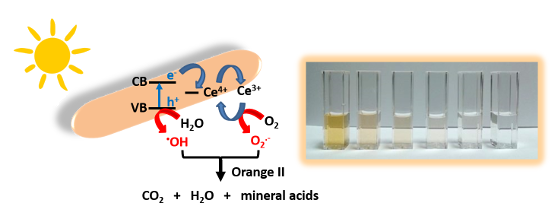
- can be trapped by water and oxygen to generate hydroxyl •OH and superoxide O2•− radicals, respectively. These highly oxidizing species are responsible of the conversion of organic compounds into carbon dioxide, water, and inorganic salts. Zinc oxide (ZnO) is one of the most widely investigated








Viability and proliferation of endothelial cells upon exposure to GaN nanoparticles
Beilstein J. Nanotechnol. 2016, 7, 1330–1337, doi:10.3762/bjnano.7.124
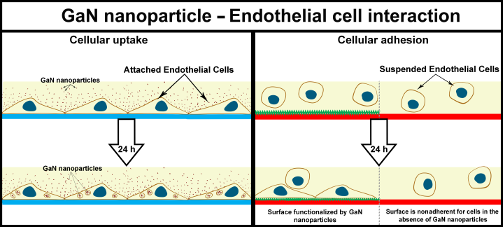
- nanoparticles were synthesized on a sacrificial layer of zinc oxide (ZnO) nanoparticles using hydride vapor phase epitaxy. The uptake of GaN nanoparticles by porcine endothelial cells was strongly dependent upon whether they were fixed to the substrate surface or free floating in the medium. The endothelial



The influence of phthalocyanine aggregation in complexes with CdSe/ZnS quantum dots on the photophysical properties of the complexes
Beilstein J. Nanotechnol. 2016, 7, 1018–1027, doi:10.3762/bjnano.7.94
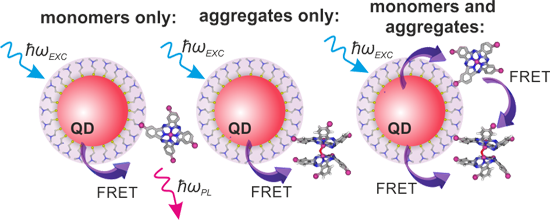
- problem important for PDT application needs to be clarified. Water-soluble sulfonated phthalocyanine derivatives, especially aluminium and zinc complexes, are well-understood sensitizers for PDT and, at the same time, they easily form nonluminescent aggregates in aqueous solution [30][31][32][33][34]. So



Phenalenyl-based mononuclear dysprosium complexes
Beilstein J. Nanotechnol. 2016, 7, 995–1009, doi:10.3762/bjnano.7.92
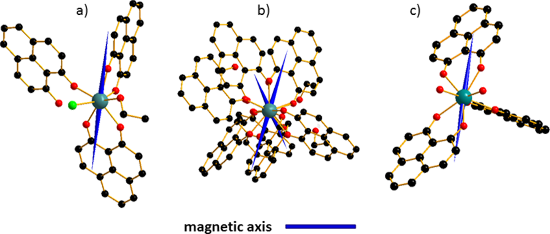
- best organic single-component conductor and has led to the creation of spin memory devices [21]. Indeed, a neutral planar phenalenyl-based molecule namely zinc methyl phenalenyl has recently been utilized as non-innocent building block for the construction of a spin memory device by Raman and co


Microwave solvothermal synthesis and characterization of manganese-doped ZnO nanoparticles
Beilstein J. Nanotechnol. 2016, 7, 721–732, doi:10.3762/bjnano.7.64
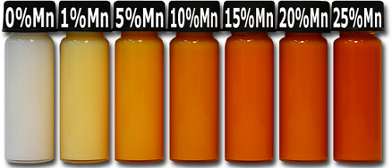
- 141, 02-507 Warsaw, Poland 10.3762/bjnano.7.64 Abstract Mn-doped zinc oxide nanoparticles were prepared by using the microwave solvothermal synthesis (MSS) technique. The nanoparticles were produced from a solution of zinc acetate dihydrate and manganese(II) acetate tetrahydrate using ethylene glycol
- -doped zinc oxide nanoparticles; microwave solvothermal synthesis (MSS); characterization techniques of nanomaterials; physical properties of Mn2+-doped ZnO nanoparticles; Introduction Nanotechnology has triggered a new global industrial revolution of the 21st century [1]. At present it is the leading
- oxides semiconductors. Zinc oxide (ZnO) is a II–VI semiconductor characterised by a wide band gap of 3.3 eV and a high exciton binding energy of circa 60 meV [4]. ZnO is used in optoelectronic devices, solar cells, data carriers, light emitting diodes (LEDs), gas sensors, thermoelectric devices


Hierarchical coassembly of DNA–triptycene hybrid molecular building blocks and zinc protoporphyrin IX
Beilstein J. Nanotechnol. 2016, 7, 697–707, doi:10.3762/bjnano.7.62
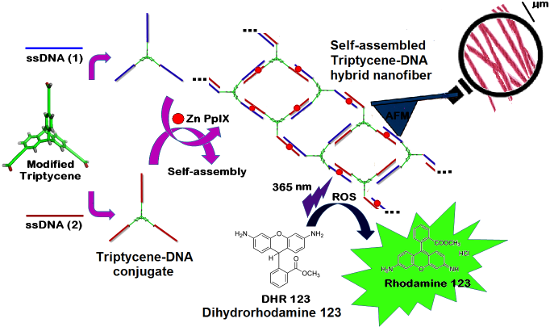
- composite DNA nanostructures by the self-assembly of complementary symmetrical 2,6,14-triptycenetripropiolic acid (TPA)–DNA building blocks and zinc protoporphyrin IX (Zn PpIX). DNA–organic molecule scaffolds for the composite DNA nanostructure were constructed through covalent conjugation of TPA with 5
- therapy (PDT) applications as well as photocatalytic reactions. Keywords: DNA nanostructure; DNA–organic hybrid; DNA self-assembly; 2,6,14-triptycenetripropiolic acid; zinc protoporphyrin IX; Introduction Hybrid nanomaterials resulting from the covalent conjugation of DNA with organic molecules [1][2][3
- polymeric networks [46][47]. In this study, we report the synthesis of the DNA–TPA scaffolds by covalent conjugation of 2,6,14-triptycenetripropiolic acid (TPA) with amine-modified 12-mer ssDNA and coassembly with zinc protoporphyrin IX(Zn PpIX) to form composite DNA nanostructures (Scheme 1). Porphyrins


Tight junction between endothelial cells: the interaction between nanoparticles and blood vessels
Beilstein J. Nanotechnol. 2016, 7, 675–684, doi:10.3762/bjnano.7.60
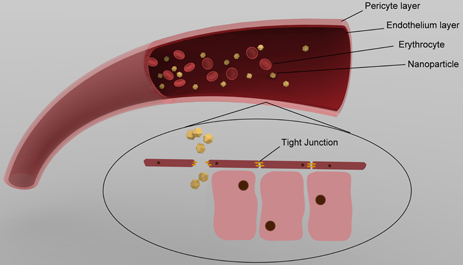
- into photo-damaged skin through follicles and intercellular spaces [28]. Also, zinc oxide, which is widely used in sunscreen, penetrates into the stratum granulosum of the epidermis [29], which leads us to the assumption that once NPs penetrate through the epidermis, there is a huge possibility to get
- pulmonary barrier (air–blood barrier) causing interstitial fibrosis [32]. Zinc oxide NPs take part in inflammatory responses in lung epithelial cells [20]. In the research for oral drug delivery, NPs could be absorbed through the intestine, and bioadhesive polymers could improve this capacity [33

Unraveling the neurotoxicity of titanium dioxide nanoparticles: focusing on molecular mechanisms
Beilstein J. Nanotechnol. 2016, 7, 645–654, doi:10.3762/bjnano.7.57
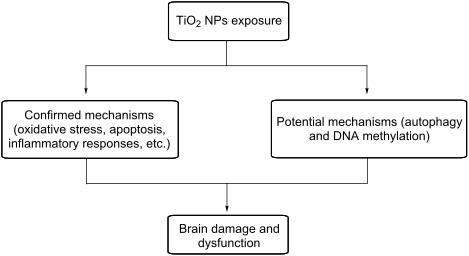
- nanoparticles [69]. In addition, copper oxide NPs [70], silica NPs [71], zinc oxide NPs [72], and silver NPs [73] were shown to induce autophagy in in vitro studies. TiO2 NPs were also capable of inducing autophagy. Studies showed that TiO2 NPs could induce autophagy in normal lung cells [74] and in primary
Bacteriorhodopsin–ZnO hybrid as a potential sensing element for low-temperature detection of ethanol vapour
Beilstein J. Nanotechnol. 2016, 7, 501–510, doi:10.3762/bjnano.7.44
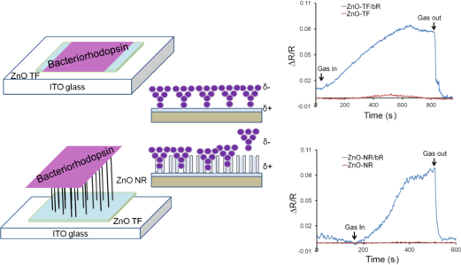
- - Institute of Microbial Technology, Sector 39A, Chandigarh 160036, India, Research Services, University of Alberta, Edmonton, AB, Canada T6G2E1 10.3762/bjnano.7.44 Abstract Zinc oxide (ZnO) and bacteriorhodopsin (bR) hybrid nanostructures were fabricated by immobilizing bR on ZnO thin films and ZnO nanorods
- bR. Results In this work, ZnO thin films (ZnO-TF) and ZnO nanorods (ZnO-NRs) were grown via the hydrothermal method on indium tin oxide (ITO) substrates (25 × 25 mm) and both structures were used for the preparation of a sensitive film for gas testing. The precursor solution (zinc acetate dihydrate
- solution consisting of zinc nitrate and hexamine. This inverted growth scheme was preferred in order to avoid contamination effects due to sedimentation and to achieve a uniform growth pattern [35][36]. Further, the suspension of wild-type, photoactive bR was prepared with aqueous amphipol (A8-35) in a 1:5


Rigid multipodal platforms for metal surfaces
Beilstein J. Nanotechnol. 2016, 7, 374–405, doi:10.3762/bjnano.7.34

- tetraphenylmethane with three acetylsulfanylmethyl groups 36 (Figure 15) for surface attachment to examine the effects of spatial arrangement of the molecular structure on charge storage in SAMs [72]. The redox-active molecules include ferrocene, zinc porphyrins, magnesium phthalocyanine, and triple-decker












Synthesis and applications of carbon nanomaterials for energy generation and storage
Beilstein J. Nanotechnol. 2016, 7, 149–196, doi:10.3762/bjnano.7.17
- polytypes are α-SiC and β-SiC. The α-SiC exhibits a hexagonal crystal structure (similar to wurtzite) and is usually formed at temperatures above 1700 °C. β-SiC exhibits a cubic crystal structure with a stacking sequence of ABCABC along the (111) direction, which is typical of a zinc blende crystal

















Chemical bath deposition of textured and compact zinc oxide thin films on vinyl-terminated polystyrene brushes
Beilstein J. Nanotechnol. 2016, 7, 102–110, doi:10.3762/bjnano.7.12
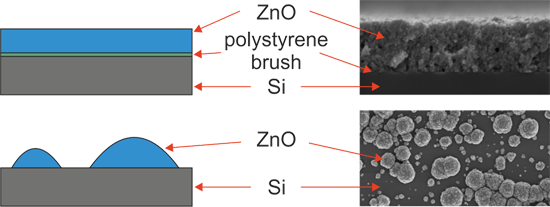
- ; thin film growth; zinc oxide; Introduction Due to its promising properties like photoemission in the UV range and its high piezoelectric coefficient, zinc oxide (ZnO; space group P63mc) is interesting for a wide range of applications. Several research groups investigate its application in light
- modified reaction solution without zinc acetate to prevent ZnO deposition. ζ-potential and water contact angle measurements on the modified brushes confirm the formation of a hydrophilic surface after the treatment. The ζ-potential decreases from −50 mV to −80 mV as shown in Figure 2. The contact angle
- out as described by Eisele et al. [33]. Stock solutions of polyvinylpyrrolidone (Mw = 10,000 g·mol−1, Lot#BCBF4168V, Sigma-Aldrich), zinc acetate (ZnAc2, Zn(CH3COO)2·2H2O, puriss p.a., ACS reagent, ≥99.0%, Sigma-Aldrich) and tetraethylammonium hydroxide (TEAOH, 1.5 M in methanol, Sigma-Aldrich) in


Blue and white light emission from zinc oxide nanoforests
Beilstein J. Nanotechnol. 2015, 6, 2463–2469, doi:10.3762/bjnano.6.255
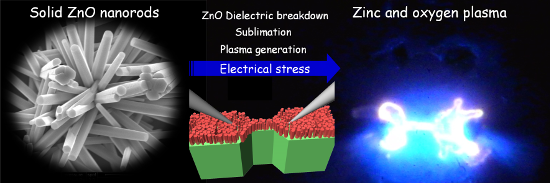
- shows three fine peaks with very high amplitude in the 465–485 nm (blue) range, corresponding to atomic transitions of zinc. Additional peaks with smaller amplitudes in the 330–650 nm range and broad spectrum white light is observed depending on the excitation conditions. The spatial and spectral
- is formed by application of the electrical bias, giving rise to light emission via atomic transitions in gaseous zinc and oxygen. The broad spectrum, white light emission is possibly due to the free electron transitions in the plasma and blackbody radiation from molten silicon. The white light may
- indicate that the dielectric breakdown of ZnO, sublimation, and plasma formation processes are the underlying mechanisms. Keywords: electrical stress; light emission; nanoforest; plasma; zinc oxide; Introduction The interest in environmentally friendly semiconductors, biocompatible [1], functional


Correction: A single-source precursor route to anisotropic halogen-doped zinc oxide particles as a promising candidate for new transparent conducting oxide materials
Beilstein J. Nanotechnol. 2015, 6, 2330–2331, doi:10.3762/bjnano.6.239


Influence of wide band gap oxide substrates on the photoelectrochemical properties and structural disorder of CdS nanoparticles grown by the successive ionic layer adsorption and reaction (SILAR) method
Beilstein J. Nanotechnol. 2015, 6, 2252–2262, doi:10.3762/bjnano.6.231
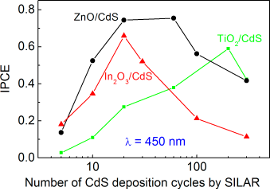
- microscopy (SEM) images of indium, zinc, and titanium oxide prepared films are shown in Figure 1. The In2O3 films (Figure 1a,d) have a uniform thickness and are characterized by a more dense packing of the grains as compared to the ZnO deposit, which consists of plate-like crystallites with approximately 100
- water, air-dried and heat-treated at 450 °C for 1 h in air. Mesoporous zinc oxide films were prepared by the electrochemical cathodic deposition from water–ethanol (1:1 by volume) electrolyte containing 0.1 mol/L Zn(NO3)2, 0.1 mol/L KCl and 4 g/L poly(vinylpyrrolidone) at 50 °C [18][38]. Deposition was
- on the electrode surface occurs. This is confirmed by the X-ray diffraction analysis [18][38]. The heating of the obtained films in air at 360 °C results in decomposition of zinc hydroxychloride with the formation of zinc oxide. The chemical deposition of CdS on the surface of oxide (ZnO, TiO2, In2O3


A single-source precursor route to anisotropic halogen-doped zinc oxide particles as a promising candidate for new transparent conducting oxide materials
Beilstein J. Nanotechnol. 2015, 6, 2161–2172, doi:10.3762/bjnano.6.222
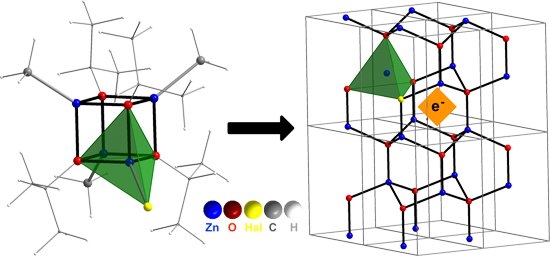
- steadily increasing price, it is highly desired to identify materials alternatives containing highly abundant chemical elements. The doping of other metal oxides (e.g., zinc oxide, ZnO) is a promising approach, but two problems can be identified. Phase separation might occur at the required high
- demand for ITO substitutes [16]. TCOs consisting of chemically doped zinc oxide materials ('E@ZO'; E = heteroelement) have been recognized as promising candidates as ITO substitutes [17][18]. Because ZnO is already n-type in its native state, and due to the difficulties associated with p-doping [19][20
- ][60][61][62][63]. It is documented that the reaction with water proceeds via the stepwise elimination of methane and the formation of hydroxo zinc species prior to polycondensation affording zinc oxide [55]. The latter process can also be interpreted as the reaction between Hδ+–OH as a Lewis and



Conformational switching of ethano-bridged Cu,H2-bis-porphyrin induced by aromatic amines
Beilstein J. Nanotechnol. 2015, 6, 2154–2160, doi:10.3762/bjnano.6.221
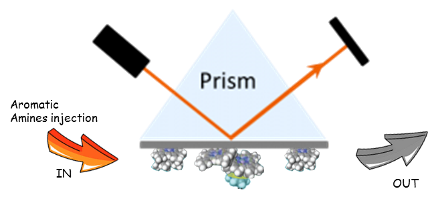
- previously observed for bis(zinc porphyrin) [8]. The behavior of the bis-porphyrin floating film upon interaction with other aliphatic acyclic and cyclic amines (tert-butylamine, 1,4-diaminobutane and 1,2-diaminocyclohexane) dissolved into the subphase was also checked. It was found that there are no


Paramagnetism of cobalt-doped ZnO nanoparticles obtained by microwave solvothermal synthesis
Beilstein J. Nanotechnol. 2015, 6, 1957–1969, doi:10.3762/bjnano.6.200
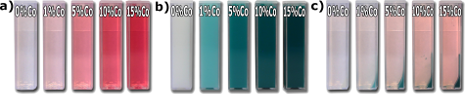
- -142 Warsaw, Poland Institute of Physics, Polish Academy of Sciences, Al. Lotników 32/46, 02-668 Warsaw, Poland 10.3762/bjnano.6.200 Abstract Zinc oxide nanopowders doped with 1–15 mol % cobalt were produced by the microwave solvothermal synthesis (MSS) technique. The obtained nanoparticles were
- , likely related to the precipitation of metallic Co in nanoparticles. Keywords: cobalt-doped zinc oxide; ferromagnetism; magnetic properties; microwave solvothermal synthesis (MSS); paramagnetism; Introduction Nanomaterials have drawn the attention of researchers from all over the world due to their new
- , interesting perspectives in many application areas [1][2][3]. The most challenging issue nowadays is how to produce such advanced nanocrystals with well-defined and reproducible electronic, optoelectronic and magnetic properties at low cost. In the present work we investigate zinc oxide (ZnO), which is an




Electrospray deposition of organic molecules on bulk insulator surfaces
Beilstein J. Nanotechnol. 2015, 6, 1927–1934, doi:10.3762/bjnano.6.195
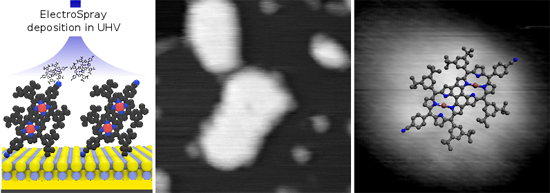
- double porphyrin and include two metallic core atoms (zinc) and two cyanophenyl groups. More information on the synthesis of the molecules can be found in [35][36][39] Scheme of the commercial ESI setup [33] (1 to 5) connected to the UHV chamber (7), i.e., sample preparation chamber. The additional


NanoE-Tox: New and in-depth database concerning ecotoxicity of nanomaterials
Beilstein J. Nanotechnol. 2015, 6, 1788–1804, doi:10.3762/bjnano.6.183

- database NanoE-Tox that is available as Supporting Information File 2. The database is based on existing literature on ecotoxicology of eight ENMs with different chemical composition: carbon nanotubes (CNTs), fullerenes, silver (Ag), titanium dioxide (TiO2), zinc oxide (ZnO), cerium dioxide (CeO2), copper
- Consumer Products Inventory [2]. According to this inventory, the most abundant ENMs used in consumer products are silver (438 products), titanium (107), carbon (90), silica (81), zinc (38) and gold (24) with the main applications in antimicrobial protection (381 products), coatings (188) and health
- : carbon nanotubes (CNTs), fullerenes, silver (Ag), titanium dioxide (TiO2), zinc oxide (ZnO), cerium dioxide (CeO2), copper oxide (CuO), and iron oxide (FeOx; Fe2O3, Fe3O4). Furthermore, all these ENMs, except CuO, are listed by the Organisation for Economic Co-operation and Development (OECD) Working





