


Search results
Search for "PLAL" in Full Text gives 15 result(s) in Beilstein Journal of Nanotechnology.
Restorative potential of laser-synthesized silver nanoparticles with Salvia officinalis for periodontal disease treatment: an in vitro study
Beilstein J. Nanotechnol. 2026, 17, 781–795, doi:10.3762/bjnano.17.55
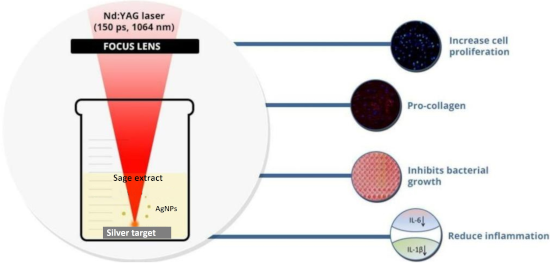
- local damage, systemic associations highlight the urgent need for innovative therapies. Herein, we present an eco-friendly synthesis of silver nanoparticles (AgNPs) by picosecond pulsed laser ablation in liquid (PLAL), using Salvia officinalis aqueous extract (sage extract) as both medium and stabilizer
- inflammation. This dual antibacterial and regenerative action demonstrates the high potential of sage-assisted PLAL-synthesized AgNPs as a safe, sustainable strategy for periodontal disease treatment. Keywords: cell proliferation; periodontal disease; pulsed laser ablation in liquid (PLAL); Salvia officinalis
- , specifically pulsed laser ablation in liquid (PLAL), involves laser ablation of a metal target immersed in a liquid, upon which a laser plasma is produced and nanoparticles are generated [4]. To the best of our knowledge, although PLAL is traditionally associated with lower yields compared to conventional



Two-step laser synthesis of Ag@TiO2 nanomaterials for the photocatalytic degradation of rhodamine B
Beilstein J. Nanotechnol. 2026, 17, 622–634, doi:10.3762/bjnano.17.43
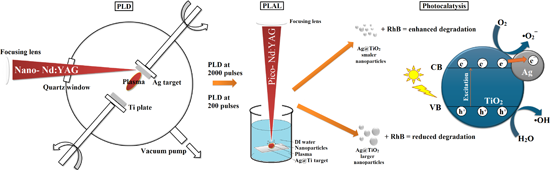
- pulsed laser ablation in liquids (PLAL). Initially, silver was ablated using 200 and 2000 pulses and deposited onto titanium targets via PLD. Subsequently, these modified targets were submerged in water and processed using PLAL to generate the final nanomaterials. Characterization through HRTEM, EDS, and
- visible light, such as water treatment and degradation of organic contaminants [10][11][12]. Among various synthesis techniques, laser-based methods, such as pulsed laser ablation in liquids (PLAL) and laser pyrolysis, stand out as clean, efficient, and surfactant-free routes for fabricating Ag@TiO2
- via the two steps pulsed laser deposition (PLD) and PLAL. First, using different numbers of laser pulses (200 and 2000 pulses), different amounts of Ag were ablated and deposited on pure Ti targets. Second, in order to investigate how the pulse number influences structural properties and


Beam shaping techniques for pulsed laser ablation in liquids: Unlocking tunable control of nanoparticle synthesis in liquids
Beilstein J. Nanotechnol. 2026, 17, 309–342, doi:10.3762/bjnano.17.22
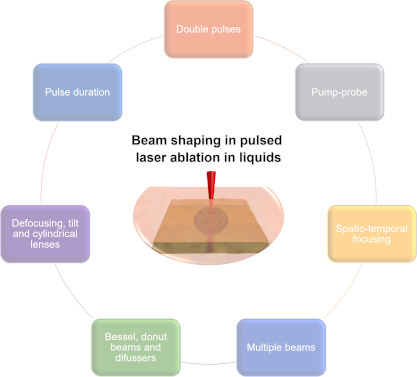
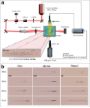
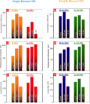
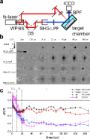
- highlighted, offering a comprehensive perspective on the future of this dynamic field. Keywords: green nanoparticles synthesis; PLAL; production upscale; pulsed laser ablation in liquids; size control; spatial beam shaping; temporal beam shaping; Review Introduction Pulsed laser ablation in liquids (PLAL
- ). Additional NPs are formed within this bubble until it collapses, releasing and ejecting the remaining NPs into the liquid [9][10][11]. Although nanomaterials can be produced by alternative physical, chemical, or biological methods [12], PLAL offers several advantages [13]. Chemical methods are effective at
- gas aggregation are highly scalable and productive, though they typically require high temperatures or vacuum systems and may offer limited control over surface chemistry. Compared with these approaches, PLAL provides high-purity colloids with reduced impurities and byproducts, even allowing for







Laser ablation in liquids for shape-tailored synthesis of nanomaterials: status and challenges
Beilstein J. Nanotechnol. 2025, 16, 1963–1997, doi:10.3762/bjnano.16.137
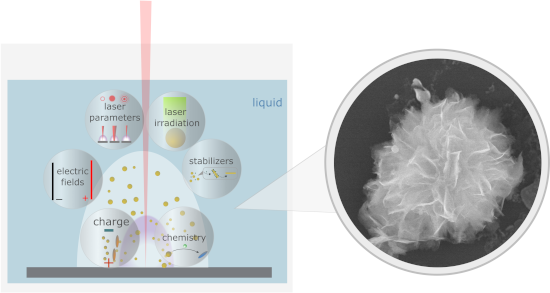
- progress in the pulsed laser ablation in liquid (PLAL) field has been achieved by getting new insights into the process of laser ablation, its stages, and mechanisms allowing to significantly boost the productivity and reach gram-scale NP production [1][4]. Another direction of the research is the control
- of NP size and size distribution. As a result, the crucial experimental parameters were determined providing strategies to reduce the formation of large NPs and to produce monodisperse small nanocrystals [1][5]. However, the goal of controlled nanomaterials synthesis by PLAL is still not completely
- sustainability of the approach due to the introduction of purification steps. In PLAL, the conditions created during laser ablation synthesis are favouring the formation and growth of near-spherical NPs. To date, much less research is performed regarding shape-controlled formation of anisotropic materials. For


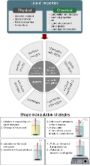


Influence of laser beam profile on morphology and optical properties of silicon nanoparticles formed by laser ablation in liquid
Beilstein J. Nanotechnol. 2025, 16, 1533–1544, doi:10.3762/bjnano.16.108
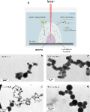
- certain progress in this field, there is still a need for reliable and controlled synthesis methods for silicon-based nanostructures. Nowadays, pulsed laser ablation in liquids (PLAL) has been recognized as a general and important route for the synthesis of nanoparticles (NPs) with tuned optical and
- electrical properties suitable for a wide range of practical applications [7][8][9]. PLAL has a number of advantages over other NP production methods due to the accessibility of equipment for ablation, the simplicity of the method, which does not require a special environment such as vacuum, and the ability
- conductivities resulted in NPs of different morphology, structure, and optical characteristics. It should be noted that, as a rule, NPs of nearly spherical morphology are formed by PLAL under typical experimental conditions. Non-spherical NPs were also reported to be produced by PLAL [13]; but this requires


Laser processing in liquids: insights into nanocolloid generation and thin film integration for energy, photonic, and sensing applications
Beilstein J. Nanotechnol. 2025, 16, 1428–1498, doi:10.3762/bjnano.16.104
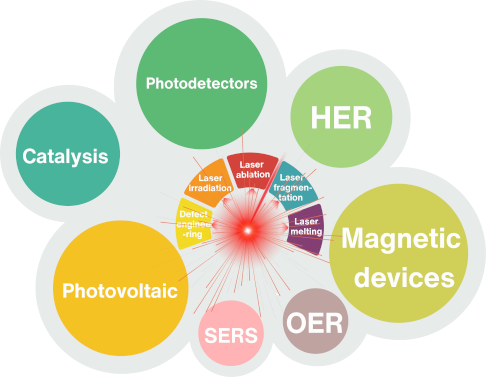
- examples of nanoparticle synthesis by laser ablation were discussed [7]. They have clearly depicted how the properties of the nanoparticles (NPs) depend strongly on size, shape, and size uniformity. Pulsed laser ablation in liquids (PLAL) is a promising method for producing pristine and supported materials
- including mono- and bimetallic NPs with distinctive structural features such as unique catalytic and plasmonic properties that cannot be achieved by conventional methods [13][14]. The latest review on gold-based NPs by PLAL discusses how laser parameters (e.g., wavelength, pulse duration, and fluence) and
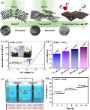
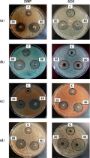
- medium characteristics (e.g., chemical composition and viscosity) influence the size, morphology, and surface properties of the Au NPs, which, in turn, determine their performance. The effect of solvents on morphology of generated NPs in laser ablation is shown in Figure 2. While PLAL offers a rich






Fabrication of metal complex phthalocyanine and porphyrin nanoparticle aqueous colloids by pulsed laser fragmentation in liquid and their potential application to a photosensitizer for photodynamic therapy
Beilstein J. Nanotechnol. 2025, 16, 1088–1096, doi:10.3762/bjnano.16.80
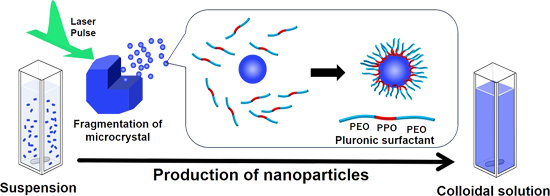
- application as photosensitizers for PDT. We have already reported the nanoparticle fabrication of some MPcs by PLAL using deionized water [13][14][15]. The nanoparticles dispersed well in pure water, but precipitated in a buffer solution and a cell culture medium after one day. In this study, therefore, an
- degradation may occur during nanoparticle fabrication via PLAL. To investigate molecular degradation, the prepared nanoparticles were dissolved in organic solvents and their visible to NIR absorption spectra were measured. The spectra agreed well with those of the raw material compounds, confirming that at
- strongly supports that cellular phototoxicity is due to photosensitized ROS generation by the nanoparticles. Therefore, it is concluded that the MPc and PtOEP nanoparticles fabricated by PLAL could be used as a new potential photosensitizer for PDT. The efficiency for PDT in acting as a sensitizer cannot


Synthesis and magnetic transitions of rare-earth-free Fe–Mn–Ni–Si-based compositionally complex alloys at bulk and nanoscale
Beilstein J. Nanotechnol. 2025, 16, 823–836, doi:10.3762/bjnano.16.62
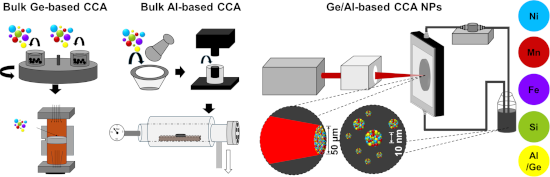
- available for producing CCA NPs, pulsed laser ablation in liquids (PLAL) stands out as a particularly promising method [41][42][43]. PLAL is a straightforward and versatile method that does not require expensive precursors, reducing agents, or surfactants [44][45]. The process is based on the laser
- irradiation of the target material submerged in a liquid environment. This makes PLAL a safe, scalable and environmentally friendly approach [46][47][48]. Research on the synthesis of CoCrFeMnNi Cantor alloy NPs by PLAL demonstrated that this method consistently produces NPs with near-equiatomic compositions
- , regardless of the target preparation technique. Additionally Gatsa et al. [49] provide a realistic perspective that the CCA NPs production using a multibeam PLAL approach can be scaled up to ca. 3 g·h−1. The CCA NPs produced by PLAL have shown a promising response as catalysts for oxygen reduction reactions


Morphology and properties of pyrite nanoparticles obtained by pulsed laser ablation in liquid and thin films for photodetection
Beilstein J. Nanotechnol. 2025, 16, 785–805, doi:10.3762/bjnano.16.60
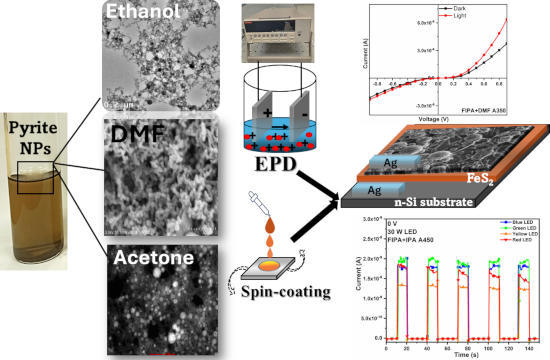
- disulfide (FeS2)) nanoparticles (NPs) of different morphologies using pulsed laser ablation in liquid (PLAL) in different organic solvents. The impact of the solvent on the morphological, compositional, and optical properties of the synthesized NPs is investigated by techniques such as transmission electron
- synthesized by PLAL. FeS2 NPs were successfully synthesized in five different solvents, along with a minor phase of iron sulfide (FeS). Additionally, by combining electrophoretic deposition and spin-coating techniques, thin film photodiodes of FeS2 were fabricated on an n-type Si substrate utilizing the
- prepared by PLAL. Keywords: electrophoretic deposition; pulsed laser ablation in liquid; pyrite nanoparticles; self-powered photodetector; spin coating; Introduction Pyrite (FeS2) is one of the earth-abundant and nontoxic semiconductors possessing a promising role in optoelectronic applications. FeS2 has






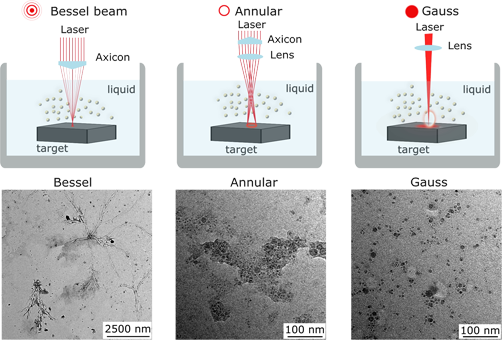
Size control of nanoparticles synthesized by pulsed laser ablation in liquids using donut-shaped beams
Beilstein J. Nanotechnol. 2025, 16, 407–417, doi:10.3762/bjnano.16.31
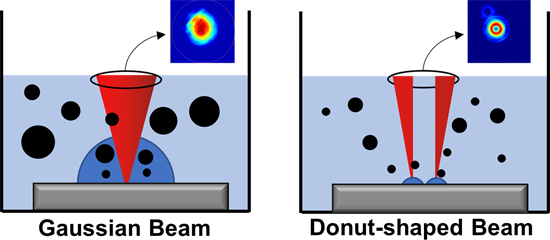
- size can cause cellular damage or prevent membrane permeation for drug delivery [10]. Therefore, a fine and reproducible size control during NP synthesis is essential. Pulsed laser ablation in liquids (PLAL) allows for the synthesis of colloidal NPs offering numerous advantages, such as being
- environmentally friendly, ensuring high chemical purity, and minimizing the need for precursors and stabilizers [11][12]. PLAL can be used to synthesize a wide range of metallic and non-metallic NPs, including alloys, (doped) oxides, and polymers [13][14][15]. PLAL allows for the generation of complex NPs with
- ]. PLAL-based NP production has significantly advanced in the last years to fulfill industrial-scale application requirements [20]. Waag et al. achieved productivities of several grams per hour for various metal NPs using a high-power, high-repetition-rate picosecond laser in combination with a fast


Laser synthesis of nanoparticles in organic solvents – products, reactions, and perspectives
Beilstein J. Nanotechnol. 2024, 15, 638–663, doi:10.3762/bjnano.15.54





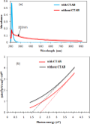
High-responsivity hybrid α-Ag2S/Si photodetector prepared by pulsed laser ablation in liquid
Beilstein J. Nanotechnol. 2020, 11, 1596–1607, doi:10.3762/bjnano.11.142
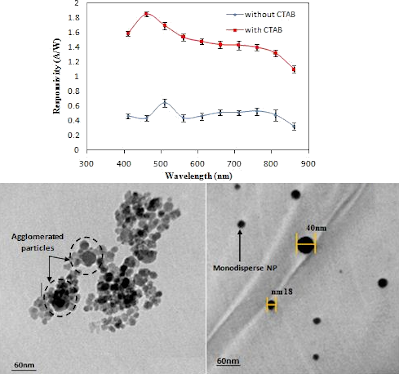
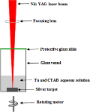
- initial responsivity after storage under ambient conditions for three weeks without any encapsulation. On the basis of these results, the proposed technique is promising and encouraging for the fabrication of inexpensive high-responsivity photodetectors. Schematic diagram of PLAL system used for




Antibacterial activity of silver nanoparticles obtained by pulsed laser ablation in pure water and in chloride solution
Beilstein J. Nanotechnol. 2016, 7, 465–473, doi:10.3762/bjnano.7.40
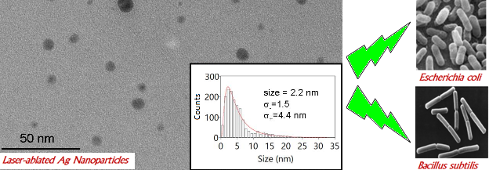
- as antibacterial agents with applications in several fields due to their strong, broad-range antimicrobial properties. AgNP synthesis by pulsed laser ablation in liquid (PLAL) permits the preparation of stable Ag colloids in pure solvents without capping or stabilizing agents, producing AgNPs more
- suitable for biomedical applications than those prepared with common, wet chemical preparation techniques. To date, only a few investigations into the antimicrobial effect of AgNPs produced by PLAL have been performed. These have mainly been performed by ablation in water with nanosecond pulse widths. We
- also be affected by other parameters linked to the ablation conditions, such as the pulse width. The antibacterial activity of AgNPs was evaluated for NPs obtained either by nanosecond (ns) or picosecond (ps) PLAL using a 1064 nm ablation wavelength, in pure water or in LiCl aqueous solution, with


Fabrication of hybrid nanocomposite scaffolds by incorporating ligand-free hydroxyapatite nanoparticles into biodegradable polymer scaffolds and release studies
Beilstein J. Nanotechnol. 2015, 6, 2217–2223, doi:10.3762/bjnano.6.227
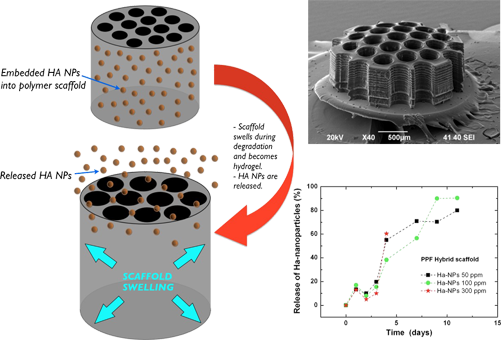
- and showed that these nanocomposites are beneficial for hard tissue replacement due to the excellent mechanical strength and osteoconductivity. They used commercially available HA NPs, whereas we prepared HA NPs by PLAL and controlled the size by this method. They demonstrated also that the addition
- ], combustion preparation [11] and various wet chemistry techniques [12][13]. However, these routes have drawbacks regarding the synthesis attributed to the use of hazardous surfactants that are not suitable for biomedical applications [14]. Pulsed laser ablation of solid targets in liquids (PLAL) for the


Current state of laser synthesis of metal and alloy nanoparticles as ligand-free reference materials for nano-toxicological assays
Beilstein J. Nanotechnol. 2014, 5, 1523–1541, doi:10.3762/bjnano.5.165
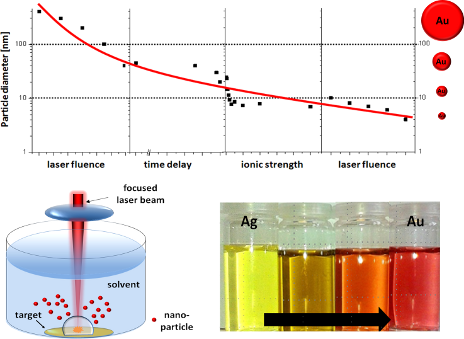
- filtration [23]. However, this process is very time consuming and often results in particle aggregation. Hence, pulsed laser ablation in liquids (PLAL) has proven to be a promising alternative for the synthesis of nanoparticles applicable in toxicity assays as it provides totally ligand-free colloidal
- particle size distribution of PLAL products is generally very broad [24][32]. Hence laser-fabricated ligand-free nanoparticles are excellent model systems to simulate implant wear processes and correlated toxic effects. Reference nanomaterials are particularly useful when their size and composition are
- species [33][36], and cannot originate from the material itself, like the ion release from nanoparticles composed of less noble materials. The fabrication of gold nanoparticles by PLAL has been extensively examined in numerous studies, while ablation may be performed in aqueous media [37][38][39] as well





