


Search results
Search for "batteries" in Full Text gives 185 result(s) in Beilstein Journal of Nanotechnology.
Nanoglasses: a trail towards uncharted regions of vitreous materials and their properties?
Beilstein J. Nanotechnol. 2026, 17, 1047–1062, doi:10.3762/bjnano.17.72



Safe and sustainable by design with ML/AI: A transformative approach to advancing nanotechnology
Beilstein J. Nanotechnol. 2026, 17, 176–185, doi:10.3762/bjnano.17.11
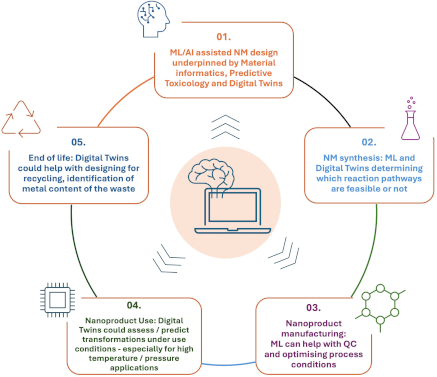
- enabled targeted therapies for cancer, minimizing side effects while enhancing therapeutic efficacy [1][2]. In the energy sector, nanostructured materials have enhanced the performance and energy density of batteries and solar cells, providing more sustainable and efficient solutions [3]. Additionally


Subdigital integumentary microstructure in Cyrtodactylus (Squamata: Gekkota): do those lineages with incipiently expressed toepads exclusively exhibit adhesive setae?
Beilstein J. Nanotechnol. 2026, 17, 38–56, doi:10.3762/bjnano.17.4
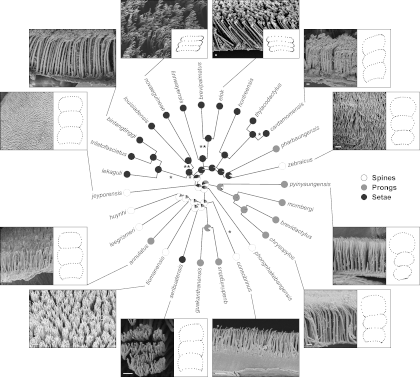
- that scale during application and release of the setal batteries. Since there is anecdotal evidence that at least some arboreal Cyrtodactylus species with macroscopically defined incipient toepads show adhesive competency [50], Riedel et al. [43] predicted that “minimally the […] trunk, crown, and




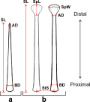
Reduced graphene oxide paper electrode for lithium-ion cells – towards optimized thermal reduction
Beilstein J. Nanotechnol. 2026, 17, 24–37, doi:10.3762/bjnano.17.3
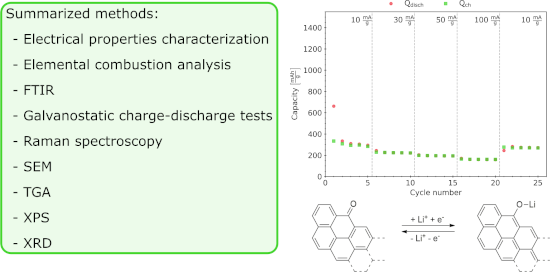
- . Keywords: electrode material; graphene paper; lithium-ion batteries; reduced graphene oxide; thermal reduction; Introduction Electrode materials comprising reduced graphene oxide (rGO) for energy storage in lithium-ion-based or sodium-ion-based technologies have been the subject of over 3800 publications
- few examples of rGO-based materials for electrodes, especially for lithium-ion batteries, LiFePO4 and rGO composite cathodes were reported by Wi et al. and Wei and colleagues [8][9]. Moreover, Wang et al. described a method for LiMn0.75Fe0.25PO4 nanorod production on rGO sheets [10]. Again, the
- -ion batteries with Li4T5O12 and LiFePO4 active materials for the electrodes [13]. Chen et al. described current collectors based on rGO films [14]. Reduced graphene oxide finds further use in sodium-ion composite cathode materials as a conduction-improving agent with Prussian white as the active




Ambient pressure XPS at MAX IV
Beilstein J. Nanotechnol. 2025, 16, 1677–1694, doi:10.3762/bjnano.16.118
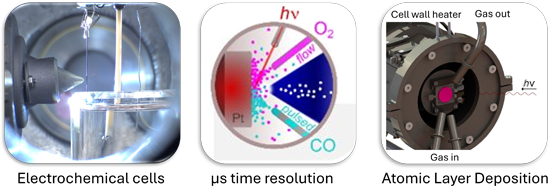
- ; batteries; catalysis; corrosion; Review Ambient pressure XPS Electron spectroscopy has significantly contributed to the understanding of chemical and physical processes that govern the complex interactions between a solid surface and its environment. These processes play crucial roles in phenomena such as
- reactions in batteries, fuel cells, corrosion, and electrocatalysis. With the advent of ambient pressure setups and specially designed sample environments, APXPS now allows for direct probing of the chemical and electronic structure at solid–liquid interfaces under realistic conditions. This capability
- evolution of passive films under electrochemical stress [67][68]. Batteries The dip-and-pull method allows for surface-sensitive XPS measurements of interfaces that are typically hidden inside batteries. Whilst the cell geometry obviously differs dramatically from that of any conventional cell, the approach






Transient electronics for sustainability: Emerging technologies and future directions
Beilstein J. Nanotechnol. 2025, 16, 1545–1556, doi:10.3762/bjnano.16.109
- BY 4.0. (c) Biodegradable cardiac pacemaker (left) with wireless and batteryless operation on heart (right). Figure 1c was adapted from [10] (Y. S. Choi et al., “Fully implantable and bioresorbable cardiac pacemakers without leads or batteries”, Nat. Biotechnol., vol. 39, pages 1228–1238, 2021


Influence of laser beam profile on morphology and optical properties of silicon nanoparticles formed by laser ablation in liquid
Beilstein J. Nanotechnol. 2025, 16, 1533–1544, doi:10.3762/bjnano.16.108
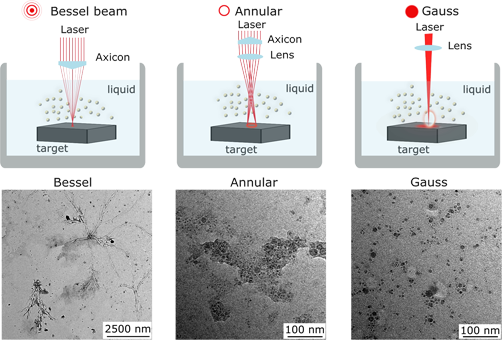
- morphology. The synthesized colloidal Si NPs are suggested for applications as a component of electrode materials in supercapacitors and batteries. Keywords: laser ablation; laser beams with Bessel, annular, Gaussian profiles; laser-induced modification; silicon nanoparticles; Introduction Silicon, due to
- batteries by providing a solution to the urgent problem of large volumetric expansion known for Si during lithiation process [3]. Due to the possibility of lateral expansion in Si nanowires, the cracking of the electrodes during lithiation is minimized. In addition, the one-dimensional structure of Si
- of Si NPs. The presence of defects in the Si structure confirmed by Raman and PL studies is a prerequisite for enhanced performance of the developed nanostructures in electrochemical processes occurring in supercapacitors or batteries [14]. The intrinsic defects act as intercalation sites during


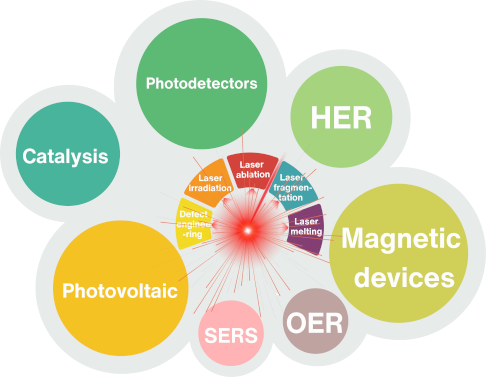
Laser processing in liquids: insights into nanocolloid generation and thin film integration for energy, photonic, and sensing applications
Beilstein J. Nanotechnol. 2025, 16, 1428–1498, doi:10.3762/bjnano.16.104







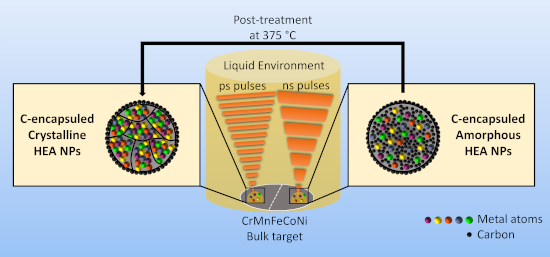
Crystalline and amorphous structure selectivity of ignoble high-entropy alloy nanoparticles during laser ablation in organic liquids is set by pulse duration
Beilstein J. Nanotechnol. 2025, 16, 1141–1159, doi:10.3762/bjnano.16.84




Soft materials nanoarchitectonics: liquid crystals, polymers, gels, biomaterials, and others
Beilstein J. Nanotechnol. 2025, 16, 1025–1067, doi:10.3762/bjnano.16.77
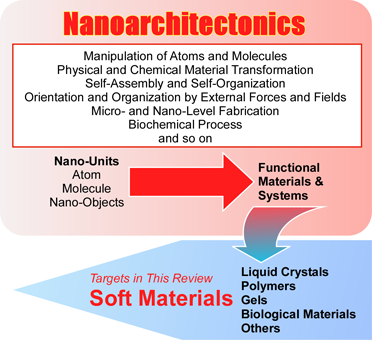
- ][182][183], fuel cells [184][185][186][187][188], batteries [189][190][191][192][193], supercapacitors [194][195][196][197][198], and other energy applications [199][200][201][202][203]. Furthermore, it is employed in environmental remediation [204][205][206][207][208], drug delivery [209][210][211
- varying compositions. In other words, chemical energy and catalysis can be used to reversibly move functional liquid crystals at the microscale. The chemical fuels’ energy density is significantly higher than that of current batteries, by at least two orders of magnitude, making chemically powered liquid
- . The following examples illustrate the potential of nanoarchitectonics based on plastic crystals. Solid electrolytes can be used safely in secondary magnesium batteries but show lower ionic conductivity compared to conventional liquid electrolytes. A class of solid electrolyte known as organic ionic






Synthesis of biowaste-derived carbon-dot-mediated silver nanoparticles and the evaluation of electrochemical properties for supercapacitor electrodes
Beilstein J. Nanotechnol. 2025, 16, 933–943, doi:10.3762/bjnano.16.71
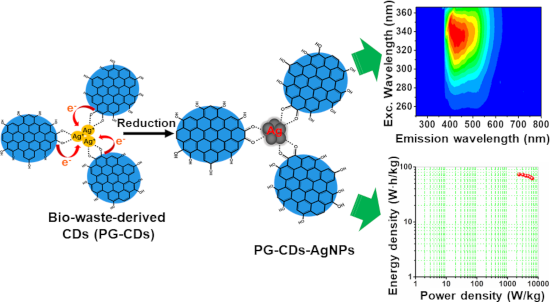
- energy demand. Therefore, a notable research focus has been given to advancements in renewable energy storage systems. Secondary batteries and supercapacitors are promising alternatives for energy storage applications [1][2]. Through the electrostatic polarization of electrolyte solutions, supercapacitor
- devices store charge across the electric double layers [3]. Supercapacitors are highly sought-after energy storage devices, as their high power density, ultrastability, and rapid charge–discharge capability render them irreplaceable by traditional metal-ion batteries [4]. Typically, the functioning of


Insights into the electronic and atomic structures of cerium oxide-based ultrathin films and nanostructures using high-brilliance light sources
Beilstein J. Nanotechnol. 2025, 16, 860–871, doi:10.3762/bjnano.16.65

- field of environmental remediation [9]. The related ability of the material to easily store and release oxygen also plays a key role in energy conversion technologies, including fuel cells and batteries [10][11]. Gas sensing applications of ceria-based materials are based on the modifications of the


Synchrotron X-ray photoelectron spectroscopy study of sodium adsorption on vertically arranged MoS2 layers coated with pyrolytic carbon
Beilstein J. Nanotechnol. 2025, 16, 847–859, doi:10.3762/bjnano.16.64
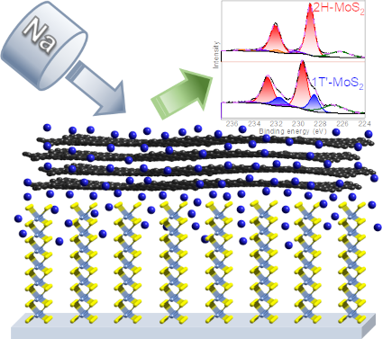
- Berlin, Germany Helmholtz-Zentrum Berlin für Materialien und Energie, 14109 Berlin, Germany 10.3762/bjnano.16.64 Abstract Hybrid materials consisting of molybdenum disulfide (MoS2) and graphitic-like carbon have great potential for practical application as anodes in high-performance sodium-ion batteries
- /desorption; sodium vapor; XPS; Introduction Sodium-ion batteries (SIBs) attract increasing interest as a low-cost alternative to lithium-ion batteries due to the abundance and wide availability of sodium. Research in this field is currently focused on developing new electrode materials to increase the


Morphology and properties of pyrite nanoparticles obtained by pulsed laser ablation in liquid and thin films for photodetection
Beilstein J. Nanotechnol. 2025, 16, 785–805, doi:10.3762/bjnano.16.60
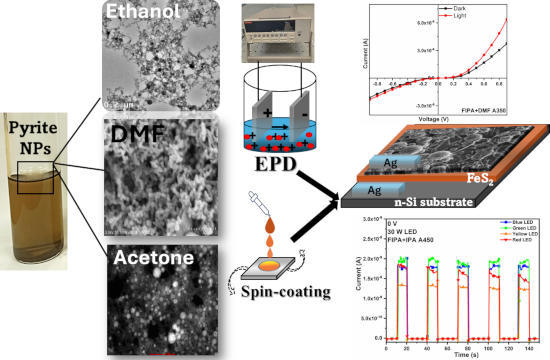
- a narrow bandgap (0.95 eV), high light absorption coefficient (≈105 cm−1), excellent properties in photoelectric conversion, and has enormous potential as an efficient photodetector system and in lithium batteries [1][2]. The prevalent forms of FeS2 are cubic-system pyrite and the orthorhombic
- related to FeS2 [3]. Pyrite has shown outstanding performance and a long shelf life as a high-capacity cathode and has been utilized in batteries [4]. Pyrite has also been identified as a promising material for effectively removing environmental contaminants in the environment near the surface of the







Nanostructured materials characterized by scanning photoelectron spectromicroscopy
Beilstein J. Nanotechnol. 2025, 16, 700–710, doi:10.3762/bjnano.16.54
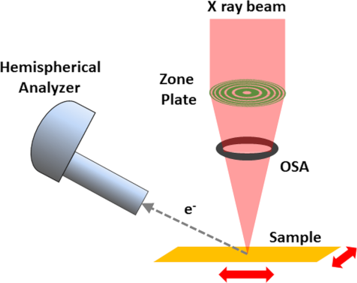
- characterization shown in the review demonstrate its usefulness in the investigation on nanostructured materials regardless of their morphology. This feature is of particular interest when device prototypes, such as sensors and batteries, must be analyzed in real conditions. The combination of imaging and


Nanoscale capacitance spectroscopy based on multifrequency electrostatic force microscopy
Beilstein J. Nanotechnol. 2025, 16, 637–651, doi:10.3762/bjnano.16.49

- study materials such as perovskite solar cells [18][19][20] and Li-ion batteries [21][22][23]. AFM enables simultaneous acquisition of topographic and electronic data by applying AC or DC voltages across the tip–sample gap, allowing for the detection of capacitive forces [24][25] or contact potential




Feasibility analysis of carbon nanofiber synthesis and morphology control using a LPG premixed flame
Beilstein J. Nanotechnol. 2025, 16, 581–590, doi:10.3762/bjnano.16.45
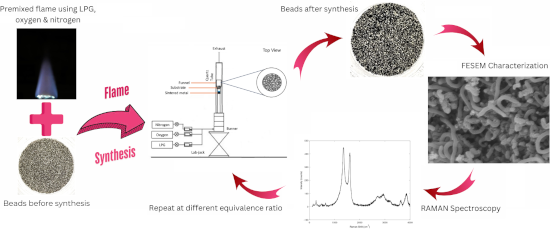
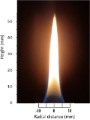
- combustion mode where the fuel and oxidizer are thoroughly mixed before ignition. LPG is a cheap industrial material used as a carbon source to produce carbon nanomaterials [6]. The application of CNFs includes, but is not limited to, energy storage in batteries and supercapacitors, electronics, drug



A review of metal-organic frameworks and polymers in mixed matrix membranes for CO2 capture
Beilstein J. Nanotechnol. 2025, 16, 155–186, doi:10.3762/bjnano.16.14






Instance maps as an organising concept for complex experimental workflows as demonstrated for (nano)material safety research
Beilstein J. Nanotechnol. 2025, 16, 57–77, doi:10.3762/bjnano.16.7

- pipelines based on new approach methodologies, batteries of more than 20 assays with over 50 individual endpoints are compared and data (from different laboratories) needs to be aggregated [45]. The offspring tracking presented in Figure 5 may represent the first step towards implementation of a BIODA to
- herewith displayed their use for visualising integrated batteries of assays and depicted their applicability as a structural representation of larger collaborative research and development endeavours. Instance maps have thus proven instrumental as a tool for creating and illustrating workflows that combine



Heterogeneous reactions in a HFCVD reactor: simulation using a 2D model
Beilstein J. Nanotechnol. 2024, 15, 1627–1638, doi:10.3762/bjnano.15.128
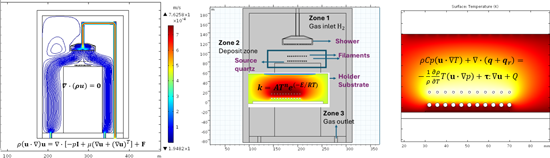
- –metal devices exhibiting blue and white electroluminescence [7][8]. It was found that these films exhibit photoconductive and photoelectric effects suitable for electroluminescence and photovoltaics applications [9][10], as well as for other applications such as solar cells and anodes for Li batteries


Strain-induced bandgap engineering in 2D ψ-graphene materials: a first-principles study
Beilstein J. Nanotechnol. 2024, 15, 1440–1452, doi:10.3762/bjnano.15.116
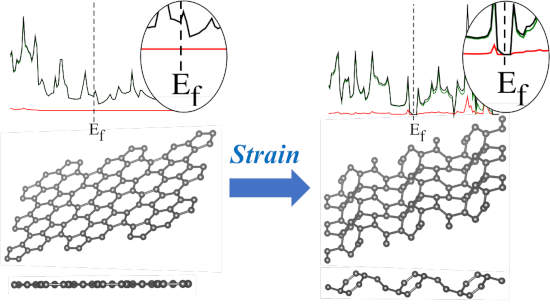
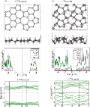
- ]. Although a successful experimental synthesis of ψ-graphene has not yet been realized, many theoretical investigations have been carried out by different research teams to study its various potential applications in sensors, lithium-ion batteries, and hydrogen storage [16][39][42]. We have recently employed
- an anode material in Li-ion batteries [16]. Theoretical investigations also suggest that when ψ-graphene is decorated with transition metals like zirconium, yttrium, and titanium, it can serve as an excellent adsorbent for hydrogen storage [42][44][45]. DFT calculations have shown that the adsorption


Lithium niobate on insulator: an emerging nanophotonic crystal for optimized light control
Beilstein J. Nanotechnol. 2024, 15, 1415–1426, doi:10.3762/bjnano.15.114
- "super-emission" scales with the system size, meaning larger systems shine brighter. The reverse phenomenon (i.e., superabsorption [35][36]) enhances light absorption for larger systems and holds promise for creating high-performance quantum batteries. However, directly observing superabsorption is


The role of a tantalum interlayer in enhancing the properties of Fe3O4 thin films
Beilstein J. Nanotechnol. 2024, 15, 1253–1259, doi:10.3762/bjnano.15.101

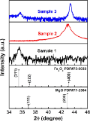
- K [1], as well as its high spin polarization with only one spin at the Fermi level, even at room temperature [2][3][4][5][6]. Fe3O4 thin films are an issue of interest and have extensive applications in Li-ion batteries, spin Seebeck devices, supercapacitors, spin Hall magnetoresistance, and the


Effect of repeating hydrothermal growth processes and rapid thermal annealing on CuO thin film properties
Beilstein J. Nanotechnol. 2024, 15, 743–754, doi:10.3762/bjnano.15.62
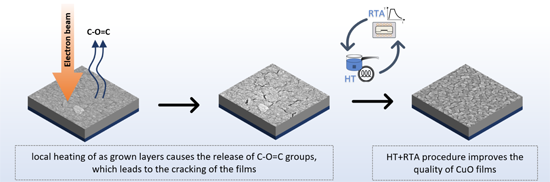
- -cleaning [1], anti-corrosion [2], and antibacterial [3] coatings. Like other CuO nanostructures, thin films also show potential for applications in photovoltaic cells [4][5], lithium-ion batteries [6], supercapacitors [7], gas sensors [8], and biosensors [9]. Furthermore, the literature reports their




Simultaneous electrochemical determination of uric acid and hypoxanthine at a TiO2/graphene quantum dot-modified electrode
Beilstein J. Nanotechnol. 2024, 15, 719–732, doi:10.3762/bjnano.15.60
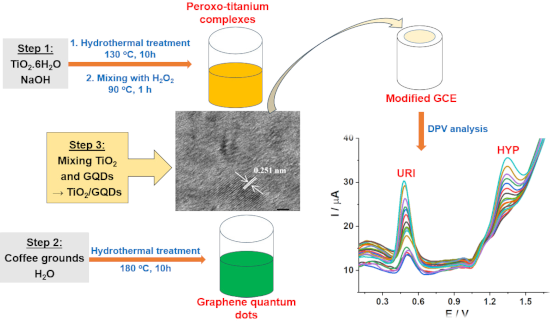
- lithium-ion storage performance of C-GQDs/α-Fe2O3 composites in lithium batteries presented excellent cyclability and rate capability [19]. Among several chemical approaches for the synthesis of titania, sol–gel processes have been commonly used for practical application. In these sol–gel methods





