Search results
Search for "chemical reactions" in Full Text gives 153 result(s) in Beilstein Journal of Nanotechnology.
Vibration-induced dynamic structural superlubricity on MoS2/Au(111) under ultrahigh vacuum
Beilstein J. Nanotechnol. 2026, 17, 1039–1046, doi:10.3762/bjnano.17.71

- wide range of materials, including insulating systems [4][23]. Moreover, it not only provides high flexibility for dynamically controlling frictional dissipation at the interface but also avoids unwanted chemical reactions induced by heating or electric fields. Indeed, dynamic mechanical control has


Ultrasonic irradiation in the synthesis of nanohydroxyapatite: a chemically friendly technique for improving hemocompatibility and antibiofilm applications
Beilstein J. Nanotechnol. 2026, 17, 991–1015, doi:10.3762/bjnano.17.68
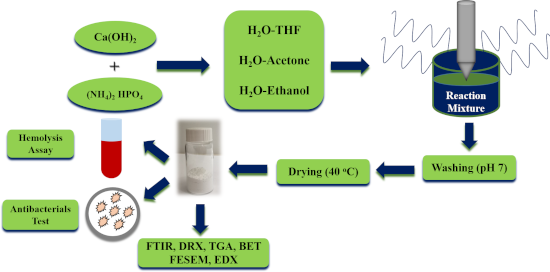
- to clarify the presence of this minor phase during the synthesis of nanohydroxyapatite in the W/ETOH system. The following sequence of chemical reactions could reasonably justify this process: The transformation can occur very quickly due to the presence of calcium hydroxide and carbonate ions in the




Materials challenges in solid-state sensors for continuous monitoring of ions in water
Beilstein J. Nanotechnol. 2026, 17, 935–973, doi:10.3762/bjnano.17.66
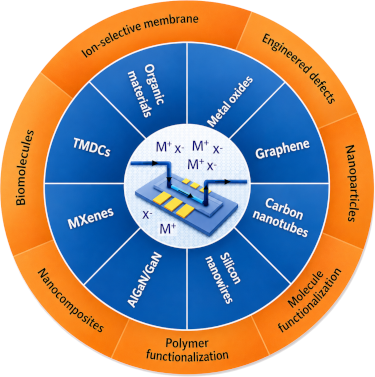
- directly responds to surface chemical reactions (protonation/deprotonation of –OH groups) that change oxide surface potential and shift the threshold voltage. Due to this mechanism, highly sensitive and stable IS-FETs for pH monitoring are reported that are CMOS-compatible and can be miniaturized, but this



Cellulose as a photocatalyst support material: extraction, structural features, and environmental applications
Beilstein J. Nanotechnol. 2026, 17, 635–652, doi:10.3762/bjnano.17.44
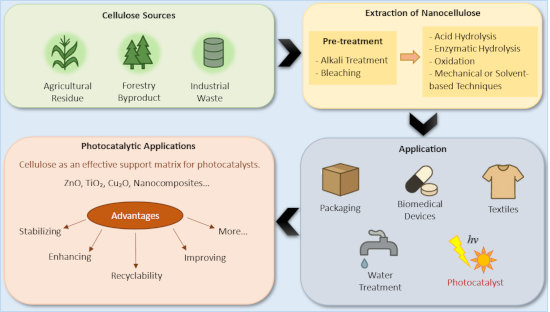
- , customizable structures, and abundance of potential anchoring sites, making them particularly valuable in advanced catalytic applications. Among these, photocatalysis has emerged as one of the most rapidly developing AOPs, in which light activates a catalyst and triggers chemical reactions that are widely


Advancing nanolithography: a comprehensive review of materials for local anodic oxidation with AFM
Beilstein J. Nanotechnol. 2026, 17, 275–291, doi:10.3762/bjnano.17.19
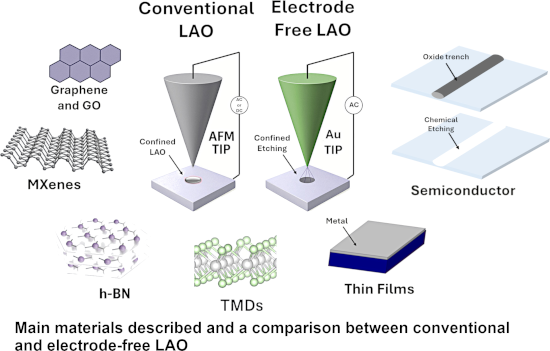
- assembling vdW heterostructures on conductive graphite slabs, which localize and amplify the electric field. This enhancement enables the breakdown of dielectric materials, such as hBN, initiating chemical reactions that drive the etching process. Notably, the method is robust under low humidity (RH ≈ 20


Structure-dependent thermochromism of PAZO thin films: theory and experiment
Beilstein J. Nanotechnol. 2026, 17, 186–199, doi:10.3762/bjnano.17.12
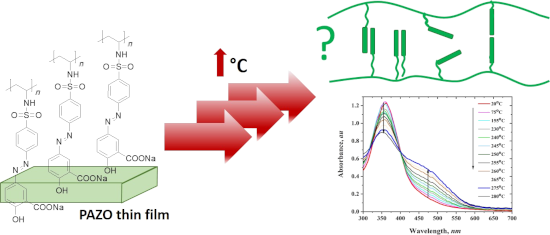
- alterations in molecular structure and chemical composition. Thermal treatment can alter the types and amounts of functional groups present in a polymer. This is a consequence of the chemical reactions occurring at elevated temperatures and leading to changes in the structure and properties of polymers. These


Safe and sustainable by design with ML/AI: A transformative approach to advancing nanotechnology
Beilstein J. Nanotechnol. 2026, 17, 176–185, doi:10.3762/bjnano.17.11

- , beginning with raw material synthesis and continuing through usage, recycling, and eventual disposal. ENMs may undergo transformations such as agglomeration, chemical reactions, or changes in surface properties. These transformations may happen in different environmental and biological contexts, including


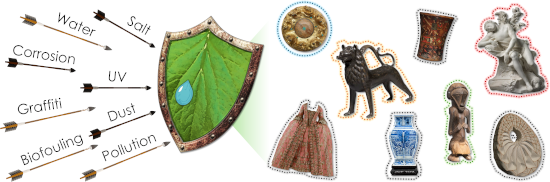
Functional surface engineering for cultural heritage protection: the role of superhydrophobic and superoleophobic coatings – a comprehensive review
Beilstein J. Nanotechnol. 2026, 17, 63–96, doi:10.3762/bjnano.17.6







Chiral plasmonic nanostructures fabricated with circularly polarized light
Beilstein J. Nanotechnol. 2025, 16, 2245–2264, doi:10.3762/bjnano.16.154
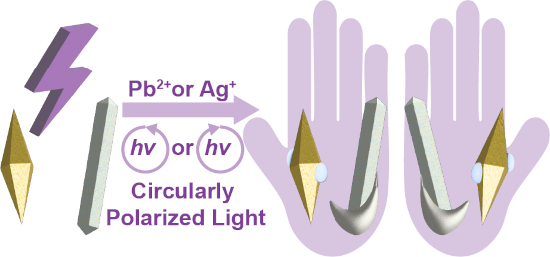
- with fabricating large arrays of cPNSs for chip-based chiral sensors. cPNSs are not only valuable for sensing chiral molecules but also show promise in promoting enantioselective chemical reactions. As this field of research is still emerging, there are many opportunities to explore. To date, the
- chemical reactions by modulating the phase of plasmonic modes. Several parameters must be carefully considered when preparing chiral PNSs with CPL. The first consideration is whether to immobilize the achiral starting PNSs on a substrate. The reactions can be easily scaled up if PNSs are dispersed in a
- the photochemical reaction rates. Additionally, the choice of photochemical reactions is another important consideration, as will be discussed in Sections 2.2 to 2.4. 2.1 Plasmon-mediated chemical reactions CPL creates cPNSs through plasmon-mediated chemical reactions (PMCRs). Three factors dictate








Laser ablation in liquids for shape-tailored synthesis of nanomaterials: status and challenges
Beilstein J. Nanotechnol. 2025, 16, 1963–1997, doi:10.3762/bjnano.16.137
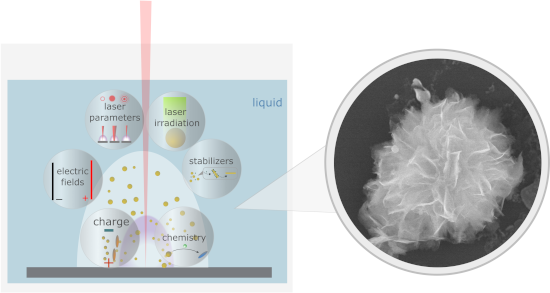
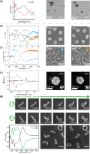
- in the next sections. Chemical processes occurring during laser ablation influence not only composition but also the chemical structure of the formed nanostructures and their surface, guiding NP growth and morphology change processes. In principle, chemical reactions are present at every stage of
- laser ablation involving the species ejected from the target and liquid components (Figure 3a). Spatially, the chemical reactions occur in different reaction zones: inside the plasma, cavitation bubble, liquid, or at their interfaces. The reactions between the ejected target material and liquid
- occurs, which interrupts the coalescence of NPs but favours the irregular growth into anisotropic or coral-shaped particles [27]. The understanding of the occurring chemical reactions in some cases provides the explanation of the regularities regarding NP structure modification. For example, in [28] the






Ambient pressure XPS at MAX IV
Beilstein J. Nanotechnol. 2025, 16, 1677–1694, doi:10.3762/bjnano.16.118
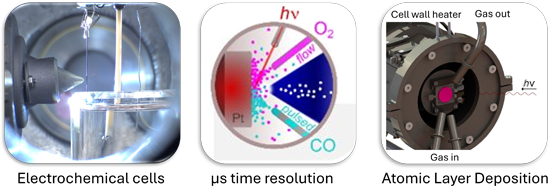
- in detector development. Their availability at HIPPIE and SPECIES is a major asset for APXPS studies. Photocatalysis Utilizing solar energy to drive chemical reactions is a central focus of sustainable energy research. Replacing fossil fuels with clean and renewable energy sources is one of the most
- material is to obtain a clean interface between the materials, which is critical for the proper function of the potential devices. In situ and operando APXPS has been utilized in many works to study the deposition of HfO2 on InAs to elucidate the chemical reactions that occur as those layers are grown in







Nanotechnology-based approaches for the removal of microplastics from wastewater: a comprehensive review
Beilstein J. Nanotechnol. 2025, 16, 1607–1632, doi:10.3762/bjnano.16.114
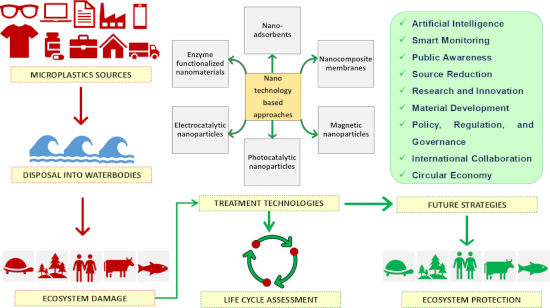
- filtration and activated carbon particle filtration, have been utilized in drinking water treatment plants to enhance MP removal [54]. Chemical processes Chemical treatment involves the use of specific reagents that initiate a series of chemical reactions aimed at enhancing the purification of water. This



Influence of laser beam profile on morphology and optical properties of silicon nanoparticles formed by laser ablation in liquid
Beilstein J. Nanotechnol. 2025, 16, 1533–1544, doi:10.3762/bjnano.16.108
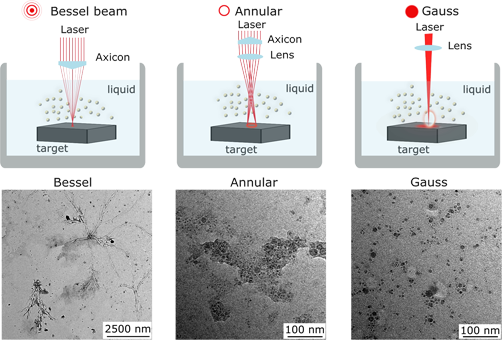
- distances (0.25 nm) in agreement with the reflections from the (111) planes of cubic 3C-SiC [40]. The formation of silicon carbide during laser ablation of silicon in ethanol has been observed in our previous work [10] and can be explained by chemical reactions of the ejected silicon species with products


Laser processing in liquids: insights into nanocolloid generation and thin film integration for energy, photonic, and sensing applications
Beilstein J. Nanotechnol. 2025, 16, 1428–1498, doi:10.3762/bjnano.16.104
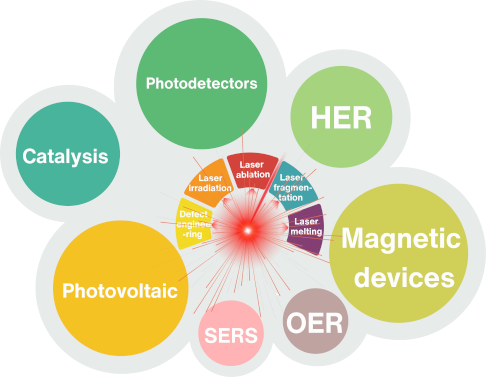
- rapidly heat target liquid regions, triggering various physical and chemical processes that lead to the formation and stabilization of desired defect structures. These processes can include thermal decomposition, phase transformations, chemical reactions, and the introduction of impurities or dopants [86







Hydrogels and nanogels: effectiveness in dermal applications
Beilstein J. Nanotechnol. 2025, 16, 1216–1233, doi:10.3762/bjnano.16.90
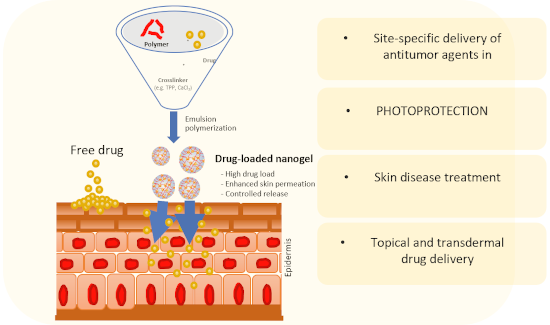
- polymer chains accomplished by irradiation, condensation reaction, radical polymerization, or chemical reactions [14][43][47]. Cross-linking agents or cross-linkers are symmetrical bifunctional compounds that contain two or more reactive ends capable of chemically attaching to specific functional groups
- (intramolecular) [44][57][148]. The process of nanogel particle formation may involve physical methods [164] or chemical reactions [165]. For example, nanogels can be obtained through electrostatic interactions generated by the ionization technique with electrospray [166]. Ionizing radiation can also be used for
- polymer cross-linking by the formation of radical groups in the polymer chains [161]. On the other hand, chemical reactions are usually performed by applying cross-linking agents [167], such as glutaraldehyde [119][129], CaCl2 [74], or N,N-methylenebisacrylamide [168]. The heterogeneous polymerization


Crystalline and amorphous structure selectivity of ignoble high-entropy alloy nanoparticles during laser ablation in organic liquids is set by pulse duration
Beilstein J. Nanotechnol. 2025, 16, 1141–1159, doi:10.3762/bjnano.16.84
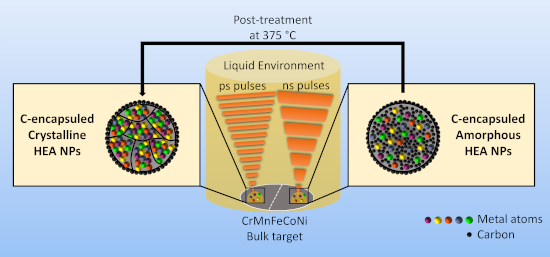
- plume heating times during LAL. Moreover, it is unlikely that the heating duration is the only prerequisite for amorphous phase formation, but also the different intensity and/or duration of chemical reactions of the plume with the solvent could contribute. One difference between LAL with ps and ns





Insights into the electronic and atomic structures of cerium oxide-based ultrathin films and nanostructures using high-brilliance light sources
Beilstein J. Nanotechnol. 2025, 16, 860–871, doi:10.3762/bjnano.16.65

- ; Introduction Transition metal oxides in the form of thin films or nanostructures find extensive use in sustainable energy technologies [1][2]. They serve as active materials or supports for catalysts for various chemical reactions, essential to energy conversion, sensing, and environmental remediation [3][4


Nanostructured materials characterized by scanning photoelectron spectromicroscopy
Beilstein J. Nanotechnol. 2025, 16, 700–710, doi:10.3762/bjnano.16.54
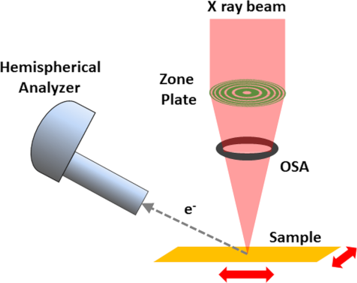
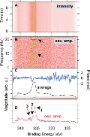
- used to obtain detailed information about nanowire surface, interface composition, and chemical reactions averaging over thousands or millions of nanowires in ensemble measurements [28], SPEM allows to investigate individual semiconductor nanostructures [29]. We investigated the surface chemical


High-temperature epitaxial growth of tantalum nitride thin films on MgO: structural evolution and potential for SQUID applications
Beilstein J. Nanotechnol. 2025, 16, 690–699, doi:10.3762/bjnano.16.53
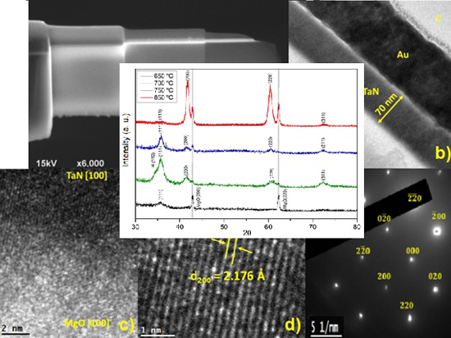
- interactions and a relatively unperturbed plume expansion. As the background pressure increases, the collision frequency between plume particles and background gas molecules rises. This leads to more pronounced interactions, including increased scattering, energy transfer, and chemical reactions. In the


Impact of adsorbate–substrate interaction on nanostructured thin films growth during low-pressure condensation
Beilstein J. Nanotechnol. 2025, 16, 473–483, doi:10.3762/bjnano.16.36

- ][19]. Hence, the usage of different species adsorbed on different substrates results in various surface patterns and defines the morphology of the growing surface. Such patterns emerge from the interplay of quasi-chemical reactions, lateral interactions between the adsorbed particles, and adsorbate


Preferential enrichment and extraction of laser-synthesized nanoparticles in organic phases
Beilstein J. Nanotechnol. 2025, 16, 254–263, doi:10.3762/bjnano.16.20
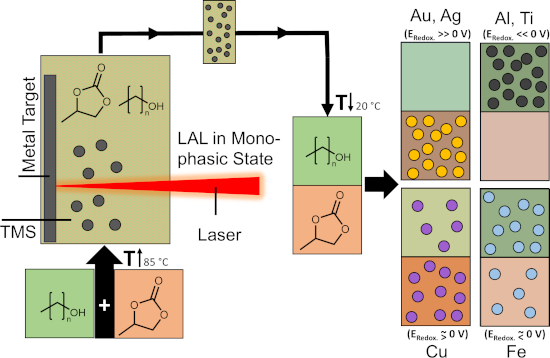
- modify the nanomaterials in situ via chemical reactions of the nanoparticles with the molecules or solutes of the liquid. Particularly when organic solvents are used as liquids, photothermally induced C–C cleavage, addition or dehydrogenation reactions of the solvents, as well as (carbon
- formed nanoparticles [1][2][3]. However, the formed nanoparticles also interact with the used liquid during the process; thus, chemical reactions such as oxidation [3][4][5][6] or carbon shell formation [7][8][9] occur depending on the solvent’s properties, allowing for alterations of the structural
- that chemical reactions may also occur on longer timescales, during the cavitation bubble phase (microsecond time scale) [60]. The smaller iron nanoparticles are found in the alcohol phase, while the smaller copper nanoparticles prefer the propylene carbonate phase. Hence, another explanation for the




Heterogeneous reactions in a HFCVD reactor: simulation using a 2D model
Beilstein J. Nanotechnol. 2024, 15, 1627–1638, doi:10.3762/bjnano.15.128
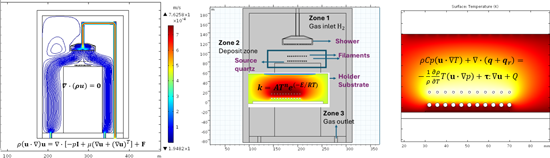
- 14 sur, Edif. IC5 y IC6. Puebla, Pue., 72507 México 10.3762/bjnano.15.128 Abstract In this study, a simulation of the elementary chemical reactions during SiOx film growth in a hot filament chemical vapor deposition (HFCVD) reactor was carried out using a 2D model. For the 2D simulation, the
- ; chemical reactions; flow dynamics; HFCVD; hot filament chemical vapor deposition; SiOx films; Introduction The growth of materials such as non-stoichiometric silicon oxide (SiOx) is an important step in semiconductor devices development. Control of deposition parameters determines the success of the
- . Different tools such as ab initio density functional theory [13][14], kinetic Monte Carlo simulations [15][16], and reactive molecular dynamics simulations [17][18] have been used to understand the chemical reactions underlying the growth of the films [19]. Modeling the reaction mechanism in both two


Liver-targeting iron oxide nanoparticles and their complexes with plant extracts for biocompatibility
Beilstein J. Nanotechnol. 2024, 15, 1593–1602, doi:10.3762/bjnano.15.125
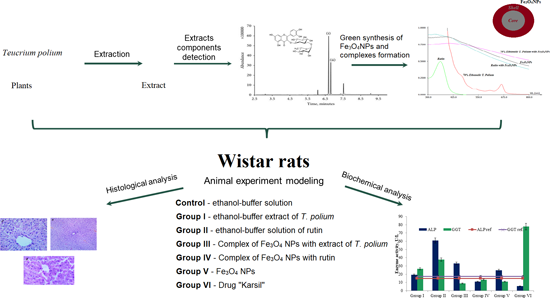
- in most biological and chemical reactions involved in the production of medical materials [10][11][12][13]. Magnetic nanoparticles (MNPs), such as iron oxides, not only exhibit superparamagnetism and high magnetic susceptibility, they also possess unique physical properties, biocompatibility


Mn-doped ZnO nanopowders prepared by sol–gel and microwave-assisted sol–gel methods and their photocatalytic properties
Beilstein J. Nanotechnol. 2024, 15, 1283–1296, doi:10.3762/bjnano.15.104
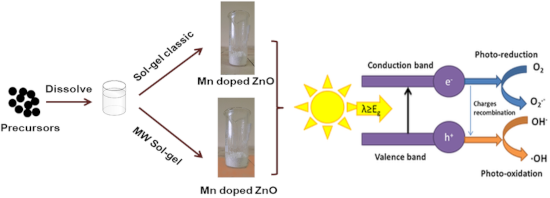
- of amorphous oxide nanopowders, the precipitation of nanocrystalline metal oxides, and the drying and thermal treatment of oxide films [23]. However, there has been comparatively less focus on studying chemical reactions in sol–gel solutions under microwave irradiation [24][25][26][27]. Numerous


Interface properties of nanostructured carbon-coated biological implants: an overview
Beilstein J. Nanotechnol. 2024, 15, 1041–1053, doi:10.3762/bjnano.15.85
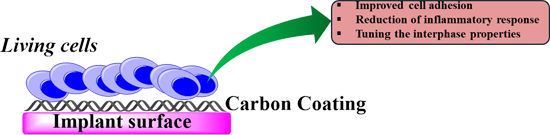
- solid choice to prevent massive implant degradation. Carbon nanomaterial coatings can prevent adverse chemical reactions triggered by both the adsorption of proteins and the metabolism of cells [151][152][153]. Hassan et al. [97] extensively investigated the effect of graphene and graphitic coatings as