


Search results
Search for "chirality" in Full Text gives 66 result(s) in Beilstein Journal of Nanotechnology.
Interconnection morphology effects on the radio frequency response of carbon nanotube sponges
Beilstein J. Nanotechnol. 2026, 17, 343–351, doi:10.3762/bjnano.17.23
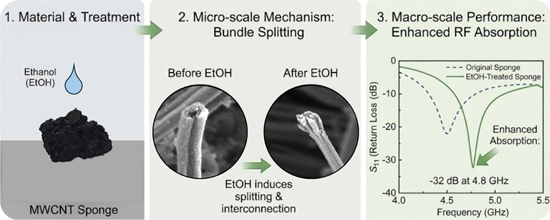
- from single-walled CNTs (SWCNTs) [12][13] as well as multiwalled CNTs (MWCNTs) [14][15][16][17]. CNTs are characterized by slow wave propagation and high characteristic impedance, and their conductivity can vary as a function of dimensions (length and diameter), chirality, and purity [16]. This enables



Beam shaping techniques for pulsed laser ablation in liquids: Unlocking tunable control of nanoparticle synthesis in liquids
Beilstein J. Nanotechnol. 2026, 17, 309–342, doi:10.3762/bjnano.17.22
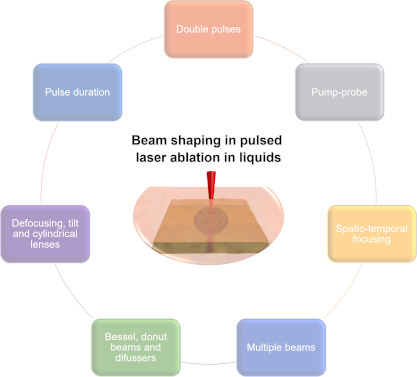
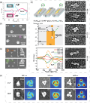
- vortex beams is shown in Figure 10a [151]. The material ablated with such a beam has been shown to form twisted nanostructures on metal surfaces with controlled chirality [151][152]. They are formed due to the involvement of ablated/molten material in a spiral motion of the vector vortex beam as


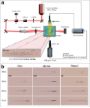

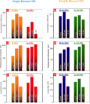


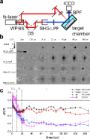


Chiral plasmonic nanostructures fabricated with circularly polarized light
Beilstein J. Nanotechnol. 2025, 16, 2245–2264, doi:10.3762/bjnano.16.154
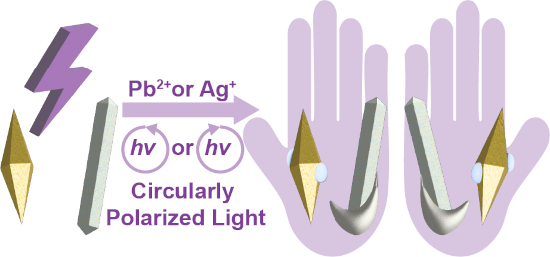
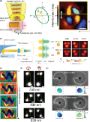
- . Additionally, the optical chirality at the near field is greater than that of the incident CPL, increasing the polarization selectivity of the interactions between molecules and CPL [17][18]. After more than two decades of development, the synthesis of cPNSs has evolved from nanolithography and self-assembly
- enantioselectivity induced by cPNSs has primarily been attributed to their geometrical chirality, which structurally favors interactions with chiral molecules [21][22]. However, chiral-induced spin selectivity through cPNSs can potentially promote enantioselective catalytic reactions [23]. Furthermore, the chiral
- plasmonic nanostructures Studies of chirality (both geometrical and optical) on plasmonic nanostructures date back to the 2000s. The early studies were primarily enabled by lithographically fabricated [24] and self-assembled plasmonic nanostructures [25]. Quasi-two-dimensional planar gold propellers [26





Stereodiscrimination of guests in chiral organosilica aerogels studied by ESR spectroscopy
Beilstein J. Nanotechnol. 2025, 16, 2034–2054, doi:10.3762/bjnano.16.140
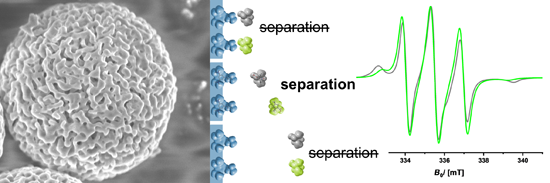
- particularly interesting result was that better performance could be achieved if one attaches bulky, hydrophobic groups directly to the stereocenter. The effect of such neighboring groups on the enantioselectivity highly depends on the distance they have to the stereocenter. Keywords: chirality; confinement
- chemistry; ESR spectroscopy; organic inorganic hybrids; porous materials; Introduction Chiral materials represent an evolving research field that focuses on materials whose structures lack mirror symmetry [1][2][3]. The materials exhibit chirality, and a good overview of important developments was given by
- Kotov and coworkers [4]. Chiral optical materials have unique optical activity, displaying phenomena such as circular dichroism and optical rotation. These characteristics are harnessed in applications like sensors, optical devices, and polarized materials. Material chirality can also lead to unusual




Deep-learning recognition and tracking of individual nanotubes in low-contrast microscopy videos
Beilstein J. Nanotechnol. 2025, 16, 1316–1324, doi:10.3762/bjnano.16.96
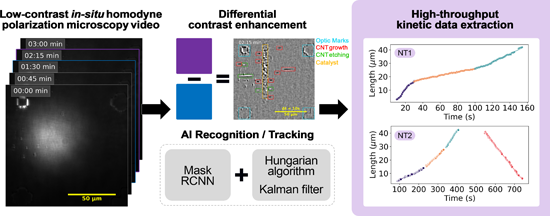
- , finding numerous applications in scientific research. Deep learning models have been used to identify two-dimensional materials in microscopic images [6], characterize mineral composition in scanning electron microscopy (SEM) samples [7], and determine nanotube chirality from transmission electron
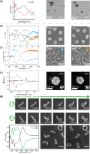
- adds useful information to the video. Additionally, differential videos capture other processes causing local changes in optical absorption. For instance, if the nanotube structure (also called helicity or chirality) changes during growth, this manifests as a second segment moving synchronously with
- the first one: The new chirality appears either as a bright segment if it has lower optical absorption, or as a dark segment otherwise. If the nanotube switches from growth to shrinkage, it appears as a single bright segment moving backward, corresponding to lower optical absorption [20]. We developed


Electronic and optical properties of chloropicrin adsorbed ZnS nanotubes: first principle analysis
Beilstein J. Nanotechnol. 2025, 16, 1184–1196, doi:10.3762/bjnano.16.87
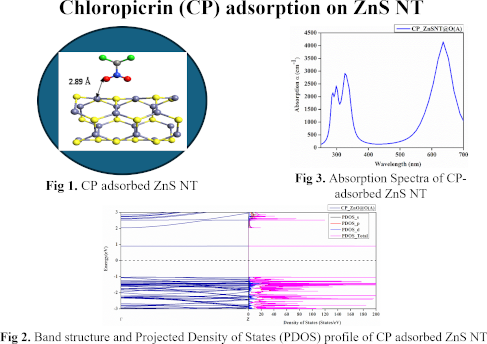
- ZnS NT with (3,3) chirality is illustrated in Figure 2. The structural analysis reveals an average Zn–S bond length of 2.29 Å, which is slightly shorter than the bond length of bulk ZnS (2.34 Å). This reduction in bond length can be attributed to the curvature of the NT structure, which induces a


Soft materials nanoarchitectonics: liquid crystals, polymers, gels, biomaterials, and others
Beilstein J. Nanotechnol. 2025, 16, 1025–1067, doi:10.3762/bjnano.16.77
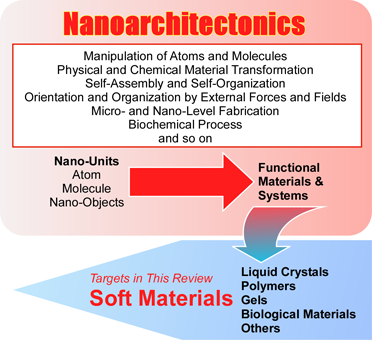
- treatment enabled the axis of linearly polarized electroluminescence to be rotated by 90°. These findings suggest that the molecular chirality, in conjunction with the tilted orientation of the chromophores within the liquid crystal molecules, induces a macroscopic electric polarization, resulting in a bulk






Radiosensitizing properties of dual-functionalized carbon nanostructures loaded with temozolomide
Beilstein J. Nanotechnol. 2025, 16, 229–251, doi:10.3762/bjnano.16.18
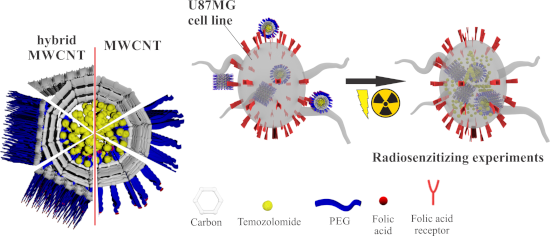
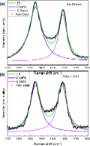
- sp3-hybridization of the carbon atoms in the CNTs; the position and intensity of the G band related to the E2g phonon mode of sp2-bonded carbon atoms in the 1600–1500 cm−1 region; the bands from the so-called low-frequency radial breathing mode (below 300 cm−1), sensitive to the diameter and chirality




Bolometric IR photoresponse based on a 3D micro-nano integrated CNT architecture
Beilstein J. Nanotechnol. 2024, 15, 1030–1040, doi:10.3762/bjnano.15.84
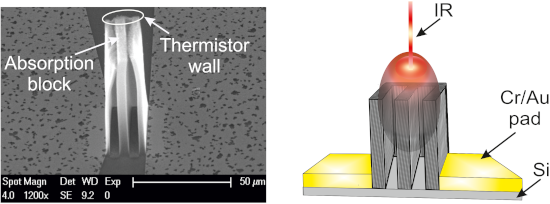
- from similar CNT growth conditions have been published in previous works [7][15]. It was shown that more than 90% of the CNTs grown on the Si wafer were double-walled carbon nanotubes (DWCNTs). The new TEM micrograph in Figure 3a shows the DWCNTs. Diameter and chirality of the carbon nanotubes are
- strongly influenced by the size and morphology of the catalyst particles. A correlation between cluster size and diameter of the CNT grown on it was shown in [15]. The effect of the growth temperature on the diameter distribution and chirality of single-walled carbon nanotubes can be found in [16]. A new


Directed growth of quinacridone chains on the vicinal Ag(35 1 1) surface
Beilstein J. Nanotechnol. 2024, 15, 556–568, doi:10.3762/bjnano.15.48
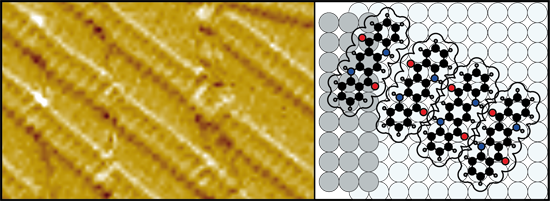
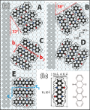
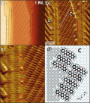
- Figure 2c. We suppose that the adsorption of a QA molecule at the step edge on the upper/lower terrace induces a local change in the electron density at the step edge. This favors a specific adsorption site of a second QA molecule with the same chirality and azimuthal orientation at the step edge on the
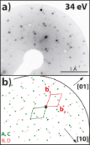
- orientations A–D are identical to those that were already observed on the nominally flat Ag(100) surface [23]. The chain directions A and C, as well as B and D, exhibit equivalent adsorption sites because of a mirror symmetry. Note that the adsorbed molecules in A(C) and B(D) are of the same chirality R(L
- ). For the chain orientation E there exists the energetically equivalent chain with molecules of the opposite chirality. The color code of the atoms is: black = carbon, gray = hydrogen, blue = nitrogen, and red = oxygen. (b) Structural formula and hard-sphere model with dimensions of QA. The nominal van


Two-dimensional molecular networks at the solid/liquid interface and the role of alkyl chains in their building blocks
Beilstein J. Nanotechnol. 2023, 14, 872–892, doi:10.3762/bjnano.14.72
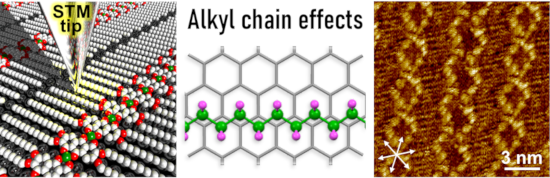
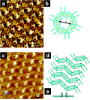
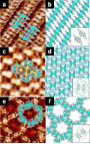
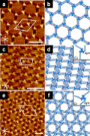
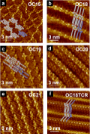
- , the mixture of homogeneous (CCn–CCn) and heterogeneous (OCn–CCn) dimers formed lozenge and linear structures. Thus, the proportion of these interdigitated dimers determines the 2D structure of the blend system. 6 Chirality The chiral information of alkyl chain units can be transferred to
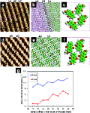
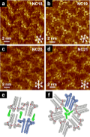
- supramolecular 2D assemblies, and the chirality of 2D structures composed of achiral molecular building blocks can be induced even upon the use of chiral solvents [144][145][146][147]. As stated in the above section 3.2, DBA derivatives formed hexagonal porous structures (Figure 6). Although the DBA molecule is
- was observed in the monolayer via self-assembly in (R)-2-octanol (Figure 14b,f). The induction of chirality was greater than 90% of the surface, and the CW and CCW domains were equally created when racemic 2-octanol was used. A pair of chiral solvents and DBA molecules formed upon interaction were









Current-induced mechanical torque in chiral molecular rotors
Beilstein J. Nanotechnol. 2023, 14, 711–721, doi:10.3762/bjnano.14.57
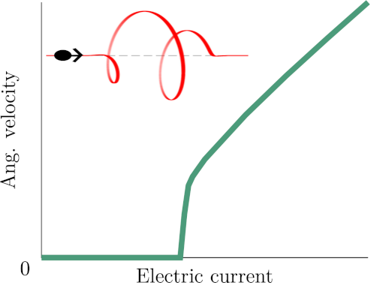
- the incoming flux is conserved. This situation arises typically with molecular rotors that exhibit an easy axis of rotation. For quantitative analysis we investigate here a classical model where molecule and wires are represented by a rigid curved path. We demonstrate that in the presence of chirality
- unidirectional rotation in the STM setup requires a degree of symmetry breaking. There are two typical situations, that is, either the molecule by itself exhibits a handedness (chirality) or chirality is imposed by the geometry of the molecular junction [6][10]. The purpose of this article is to provide a
- crossover between both regimes. To exemplify our results, we employ a helical geometry. Helical molecular wires have sparked a lot of attention because of reports of spin-selective transport [16][17][18]. This phenomenon falls under the umbrella term “chirality-induced spin selectivity (CISS)”. The full




![[Graphic 29]](/bjnano/content/inline/2190-4286-14-57-i54.svg?max-width=637&scale=1.18182)


Single-step extraction of small-diameter single-walled carbon nanotubes in the presence of riboflavin
Beilstein J. Nanotechnol. 2022, 13, 1564–1571, doi:10.3762/bjnano.13.130
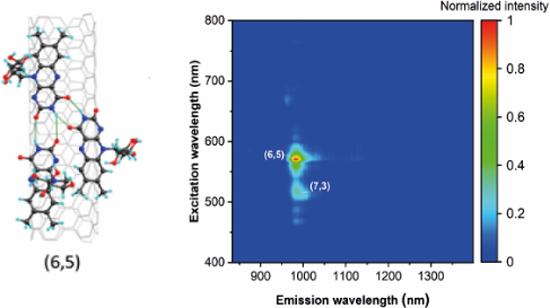
- agents [6][7][8]. Despite significant progress toward the synthesis of monochiral and chirality-enriched carbon nanotubes, further improvements are of unmet need even at the laboratory scale [3][8]. As SWCNT synthesis yields a distribution of bundled (n,m) types, solubilizing and isolating specific
- facilitate chirality separation. Conventional surfactants such as sodium dodecyl sulfate (SDS) and sodium deoxycholate (DOC), as well as polyethylene glycol-based compositions, are used to obtain high-quality dispersions of individual SWCNTs [3][4][5][10]. Although given surfactants show exemplary
- performance in both individualization and chirality separation of carbon nanotubes, excessive surfactant concentrations are usually required for their complete individualization [2][8][11]. Such excess subsequently introduces an additional step of surfactant removal to recover the SWCNTs in a pristine state


Design of surface nanostructures for chirality sensing based on quartz crystal microbalance
Beilstein J. Nanotechnol. 2022, 13, 1201–1219, doi:10.3762/bjnano.13.100
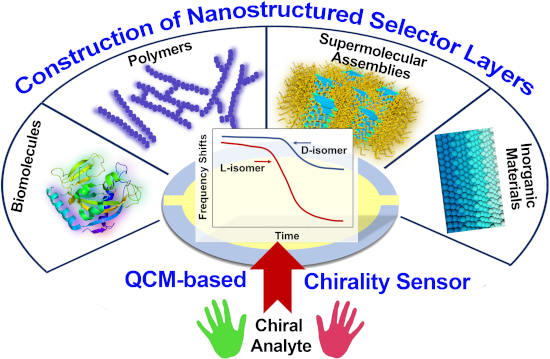
- for various sensing applications, including chirality detection due to the high sensitivity to nanogram or picogram mass changes, fast response, real-time detection, easy operation, suitability in different media, and low experimental cost. The sensing performance of QCM is dependent on the surface
- ; chiral surface; chirality recognition; quartz crystal microbalance (QCM); sensing applications; surface architecture; Introduction Chirality is a prevalent phenomenon in nature. Many common biological macromolecules such as proteins, ribose, and cellulose are inherently chiral. Chiral molecules have two
- several pregnant women causing fetal malformation [7], owing to the trace presence of teratogenic (S)-thalidomide in sedative (R)-thalidomide [8]. Hence, chirality detection keeps attracting much attention in the fields of chemistry, biology, and medicine. Especially for the pharmaceutical and food


Tunable high-quality-factor absorption in a graphene monolayer based on quasi-bound states in the continuum
Beilstein J. Nanotechnol. 2022, 13, 675–681, doi:10.3762/bjnano.13.59
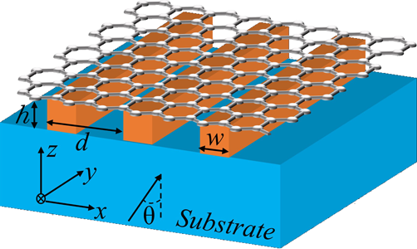
- linear dispersion of the Dirac fermions [36]. These features proposed for graphene enable novel active devices, including modulators [37], perfect absorbers [38][39], imaging devices [40], detectors [41], waveguides [42][43], polarizers [44], and electromagnetic chirality devices [45]. The strength of


Effects of temperature and repeat layer spacing on mechanical properties of graphene/polycrystalline copper nanolaminated composites under shear loading
Beilstein J. Nanotechnol. 2021, 12, 863–877, doi:10.3762/bjnano.12.65
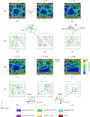
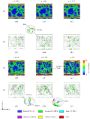
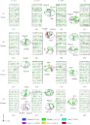
- ) composites under shear loading are investigated by molecular dynamics simulations. The effects of different temperatures, graphene chirality, repeat layer spacing, and grain size on the mechanical properties, such as failure mechanism, dislocation, and shear modulus, are observed. The results indicate that
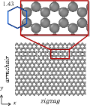
- the mechanical properties of carbon materials [31]. In this study, graphene with zigzag and armchair chirality is considered while simulating different properties of graphene monolayers and copper layers, including stress–strain curve variations, the distribution of von Mises stress, the evolution of
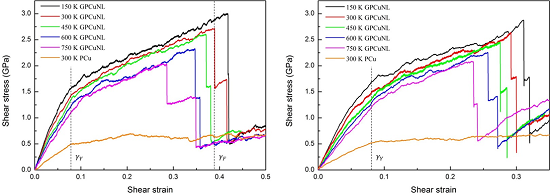
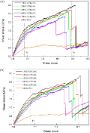
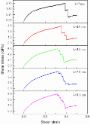
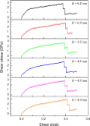
- temperature and chirality The stress–strain curves of GPCuNL composites and polycrystalline copper (PCu) at different temperatures and with different graphene chirality are presented in Figure 3, where yield and failure strain are defined as γY and γF, respectively. As shown in Figure 3, the shear stress of










Direct observation of the Si(110)-(16×2) surface reconstruction by atomic force microscopy
Beilstein J. Nanotechnol. 2020, 11, 1750–1756, doi:10.3762/bjnano.11.157
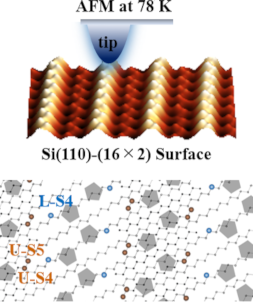
- nanodots [8][9]. Particularly, the Si(110)-(16×2) reconstructed surface is considered to be an ideal 1D template [4][7][9]. Since this reconstructed surface is reported to be two dimensionally chiral, it has been the subject of many investigations, for example, in efforts to control the chirality for
- characteristic structures were observed in flat and step areas. In the flat area, the 16×2 reconstruction area (solid square) and the disorder area (dotted square) were mixed. The 16×2 reconstruction is known to have chirality with zigzag chains extending in the direction of or [13][21]. In this AFM image, zig



Self-assembly and spectroscopic fingerprints of photoactive pyrenyl tectons on hBN/Cu(111)
Beilstein J. Nanotechnol. 2020, 11, 1470–1483, doi:10.3762/bjnano.11.130
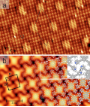
- . The molecules interdigitated in both the atetra and btetra directions, with two distinct interdigitation arrangements, inducing organizational chirality of the achiral pyrene units [48]. Based on the model of the assembly depicted in Figure 2b, the array was stabilized by intermolecular noncovalent
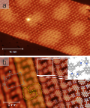
- nm ± 0.05 nm (labeled as d in Figure 3b). For each chirality, six distinct rotational orientations of the trans-like molecule 2, separated by 30°, were observed on hBN/Cu(111) (not shown). Although rare, coexisting densely packed arrays could be detected near the step edges (see Figure S7, Supporting
- chirality. Overall, six distinct rotational orientations of the cis-like pyrene molecule 3, separated by 60°, were observed on hBN/Cu(111) (not shown). Binary assemblies The combination of different pyrene derivatives opens pathways to distinct multicomponent assemblies on hBN/Cu(111). For example, the


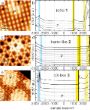


Hybridization vs decoupling: influence of an h-BN interlayer on the physical properties of a lander-type molecule on Ni(111)
Beilstein J. Nanotechnol. 2020, 11, 1168–1177, doi:10.3762/bjnano.11.101
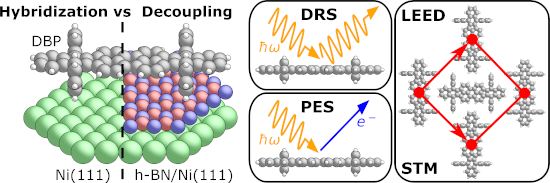
- , Chiba 263-8522, Japan Molecular Chirality Research Center, Chiba University, 1-33, Yayoi-cho, Inage-ku, Chiba 263-8522, Japan 10.3762/bjnano.11.101 Abstract 2D materials such as hexagonal boron nitride (h-BN) are widely used to decouple organic molecules from metal substrates. Nevertheless, there are


Scanning tunneling microscopy and spectroscopy of rubrene on clean and graphene-covered metal surfaces
Beilstein J. Nanotechnol. 2020, 11, 1157–1167, doi:10.3762/bjnano.11.100
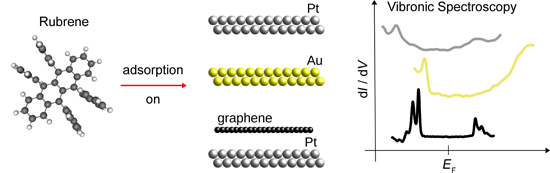
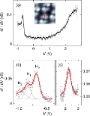
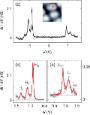
- near-edge X-ray absorption fine structure spectroscopy [15]. The observed chirality, R-C42H28 and L-C42H28, therefore results from the left or right pair of phenyl groups of a twisted C42H28 molecule being closer to the surface. On Au(111) the formation of homochiral clusters led to remarkable



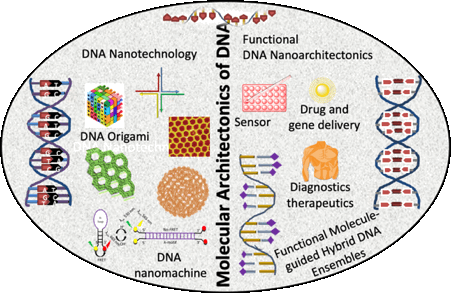
Molecular architectonics of DNA for functional nanoarchitectures
Beilstein J. Nanotechnol. 2020, 11, 124–140, doi:10.3762/bjnano.11.11
- dT20–(APA)20–dT20, extended end-to-end through aromatic interactions, was visualized by AFM (Figure 4c). The left-handedness of the double-helical assembly dT20–(APA)20–dT20 observed in AFM correlated with the CD data. The stimuli-responsiveness of the SFM-supported chirality-imprinted double-helical


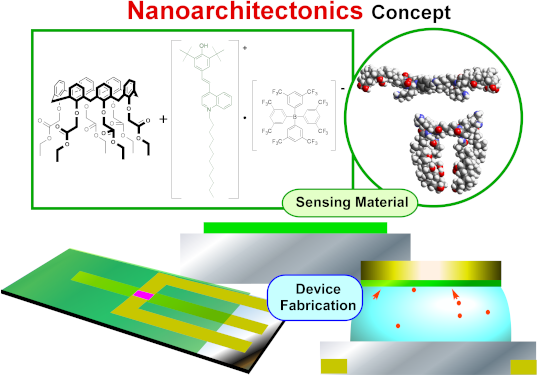
Review of advanced sensor devices employing nanoarchitectonics concepts
Beilstein J. Nanotechnol. 2019, 10, 2014–2030, doi:10.3762/bjnano.10.198
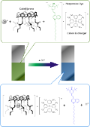
- related to protein metabolism, food products and pharmaceuticals. Such difficult goals can be achieved through a nanoarchitectonics approach, namely molecular imprinting [103][104][105]. Qiu and co-workers developed sensors for chirality detection of amino acid guests using an organic electrochemical





First principles modeling of pure black phosphorus devices under pressure
Beilstein J. Nanotechnol. 2019, 10, 1943–1951, doi:10.3762/bjnano.10.190
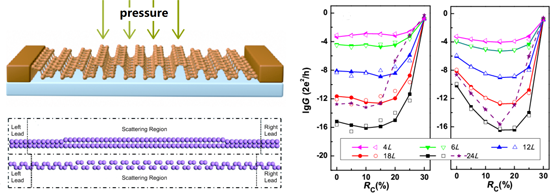
- study the chirality dependence of strain-related quantum transport of BP, we propose an empirical model based on the Wentzel–Kramers–Brillouin (WKB) approximation to describe the transport through the BP device, which could serve as a simple compact model for this emerging device. In this manuscript, we




Chiral nanostructures self-assembled from nitrocinnamic amide amphiphiles: substituent and solvent effects
Beilstein J. Nanotechnol. 2019, 10, 1608–1617, doi:10.3762/bjnano.10.156
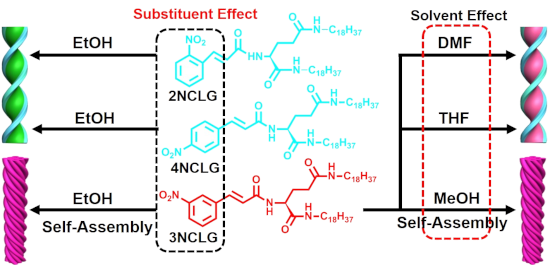
- nanotubes, depending on the substituent position in the pyridine ring. However, we did not observe inversion in the helical sense of the formed self-assembled nanostructures due to the macroscopic chirality of nanofibers and nanotubes, which makes them difficult to be directly detected by a microscope. On
- formed 3D network gels. The SEM results reveal that the nanoscale chirality of the 3NCLG assembly is opposite to that of the 2NCLG and 4NCLG assemblies. It is suggested that the nanoscale chirality of the formed nanostructures did not strictly follow the chirality of the chiral carbon centers in
- theory that the formation of assemblies and the chirality of ʟ-glutamic acid was transferred to the cinnamic amide moiety. In our previous work, the self-assembly of cinnamic acid derivatives was photo-responsive, while in this work, we found that the self-assembled molecules of the three gelators did




Synthesis and characterization of quaternary La(Sr)S–TaS2 misfit-layered nanotubes
Beilstein J. Nanotechnol. 2019, 10, 1112–1124, doi:10.3762/bjnano.10.111
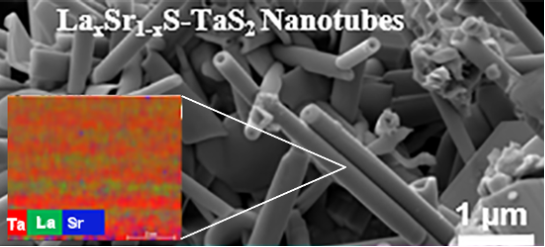
- assigned to the A1g vibration of the 2H-TaS2. Obviously, the diameter, number of layers and chirality varies from one nanotube to the next, and from one batch to the next. This polydispersity leads to the broadening of the peaks and minor shifts in their positions. Increasing the Sr content in the lattice





