Search results
Search for "composition" in Full Text gives 1133 result(s) in Beilstein Journal of Nanotechnology. Showing first 200.
Nanoglasses: a trail towards uncharted regions of vitreous materials and their properties?
Beilstein J. Nanotechnol. 2026, 17, 1047–1062, doi:10.3762/bjnano.17.72

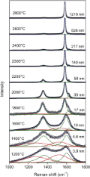
- has always been closely tied to the continuous development of new and improved materials. From the earliest stages of material use, humans learned to modify the structure and composition of materials to enhance their performance and expand their applications. While chemical modifications play a key
- similar composition. This difference arises from the distinct atomic structures of crystalline or vitreous materials, where the rigidity of the crystalline order restricts significant changes in specific volume or local atomic arrangements within a given crystal structure and for the same chemical
- glasses with a given chemical composition undergo “microstructural” engineering beyond the well-known and limited changes in specific volume? Can we impose a tailored “microstructure” onto glasses to control their properties? This line of inquiry extends further, exploring the potential extent of


Influence of an external electric field on the catalytic CO oxidation of nanoscaled CeO2 and its La3+ and Gd3+ congeners
Beilstein J. Nanotechnol. 2026, 17, 1028–1038, doi:10.3762/bjnano.17.70
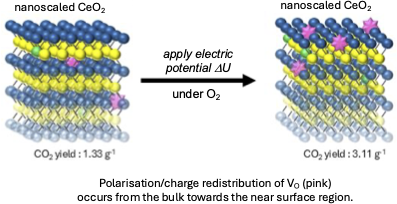
- potential, charge transport within nCeO2 is modulated. Our results show that both dopants Gd3+ and La3+ lead to an increasing VO concentration, whereas the impact of the applied potential on the oxidation behaviour varies with catalyst composition. The applied electric potential markedly improves the
- these dopants behave differently when coupling with such low-power electrical fields. In situ FTIR studies were used to follow and monitor the influence of the electrical field by measuring the change in the final gas composition over the headspace of the sample, giving substantial information about the


Synthesis and characterization of RF-sputtered ZnTe/Cu2−xTe thin films for solar cell applications
Beilstein J. Nanotechnol. 2026, 17, 1016–1027, doi:10.3762/bjnano.17.69
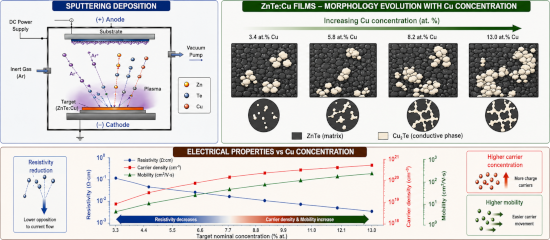
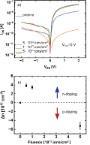
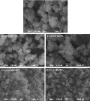
- target, including the combined effects of composition and substrate temperature on phase evolution, microstructure, and functional properties, remains limited. In particular, the relationship between Cu-induced phase segregation, structural evolution, and the resulting electrical transition has not been
- fully established. Based on this approach, the present work investigates ZnTe-based films deposited from a ZnTe–CuO composite target over a broad nominal composition range (3–13 atom %) and at two substrate temperatures (300 and 350 °C). The objective is to establish the correlation between phase
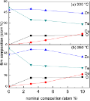
- deposition time was fixed at 60 min for all samples. Structural and chemical characterization The chemical composition of the films grown on silicon substrates was determined by energy dispersive X-ray spectroscopy (EDS) using a scanning electron microscope (XL30, ESEM, Phillips) equipped with EDX (EDAX) and



Ultrasonic irradiation in the synthesis of nanohydroxyapatite: a chemically friendly technique for improving hemocompatibility and antibiofilm applications
Beilstein J. Nanotechnol. 2026, 17, 991–1015, doi:10.3762/bjnano.17.68
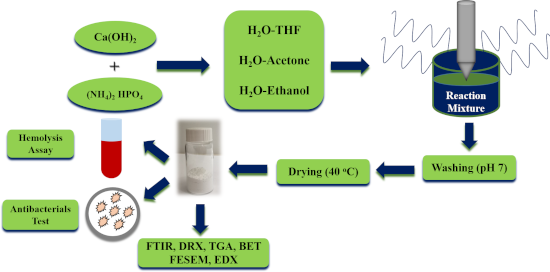
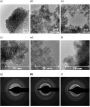
- of ultrasonic waves promotes in the reaction medium the formation and coexistence of another distinct mineral phase with carbonate groups in its composition. Table 2 shows the carbonate content of the nHA samples, which was calculated by integrating the absorption bands in the ν3 region of the CO32




Development of Protium heptaphyllum essential oil-loaded nanocapsules: experimental design and biological activity
Beilstein J. Nanotechnol. 2026, 17, 974–990, doi:10.3762/bjnano.17.67
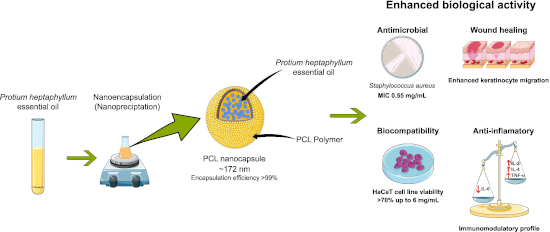
- development of novel natural products and promotes the sustainable use of renewable biological resources with high therapeutic potential. Among these, essential oils are particularly important due to their complex chemical composition, rich in terpenoids and phenolic compounds known to exhibit antimicrobial
- , predominantly composed of α-pinene and p-cymene, on biological responses such as cytokine modulation and wound healing has not been systematically investigated. Previous studies have primarily focused on its chemical composition and biological activities in the free form, with limited exploration of its
- Discussion Chemical composition of P. heptaphyllum essential oil The chromatographic analysis of P. heptaphyllum essential oil revealed the presence of 31 distinct compounds, with a predominance of monoterpenes, accounting for 92.1% of the total composition (Table 1). The principal constituent identified was




Materials challenges in solid-state sensors for continuous monitoring of ions in water
Beilstein J. Nanotechnol. 2026, 17, 935–973, doi:10.3762/bjnano.17.66
- and with temperature fluctuations is required because real samples (biological fluids, environmental solutions, or industrial streams) differ widely in composition and operating conditions. In practice, this means the device must tolerate variations in ionic strength, pH, temperature, and fluid flow
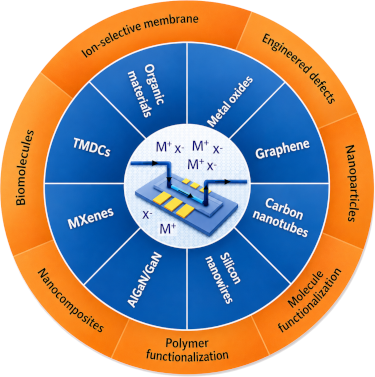
- explored for online water monitoring (Figure 1). Each sensor type differs in its transduction mechanism, structural configuration, and material composition, which ultimately influence its analytical performance, stability, and ease of integration into autonomous systems [22]. Potentiometric sensors
- placed in contact with the water layer (or positioned above it) as a gate electrode. This geometry allows for stable operation in aqueous environments and enables continuous monitoring of bulk solution properties, though it similarly faces challenges with interference from electrolyte composition and



Enhanced erosion resistance and radiation stability of WC–WO3 nanocomposite films under 100 keV Kr+ ion irradiation
Beilstein J. Nanotechnol. 2026, 17, 922–934, doi:10.3762/bjnano.17.65
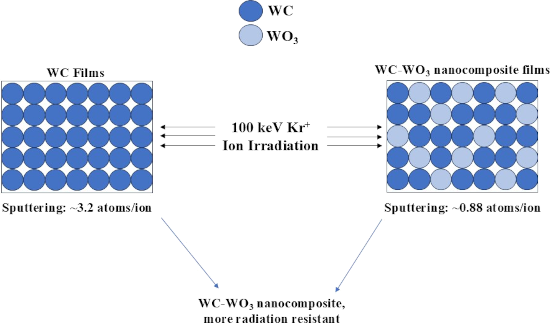
- causes degradation of the PFC material, and the sputtered atoms contaminate the plasma of tokamaks, which is undesirable. The erosion (sputtering) of films is known to be dependent on several factors such as ion energy [55], composition of material and its properties [56][57], film thickness [58], and



Nanocarrier strategies to overcome P-glycoprotein-mediated drug resistance in cancer therapy
Beilstein J. Nanotechnol. 2026, 17, 882–921, doi:10.3762/bjnano.17.64
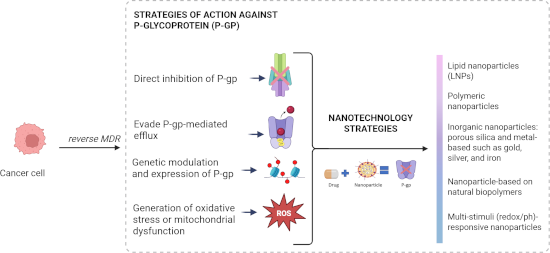
- reduces the cytosolic availability of chemotherapeutics independently of P-gp, but pH-responsive nanocarriers engineered for endosomal escape indirectly address this barrier. EMT-associated phenotypic shifts alter membrane composition and uptake pathways in ways that affect nanoparticle internalization
- liposomes, first discovered in the 1960s, which were commonly used to deliver anticancer agents, antibiotics, and vaccines. The size, surface charge, and composition of liposomes influence their biological behavior, biodistribution, and shelf life [45]. Another important class are nanostructured lipid


He+ FIBID-fabricated 3D AFM tip architectures: an exploratory study of hollow pillars, helices, and spirals
Beilstein J. Nanotechnol. 2026, 17, 863–871, doi:10.3762/bjnano.17.62
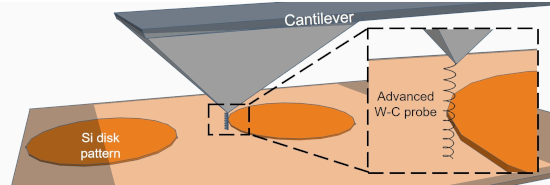
- composition of the probe can be tailored beyond the constraints of standard conical or pyramidal commercial tips. Among direct-write methods, focused ion beam-induced deposition (FIBID) [8][9] and focused electron beam-induced deposition (FEBID) [10][11] provide a route to grow three-dimensional (3D



Nanoparticle delivery systems for HIV pre-exposure prophylaxis (PrEP): advances and challenges
Beilstein J. Nanotechnol. 2026, 17, 839–853, doi:10.3762/bjnano.17.60
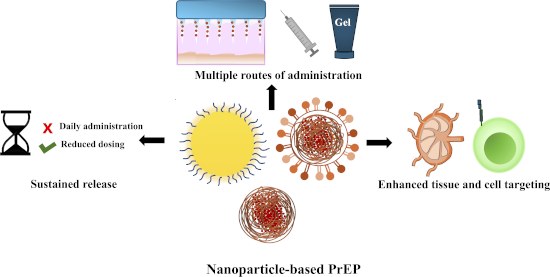
- , mechanical properties, and surface composition that need to be considered in the design of the nanoparticles. The choice of core material plays a pivotal role in defining the physicochemical properties, release behavior, biocompatibility, and clinical feasibility of nanoparticle formulations. Various
- systems, LBNPs in general allow for a higher flexibility in tuning surface charge and membrane composition to facilitate interactions with immune cells [56]. Both factors enhance the overall ability of targeted delivery. One example of surface functionalized LBNPs for targeted delivery are DRV-loaded SLNs
- nanoparticles surface provided some control over the intracellular trafficking pathways, achieving preferential enrichment of the nanoparticles in either endolysosomal compartments or VCCs [101]. Combined, these studies highlight the importance of lipid composition and ligand decoration on the nanoparticle


Glycerol photoelectrochemical oxidation reaction at carbon nitrides/BiVO4 materials
Beilstein J. Nanotechnol. 2026, 17, 806–817, doi:10.3762/bjnano.17.57
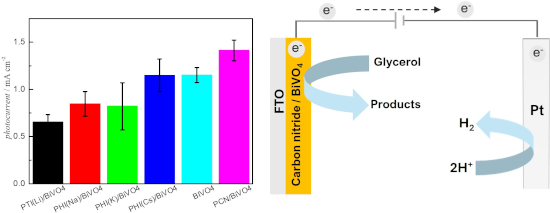
- acquired from 10° to 80° at a rate of 2°·min−1 with a step size of 0.02°. Morphological features and elemental composition were determined by field-emission scanning electron microscopy (FEG-SEM; Zeiss Supra35) coupled with energy-dispersive X-ray spectroscopy (EDS), operating at 15 kV. Optical properties





Tuning the electronic properties of defect-rich MoS2
Beilstein J. Nanotechnol. 2026, 17, 796–805, doi:10.3762/bjnano.17.56
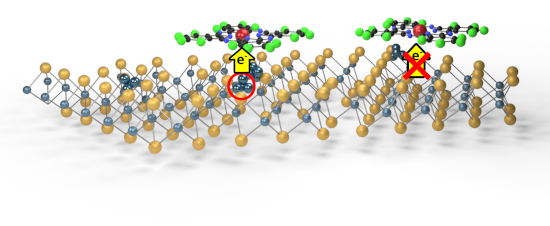
- the partial reversal of the sputter-induced energetic shifts by a subsequent deposition of CoPcF16. Monitoring the Mo/S ratios (Supporting Information File 1, Table S7) yields no significant difference inflicted by sputtering, indicating that these actions do not change the composition of the bulk. In


Tailoring Ag–Pt nanoalloys through solid-state dewetting: structural and optical insights
Beilstein J. Nanotechnol. 2026, 17, 748–759, doi:10.3762/bjnano.17.52

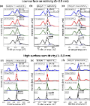
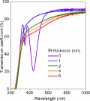
- process. Optical measurements revealed the presence of a single resonance peak. The composition-dependent plasmonic resonance band was observed for low Pt contents, while progressively blue-shifting and decreasing in intensity with increasing Pt concentration. This behavior is consistent with the strong d
- decomposition of the thin Ag/Pt bilayer into isolated homogenous nanoislands. The chemical composition of the nanostructures was examined using energy dispersive spectroscopy (EDS) in point analysis mode. The example spectrum, shown in Figure 2b, confirms the coexistence of Ag and Pt in the analyzed
- greater control over the final alloy composition. However, SEM observations revealed that an annealing temperature of 650 °C was insufficient to produce spherical, isolated nanostructures, instead resulting in the formation of irregularly shaped nanoislands. Therefore, the annealing temperature was




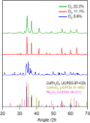
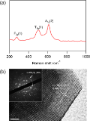
Oxidative atmosphere-driven formation of single-phase spinel CuRh2O4 nanofibers for alkaline water oxidation
Beilstein J. Nanotechnol. 2026, 17, 737–743, doi:10.3762/bjnano.17.50
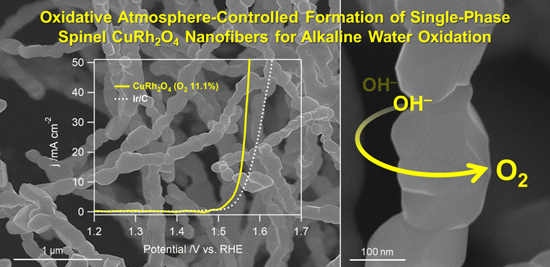
- characterization Morphology and elemental composition of the synthesized nanomaterials were examined using field-emission scanning electron microscopy (FE-SEM; JEOL JSM-6700F) and high-resolution transmission electron microscopy (HRTEM; JEOL JEM-2100F). Surface chemical states and crystallographic structures were




Environmental applications of silver nanoparticles: state-of-the-art review and emerging trends
Beilstein J. Nanotechnol. 2026, 17, 697–736, doi:10.3762/bjnano.17.49
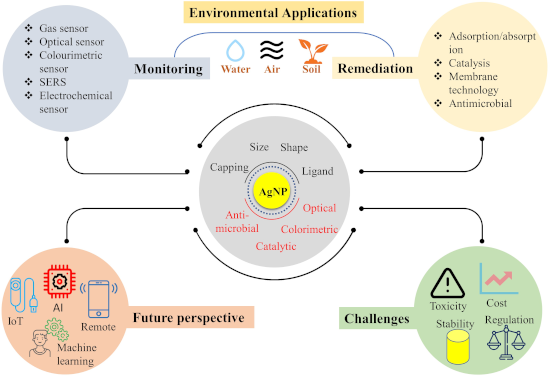
- particle size, surface composition, state stability, and organic matter, which ultimately generate bioavailability and toxicity concerns [34]. The regulatory framework governing AgNP environmental applications remains fragmented across jurisdictions; while OECD, ISO, EU, and US EPA guidelines address
- , which calculated the AgNP concentration as particles per millilitre [53]. Microscopic techniques, such as transmission electron microscopy, provide high-resolution images of individual nanoparticles, confirming morphology, size distribution, and elemental composition when coupled with energy-dispersive
- spectroscopy (SERS) using AgNP nanocomposites could selectively detect polystyrene nanoparticles with a detection limit of 14 μg/mL [55]. X-ray photoelectron spectroscopy (XPS) provides information on the elemental composition, surface oxidation states, and electronic configuration of AgNPs [56]. This


Molecular engineering of individual dye-based nanoparticle photostability for ultrabright two-photon fluorescence
Beilstein J. Nanotechnol. 2026, 17, 688–696, doi:10.3762/bjnano.17.48
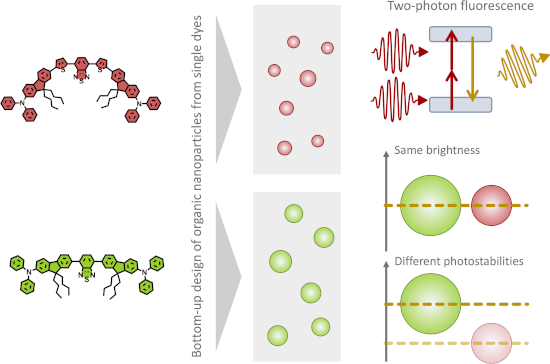
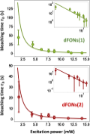
- their molecular composition. Saturation measurements allowed to estimate the 2P absorption cross section of individual dye molecules aggregated in nanoparticles, in remarkable agreement with the values obtained with another independent method. The large value obtained for dFONs(2) correlates with a


Decontamination from water pollutants and pathogens by electrospun nanofibers doped with heavy-atom-free borafluorene-BODIPY photosensitizers
Beilstein J. Nanotechnol. 2026, 17, 668–682, doi:10.3762/bjnano.17.46
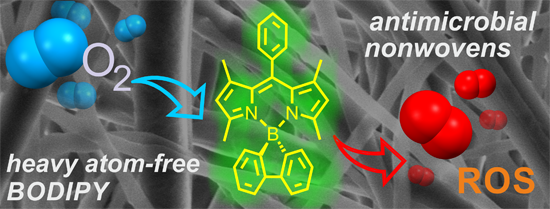
- successfully incorporated into electrospun polymeric nanofibers. Optimization of the material composition revealed that polycaprolactone (PCL), an FDA- and EMA-approved, biodegradable, easily accessible, and cost-efficient polymer, doped with BODIPY at a concentration of only 0.15 wt %, is an efficient
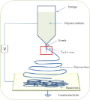
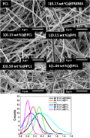
- -scale industrialized production of membrane filters [40][41][42][43][44][45][46][47][48][49]. We optimized electrospinning conditions and material composition using three different polymers, namely, poly(methyl methacrylate) (PMMA), polycaprolactone (PCL), and polystyrene (PS), doped with various
- ± standard deviation. Reaction progress was monitored by 1H NMR spectra analysis of the reaction mixture sampled after a given time. From each of the taken samples, the water was evaporated, D2O was added, and the composition of the mixture was investigated with 1H NMR. Photoinactivation studies The



Two-step laser synthesis of Ag@TiO2 nanomaterials for the photocatalytic degradation of rhodamine B
Beilstein J. Nanotechnol. 2026, 17, 622–634, doi:10.3762/bjnano.17.43
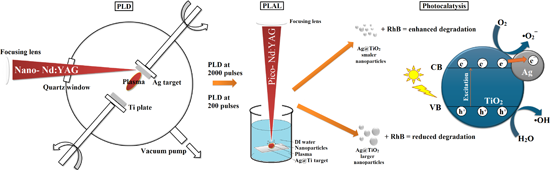
- the morphology, composition, and crystallinity of the resulting nanostructures with high precision. The absence of organic contaminants or residual reagents maximizes the catalytic surface area, while the presence of silver can influence the optical response of TiO2 through plasmon-related effects
- , Detroit, MI, USA) over the wavelength range of 300–700 nm, with absorbance monitored at 550 nm. SEM analysis A field-emission scanning electron microscope (FESEM), Scios 2 DualBeam (Thermo Fisher Scientific, Waltham, MA, USA), was used to determine the morphology and chemical composition, including


Recent progress in enhancing built-in electric fields of perovskite solar cells via junction engineering
Beilstein J. Nanotechnol. 2026, 17, 602–621, doi:10.3762/bjnano.17.42
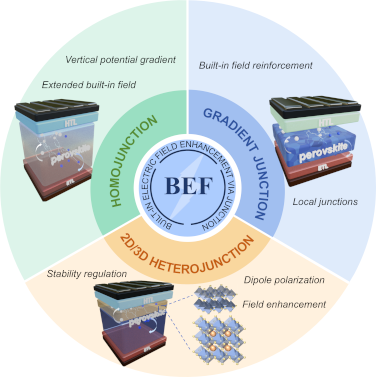
- advantages include a continuous potential distribution, fewer additional interfaces, and good compatibility with existing fabrication processes. In contrast, gradient junctions employ gradual variations in composition, ion concentration, dimensionality, or bandgap along the film thickness to create a
- recombination and charge accumulation characteristic of conventional flat-band architectures. To this end, the introduction of graded-junction structures into perovskite absorbers and adjacent interfacial layers, achieved by controlled through-thickness gradients in composition, ionic species or concentration
- primarily employed cation or anion composition gradients to directly tailor the band structure, and subsequent research has expanded to diverse routes such as dimensional-gradient engineering, synergistic ion regulation, and tailored interfacial optimization (see Table 2 for representative graded-junction




Probing tribological evolution in atomically thin MoS2 at different scales
Beilstein J. Nanotechnol. 2026, 17, 586–597, doi:10.3762/bjnano.17.40
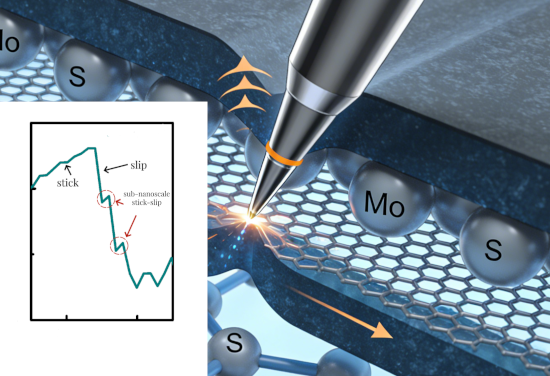
- lengths above 100 nm) of MoS2 films induced by substrate adhesion, sliding velocity, and chemical composition of the tip [11][12]. These long-range distortions are present in our experimental system and modulate the tip–MoS2 contact geometry, which is not fully considered in the MD simulations [11][12


Laser–material interactions in liquids for the synthesis of nanomaterials: current status and perspectives
Beilstein J. Nanotechnol. 2026, 17, 571–575, doi:10.3762/bjnano.17.38
- materials, including metals [2][3], oxides [4][5], semiconductors [6][7], and organics [8][9]. In addition, LSPC enables the synthesis of multicomponent nanomaterials, such as binary [10][11], ternary [12][13], and compositionally complex alloys [14][15], with a high degree of control over their composition
- changes in atomic structure, enabling defect engineering [20]. The broad materials library accessible through LSPC, combined with the wide range of laser, target, and solvent parameters, creates a complex multidimensional optimization space governing nanoparticle size, internal structure, composition, and
- melting to explosive fragmentation of Au nanoparticles under picosecond laser irradiation in water [42]. Further advances in LSPC can be facilitated by data-driven machine learning approaches, which provide new pathways for optimizing synthesis parameters toward targeted size, composition, phase, and
Synthesis of Cu–Mo/TiO2 and Co–Mo/TiO2 photocatalysts for the efficient degradation of organic pollutants in water
Beilstein J. Nanotechnol. 2026, 17, 559–570, doi:10.3762/bjnano.17.37
- patterns of TiO2 and the co-doped TiO2 materials prepared by the sol–gel method. The sample TiO2 shows the crystalline structures anatase and rutile according to the crystallographic cards CPDS 121 and 4031 [25][26], respectively. The composition of each phase was determined using the MAUD software
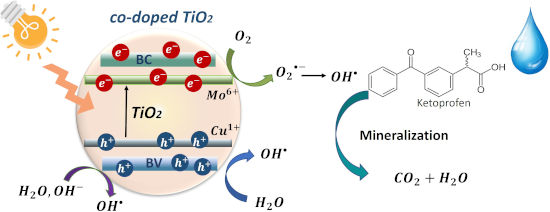
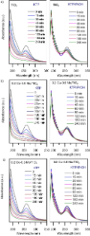
- reaction of ketoprofen, indicating that the composition, the light absorption improvement, the generation of surface oxygen vacancy and defects by the dopants, and the surface charge properties in this material enhance the photocatalytic oxidation of ketoprofen. Degradation of ketoprofen was complete after



Electrochemical determination of ciprofloxacin using a MIL-101/reduced graphene oxide-modified electrode
Beilstein J. Nanotechnol. 2026, 17, 541–554, doi:10.3762/bjnano.17.35
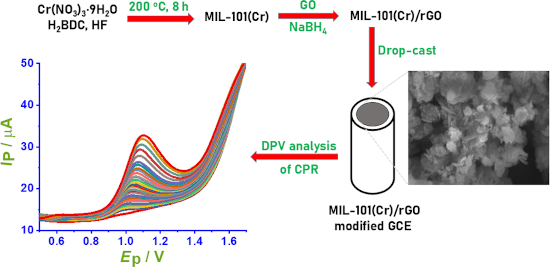
- interfacial interactions between MIL-101 and rGO sheets. The EDX results confirm the successful formation of the MIL-101/rGO composite through the presence of C, O, and Cr as the main constituent elements. As summarized in the elemental composition table, carbon (C) accounts for 30.42 wt % (42.31 atom
- residual oxygen-containing functional groups on rGO. Chromium (Cr), the metal center of MIL-101, is detected at 20.72 wt % (6.66 atom %), confirming the successful introduction of the MIL-101 framework (Figure 2). The chemical composition and electronic states of the MIL-101/rGO composite were investigated
- by X-ray photoelectron spectroscopy (XPS). The survey spectrum (Figure 3a) confirms the presence of Cr, C, and O, which is consistent with the expected composition of MIL-101(Cr) integrated with reduced graphene oxide (rGO). No obvious extraneous elemental signals were observed in the survey spectrum


Upcycling agroindustrial waste into graphene oxide supports for gold nanoparticles: toward sustainable nanomaterials
Beilstein J. Nanotechnol. 2026, 17, 489–504, doi:10.3762/bjnano.17.32
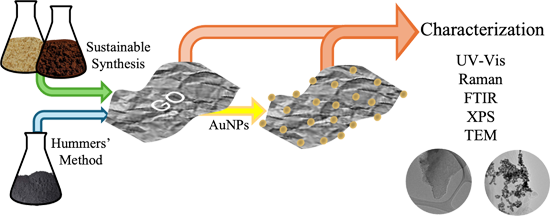
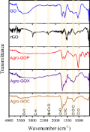
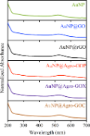
- room temperature in the 4000–540 cm−1 range with a spectral resolution of 4 cm−1, averaging 80 scans per sample. The surface chemical composition was assessed by X-ray photoelectron spectroscopy (XPS) using a SPECS spectrometer equipped with a PHOIBOS 100 energy analyzer and an Al Kα X-ray source (hν
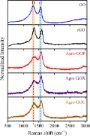
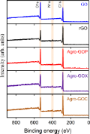
- domains [43][44]. Taken together, the Raman results corroborate the UV–vis spectroscopy analysis by confirming that Agro-GOs possess much smaller and more disrupted sp2 domains than GO. To further elucidate the chemical composition and bonding environments of the samples, XPS was performed. XPS survey
- spectra were measured to evaluate the surface elemental composition of the synthesized samples (Figure 3). The spectra reveal the presence of carbon and oxygen in all samples, as expected for GO-based materials, along with a minor nitrogen contribution in rGO and the Agro-GO samples. This nitrogen signals



Defects and defect-mediated engineering of two-dimensional materials: challenges and open questions
Beilstein J. Nanotechnol. 2026, 17, 454–488, doi:10.3762/bjnano.17.31
- for a given starting composition mixture. If the composition is determined by the element mixture (e.g., if the elements are sealed in a reactor or ampule) the system may separate into compositional phases that minimize the overall formation enthalpy. Materials with intermediate stoichiometries are
- difficult to obtain. Similarly, in thin film growth involving volatile components (e.g., chalcogens), the composition of the film is determined by the compound with the lowest formation enthalpy and not by the atom flux. For example, during molecular beam epitaxy (MBE) growth of chalcogenides, chalcogen
- atoms are generally supplied in excess, and the film will adopt the lowest-energy composition. In these cases, the stoichiometry of the film is not determined by the composition of the source materials but by the thermodynamic stability of the film. So again, in thin film growth, obtaining compositions