Search results
Search for "drop casting" in Full Text gives 68 result(s) in Beilstein Journal of Nanotechnology.
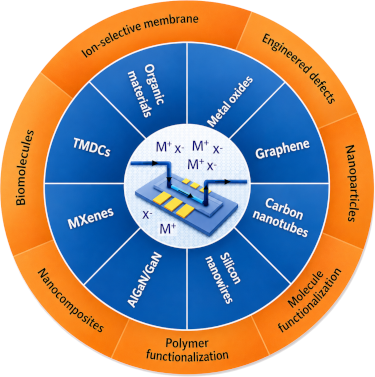
Materials challenges in solid-state sensors for continuous monitoring of ions in water
Beilstein J. Nanotechnol. 2026, 17, 935–973, doi:10.3762/bjnano.17.66


Supramolecular one-dimensional conducting nanofibers from a C3-symmetric tetrathiafulvalene derivative
Beilstein J. Nanotechnol. 2026, 17, 872–881, doi:10.3762/bjnano.17.63
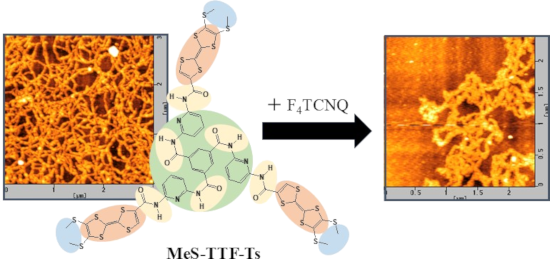
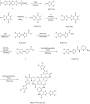
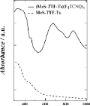
- cast films deposited on quartz substrates. The samples were prepared by drop-casting a DMSO solution of MeS-TTF-Ts and a mixed solution of MeS-TTF-Ts in DMSO and F4TCNQ in acetonitrile onto quartz substrates, followed by solvent evaporation. The final concentration of each solution was adjusted to 6 mM
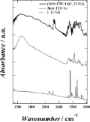
- F4TCNQ. Figure 5 shows the FTIR spectra of neutral F4TCNQ and the (MeS-TTF-Ts)(F4TCNQ)3 charge-transfer complex thin film deposited on a CaF2 substrate. The thin film was prepared by drop-casting a mixed solution of MeS-TTF-Ts in DMSO and F4TCNQ in acetonitrile onto a CaF2 substrate, followed by solvent


Oxidative atmosphere-driven formation of single-phase spinel CuRh2O4 nanofibers for alkaline water oxidation
Beilstein J. Nanotechnol. 2026, 17, 737–743, doi:10.3762/bjnano.17.50
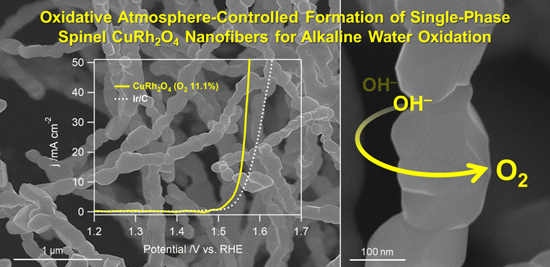
- °C for 10 min. This drop-casting procedure was repeated five times, resulting in a total catalyst loading of 60 μg on each electrode. Subsequently, 10 μL of 0.05 wt % Nafion solution (diluted in ethanol) was drop-cast onto the catalyst-modified GC electrode and dried in a desiccator for 30 min. All

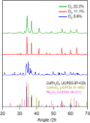

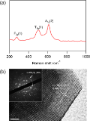


Impacts of annealing on structural and photophysical properties of zinc phthalocyanine adsorbed on graphene
Beilstein J. Nanotechnol. 2026, 17, 576–585, doi:10.3762/bjnano.17.39
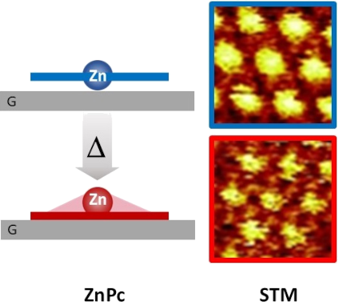
- -tristyrylbenzene substituted by dodecyl alkoxy peripheral chains TSB35-C12 [39] (Scheme 1b) grown by drop-casting from a toluene solution either on HOPG, for STM experiments, or on a transparent monolayer chemical-vapor-deposition (CVD) graphene on glass substrates, for optical measurements. This system has been


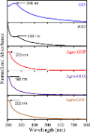
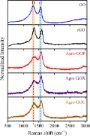
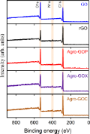
Upcycling agroindustrial waste into graphene oxide supports for gold nanoparticles: toward sustainable nanomaterials
Beilstein J. Nanotechnol. 2026, 17, 489–504, doi:10.3762/bjnano.17.32
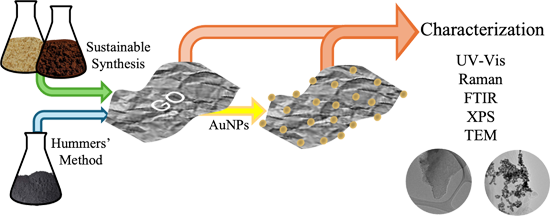
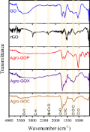
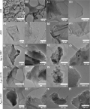
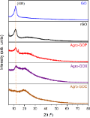
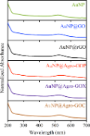
- samples were prepared by drop-casting stable aqueous dispersions of the materials onto carbon-coated copper grids (200 mesh). Thermogravimetric analysis (TGA) was performed using a TA Instruments Q500 thermogravimetric analyzer over a temperature range of 30–700 °C. The heating rate was set at 10 °C·min−1



Ultrathin water layers on mannosylated gold nanoparticles
Beilstein J. Nanotechnol. 2025, 16, 2183–2198, doi:10.3762/bjnano.16.151
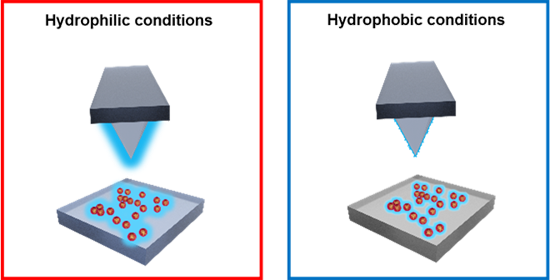
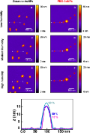
- islands. We analyzed adsorption on the hydrophobic OTS with the same procedure (Figure 6D–F and Figure 6J–L). Here, the required drop-casting method resulted in a typical “coffee ring” effect [33], as nicely seen in Figure 6D,J. Local inhomogeneities prevail on areas inside and outside the ring. Generally
- . The drop-casting method used on OTS allowed for complete evaporation of the droplet. The NP–surface interactions are now relatively weak, and inter-NP interactions are favored. NP movement was faster than evaporation, resulting in the observed “coffee ring” drying. Mesoscale observations of NP
- washed with Milli-Q water and dried in flowing nitrogen. The adsorption on the hydrophobic surfaces was achieved by drop casting. A droplet of dimanno-AuNPs or PEG AuNPs was deposited on the surface and dried in air. Infrared spectroscopy FTIR measurements were carried out with a grazing incidence



Influence of laser beam profile on morphology and optical properties of silicon nanoparticles formed by laser ablation in liquid
Beilstein J. Nanotechnol. 2025, 16, 1533–1544, doi:10.3762/bjnano.16.108
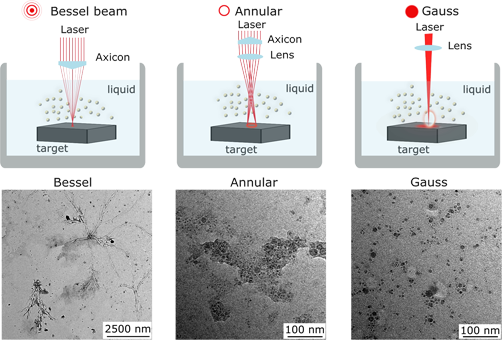
- ) operating at an accelerating voltage of 10 kV. For SEM and Raman measurements, the colloidal solution was deposited onto Al foil by drop casting and dried at room temperature. The Raman measurements were performed under 488 nm excitation using a micro-Raman system (“NanoFlex”, Solar LS, Belarus). The UV–vis


Laser processing in liquids: insights into nanocolloid generation and thin film integration for energy, photonic, and sensing applications
Beilstein J. Nanotechnol. 2025, 16, 1428–1498, doi:10.3762/bjnano.16.104
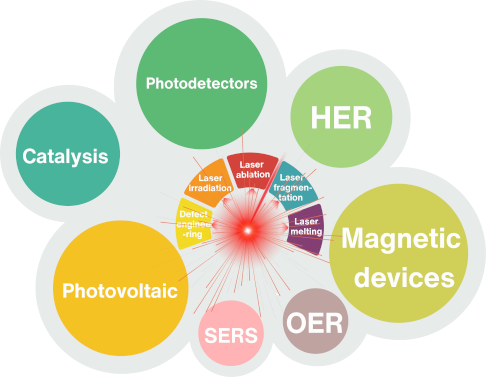
- method for developing advanced functional materials. This section of the discussion focuses on the fabrication of thin films using laser-processed nanocolloids by various techniques such as electrophoretic deposition (EPD), spin-dip coating, spin coating, drop-casting, and spray deposition. The choice of
- ]. Figure 10d shows the X-ray diffraction (XRD) measurements of CdS nanoropes. A comparison of spin coating and drop casting for film fabrication on graphene paper was made using Ni/NiO NPs synthesized by LAL. Rutherford backscattering spectrometry measurements revealed that the homogeneity of the NPs was
- better after spin coating than drop casting [110]. A functionalization study on SiC nanocrystals was made. SiC–polyvinyl alcohol (PVA) polymeric nanocomposites were manufactured by adding silicon carbide NPs prepared by PLAL to PVA and thin films of the composites were prepared by spin coating on glass






Photochemical synthesis of silver nanoprisms via green LED irradiation and evaluation of SERS activity
Beilstein J. Nanotechnol. 2025, 16, 1417–1427, doi:10.3762/bjnano.16.103
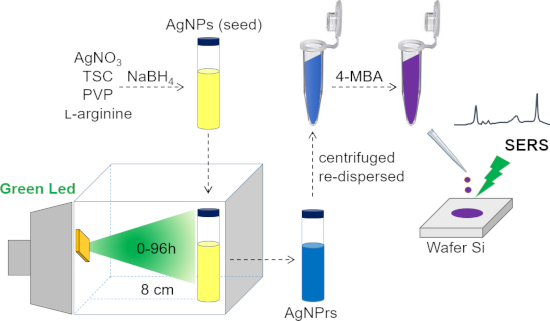
- concentration of 4-MBA decreased logarithmically. Since the sample was prepared by drop casting onto a Si wafer, AgNPrs tended to aggregate, which may have led to reduced resolution of the Raman peaks at very low analyte concentrations. The relationship between 4-MBA concentration and the intensity of the 1589


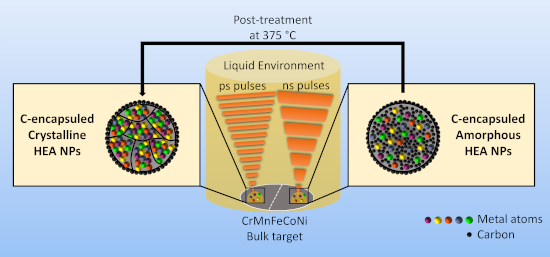
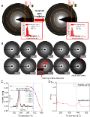
Crystalline and amorphous structure selectivity of ignoble high-entropy alloy nanoparticles during laser ablation in organic liquids is set by pulse duration
Beilstein J. Nanotechnol. 2025, 16, 1141–1159, doi:10.3762/bjnano.16.84




Single-layer graphene oxide film grown on α-Al2O3(0001) for use as an adsorbent
Beilstein J. Nanotechnol. 2025, 16, 1082–1087, doi:10.3762/bjnano.16.79
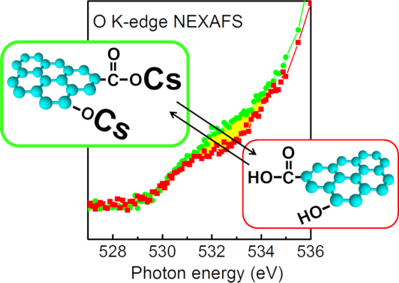
- drop-casting technique, wherein GO flakes dispersed in a solvent are cast onto a substrate [16][17]. This technique does not allow for the control of number of layers. Consequently, studies have been conducted to synthesize large-area and single-layer GO (SLGO) films. As mentioned above, GO films have


Piezoelectricity of hexagonal boron nitrides improves bone tissue generation as tested on osteoblasts
Beilstein J. Nanotechnol. 2025, 16, 1068–1081, doi:10.3762/bjnano.16.78
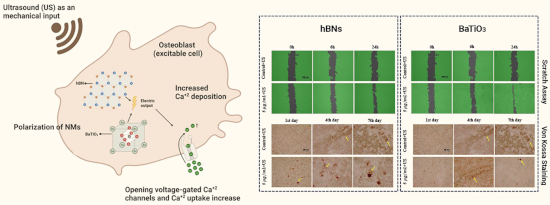
- drop-casting 1 μL of hBN suspension (prepared in deionized water) onto a TEM grid. Fourier-transform infrared spectroscopy (FTIR, Shimadzu IRAffinity-1S) and Raman spectroscopy (Renishaw, 532 nm laser) were used to analyze chemical bonds and assess crystallinity. UV–visible spectroscopy (Varian Cary UV


Morphology and properties of pyrite nanoparticles obtained by pulsed laser ablation in liquid and thin films for photodetection
Beilstein J. Nanotechnol. 2025, 16, 785–805, doi:10.3762/bjnano.16.60
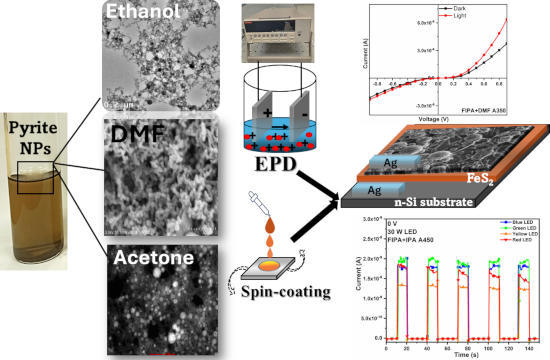
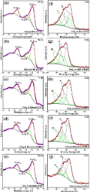
- methanol are 8–85 nm whereas those in acetone range between 6–55 nm. Elemental composition analysis of the NPs By drop-casting these pyrite NPs onto FTO substrates and analyzing them using XPS, the elemental composition of the particles in all the solvents was identified. For binding energy correction of
- FTO substrate that was utilized for drop casting. Thus, it is presumed that the conversion of pyrite to FeS happens during the process of laser ablation itself. Although FeS was detected alongside FeS2, the XPS results indicate the FeS2 dominance, and the XRD analysis also validates it. A plausible






Effect of wavelength and liquid on formation of Ag, Au, Ag/Au nanoparticles via picosecond laser ablation and SERS-based detection of DMMP
Beilstein J. Nanotechnol. 2024, 15, 1054–1069, doi:10.3762/bjnano.15.86

- -dispersive X-ray spectroscopy. Furthermore, NPs of various sizes ranging from 6 to 35 nm were loaded onto a filter paper by a simple and effective drop-casting approach to achieve flexible surface-enhanced Raman spectroscopy (SERS) substrates/sensors. These substrates were tested using a simple, portable
- . Subsequently, metal and alloy NPs synthesized via laser ablation (encompassing 18 distinct samples) were applied to the FP through a straightforward drop-casting method and then allowed to dry at room temperature. Following this, the analyte of interest was also applied onto the substrate using drop casting
- distribution of NPs on a FP was analyzed using the INCA software with a field-emission scanning electron microscope (FESEM, Carl Zeiss Ultra 55). Samples were prepared by drop casting 10 µL of NPs onto a FP, followed by sputtering a thin conductive layer of gold onto the FP to facilitate lower magnification


Intermixing of MoS2 and WS2 photocatalysts toward methylene blue photodegradation
Beilstein J. Nanotechnol. 2024, 15, 817–829, doi:10.3762/bjnano.15.68
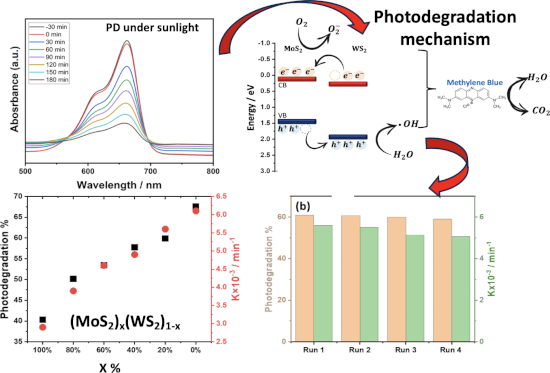
- considered samples. The specimens were prepared by drop casting a solution of the exfoliated samples on lacey carbon transmission electron microscopy (TEM) grids. Additionally, agglomeration of the flakes can be usually observed as well, which could be due to the effect of the solvent used for drop casting
- microscope (Cs-corrected Titan, Thermo Fisher Scientific). Thin carbon-coated Cu mesh grids were used to prepare TEM samples by the drop-casting method. The surface chemical bonding states and composition of the samples were determined with a scanning XPS microprobe (PHI VersaProbe III, Physical Electronics


Heat-induced morphological changes in silver nanowires deposited on a patterned silicon substrate
Beilstein J. Nanotechnol. 2024, 15, 435–446, doi:10.3762/bjnano.15.39
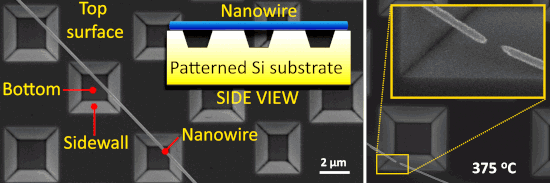
- , which corresponds to the angle between (111) and (001) planes in Si. Samples for heat-treatment studies were prepared by drop-casting Ag NWs onto the patterned substrates from a solution. Since the width and period of the holes were intentionally made much smaller than the average length of NWs, many


Isolation of cubic Si3P4 in the form of nanocrystals
Beilstein J. Nanotechnol. 2023, 14, 971–979, doi:10.3762/bjnano.14.80
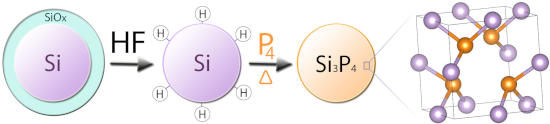
- –1100 nm. The mass concentration of Si3P4 material in the sol (for the sake of attenuation coefficient calculation) was determined by drop casting 3.00 μL of the sol onto a sapphire substrate followed by an XRF study of the resultant film. DFT-GGA computations (structure optimization and calculation of


Ni, Co, Zn, and Cu metal-organic framework-based nanomaterials for electrochemical reduction of CO2: A review
Beilstein J. Nanotechnol. 2023, 14, 904–911, doi:10.3762/bjnano.14.74
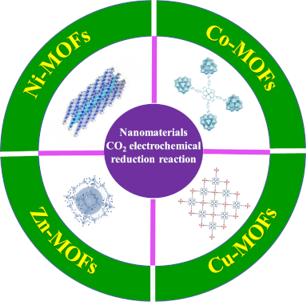
- converting individual MOFs into MOF-derived carbon-support nanomaterials. Another issue is the durability of the working electrodes. Many studies have employed drop casting and the use of binders to affix MOFs onto the substrate for electrode fabrication. This approach presents drawbacks such as reduced


A graphene quantum dots–glassy carbon electrode-based electrochemical sensor for monitoring malathion
Beilstein J. Nanotechnol. 2023, 14, 701–710, doi:10.3762/bjnano.14.56
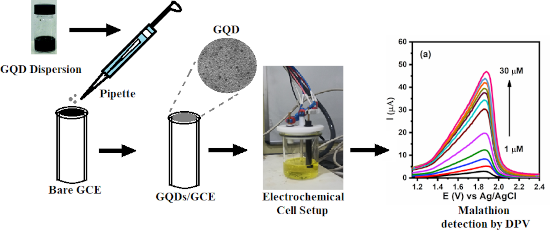
- diffraction were used to characterize the morphological and structural properties of GQDs. An electrochemical sensor was developed by drop casting GQDs on a glassy carbon electrode (GCE). The sensor detects the organophosphate pesticide malathion in a selective and sensitive manner. Using cyclic voltammetry
- organophosphate pesticide malathion. Graphene quantum dots were synthesized hydrothermally using glucose as precursor. The glassy carbon electrode that served as working electrode in the electrochemical cell was modified with graphene quantum dots by drop casting. To evaluate the modified electrode’s oxidation


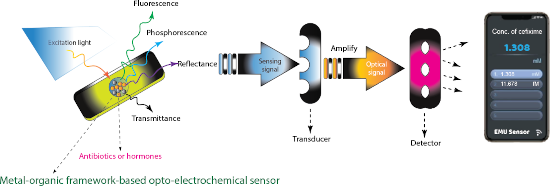
Metal-organic framework-based nanomaterials as opto-electrochemical sensors for the detection of antibiotics and hormones: A review
Beilstein J. Nanotechnol. 2023, 14, 631–673, doi:10.3762/bjnano.14.52


Conjugated photothermal materials and structure design for solar steam generation
Beilstein J. Nanotechnol. 2023, 14, 454–466, doi:10.3762/bjnano.14.36
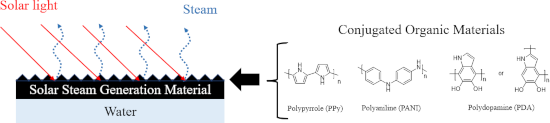
- PDA as a PTM to improve the chemical stability and light absorption ability [49]. The Ni1Co3@PDA was dispersed onto the surface of a round commercial sponge by drop casting. The photothermal performance of the Ni1Co3@PDA deposited on the sponge was then evaluated using a kerosene lamp-like setup


Structural, optical, and bioimaging characterization of carbon quantum dots solvothermally synthesized from o-phenylenediamine
Beilstein J. Nanotechnol. 2023, 14, 165–174, doi:10.3762/bjnano.14.17
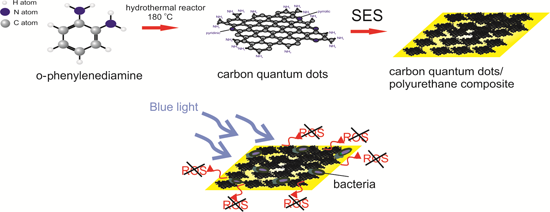
- ), CQDs were deposited on graphene oxide copper grids with 300 mesh by drop casting. For AFM imaging, all CQDs samples were deposited on freshly cleaved mica. The AFM measurements were conducted using a Quesant microscope operating in tapping mode in air at ambient temperature. Statistical analysis of all
- AFM images was performed in Gwyddion software [51]. FTIR measurements were conducted using an infrared microscope Nicolet iN10 Thermofisher Scientific operated in the ATR mode. All samples were deposited on Si substrates by drop casting. Spectra were recorded at ambient temperature in the range of 400


Rapid and sensitive detection of box turtles using an electrochemical DNA biosensor based on a gold/graphene nanocomposite
Beilstein J. Nanotechnol. 2022, 13, 1458–1472, doi:10.3762/bjnano.13.120
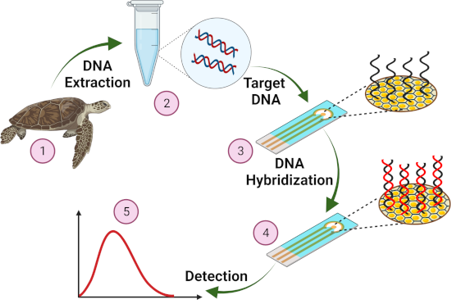
- for hybridisation efficiency. In the drop-casting method, there is little scope to conduct experiments at variable pH values due to the use of the microlitre scale solution. Usually, DNA hybridisation efficiency peaks between pH 7.5 and 8.5 due to good accessibility and binding affinity [62]. For this



Nickel nanoparticle-decorated reduced graphene oxide/WO3 nanocomposite – a promising candidate for gas sensing
Beilstein J. Nanotechnol. 2021, 12, 343–353, doi:10.3762/bjnano.12.28
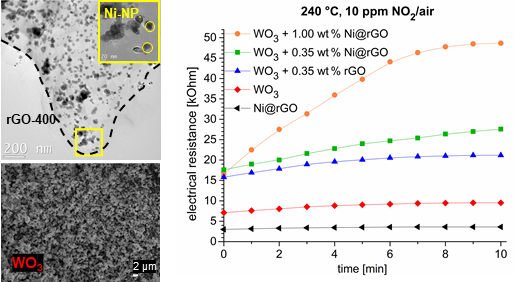
- . TEM samples were prepared by drop casting the with acetonitrile diluted material on 200 µm carbon-coated copper grids, followed by washing the grid several times with acetonitrile to remove the excess ionic liquid. The size distribution was determined manually or with the aid of the Gatan Digital


Fusion of purple membranes triggered by immobilization on carbon nanomembranes
Beilstein J. Nanotechnol. 2021, 12, 93–101, doi:10.3762/bjnano.12.8
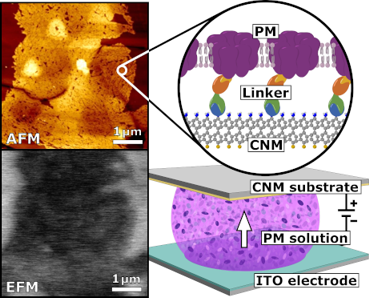
- ) using distilled water. The OD was measured at 589 nm using a UV–vis spectrometer (Lambda 35, Perkin Elmer). Sample preparation Drop casting: PM solutions of different volumes and concentrations were dripped onto the CNM substrates and incubated for different periods. Drying was prevented by putting the
- synthesis route is well established and the resulting CNM has reactive amino head groups that can be functionalized in subsequent experiments. The functionalization of the CNM is necessary to immobilize the PM patches by chemical complex formation after deposition. In a first step, simple drop-casting
- optimistic that complete substrate coverage can be achieved through further optimization measures. One approach would be to alternate the polarity of the electric field several times after deposition to remove unbound PM patches. WT PM deposited on NBPT CNM using drop-casting and electrophoretic