


Search results
Search for "ductility" in Full Text gives 21 result(s) in Beilstein Journal of Nanotechnology.
Nanoglasses: a trail towards uncharted regions of vitreous materials and their properties?
Beilstein J. Nanotechnol. 2026, 17, 1047–1062, doi:10.3762/bjnano.17.72



First-principles study on elastic properties of Cu, (Cu1−x,Nix)3Sn and interfacial mechanical properties of (Cu1−x,Nix)3Sn/Cu in the lead-free solder joint
Beilstein J. Nanotechnol. 2026, 17, 428–439, doi:10.3762/bjnano.17.29
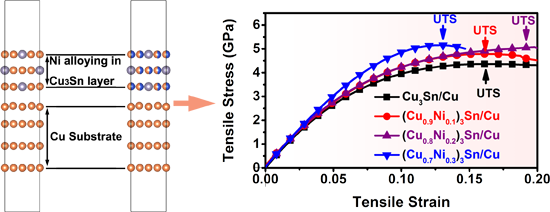
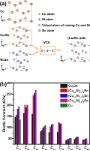
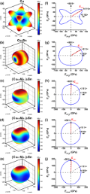
- mechanism can be attributed to the simultaneous improvements of oriented Young’s modulus and ductility of (CuxNi1−x)3Sn, achieved by Ni alloying. But higher Ni content beyond the thermodynamically stable domain of (CuxNi1−x)3Sn will deteriorate the interfacial mechanical properties by mechanical or
- alloying strategies to meet the requirements for electronic device miniaturization and harsh environmental applications. Keywords: ductility; elastic modulus; interfacial toughness; lead-free solder; work of adhesion; Introduction Due its toxicity, lead has caused serious problems in human health and
- reliability of lead-free solder joints by Ni alloying. For instance, Zhang et al. observed that the corrosion resistance of Sn-Zn solder can be enhanced by alloying with Ni, Cr, Cu, or Ag; the higher corrosion resistance follows the order Ag < Cu < Cr < Ni [11]. El-Taher et al. demonstrated that the ductility


Polycatecholamine nanocoatings on stainless steel: the effect on attachment of human fibroblasts and platelets
Beilstein J. Nanotechnol. 2026, 17, 365–380, doi:10.3762/bjnano.17.25
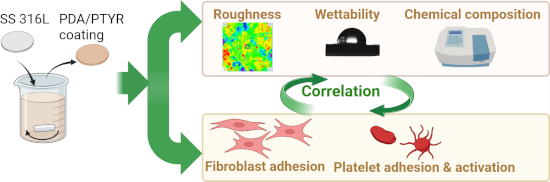
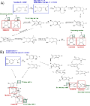
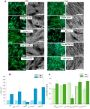
- oxide and forsterite nanoparticles, all of which were shown to enhance fibroblast adhesion, migration, or proliferation [2][3][4][5]. Beyond orthopedic and dental uses, SS 316L is a standard material for cardiovascular implants, particularly stents, due to its strength, ductility and ability to form




Time of flight secondary ion mass spectrometry imaging of contaminant species in chemical vapour deposited graphene on copper
Beilstein J. Nanotechnol. 2026, 17, 200–213, doi:10.3762/bjnano.17.13
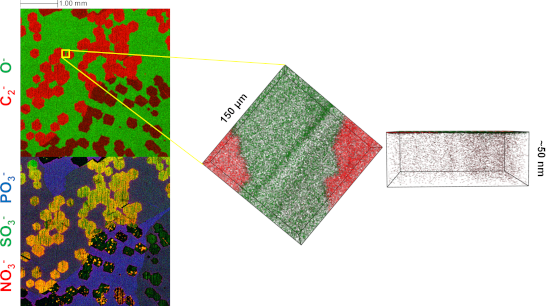
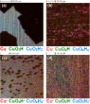
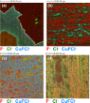
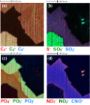
- three samples over the depth shown here, and to greater depth (>50 nm). Phosphorous is a common additive to copper metals during the smelting process, to aid removal of oxygen and improve the copper material performance, in terms of strength, ductility, and corrosion resistance, although there can be a





Multifunctional properties of bio-poly(butylene succinate) reinforced with multiwalled carbon nanotubes
Beilstein J. Nanotechnol. 2025, 16, 1014–1024, doi:10.3762/bjnano.16.76
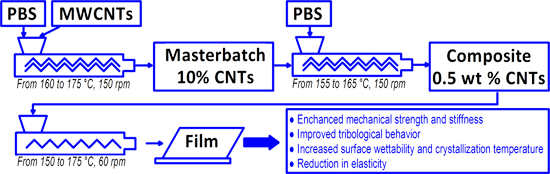
- %. Furthermore, the surface wettability increased by 15%, and the crystallization temperature rose by 25%, indicating an acceleration in crystallization kinetics. However, these enhancements were accompanied by a 37–50% reduction in elasticity. Despite the decrease in ductility, the elongation at break remained



Effects of cutting tool geometry on material removal of a gradient nanograined CoCrNi medium entropy alloy
Beilstein J. Nanotechnol. 2024, 15, 925–940, doi:10.3762/bjnano.15.76
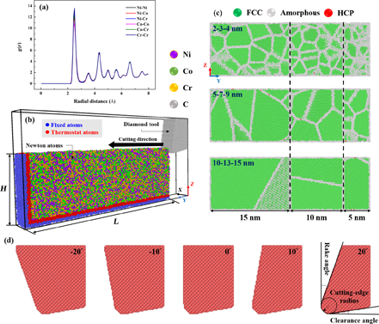
- -entropy alloys (MEAs) have attracted extensive attention and research because of their superior mechanical properties, such as higher ductility, strength, and toughness. This study uses molecular dynamics (MD) simulations to investigate the cutting behavior of a gradient nanograined (GNG) CoCrNi MEA
- attention and research [1][2]. Among them, the ternary medium-entropy alloy (MEA) CoCrNi and its derived five-element CoCrFeMnNi HEA [3][4] have been found to exhibit high strength and ductility. Weng et al. used laser-aided additive manufacturing to fabricate a CoCrNi MEA with a perfect combination of
- strength and ductility [5]. Zhang et al. fabricated a new transformable FeCoCrNiMn HEA with both face-centered cubic (FCC) and body-centered cubic (BCC) phases to enhance the strength and ductility of the HEA [6]. This has been attributed to the low stacking-fault energy of this type of alloy. The








Electrostatic pull-in application in flexible devices: A review
Beilstein J. Nanotechnol. 2022, 13, 390–403, doi:10.3762/bjnano.13.32
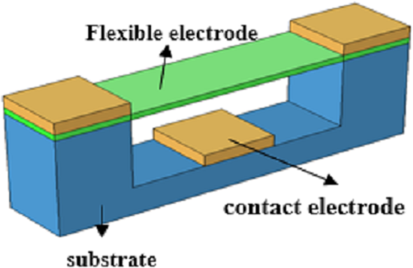
- increasing attention due to their unique ductility. This review summarizes nanoelectromechanical switches made by flexible materials and classifies and discusses their applications in, among others, radio frequency systems, microfluidic systems, and electrostatic discharge protection. It is supposed to give


Theoretical understanding of electronic and mechanical properties of 1T′ transition metal dichalcogenide crystals
Beilstein J. Nanotechnol. 2022, 13, 160–171, doi:10.3762/bjnano.13.11
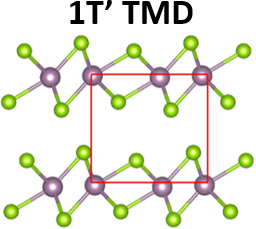
- . The ratio of bulk modulus over shear modulus (B/G) could be used to evaluate the ductility and brittleness of a material [50]. If the value of this ratio is higher than 1.75, the material behaves in a ductile manner, if below 1.75 it behaves in a brittle manner. Based on the result illustrated in



Bulk chemical composition contrast from attractive forces in AFM force spectroscopy
Beilstein J. Nanotechnol. 2021, 12, 58–71, doi:10.3762/bjnano.12.5
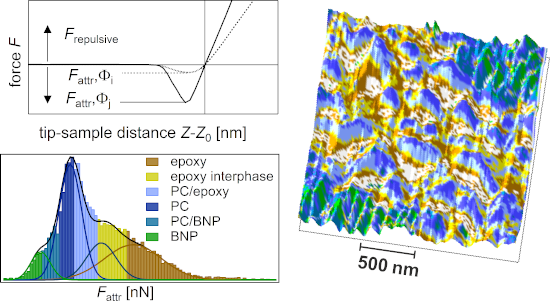
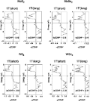
- shows the property domain of the measurements. On the top left, the histogram of the stiffness kr, acquired from glass (grey bars), neat epoxy (yellow bars), and boehmite (green bars) is shown. Boehmite shows a wide range of kr values (0.2 < kr < 0.4), which is due to its anisotropic ductility caused by


Preparation, characterization and photocatalytic performance of heterostructured CuO–ZnO-loaded composite nanofiber membranes
Beilstein J. Nanotechnol. 2020, 11, 631–650, doi:10.3762/bjnano.11.50
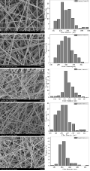
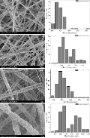
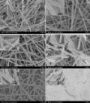
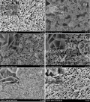
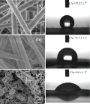
- temperature reached 180 °C, the tensile strength of the CNFMs increased suddenly because of the increased adhesion between nanofibers resulting from the almost complete melting of PVDF. In addition, as the heat-treatment temperature increases, the ductility of PVDF increases, resulting in a higher elongation











Abrupt elastic-to-plastic transition in pentagonal nanowires under bending
Beilstein J. Nanotechnol. 2019, 10, 2468–2476, doi:10.3762/bjnano.10.237
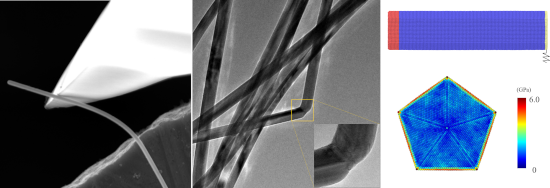
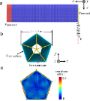
- grain-boundary-hardened material that sacrifices ductility for strength [27]. In both the tensile and three-point bending tests, the NW is rigidly fixed at both ends. Even though the NW is bent in the three-point bending test, the deflection of the NW before failure is relatively small in comparison to



Flexible freestanding MoS2-based composite paper for energy conversion and storage
Beilstein J. Nanotechnol. 2019, 10, 1488–1496, doi:10.3762/bjnano.10.147
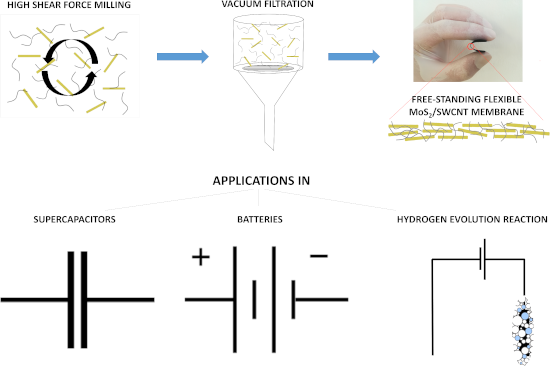
- were evaluated. The tensile strength and tensile ductility are important material parameters that influence material’s final applicability. The tensile strength of the prepared material reached a value of 3.02 MPa while tensile ductility was 7.74%. It should be mentioned that the preparation of paper
- solely from MoS2 sheets is not possible since there is no material holding the individual MoS2 sheets together. On the other hand, paper made of only SWCNT possesses a tensile strength of 5.95 MPa and tensile ductility of 2.45%. Therefore, incorporation of MoS2 sheets into SWCNT paper results in
- decreased tensile strength and increased tensile ductility and the as-prepared MoS2-based composite paper is able to undergo significant plastic deformation before rupture in the material occurs. Electrochemical performance of freestanding MoS2-based composite paper First, we tested the MoS2-based composite


An iridescent film of porous anodic aluminum oxide with alternatingly electrodeposited Cu and SiO2 nanoparticles
Beilstein J. Nanotechnol. 2019, 10, 735–745, doi:10.3762/bjnano.10.73
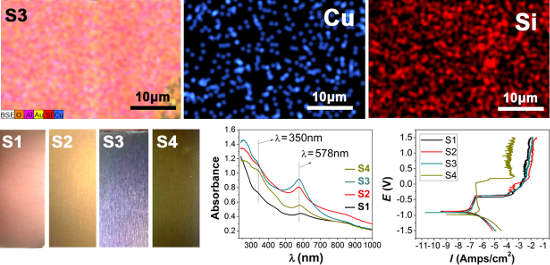
- film that exhibited a rainbow effect and superior anti-corrosion performance. Keywords: aluminum alloys; anodic aluminum oxidation; interference-enabled color production; rainbow effect; structural color; Introduction Due to the low cost, high mechanical strength and ductility, and well-developed


A Ni(OH)2 nanopetals network for high-performance supercapacitors synthesized by immersing Ni nanofoam in water
Beilstein J. Nanotechnol. 2019, 10, 281–293, doi:10.3762/bjnano.10.27
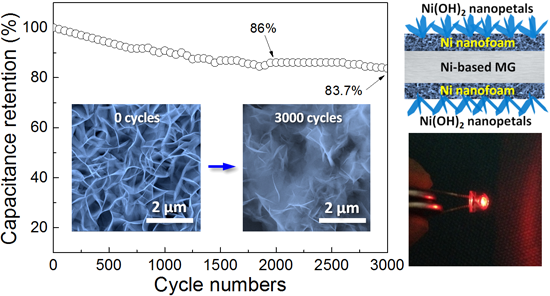
- potential range, and Δt is the discharge time of a single SC device. Results and Discussion Material structure The sandwich-like Ni(OH)2/Ni-NF/MG composite electrode inherits the excellent flexibility and ductility of Ni40Zr20Ti40 MG after dealloying in 0.05 M HF solutions for 4 h and being immersed in
- layer smoothly adheres to the MG matrix. The thickness of the Ni-NF layer is ca. 1.5 μm; the Ni40Zr20Ti40 MG is ca. 22 μm thick. It is well known that Ni-based MGs exhibit a much larger elasticity and ductility than their corresponding crystalline alloys. A sufficiently thick MG layer acts as a ductile




Diffusion and surface alloying of gradient nanostructured metals
Beilstein J. Nanotechnol. 2017, 8, 547–560, doi:10.3762/bjnano.8.59
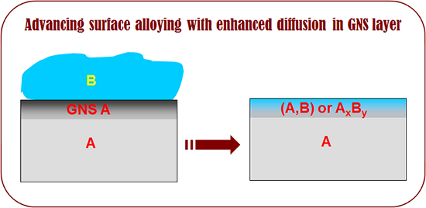
- homogeneous nano-grained and CG samples. For example, a considerable tensile ductility was achieved with the significantly enhanced strength in different metals with a gradient nanostructured (GNS) layer [1][2][3], distinct from the traditional trade-offs between strength and ductility in conventional metals
- , composition, and phase are expected to be further explored. For example, a synergic improvement in strength, ductility, and resistance to wear and corrosion might be expected, while the distribution of microstructure, composition, and phase can be controlled within broader ranges due to the promoted diffusion




A new approach to grain boundary engineering for nanocrystalline materials
Beilstein J. Nanotechnol. 2016, 7, 1829–1849, doi:10.3762/bjnano.7.176
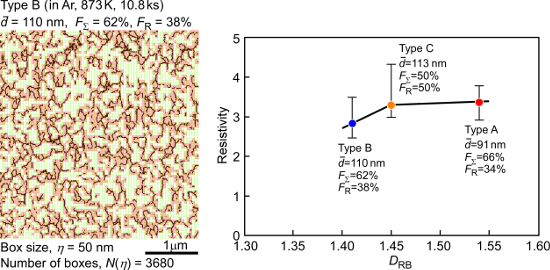
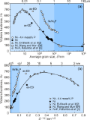
- structure, and conventional grain size range. It is evident that the much higher strength of nanocrystalline materials compared to ordinary polycrystals originates from the extensive interaction between grain boundaries and dislocations. On the other hand, poor ductility and severe brittleness of
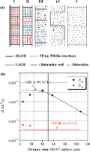
- ductility and intergranular brittleness, and further to confer desirable bulk mechanical properties to nanocrystalline materials through GBE. Figure 15 shows a schematic diagram illustrating our current knowledge of GBE through the incorporation of optimum grain boundary microstructure for desirable bulk
- analysis is very useful for the precise control of grain boundary microstructure-dependent bulk properties. This is especially helpful for mediating poor ductility and brittleness, which are long pending problems to be urgently solved in nanocrystalline materials. Our recent challenge of GBE based on







Effect of triple junctions on deformation twinning in a nanostructured Cu–Zn alloy: A statistical study using transmission Kikuchi diffraction
Beilstein J. Nanotechnol. 2016, 7, 1501–1506, doi:10.3762/bjnano.7.143
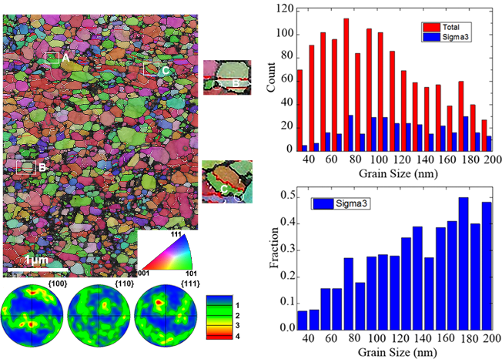
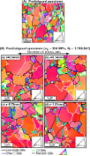
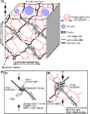
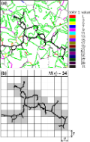
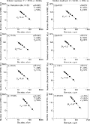
- ]. However, research in this area has met the paradox of strength and ductility tradeoff, especially when materials are refined to ultrafine-grained or nanostructured range [4][5][6][7][8]. They are usually either strong or ductile, but rarely both at the same time. Deformation twinning is one of a few
- mechanisms that can simultaneously improve both strength and ductility [5][6][9][10][11]. Consequently, deformation twinning in nanostructured metals has received extensive attention in recent years [10]. Among all of the twinning mechanisms in nanocrystalline materials, partial mission from grain boundaries



Deformation-induced grain growth and twinning in nanocrystalline palladium thin films
Beilstein J. Nanotechnol. 2013, 4, 554–566, doi:10.3762/bjnano.4.64
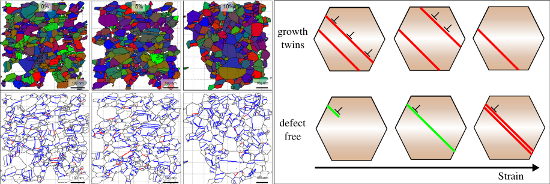
- ductility and suffer from rapid strain localization [2]. Understanding the underlying deformation mechanisms operating in these structures is important, for example to guarantee the reliability of nc materials in next-generation micro- and nano-scale devices. In nc metals, with grain sizes well below 100 nm
- , the conventional deformation mechanisms based on dislocation motion and multiplication, which govern deformation in coarse-grained metals, are increasingly limited by grain boundaries with decreasing grain size. It is believed that their low ductility is associated with this [3]. Although nc metals


Plasticity of nanocrystalline alloys with chemical order: on the strength and ductility of nanocrystalline Ni–Fe
Beilstein J. Nanotechnol. 2013, 4, 542–553, doi:10.3762/bjnano.4.63
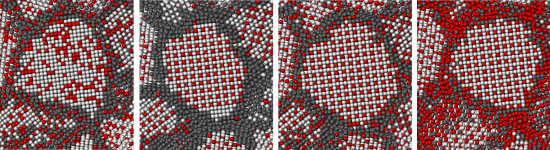
- considered as a possible route for achieving room temperature ductility in this otherwise brittle class of materials [1][2]. The underlying assumption is that for very small grain sizes plasticity can be carried by grain boundary (GB) mediated processes rather than by energetically expensive superlattice
- strengthening but does not increase the room temperature ductility [10]. It was demonstrated experimentally, that additional modifications, e.g., a bimodal grain structure and nanotwins can enhance the ductility while conserving the strength [10]. For nc Ni–Fe alloys, several observations were made: For nc
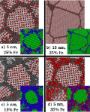
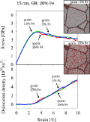
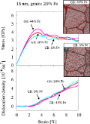
- in an even stronger dependence on GB composition. For the 15 nm grain size, however, an ordered grain interior also resulted in intergranular fracture. The processes in the GB can apparently not accommodate themselves for this grain size. Ductility could here be conserved by increasing the volume



Friction and durability of virgin and damaged skin with and without skin cream treatment using atomic force microscopy
Beilstein J. Nanotechnol. 2012, 3, 731–746, doi:10.3762/bjnano.3.83
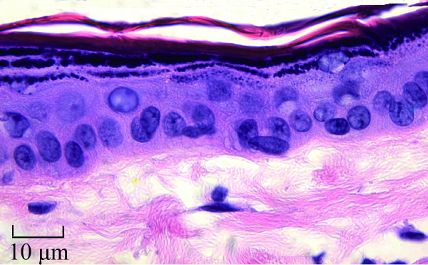
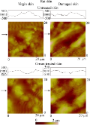
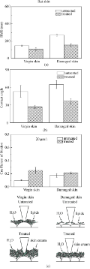
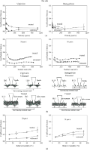
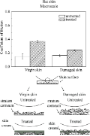
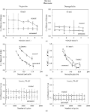
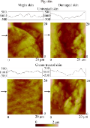
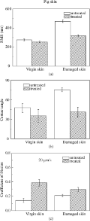
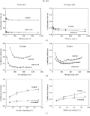
- leads to a greater ductility and larger real area of contact. Larger contact area and formation of meniscus bridges are responsible for higher friction in cream-treated skin [6]. Effect of velocity, normal load, relative humidity and number of cycles on nanoscale friction Figure 6a shows the coefficient
- loss of the lipid layer. After the application of skin cream, the skin surface properties change, and the skin is moistened and softened by the skin cream, which leads to a greater ductility and a larger real area of contact resulting in stronger adhesion, such that the coefficient of friction of cream





Conducting composite materials from the biopolymer kappa-carrageenan and carbon nanotubes
Beilstein J. Nanotechnol. 2012, 3, 415–427, doi:10.3762/bjnano.3.48
- a reduction of the E and TS values but improved ductility. For example, the γ value for KC–MWNTs films with glycerin prepared by the evaporative-cast method is 7.1% compared to 5.1% for the same film without glycerin. This suggests that glycerin is a good material for improving the mechanical
- , but at the cost of electrical conductivity. Buckypaper films displayed superior electrical and mechanical characteristics (bar ductility) over evaporation-cast films, but they were less sensitive to changes in the humidity. MWNT films exhibited sensitivity to humidity as high as of 70%, easily





