


Search results
Search for "fast scanning" in Full Text gives 16 result(s) in Beilstein Journal of Nanotechnology.
Laser–material interactions in liquids for the synthesis of nanomaterials: current status and perspectives
Beilstein J. Nanotechnol. 2026, 17, 571–575, doi:10.3762/bjnano.17.38

- ) using diffractive optical elements [69]. The static diffractive optical elements have at least an order of magnitude lower cost than the fast-scanning systems and have an inherent benefit: the possibility to use lower repetition rates while employing the optimum processing fluence per beam [70]. More
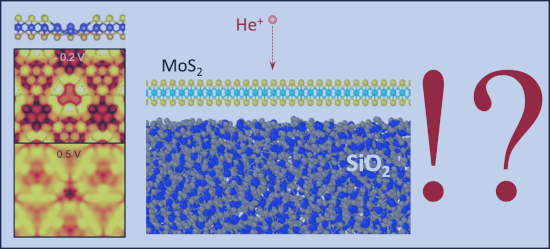
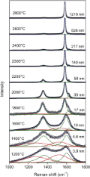
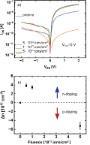
Defects and defect-mediated engineering of two-dimensional materials: challenges and open questions
Beilstein J. Nanotechnol. 2026, 17, 454–488, doi:10.3762/bjnano.17.31





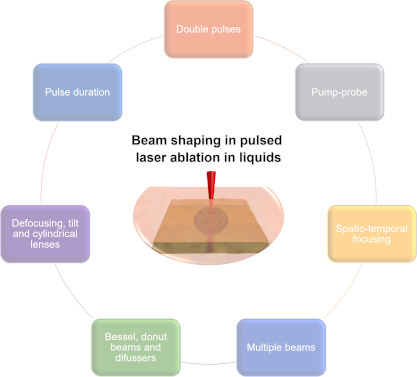
Beam shaping techniques for pulsed laser ablation in liquids: Unlocking tunable control of nanoparticle synthesis in liquids
Beilstein J. Nanotechnol. 2026, 17, 309–342, doi:10.3762/bjnano.17.22
- production rates up to several grams per hour in specialised setups requiring fast scanning systems and high power (500 W) and repetition rate (10 MHz) picosecond laser sources [5][35][53][54]. Only recently, the employment of diffractive optical elements has enabled the gram-per-hour productivity scale with







Deep learning for enhancement of low-resolution and noisy scanning probe microscopy images
Beilstein J. Nanotechnol. 2025, 16, 1129–1140, doi:10.3762/bjnano.16.83
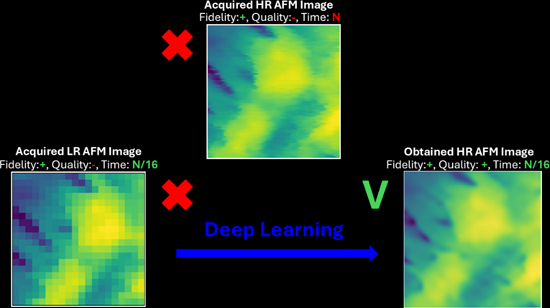
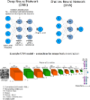
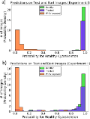
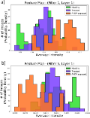
- shows deep learning models to be superior for super-resolution tasks and enables significant reduction in AFM measurement time, whereby low-pixel-resolution AFM images are enhanced in both resolution and fidelity through deep learning. Keywords: atomic force microscopy; deep learning; fast scanning
- interactions. Scanning distortions due to non-linearities in the scan are also trickier to correct and harder to avoid in fast scanning. Some of these artifacts can be eliminated or attenuated by image processing techniques [4][5][6][7][8][9][10][11][12]. Another resolution-limiting factor in AFM is the tip
- deep learning models in comparison to the traditional methods. This could arise from the difference between fast and traditional AFM scanning as Celgard® 2400 was measured with fast AFM and titanium film with standard, slow AFM. The fast-scanning is often achieved at the expense of somewhat worse


Shape, membrane morphology, and morphodynamic response of metabolically active human mitochondria revealed by scanning ion conductance microscopy
Beilstein J. Nanotechnol. 2025, 16, 951–967, doi:10.3762/bjnano.16.73
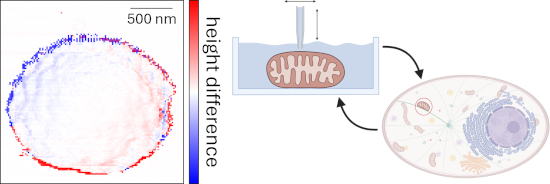
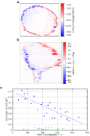
- . Difference images were colour-coded with a custom colour pattern, where the centre of the scale is white, positive heights are red, and negative heights are blue. Line profiles were always extracted in Gwyddion along the fast scanning direction (x-axis). The line profile data was read and processed in the



The role of convolutional neural networks in scanning probe microscopy: a review
Beilstein J. Nanotechnol. 2021, 12, 878–901, doi:10.3762/bjnano.12.66
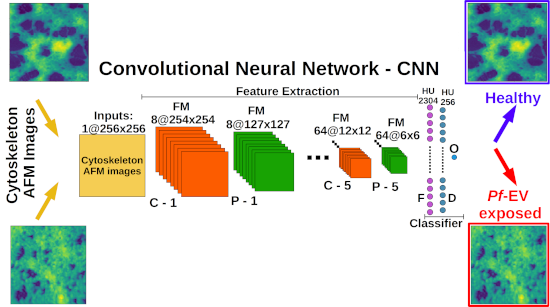
- molecules, the test set can be generated computationally from first principles. Various fast-scanning approaches have also been applied. Augmentation techniques are often required. Another characteristic of SPM is that it is multimodal. One scan can provide multiple mappings simultaneously with the







Reducing molecular simulation time for AFM images based on super-resolution methods
Beilstein J. Nanotechnol. 2021, 12, 775–785, doi:10.3762/bjnano.12.61
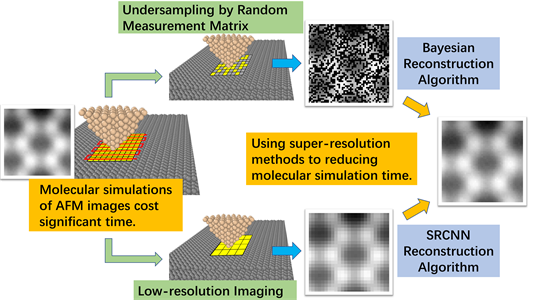
- the molecular structure [26], recognizing and classifying surface features [27][28][29], and fast scanning [30][31]. The main problem in training models of machine learning is providing sufficiently labeled training data. High-resolution AFM experiments are time consuming and experimental data are, a




Highly ordered mesoporous silica film nanocomposites containing gold nanoparticles for the catalytic reduction of 4-nitrophenol
Beilstein J. Nanotechnol. 2019, 10, 1368–1379, doi:10.3762/bjnano.10.135
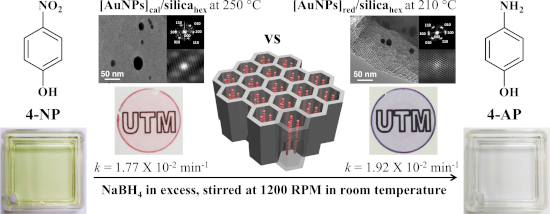
- (ICP-OES) on an Agilent model 700 series spectrometer where the samples were digested in 5 wt % aqua regia. The catalytic performance was studied via a Shimadzu DR UV–vis spectrophotometer (UV-2600) under liquid set-up with the fast scanning method using a standard 3 mL quartz cell. Fabrication of


Pure and mixed ordered monolayers of tetracyano-2,6-naphthoquinodimethane and hexathiapentacene on the Ag(100) surface
Beilstein J. Nanotechnol. 2019, 10, 1188–1199, doi:10.3762/bjnano.10.118
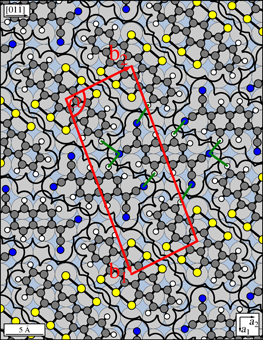
- hydrogen bonds (green lines). (c) Drift-corrected and filtered STM image. The fast scanning direction is the vertical direction (Ub = −0.81 V; It = 127 pA). A hard-sphere model of the structure derived from LEED has been overlaid. The non-symmetric shape of the molecule is assigned to tip effects, but not
- showing different islands. Here, all four possible domains with different orientations can be observed at the same time. They are marked by A–D. The fast scanning direction is in horizontal orientation (Ub = −1.51 V; It = 82 pA). This STM image has been selected to demonstrate the presence of the
- different symmetry-equivalent domains. The corresonding islands are smaller than usual. (c) STM image. The fast scanning direction is horizontal (Ub = −0.80 V; It = 80 pA). A hard-sphere model of the structure derived from LEED has been superimposed. (d) Hard-sphere model with indicated unit cell and


Biomimetic surface structures in steel fabricated with femtosecond laser pulses: influence of laser rescanning on morphology and wettability
Beilstein J. Nanotechnol. 2018, 9, 2802–2812, doi:10.3762/bjnano.9.262
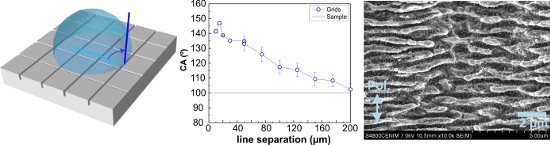
- right combination of a high repetition rate laser and fast scanning head. The specific experimental conditions used to fabricate the different areas are displayed in Table 1, including 4 different laser fluence values. SEM micrographs of the 16 different areas corresponding to the experimental



Optical near-field mapping of plasmonic nanostructures prepared by nanosphere lithography
Beilstein J. Nanotechnol. 2018, 9, 1536–1543, doi:10.3762/bjnano.9.144
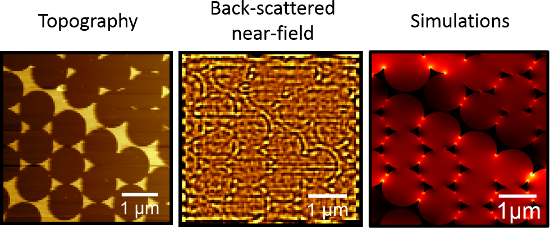
- tips to ensure a detectable near-field contribution that will exceed the ubiquitous background far-field signal in the scattered light. In ideal conditions, fast scanning on the surface ensures a high sensitivity, and minimizes the drift. To achieve this objective, most nano-antennas used in aSNOM are




Automated image segmentation-assisted flattening of atomic force microscopy images
Beilstein J. Nanotechnol. 2018, 9, 975–985, doi:10.3762/bjnano.9.91
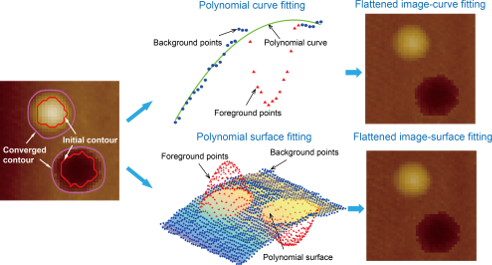
- flattening During scanning, AFM images are constructed line by line. The time required for each scan line is around 1 s along the fast scanning direction, which is much shorter than that of several minutes required for an entire image. As a result, the direction of drift is normally perpendicular to that of
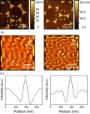
- the fast scanning, namely, along the slow scan direction. Along individual scan lines, the drift is much lower. Here we investigate the influence of fitting direction on the performance of image flattening in SWCF. Figure 8a shows a raw AFM image. The SWCF was then applied to individual scan lines
- along the horizontal direction (fast scanning direction). The flattened result is shown in Figure 8b. One can see that the SWCF along the horizontal direction gives an optimized image flattening. To test the influence of fitting direction relative to the drift direction, here the raw AFM image was


Direct writing of gold nanostructures with an electron beam: On the way to pure nanostructures by combining optimized deposition with oxygen-plasma treatment
Beilstein J. Nanotechnol. 2017, 8, 2530–2543, doi:10.3762/bjnano.8.253
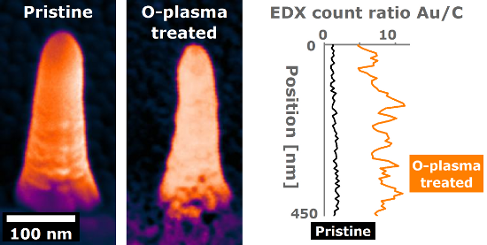
- atmosphere for a few hours during the transfer from the fabrication facility to the TEM lab. AFM investigations were carried out on a Veeco/Bruker Dimension 3000 atomic force microscope. (a) Schematics of the FEBID experimental set-up. Note that the direction of electron beam movement, i.e., fast scanning

Nanoscale rippling on polymer surfaces induced by AFM manipulation
Beilstein J. Nanotechnol. 2015, 6, 2278–2289, doi:10.3762/bjnano.6.234
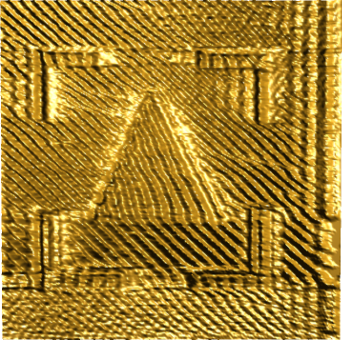
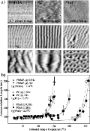
- pattern. In this case the observed ripples were perpendicular or almost perpendicular to the fast scanning direction. The researchers have soon realized that many parameters can affect the formation of nanoripples. These parameters depend on the characteristics of the tip–surface contact, the experimental




Kelvin probe force microscopy for local characterisation of active nanoelectronic devices
Beilstein J. Nanotechnol. 2015, 6, 2193–2206, doi:10.3762/bjnano.6.225
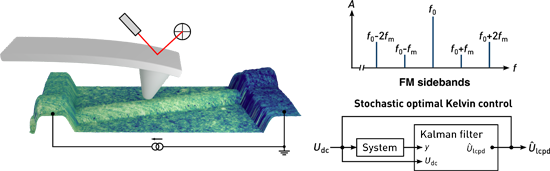
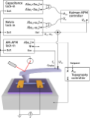
- ] or fast scanning [39]. According to the separation principle [37], the optimal controller that minimises the expected error can be constructed by finding an optimal ‘observer’ and an optimal ‘regulator’. As an observer, we use a Kalman filter [40], which continuously blends the sideband measurements


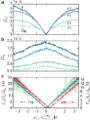
![[Graphic 33]](/bjnano/content/inline/2190-4286-6-225-i48.png?max-width=637&scale=1.18182) for different modulation amplitu...
for different modulation amplitu...




Scanning reflection ion microscopy in a helium ion microscope
Beilstein J. Nanotechnol. 2015, 6, 1125–1137, doi:10.3762/bjnano.6.114
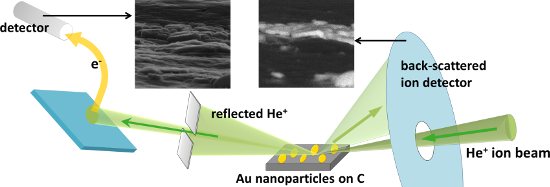
- advantage as SEM: fast scanning and a large maximum field of view. On the other hand, scanning and measurements in AFM can be performed for all sides of the sample features, whereas in RIM (as well as in REM) only the side facing the beam is suited for investigation. In this work, RIM was demonstrated to





