


Search results
Search for "hybrid nanocomposites" in Full Text gives 15 result(s) in Beilstein Journal of Nanotechnology.
Materials challenges in solid-state sensors for continuous monitoring of ions in water
Beilstein J. Nanotechnol. 2026, 17, 935–973, doi:10.3762/bjnano.17.66
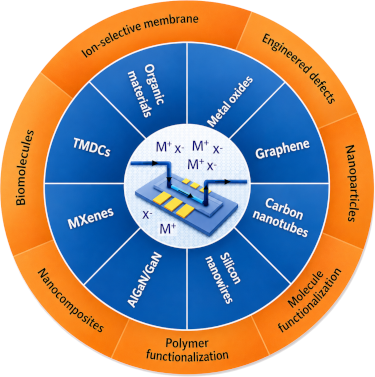
- through strategies such as defect engineering, nanoparticle doping, surface functionalization with organic molecules, or incorporation of advanced recognition elements like metal–organic frameworks, covalent organic frameworks, ion-imprinted polymers, and biomaterials. Hybrid nanocomposites and ion



Cellulose as a photocatalyst support material: extraction, structural features, and environmental applications
Beilstein J. Nanotechnol. 2026, 17, 635–652, doi:10.3762/bjnano.17.44
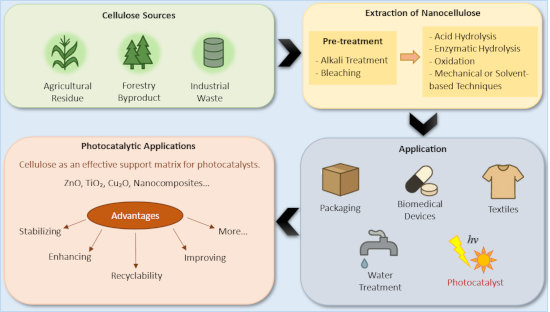
- of functional groups enable it to act as an effective support matrix for photocatalysts such as ZnO, TiO2, Cu2O, and various hybrid nanocomposites. Through stabilizing nanoparticles, preventing their aggregation and contributing to pollutant adsorption, cellulose enhances the overall efficiency of


Upcycling agroindustrial waste into graphene oxide supports for gold nanoparticles: toward sustainable nanomaterials
Beilstein J. Nanotechnol. 2026, 17, 489–504, doi:10.3762/bjnano.17.32
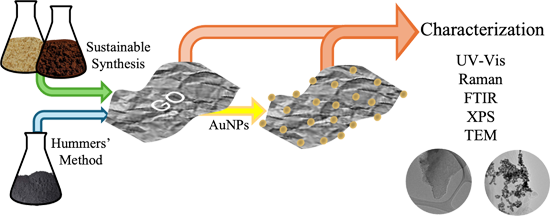
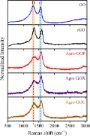
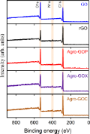
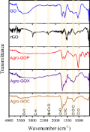
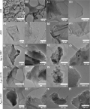
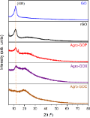
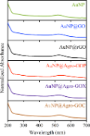
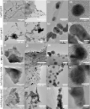
- ; hybrid nanocomposites; plasmonic nanomaterials; surface functionalization; Introduction Graphene oxide (GO), due to its unique physicochemical properties, is widely explored regarding a range of applications, including sensors, water purification, and energy storage and conversion [1][2][3][4][5]. GO is



A nonenzymatic reduced graphene oxide-based nanosensor for parathion
Beilstein J. Nanotechnol. 2022, 13, 730–744, doi:10.3762/bjnano.13.65
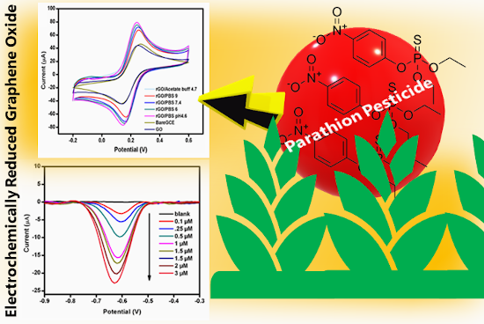
- nanoribbons doped with silver nanoparticles, rGO doped with ZrO2, and CuO–TiO2 hybrid nanocomposites were proposed to detect methyl parathion [19][20][21][22]. Rajaji et al. (2019) modified glassy carbon electrodes with graphene oxide encapsulated 3D porous chalcopyrite (CuFeS2) nanocomposites to detect


Zinc oxide nanostructures for fluorescence and Raman signal enhancement: a review
Beilstein J. Nanotechnol. 2022, 13, 472–490, doi:10.3762/bjnano.13.40
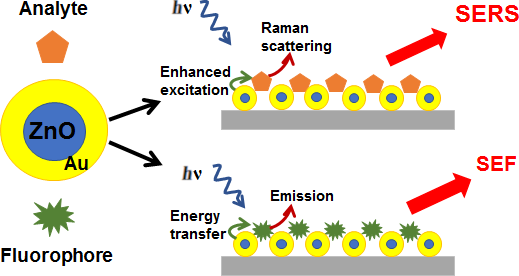
- , enhanced Raman scattering for periodic ZnO-elevated Au dimer nanostructures [12] and enhanced fluorescence emission signals from Al-doped ZnO films [13] were obtained. The development of hybrid nanocomposites based on ZnO and noble metals for fluorescence and Raman signal enhancement has recently attracted




Nanocellulose: Recent advances and its prospects in environmental remediation
Beilstein J. Nanotechnol. 2018, 9, 2479–2498, doi:10.3762/bjnano.9.232

- ) [101]. The abundant surface –OH groups act as hydrophilic sites to accelerate nucleation and growth of inorganic particles, consequently controlling the morphology, particle size, and crystallinity [107]. Such readily available surface –OH groups offer an ideal platform for the fabrication of hybrid
- nanocomposites with hierarchical structure. Besides, these –OH groups can be tailored for selective and improved interactions through a variety of chemical modifications [88]. The hydrophilicity of nanocellulose can be improved by inserting hydrophilic groups, such as carboxylic acids, alcohols, and amides, into


New 2D graphene hybrid composites as an effective base element of optical nanodevices
Beilstein J. Nanotechnol. 2018, 9, 1321–1327, doi:10.3762/bjnano.9.125
- the hybrid nanocomposite were approximately equal for both metallic and semiconductor nanotubes. Keywords: absorption coefficient; 2D CNT–graphene hybrid nanocomposite; optical conductivity; optical nanodevices; topological models; Findings The applicability of graphene hybrid nanocomposites in the
- field of optical communications has been hinted to by the active research for the last six years, in which the unique properties of these hybrid nanocomposites as electro-optic materials for optical modulators of different types has been demonstrated [1][2][3][4]. One of the newest and hitherto only
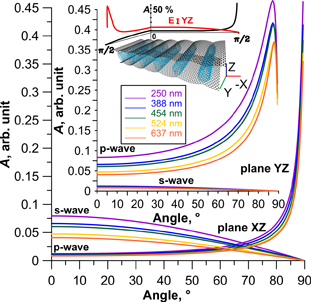
- the SCC DFTB2 method. Figure 3 and Figure 4 show the spectra of the real and imaginary parts of the diagonal elements of the surface conductivity tensor for four topological models of 2D CNT–graphene hybrid nanocomposites with an intertube distance of 13 hexagons and four types of CNTs. An analysis of


Two-dimensional carbon-based nanocomposites for photocatalytic energy generation and environmental remediation applications
Beilstein J. Nanotechnol. 2017, 8, 1571–1600, doi:10.3762/bjnano.8.159
- electrostatic interactions between graphene nanoplatelets are responsible for self-assembly of graphene sheets. In addition to the above-mentioned methods, there are also other efficient methods for synthesis of graphene–metal oxide hybrid nanocomposites, such as solution mixing [59], UV-assisted reduction [13
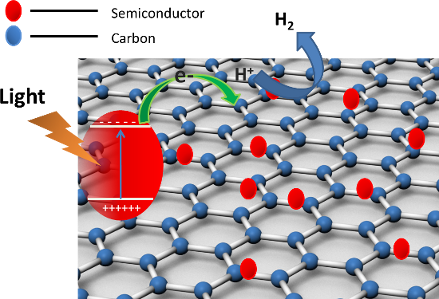
- demonstrated by Du et al. [129] on graphene–titania hybrid nanocomposites and explained as the interfacial charge transfer by using density functional calculations. They demonstrated the formation of a charge transfer complex at the interface of graphene and titania due to the work function difference of both


Photocatalysis applications of some hybrid polymeric composites incorporating TiO2 nanoparticles and their combinations with SiO2/Fe2O3
Beilstein J. Nanotechnol. 2017, 8, 272–286, doi:10.3762/bjnano.8.30
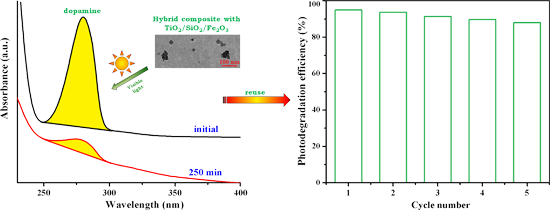
- ) of all hybrid nanocomposites containing TiO2 NPs and also to investigate the spatial distribution of the elements through the X-ray elemental mapping images. In the EDX patterns (Figure 3), the Ti, Si and Fe signals confirmed the existence of inorganic nanoparticles, while the organic matrix is


Reasons and remedies for the agglomeration of multilayered graphene and carbon nanotubes in polymers
Beilstein J. Nanotechnol. 2016, 7, 1174–1196, doi:10.3762/bjnano.7.109
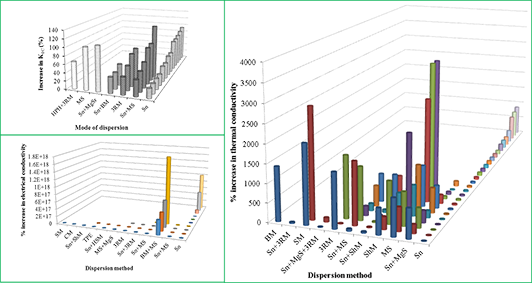
- improve the physical properties of hybrid nanocomposites. Sumfleth et al. doped titania into MWNT–epoxy [57]. They found enhanced CNT dispersion and synergistic effects in these multiphase nanocomposites. Ma et al. doped nanoclay into CNT–acrylonitrile butadiene styrene (ABS) system and found enhanced CNT


Photocurrent generation in carbon nanotube/cubic-phase HfO2 nanoparticle hybrid nanocomposites
Beilstein J. Nanotechnol. 2016, 7, 1075–1085, doi:10.3762/bjnano.7.101
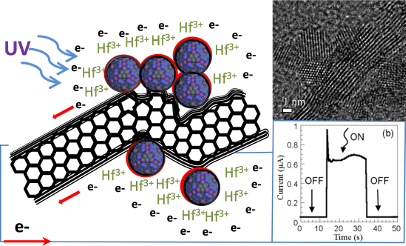
- ) occurs in MWCNTs. Hence, PL measurements of our hybrid nanocomposites rather address mutual interaction of the radiative centers on the surface of HfO2 nanoparticles and metallic CNT framework, conceivably acting either as a surface-passivating agent or as an antenna enhancing light interaction with
- nanoparticles [21]. Figure 3 shows room temperature PL spectra of the hybrid nanocomposites dispersed in ethanol as a colloidal suspension and of the free-standing HfO2 nanoparticles. As one can deduce from the PL intensity scales in Figure 3a,b, the total quantum yield in the case of nanocomposites is two


Evaluation of gas-sensing properties of ZnO nanostructures electrochemically doped with Au nanophases
Beilstein J. Nanotechnol. 2016, 7, 22–31, doi:10.3762/bjnano.7.3
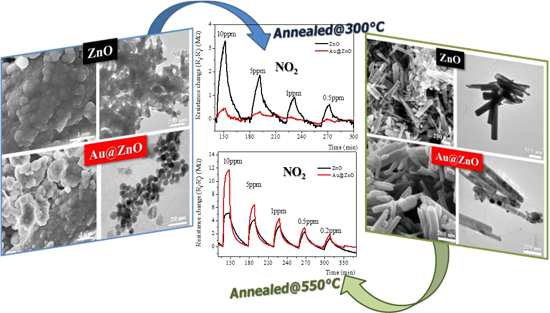
- decorated with spherical Au NPs. In the case of Au@ZnO annealed at 300 °C, the density of Au NPs on ZnO nanostructures was higher than that in the case of hybrid nanocomposites annealed at 550 °C in which the surface of ZnO nanorods was decorated with only few Au NPs. The annealing temperature strongly




Controlled graphene oxide assembly on silver nanocube monolayers for SERS detection: dependence on nanocube packing procedure
Beilstein J. Nanotechnol. 2016, 7, 9–21, doi:10.3762/bjnano.7.2
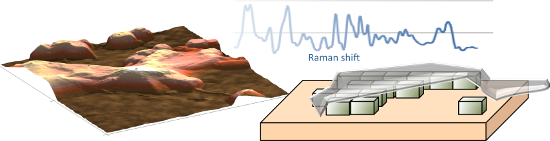
- -containing functionalities, which confer to the system additional features including great chemical stability in aqueous media and superior ability of capturing and retaining molecules. Reports on nanoparticle/graphene hybrid nanocomposites showed that SERS signals arising from graphene/metal hybrid


Silica micro/nanospheres for theranostics: from bimodal MRI and fluorescent imaging probes to cancer therapy
Beilstein J. Nanotechnol. 2015, 6, 546–558, doi:10.3762/bjnano.6.57

- multimodal imaging probes for magnetic resonance imaging (MRI) and optical imaging are the most popular and interesting, since they provide high spatial resolution (MRI) and allow for a rapid screening of the disease site (optical imaging) simultaneously. But such hybrid nanocomposites have certain
- Gd2(CO3)3:Tb complex was found to be 8–12 nm with high degree of narrow size distribution. The coating with silica was confirmed by HRTEM studies in which the outer material covering the hybrid nanocomposites appeared as a thin layer with diameter of 6 nm. The magnetic properties of the NPs were
- -aminopropyltriethoxysilane (APS) were activated with pyridine bismethylenenitrilotetrakis(acetic acid) (PMN) and, finally, to this different lanthanide salts were added. The characterization of these hybrid nanocomposites was done by TEM, fluorescence spectroscopy, 13C cross-polarization magic-angle spinning (CP/MAS) NMR


An insight into the mechanism of charge-transfer of hybrid polymer:ternary/quaternary chalcopyrite colloidal nanocrystals
Beilstein J. Nanotechnol. 2014, 5, 1235–1244, doi:10.3762/bjnano.5.137
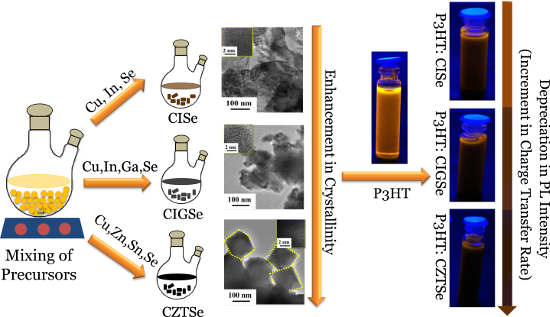
- the above observations was provided by investigating the photoluminescence intensities of each of the prepared hybrid nanocomposites of CISe, CIGSe and CZTSe. Emission intensity studies for each of the nanocrystal inks: P3HT were investigated by photoluminescence spectroscopy to study trends of
- , we calculated the value of accessible flourophores, fa, for P3HT:CISe, P3HT:CIGSe and P3HT:CZTSe and the values are found to be ~0.32, ~0.41 and ~0.54, respectively. Among all investigated hybrid nanocomposites of CISe-based chalcogenides, (fa), the maximum number of accessible flourophores was





