Search results
Search for "low energy" in Full Text gives 295 result(s) in Beilstein Journal of Nanotechnology. Showing first 200.
Ultrasonic irradiation in the synthesis of nanohydroxyapatite: a chemically friendly technique for improving hemocompatibility and antibiofilm applications
Beilstein J. Nanotechnol. 2026, 17, 991–1015, doi:10.3762/bjnano.17.68
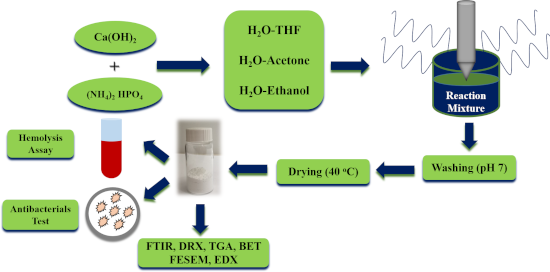
- method. To propose alternative methodologies to those mentioned in Figure 2, we implemented techniques with low energy consumption that allow for ease in handling reaction variables. One novel and versatile process for obtaining hydroxyapatite is sonochemistry, which uses ultrasound as energy source [16
- simplicity of the reaction medium, low energy consumption, and short processing times required to obtain the products, nHA synthesis carried out with ultrasonic irradiation complies with the precepts of green chemistry. Specifically, this method operates at low temperatures and atmospheric pressure




Materials challenges in solid-state sensors for continuous monitoring of ions in water
Beilstein J. Nanotechnol. 2026, 17, 935–973, doi:10.3762/bjnano.17.66
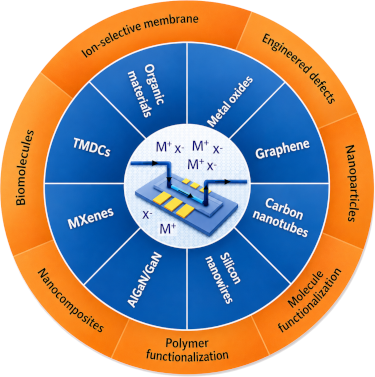
- essential for monitoring natural water resources, treatment facilities, and wastewater systems. Solid-state sensors have emerged as versatile platforms for this purpose due to their adaptability in geometry, compatibility with electronic integration, portability, and low energy requirements. A wide variety


Enhanced erosion resistance and radiation stability of WC–WO3 nanocomposite films under 100 keV Kr+ ion irradiation
Beilstein J. Nanotechnol. 2026, 17, 922–934, doi:10.3762/bjnano.17.65
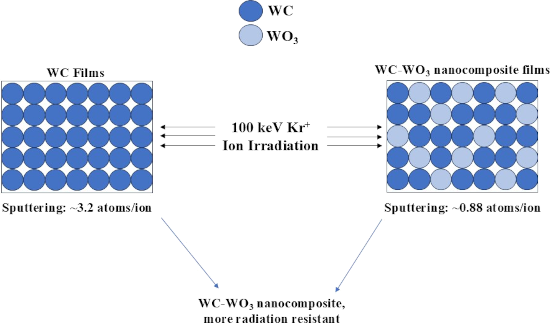
- , indicating dynamic microstructural evolution rather than amorphization under irradiation. These results highlight the potential of WC–WO3 nanocomposites as erosion-resistant and structurally resilient candidates for future plasma-facing applications in fusion reactors. Keywords: low energy ions; plasma
- erosion in the composite thin films. Thus, the present work aims to investigate the erosion behaviour of WC–WO3 nanocomposite films and its comparison with WC films under “low-energy” ion irradiation, i.e., in the nuclear energy loss regime. It is important to note that the nuclear energy loss (Sn
- × 1 cm, namely S1 (WC–WO3 nanocomposite films) and S2 (WC films) is given in Table 2. Later, half part (0.5 cm × 1 cm) of both the samples were irradiated with 100 keV Kr+ ions, at normal incidence, from ECR ion source based low energy ion beam facility (LEIBF) at Inter University Accelerator Centre



Tuning the electronic properties of defect-rich MoS2
Beilstein J. Nanotechnol. 2026, 17, 796–805, doi:10.3762/bjnano.17.56
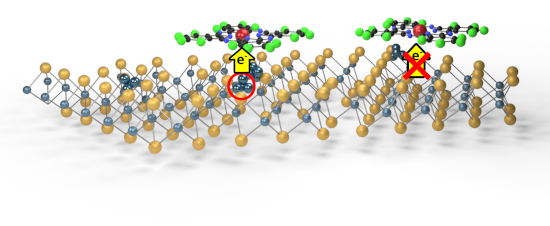
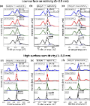
- sputtering for 4 min (Figure 1c,f,i). A low energy of 500 eV was used to avoid more severe radiation damage of MoS2 (for further details, e.g., the corresponding kx–ky maps, see Figure S1 in Supporting Information File 1). To ascertain the valence band maximum as the energy of the highest occupied state, the


Substrate-dependent pore formation in molybdenum disulfide monolayers under ion irradiation
Beilstein J. Nanotechnol. 2026, 17, 769–780, doi:10.3762/bjnano.17.54
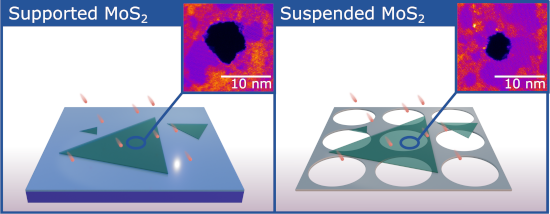
- -)electronic and catalytic functionality [14][15][16][17][18]. Ion irradiation has already proven effective for defect engineering across different energy regimes: Low-energy ions enable implantation with near-atomic precision [19][20][21], kiloelectronvolt ions primarily create point defects in monolayers [22
- × 1011 cm−2). The pore formation efficiency of MoS2 on Au in Figure 5b is strongly reduced (η ≈ 0.28) compared with MoS2 on SiO2 in Figure 5a (η ≈ 0.83), despite the higher expected energy transfer for the Au irradiation. For the low-energy SHI irradiation (Figure 5c), efficiency is further reduced to η


Superconducting artificial neural networks and quantum circuits
Beilstein J. Nanotechnol. 2026, 17, 744–747, doi:10.3762/bjnano.17.51

- Anatolie S. Sidorenko Technical University of Moldova, Chisinau 2004, Republic of Moldova 10.3762/bjnano.17.51 Keywords: artificial neural networks; high-performance computing; Josephson junctions; superconducting digital technologies; superconducting quantum circuits; ultra-low energy
- dissipation while simultaneously increasing performance. The future of high-performance computing with reduced energy consumption is closely associated with technologies characterised by ultra-low energy dissipation. A highly promising approach is the implementation of artificial neural networks using
Fractional shot noise of an SU(N) Kondo system
Beilstein J. Nanotechnol. 2026, 17, 515–540, doi:10.3762/bjnano.17.34
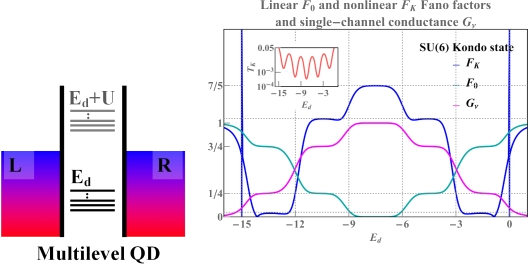
- universal scaling, the Kondo temperature kBTK being the only energy scale that governs low-energy properties [54]. The Kondo temperature can be extracted, for example, from the temperature dependence of conductance or from the susceptibility [4][55][56]. For bulk systems, also spectroscopic measurements of
- disrupt the superposition of states and entanglement, leading to information loss and decoherence. The considerations made in this work are in the spirit of the effective Fermi liquid (FL) theory [77][78][79][80][81][82][83][84][85][86]. One can analyze the low-energy behavior of a multilevel interacting
- the elastic and inelastic scattering of quasiparticles. The latter approach is the path we follow in this article. FL theory applies to the low-energy properties of quasiparticles. The great advantage of this theory is that it can be also applied to nonequilibrium processes. In the Kondo problem of


![[Graphic 127]](/bjnano/content/inline/2190-4286-17-34-i187.svg?max-width=637&scale=1.18182)

Defects and defect-mediated engineering of two-dimensional materials: challenges and open questions
Beilstein J. Nanotechnol. 2026, 17, 454–488, doi:10.3762/bjnano.17.31
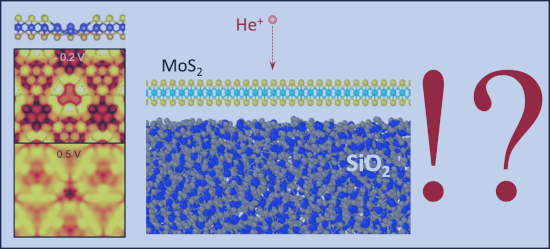
- of impurities, see [6][7][8][9][10] for an overview. Specifically, low-energy ion implantation [11][12][13][14][15][16][17] can be employed to directly create impurities in 2D materials. Alternatively, due to the 2D geometry, impurities can be introduced through filling the vacancies previously
- material-dependent. A counterintuitive approach to decrease the concentration of surface defects in layered TMDs was also suggested [76], namely, a two-step process including low-energy (500 eV) Ar ion bombardment followed by annealing. It was demonstrated that the concentration of Te vacancies on the as
- graphene (Gr) on Ir(111) is irradiated with noble gas ions of sufficiently low energy, such that only single Gr vacancies are created, and at sufficiently high temperature, such that the vacancies are mobile, the vacancies organize into clusters of rather uniform size, whose positioning reflects the moiré





Ferroelectric nanodot reservoir for neuromorphic computing
Beilstein J. Nanotechnol. 2026, 17, 352–364, doi:10.3762/bjnano.17.24
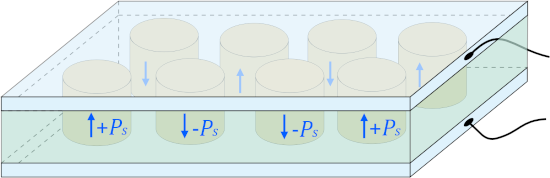
- evolution of polarization states with low energy consumption and fast switching speeds, leveraging the intrinsic properties of ferroelectrics. Furthermore, while previous considerations of neuromorphic ferroelectric nanodot-based setups [38][39] demonstrated static logic functions in topologically
- neuromorphic purposes using abstract or spin-based physical systems [43][44], the ferroelectric platform described here uniquely combines analog configurability, scalability, and low-energy operation due to the intrinsic dielectric polarization physics. In contrast to spintronic or CMOS-based implementations
- /output schemes offer a high degree of flexibility and compatibility with different system architectures. Notably, all implementations rely solely on dielectric polarization degrees of freedom, requiring no active current-driving elements. This makes the system particularly attractive for low-energy, high


Advancing nanolithography: a comprehensive review of materials for local anodic oxidation with AFM
Beilstein J. Nanotechnol. 2026, 17, 275–291, doi:10.3762/bjnano.17.19
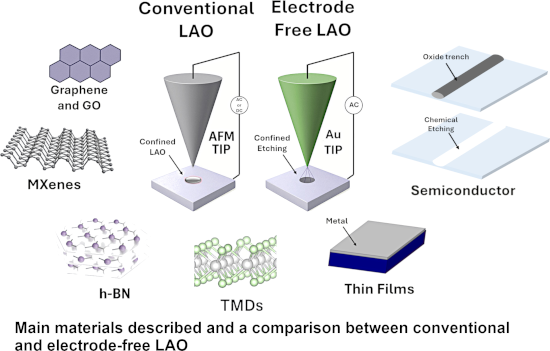
- thermochemical changes in an ultrathin resist, and is therefore an important comparator for writing speed and patterning rate. FEL, based on the emission of low-energy electrons from an AFM tip, provides sub-10 nm resolution in ultrathin molecular resists and thus represents the upper limit of tip-based spatial
- effects. For comparison, it is worth mentioning the non-oxidative SPL technique FEL [57], which has recently proven its efficiency and reliability. It exploits a Fowler–Nordheim-type emission of low-energy electrons from a conductive AFM tip. This beam of low-energy electrons can induce highly confined
- unique etching profiles and selective modifications. In a study by Reuter et al., low-energy electrons emitted from the tip have been used to induce nanoscale oxidation on a MoTe2 nanosheet surface under ambient conditions [36]. The study demonstrates a novel, resist-free method for nanoscale patterning


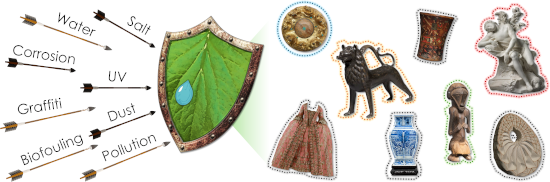
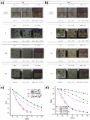
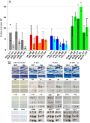
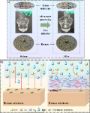
Functional surface engineering for cultural heritage protection: the role of superhydrophobic and superoleophobic coatings – a comprehensive review
Beilstein J. Nanotechnol. 2026, 17, 63–96, doi:10.3762/bjnano.17.6




Competitive helical bands and highly efficient diode effect in F/S/TI/S/F hybrid structures
Beilstein J. Nanotechnol. 2026, 17, 15–23, doi:10.3762/bjnano.17.2
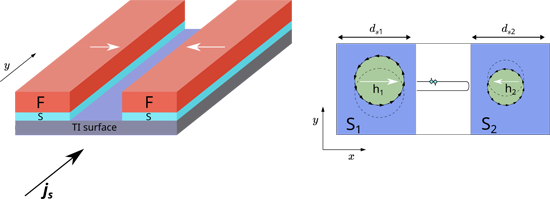
- The F/S/TI/S/F hybrid structure can be described by the following effective low-energy Hamiltonian in the particle–hole and spin space: where α is the Fermi velocity, μ is the chemical potential, and V is the impurity potential of a Gaussian form, which is used for further quasiclassical approximation


![[Graphic 16]](/bjnano/content/inline/2190-4286-17-2-i31.svg?max-width=637&scale=1.18182)
![[Graphic 17]](/bjnano/content/inline/2190-4286-17-2-i32.svg?max-width=637&scale=1.18182)


Quantitative estimation of nanoparticle/substrate adhesion by atomic force microscopy
Beilstein J. Nanotechnol. 2026, 17, 1–14, doi:10.3762/bjnano.17.1

- density of Cu) were considered. Assuming an initial velocity of ≈100 m·s−1 [45] for 0 V acceleration bias, the total energy per atom increases linearly from 0.003 eV·atom−1 at 0 V to 0.068 eV·atom−1 at 1000 V, placing the single-charged NPs within the low-energy regime (soft landing) [46]. Note, the term



Internal 3D temperature mapping in biological systems using ratiometric light-sheet imaging and lipid-coated upconversion nanothermometers
Beilstein J. Nanotechnol. 2025, 16, 2306–2316, doi:10.3762/bjnano.16.159
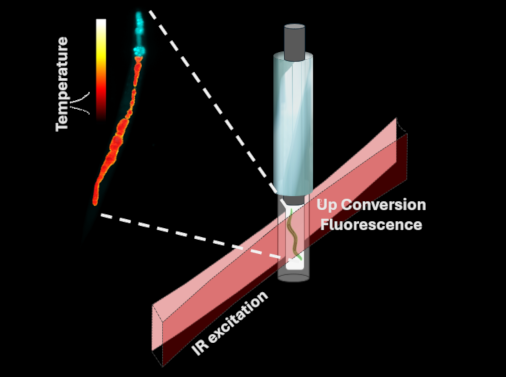
- (UC) fluorescence, enabling the conversion of low-energy excitation (longer wavelengths) into high-energy emission (shorter wavelengths). This is particularly advantageous for biomedical applications, as it eliminates the need for ultraviolet or visible excitation, which can cause photobleaching and


Chiral plasmonic nanostructures fabricated with circularly polarized light
Beilstein J. Nanotechnol. 2025, 16, 2245–2264, doi:10.3762/bjnano.16.154
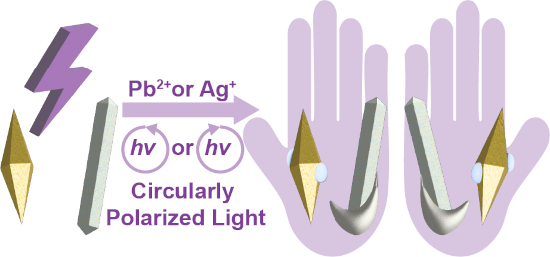
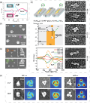
- -assisted hydrolysis with relatively low-energy electrons (≈1.5 eV compared to >10 eV at the hot spots) at the lateral sides of AuNRs. In contrast, polymethyl(methacrylate) (PMMA) decomposed preferentially at the hot spots of the AuNRs under femtosecond laser excitation by high-energy hot electrons





Targeting the vector of arboviruses Aedes aegypti with nanoemulsions based on essential oils: a review with focus on larvicidal and repellent properties
Beilstein J. Nanotechnol. 2025, 16, 1894–1913, doi:10.3762/bjnano.16.132
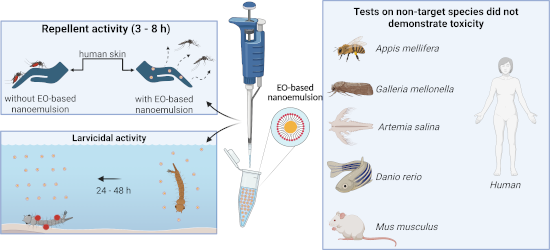
- through a low-energy method, using polysorbate 20 as a surfactant. The formulation presented an average droplet size ranging from 244.6 to 280.4 nm, a polydispersity index of less than 0.25, and a negative zeta potential (−15.7 to −18.6 mV), maintaining stability for 14 days. In the bioassays, fourth
- bicyclogermacrene, valerianol, β-pinene, and sesquirosefuran being the major substances in the essential oil of leaves (81.4%), suggesting a key role of this metabolites in larvicidal activity [113][115]. The oil was extracted using hydrodistillation and incorporated into the nanoemulsion by the low-energy method
- using a low-energy method with sorbitan monooleate 80 and polysorbate 20. The NE presented an average droplet size of 74.5 nm (±1.939) and a polydispersity index of 0.271 (±0.007), remaining physicochemically stable for up to 180 days. Larvicidal bioassays against third-stage Aedes aegypti larvae


Phytol-loaded soybean oil nanoemulsion as a promising alternative against Leishmania amazonensis
Beilstein J. Nanotechnol. 2025, 16, 1826–1836, doi:10.3762/bjnano.16.126

- via the low-energy emulsification method, as a novel potential pharmacological alternative for the treatment of cutaneous leishmaniasis. Results Phytol-loaded soybean-oil nanoemulsion Blank-NE and soybean oil nanoemulsions loaded with phytol (PHYT-NE) were successfully prepared using the phase
- demonstrate that the phytol-loaded nanoemulsion, developed through a low-energy PIC method, is a stable and physicochemical suitable system for topical and transdermal administration in the future. The PHYT-NE exhibited enhanced leishmanicidal activity against Leishmania amazonensis promastigotes in a time
- ). Nanoemulsion preparation and composition Nanoemulsions were prepared using the phase inversion composition method, a low-energy technique wherein the aqueous phase (AP) was gradually added dropwise to the oil phase (OP) under continuous magnetic stirring at 1500 rpm, using a magnetically stirrer (IKA® C-MAG


Electrical, photocatalytic, and sensory properties of graphene oxide and polyimide implanted with low- and medium-energy silver ions
Beilstein J. Nanotechnol. 2025, 16, 1794–1811, doi:10.3762/bjnano.16.123
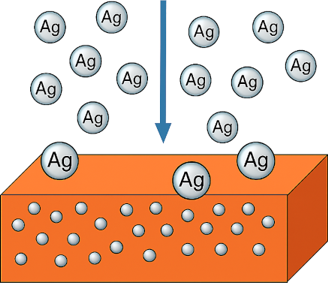
- implantation provides a controllable alternative for tuning surface properties at the nanoscale, enabling the targeted introduction of functional species without chemical reagents. This work investigates the effects of low-energy (20 keV) and medium-energy (1.5 MeV) Ag+ ion implantation on the electrical
- Table 1 and Figure 1. Table 1 presents the mean projected range Rp and straggling of projected range of the Ag ions in GO and PI, together with the nuclear and electron stopping powers and their ratio at the sample surface. It is evident from Table 1 that, for low-energy implantation, the projected
- to deeper ion penetration. While higher fluences also distort the surface, the resulting densification or redistribution of defects may lead to a decrease in roughness at the highest fluence. The findings for PI suggest that the application of low-energy 20 keV Ag (Figure 10) ion implantation results


Multifunctional anionic nanoemulsion with linseed oil and lecithin: a preliminary approach for dry eye disease
Beilstein J. Nanotechnol. 2025, 16, 1711–1733, doi:10.3762/bjnano.16.120
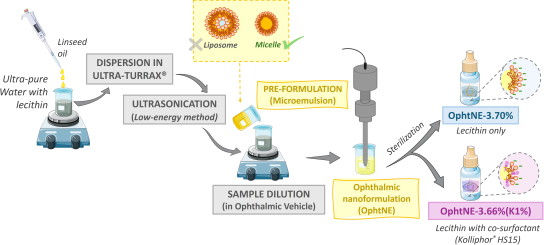
- efficacy and safety for ocular administration. Keywords: eye drops; micelles; low-energy method; ophthalmic vehicle; sample dilution; stability; Introduction Dry eye disease (DED) is a multifactorial condition affecting the ocular surface, characterized by changes in tear fluid composition and/or
- , homogeneity, and stability in colloidal systems are influenced by component proportions (surfactant, oil, and co-surfactant), emulsification methods (low-energy or high-energy techniques) [40][41][42], and intrinsic properties like linseed oil viscosity and lecithin’s molecular structure [43]. These last
- experimentally determined using a dilution method combined with a low-energy technique, ensuring the formation of uniform micelles ideal for ophthalmic applications, as detailed below. Preparation of ophthalmic nanoformulations To obtain nanoemulsions for ocular application, three progressive studies were



Venom-loaded cationic-functionalized poly(lactic acid) nanoparticles for serum production against Tityus serrulatus scorpion
Beilstein J. Nanotechnol. 2025, 16, 1633–1643, doi:10.3762/bjnano.16.115
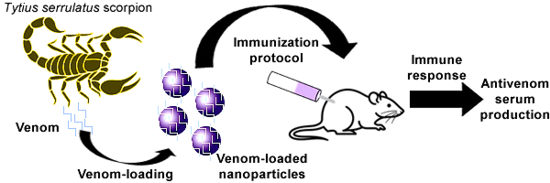
- -loaded PLA nanoparticles were fabricated by nanoprecipitation methods. In this technique, the PLA nanoparticles (NPs) were produced by low-energy solvent displacement and functionalized with polyethylenimine (cationic polymer) for the T. serrulatus protein adsorption. The NPs showed a mean diameter of
- were successfully obtained using parameters selected for the nanoprecipitation method. This low-energy technique allowed the spontaneous self-assembling of PLA nanoparticles, which were functionalized with polyethyleneimine (PEI) to enable the adsorption of venom proteins. Experimental results
- functionalized cationic PLA nanoparticles adsorbed with negatively charged proteins was successfully developed by low-energy solvent diffusion method, producing effective and stable spherical cationic nanoparticles. The positive surface charge enabled a high protein incorporation into particles. The prolonged


Few-photon microwave fields for superconducting transmon-based qudit control
Beilstein J. Nanotechnol. 2025, 16, 1580–1591, doi:10.3762/bjnano.16.112
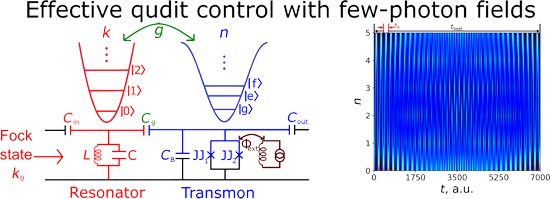
- efficient state control of the qudit will be possible for low-energy levels, n = 1–3. Switching between effectively populated states is carried out when an external magnetic flux Φext is applied to the interferometer, taking into account the condition (Figure 6). The tuning of the plasma frequency is


Laser processing in liquids: insights into nanocolloid generation and thin film integration for energy, photonic, and sensing applications
Beilstein J. Nanotechnol. 2025, 16, 1428–1498, doi:10.3762/bjnano.16.104
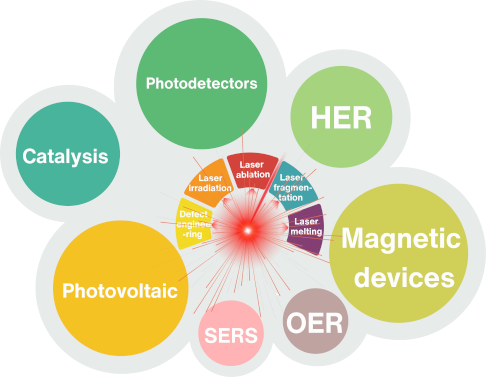
- careful control of several factors, such as particle surface charge, the electrical and fluid properties of the suspension, electrode material selection, and the current–voltage parameters. Additionally, it is a cost-effective, environmentally friendly method due to its low energy requirements and minimal






Synthesis and antibacterial properties of nanosilver-modified cellulose triacetate membranes for seawater desalination
Beilstein J. Nanotechnol. 2025, 16, 1380–1391, doi:10.3762/bjnano.16.100
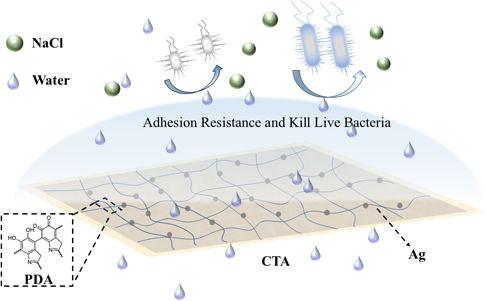
- these, membrane-based desalination stands out due to its numerous advantages, such as low energy consumption, compact footprint, and ease of operation [11][12]. Over the past decade, there has been a substantial increase in research publications related to membrane desalination, with the number reaching


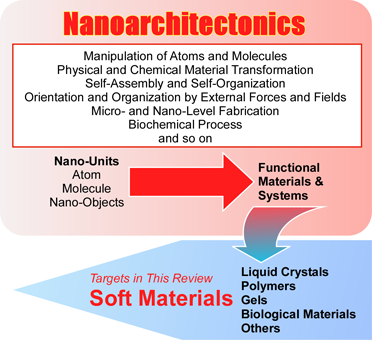
Soft materials nanoarchitectonics: liquid crystals, polymers, gels, biomaterials, and others
Beilstein J. Nanotechnol. 2025, 16, 1025–1067, doi:10.3762/bjnano.16.77






A calix[4]arene-based supramolecular nanoassembly targeting cancer cells and triggering the release of nitric oxide with green light
Beilstein J. Nanotechnol. 2025, 16, 1003–1013, doi:10.3762/bjnano.16.75
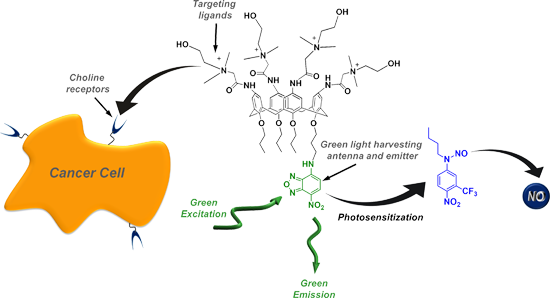
- targeting ability combined with a photoresponsive character. The chromo-fluorogenic component can be exploited for cell tracking and as a suitable low energy light-harvesting antenna to activate photoinduced bimolecular processes with an otherwise blue-light-activatable NOPD encapsulated therein. For this