


Search results
Search for "magnetic field" in Full Text gives 325 result(s) in Beilstein Journal of Nanotechnology. Showing first 200.
Defects and defect-mediated engineering of two-dimensional materials: challenges and open questions
Beilstein J. Nanotechnol. 2026, 17, 454–488, doi:10.3762/bjnano.17.31
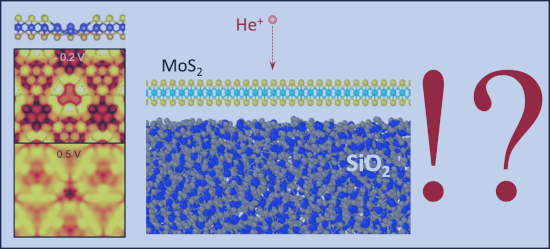
- state lead to additional tunneling channels, which is reflected in symmetric steps of the differential conductance in the dI/dV spectra [144]. In the absence of an external magnetic field, the excitation energies are directly related to the crystal-field split anisotropy of the defect in its atomic
- -scale surrounding [145]. The application of an external magnetic field leads to Zeeman splitting of the spin states, allowing also for the identification of the spin 1/2 states. To the best of our knowledge, no such experiments have been reported in the literature on TMDs so far. One challenge is the





Fast vortex dynamics and relaxation times in NbRe-based heterostructures
Beilstein J. Nanotechnol. 2026, 17, 292–302, doi:10.3762/bjnano.17.20
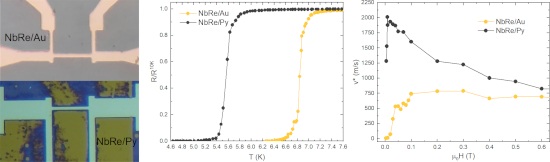
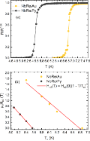
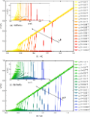
- to extract the quasiparticle energy relaxation time. For external magnetic field values for which edge barrier pinning is dominant and thermal effects are negligible, the relaxation times are about 150 ps and 24 ps for NbRe/Au and NbRe/Py bilayers, respectively. These results indicate that NbRe/Py
- work, we systematically investigate vortex dynamics and flux-flow instability phenomena in micrometer-wide bilayers in which NbRe is brought into contact with either thin N or F materials. In particular, we measure transport properties in the presence of a magnetic field in NbRe/Au and NbRe/Py
- microstrips. Experimental data show that the two materials modify the vortex dynamics of NbRe differently, with Py allowing for larger v* as a function of the magnetic field. Furthermore, the calculation of the quasiparticle energy relaxation times reveals faster relaxation times in NbRe/Py than in NbRe/Au


From shield to spear: Charge-reversible nanocarriers in overcoming cancer therapy barriers
Beilstein J. Nanotechnol. 2026, 17, 159–175, doi:10.3762/bjnano.17.10
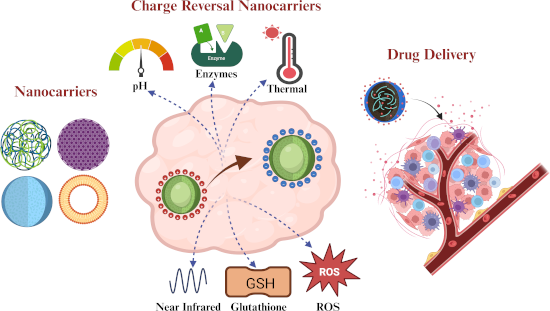
- ., DOX, geldanamycin) under alternating magnetic fields while preserving systemic safety [65]. Core–shell magnetic nanoparticles (Fe3O4@P(MEO2MA60-OEGMA40)) combine magnetic hyperthermia with controlled doxorubicin release, achieving localized heating (≈42 °C) under an alternating magnetic field to
- doxorubicin release at temperatures of ≥44 °C, effectively targeting resistant and quiescent cancer stem cells. Combined TR-DOXO and magnetic field treatment achieved complete tumour inhibition in mice, demonstrating strong hyperthermia–chemotherapy synergy [67]. The combination of magnetic targeting, thermal


Capabilities of the 3D-MLSI software tool in superconducting neuron design
Beilstein J. Nanotechnol. 2026, 17, 122–138, doi:10.3762/bjnano.17.8

- capable of extracting a three-dimensional magnetic field distribution and a planar current distribution by solving a system of integro-differential equations on a 2D grid. Recently, VoxHenry [12] and SuperVoxHenry [13] simulators were developed, which use voxel-based discretization as well as advanced
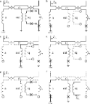
- the size of superconducting ground plane. In fact, the screen-mediated interaction is determined by the ring currents circulating in the screen to close the return current caused by the magnetic field of the control line. Obviously, the forced truncation of the ground plane in simulations (see lower
- are Maxwell and London equations with proper excitation. Based on them, the inductance can be evaluated using the free energy functional. Therefore, the basic equations for 3D-MLSI are static London and Biot–Savart expressions for magnetic field , vector potential , and full energy E. The only free



Microscopic study of the intermediate mixed state in intertype superconductors
Beilstein J. Nanotechnol. 2026, 17, 57–62, doi:10.3762/bjnano.17.5
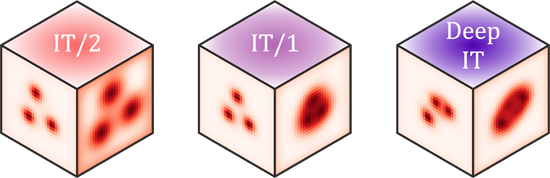
- -neighbor hopping amplitude, and g > 0 denotes the onsite attraction strength. An external magnetic field is incorporated via the Peierls substitution in the hopping matrix elements as where A(r) is the vector potential associated with the magnetic field B = ∇ × A. Within the mean-field approximation, the
- approximated by a quadratic dependence. The BdG equations are coupled self-consistently to the magnetic field through the Ampère–Maxwell law, expressed in the Biot–Savart form for the induced vector potential Aind: The total vector potential is A = A0 + Aind, where A0 corresponds to the uniform external field
- . The current density j, defined on the links between neighboring sites i and j, is given by where the Peierls phase in tij ensures coupling to the magnetic field. The coupled system of Equation 3–Equation 6 is solved self-consistently using an iterative algorithm developed in [28][30]. The calculations


Competitive helical bands and highly efficient diode effect in F/S/TI/S/F hybrid structures
Beilstein J. Nanotechnol. 2026, 17, 15–23, doi:10.3762/bjnano.17.2
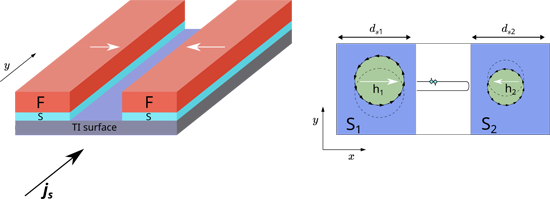
- for achieving highly efficient superconducting diodes in the absence of an external magnetic field. Moreover, the sign of the diode efficiency can be changed as a function of the interface transparency. As a direction for further studies, one could investigate the Josephson diode effect in the hybrid


![[Graphic 16]](/bjnano/content/inline/2190-4286-17-2-i31.svg?max-width=637&scale=1.18182)
![[Graphic 17]](/bjnano/content/inline/2190-4286-17-2-i32.svg?max-width=637&scale=1.18182)


Terahertz-range on-chip local oscillator based on Josephson junction arrays for superconducting quantum-limited receivers
Beilstein J. Nanotechnol. 2025, 16, 2296–2305, doi:10.3762/bjnano.16.158
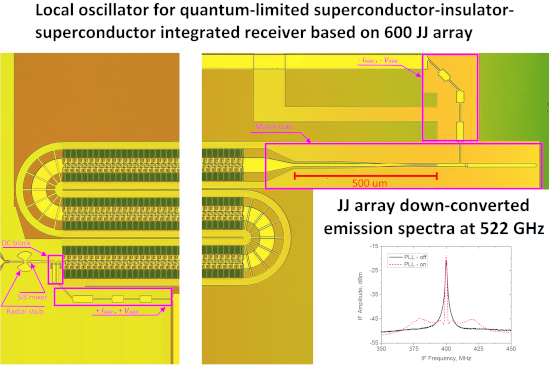
- steps. The operation in the Fiske steps mode is complicated by the need to search for operation points at a particular frequency with sufficient generation power. The computer procedure of the operating point selection performed by varying the bias current through the FFO and the magnetic field takes


Improving magnetic properties of Mn- and Zn-doped core–shell iron oxide nanoparticles by tuning their size
Beilstein J. Nanotechnol. 2025, 16, 2285–2295, doi:10.3762/bjnano.16.157
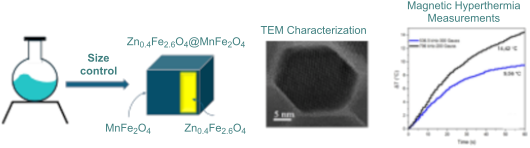
- investigated as a novel cancer treatment due to its ability to locally generate heat in tumors, thereby minimizing damage to healthy tissues compared to conventional chemotherapy and radiotherapy [3]. This process relies on exposing magnetic nanoparticles to an alternating magnetic field, causing them to
- generate heat through Brownian and Néel relaxation mechanisms [4]. The heat generation capacity of these nanoparticles is often quantified by the specific absorption rate (SAR), which represents the power dissipated as heat per gram of nanoparticles under the influence of an alternating magnetic field. The
- . Magnetic properties of the NPs were studied using a vibrating sample magnetometer (VSM) from Microsense applying a magnetic field of 5 kOe. Several milligrams of purified and surfactant-free NPs were encapsulated into a quartz-glass cup and hermetically sealed. SAR measurements were performed using a



Stereodiscrimination of guests in chiral organosilica aerogels studied by ESR spectroscopy
Beilstein J. Nanotechnol. 2025, 16, 2034–2054, doi:10.3762/bjnano.16.140
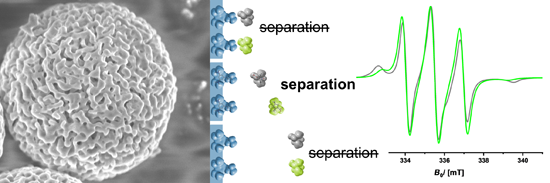
- surfaces has proven challenging. For the separation of the individual factors, researchers developed powerful nuclear magnetic resonance (NMR) techniques. Great success was reached using pulsed field gradient (PFG)-NMR [19][20][21]. PFG-NMR incorporates the application of magnetic field gradients in
- addition to the uniform external magnetic field. A sequence of gradient pulses is used to label the position of the nuclear spins. The first pulse encodes spatial information; if the spins move (diffuse) during the interval, a second gradient pulse will partially or fully refocus them. The extent to which




Energy spectrum and quantum phase transition of the coupled single spin and an infinitely coordinated Ising chain
Beilstein J. Nanotechnol. 2025, 16, 1668–1676, doi:10.3762/bjnano.16.117
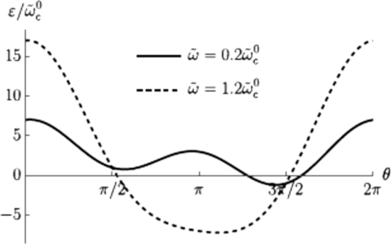
- mostly aligned along the z-axis due to the large term. Effectively, an interaction with the single spin creates a strong magnetic field parallel to the single spin direction. Thus, the perpendicular component of the “magnetic field” can be considered as a small perturbation. Formally, this means that

![[Graphic 39]](/bjnano/content/inline/2190-4286-16-117-i63.svg?max-width=637&scale=1.18182)


![[Graphic 51]](/bjnano/content/inline/2190-4286-16-117-i75.svg?max-width=637&scale=1.18182)
Few-photon microwave fields for superconducting transmon-based qudit control
Beilstein J. Nanotechnol. 2025, 16, 1580–1591, doi:10.3762/bjnano.16.112
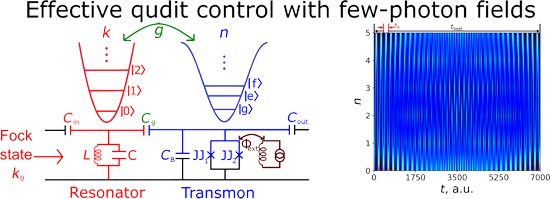
- ), or a pair of JJs forming an interferometer-like circuit, so the spectrum is no longer equidistant. In the case where the JJ pair is used, the characteristic (plasma) frequency of the transmon can be quickly adjusted in 10–20 ns in the range of 1 GHz by an external magnetic field [35]. In practice
- , researchers try to reduce the transmon frequency dependence on the external magnetic field to get rid of parasitic flux fluctuations. A large shunt capacitance CB is needed to increase resistance to parasitic charge fluctuations [36]. A few-photon non-classical microwave field (with a certain number of
- description of Fock-based qudit control First, we need to quantize the field in the harmonic oscillator that corresponds to a high-quality resonator. The energy of the electric field stored in the capacitor and the energy of the magnetic field stored in the inductor can be written as follows: with operators


Modeling magnetic properties of cobalt nanofilms used as a component of spin hybrid superconductor–ferromagnetic structures
Beilstein J. Nanotechnol. 2025, 16, 1557–1566, doi:10.3762/bjnano.16.110
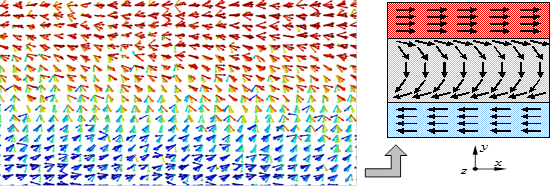
- structure and composition of Co–Ni–Fe films were evaluated, and it was found out how the deposition rate affects the conversion of a weak magnetic field into magnetic induction. In addition, thin-film structures based on Fe and Co are among the most promising materials that can be applied in the creation of
- force parameter and damping spin coefficient, respectively; χ(t), η(t) are white noise present in the description of atom motion processes and the behavior of their spins, respectively; and ωi is the multiplication value of the gyromagnetic ratio and the local magnetic field [22]. It has been known for
- checking the convergence of the obtained numerical solutions. The second task investigated the self-organization of atomic spins in cobalt thin films and analyzed the dependence of nanofilm magnetic properties on their thickness. In both problems, there was no external magnetic field in the system, and the


Nanomaterials for biomedical applications
Beilstein J. Nanotechnol. 2025, 16, 1499–1503, doi:10.3762/bjnano.16.105

- . Drugs or genetic material can be carried by these cylindrical nanoparticles and directed towards specific cells through external stimuli such as a magnetic field or light [12]. A new nanoscale drug delivery system has been developed by using carbon nanotubes and a carbon nanotube–graphene hybrid to more
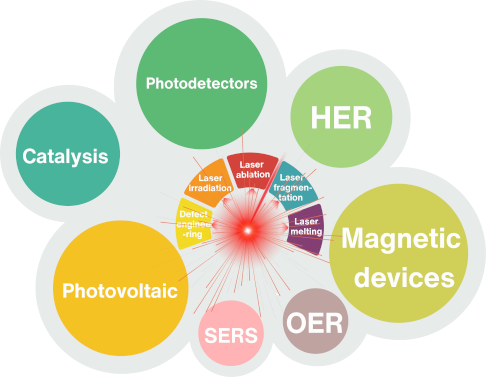
Laser processing in liquids: insights into nanocolloid generation and thin film integration for energy, photonic, and sensing applications
Beilstein J. Nanotechnol. 2025, 16, 1428–1498, doi:10.3762/bjnano.16.104






Better together: biomimetic nanomedicines for high performance tumor therapy
Beilstein J. Nanotechnol. 2025, 16, 1246–1276, doi:10.3762/bjnano.16.92
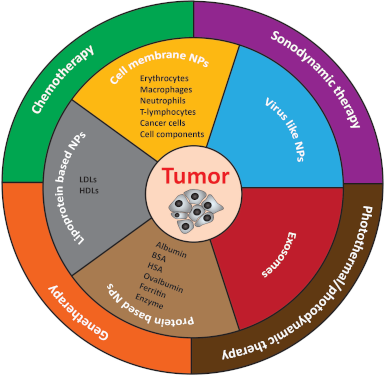
- intravenous administration of T cell membrane-coated nanoparticles directed to the cancerous organ by an externally applied magnetic field, followed by immune cell membrane-mediated cancer targeting. This strategy led to accelerated accumulation of nanomedicine in the tumor with minimal off-target exposure






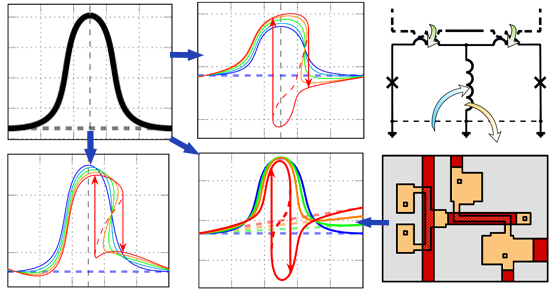
Transfer function of an asymmetric superconducting Gauss neuron
Beilstein J. Nanotechnol. 2025, 16, 1160–1170, doi:10.3762/bjnano.16.85
- ]. Indeed, the inductance of a superconducting film carrying an electric current consists of two components, namely, the magnetic inductance (originating from the magnetic field energy) and the kinetic inductance (originating from the kinetic energy of the superconducting electrons). Should one want to



Structural and magnetic properties of microwave-synthesized reduced graphene oxide/VO2/Fe2O3 nanocomposite
Beilstein J. Nanotechnol. 2025, 16, 921–932, doi:10.3762/bjnano.16.70
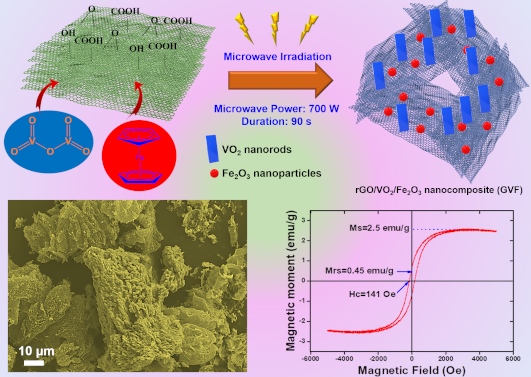
- of metal oxide on the rGO surface, which agrees with the previous SEM, XRD, and XPS analysis. The magnetic properties of the GVF investigated at room temperature under an applied magnetic field ranging from −6000 Oe to 6000 Oe is shown in Figure 9. Herein, the saturation magnetization (Ms) value for



Synthesis and magnetic transitions of rare-earth-free Fe–Mn–Ni–Si-based compositionally complex alloys at bulk and nanoscale
Beilstein J. Nanotechnol. 2025, 16, 823–836, doi:10.3762/bjnano.16.62
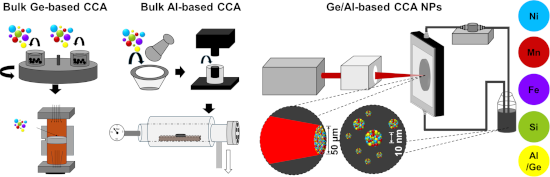
- applications such as magnetic hyperthermia, where NPs are used in cancer therapy to induce localized heating when exposed to an alternating magnetic field [34]. However, producing CCAs at the nanoscale presents significant challenges. Traditional wet chemistry approaches often fail because of elemental
- FC curve shows higher magnetization than the ZFC curve, indicating that spin alignment occurs faster when cooled in the presence of a magnetic field because of the pre-alignment that the magnetic field produces. Above 179 K, the ZFC and FC curves converge, suggesting that thermal energy disrupts
- in the presence of a magnetic field. The M–H curve (Figure 7d and Figure S6d, Supporting Information File 1) of the Al-based CCA at 5 K shows significant hysteresis, with a Hc of 16.6 kA·m−1, which is higher than that of the bulk Al-based CCA (11 kA·m−1). The increase in Hc in the NPs is likely due


Morphology and properties of pyrite nanoparticles obtained by pulsed laser ablation in liquid and thin films for photodetection
Beilstein J. Nanotechnol. 2025, 16, 785–805, doi:10.3762/bjnano.16.60
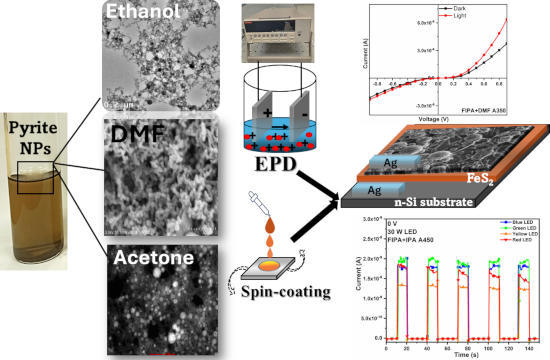
- of a magnetic field by laser ablation in liquids. SEM and TEM images of FeS2 nanoparticles prepared without a magnetic field revealed spherical particles with varying sizes, aggregation and agglomeration with an average size of approximately 40 nm [38]. In contrast to this, the average particle sizes
- phase-pure FeS2. A photodetector with detectivity of around 108 Jones was reported [68]. Mohsin et al. reported an external magnetic field-assisted laser ablation in liquid technique to prepare FeS2 nanoparticles [38]. They reported fabrication of FeS2 NPs/p-Si photodetectors using dipping technique






Changes of structural, magnetic and spectroscopic properties of microencapsulated iron sucrose nanoparticles in saline
Beilstein J. Nanotechnol. 2025, 16, 762–784, doi:10.3762/bjnano.16.59
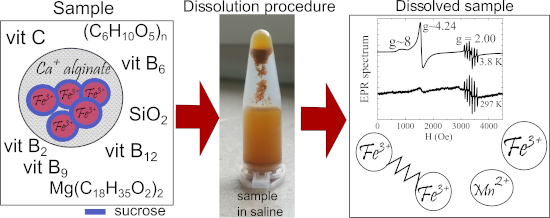
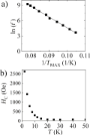
- the considered temperature range. Increasing the magnetic field to 10 kOe did not significantly change the position of TMAX (see inset of Figure 5b), and the shape of the ZFC–FC relation. Only the magnetic field above 10 kOe shifts the ZFC maximum to lower temperatures; however, even at 60 kOe, the
- full reversibility of the ZFC and FC curves is not achieved (Figure 5b). The so-called irreversibility temperature, TIRR, at which the ZFC and FC curves bifurcate, is very little dependent on the magnetic field and is around 65 K for all registered temperature relations. It should be also stressed that
- in the M(T) relations there is no trace of the Verway transition (TV ≈ 125 K) typical for Fe3O4. Figure 5c presents the temperature dependences of the real part of the magnetic susceptibility, χ’(T), registered at several frequencies f of an ac external magnetic field for FS0. (In Figure 5c only





High-temperature epitaxial growth of tantalum nitride thin films on MgO: structural evolution and potential for SQUID applications
Beilstein J. Nanotechnol. 2025, 16, 690–699, doi:10.3762/bjnano.16.53
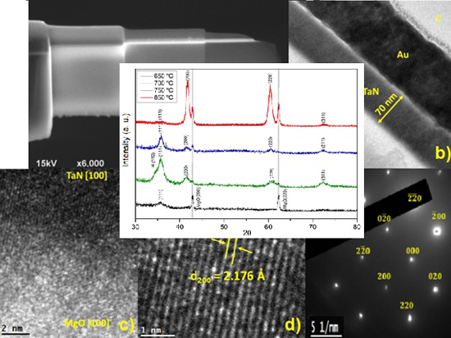
- critical temperature of 6.3 K. In materials with superconducting properties, any variation of an external magnetic field induces electric currents on the surface that counteract this variation. This unique property enables the materials to detect very weak magnetic fields. This principle is leveraged in


Performance optimization of a microwave-coupled plasma-based ultralow-energy ECR ion source for silicon nanostructuring
Beilstein J. Nanotechnol. 2025, 16, 484–494, doi:10.3762/bjnano.16.37

- a strong electric field generated in the cavity, the ECR-based ion sources equipped with microwave cavities neither contain any filament nor any type of electrode [26]. The high plasma density within a quartz cup is confined by solenoid magnets surrounding it, creating a multi-cusp magnetic field
- . However, careful attention is required for the microwave coupling to the plasma cup to minimize the reflections of microwave power. Mechanical adjustments to the resonator length and waveguide are made to ensure minimal reflection. Additionally, maintaining the necessary magnetic field strength is crucial


Vortex lattices of layered HTSCs at different vortex–vortex interaction potentials
Beilstein J. Nanotechnol. 2025, 16, 362–370, doi:10.3762/bjnano.16.27
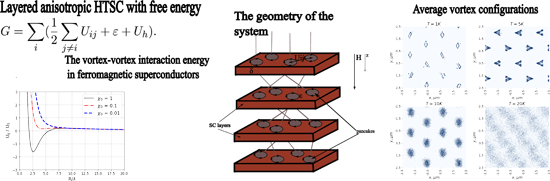
- ; Introduction Type-II superconductors, as shown by numerous studies, have a complex phase diagram in a magnetic field. In fields greater than the first critical field Hc1 and less than the second critical field Hc2, at temperatures below the critical temperature the superconductor is in a mixed state, in which
- the magnetic field penetrates the superconductor in the form of Abrikosov vortices [1]. In high-temperature superconductors (HTSCs), such as Y- and Bi-based cuprates, the vortex lattice is further complicated since these compounds have a layered structure [2][3][4][5][6]. The vortex filament in these
- discovered. Indications were also obtained that the second peak on the magnetization curve (second magnetization peak) at low temperature (less than 0.55Tc) coincides with the transition between the regimes of the flow of the vortex lattice. The measurements were also performed in a magnetic field inclined


Theoretical study of the electronic and optical properties of a composite formed by the zeolite NaA and a magnetite cluster
Beilstein J. Nanotechnol. 2025, 16, 44–53, doi:10.3762/bjnano.16.5
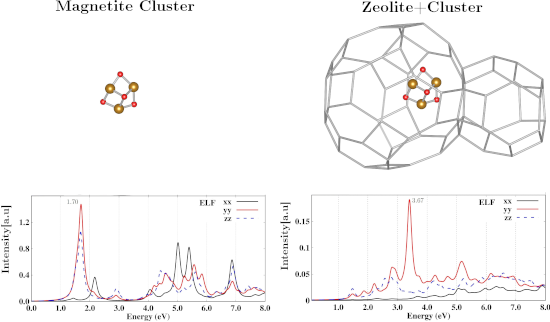
- introduction of magnetic nanoparticles into zeolite crystals so that the resulting composite can respond to an external magnetic field [33]. By imparting magnetic properties to such composites, they can be efficiently recovered after capturing contaminants such as heavy metals [34][35][36][37] and dyes [38][39




New design of operational MEMS bridges for measurements of properties of FEBID-based nanostructures
Beilstein J. Nanotechnol. 2024, 15, 1273–1282, doi:10.3762/bjnano.15.103
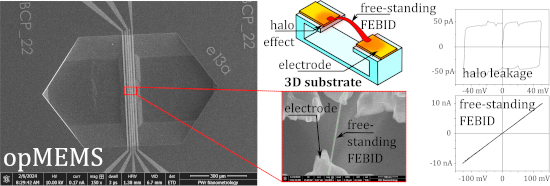
- [38], but this technique is difficult to apply in SEM chambers (the ultimate working environment for opMEMS) because of the difficulty of obtaining a controlled magnetic field inside. In the experiments, the resonance of the opMEMS was measured outside the vacuum chamber using a SIOS nano vibration





