


Search results
Search for "membrane technology" in Full Text gives 16 result(s) in Beilstein Journal of Nanotechnology.
Environmental applications of silver nanoparticles: state-of-the-art review and emerging trends
Beilstein J. Nanotechnol. 2026, 17, 697–736, doi:10.3762/bjnano.17.49
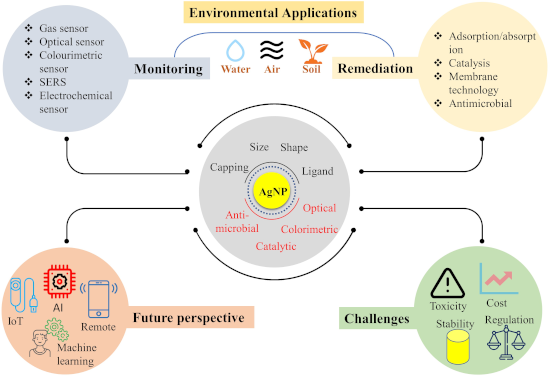
- technologies incorporating AgNPs. The advent of technological advancements aimed at providing safe water for individuals led to the incorporation of AgNPs into membrane technology, enabling sustained Ag release to remove pathogens and biofouling microorganisms in a continuous-flow system [22]. Nanosilver
- -incorporated aminated polyethersulfone was designed to impart antibacterial properties to membrane technology for water treatment applications [140]. The incorporated AgNPs exhibited enhanced antibacterial activity, resulting in sustained Ag release over 25 days, indicating improved membrane lifespan [140
- (26 to 67%), and CaCl2 (27 to 41%)) and lowest fouling along with high flux recovery. The surface property, high porosity, and antimicrobial action of AgNPs have added to the advancement of membrane technology [141]. A study developed a nanocatalytic membrane to remove dyes (MO, MB, and RhB) and


Cellulose as a photocatalyst support material: extraction, structural features, and environmental applications
Beilstein J. Nanotechnol. 2026, 17, 635–652, doi:10.3762/bjnano.17.44
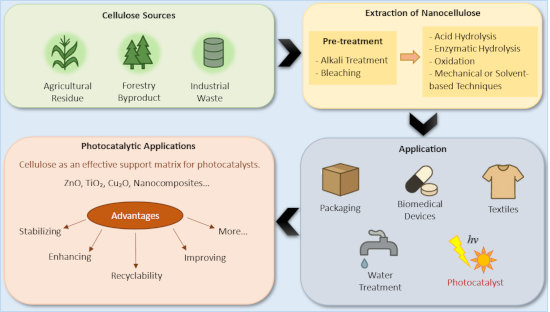
- have become a central focus in advancing membrane technology for water treatment as conventional membranes, though vital for protecting aquatic life, often struggle to meet the rising environmental and social demands; one effective strategy to overcome these limitations is through membrane modification


Nanotechnology-based approaches for the removal of microplastics from wastewater: a comprehensive review
Beilstein J. Nanotechnol. 2025, 16, 1607–1632, doi:10.3762/bjnano.16.114
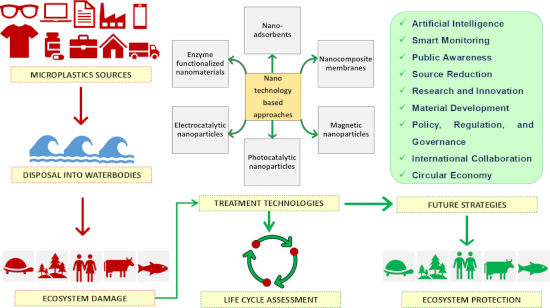
- synthesis, hybrid system integration, and machine learning optimization. Together, these approaches aim to establish a comprehensive, scalable, and environmentally safe solution for the remediation of MPs in wastewater systems. Keywords: artificial intelligence; membrane technology; microplastic
- seawater and brackish water [111]. The physical mechanisms involved in the removal of pollutants are schematically represented in Figure 9 and explained in Table 5 [112]. Membrane technology faces a key limitation in balancing selectivity with permeability, often resulting in a compromise between the two


Synthesis and antibacterial properties of nanosilver-modified cellulose triacetate membranes for seawater desalination
Beilstein J. Nanotechnol. 2025, 16, 1380–1391, doi:10.3762/bjnano.16.100
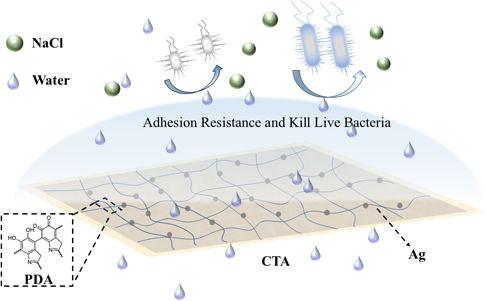
- further improvements and new applications of nanomaterials in membrane technology remains promising. Experimental Materials CTA was purchased from DAICEL (China) Investment Co., Ltd. Dopamine hydrochloride (98%), tris(hydroxymethyl)aminomethane hydrochloride (standard buffer substance, 99.9% (titration


Synthesis of a multicomponent cellulose-based adsorbent for tetracycline removal from aquaculture water
Beilstein J. Nanotechnol. 2025, 16, 728–739, doi:10.3762/bjnano.16.56
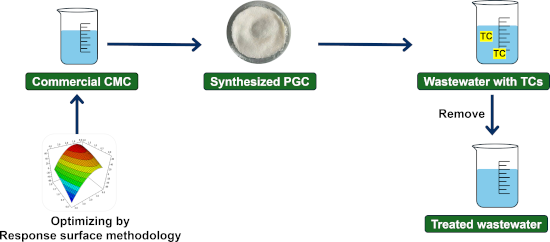
- , low adsorption efficiency, water matrices, and secondary pollutant formation, limiting their overall efficiency. A promising method for tackling tetracycline antibiotics involves membrane technologies such as osmosis membrane technology [6][7]. However, this approach presents significant upfront


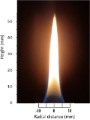
Feasibility analysis of carbon nanofiber synthesis and morphology control using a LPG premixed flame
Beilstein J. Nanotechnol. 2025, 16, 581–590, doi:10.3762/bjnano.16.45
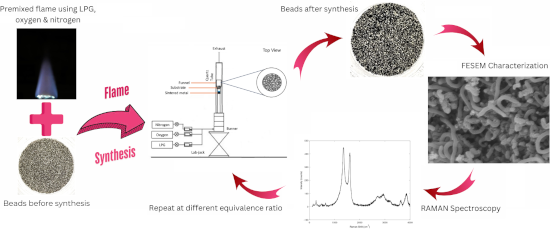
- Laboratory (HiREF), Universiti Teknologi Malaysia, 81310 Johor Bahru, Malaysia Advanced Membrane Technology Research Center, Universiti Teknologi Malaysia, 81310 Johor Bahru, Malaysia Department of Chemistry, Faculty of Science, Universiti Teknologi Malaysia 81310 Johor Bahru, Malaysia Department of Physics



Water in nanoporous hexagonal boron nitride nanosheets: a first-principles study
Beilstein J. Nanotechnol. 2025, 16, 510–519, doi:10.3762/bjnano.16.39
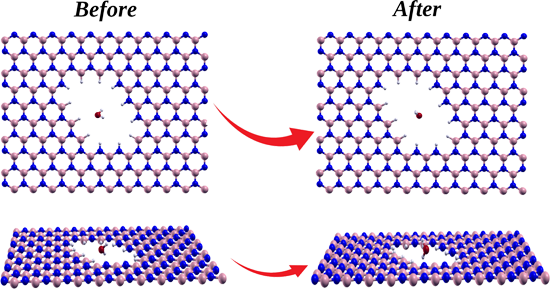
- recent decades, technological advances such as membrane technology and energy recovery equipment have led to a considerable reduction in the energy required to desalinate seawater [2][3]. The proposal to use membranes that exhibit superior selectivity and high water flux has been a major focus for




A review of metal-organic frameworks and polymers in mixed matrix membranes for CO2 capture
Beilstein J. Nanotechnol. 2025, 16, 155–186, doi:10.3762/bjnano.16.14
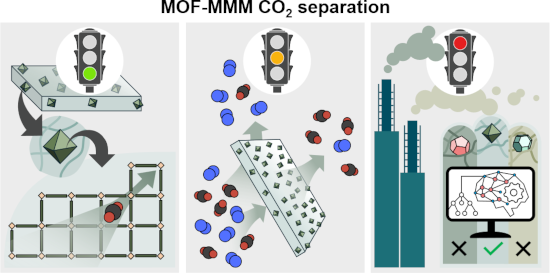
- , including regenerative solvent-based absorption [2][6], fixed-bed adsorption [7], cryogenic separation techniques [8], and membrane separation methods [9][10][11][12]. Of these, membrane technology offers advantages such as exceptional stability, high efficiency, low energy consumption, and ease of




Control of morphology and crystallinity of CNTs in flame synthesis with one-dimensional reaction zone
Beilstein J. Nanotechnol. 2023, 14, 741–750, doi:10.3762/bjnano.14.61
- Malaysia, 81310 Johor Bahru, Malaysia Advanced Membrane Technology Research Center, Universiti Teknologi Malaysia, 81310 Johor Bahru, Malaysia National Research and Innovation Agency, Indonesia 10.3762/bjnano.14.61 Abstract The growth of carbon nanotubes (CNTs) in a flame requires conditions that are


Recent progress in cancer cell membrane-based nanoparticles for biomedical applications
Beilstein J. Nanotechnol. 2023, 14, 262–279, doi:10.3762/bjnano.14.24
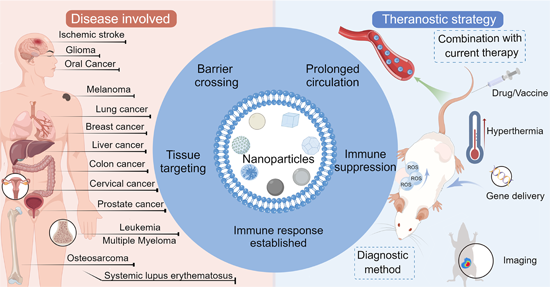
- oxidation, which leads to a decrease in heating efficiency [100]. In addition, magnetic NPs are usually recognized and cleared from the body, which prevents them from reaching their target [101]. Biomimetic cancer cell membrane technology can enhance the performance of magnetic iron oxide NPs (e.g., prevent
- expected therapeutic benefits. The biomimetic cancer cell membrane technology shows good prospects for individualized treatment. This facilitates the reduction of drug doses and efficient diagnosis and treatment. Although NPs based on cancer cell membranes have been found to be a promising biomimetic


Nanocellulose: Recent advances and its prospects in environmental remediation
Beilstein J. Nanotechnol. 2018, 9, 2479–2498, doi:10.3762/bjnano.9.232
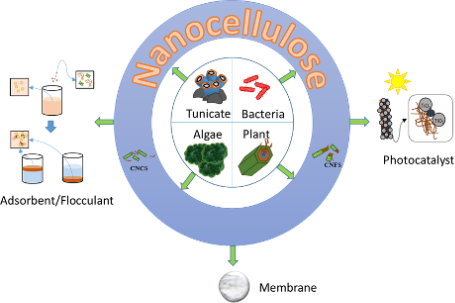
- material in the field of membrane technology for environmental remediation will be discussed. Cellulose nanofibers and nanocrystals have been studied as membrane construction materials for wastewater treatment [146], gas


Block copolymers for designing nanostructured porous coatings
Beilstein J. Nanotechnol. 2018, 9, 2332–2344, doi:10.3762/bjnano.9.218
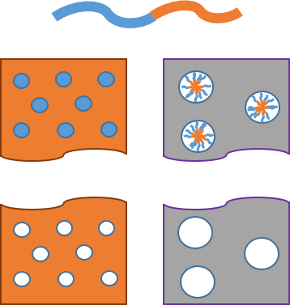
- inside the substrate macropore. Additionally, transport studies were also performed, selecting two different target molecules. Size-selective sensitivity was confirmed, thus suggesting the possible application of these coatings in membrane technology for increasing the controlled transition of chemicals
- , even titania worm-like structures were obtained. In this context, the exploitation of such functional porous coatings is very appealing from the membrane technology viewpoint by direct deposition onto a macroporous substrate (whose role is to guarantee the necessary mechanical resistance), thus forming
- highly ordered nanostructures obtainable by exploiting the peculiar properties of BCs have found ample use in membrane technology, even if there are still economic and environmental concerns that need to be overcome. Among the different types of BCs, this review focused on the main results obtained for


Engineering of oriented carbon nanotubes in composite materials
Beilstein J. Nanotechnol. 2018, 9, 415–435, doi:10.3762/bjnano.9.41
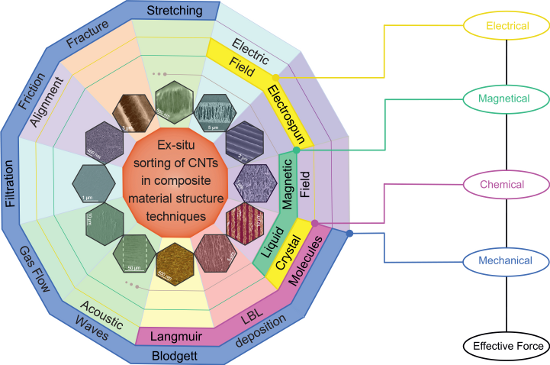
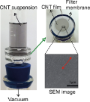
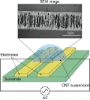
- Razieh Beigmoradi Abdolreza Samimi Davod Mohebbi-Kalhori Department of Chemical Engineering, University of Sistan and Baluchestan, University Blvd., Zahedan 98167-45845, Iran, Innovation Center for Membrane Technology (ICMT), University of Sistan and Baluchestan, University Blvd., Zahedan 98167








Polystyrene-block-poly(ethylene oxide) copolymers as templates for stacked, spherical large-mesopore silica coatings: dependence of silica pore size on the PS/PEO ratio
Beilstein J. Nanotechnol. 2016, 7, 1454–1460, doi:10.3762/bjnano.7.137
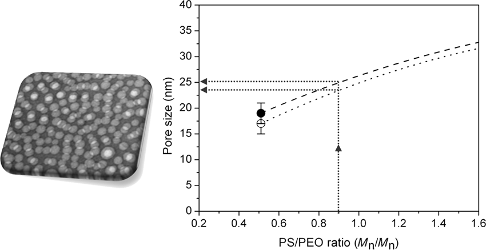
- , membrane technology, drug delivery, dosing, adsorption, sensing, among many others [1][2][3][4][5]. Different approaches have been applied in order to obtain porous materials characterized by a controlled porous architecture. A sol–gel process, carried out in combination with a templating method and spin


Selective porous gates made from colloidal silica nanoparticles
Beilstein J. Nanotechnol. 2015, 6, 2105–2112, doi:10.3762/bjnano.6.215
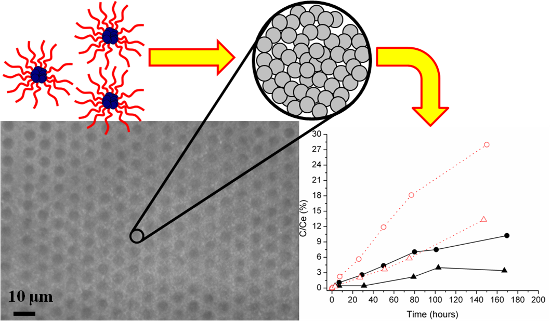
- the dawn of membrane technology in the 1920s, mostly used for separation of bacteria from water [8]. In the following years, microfiltration devices have found application in several technological fields: water treatments, food industry, biotechnology, electronics and microfluidics [9][10][11][12][13


Applicability and costs of nanofiltration in combination with photocatalysis for the treatment of dye house effluents
Beilstein J. Nanotechnol. 2014, 5, 476–484, doi:10.3762/bjnano.5.55
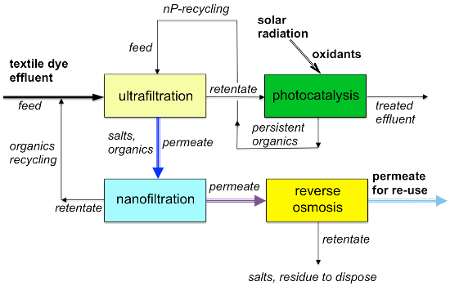
- prove the usefulness of those concepts. Different applications of photocatalysis on the lab-scale have been published in recent years. Membrane technology is used almost in all those processes and an overview will be given of those recently published systems that have been reported to be potentially





