Search results
Search for "metal oxides" in Full Text gives 228 result(s) in Beilstein Journal of Nanotechnology. Showing first 200.
Materials challenges in solid-state sensors for continuous monitoring of ions in water
Beilstein J. Nanotechnol. 2026, 17, 935–973, doi:10.3762/bjnano.17.66
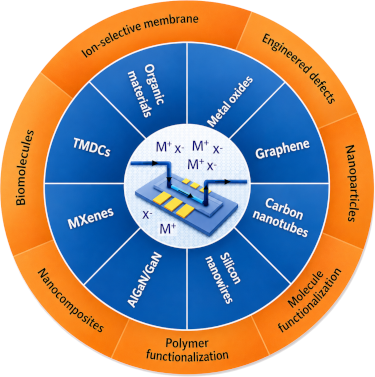
- of active materials have been investigated, including metal oxides, graphene, carbon nanotubes, silicon nanowires, AlGaN/GaN, MXenes, transition metal dichalcogenides, and organic polymers all of which can be tailored for sensor development. Sensor selectivity and functionality can be enhanced
- mechanical integrity during repeated cycling to deliver long-term performance [107]. Inorganic materials Semiconducting metal oxides. Metal-oxide thin films (such as ZnO, SnO2, IGZO, In2O3) are classified as classic inorganic semiconductors with a wide bandgap (3–4 eV). The surface of a semiconducting metal
- oxide is its most chemically active region that can have a significant impact on the electronic structure of the material. Because metal oxides combine metal cations and oxygen anions with partly ionic bonding, their surfaces behave very differently from covalent semiconductors like silicon. Surface



Light-driven ammonia electrooxidation via carbon nitride–ruthenium molecular interfaces
Beilstein J. Nanotechnol. 2026, 17, 854–862, doi:10.3762/bjnano.17.61
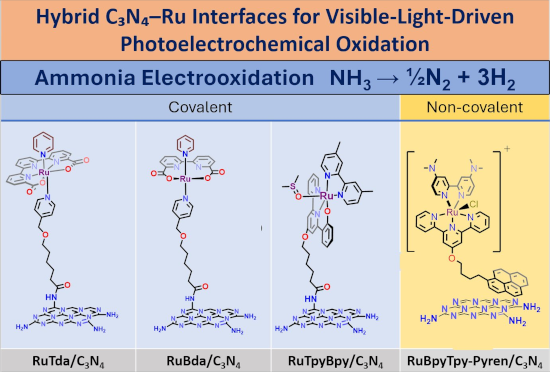
- precision with heterogeneous scalability. Homogeneous catalysts (molecular complexes in solution) operate with exquisite precision, that is, well-defined active sites, traceable mechanisms, and selective tunability achievable atom by atom via ligand design. Heterogeneous catalysts (metal oxides


Glycerol photoelectrochemical oxidation reaction at carbon nitrides/BiVO4 materials
Beilstein J. Nanotechnol. 2026, 17, 806–817, doi:10.3762/bjnano.17.57
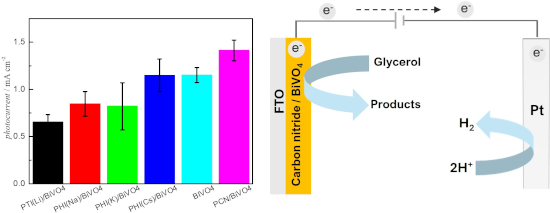
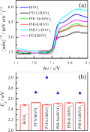
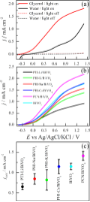
- [6]. These strategies include the synthesis of new photocatalysts, such as metal oxides, doped oxides, heterojunctions, and protective layers to enhance charge transfer at both interfaces and in the bulk, thereby lowering the activation energy barriers [7]. In this sense, bismuth vanadate (BiVO4) has





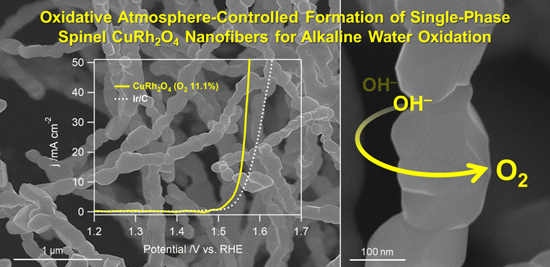
Oxidative atmosphere-driven formation of single-phase spinel CuRh2O4 nanofibers for alkaline water oxidation
Beilstein J. Nanotechnol. 2026, 17, 737–743, doi:10.3762/bjnano.17.50
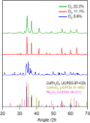
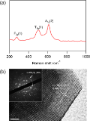
- , suggesting that PVP is almost completely decomposed and removed under oxidative conditions at 850 °C [16]. These findings confirm that the resulting materials predominantly exist as fully oxidized metal oxides, with minimal contribution from carbon species derived from PVP. As shown in Figure 4a, Raman




Environmental applications of silver nanoparticles: state-of-the-art review and emerging trends
Beilstein J. Nanotechnol. 2026, 17, 697–736, doi:10.3762/bjnano.17.49
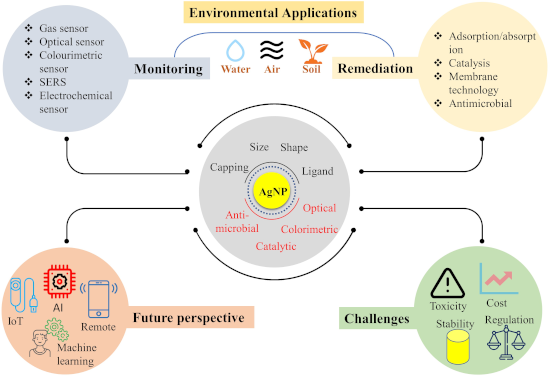
- % conversion of HCHO at 55 °C, where 32% conversion was achieved at ZSM-5||Ag/SiO2 [169]. A study explored the potential of diesel particulate matter (DPM) oxidation, a hazardous environmental contaminant [166]. A study examined the possibility of Ag-supported different metal oxides (Al2O3, TiO2, ZnO, and CeO2


Cellulose as a photocatalyst support material: extraction, structural features, and environmental applications
Beilstein J. Nanotechnol. 2026, 17, 635–652, doi:10.3762/bjnano.17.44

- photoactive nanomaterials, including metal oxides and nonmetallic semiconductors, to remediate and purify water, and the use of these hybrid systems is growing steadily in water treatment applications [15]. Photocatalyst immobilization on membranes addresses key challenges by preventing photocatalyst loss
- applied in wastewater treatment to degrade organic pollutants efficiently [86]. Metal oxides serve as key activators in photocatalytic oxidation by initiating radical chain reactions, and they remain favored for their low cost, minimal toxicity, and ease of modification through strategies such as size


Synthesis of Cu–Mo/TiO2 and Co–Mo/TiO2 photocatalysts for the efficient degradation of organic pollutants in water
Beilstein J. Nanotechnol. 2026, 17, 559–570, doi:10.3762/bjnano.17.37
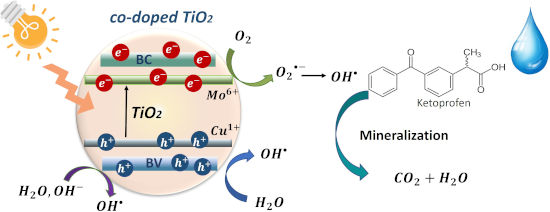
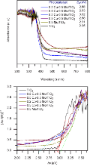
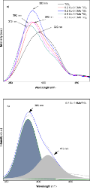
- content. No evidence of diffraction peaks attributable to molybdenum, copper, or cobalt oxides was observed. If metal oxides are present in the material, they are small, highly dispersed crystals that the technique cannot detect. Figure 1b shows the materials’ diffractogram in the range of 2θ = 21–31°. It



Gold nanoparticle-decorated reduced graphene oxide as a highly effective catalyst for the selective α,β-dehydrogenation of N-alkyl-4-piperidones
Beilstein J. Nanotechnol. 2026, 17, 218–238, doi:10.3762/bjnano.17.15
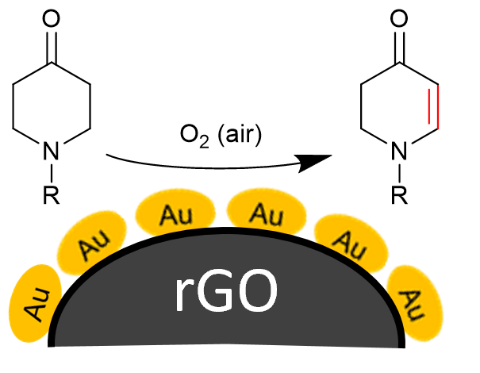
- filtration and where the NPs are further stabilized against coalescence, aggregation, sintering, or Ostwald ripening under the catalytic reaction conditions. By anchoring AuNPs onto a solid support, such as metal oxides, polymers, or carbon-based materials, their stability is significantly enhanced
- . Synthesis of Au@SiW9/AC, Au@SiW9/rGO, and Au@SiW9/CB The DP method is the most widely used procedure to support gold nanoparticles on metal oxides [6]. The synthesis involves dissolving the POM salt (SiW9) and the gold precursor (KAuCl4) in water in an ice bath, dispersing the carbon material (AC, rGO, CB


Influence of surface characteristics on the in vitro stability and cell uptake of nanoliposomes for brain delivery
Beilstein J. Nanotechnol. 2026, 17, 139–158, doi:10.3762/bjnano.17.9

- sizes determined directly from their elution times. AF4–MALS has been extensively utilized for sizing various categories of nanoparticles such as metal oxides, polymeric and silica nanoparticles. Additionally, it has been employed for the separation of diverse macromolecules and structures including







Missing links in nanomaterials research impacting productivity and perceptions
Beilstein J. Nanotechnol. 2025, 16, 2168–2176, doi:10.3762/bjnano.16.149
- , other 2D nanomaterials, such as elemental 2D materials (e.g., borophene, phosphorene, and silicene), transition metal dichalcogenides (e.g., MoS2, WS2, and NbSe2), transition metal oxides (e.g., MnO2, Fe2O3, and Ni(OH)2 nanosheets), MXenes (e.g., Ti3C2, Ti2C, and Ta4C3), 2D halides (e.g., CrI3, NiI2
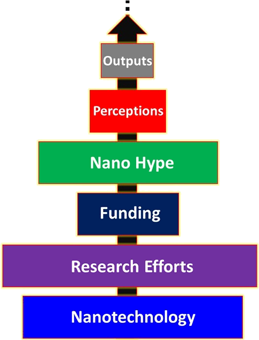
- nanotubes, graphene, metal oxides, quantum dots, and MXenes are among the most extensively studied and explored nanomaterials. These materials have been researched in nearly every discipline, leading to the establishment of numerous startups and companies focused on their production, processing, and
- , though nanomaterials research has made impressive scientific advances, its translation into mass-market products remains partial. Therefore, it raises a vital and valid question: Why are heavily researched nanomaterials such as carbon nanotubes, graphene, metal oxides, quantum dots, and MXenes still so
Microplastic pollution in Himalayan lakes: assessment, risks, and sustainable remediation strategies
Beilstein J. Nanotechnol. 2025, 16, 2144–2167, doi:10.3762/bjnano.16.148

- the most prevalent mechanisms in nanomaterials to eliminate MPs, where metal oxides and carbon materials are particularly effective. Surface modification and environmental factors are crucial in controlling removal. 6.3 Tailoring nanomaterials for low-temperature, high-UV environments The Himalayan


Current status of using adsorbent nanomaterials for removing microplastics from water supply systems: a mini review
Beilstein J. Nanotechnol. 2025, 16, 1837–1850, doi:10.3762/bjnano.16.127
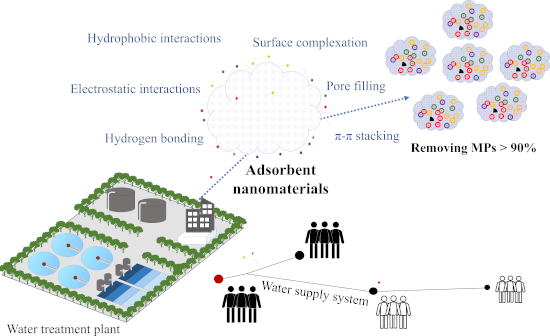
- functionality can be adjusted by changing the metal oxides and linkers, enabling easy synthesis and modification for diverse applications, including MP adsorption [59]. By using ZIF-8 nanocomposite, Pasanen et al. removed 99% of MPs after 1 h. The properties of nanocomposites showed highly porous structures


Nanotechnology-based approaches for the removal of microplastics from wastewater: a comprehensive review
Beilstein J. Nanotechnol. 2025, 16, 1607–1632, doi:10.3762/bjnano.16.114
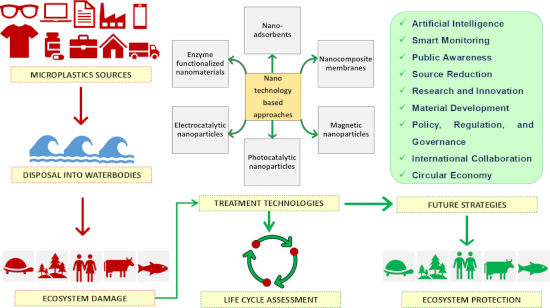
- various nanoenabled treatment strategies such as adsorption, photocatalysis, and membrane filtration using materials like metal-organic frameworks, carbon-based nanomaterials, MXenes, and metal oxides. It also highlights recent innovations such as microrobotic systems and AI-assisted detection frameworks
- solution into a gel, enabling precise compositional control and producing homogenous metal oxides suited for photocatalytic applications [74]. Hydrothermal synthesis uses high-temperature, high-pressure aqueous environments to yield well crystalized particles with controlled morphologies, while co
- contaminated with MPs. Meanwhile, a higher cost of these adsorbents limit their use for the removal of MPs [82]. Research is actively exploring alternative adsorbents, with a particular focus on nanomaterial-based options. Among these, carbon nanotubes (CNTs), nanoscale metals, nanocomposites, and metal oxides



Transient electronics for sustainability: Emerging technologies and future directions
Beilstein J. Nanotechnol. 2025, 16, 1545–1556, doi:10.3762/bjnano.16.109

- has prompted further exploration of chemically analogous materials, such as germanium [45][46], silicon–germanium alloys [45], amorphous semiconductors [45], indium–gallium–zinc oxide (IGZO) [47], and metal oxides such as zinc oxide [48], for their potential as bioresorbable semiconductors. These


Laser processing in liquids: insights into nanocolloid generation and thin film integration for energy, photonic, and sensing applications
Beilstein J. Nanotechnol. 2025, 16, 1428–1498, doi:10.3762/bjnano.16.104
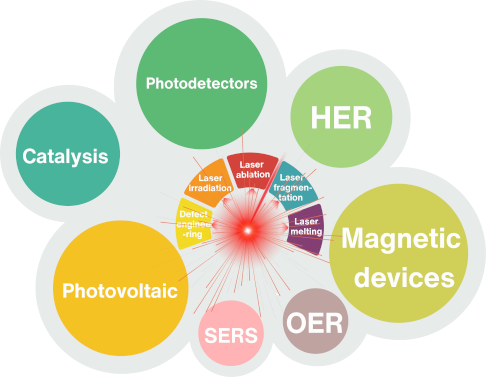
- , indicating an increase in particle size [76]. Laser irradiation offers a clean, efficient, and useful method for synthesizing various nanomaterials, including metals, semiconductors, metal oxides, and bimetallic NPs [46][77][78][79][80][81][82]. The process allows for the alloying of NPs, such as AuCo [77








Crystalline and amorphous structure selectivity of ignoble high-entropy alloy nanoparticles during laser ablation in organic liquids is set by pulse duration
Beilstein J. Nanotechnol. 2025, 16, 1141–1159, doi:10.3762/bjnano.16.84
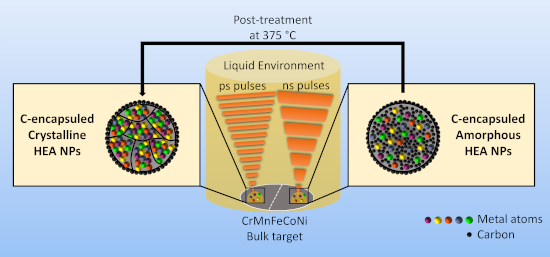
- heterogeneous catalysts, colloids are more flexible as the support material is not predefined by the synthesis route but can be freely chosen. This may be highly relevant as previous studies report on the facile supporting of laser-generated NPs onto multiple carrier materials such as carbon [33][34][35], metal
- oxides [36][37], or metal electrodes [38][39], using electrostatic [37], diffusive [40], or electrophoretic [39] pathways. Additionally, in contrast to form-in-place-methods such as CTS [20], the NP size does not depend on the loading [40]. Nanoparticle generation by laser synthesis and processing of





Soft materials nanoarchitectonics: liquid crystals, polymers, gels, biomaterials, and others
Beilstein J. Nanotechnol. 2025, 16, 1025–1067, doi:10.3762/bjnano.16.77
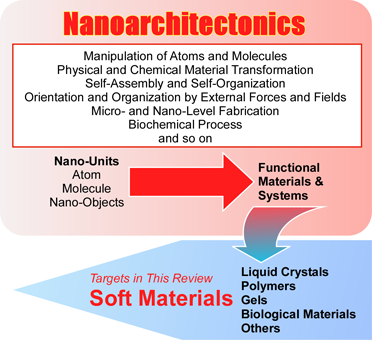
- . Liquid crystal nanoarchitectonics is not merely concerned with the manipulation of liquid crystal structures; it also encompasses the transfer of such structures to alternative materials, thereby influencing their nanostructure [238][239][240]. Metal oxides of earth-abundant elements are of significant
- beneficial to extend the findings of this study to explore the nanoarchitectonics of other mesoporous metal oxides in electrocatalytic electrodes. Additionally, there are nanoarchitectonics examples that couple liquid crystal structure control with other functions, such as catalysis. Mavrikakis, Abbott, and






Structural and magnetic properties of microwave-synthesized reduced graphene oxide/VO2/Fe2O3 nanocomposite
Beilstein J. Nanotechnol. 2025, 16, 921–932, doi:10.3762/bjnano.16.70
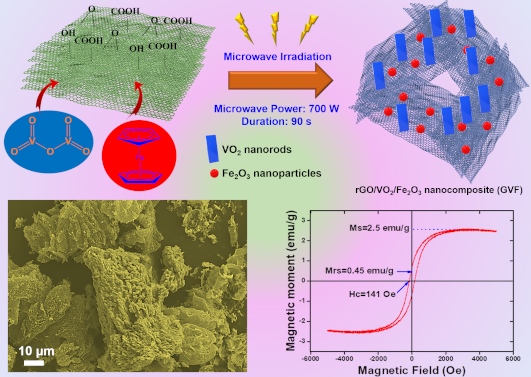
- graphite oxide to form rGO, the reduction of V2O5 to form VO2, and the formation of Fe2O3 from ferrocene. X-ray diffraction and X-ray photoelectron spectroscopy analyses confirm the formation of distinct metal oxides in the presence of rGO. Furthermore, the morphological analysis reveals the deposition of
- , such spherical particles of the metal oxides are also deposited on the edges of the graphene sheets (Figure 6d). The corresponding elemental mapping further demonstrates the presence of elements such as V, O, and C in the GV (Figure 6e–h). Additionally, the EDX spectrum also confirms the presence of
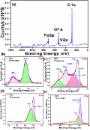
- rGO. Additionally, the high-resolution XPS spectrum of C 1s represents a major peak at 284.5 eV, corresponding to the C=C/C–C bond, and a minor peak at 284 eV corresponding to the C–H bond of rGO (Figure 7e). Therefore, XPS analysis confirms the presence of distinct metal oxides and rGO in the GVF




Insights into the electronic and atomic structures of cerium oxide-based ultrathin films and nanostructures using high-brilliance light sources
Beilstein J. Nanotechnol. 2025, 16, 860–871, doi:10.3762/bjnano.16.65

- ; Introduction Transition metal oxides in the form of thin films or nanostructures find extensive use in sustainable energy technologies [1][2]. They serve as active materials or supports for catalysts for various chemical reactions, essential to energy conversion, sensing, and environmental remediation [3][4
- dynamic processes occurring for example upon photoexcitation. Among transition metal oxides, cerium oxide (or ceria) has unique redox properties, linked to the relative stability of Ce cations in the 4+ and 3+ oxidation states, which make the material highly effective in automotive catalysts and in the


Facile one-step radio frequency magnetron sputtering of Ni/NiO on stainless steel for an efficient electrode for hydrogen evolution reaction
Beilstein J. Nanotechnol. 2025, 16, 837–846, doi:10.3762/bjnano.16.63
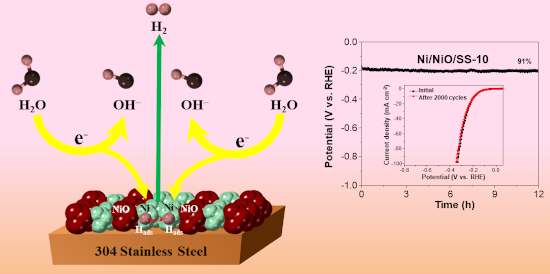
- fabricated metal/metal oxide-based nanomaterials using various solution-based methods for alkaline HER because of the efficacy of metal oxides in breaking water molecules. In this context, Ni/NiO-based nanomaterials were evaluated as promising catalysts for industrial applications because of their Gibbs free


Emerging strategies in the sustainable removal of antibiotics using semiconductor-based photocatalysts
Beilstein J. Nanotechnol. 2025, 16, 264–285, doi:10.3762/bjnano.16.21
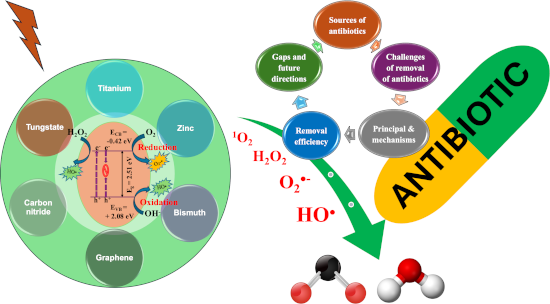
- four distinct generations [52], each shedding light on the mechanisms of various photocatalysts used for pollutant degradation, namely, single-component transition metal oxides (TMOs) representing the first generation, doped TMOs, binary TMOs, and doped binary TMOs as the second generation, and
- , including biochar, metal-organic frameworks (MOFs), functionalized mesoporous silica, porous organic polymers, zeolite, and derivatives of graphene. These substances act as a support for metal oxides and immobilize the catalyst, increase the catalyst surface area, and improve the chemical stability
- significant photocatalytic activity in the degradation of antibiotics; they are given below in Table 3. Bismuth metal oxides such as Bi2WO6, Bi2MO6, BiVO4, and Bi2Ti2O7 are also gaining attention for their possible use in antibiotic degradation. The hybrid oxides mostly comprise Bi2O3 and various metal oxides



The round-robin approach applied to nanoinformatics: consensus prediction of nanomaterials zeta potential
Beilstein J. Nanotechnol. 2024, 15, 1536–1553, doi:10.3762/bjnano.15.121
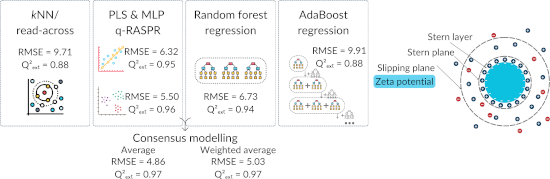
- reliable except the one NM sample whose leverage value was equal to 0.859. Random forest regression model Data preprocessing To facilitate data analysis, the unique string feature names of the chemical formula descriptors were converted into a binary variable. For this purpose, metal oxides (e.g., CeO2 and


Electrochemical nanostructured CuBTC/FeBTC MOF composite sensor for enrofloxacin detection
Beilstein J. Nanotechnol. 2024, 15, 1522–1535, doi:10.3762/bjnano.15.120
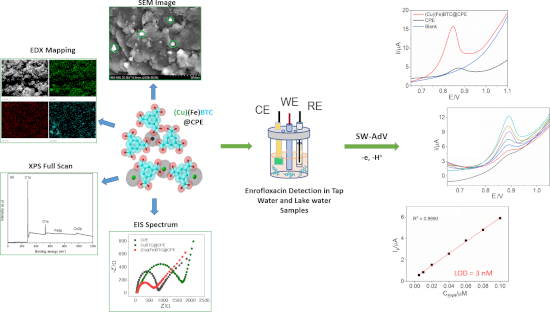
- capacity, and an acceptable efficacy of the electron transfer, Cu3(BTC)2 exhibited a good sensitivity to 2,4-dichlorophenol in the range from 0.04 to 1.00 μM with a limit of detection (LOD) of 9 nM in differential pulse voltammetry measurements. Moreover, the combination of metal oxides and MOFs showed better






Mn-doped ZnO nanopowders prepared by sol–gel and microwave-assisted sol–gel methods and their photocatalytic properties
Beilstein J. Nanotechnol. 2024, 15, 1283–1296, doi:10.3762/bjnano.15.104
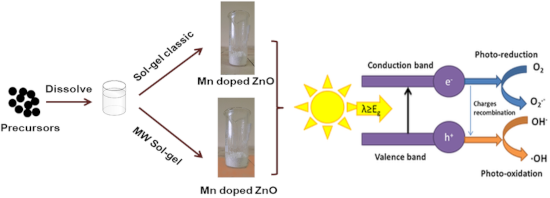
- of amorphous oxide nanopowders, the precipitation of nanocrystalline metal oxides, and the drying and thermal treatment of oxide films [23]. However, there has been comparatively less focus on studying chemical reactions in sol–gel solutions under microwave irradiation [24][25][26][27]. Numerous


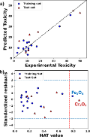
Introducing third-generation periodic table descriptors for nano-qRASTR modeling of zebrafish toxicity of metal oxide nanoparticles
Beilstein J. Nanotechnol. 2024, 15, 1142–1152, doi:10.3762/bjnano.15.93

- range of substances that can be categorized as carbon-based, metal oxides, semiconductors, polymers, clays, emulsions, or metals [2]. Metal oxide nanoparticles (MONPs) are metallic oxides that exist within the nanoscale range and can be intentionally created or occur naturally [3]. Under the rapid
- ) of the zebrafish hatching enzyme (ZHE1) of 24 MONPs is utilized for the modeling study [33]. The experimental data (%EIzebrafish) ranged from −1.04 (Co3O4) to 44.72 (Cr2O3). Descriptor calculation Models were developed based on the fundamental properties of these metal oxides that can be obtained