


Search results
Search for "modeling" in Full Text gives 337 result(s) in Beilstein Journal of Nanotechnology. Showing first 200.
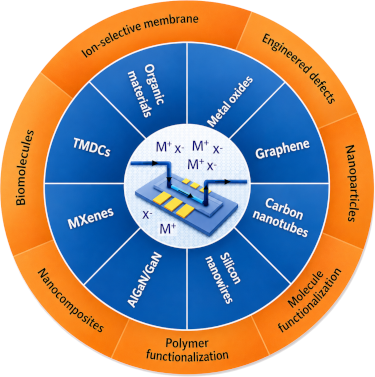
Materials challenges in solid-state sensors for continuous monitoring of ions in water
Beilstein J. Nanotechnol. 2026, 17, 935–973, doi:10.3762/bjnano.17.66


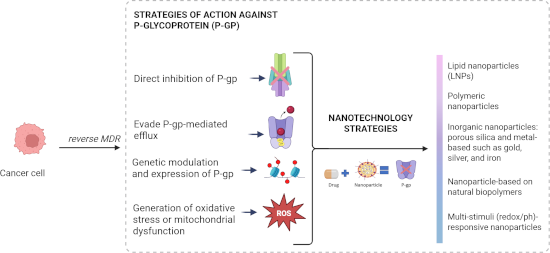
Nanocarrier strategies to overcome P-glycoprotein-mediated drug resistance in cancer therapy
Beilstein J. Nanotechnol. 2026, 17, 882–921, doi:10.3762/bjnano.17.64


Restorative potential of laser-synthesized silver nanoparticles with Salvia officinalis for periodontal disease treatment: an in vitro study
Beilstein J. Nanotechnol. 2026, 17, 781–795, doi:10.3762/bjnano.17.55
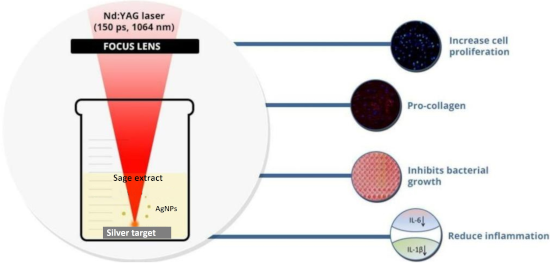
- crucial stages in tissue restoration and regeneration [57]. Besides the reported role of AgNPs in improved collagen deposition during wound healing [58][59], using plant extracts during nanoparticles synthesis was found to promote wound healing and collagen modeling in vivo [60]; but, to the best of our



Substrate-dependent pore formation in molybdenum disulfide monolayers under ion irradiation
Beilstein J. Nanotechnol. 2026, 17, 769–780, doi:10.3762/bjnano.17.54
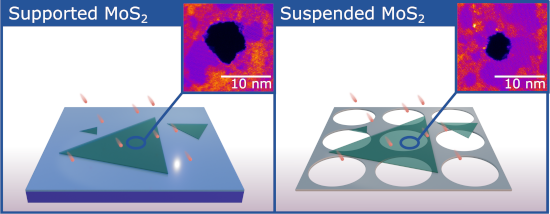
- benchmarks for future modeling. A particularly promising next step would be a targeted description of electronic energy dissipation across the interface between the 2D material and the substrate. Experimental Sample preparation A custom chemical vapor deposition (CVD) process is used to grow monolayer MoS2


Protein-based custom-designed molecular nanotraps for biomedical applications
Beilstein J. Nanotechnol. 2026, 17, 683–687, doi:10.3762/bjnano.17.47

- ). The whole process occurred in an aqueous environment, providing sustainable conditions. The surface response method [20][21] enabled the modeling of the optimal conditions for the synthesis of uniform bioMIPs, yielding nanoparticulates with a low polydispersity (PDI < 0.3). Investigations to elucidate

Laser–material interactions in liquids for the synthesis of nanomaterials: current status and perspectives
Beilstein J. Nanotechnol. 2026, 17, 571–575, doi:10.3762/bjnano.17.38
- requires input from computational modeling [33][36]. At longer timescales, shadowgraphy offers valuable information on bubble evolution [37], although processes occurring within the bubble remain largely inaccessible and necessitate the use of X-ray probing to elucidate nanoparticle growth mechanisms [38
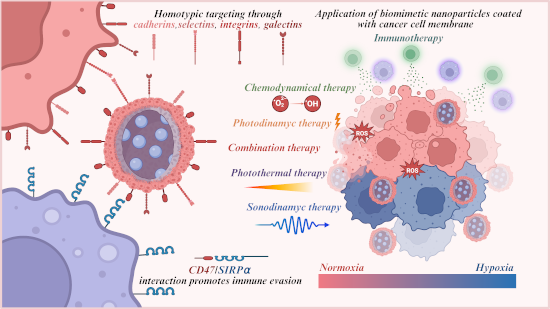
Biomimetic nanoparticles in cancer photodynamic therapy: a review of targeted delivery systems and therapeutic outcomes
Beilstein J. Nanotechnol. 2026, 17, 396–422, doi:10.3762/bjnano.17.27


Multilayered hyperbolic Au/TiO2 nanostructures for enhancing the nonlinear response around the epsilon-near-zero point
Beilstein J. Nanotechnol. 2026, 17, 251–261, doi:10.3762/bjnano.17.17
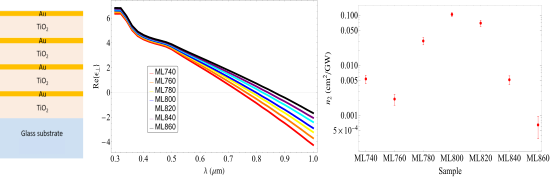
- only interested in the visible region because it is the region in which we are able to study the nonlinear response. Data analysis and multilayer modeling were performed using CompleteEASE software by J.A. Woollam. The optical constants were fitted using a B-splines layer with a Au thin film with KK


Comparative study on 3D morphologies of delignified, single tracheids and fibers of five wood species
Beilstein J. Nanotechnol. 2026, 17, 239–250, doi:10.3762/bjnano.17.16
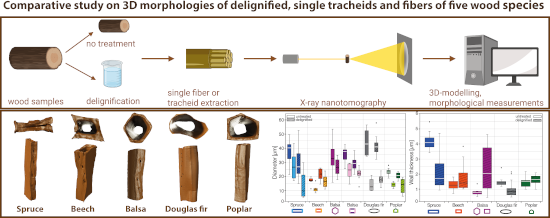
- delignification. The 3D models provide a valuable resource for (1) understanding interspecies differences of fibers and tracheids, (2) optimizing the use of delignified wood in industrial applications (including bio-based and bio-inspired materials), and (3) physical modeling of wood regarding questions of wood
- fibers and tracheids, paving the way for more effective modeling applications, such as finite element modeling or computational simulations of fluid flow or heat transfer, aiding in development of various industrial applications of delignified wood. Accurate 3D models provide valuable insights into


Micro- and nanoscale effects in biological and bioinspired materials and surfaces
Beilstein J. Nanotechnol. 2026, 17, 214–217, doi:10.3762/bjnano.17.14
- ” consists of 15 articles representing all facets of research on biological and bioinspired surfaces, ranging from experimental and microscopy studies on biological objects, translational approaches with characterization of artificial replicas, bioinspired prototypes to theoretical studies including modeling
- adhesion. They combined molecular dynamics for the simulation of the adhesive contact between the gecko spatula and the substrate with finite element modeling of the mechanical behavior of the adhesive seta to understand key aspects of gecko seta adhesion across scales. Besides these studies, focusing on
Structure-dependent thermochromism of PAZO thin films: theory and experiment
Beilstein J. Nanotechnol. 2026, 17, 186–199, doi:10.3762/bjnano.17.12
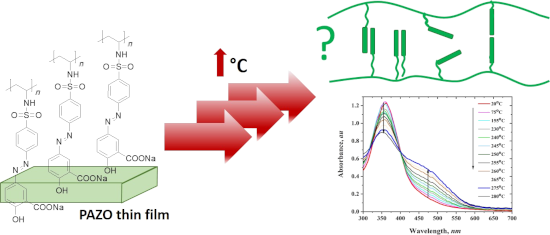
- relationship between the structural organization of the polymer side chains and temperature-induced optical changes. By combining experimental spectroscopic techniques with theoretical modeling, we demonstrate that the thermochromic response of PAZO films is strongly influenced by molecular aggregation, film
- be discussed in more details in the Section “Density functional theory modeling”. Analysis of spectrofluorimetric, infrared, and S and P polarization spectra Two PAZO samples were used for the spectrofluorimetric analysis: the first sample was not thermally treated (red curves in Figure 3A) and the
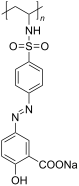
- with enhanced efficiency or expanded surface coverage. Density functional theory modeling PAZO is a polymer with azobenzene units incorporated as pendant groups attached to the main polymer backbone (Figure 6A). The core of PAZO polymer side chains is the azobenzene fragment (Ar–N=N–Ar), which can


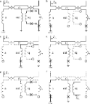
Capabilities of the 3D-MLSI software tool in superconducting neuron design
Beilstein J. Nanotechnol. 2026, 17, 122–138, doi:10.3762/bjnano.17.8

- the modeling and the experiment is also possible. This may be the case for red diamonds in Figure 4d since a noticeable deviation is observed for both filled and empty symbols. Fortunately, this type of coupling area design was not used in layouts of neurons studied below. Superconducting neurons Next
- size in the vicinity of the boundary. This allows for more accurate modeling of regions of strong current density changes located just in the vicinity of strip line edges (see inset on Figure 8b). The choice of the upper grid scale value ah is defined mainly by the minimal strip line width according to
- interferometer designs, this allows for the extraction of self- and mutual inductances to be achieved with an accuracy of 1–2%, as shown in Figure 9. When modeling large SQUIDs based on partial loops of neurons, the values ah = 2 μm and ahb = 0.25 μm were mostly used. One can see that a relative accuracy within



Terahertz-range on-chip local oscillator based on Josephson junction arrays for superconducting quantum-limited receivers
Beilstein J. Nanotechnol. 2025, 16, 2296–2305, doi:10.3762/bjnano.16.158
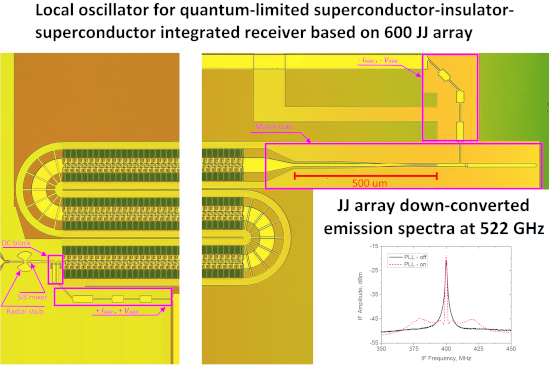
- lines with different gap widths. The inset shows the profile of the CPW. Pump current and calculated S21 parameter for the scheme with a higher critical current density. The discrepancy between the experiment and modeling is likely to be caused by the absence of the matched load at the nonradiating end


Electromagnetic study of a split-ring resonator metamaterial with cold-electron bolometers
Beilstein J. Nanotechnol. 2025, 16, 2199–2206, doi:10.3762/bjnano.16.152
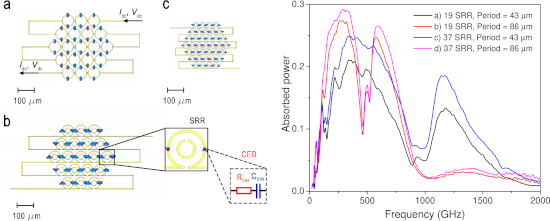
- in series. The total absorbed power is calculated as the sum of the powers absorbed in these discrete ports representing the CEBs. The power in our modeling is normalized to the power outgoing from the waveguide port, which is equal to 0.5 in arbitrary units. Results The design of the previously


Missing links in nanomaterials research impacting productivity and perceptions
Beilstein J. Nanotechnol. 2025, 16, 2168–2176, doi:10.3762/bjnano.16.149
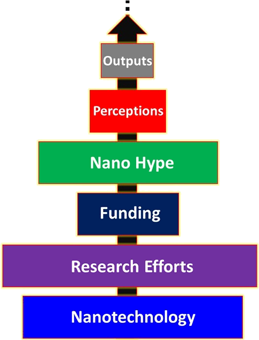
- standardized toxicity assessment, environmental fate modeling, and lifecycle analysis to enable safe and scalable commercialization. (2) Strengthen industry engagement through public–private partnerships that integrate advanced nanomaterials such as graphene, MXenes, nanoporous catalysts, and quantum dots into
Microplastic pollution in Himalayan lakes: assessment, risks, and sustainable remediation strategies
Beilstein J. Nanotechnol. 2025, 16, 2144–2167, doi:10.3762/bjnano.16.148
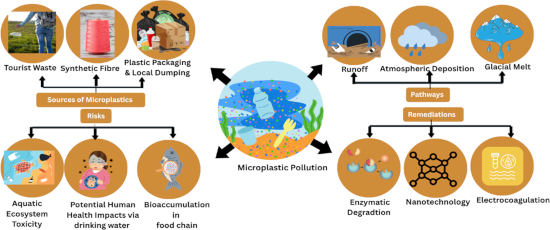
- key mechanism in remote lakes besides direct input [7]. Groundwater modeling methods have been instrumental in describing the transport and fate of contaminants, including MPs, in subsurface environments. Numerical methods such as MODFLOW coupled with transport methods such as MT3DMS and RT3D are
- in Himalayan groundwater [30]. Our addition of groundwater vulnerability modeling and toxicity pathways to this contributes by incorporating MPs into groundwater threat frameworks, providing a new contribution in linking solid plastic pollution with hydrological threats in vulnerable highland


Electron transport through nanoscale multilayer graphene and hexagonal boron nitride junctions
Beilstein J. Nanotechnol. 2025, 16, 2132–2143, doi:10.3762/bjnano.16.147
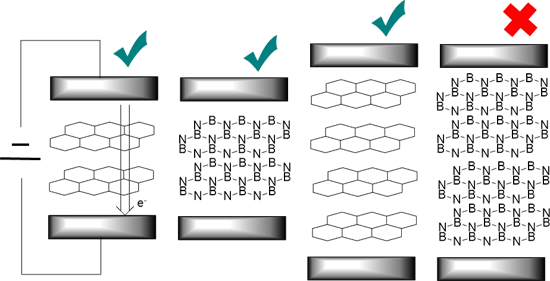
- transmission probability. Thus, the defects increase the current through the nanoscale junctions. Modeling of graphite and h-BN. (a) Unit cell of graphite, (b) DOS of graphite, (c) band structure of graphite, (d) unit cell of h-BN, (e) DOS of h-BN, (f) band structure of h-BN, and (g) schematic of the Brillouin
- zone. Modeling of graphite and h-BN with Stone–Wales defect. (a) Unit cell of defective graphite, (b) DOS of defective graphite, (c) band structure of defective graphite, (d) unit cell of defective h-BN, (e) DOS of defective h-BN, (f) band structure of defective h-BN, and (g) schematic of the Brillouin
- zone. Modeling of N-doped graphite. (a) Unit cell of N-doped graphite, (b) band structure of N-doped graphite, (c) schematic of the Brillouin zone, and (d) DOS of N-doped graphite. Geometry of Pt/graphene/Pt junctions with (a) one layer, (b) two layers, (c) three layers, (d) four layers; (e) five


Molecular and mechanical insights into gecko seta adhesion: multiscale simulations combining molecular dynamics and the finite element method
Beilstein J. Nanotechnol. 2025, 16, 2055–2076, doi:10.3762/bjnano.16.141
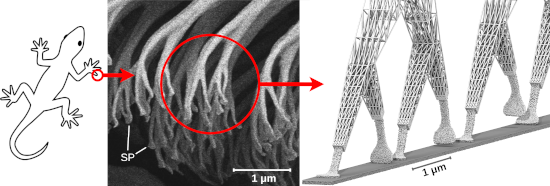
- limitations inherent in single-scale models. Keywords: finite element method; gecko adhesion; hybrid modeling; molecular dynamics; multiscale simulations; seta; spatula; Introduction Geckos possess the ability to adhere to a variety of substrates, a trait attributed to specialized micro- and nanoscale
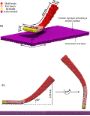
- modeled with a height H0 of 22.8 μm and an inclination angle αse of 30°. The multiscale seta was constructed by modeling a main shaft that branched four times into 16 tips, each connecting to a molecular spatula. The overall seta geometry was bound by the positive legs of the two parabolas (red lines
- while avoiding unnecessary computational cost. We note that the substrate model is an idealized approximation chosen for consistency with our prior work [10][12] and computational efficiency. Modeling biologically realistic interfaces will require extending the present model to include stratification






Mechanical property measurements enabled by short-term Fourier-transform of atomic force microscopy thermal deflection analysis
Beilstein J. Nanotechnol. 2025, 16, 1952–1962, doi:10.3762/bjnano.16.136
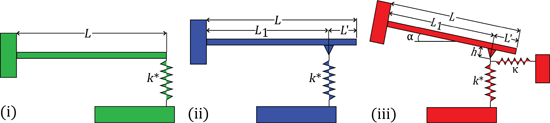
- microscopy [3], tapping mode AFM [4], and contact resonance AFM (CR-AFM) [5], each providing unique advantages or insights into a surface and the materials that comprise it. Alongside the developments of the experimental technique, there have been a number of modeling techniques created that can be used to




PEGylated lipids in lipid nanoparticle delivery dynamics and therapeutic innovation
Beilstein J. Nanotechnol. 2025, 16, 1914–1930, doi:10.3762/bjnano.16.133
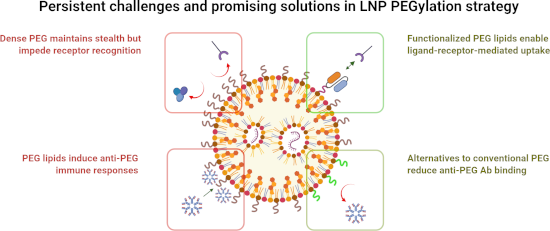
- molar ratio of 50:10:38.5:1.5, SANS analysis revealed a core–shell architecture with an average particle diameter of approximately 75 nm and a LNP shell thickness of 5 to 7 nm. Quantitative modeling of shell composition further demonstrated that the DMPE-PEG2k lipid accounted for 3.0 ± 0.5% of the shell


On the road to sustainability – application of metallic nanoparticles obtained by green synthesis in dentistry: a scoping review
Beilstein J. Nanotechnol. 2025, 16, 1851–1862, doi:10.3762/bjnano.16.128
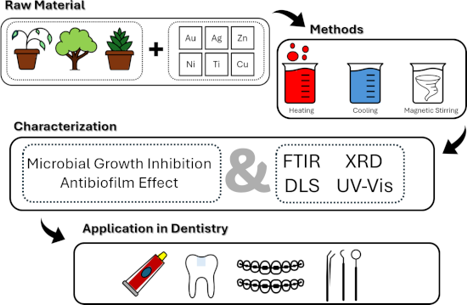
- absent in 16.2% (n = 14) of the works, while 9.5% (n = 8) did not replicate their experiments. Limitations also included restricted animal modeling (8.1%; n = 7) and absence of long-term effect assessments (8.1%; n = 7). Altogether, these findings indicate that while green-synthesized nanoparticles hold


Beyond the bilayer: multilayered hygroscopic actuation in pine cone scales
Beilstein J. Nanotechnol. 2025, 16, 1695–1710, doi:10.3762/bjnano.16.119
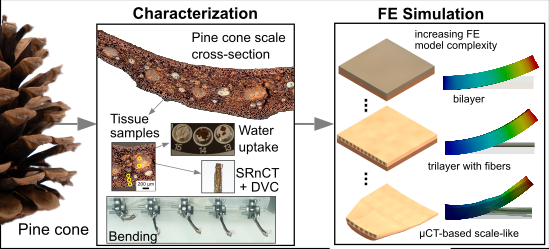
- integrate high-resolution computed tomography-based geometries to further elucidate the mechanisms underlying hygroscopic actuation. This integrative approach will bridge experimental findings with computational modeling and advance plant biomechanics and biomimetic transfer. Keywords: digital volume
- , together with previously published bilayer models, show that the analytical analysis of such a complex drying movement is a sensitive system of selected expansion coefficients, mechanical properties, and geometric models. It should be noted that the modeling of sorption/desorption of water via thermal
- zones. This analysis highlighted the importance of the tissue material properties and raises some questions about previous Young’s modulus measurements. Furthermore, the achievable bending angle can be increased by avoiding a simple bilayer geometry and modeling the sclerenchyma layer as discrete fibers


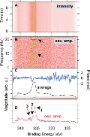
Ambient pressure XPS at MAX IV
Beilstein J. Nanotechnol. 2025, 16, 1677–1694, doi:10.3762/bjnano.16.118
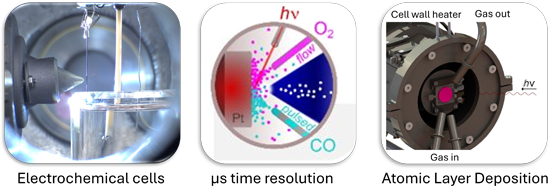
- between fundamental surface studies and application-relevant complexity. Another promising frontier is the coupling of APXPS with advanced data acquisition and analysis, such as machine learning for spectral interpretation, real-time kinetic modeling, and high-throughput experimentation. These approaches





Nanotechnology-based approaches for the removal of microplastics from wastewater: a comprehensive review
Beilstein J. Nanotechnol. 2025, 16, 1607–1632, doi:10.3762/bjnano.16.114
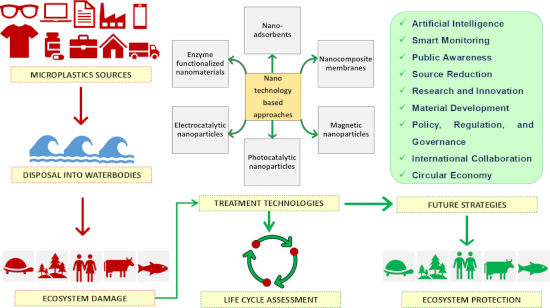
- fine tuning process parameters for improved performance [139]. Recent advancements in computational modeling and AI have significantly contributed to the development of more efficient and targeted strategies for MP and NP removal. As illustrated in Figure 13, AI and ML models serve as powerful tools


Bioinspired polypropylene-based functionally graded materials and metamaterials modeling the mistletoe–host interface
Beilstein J. Nanotechnol. 2025, 16, 1592–1606, doi:10.3762/bjnano.16.113
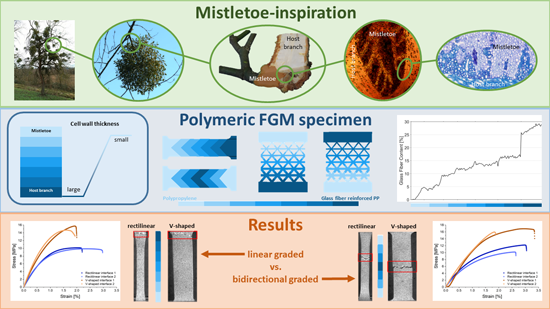
- colleagues have also structured the interfaces of the gradients in their work on bioinspired 3D-printed fused deposition modeling materials, incorporating different patterns such as collagen-like triple helices into their geometric design, resulting in a 50% toughness increase compared to the non-graded
- and material gradients, finite element (FE) simulations were performed using small deformation implicit modeling. The linear solver of the ANSYS static structural module was used for the FE simulations. Due to the low thickness of the metamaterial structures, the plane stress 2D model (PLANE 183





