Search results
Search for "nanospheres" in Full Text gives 142 result(s) in Beilstein Journal of Nanotechnology.
Beam shaping techniques for pulsed laser ablation in liquids: Unlocking tunable control of nanoparticle synthesis in liquids
Beilstein J. Nanotechnol. 2026, 17, 309–342, doi:10.3762/bjnano.17.22
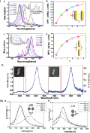
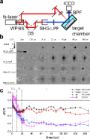
- presence of terbium NPs. When the fluence increases from 60 to 140 J·cm−2, the radical yield with oxidised NPs rises by over an order of magnitude [114][115]. Moreover, according to Davletshin et al., plasmonic coupling in aqueous Au nanospheres leads to enhanced local fields. This leads to a reduction via
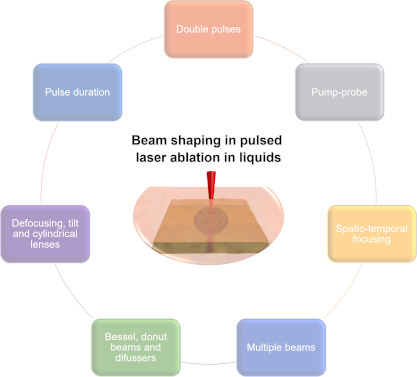
- lenses in PLAL can lead to the formation of nanoribbons [140], and this may be attributed to two main mechanisms. First, the initially formed Ag nanospheres could undergo nanowelding under the influence of a line-shaped light sheet produced by cylindrical focusing, leading to chain- or ribbon-like







Laser ablation in liquids for shape-tailored synthesis of nanomaterials: status and challenges
Beilstein J. Nanotechnol. 2025, 16, 1963–1997, doi:10.3762/bjnano.16.137
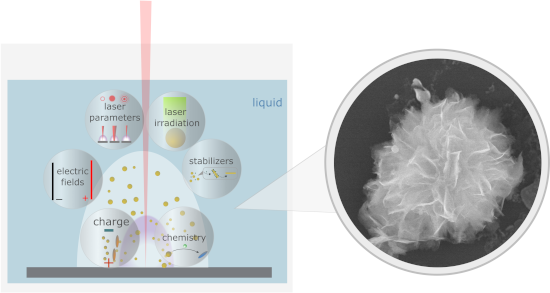
- , shape, crystal structure, and temperature [12]. As a result, thermodynamically controlled growth typically results in near-spherical NPs. The lowest surface energy of nanospheres also induces the transformation of other shapes into spherical ones. The effect of surface energy is most pronounced in small
- –water mixtures provides a higher yield of gaseous products which favours the formation of hollow nanospheres. This effect observed in water–ethanol mixtures is explained by a longer cavitation bubble lifetime as compared to that of pure water [56][57]. Similarly, saturation of a liquid with gases also
- provides a route to synthesize hollow nanospheres, as shown in [58]. The reactive gases, such as H2, O2, and CO2 can also direct the growth of nonspherical NPs by adsorption on the seed NP surface and block the growth along specific directions [59][60]. The ambient gases can also induce exfoliation of





Exploring the potential of polymers: advancements in oral nanocarrier technology
Beilstein J. Nanotechnol. 2025, 16, 1751–1793, doi:10.3762/bjnano.16.122
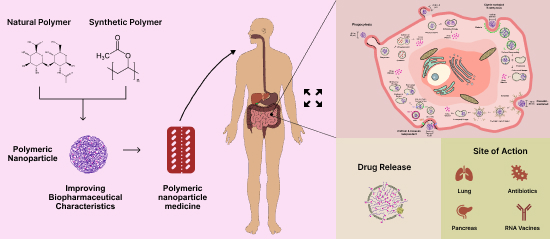
- control over site specificity and drug release [28]. The absorption of PNs depends on their size, surface characteristics, and morphology, which may exhibit distinct features, classifying them as either nanocapsules or nanospheres. Nanocapsules consist of an oily core where the drug is encapsulated
- (Figure 2C), surrounded by a polymeric shell that regulates its release profile; alternatively, the drug may be adsorbed onto the polymeric wall (Figure 2D). In contrast, nanospheres are formed when the drug is either adsorbed onto the surface of the polymeric matrix (Figure 2B) or retained inside it
- (Figure 2A), resulting in a uniform dispersion of active compounds within the polymer [29][30]. The encapsulation of drugs in nanocapsules and nanospheres correlates with their biopharmaceutical characteristics, which are directly linked to oral absorption. Amidon et al. [31], through studies correlating


Advances of aptamers in esophageal cancer diagnosis, treatment and drug delivery
Beilstein J. Nanotechnol. 2025, 16, 1734–1750, doi:10.3762/bjnano.16.121
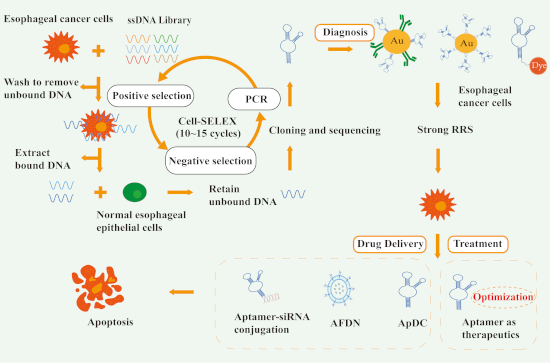
- optimize aptamer performance [135]. The second strategy is encapsulation of nanocarriers, such as metal nanoparticles, quantum dots, silica nanoparticles and liposomes. Gold nanoparticles (AuNPs) have different morphologies, among which gold nanospheres are the most popular. Spherical AuNPs are synthesized


Prospects of nanotechnology and natural products for cancer and immunotherapy
Beilstein J. Nanotechnol. 2025, 16, 1644–1667, doi:10.3762/bjnano.16.116

- nanoparticles Gold nanoparticles are nanometer-scale structures composed of a gold core with surface ligands, which can be structured into nanospheres, nanocages, nanorods, and nanoshells [146][147]. There are various manufacturing processes such as vacuum sputtering, biosynthesis, methods based on ultraviolet


Laser processing in liquids: insights into nanocolloid generation and thin film integration for energy, photonic, and sensing applications
Beilstein J. Nanotechnol. 2025, 16, 1428–1498, doi:10.3762/bjnano.16.104
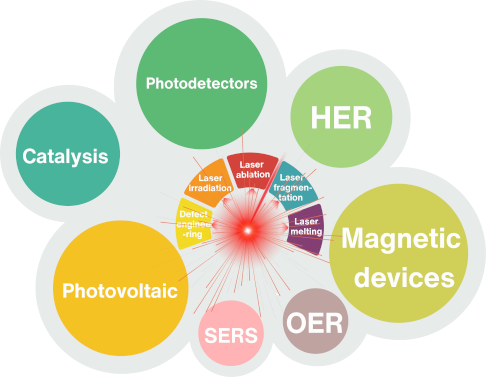
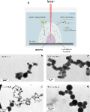
- particle size through a relatively simple process, further advancing the field of laser-based nanoparticle synthesis. The first report on the fabrication of ZnO quantum dots (QDs) through laser irradiation of ZnO hollow nanospheres in a liquid medium highlighted a rapid, simple process conducted at room
- temperature and normal atmospheric pressure [34]. A laser fragmentation mechanism was proposed, based on the interaction between the laser and the nanospheres, which generates plasma (Figure 7e). Most LIL processes can be classified as either fragmentation or melting, depending on the type of final product






Enhancing the therapeutical potential of metalloantibiotics using nano-based delivery systems
Beilstein J. Nanotechnol. 2025, 16, 1350–1366, doi:10.3762/bjnano.16.98
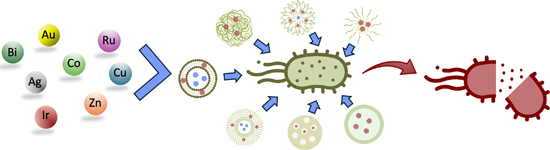
- ]. The most common forms of polymeric NPs include nanocapsules, which have a polymeric membrane enclosing the drug payload, and nanospheres, consisting of a solid polymer matrix. Among these, polymersomes and dendrimers are notable types of polymeric NPs [78]. Polymersomes, made from amphiphilic block


Towards a quantitative theory for transmission X-ray microscopy
Beilstein J. Nanotechnol. 2025, 16, 1113–1128, doi:10.3762/bjnano.16.82
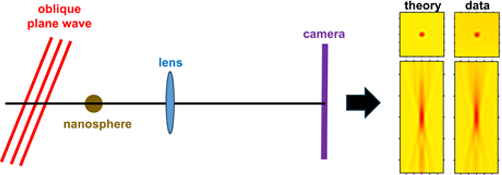
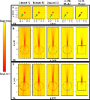
- that this model produces good qualitative agreement with our 3D measurements of 60 nm gold nanospheres, but only if both β and δ for the complex refractive index n = 1 – δ + iβ of gold are included in the model. This shows that both absorption and phase properties of the specimen influence the acquired
- index [22] and so is well suited to the gold nanospheres that we use as test objects in this study. We therefore name our model the partially coherent Mie (pc-Mie) model. Second, we compare the theory for our model to the preceding two 3D models, providing a deeper understanding of the principles that
- a tilt in the optical train that requires adjustment of the model. Finally, we perform the first quantitative comparisons of a 3D model to real data, revealing that the microscope underestimates the absorption of the 60 nm gold nanospheres. In sum, our work not only extends the modelling framework



Time-resolved probing of laser-induced nanostructuring processes in liquids
Beilstein J. Nanotechnol. 2025, 16, 968–1002, doi:10.3762/bjnano.16.74
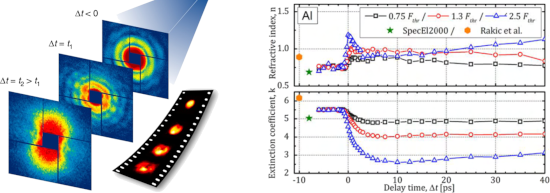
- caused by fluctuations in individual single-particle images. Single Au nanospheres were irradiated with femtosecond infrared laser pulses, rapidly increasing the electron temperature to several tens of thousands of kelvins within a few hundred femtoseconds. Photoexcited hot electrons in metallic Au


Structural and magnetic properties of microwave-synthesized reduced graphene oxide/VO2/Fe2O3 nanocomposite
Beilstein J. Nanotechnol. 2025, 16, 921–932, doi:10.3762/bjnano.16.70
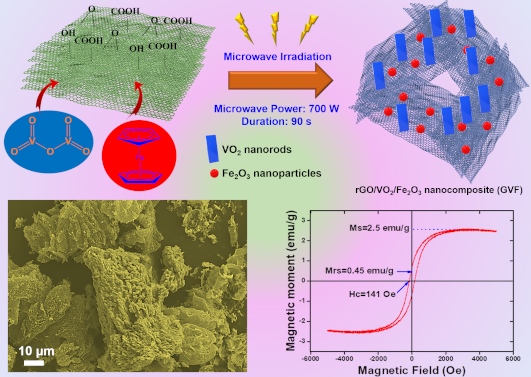
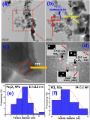
- . The detailed structure of the GVF was monitored by HRTEM analysis. The corresponding images are shown in Figure 8a–f. As shown in Figure 8a, the rGO nanosheets are found to be transparent and thin in nature. In the magnified HRTEM image, an agglomerated dispersion of Fe2O3 NPs and VO2 nanospheres (NSs



Nanomaterials in targeting amyloid-β oligomers: current advances and future directions for Alzheimer's disease diagnosis and therapy
Beilstein J. Nanotechnol. 2025, 16, 561–580, doi:10.3762/bjnano.16.44
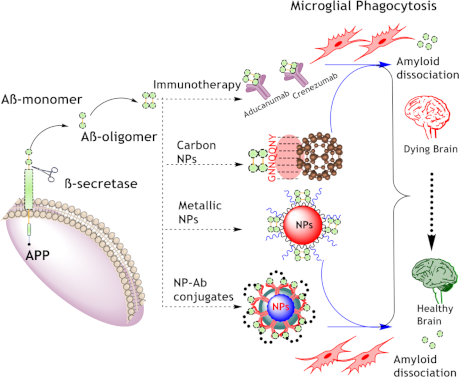
- detection methods, Liu et al. developed a fluorescence-based system using a FAM-labeled DNA aptamer fluorophore along with a nanoquencher attached to self-assembled polydopamine nanospheres. This nanosystem showed selective recognition of AβOs through a “fluorescence-signal on” mechanism, where the FAM-DNA


Synthetic-polymer-assisted antisense oligonucleotide delivery: targeted approaches for precision disease treatment
Beilstein J. Nanotechnol. 2025, 16, 435–463, doi:10.3762/bjnano.16.34


Recent advances in photothermal nanomaterials for ophthalmic applications
Beilstein J. Nanotechnol. 2025, 16, 195–215, doi:10.3762/bjnano.16.16
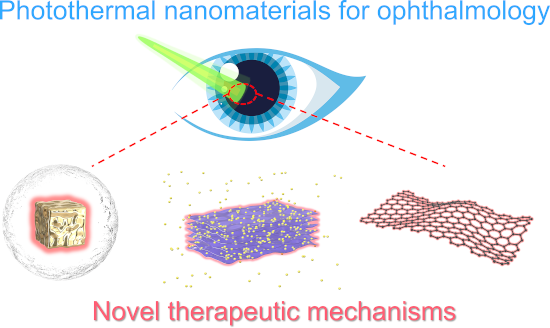
- photothermal therapy agent, AuAgCu2O-NS, which consists of a core of AuAg alloy nanospheres and a Cu2O shell, specifically designed for treating non-healing keratitis caused by drug-resistant bacterial infections [152]. This agent’s controllable photothermal effects, coupled with the release of Ag+ ions from


Facile synthesis of size-tunable L-carnosine-capped silver nanoparticles and their role in metal ion sensing and catalytic degradation of p-nitrophenol
Beilstein J. Nanotechnol. 2024, 15, 1576–1592, doi:10.3762/bjnano.15.124
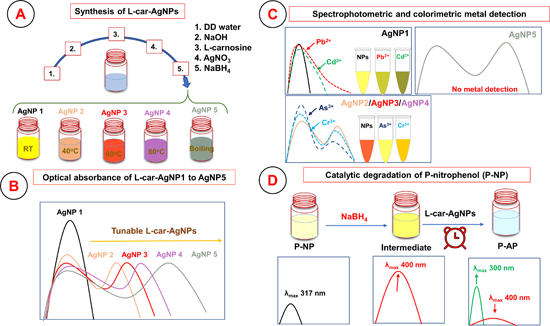
- capping and stabilizing agent is required for silver nanoparticle synthesis. Maiti et al. demonstrated that the dipeptide ʟ-carnosine interacted highly with pristine silver nanospheres [6]. However, its role as a stabilizing/capping agent was never explored for nanoparticle synthesis and advanced
- the potential of gelatine-embedded silver nanoparticles in the degradation of P-NP, but it was not used for heavy metal ion sensing [17]. Similarly, citrate-stabilized silver nanospheres were used for the colorimetric detection of Ni2+ with a threshold limit of 0.75 mM without any catalytic activity
- pristine silver nanospheres upon interaction. The appearance of the redshifted peak might be due to charge transfer or aggregation [7]. An increased nanoparticle size leads to a further redshift of the plasmonic peak [26]. Hydrodynamic size, zeta potential, and morphology of the ʟ-car-AgNPs are shown in




Nanoarchitectonics with cetrimonium bromide on metal nanoparticles for linker-free detection of toxic metal ions and catalytic degradation of 4-nitrophenol
Beilstein J. Nanotechnol. 2024, 15, 1312–1332, doi:10.3762/bjnano.15.106
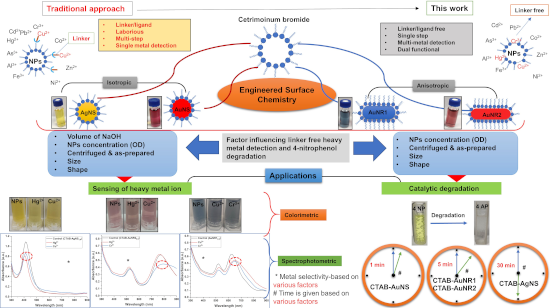
- , metal composition, centrifugation, and NaOH amount, were investigated for their impact on the performance of CTAB-capped nanoparticles in heavy metal detection and 4-NP degradation. CTAB-Au nanospheres demonstrated limited heavy metal ion detection capability but exhibited remarkable efficiency in
- degrading 94.37% of 4-NP within 1 min. In contrast, silver nanospheres effectively detected Hg2+, Cu2+, and Fe3+ at concentrations as low as 1 ppm and degraded 90.78% of 4-NP within 30 min. Moreover, anisotropic gold nanorods (CTAB-AuNR1 and CTAB-AuNR2) showed promising sensing capabilities towards Cu2
- purchased from CDH Fine Chemicals, India. The chemicals obtained were used without further purification. All glassware was cleaned with aqua regia and rinsed with double distilled (DD) water before use. Cetrimonium bromide as capping agent CTAB-AgNS (silver nanospheres) and CTAB-AuNS (gold nanospheres) were




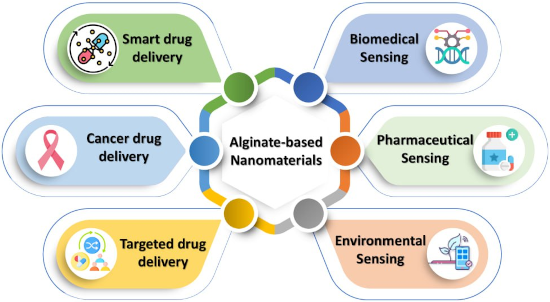
Unveiling the potential of alginate-based nanomaterials in sensing technology and smart delivery applications
Beilstein J. Nanotechnol. 2024, 15, 1077–1104, doi:10.3762/bjnano.15.88
- scanning electron microscopy (SEM) and transmission electron microscopy (TEM). The shape and size of the nanoparticles can be determined by these two methods [59]. TEM is extensively utilized and can differentiate between nanocapsules and nanospheres, as well as measure the thickness of the nanocapsule


Synthesis of silver–palladium Janus nanoparticles using co-sputtering of independent sources: experimental and theorical study
Beilstein J. Nanotechnol. 2024, 15, 808–816, doi:10.3762/bjnano.15.67
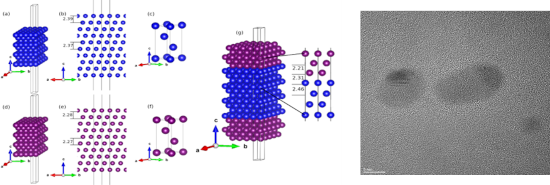
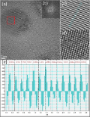
- using a JEOL JEM-2100F microscope. The EDS analysis was performed using INCA software. In order to assist the interpretation of the electron micrographs, several atomistic models of AgPd nanoparticles were created. These models consist of nanospheres of approximately 10 nm diameter, for a total of




Classification and application of metal-based nanoantioxidants in medicine and healthcare
Beilstein J. Nanotechnol. 2024, 15, 396–415, doi:10.3762/bjnano.15.36
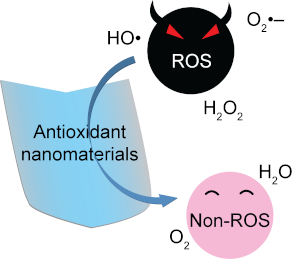
- collaborators synthesized mesoporous carbon nanospheres (PMCSs) derived from a MOF precursor, exhibiting dual photodynamic and photothermal characteristics. Utilizing this framework, concentration and temperature at thrombotic sites were elevated significantly upon local irradiation (808 nm laser), resulting in


Graphene removal by water-assisted focused electron-beam-induced etching – unveiling the dose and dwell time impact on the etch profile and topographical changes in SiO2 substrates
Beilstein J. Nanotechnol. 2024, 15, 190–198, doi:10.3762/bjnano.15.18
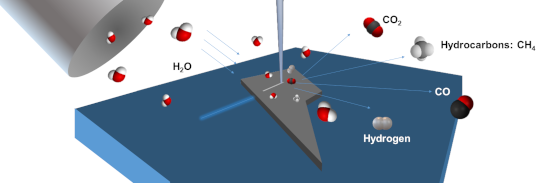
- graphene films, each with its own set of advantages and disadvantages. Most of the current techniques are based on multistep processing. For example, ultranarrow graphene nanoribbons can be formed with the so-called meniscus-mask lithography [7] or nanospheres lithography [8], although positioning and


Nanotechnological approaches in the treatment of schistosomiasis: an overview
Beilstein J. Nanotechnol. 2024, 15, 13–25, doi:10.3762/bjnano.15.2

- divided into two types: nanocapsules and nanospheres [18]. Nanocapsules consist of reservoir systems with an oil or water core and an external polymeric shell. They are, overall, used to increase drug solubility [20]. Usually, once in the body, the encapsulated drug diffuses through the polymeric wall in
- a zero-order kinetic, that means, it constantly releases the encapsulated drug [17]. In opposition, nanospheres are matrix systems formed by polymers without a central core. During the administration, the matrix erodes and the drug diffuses, resulting in a first-order kinetic drug release, that is


Hierarchically patterned polyurethane microgrooves featuring nanopillars or nanoholes for neurite elongation and alignment
Beilstein J. Nanotechnol. 2023, 14, 1157–1168, doi:10.3762/bjnano.14.96
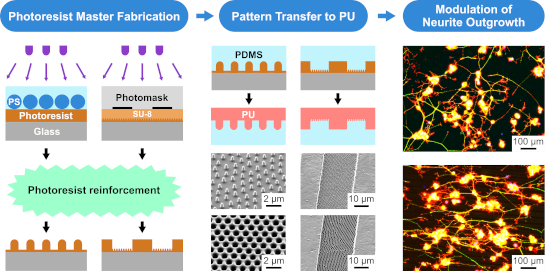
- guidance conduits. Experimental Materials Polystyrene nanospheres (ca. 1.1 µm diameter), laminin from Engelbreth–Holm–Swarm murine sarcoma, and nerve growth factor (2.5S, from murine submaxillary glands) were purchased from Sigma, Merck KGaA (Germany). SU-8 50 and SU-8 developer were obtained from Kayaku
- . ratio 1:0.7) at 5000 rpm and soft-baked at 95 °C for 160 s. An array of polystyrene nanospheres (1.1 µm) embedded in PDMS was placed in conformal contact with the SU-8, and then exposure was performed at a dose of 35–42 mJ·cm−2 (Figure 1A(i)). (Older PS-NS/PDMS films seem to require slightly higher UV
- served as a template for creating a PDMS nanopillar structure for the capillary thermal imprinting of SU-8. An AZ1518 film was spin-coated on glass coverslips at 5000 rpm and soft-baked at 100 °C for 1.5 min. Exposure was performed at a dose of 13 mJ·cm−2 with an array of 1.1 μm polystyrene nanospheres


Sulfur nanocomposites with insecticidal effect for the control of Bactericera cockerelli
Beilstein J. Nanotechnol. 2023, 14, 1106–1115, doi:10.3762/bjnano.14.91
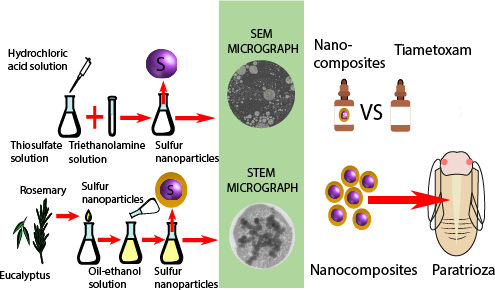
- ]. Furthermore, different kinds of polysaccharides (e.g., chitosan, alginates, and polyethylene glycol) have been used for the synthesis of nanoinsecticides [15]. While other forms of polymer and non-polymer nanoformulations, such as nanofibers, nanocapsules, nanogels, nanomicelles, and nanospheres, have been


Nanoarchitectonics of photothermal materials to enhance the sensitivity of lateral flow assays
Beilstein J. Nanotechnol. 2023, 14, 988–1003, doi:10.3762/bjnano.14.82
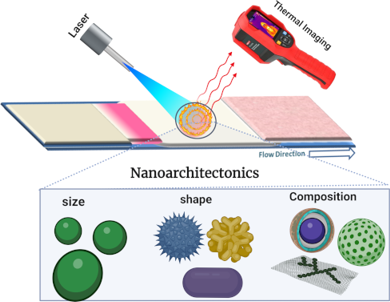
- controlled by size, shape, and aspect ratio of the nanomaterials. The size-dependent thermal conversion efficiency of gold nanospheres was studied using 5 to 50 nm particles under 532 nm laser light irradiation [53] (Figure 5A). The thermal conversion efficiency increased from 0.65 to 0.803 on decreasing the
- higher cross-sectional area. The PCE of the gold nanoshells can be increased by either increasing the core-to-shell radius ratio or by increasing their aspect ratio [58][59]. In a theoretical study, the size-dependent optical properties of three different nanomaterials, including gold nanospheres, gold
- [74][76]. Au-based nanocomposites have been widely applied in the field of biosensor development because of their wide absorption and excellent light-to-heat conversion properties. Core–shell nanoparticles have a higher PCE than gold nanospheres [77]. Variations in the optical properties were observed


Investigations on the optical forces from three mainstream optical resonances in all-dielectric nanostructure arrays
Beilstein J. Nanotechnol. 2023, 14, 674–682, doi:10.3762/bjnano.14.53
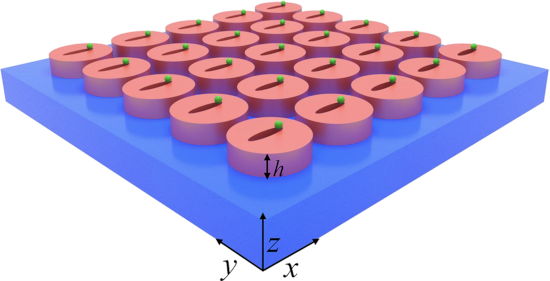
- , and the quasi-BIC resonances. For all cases, the metasurface structure is assumed to be immerged in water (n = 1.31) to model a realistic suspending condition for the PS nanospheres. The optical forces on the PS at the excitation values of those three resonances are all calculated based on the MST


Plasmonic nanotechnology for photothermal applications – an evaluation
Beilstein J. Nanotechnol. 2023, 14, 380–419, doi:10.3762/bjnano.14.33
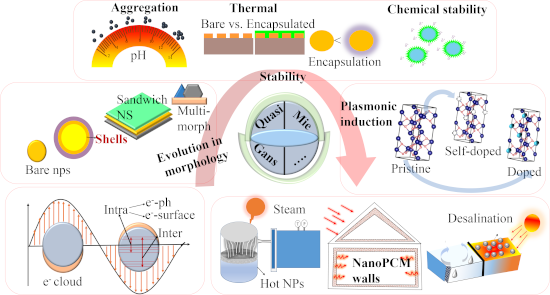
- of proximity as well as morphology influence considerably the LSPR properties, for example, in Au nanorods and nanospheres. In contrast, nanospheres and nanorods exhibited considerable tunability of the LSPR due to changes to the localized electromagnetic field of the plasmons due to changing
- with respect to changing parameters of the material under consideration can be developed with a few examples of the theoretically arrived optical cross sections of a few generic morphologies of nanoparticles and will be discussed next for the case of nanospheres, nanorods, and nanomatryushkas. The
- be accounted for regarding different morphologies, essential for obtaining the accurate results in Figure 4. 2.2 Extinction properties of nanomaterials 2.2.1 Nanospheres: The interaction of light with a particle is in one way simplistically modelled using the so-called quasi-static approximation