


Search results
Search for "periodontal disease" in Full Text gives 5 result(s) in Beilstein Journal of Nanotechnology.
Restorative potential of laser-synthesized silver nanoparticles with Salvia officinalis for periodontal disease treatment: an in vitro study
Beilstein J. Nanotechnol. 2026, 17, 781–795, doi:10.3762/bjnano.17.55
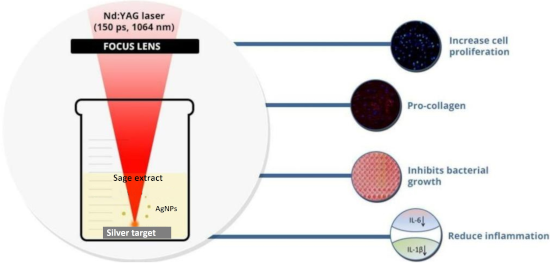
- Belgrade, Republic of Serbia 10.3762/bjnano.17.55 Abstract Periodontal disease is one of the most prevalent human pathologies initiated by microbial dysbiosis and the inflammatory reaction that leads to gingival fibroblasts apoptosis, connective tissue damage, and atrophy, resulting in tooth loss. Beyond
- inflammation. This dual antibacterial and regenerative action demonstrates the high potential of sage-assisted PLAL-synthesized AgNPs as a safe, sustainable strategy for periodontal disease treatment. Keywords: cell proliferation; periodontal disease; pulsed laser ablation in liquid (PLAL); Salvia officinalis
- enhanced biological effects. Periodontal disease is considered to be one of the most common diseases in humans with prevalence estimated to be approximately 42% to 62% of the world population, among which 7.8% to 23.6% are severe forms, according to the National Health and Nutrition Examination Surveys



On the road to sustainability – application of metallic nanoparticles obtained by green synthesis in dentistry: a scoping review
Beilstein J. Nanotechnol. 2025, 16, 1851–1862, doi:10.3762/bjnano.16.128
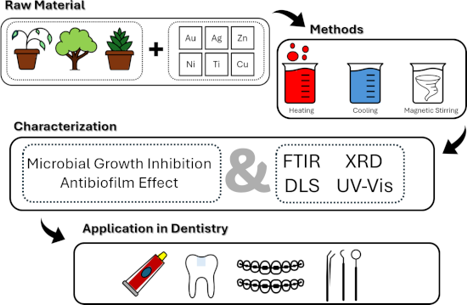
- caries and periodontal disease progression. In periodontal therapy, green-synthesized nanoparticles have been formulated into bioadhesive gels, local delivery systems, and coated dental flosses to sustain antimicrobial release in periodontal pockets [18]. Such approaches improve the control of


Berberine-loaded polylactic acid nanofiber scaffold as a drug delivery system: The relationship between chemical characteristics, drug-release behavior, and antibacterial efficiency
Beilstein J. Nanotechnol. 2024, 15, 71–82, doi:10.3762/bjnano.15.7
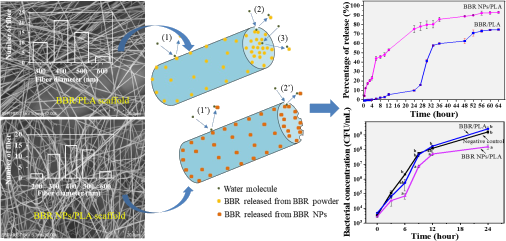
- treatment of bone defects [21]. In dentistry, anti-infective nanofiber-based drug-release systems have been investigated for periodontal disease control, endodontic therapy, cariogenic microorganism control, and tissue reconstruction [25]. Due to the controlled drug release, BBR-loaded nanofiber scaffolds


Coordination-assembled myricetin nanoarchitectonics for sustainably scavenging free radicals
Beilstein J. Nanotechnol. 2022, 13, 284–291, doi:10.3762/bjnano.13.23
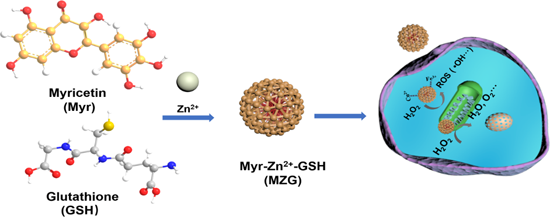
- ], sepsis [6], cancer [7], and inflammatory diseases (e.g., periodontal disease and inflammatory bowel disease) [8][9]. Therefore, the development of antioxidative reagents is a crucial strategy to alleviate chronic diseases and maintain the redox balance. Increasingly efficient antioxidant materials are


Preparation of micro/nanopatterned gelatins crosslinked with genipin for biocompatible dental implants
Beilstein J. Nanotechnol. 2018, 9, 1735–1754, doi:10.3762/bjnano.9.165
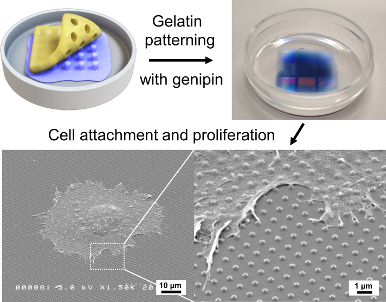
- implants [21][22]. It is also used as an absorbable hemostatic sponge to provide an occlusive matrix [23][24] and as a bone healing material in tissue engineering [25][26] in the field of dentistry. Recent studies have attempted to regenerate collagen fibers, lost as a result of periodontal disease, using







Other Beilstein-Institut Open Science Activities



