Search results
Search for "plasmon resonance" in Full Text gives 226 result(s) in Beilstein Journal of Nanotechnology. Showing first 200.
Tailoring Ag–Pt nanoalloys through solid-state dewetting: structural and optical insights
Beilstein J. Nanotechnol. 2026, 17, 748–759, doi:10.3762/bjnano.17.52

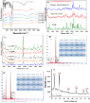
- the bulk Ag–Pt system, and provide insight into their structure–property relationships relevant for catalytic and plasmonic applications. Keywords: Ag–Pt alloy; dewetting; nanoalloys; plasmon resonance; thin films; Introduction Nanoalloys in the form of nanostructures exhibit novel and intriguing
- properties, and thus, the application potential of the fabricated nanosystem. Moreover, when designing plasmonic devices based on Ag–Pt nanoalloys, one must take into account the damping of the plasmon resonance in platinum alloys. This phenomenon was theoretically investigated [36][37][38][39] and supported
- components, causing quenching of the plasmon resonance. We demonstrate that the Ag plasmon resonance is damped once the compositional threshold is reached. Taking into consideration both the intrinsic challenges of Ag–Pt nanoalloy formation and their promising application potential, developing an optimized




Environmental applications of silver nanoparticles: state-of-the-art review and emerging trends
Beilstein J. Nanotechnol. 2026, 17, 697–736, doi:10.3762/bjnano.17.49
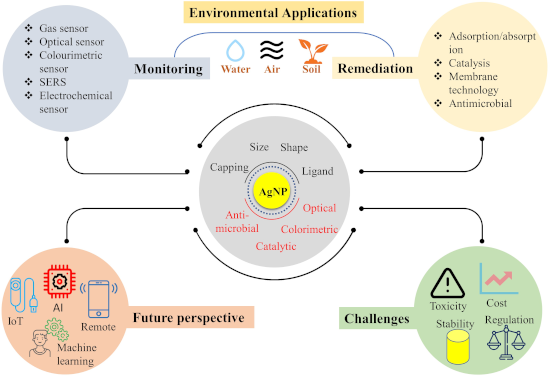
- environmental monitoring and remediation. For example, the optical properties of AgNPs are primarily governed by localised surface plasmon resonance (LSPR ), which occurs in the 380–450 nm region and depends on the nanoparticles’ size and shape. The unique optical properties of nanosilver were utilised to


Two-step laser synthesis of Ag@TiO2 nanomaterials for the photocatalytic degradation of rhodamine B
Beilstein J. Nanotechnol. 2026, 17, 622–634, doi:10.3762/bjnano.17.43
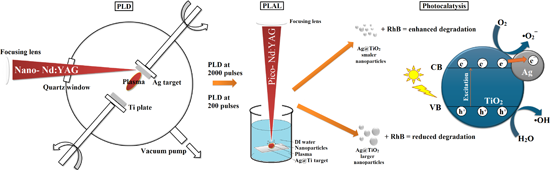
- photocatalytic activity. The improved activity of Ag@TiO2 is not mainly due to bandgap reduction. It is more likely related to Ag–TiO2 interaction, where Ag reduces electron–hole recombination and enhances light absorption through surface plasmon resonance, leading to increased formation of reactive oxygen
- numerous modification strategies. Silver-modified titanium dioxide (Ag@TiO2) nanoparticles have gained significant attention as advanced photocatalysts for the degradation of organic pollutants, particularly under visible-light irradiation. The incorporation of silver introduces localized surface plasmon
- resonance effects and facilitates the formation of Schottky barriers at the metal–semiconductor interface, both of which contribute to an extended light absorption range and enhanced charge carrier separation. The improved activity is primarily attributed to the narrowing of TiO2’s effective bandgap and the


Upcycling agroindustrial waste into graphene oxide supports for gold nanoparticles: toward sustainable nanomaterials
Beilstein J. Nanotechnol. 2026, 17, 489–504, doi:10.3762/bjnano.17.32
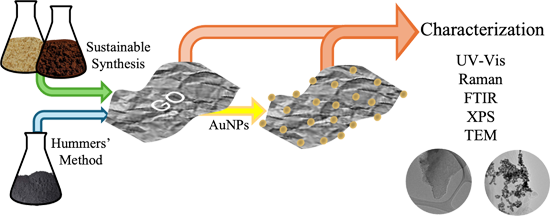
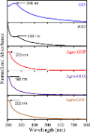
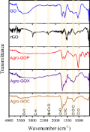
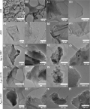
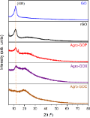
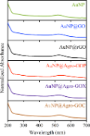
- agroindustrial waste-derived samples (Agro-GOP, Agro-GOX, and Agro-GOC). UV–vis spectra of AuNPs and AuNPs supported on GO samples. The plasmon resonance peak appears at 522 nm for AuNPs and is redshifted (526–531 nm) in the hybrids, indicating interaction with the GO surface. TEM images of AuNP-decorated GO
- framework [30][55][56]. For clarity, the resulting hybrids are denoted as AuNP@GO, where the suffix identifies the specific type of GO support. The UV–vis spectra shown in Figure 9 revealed characteristic optical features from both AuNPs and the GO supports. Free AuNPs displayed a localized surface plasmon
- resonance (LSPR) band centered at 522 nm, indicative of small and well-dispersed AuNPs in colloidal suspension. AuNPs grown on GO substrates showed redshifted LSPR bands in the range of 526–531 nm, accompanied by notable spectral broadening. These features are attributed to interactions between AuNPs and



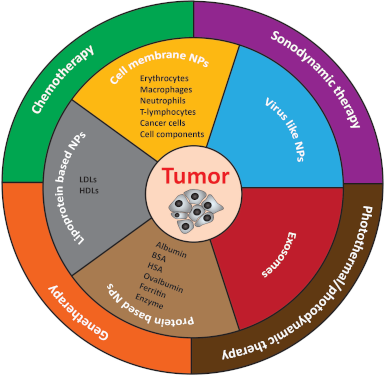
Biomimetic nanoparticles in cancer photodynamic therapy: a review of targeted delivery systems and therapeutic outcomes
Beilstein J. Nanotechnol. 2026, 17, 396–422, doi:10.3762/bjnano.17.27


Beam shaping techniques for pulsed laser ablation in liquids: Unlocking tunable control of nanoparticle synthesis in liquids
Beilstein J. Nanotechnol. 2026, 17, 309–342, doi:10.3762/bjnano.17.22
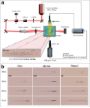
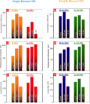
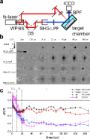
- pulse energies of 15 and 25 mJ (fluences of 34 and 56 mJ·cm−2). As seen in Figure 15a, at 15 mJ, the standard beam has minimal impact on NP size, with the surface plasmon resonance (SPR) peak at 390 nm remaining weak even after 60 min of irradiation. In contrast, the diffused beam at the same energy







Gold nanoparticle-decorated reduced graphene oxide as a highly effective catalyst for the selective α,β-dehydrogenation of N-alkyl-4-piperidones
Beilstein J. Nanotechnol. 2026, 17, 218–238, doi:10.3762/bjnano.17.15
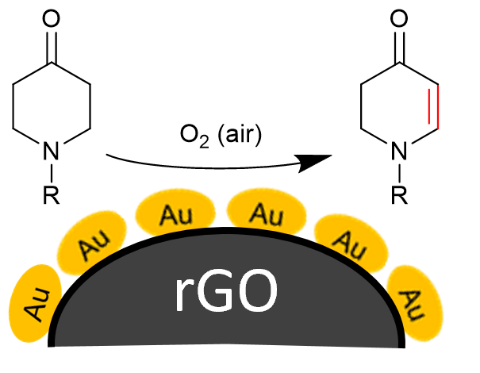
- gold nanoparticle suspension. The presence of AuNPs was confirmed by the appearance of a localized surface plasmon resonance (LSPR) band in the visible wavelength range, with a maximum absorbance at λmax = 519 nm (Figure 4a). The hydrodynamic radius (HD) by number-weighted distribution of dynamic light


Chiral plasmonic nanostructures fabricated with circularly polarized light
Beilstein J. Nanotechnol. 2025, 16, 2245–2264, doi:10.3762/bjnano.16.154
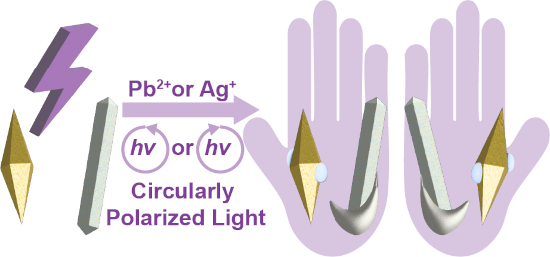
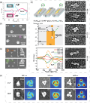
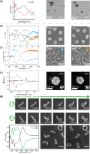
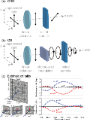
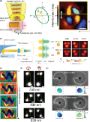
- ][101][102]. When the localized surface plasmon resonance of metal seeds is excited, hot electrons reduce Ag+ or from solution and deposit metallic Ag and Au. However, various studies in the past two decades on the plasmon-mediated reduction of Ag(I) and Au(III) have demonstrated a weak dependence of





Optical bio/chemical sensors for vitamin B12 analysis in food and pharmaceuticals: state of the art, challenges, and future outlooks
Beilstein J. Nanotechnol. 2025, 16, 2207–2244, doi:10.3762/bjnano.16.153
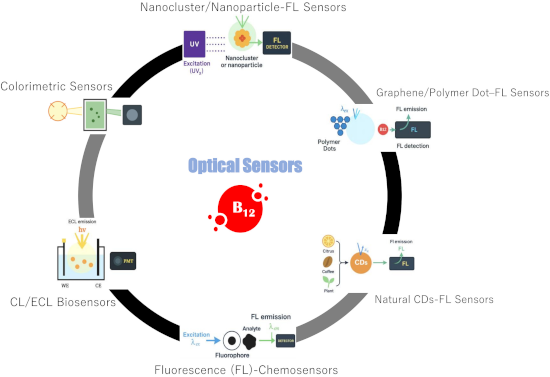
- biosensing platforms in detecting Co2+ ions and VB12 using RNA aptamer–gold nanoparticles colorimetric sensors, surface plasmon resonance sensors, chemiluminescence and electrochemiluminescence biosensors, and fluorescence biosensors (i.e., chemosensors, nanoclusters/nanoparticles-based sensors, and carbon
- distinct spectral absorption response. Specifically, the derived compound of 3-((2-hydroxynaphthalen-1-yl)diazenyl)-2-(styryl)quinazolin-4(3H)-one emerged as a rapid tool for the determination of Co2+ (λmax = 582 nm) and Fe2+ (λmax = 566 nm) in water. Surface plasmon resonance-based biosensors Surface
- plasmon resonance (SPR) sensors operate through a simple and effective mechanism in five key steps: (i) An electromagnetic field at the metal–dielectric interface excites coherent electron oscillations in the metal; (ii) this leads to the generation of surface plasmon polaritons (SPPs; i.e., oscillating


On the road to sustainability – application of metallic nanoparticles obtained by green synthesis in dentistry: a scoping review
Beilstein J. Nanotechnol. 2025, 16, 1851–1862, doi:10.3762/bjnano.16.128
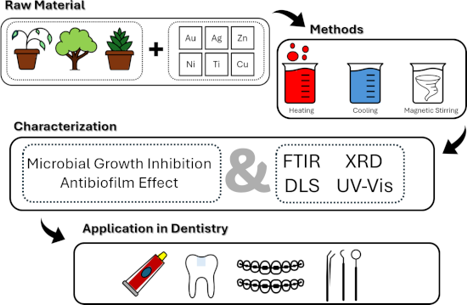
- nanoparticle formation in real time by detecting surface plasmon resonance bands, which provide insight into particle size and distribution [57]. XRD offers detailed information on the crystalline structure and phase composition of the nanoparticles, confirming successful synthesis and purity [53]. Together


Electrical, photocatalytic, and sensory properties of graphene oxide and polyimide implanted with low- and medium-energy silver ions
Beilstein J. Nanotechnol. 2025, 16, 1794–1811, doi:10.3762/bjnano.16.123
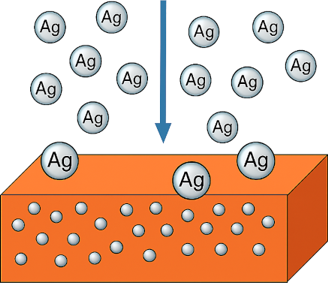
- catalytically active sites resulting from the carbonization of the polymer matrix, together with the silver clusters formed during ion implantation, provide suitable conditions for reactant adsorption and efficient charge transfer. Silver ions exhibit strong localized surface plasmon resonance in the visible


Laser processing in liquids: insights into nanocolloid generation and thin film integration for energy, photonic, and sensing applications
Beilstein J. Nanotechnol. 2025, 16, 1428–1498, doi:10.3762/bjnano.16.104
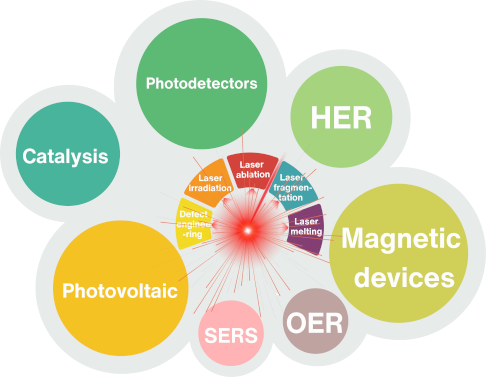
- approximately 15 to 40 nanoparticles per μm2. The hybrid materials exhibited plasmon resonance absorption of the Au NPs. Shorter EPD times maintained the properties of graphene, while longer deposition times resulted in the conversion of graphene to graphene oxide due to its electrochemical oxidation [132






Photochemical synthesis of silver nanoprisms via green LED irradiation and evaluation of SERS activity
Beilstein J. Nanotechnol. 2025, 16, 1417–1427, doi:10.3762/bjnano.16.103
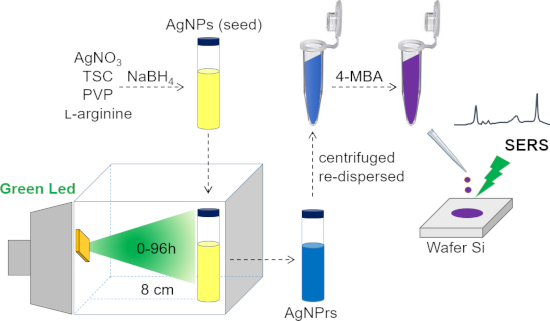
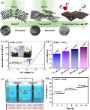
- candidates for surface-enhanced Raman scattering (SERS) due to their strong localized surface plasmon resonance and sharp tip geometry. In this study, AgNPrs were synthesized through a photochemical method by irradiating spherical silver nanoparticle seeds with 10 W green light-emitting diodes (LEDs; 520
- ratio of the nanoprisms [4][15]. Therefore, the clear observation of the OPQ peak at 48 h suggests a significant contribution of nanoplate thickness to the overall surface plasmon resonance behavior, which could account for the blueshift of the IPD peak. After 72 and 96 h, the OPQ and IPQ peaks remained
- , photochemical methods utilizing physical agents such as lasers [5], UV light [6], or LEDs [7][8][9] have gained attention due to their superior spatial and temporal control, high stability of the resulting AgNPrs and avoidance of environmentally unfriendly reducing agents [8][10]. The strong surface plasmon


Synthesis and antibacterial properties of nanosilver-modified cellulose triacetate membranes for seawater desalination
Beilstein J. Nanotechnol. 2025, 16, 1380–1391, doi:10.3762/bjnano.16.100
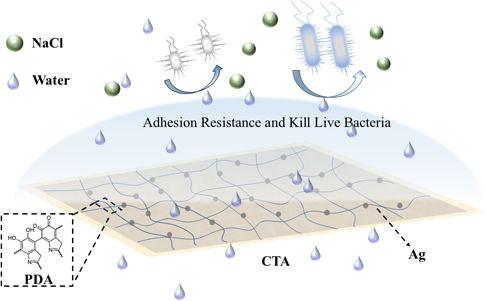
- nanomaterials can be engineered to optimize their antimicrobial activity, making them versatile tools in the development of advanced membrane technologies. Quantum effects, such as localized surface plasmon resonance in metallic nanoparticles, can further enhance antimicrobial properties by generating reactive


Better together: biomimetic nanomedicines for high performance tumor therapy
Beilstein J. Nanotechnol. 2025, 16, 1246–1276, doi:10.3762/bjnano.16.92







Time-resolved probing of laser-induced nanostructuring processes in liquids
Beilstein J. Nanotechnol. 2025, 16, 968–1002, doi:10.3762/bjnano.16.74
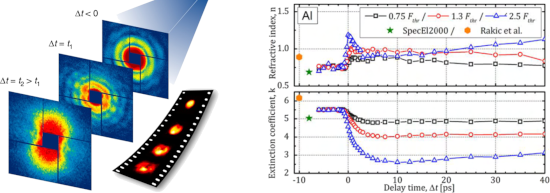
- other than purely thermal effects. Among these are electron emission [109], near-field forces of the plasmon resonance on the surface, pressure effects due to an expanding electron gas [25][27], or spatial spreading of fast electrons [110][111]. In general, with femtosecond excitation a large fraction
- approaches [115]. The subsequent pressure and temperature conditions emanate from the close interaction of the excited particles with the medium. The width of the SPR reflects the coherence time of this oscillation. This dephasing time amounts to a few femtoseconds, leading to a plasmon resonance width of
- -field ablation [26][52]. While electronic excitation is easily detected by TAS, the various structural responses of NPs are weaker and ambiguous in TAS. While elastic oscillations of NPs are identified in periodic modulations of the plasmon resonance due to the change of electron density, other


Synthesis of biowaste-derived carbon-dot-mediated silver nanoparticles and the evaluation of electrochemical properties for supercapacitor electrodes
Beilstein J. Nanotechnol. 2025, 16, 933–943, doi:10.3762/bjnano.16.71
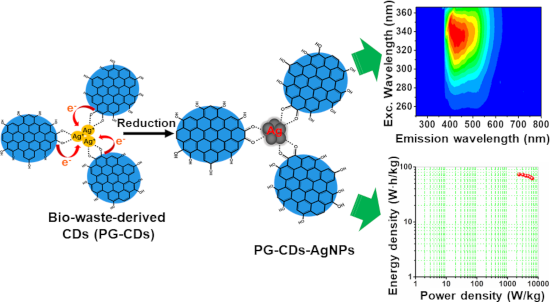
- evidenced from the progressive color change of the solution as shown by surface plasmon resonance (SPR). Structural and morphological analysis The optical properties of PG-CDs and PG-CDs-AgNPs were studied using UV–visible spectroscopy and photoluminescence (PL) spectroscopy. An absorption peak at 275 nm


Nanomaterials in targeting amyloid-β oligomers: current advances and future directions for Alzheimer's disease diagnosis and therapy
Beilstein J. Nanotechnol. 2025, 16, 561–580, doi:10.3762/bjnano.16.44
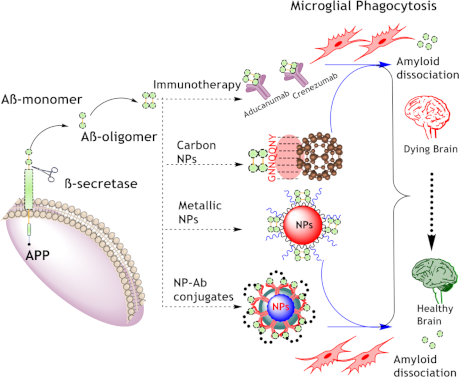
- ., CSF and blood tests [54]. Researchers have also employed the surface plasmon resonance (SPR) of citric acid-coated AuNPs, to specifically detect and quantify Aβ40 oligomers, as the SPR absorption band of AuNPs was found to be sensitive to the presence of AβOs [55]. While exploring the range of AβO


N2+-implantation-induced tailoring of structural, morphological, optical, and electrical characteristics of sputtered molybdenum thin films
Beilstein J. Nanotechnol. 2025, 16, 495–509, doi:10.3762/bjnano.16.38
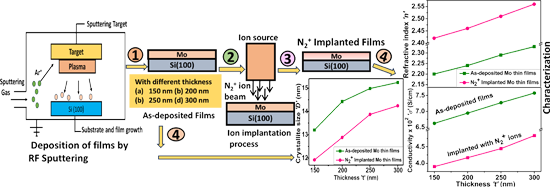
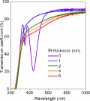
- production of Mo nanoparticles and the subsequent increase in surface plasmon resonance or interband transitions. As-deposited molybdenum thin films deposited at room temperature typically exhibit a smooth surface and crystalline structure. The absorbance of molybdenum thin films increases with increasing
- film thickness and peaks between 300 and 700 nm, corresponding to the localized surface plasmon resonance (LSPR) of molybdenum nanoparticles [45][46]. The formation of defects through ion irradiation increased the scattering of light and absorption within the film, resulting in enhanced overall


Effect of additives on the synthesis efficiency of nanoparticles by laser-induced reduction
Beilstein J. Nanotechnol. 2025, 16, 464–472, doi:10.3762/bjnano.16.35
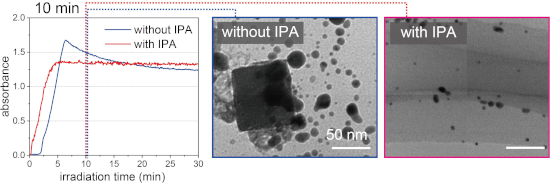
- the change in the absorption peak at 520 nm in the UV–vis absorption spectrum caused by the localized surface plasmon resonance (LSPR) of the Au nanoparticles as a function of the laser irradiation time. The black line shows the change in absorbance for the solution without IPA, and the red line shows


Engineered PEG–PCL nanoparticles enable sensitive and selective detection of sodium dodecyl sulfate: a qualitative and quantitative analysis
Beilstein J. Nanotechnol. 2025, 16, 385–396, doi:10.3762/bjnano.16.29
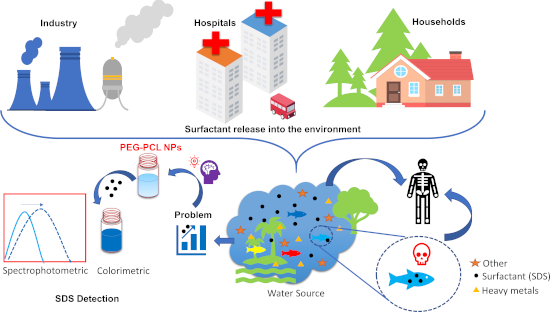
- spectrophotometric methods. Specifically, when combined with the Bradford reagent, the PEG–PCL nanoparticles produced a distinct blue color, indicating a successful interaction. This interaction generated a sharp plasmon resonance peak with a maximum absorbance (λmax) at 620 nm. Further, the addition of SDS to PEG
- nanoparticles showed a selective response to SDS. Specifically, only in the presence of SDS a significant redshift of approximately 30 nm was observed in the plasmon resonance peak. This redshifting of absorbance maximum to a longer wavelength is a unique response not seen with the other tested ions or
- a plasmon resonance peak around 595 nm, forming a blue form of the dye–protein complex [37]. Furthermore, the quantification of SDS is not possible with a dye, only without involving protein. Therefore, the current study utilized NPs with PEG–PCL to detect SDS in the presence of the Bradford reagent


Pulsed laser in liquid grafting of gold nanoparticle–carbon support composites
Beilstein J. Nanotechnol. 2025, 16, 349–361, doi:10.3762/bjnano.16.26
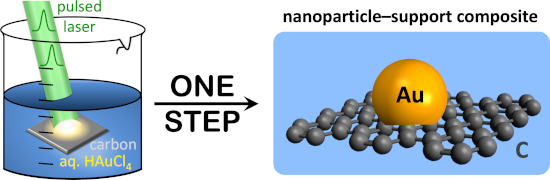
- ns, 532 nm, and 87 mJ·cm−2 pulses. We employed 532 nm pulses because gold nanoparticle generation works well at that wavelength, as nanoparticle nucleation and growth take advantage of this laser wavelength being resonant with the surface plasmon resonance in gold nanoparticles [25]. For 532 nm


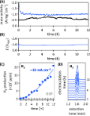
Preferential enrichment and extraction of laser-synthesized nanoparticles in organic phases
Beilstein J. Nanotechnol. 2025, 16, 254–263, doi:10.3762/bjnano.16.20
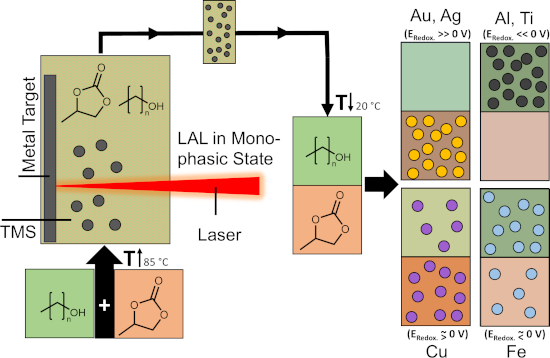
- -spectroscopy (Supporting Information File 1, Figure S1 and Figure S5) at the wavelength of the plasmon resonance peak (for Au and Ag) or at the wavelength of 550 nm (for Cu, Fe, Al, and Ti). The extinction at a wavelength of 550 nm for copper was used because the plasmon resonance peaks were not always




Recent advances in photothermal nanomaterials for ophthalmic applications
Beilstein J. Nanotechnol. 2025, 16, 195–215, doi:10.3762/bjnano.16.16
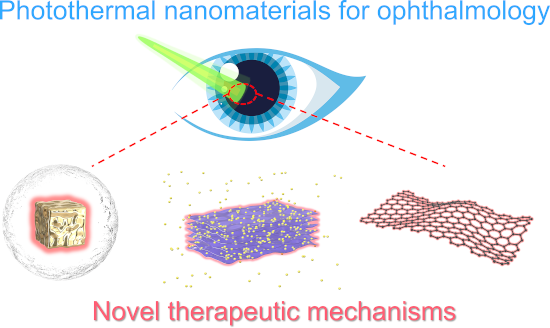
- categorized into three distinct types based on their different photothermal conversion mechanisms, which arise from their unique electronic structures [23][24]. The types include metals exhibiting localized surface plasmon resonance (LSPR), carbon and polymer materials undergoing molecular thermal vibration
- materials initiate photothermal conversion through localized surface plasmon resonance (LSPR), characterized by absorption at a single wavelength [48][49][50]. The therapeutic process involves mechanical forces generated by the rupture of vapor nanobubbles, effectively treating tissues or cells. (d–f


Facile synthesis of size-tunable L-carnosine-capped silver nanoparticles and their role in metal ion sensing and catalytic degradation of p-nitrophenol
Beilstein J. Nanotechnol. 2024, 15, 1576–1592, doi:10.3762/bjnano.15.124
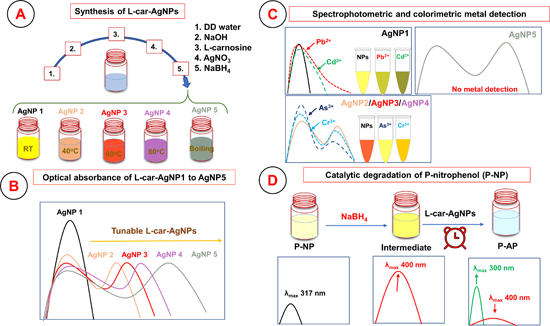
- properties [3][11][12]. These include localized surface plasmon resonance (LSPR), which can be utilized to detect heavy metal ions. The catalytic properties can be applied to degrade nitrophenolic compounds such as P-NP. Also, it is well documented that the properties of silver nanoparticles can be modulated
- degradation demonstrates the catalytic prowess of ʟ-car-AgNPs and highlights their potential in environmental remediation applications. The successful synthesis of ʟ-car-AgNPs with tunable plasmon resonance has paved the way for their application as colorimetric sensors for heavy metal detection and as