Search results
Search for "precipitation" in Full Text gives 297 result(s) in Beilstein Journal of Nanotechnology. Showing first 200.
Influence of an external electric field on the catalytic CO oxidation of nanoscaled CeO2 and its La3+ and Gd3+ congeners
Beilstein J. Nanotechnol. 2026, 17, 1028–1038, doi:10.3762/bjnano.17.70
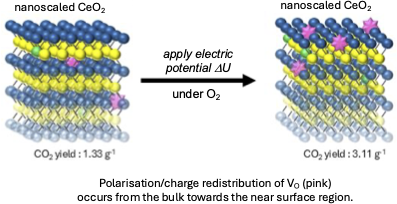
- CO oxidation capability on solid nCeO2 under an external electric field. Results and Discussion Characterization A series of nCeO2, containing Gd3+ and La3+ (2.5% and 5%), was synthesized by a precipitation method (see Supporting Information File 1). XRD patterns are in accord with JCPDS of 34-0394


Ultrasonic irradiation in the synthesis of nanohydroxyapatite: a chemically friendly technique for improving hemocompatibility and antibiofilm applications
Beilstein J. Nanotechnol. 2026, 17, 991–1015, doi:10.3762/bjnano.17.68
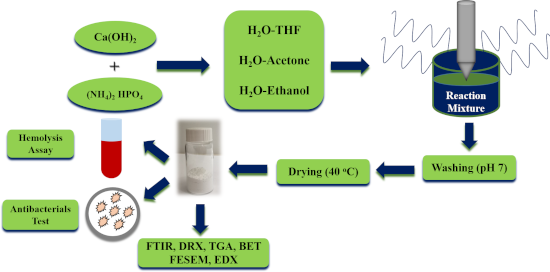
- necessary activation energy to overcome the kinetic barriers for both phases, enabling the co-precipitation of calcite alongside the more thermodynamically stable hydroxyapatite. The proportion of calcite formed increased as the ultrasonic irradiation time progressed from 15 to 60 min. This is evident from
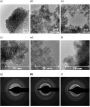
- formation of different proportions of calcite after 15 and 60 min of reaction (see Figure 5B,C). These results, along with those from FTIR, demonstrate that the sonication energy was able to promote the joint precipitation of both crystalline phases in both reactions carried out at 15 and 60 min of UI. The
- reaction medium: The solubility product of hydroxyapatite is a key a parameter of great interest for understanding its higher precipitation capacity compared to calcite. An acceptable value for the Ksp of HA is 2.91 × 10−58, as reported by L. C. Bell and coworkers [65]. According to Equation 14, this value




Supramolecular one-dimensional conducting nanofibers from a C3-symmetric tetrathiafulvalene derivative
Beilstein J. Nanotechnol. 2026, 17, 872–881, doi:10.3762/bjnano.17.63
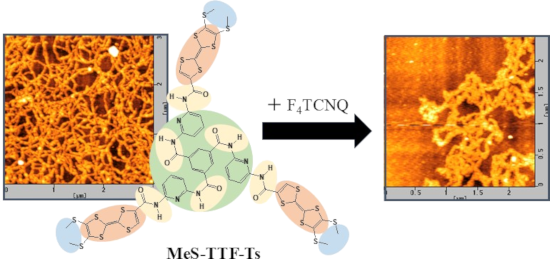
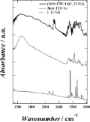
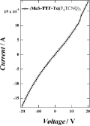
- temperature overnight. Hexane was added to the mixture to induce precipitation, and the resulting solid was collected and washed with ethyl acetate, methanol, and hexane to afford MeS-TTF-Ts as a brown solid. Yield 14.65 mg (55.9%) [48][49]. 1H NMR (400 MHz, DMSO-d6) δ 10.74 (m, J = 24.0 Hz, 3H), 8.67 (t, J


Environmental applications of silver nanoparticles: state-of-the-art review and emerging trends
Beilstein J. Nanotechnol. 2026, 17, 697–736, doi:10.3762/bjnano.17.49


Molecular engineering of individual dye-based nanoparticle photostability for ultrabright two-photon fluorescence
Beilstein J. Nanotechnol. 2026, 17, 688–696, doi:10.3762/bjnano.17.48
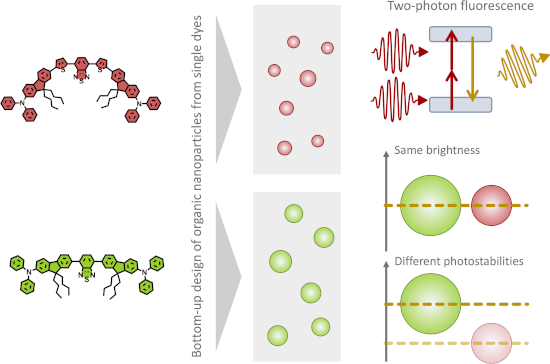
- photobleaching at the individual nanoparticle level – an essential step toward the rational design of photostable dFONs. Results and Discussion Nanoparticles structure Two families of dFONs, hereafter called dFONs(1) [20] and dFONs(2) [11], are obtained through precipitation [32] from quadrupolar dyes, hereafter
- called 1 and 2 (Figure 1a,b). By adjusting the dye concentration during precipitation [20], we tuned the nanoparticle diameters as can be seen in Figure 1c,d. Whereas dFON(2) exhibits a single size population centered at 20 nm, dFON(1) shows two distinct size populations, namely, a smaller one centered
- obtain the expression of F versus Pexc (Equation 1 of the main text) introducing a saturation term Psat such as: (a) Molecular structures of dyes 1 and 2. (b) Preparation scheme of dFONs(1) and dFONs(2) by precipitation, using, respectively, 2 mM and 1 mM stock solutions of dye 1 and dye 2. (c


Cellulose as a photocatalyst support material: extraction, structural features, and environmental applications
Beilstein J. Nanotechnol. 2026, 17, 635–652, doi:10.3762/bjnano.17.44


Gold nanoparticle-decorated reduced graphene oxide as a highly effective catalyst for the selective α,β-dehydrogenation of N-alkyl-4-piperidones
Beilstein J. Nanotechnol. 2026, 17, 218–238, doi:10.3762/bjnano.17.15
- environments, their tunable surface area and surface chemistry, and electrical conductivity [18][19]. To deposit metal NPs onto a carbon support, procedures such as adsorption or reduction–deposition (RD), co-precipitation, impregnation, and deposition precipitation (DP) are commonly employed [6][19]. Carbon
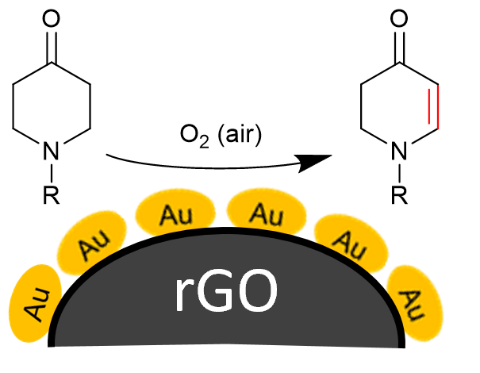
- catalysts synthesized via the reduction–precipitation method and stabilized with SiW9 polyoxometallate show the highest efficiency in the oxidative dehydrogenation (ODH) of N-methyl-4-piperidone. The superior activity of these catalysts arises from electron transfer from rGO to Au via C–O–Au interfacial


Ultrathin water layers on mannosylated gold nanoparticles
Beilstein J. Nanotechnol. 2025, 16, 2183–2198, doi:10.3762/bjnano.16.151
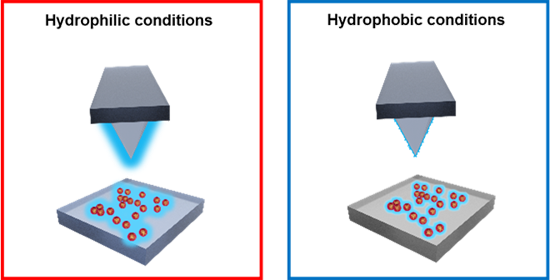
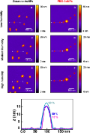
- overnight sample incubation to reach 90 ± 5% RH, corresponding to very wet climate or air during precipitation. In addition, we refer to “hydrophilic conditions” in AFM for hydrophilic surfaces (APDMES silicon) scanned by a silicon tip. We found a vertical resolution (∆z) of 0.04 nm and a surface roughness



Exploring the potential of polymers: advancements in oral nanocarrier technology
Beilstein J. Nanotechnol. 2025, 16, 1751–1793, doi:10.3762/bjnano.16.122
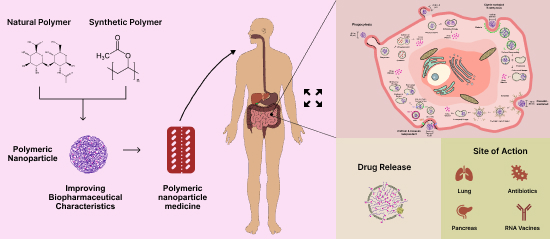
- commonly used methods for the preparation of PNs employing preformed polymers. These methods typically begin with the formulation of an emulsifying system, a step common to all techniques, followed by the formation of NPs through a process that varies depending on the method, such as solvent precipitation
- specific polymer classes, depending on their physicochemical properties and solubility behavior. Nanoprecipitation is frequently employed for synthetic polymers such as PLGA and PCL, which are soluble in organic solvents and undergo controlled precipitation in aqueous media, enabling efficient
- other and produced through polymerization reactions such as addition, condensation, ring-opening polymerization, emulsion, precipitation, and others [57]. Monomers determine the decomposition products of polymers in the body and, consequently, their toxicity and biocompatibility. This is why synthesis


Prospects of nanotechnology and natural products for cancer and immunotherapy
Beilstein J. Nanotechnol. 2025, 16, 1644–1667, doi:10.3762/bjnano.16.116
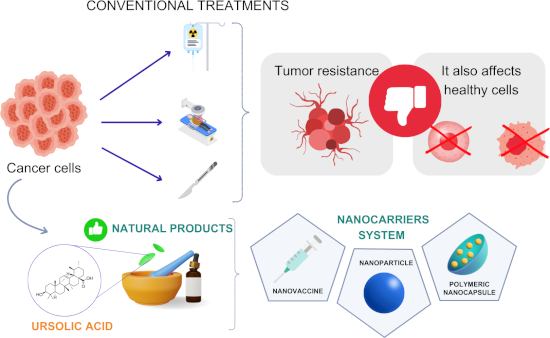
- nanoparticles were obtained by precipitation and freeze-drying and were analyzed by HPLC and DLS. Additionally, the in vivo studies performed in a mice model with breast cancer tumor (4T1 cell) showed that the drug exhibits a level of biosafety while reaching 44% tumor inhibition [75]. Polysaccharide


Nanotechnology-based approaches for the removal of microplastics from wastewater: a comprehensive review
Beilstein J. Nanotechnol. 2025, 16, 1607–1632, doi:10.3762/bjnano.16.114
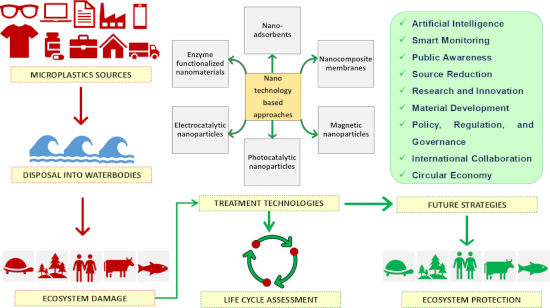
- . Common chemical treatment techniques include coagulation, flocculation, precipitation, and electrocoagulation [18]. Even though both physical and chemical methods are found to be effective in the removal of MPs, they pose several challenges on the remediation of MPs, such as blocking pores and surfaces
- -precipitation involves solvent displacement method, where acetone, ethanol, hexane are some of the solvents used [75]. In electrospinning, nanofibers are generated [76]. In parallel, green synthesis utilises biological entities such as plant extracts or microorganisms as reducing agents to produce eco-friendly


Photocatalytic degradation of ofloxacin in water assisted by TiO2 nanowires on carbon cloth: contributions of H2O2 addition and substrate absorbability
Beilstein J. Nanotechnol. 2025, 16, 1567–1579, doi:10.3762/bjnano.16.111
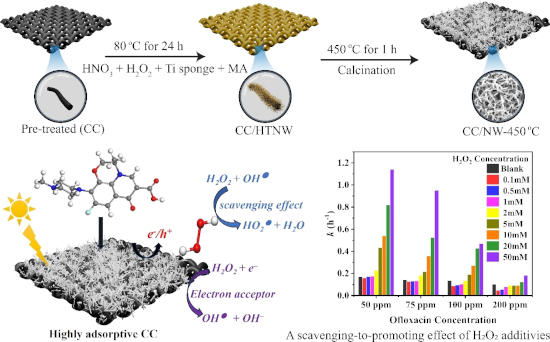
- deposition, electrophoretic deposition, and electrochemical deposition are extensively utilized for the synthesis of TiO2 nanowire arrays, owing to their advantageous physical properties and varied applications [14][15]. Our previous study accomplished the precipitation of TiO2 nanowire arrays, with
- and deionized water alternately in an ultrasonic bath, followed by drying at 60 °C. After that, it was immersed in 200 mL of a 30 wt % H2O2 solution, containing 60 mg of melamine, 4 mL of 65 wt % HNO3, and 1 g of titanium sponge, at 80 °C for 24 h to facilitate the precipitation of hydrogen titanate
- carbon cloth substrate via a heterogeneous nucleation mechanism [19][20]. Figure S1 in Supporting Information File 1 shows the homogeneous precipitation of hydrogen titanate nanowires on the carbon cloth. Subsequent calcination in air at 450 °C transformed the hydrogen titanate structures into anatase


Dendrimer-modified carbon nanotubes for the removal and recovery of heavy metal ions from water
Beilstein J. Nanotechnol. 2025, 16, 1522–1532, doi:10.3762/bjnano.16.107

- metal contamination. Consequently, the efficient removal of heavy metal ions remains a critical research challenge. Various methods have been employed including membrane filtration [1], flocculation [2], adsorption [3][4], precipitation [5], electrolytic removal [6], ion exchange [7], reduction [8], and


Laser processing in liquids: insights into nanocolloid generation and thin film integration for energy, photonic, and sensing applications
Beilstein J. Nanotechnol. 2025, 16, 1428–1498, doi:10.3762/bjnano.16.104






The role of biochar in combating microplastic pollution: a bibliometric analysis in environmental contexts
Beilstein J. Nanotechnol. 2025, 16, 1401–1416, doi:10.3762/bjnano.16.102
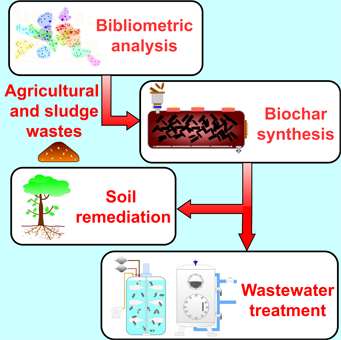
- derived from hardwood using an open-fire stove exhibited a relatively low surface area of 292.8 m2·g−1. Modified biochar synthesis strategies aim to enhance adsorption capacity while maintaining stable pore volume. For instance, magnetic biochar (MBC) synthesized from peanut shells using co-precipitation



Enhancing the therapeutical potential of metalloantibiotics using nano-based delivery systems
Beilstein J. Nanotechnol. 2025, 16, 1350–1366, doi:10.3762/bjnano.16.98
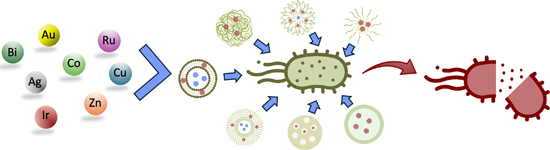
- been suggested that the antibacterial action is strongly related to bioavailability and stability. In fact, the poor water solubility, the degradation (precipitation) by chloride in the bloodstream, the interaction with sulfur-containing proteins, and the rapid clearance by macrophages are the main


Crystalline and amorphous structure selectivity of ignoble high-entropy alloy nanoparticles during laser ablation in organic liquids is set by pulse duration
Beilstein J. Nanotechnol. 2025, 16, 1141–1159, doi:10.3762/bjnano.16.84
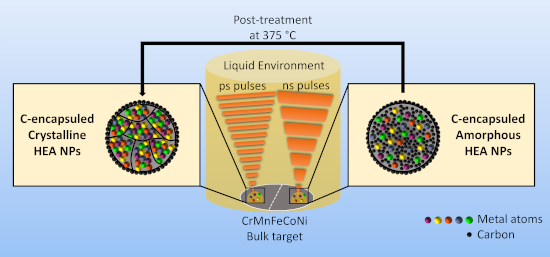
- structure as lower cooling rates would lead to the precipitation of carbon species to the surface of the particles, which was discussed by Abdelhafiz et al. in the context of high-entropy oxide materials via CTS [100]. Of course, carbon diffusion into the particle core after its cooldown may not be excluded




Fabrication of metal complex phthalocyanine and porphyrin nanoparticle aqueous colloids by pulsed laser fragmentation in liquid and their potential application to a photosensitizer for photodynamic therapy
Beilstein J. Nanotechnol. 2025, 16, 1088–1096, doi:10.3762/bjnano.16.80
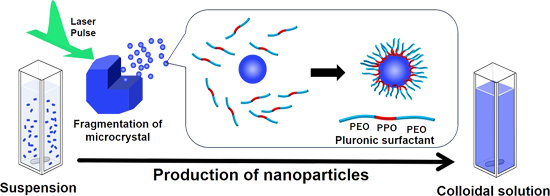
- any precipitation for longer than one week. The aqueous F-127 solution at 0.1 wt % concentration, which is about one tenth of the critical micelle concentration, was enough to fabricate nanoparticles with excellent dispersion stability and high production efficiency. We examined the photosensitized
- by nanosecond laser fragmentation in Pluronic F-127 (0.1 wt %) aqueous solution. The MPc nanoparticles exhibited a strong absorption band in NIR. The prepared nanoparticles with a hydrodynamic diameter of about 60 nm dispersed stably in PBS and cell culture media without any precipitation over the
- squares), and the pure colloids with F-127 added (red circles) evaluated by absorption measurements. A decrease in absorbance at 620 nm means precipitation of the nanoparticles. (a) Absorption spectra of the CoPc colloid (0.005 wt %) fabricated in F-127 solution of different concentrations (0, 0.1, and 5


Supramolecular hydration structure of graphene-based hydrogels: density functional theory, green chemistry and interface application
Beilstein J. Nanotechnol. 2025, 16, 806–822, doi:10.3762/bjnano.16.61
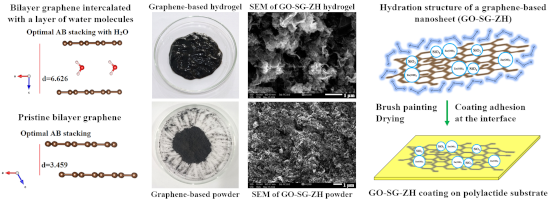
- then sonicated for 15 min. A volume of 500 mL of the as-prepared GO/Zn2+ dispersion was dropped into the 500 mL SG dispersion. The mixture was agitated for 15 min and sonicated for 15 min. Then, the reaction was adjusted to pH 10 using ammonia solution for Zn(OH)2 precipitation and kept stirring for 1
- exhibited sharp characteristic peaks of the Zn(OH)2 crystal at 2θ = 20.2°, 20.94°, 25.07°, 27.23°, 27.83°, and 32.97° [40][41][42]. Zinc hydroxide nanocrystals (ZH) were formed on the nanocomposite during the precipitation by alkaline ammonia in the synthesis process (see Methods section). The constituents


Morphology and properties of pyrite nanoparticles obtained by pulsed laser ablation in liquid and thin films for photodetection
Beilstein J. Nanotechnol. 2025, 16, 785–805, doi:10.3762/bjnano.16.60
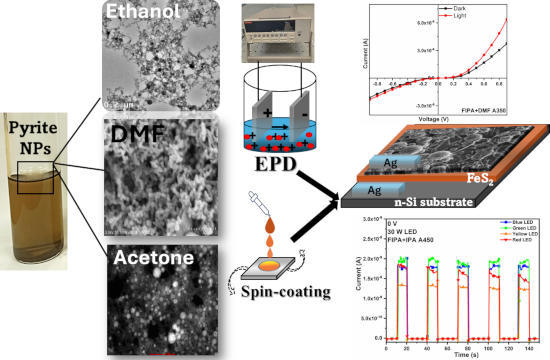
- NPs obtained in acetone is comparable to the reported work on Ag, we observed precipitation within a few minutes. The precipitation of FeS2 NPs in acetone can be attributed either to the relatively low viscosity (0.306 mPa·s) of acetone, which means that NPs have higher mobility, increasing the
- or steric stabilization, leading to agglomeration and precipitation. This behavior contrasts with metallic Ag NPs, which remain stable in acetone due to stronger electrical double layers and surface charge. According to the literature, in the case of nanosecond (ns) laser pulses, the laser energy can






Aprepitant-loaded solid lipid nanoparticles: a novel approach to enhance oral bioavailability
Beilstein J. Nanotechnol. 2025, 16, 652–663, doi:10.3762/bjnano.16.50
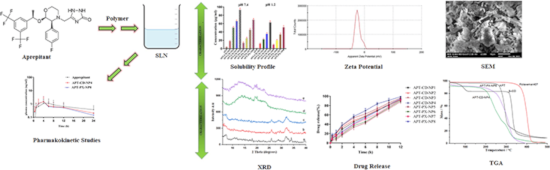
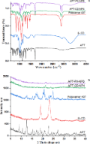
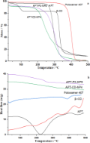
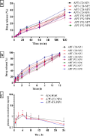
- analysis. APT-loaded SLNs were prepared by the precipitation method and characterized by physicochemical studies including particle size and zeta potential measurements, drug content, encapsulation efficiency and solubility studies, Fourier-transform infrared spectroscopy (FTIR), scanning electron
- as hot homogenization, cold homogenization, and solvent evaporation are used to prepare SLNs, but precipitation is the most compatible method for compound, polymer, and lipid. The precipitation method consists of dissolving the lipid with organic solvents and adding water to cause supersaturation of
- solid lipids in the mixture, which leads to precipitation of SLNs [12]. The precipitation method has the advantage of simple, rapid, reproducible, cost-effective, and easy handling for producing SLNs with good scale-up potential [13]. In the present study, we prepared SLNs containing APT with better



Quantification of lead through rod-shaped silver-doped zinc oxide nanoparticles using an electrochemical approach
Beilstein J. Nanotechnol. 2025, 16, 422–434, doi:10.3762/bjnano.16.33
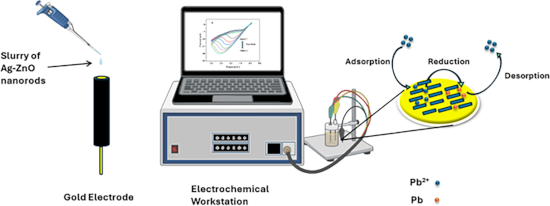
- they were fabricated using a low-temperature co-precipitation method. The resulting Ag@ZnO NRs had good optical properties, nanorod morphologies, and high crystallinity with no impurities. Technological advancements are leading people to use lightweight electronics and affordable sensors
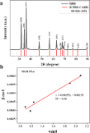
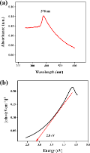
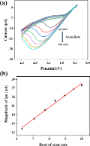
- experiments. Conclusion In conclusion, a low-temperature co-precipitation technique was utilized to yield highly crystalline nanorods of ZnO doped with Ag. A variety of techniques were employed to analyze the physical and chemical characteristics of as-synthesized Ag@ZnO NRs. The results demonstrate that the





Engineered PEG–PCL nanoparticles enable sensitive and selective detection of sodium dodecyl sulfate: a qualitative and quantitative analysis
Beilstein J. Nanotechnol. 2025, 16, 385–396, doi:10.3762/bjnano.16.29
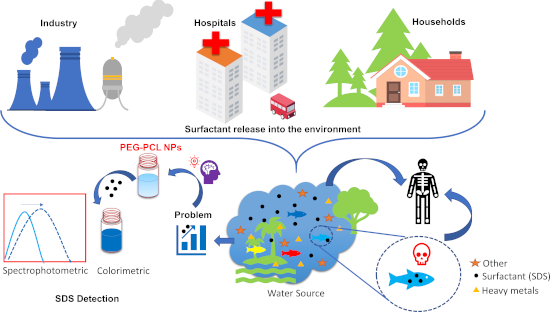
- precipitation step is essential for purifying the nanoparticles and achieving a stable, solid-state product that can be easily collected and dried. Finally, the synthesized PEG–PCL NPs are characterized to assess their size and uniformity. Dynamic light scattering (DLS) techniques measure the average particle


Fabrication and evaluation of BerNPs regarding the growth and development of Streptococcus mutans
Beilstein J. Nanotechnol. 2025, 16, 308–315, doi:10.3762/bjnano.16.23
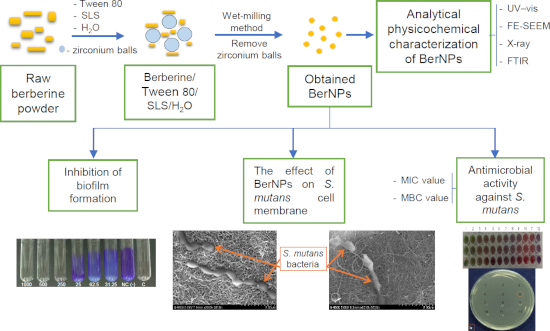
- inhibitory activity against pathogenic bacteria have been reported. In 2022, Nguyen et al. fabricated berberine nanoparticles (BerNPs) by antisolvent precipitation (ASP) using glycerol as a safe organic solvent and evaluated their antibacterial activity on S. aureus and E. coli O157:H7 [12]. Additionally
- demonstrated superior efficiency in producing nanoscale berberine. Tran et al. employed the ball milling technique to produce BerNPs, achieving a particle size of 570.7 nm [23]. Piri et al. utilized the anti-solvent precipitation method, yielding BerNPs with an average particle size of 75 nm [24]. BerNPs were
- . mutans was reported with a MIC of 1024 µg/mL and a MBC of 2054 µg/mL [29]. Antibacterial activities of berberine and BerNPs have been documented by various researchers. Nguyen et al. indicated that BerNPs prepared via the antisolvent precipitation method achieved MBC values of 2 and 5 mg/mL against




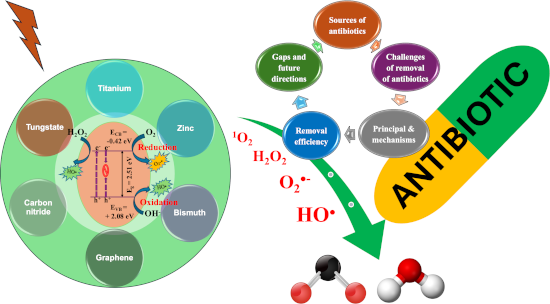
Emerging strategies in the sustainable removal of antibiotics using semiconductor-based photocatalysts
Beilstein J. Nanotechnol. 2025, 16, 264–285, doi:10.3762/bjnano.16.21
- advanced methods, including sol–gel, hydrothermal, solvothermal, precipitation and template-assisted techniques [53]. The synthesis method chosen often depends on factors such as the desired crystal structure, particle size, surface area, and photocatalytic activity required for the specific application