


Search results
Search for "reactive oxygen species generation" in Full Text gives 6 result(s) in Beilstein Journal of Nanotechnology.
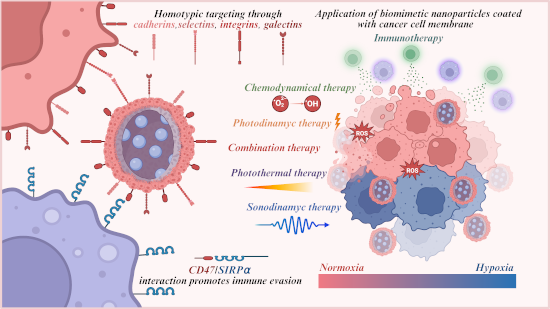
Biomimetic nanoparticles in cancer photodynamic therapy: a review of targeted delivery systems and therapeutic outcomes
Beilstein J. Nanotechnol. 2026, 17, 396–422, doi:10.3762/bjnano.17.27


Fabrication of metal complex phthalocyanine and porphyrin nanoparticle aqueous colloids by pulsed laser fragmentation in liquid and their potential application to a photosensitizer for photodynamic therapy
Beilstein J. Nanotechnol. 2025, 16, 1088–1096, doi:10.3762/bjnano.16.80
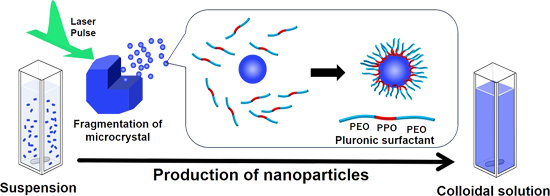
- fragmentation in liquids; reactive oxygen species generation; Introduction Porphyrins and phthalocyanines (Pcs), exhibiting intense absorption in the visible to near-infrared (NIR) regions, are well studied as photosensitizers in photodynamic therapy (PDT) [1]. Especially, Pcs absorb strongly light in the


Comprehensive review on ultrasound-responsive theranostic nanomaterials: mechanisms, structures and medical applications
Beilstein J. Nanotechnol. 2021, 12, 808–862, doi:10.3762/bjnano.12.64
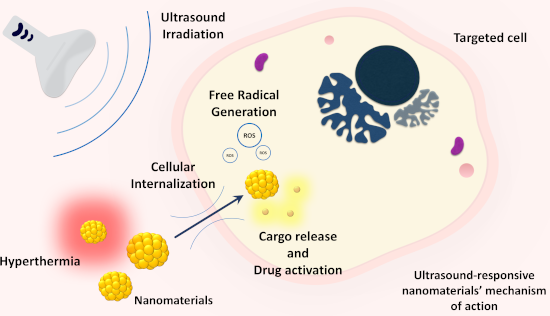
- modality, it is attractive to combine it with rationally designed nanoparticles for theranostics. The mechanisms of US interactions include cavitation microbubbles (MBs), acoustic droplet vaporization, acoustic radiation force, localized thermal effects, reactive oxygen species generation, sonoluminescence


Size-selected Fe3O4–Au hybrid nanoparticles for improved magnetism-based theranostics
Beilstein J. Nanotechnol. 2018, 9, 2684–2699, doi:10.3762/bjnano.9.251
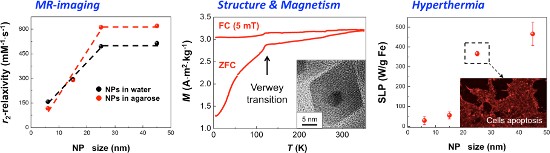
- -44 and MNP-25 samples (Figure S2), T2-weighted MRI-images of the NP solutions in water and 2% agarose (Figure S3), hydrodynamic size of NPs in water (Table S1), a cell viability study by MTS assay (Table S2), apoptosis/necrosis activation (Figures S4 and S6) as well as reactive oxygen species
- generation (Figures S5 and S7) in 4T1 cells cultivated with MNP-25 NPs followed by AMF application in comparison with control, are presented in the Supporting Information. Supporting Information File 210: Additional experimental information. Acknowledgements The authors gratefully acknowledge the financial


Review on nanoparticles and nanostructured materials: history, sources, toxicity and regulations
Beilstein J. Nanotechnol. 2018, 9, 1050–1074, doi:10.3762/bjnano.9.98



Surface coating affects behavior of metallic nanoparticles in a biological environment
Beilstein J. Nanotechnol. 2016, 7, 246–262, doi:10.3762/bjnano.7.23
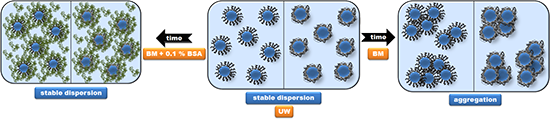
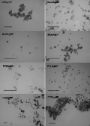
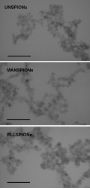
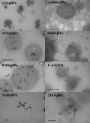
- media like dissolution, adsorption, binding, and aggregation, all influencing biological impacts by affecting reactive oxygen species generation, cellular uptake and NP biodistribution [15][16][17][18]. Metallic NPs usually aggregate in media with high electrolyte content that correspond to biological




Other Beilstein-Institut Open Science Activities



