


Search results
Search for "sorption measurements" in Full Text gives 16 result(s) in Beilstein Journal of Nanotechnology.
Beyond the bilayer: multilayered hygroscopic actuation in pine cone scales
Beilstein J. Nanotechnol. 2025, 16, 1695–1710, doi:10.3762/bjnano.16.119
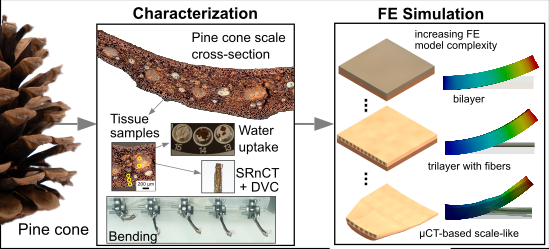
- correlation (DVC); finite element analysis; hygroscopic bending; plant biomechanics; sorption measurements; Introduction In recent years, the hygroscopic motion of plant structures has attracted increasing attention from researchers and engineers, both for fundamental biological research and bioinspired
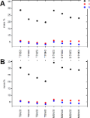
- ) Trilayer with varying fibers. (E) Remodeled scale (“scale-like”). Results of the sorption measurements and the bending angle characterization. (A) The average moisture content of the scale tissues as a function of relative humidity. The desorption is shown as a solid line, the absorption as a dashed line


Gas sorption porosimetry for the evaluation of hard carbons as anodes for Li- and Na-ion batteries
Beilstein J. Nanotechnol. 2020, 11, 1217–1229, doi:10.3762/bjnano.11.106
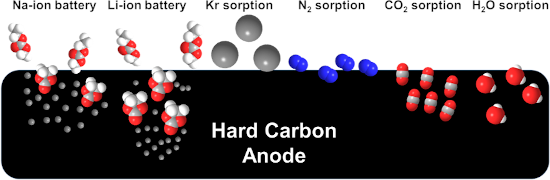
- Information File 1, Figure S7). We expect the combination of large, micrometer-sized pore systems with pore necks of a few angstroms and kinetic limitations of the N2 molecules to penetrate the pore system. Kr sorption at 77.4 K as well as CO2 and H2O sorption measurements at higher temperatures were
- . Importantly, the obtained values for the SSA from CO2 sorption (SSACO2), for all samples, strongly differ from values determined by Kr sorption (SSAKr). Table 1 summarizes the SSAs calculated from CO2 and Kr sorption measurements using the BET theory. The absolute values for the SSAs derived from Kr and CO2
- homogeneously distributed, however, at much lower absolute numbers. Despite having the highest geometrical surface-to-volume ratio, RF-1600 is likely to have a much smaller electrode–electrolyte interface than the other samples. The H2O sorption measurements also reveal similar isotherm shapes for the HT


Nickel nanoparticles supported on a covalent triazine framework as electrocatalyst for oxygen evolution reaction and oxygen reduction reactions
Beilstein J. Nanotechnol. 2020, 11, 770–781, doi:10.3762/bjnano.11.62
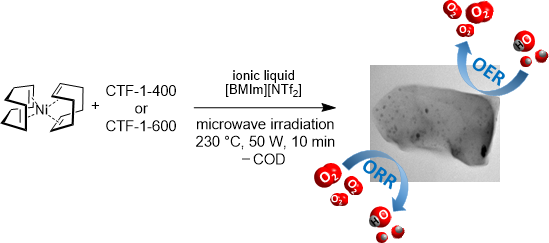
- Information File 1). As expected, both CTF-1-400 and CTF-1-600 (as-synthesized) showed limited long-range order according to powder X-ray diffraction (PXRD) measurements (Figure S1, Supporting Information File 1) [32][42]. Nitrogen sorption measurements for CTF-1-400 showed a type-I isotherm with 954 m2/g
- ° and 100° 2θ with a scan speed of 2 s/step and 0.057° (2θ) step size. Nitrogen sorption measurements were performed with a Nova 4000e from Quantachrome at 77 K and evaluated with the NovaWin 11.03 software. The materials were first degassed under vacuum (<10−2 mbar) at 120 °C overnight. The Brunauer


Synthesis of amorphous and graphitized porous nitrogen-doped carbon spheres as oxygen reduction reaction catalysts
Beilstein J. Nanotechnol. 2020, 11, 1–15, doi:10.3762/bjnano.11.1
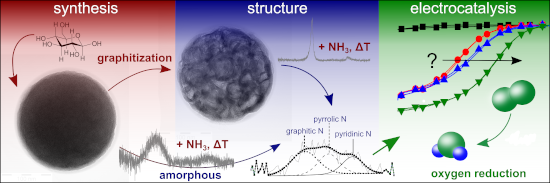
- ° continuous mode, 0.5 s per step). Porosity and specific surface area were determined by N2 sorption measurements on a Micromeritics ASAP 2420 instrument (Micromeritics) in a relative pressure range of p/p0 between 4 × 10⁻⁶ and 0.99 and a temperature of −196 °C. The specific surface area was calculated by the




Air oxidation of sulfur mustard gas simulants using a pyrene-based metal–organic framework photocatalyst
Beilstein J. Nanotechnol. 2019, 10, 2422–2427, doi:10.3762/bjnano.10.232
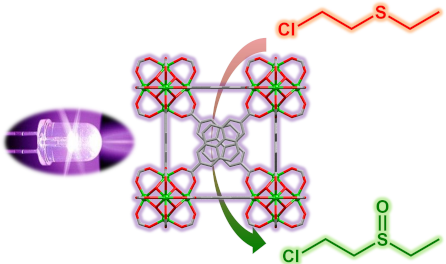
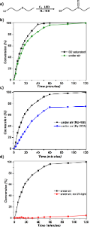
- scanning electron microscopy (SEM) images showing that bulk NU-400 material consists of octahedral crystals ranging in sizes from 1 to 5 microns (Figure S3, Supporting Information File 1). The microporous nature of NU-400 was established by N2 sorption measurements at 77 K, which revealed a Brunauer–Emmet




Charge-transfer interactions between fullerenes and a mesoporous tetrathiafulvalene-based metal–organic framework
Beilstein J. Nanotechnol. 2019, 10, 1883–1893, doi:10.3762/bjnano.10.183
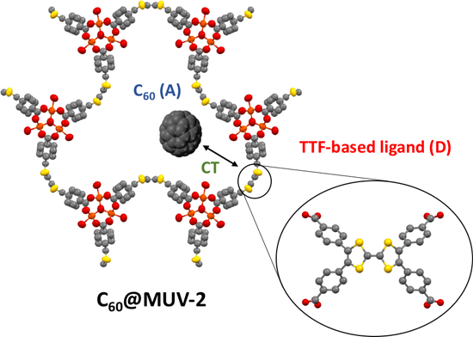
- electron-donor TTF ligand is studied in detail by means of different spectroscopic techniques and density functional theory (DFT) calculations. Importantly, gas sorption measurements demonstrate that sorption capacity is maintained after encapsulation of fullerenes, whereas the electrical conductivity is
- fullerenes has been carried out by different spectroscopic techniques and theoretical calculations. Gas sorption measurements demonstrate that permanent porosity is retained, whereas electrical measurements show that conductivity is enhanced after C60 encapsulation. Results and Discussion Synthesis and
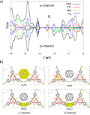
- linkers was found to be 1.1 V (vs Ag/AgCl) [53] and the redox potential of C60 is −0.33 V (vs Ag/AgCl). Gas sorption measurements The porosity of C60@MUV-2 was studied by means of N2 and CO2 adsorption isotherm measurements (Figure 4). The measurement of nitrogen at 77 K yielded a combination of type-I




Ultrathin hydrophobic films based on the metal organic framework UiO-66-COOH(Zr)
Beilstein J. Nanotechnol. 2019, 10, 654–665, doi:10.3762/bjnano.10.65
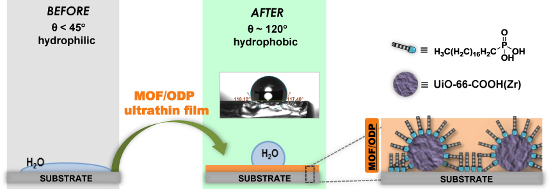
- radiation source operated at 40 kV and 80 mA (average Kα radiation λ = 1.5418 Å). The sorption measurements were performed at 77 K on a BEL Japan Belsorp Mini apparatus using N2 as the probing gas. The samples were outgassed at 50 °C under vacuum for 24 h (BEL Japan, Belsorp Prep). Scanning electron


Improving control of carbide-derived carbon microstructure by immobilization of a transition-metal catalyst within the shell of carbide/carbon core–shell structures
Beilstein J. Nanotechnol. 2019, 10, 419–427, doi:10.3762/bjnano.10.41
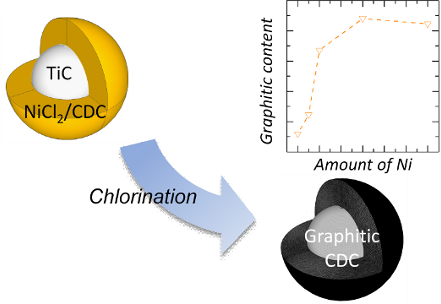
- −196 °C using liquid nitrogen as coolant (Quantachrome Quadrasorb Si-MP) and CO2 sorption measurements at 0 °C using a cryostat (Quantachrome Nova 4200e). Before the measurement, the sample was degassed at 250 °C for 4 h (N2 sorption) or 100 °C for 24 h (CO2 sorption). The pore size distributions were


Bombyx mori silk/titania/gold hybrid materials for photocatalytic water splitting: combining renewable raw materials with clean fuels
Beilstein J. Nanotechnol. 2018, 9, 187–204, doi:10.3762/bjnano.9.21
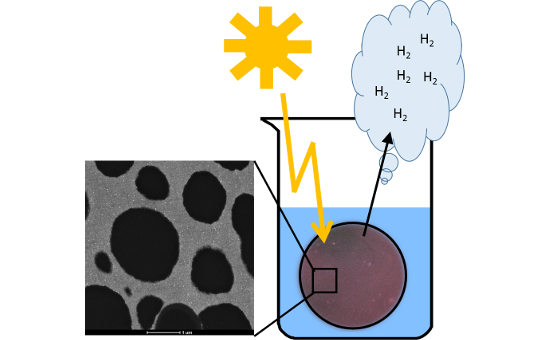
- equation was done using the HighScore Plus V.4.0 (4.0.0.19037) software from PANalytical B.V. Nitrogen sorption measurements were performed on a BELSORP-max with N2 at 77 K using 40 measurement points. Prior to all measurements, samples were ground and dried at 90 °C for at least 24 h until the weight




One-step chemical vapor deposition synthesis and supercapacitor performance of nitrogen-doped porous carbon–carbon nanotube hybrids
Beilstein J. Nanotechnol. 2017, 8, 2669–2679, doi:10.3762/bjnano.8.267
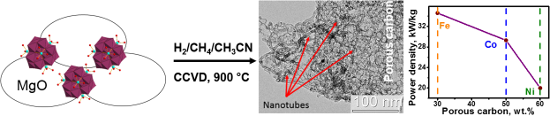
- Information File 1). Since the average pore size determined from the N2 sorption measurements was ≈12 nm for all samples, we conclude that this carbon material was templated by MgO nanoparticles. The nanotubes permeate the porous carbon (Figure 2a,c,f) and connect the flakes (Figure 2b). The supported metals


Preparation of thick silica coatings on carbon fibers with fine-structured silica nanotubes induced by a self-assembly process
Beilstein J. Nanotechnol. 2017, 8, 1145–1155, doi:10.3762/bjnano.8.116
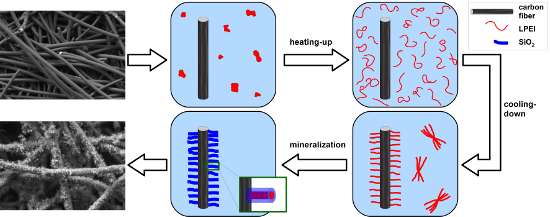
- sorption measurements. The overall morphology is more or less preserved for the immobilization of these modified aggregates on the carbon fiber surface. Addition of copper(II) ions leads to two-dimensional, fan like structures located on the fiber surface, whereas calcium(II) ions redirect the morphology


First examples of organosilica-based ionogels: synthesis and electrochemical behavior
Beilstein J. Nanotechnol. 2017, 8, 736–751, doi:10.3762/bjnano.8.77
- ) pattern. All SAXS patterns show a strong scattering signal with a typical q−4 behavior indicating an amorphous, mesoporous system with strong phase boundaries and cylindrical pores, but without ordered mesopores [37]. This is confirmed by nitrogen sorption measurements, Figure 6. All monoliths show a type
- heating cycle). The Tg of the pure IL [BmimSO3H][PTS] is −11.9 °C. n.o. = not observed. Acknowledgements We thank R. Rothe for nitrogen sorption measurements, Y. Linde for elemental analysis measurements, Dr. A. Friedrich and Dr. M. Neumann for help with TGA, P. Ray for carrying out the classical








In situ formation of reduced graphene oxide structures in ceria by combined sol–gel and solvothermal processing
Beilstein J. Nanotechnol. 2016, 7, 1815–1821, doi:10.3762/bjnano.7.174
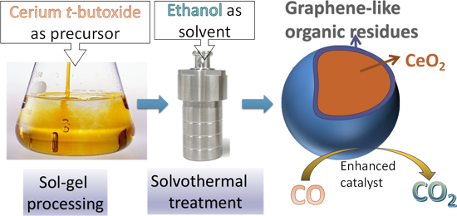
- TG 209 C in a platinum crucible in synthetic air with a heating rate of 10 °C/min. Nitrogen sorption measurements were performed on an ASAP 2020 (Micromeritics). The samples were degassed in vacuum at room temperature for at least 5 h prior to measurement. The total surface area was calculated




Cantilever bending based on humidity-actuated mesoporous silica/silicon bilayers
Beilstein J. Nanotechnol. 2016, 7, 637–644, doi:10.3762/bjnano.7.56
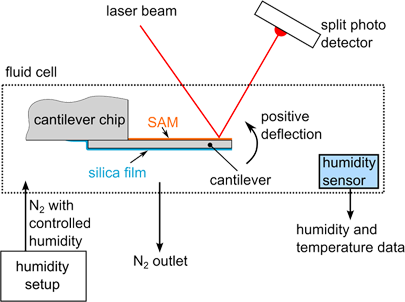
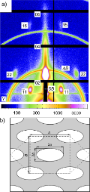
- Switzerland) at a distance of 1502 mm. For the in situ water sorption measurements, a custom-built humidity cell with Kapton X-ray windows was used. The working principle is very similar to the humidity chamber for AFM described above with a humidity range between about 10 and 90% RH (for more information on


Nanostructured, mesoporous Au/TiO2 model catalysts – structure, stability and catalytic properties
Beilstein J. Nanotechnol. 2011, 2, 593–606, doi:10.3762/bjnano.2.63
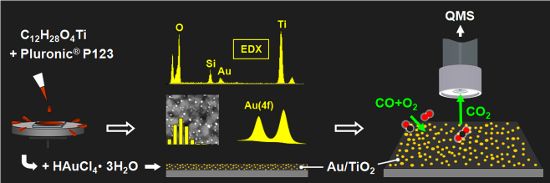
- /TiO2 film yielded statistically relevant data. The surface area and the pore diameter of the titania (cast TiO2 material, different batches) was determined by N2 sorption measurements (Autosorb MP1 and Quadrasorb, Quantachrome). The specific surface area was calculated using the Brunauer–Emmett–Teller
- and constant partial pressure of the other reactant (1 mbar). Supporting Information Supporting Information features details on the nitrogen sorption measurement of porous titania. Supporting Information File 38: Details of sorption measurements. Acknowledgements This work was supported by the






Inorganic–organic hybrid materials through post-synthesis modification: Impact of the treatment with azides on the mesopore structure
Beilstein J. Nanotechnol. 2011, 2, 486–498, doi:10.3762/bjnano.2.52
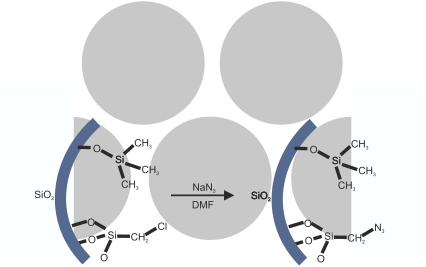
- gratefully acknowledged for helpful discussions, and we thank D. Mannes for the small angle X-ray scattering measurements, C. Egger for the nitrogen sorption measurements and M. Lang for the elemental analyses.





