


Search results
Search for 黄岩区46部已电子化家谱名录 in Full Text gives 1186 result(s) in Beilstein Journal of Nanotechnology. Showing first 200.
Prospects of nanotechnology and natural products for cancer and immunotherapy
Beilstein J. Nanotechnol. 2025, 16, 1644–1667, doi:10.3762/bjnano.16.116
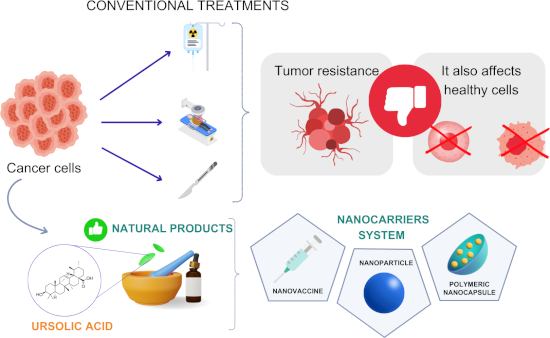
- modulate immune checkpoints, such as curcumin seen in patents CN111202719 and US240447339, and terpenoids with direct anticancer activity, such as paclitaxel, observed in patent CN111202719 [46][47][48][49][50]. Moreover, natural products play a promising role in cancer treatment and immunotherapy. Their


Venom-loaded cationic-functionalized poly(lactic acid) nanoparticles for serum production against Tityus serrulatus scorpion
Beilstein J. Nanotechnol. 2025, 16, 1633–1643, doi:10.3762/bjnano.16.115
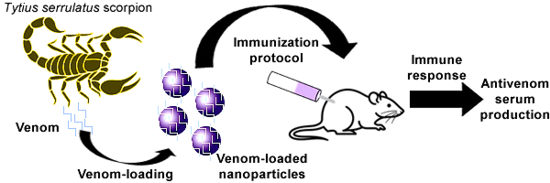
- desiccator for 24 h. The images were obtained with a silicon tip, operating in the attractive region of a cantilever in non-contact mode. For the FEGSEM analyzes, a drop of dispersion was placed in a microscope slide with carbon tapes and dried under a desiccator for 24 h [46]. Protein-loading efficiency The


Nanotechnology-based approaches for the removal of microplastics from wastewater: a comprehensive review
Beilstein J. Nanotechnol. 2025, 16, 1607–1632, doi:10.3762/bjnano.16.114
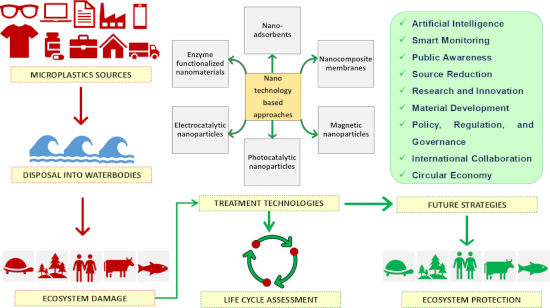
- leading to mass mortality. Such interactions amplify the ecological consequences of MPs in the environment. Consequently, the ingestion of MPs embedded with contaminants can contribute to the transfer of toxic substances across terrestrial and aquatic food webs [46]. In freshwater ecosystems, MPs can


Bioinspired polypropylene-based functionally graded materials and metamaterials modeling the mistletoe–host interface
Beilstein J. Nanotechnol. 2025, 16, 1592–1606, doi:10.3762/bjnano.16.113
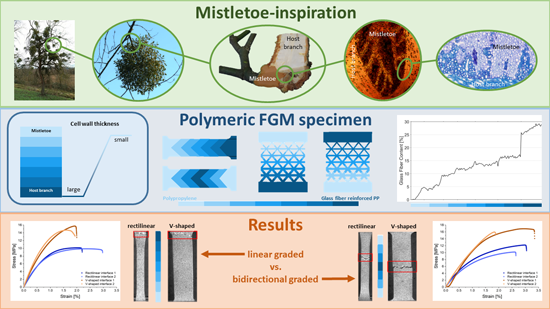
- ], as well as graded porosities [16][46][47], but are mostly not capable of achieving a continuous material gradient. Such a continuous gradient affects the global and local mechanical properties of the sample and prevents the risk of delamination along the interface compared to abrupt material


Few-photon microwave fields for superconducting transmon-based qudit control
Beilstein J. Nanotechnol. 2025, 16, 1580–1591, doi:10.3762/bjnano.16.112
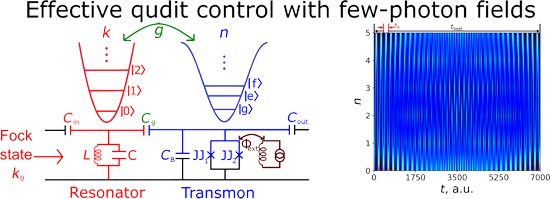
- of the transmon excitation. Figure 2 shows 2D distributions characterizing the time dynamics of the population of different transmon states in the case of strong and weak nonlinearity in the system. Here we see Rabi-like oscillations [46][47][48] between different transmon states, and the amplitude


Transient electronics for sustainability: Emerging technologies and future directions
Beilstein J. Nanotechnol. 2025, 16, 1545–1556, doi:10.3762/bjnano.16.109

- has prompted further exploration of chemically analogous materials, such as germanium [45][46], silicon–germanium alloys [45], amorphous semiconductors [45], indium–gallium–zinc oxide (IGZO) [47], and metal oxides such as zinc oxide [48], for their potential as bioresorbable semiconductors. These


Influence of laser beam profile on morphology and optical properties of silicon nanoparticles formed by laser ablation in liquid
Beilstein J. Nanotechnol. 2025, 16, 1533–1544, doi:10.3762/bjnano.16.108
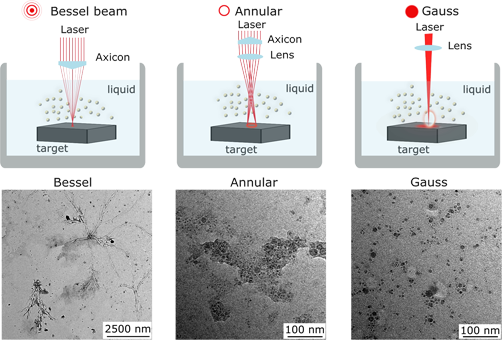
- photogenerated holes with electrons from the oxide-related defects on the surface of silicon nanoparticles [44][46]. The characteristic PL intensities are different for Si NPs prepared by laser ablation with different beam profiles, which can indicate variations among the generated defects during the formation


Dendrimer-modified carbon nanotubes for the removal and recovery of heavy metal ions from water
Beilstein J. Nanotechnol. 2025, 16, 1522–1532, doi:10.3762/bjnano.16.107

- chelation of divalent ions at later stages. In fact, chelation mechanism has been reported in previous studies including PAMAM-functionalized carbon materials [46][47][48]. Moreover, the kinetic study for the adsorption of Pb2+ and Cd2+ metal ions by dendrimerized CNTs-G5 was evaluated using two kinetic


Cross-reactivities in conjugation reactions involving iron oxide nanoparticles
Beilstein J. Nanotechnol. 2025, 16, 1504–1521, doi:10.3762/bjnano.16.106
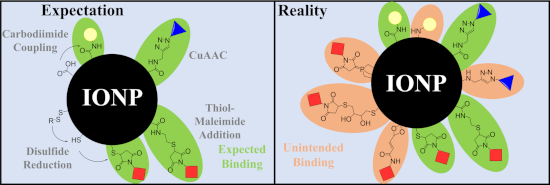
- surface chemistries, these considerations are especially important. The reactivity of the iron oxide surface itself is often neglected, but it should be noted that the use of thiols [43][44][45][46] and amines [47][48] as anchoring groups for IONP ligands has been reported in the literature, so it is







Laser processing in liquids: insights into nanocolloid generation and thin film integration for energy, photonic, and sensing applications
Beilstein J. Nanotechnol. 2025, 16, 1428–1498, doi:10.3762/bjnano.16.104
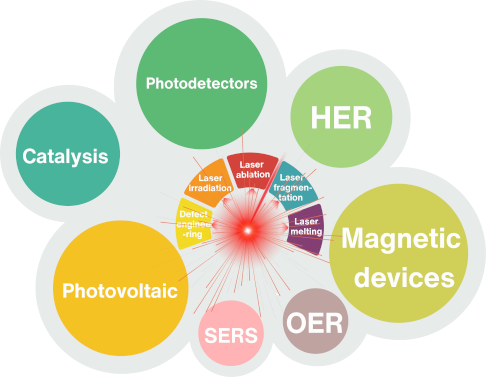
- metals [45][46], oxides [47], semiconductors [48], and even carbides [41][49]. When compared to other particle fabrication processes, material versatility of this technique stands out. Further, the SMSPs obtained by PLML are unique in a way that they are spherical, mechanically very strong [50], and
- particles gradually becoming more homogeneous over time. The advantages of submicrometer particles produced by PLML over NPs synthesized by conventional PLAL, can be explained using Au–Fe systems [61], where the bulk thermodynamic contribution leads to an Au-enriched core and Fe-rich surface [46]. In
- , indicating an increase in particle size [76]. Laser irradiation offers a clean, efficient, and useful method for synthesizing various nanomaterials, including metals, semiconductors, metal oxides, and bimetallic NPs [46][77][78][79][80][81][82]. The process allows for the alloying of NPs, such as AuCo [77






The role of biochar in combating microplastic pollution: a bibliometric analysis in environmental contexts
Beilstein J. Nanotechnol. 2025, 16, 1401–1416, doi:10.3762/bjnano.16.102
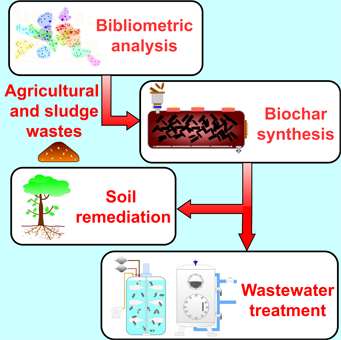
- interactions in soil [31]. Biochar properties The physical and chemical properties of biochar depend significantly on the composition of its feedstock [46]. Molecular model calculations and quantum chemistry analyses suggest that biochar derived from wood exhibits superior physical properties, such as porosity


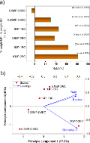

Synthesis and antibacterial properties of nanosilver-modified cellulose triacetate membranes for seawater desalination
Beilstein J. Nanotechnol. 2025, 16, 1380–1391, doi:10.3762/bjnano.16.100
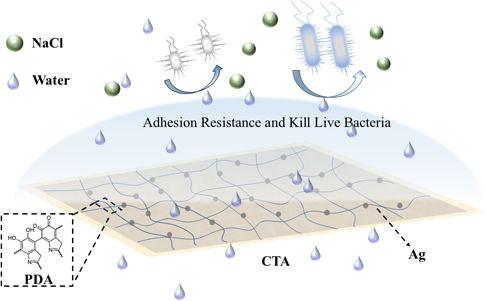
- (NH3)2]+ ions into Ag nanoparticles, which are then immobilized onto CTA membrane (Supporting Information File 1, Figure S1b,c) [40][41][42][43]. This process bypasses the need for conventional environmentally unfriendly oxidation and activation processes, as reported in the literature [44][45][46


Enhancing the therapeutical potential of metalloantibiotics using nano-based delivery systems
Beilstein J. Nanotechnol. 2025, 16, 1350–1366, doi:10.3762/bjnano.16.98
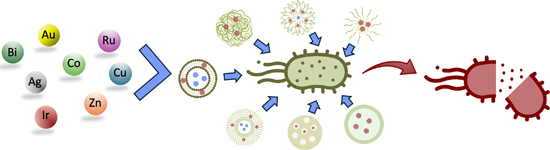
- , antibiotics can bind to multiple sites in the cell wall peptidoglycans (PGNs), resulting in inhibition of PGN synthesis, perturbation of the cell membrane integrity and cell death [46][47]. In Gram-negative bacteria, lipopolysaccharides interact electrostatically with positively charged antibiotics [48] and


Ferroptosis induction by engineered liposomes for enhanced tumor therapy
Beilstein J. Nanotechnol. 2025, 16, 1325–1349, doi:10.3762/bjnano.16.97
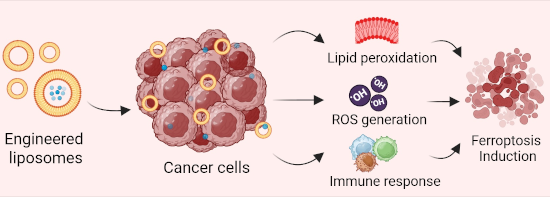
- peroxides and the formation of non-toxic lipid alcohol under normal conditions [44]. Changes in GPX4 activity may indicate ferroptosis, which can be monitored by measuring NADPH and phosphatidylcholine hydroperoxide [45][46]. Heat shock proteins can also inhibit ferroptosis by stimulating GPX4 or regulating
- chloroacetamides, like RSL3, trigger ferroptosis by forming covalent bonds with and blocking selenocysteine activity at the active zone of GPX4 [46][88]. Also, nitrile oxide electrophiles, specifically ML210, JKE-1674, and JKE-1716, trigger ferroptosis through their interaction with selenocysteine as a binding


Wavelength-dependent correlation of LIPSS periodicity and laser penetration depth in stainless steel
Beilstein J. Nanotechnol. 2025, 16, 1302–1315, doi:10.3762/bjnano.16.95
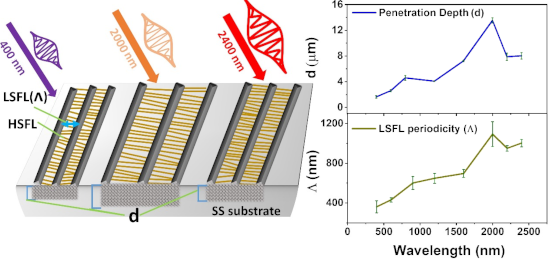
- incident polarization [40][41][42][43][44][45]. A recent review by Jörn Bonse and Stephan Gräf provides a comprehensive classification based on materials and associated theories [46]. Two primary classes of theories – electromagnetic and matter reorganization – have been proposed to explain LIPSS formation
- [46][47][48]. LSFL formation is often attributed to the interference between incoming electromagnetic radiation and surface electromagnetic waves and involves surface polaritons and surface plasmon polaritons (SPPs). These SPPs propagate along the interface of the two media in which the electron




Enhancing the photoelectrochemical performance of BiOI-derived BiVO4 films by controlled-intensity current electrodeposition
Beilstein J. Nanotechnol. 2025, 16, 1289–1301, doi:10.3762/bjnano.16.94
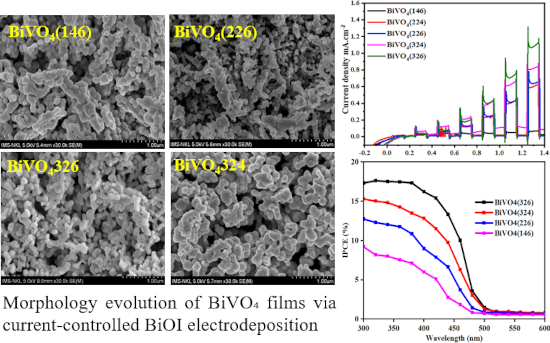
- of monoclinic BiVO4 (JCPDS PDF #14-0688) and fluorine-doped tin oxide (FTO) substrate (JCPDS PDF #46-1088) [21][22][23]. The peaks at approximately 28.9°, 30.6°, 34.6°, and 35.2° were assigned to the (110), (121), (040), (200), and (002) planes of monoclinic BiVO4, respectively. Notably, the (121



Acrocomia aculeata oil-loaded nanoemulsion: development, anti-inflammatory properties, and cytotoxicity evaluation
Beilstein J. Nanotechnol. 2025, 16, 1277–1288, doi:10.3762/bjnano.16.93
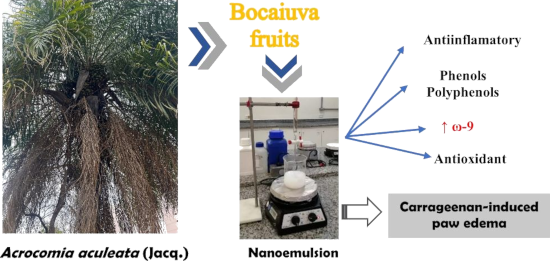
- nanoemulsion [45][46]. Figure 3 shows the behavior of zeta potential and droplet size in Bocaiúva oil-loaded nanoemulsion over 180 days. The droplet size remained stable at around 170 nm, and no statistical differences were found at any point in time over 180 days (Ftest = 0.18, pvalue = 0.0804). In contrast


Better together: biomimetic nanomedicines for high performance tumor therapy
Beilstein J. Nanotechnol. 2025, 16, 1246–1276, doi:10.3762/bjnano.16.92
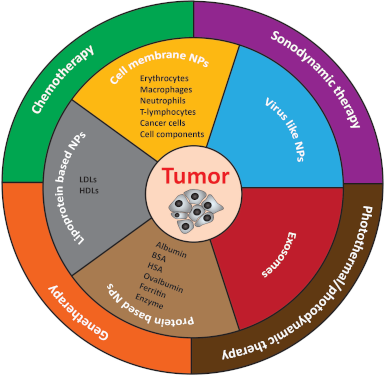
- . Cancer cell membrane-coated nanoparticles can enter the cancer cells simply by fusion. The membrane coating is fused with the cancer cell membrane and delivers the payload inside the cytosol [46]. A distinctive characteristic of cell membrane-coated nanocarriers is that they include carbohydrates
- targeting of the tumor in patient-derived tumor cells animal models through homologous targeting. In another study, the homologous targeting effect was successfully utilized to deliver doxorubicin (DOX), mefuparib hydrochloride (MHP) and poly(ADP-ribose) polymerase inhibitor in MCF7-tumor bearing mice [46






Functional bio-packaging enhanced with nanocellulose from rice straw and cinnamon essential oil Pickering emulsion for fruit preservation
Beilstein J. Nanotechnol. 2025, 16, 1234–1245, doi:10.3762/bjnano.16.91
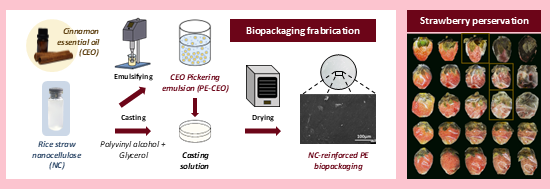
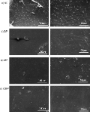
- suspension has a size of around 20–30 nm and a length below 300 nm, and size increase due to structural collapse would be seen upon drying [24][46]. A SEM image of the nanocellulose sample is given in Figure 3a. After freeze-drying, some coagulation occurred, increasing the size of the sample to reach ≈4 µm
- alcohol (PVA), and glycerin (C3H8O3), were obtained from commercial sources and used as received. Material synthesis Nanocellulose synthesis process Rice straw served as the source material for nanocellulose production. Following a previously established procedure [46], two alkaline pretreatment steps and
- ultrasonic homogenizer (Germany) to create the NC suspension. Our previous research has stated that the size of the NC crystals was around 20–30 nm in width and 300 nm in length [24][46]. The NC concentration in the suspension was analyzed by dripping 3 mL of the suspension onto a pre-dried Petri dish



Hydrogels and nanogels: effectiveness in dermal applications
Beilstein J. Nanotechnol. 2025, 16, 1216–1233, doi:10.3762/bjnano.16.90
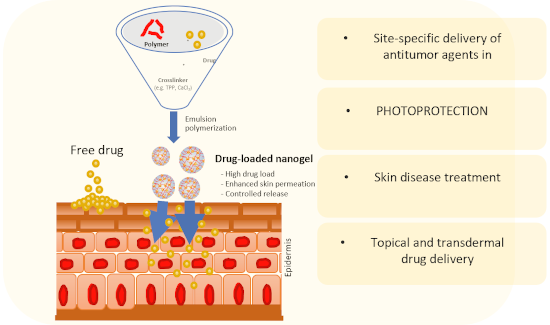
- stimuli such as heating/cooling [45][46]. Polymer chemical cross-linking can be performed by the formation of a network structure from monomers by polymerization or post-cross-linking of linear polymers with a cross-linking agent. Examples of chemical cross-linking methods are covalent bonding between


Electronic and optical properties of chloropicrin adsorbed ZnS nanotubes: first principle analysis
Beilstein J. Nanotechnol. 2025, 16, 1184–1196, doi:10.3762/bjnano.16.87
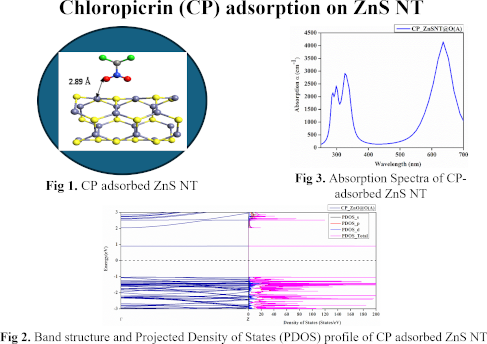
- ][43][44][45]. Previous studies have demonstrated the gas-sensing capabilities of ZnS NTs. Khan et al. [40] investigated ZnS NTs as sensors for ammonia and phosphine using density functional theory (DFT) to analyze adsorption behavior. Zhang et al. [46][47] reported that ZnS NTs exhibit superior


Mechanical stability of individual bacterial cells under different osmotic pressure conditions: a nanoindentation study of Pseudomonas aeruginosa
Beilstein J. Nanotechnol. 2025, 16, 1171–1183, doi:10.3762/bjnano.16.86
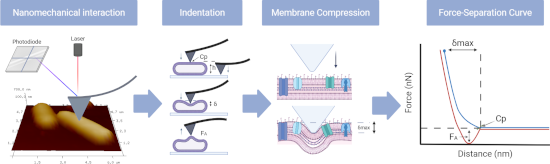
- investigated sample [11][43][44]. The force–volume (FV) mode allows for mapping surface physical parameters of the analyzed sample via controlled nanoindentations on a pre-programmed grid on the sample surface [44][45][46][47]. In conventional scanning modes (e.g., contact and tapping) the changes in


Transfer function of an asymmetric superconducting Gauss neuron
Beilstein J. Nanotechnol. 2025, 16, 1160–1170, doi:10.3762/bjnano.16.85
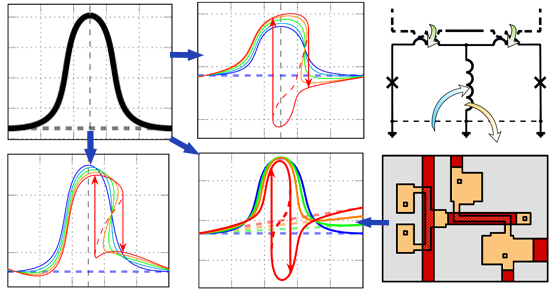
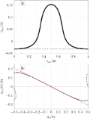
- make a substitution ϕb→ϕb − tϕin. This can be seen in Equation 44–Equation 46 by moving the asymmetry terms to the right-hand side. In other words, when ϕin is swept in the positive direction, the effective bias flux (which determines the imbalance of the magnetic flux in the receiving loops ofthe



Crystalline and amorphous structure selectivity of ignoble high-entropy alloy nanoparticles during laser ablation in organic liquids is set by pulse duration
Beilstein J. Nanotechnol. 2025, 16, 1141–1159, doi:10.3762/bjnano.16.84
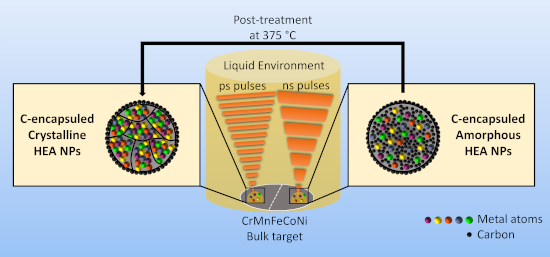
- colloids (LSPC) [41][42][43][44] provides nanoparticles dispersed in liquids without the addition of common additives (e.g., citrate [45], tensides [46], polymers [47]) or support material to stabilize the particles with high variability on the used solvent, yielding colloidal nanoparticles with




Deep learning for enhancement of low-resolution and noisy scanning probe microscopy images
Beilstein J. Nanotechnol. 2025, 16, 1129–1140, doi:10.3762/bjnano.16.83
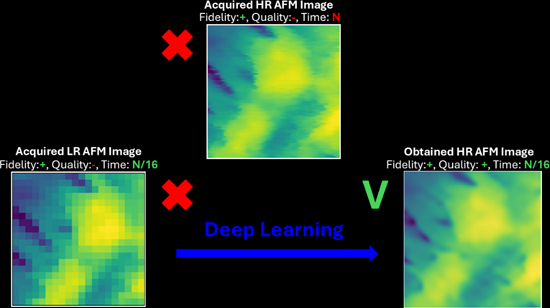
- assess image similarity on a structural basis. This was the motivation for formulating the structural similarity index measure (SSIM) [46]. SSIM has become a widely used reference metric when quantifying image fidelity. No-reference metrics One intuitive approach to quantify the quality of an image is





