Search results
Search for 奥斯卡6项提名电影片尾旁白剧透 in Full Text gives 2649 result(s) in Beilstein Journal of Nanotechnology. Showing first 200.
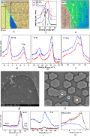
Piezoelectricity of hexagonal boron nitrides improves bone tissue generation as tested on osteoblasts
Beilstein J. Nanotechnol. 2025, 16, 1068–1081, doi:10.3762/bjnano.16.78
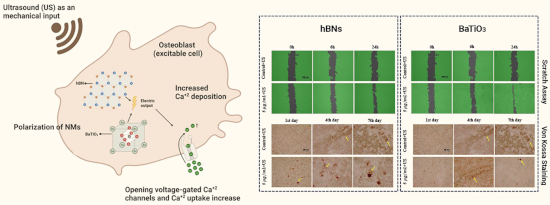
- undergoes continuous remodeling, where old bone is replaced with new tissue, a process that becomes particularly prominent once bones reach peak mass and continues through adulthood, replacing most of the skeleton approximately every decade [1]. Hydroxyapatite crystals (Ca10(PO4)6(OH)2) form through the
- , osteoclasts, osteoblasts, and osteocytes, which coordinate bone resorption and deposition. Bone lining cells cover bone surfaces and play a key role in osteoclast differentiation [4][5]. Osteoclasts are large, multinucleated cells responsible for bone resorption through lysosomal enzymes and acid secretion [6
- µL pipet tip, and then washed with PBS to remove the unattached cells. Afterward, the cells were treated with NMs, suspended in serum-free media with increasing concentration values (1, 5, and 10 µg/mL), and left for incubation for 24 h. Images of the cells were taken at 0, 6, and 24 h using an


Soft materials nanoarchitectonics: liquid crystals, polymers, gels, biomaterials, and others
Beilstein J. Nanotechnol. 2025, 16, 1025–1067, doi:10.3762/bjnano.16.77
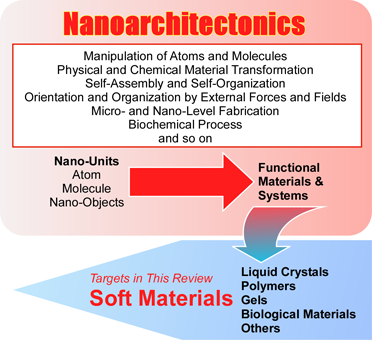
- exhibit diverse responses to external stimuli is on the rise [6][7][8][9][10]. The field of materials chemistry is undergoing a transition from a focus on hard, robust materials to a greater emphasis on softer, more mouldable substances. This shift is actually reasonable as observed in the evolution of
- (Figure 6) [241]. The presence of two salts and two surfactants ensures the stability of the lyotropic liquid crystal mesophase even at elevated salt concentrations. The calcium and iron salts act as eutectic solvents, facilitating the assembly of surfactants into the lyotropic liquid crystal phase


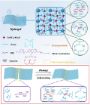




Multifunctional properties of bio-poly(butylene succinate) reinforced with multiwalled carbon nanotubes
Beilstein J. Nanotechnol. 2025, 16, 1014–1024, doi:10.3762/bjnano.16.76
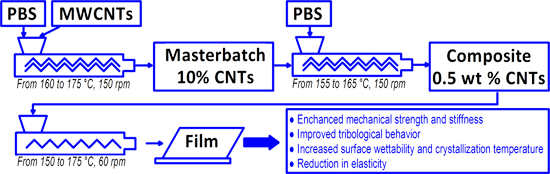
- in microbial environments is primarily attributed to its high degree of crystallinity [6][7][8]. A well-established approach to improving polymer properties involves the incorporation of nanofillers, particularly carbon nanotubes (CNTs). Even at low concentrations, CNTs can significantly affect the
- in the PBS/CNT_0.5 nanocomposite was verified, with TGA data indicating a content of approximately 0.6 wt %. Differential scanning calorimetry (DSC) analysis was conducted to assess the effect of CNTs on the thermal properties and crystallinity of PBS. The DSC thermograms (Figure 5 and Figure 6
- (Figure 5, black curve). In contrast, the PBS/CNT_0.5 nanocomposite showed a cold crystallization peak at 99.0 °C and a melting peak at 114.1 °C (Figure 6, black curve). During the cooling process from 300 to 0 °C, crystallization peaks were observed in the thermograms at 72.6 °C for neat PBS (Figure 5



A calix[4]arene-based supramolecular nanoassembly targeting cancer cells and triggering the release of nitric oxide with green light
Beilstein J. Nanotechnol. 2025, 16, 1003–1013, doi:10.3762/bjnano.16.75
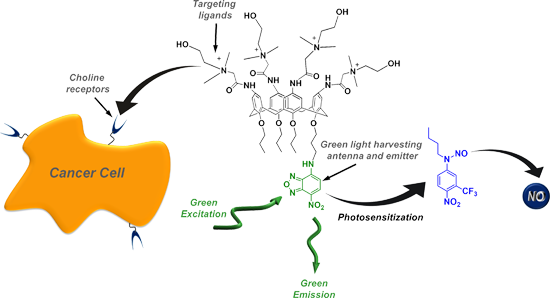
- immunogenicity and paving the way for a variety of applications in the biomedical field [1][6][7][8][9]. Due to their amphiphilic character, calix[n]arene derivatives can self-assemble in water medium, leading to nanoaggregates exhibiting much better hosting performances than the single monomers [10]. Aggregates
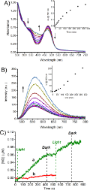
- observed upon exposure of an air-equilibrated NOPD 2 (100 µM) solution at λexc = 420 nm after 0, 6, 11, 20, 30, 40, 60, 80, 100, 130, and 160 min. (A) Absorption spectrum of the supramolecular complex 1·2 in water; [1] = 50 µM; [2] = 40 µM. The inset shows the size distribution of the same solution of 1·2


Time-resolved probing of laser-induced nanostructuring processes in liquids
Beilstein J. Nanotechnol. 2025, 16, 968–1002, doi:10.3762/bjnano.16.74
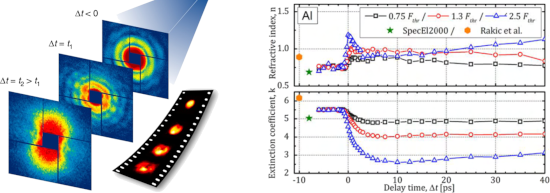
- exchanging energy and material with the excited loci. LSPC commonly encompasses laser ablation in liquid (LAL), which allows for producing NPs from a surface of virtually any solid [6][7][8][9], laser fragmentation in liquid (LFL) to further reduce dimensions of particles down to few-atom clusters [10][11


Shape, membrane morphology, and morphodynamic response of metabolically active human mitochondria revealed by scanning ion conductance microscopy
Beilstein J. Nanotechnol. 2025, 16, 951–967, doi:10.3762/bjnano.16.73
- [6][7][8][9]. These processes are integral to maintaining cellular homeostasis [10], and disruptions in mitochondrial function are implicated in numerous diseases, including Parkinson’s disease [11][12][13], cardiovascular diseases [14][15][16], Alzheimer’s disease [12][17][18], obesity [19], and
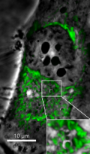
- . One of these effects appears to be associated to the dynamics of the mitochondria’s morphology (in the following referred to as morphodynamics, cf. [6]) and their contact with the measurement environment. Finally, we propose hypotheses to explain the observed effects. Results Viability of the
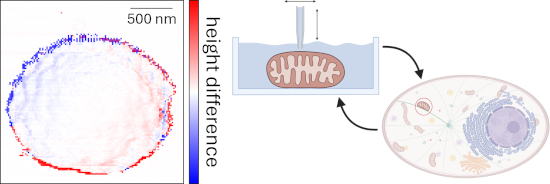
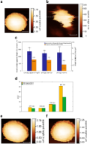
- data set is depicted in Figure 3e,f. Figure 3e shows the false-colour topography of a mitochondrion with a initial diameter of 1.96 μm and a maximum apparent height of 2.15 μm. After an elapsed time of 6 hours and 17 minutes, the same mitochondrion (Figure 3f) exhibits a slightly increased diameter of



Tendency in tip polarity changes in non-contact atomic force microscopy imaging on a fluorite surface
Beilstein J. Nanotechnol. 2025, 16, 944–950, doi:10.3762/bjnano.16.72
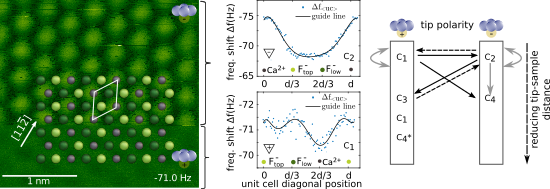
- insulator materials in real space with unprecedented spatial resolution [2][3][4][5][6]. Besides high-resolution imaging of molecular structures [7], NC-AFM has demonstrated its ability to identify sublattices of atomic surfaces [8][9][10]. In these studies, the knowledge of the tip’s atomic structure plays
- a vital role as the tip-terminating cluster uniquely interacts with the different surface atoms. At cryogenic temperatures, the use of functionalized tips such as as CO-terminated tips [6][11], Xe-terminated tips [12][13][14] and O-terminated Cu tips [15][16][17] has become the state-of-the-art for


Synthesis of biowaste-derived carbon-dot-mediated silver nanoparticles and the evaluation of electrochemical properties for supercapacitor electrodes
Beilstein J. Nanotechnol. 2025, 16, 933–943, doi:10.3762/bjnano.16.71
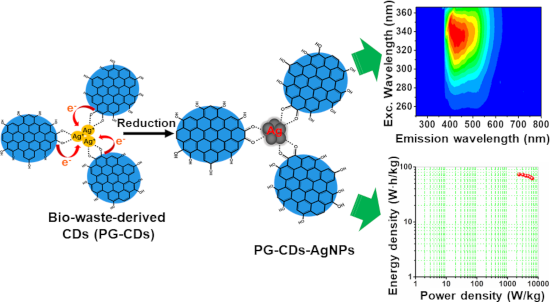
- supercapacitors involves two different kinds of charge-storing mechanisms: pseudocapacitance and electric double-layer capacitance (EDLC) [5]. The reversible redox processes are the primary charge-storage mechanism for pseudocapacitors [6]. Even though the capacitance value of pseudocapacitors is theoretically
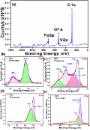
- reported that the difference between the two peaks was around 6 eV, which indicates that silver was present in the PG-CDs-AgNPs in the form of nanoparticles of zero-valent silver [33]. Therefore, the XPS results proved that the PG-CDs-AgNPs were successfully synthesized. Additionally, CDs triggered the


Structural and magnetic properties of microwave-synthesized reduced graphene oxide/VO2/Fe2O3 nanocomposite
Beilstein J. Nanotechnol. 2025, 16, 921–932, doi:10.3762/bjnano.16.70
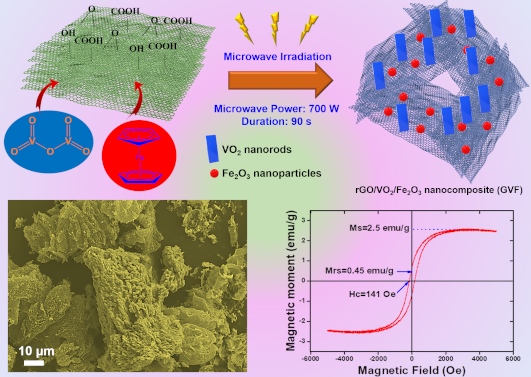
- , including their derivatives, are broadly explored for miscellaneous applications, such as energy storage/conversion, EMI shielding, biosensing, optoelectronics, robotics, flexible electronics, paint industries, textile industries, biomedical devices [5][6][7]. To be specific, the innovation of graphene



Focused ion beam-induced platinum deposition with a low-temperature cesium ion source
Beilstein J. Nanotechnol. 2025, 16, 910–920, doi:10.3762/bjnano.16.69
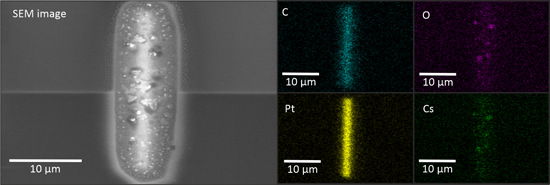
- magnetic or superconductive structures can be created [1][2][3][4]. Also, specific mechanical structures on atomic force microscopy (AFM) cantilevers can be made [5][6]. In the literature, four mechanisms are used to explain the complex process of focused ion beam-induced deposition (FIBID) [5][7]; the
- nozzle kept about 100 μm above the sample surface. The chamber pressure of the Cs+ and the Ga+ FIB was about 5 × 10⁻⁷ mbar before deposition and 8 × 10⁻⁶ mbar during deposition. For Pt deposition, a beam step size of −150% of the beam diameter was used with an upper limit of 200 nm for the Cs FIBID to
- density of 6 pA·μm−2 . Before deposition, a small part of the Si substrate was gently milled with the Cs+ FIB at 16 kV, such that any native oxide and other contaminations were completely removed at this location. With that, the influence of oxygen molecules on the deposited layer can be excluded. The


Characterization of ion track-etched conical nanopores in thermal and PECVD SiO2 using small angle X-ray scattering
Beilstein J. Nanotechnol. 2025, 16, 899–909, doi:10.3762/bjnano.16.68
- attracted significant attention in the past decade because of their broad applicability in a variety of areas including biosensing, micro/ultrafiltration, desalination, ion and molecular separation, dialysis, battery technologies, blue energy generation, and nanofluidics [1][2][3][4][5][6][7][8][9][10][11
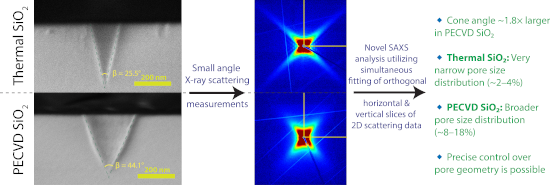
- , including selectivity, throughput, and molecular capture. Small-angle X-ray scattering (SAXS) has proven to be an invaluable tool for characterizing nanopore membranes, offering nondestructive analytical capabilities that yield statistical information of more than 106 pores [6][13][29][40]. With a beam size
- measured pore radii, we estimate track etch rates of 69 ± 3 nm/min for thermal and 90 ± 6 nm/min for PECVD SiO2, respectively. While the scanning electron microscopy images reveal the variation in nanopore size for PECVD SiO2 compared to thermal SiO2, as well as differences in nanopore morphology, these


Heat-induced transformation of nickel-coated polycrystalline diamond film studied in situ by XPS and NEXAFS
Beilstein J. Nanotechnol. 2025, 16, 887–898, doi:10.3762/bjnano.16.67
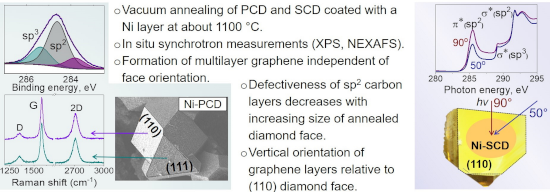
- producing hybrid materials which combine these two forms of carbon [1][2][3]. In particular, such graphene-on-diamond heterostructures have been shown to be attractive for power electronics [4][5], microelectronic devices [6][7], and detectors [7][8]. At room temperature and atmospheric pressure, carbon in
- PCD. Next, we annealed it and conducted angle-dependent TEY NEXAFS measurements at the C K-edge. Figure 6 compares the C K-edge spectra of the bare polished (110) face of SCD (Figure 6a) and the Ni-coated (110) face of SCD (Figure 6b) after annealing and subsequent cooling to room temperature. The
- subtraction of a Shirley’s background. The morphology of the clean and Ni-coated PCD film after annealing in high vacuum at 1100 °C was studied using SEM with a JEOL 6700F microscope (accelerating voltage of 5 kV, JEOL Ltd., Tokyo, Japan). EDX spectroscopy analysis was carried out on a Bruker XFlash 6


Ar+ implantation-induced tailoring of RF-sputtered ZnO films: structural, morphological, and optical properties
Beilstein J. Nanotechnol. 2025, 16, 872–886, doi:10.3762/bjnano.16.66
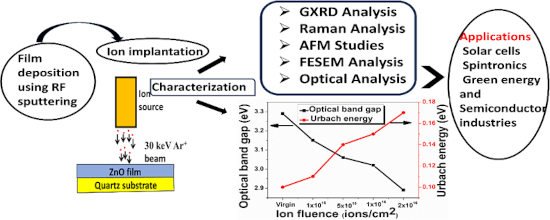
- displays [5], solar cells [6], and light-emitting diodes [7]. There are numerous methods for synthesizing ZnO films, including pulsed laser deposition, spray pyrolysis, radio frequency (RF) sputtering, and sol–gel techniques. Here RF sputtering is preferred over other methods because it provides high
- cleaned using acetone and, finally, isopropyl alcohol before the experiment. The sputtering chamber is pumped to a base pressure of 1.2 × 10⁻⁶ Torr; then a mixture of nitrogen and argon gas is introduced into the sputtering chamber with flows of 1.8 and 10.0 sccm, respectively. When the pressure inside
- appropriate physical model is designed and fitted using different ellipsometry parameters to obtain the least root mean square error. The thickness of the as-grown ZnO films was found to be around 296 ± 6 nm. Moreover, the thickness of ZnO films calculated using cross-sectional FESEM images was of the same






Insights into the electronic and atomic structures of cerium oxide-based ultrathin films and nanostructures using high-brilliance light sources
Beilstein J. Nanotechnol. 2025, 16, 860–871, doi:10.3762/bjnano.16.65

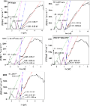
- ]. Additionally, because of their often high efficiency at harnessing solar energy, they find application in photocatalysis and photovoltaics [5][6]. Optimizing these applications requires unravelling the often complex processes that influence functionality through an atomic-level description. To this end


Synchrotron X-ray photoelectron spectroscopy study of sodium adsorption on vertically arranged MoS2 layers coated with pyrolytic carbon
Beilstein J. Nanotechnol. 2025, 16, 847–859, doi:10.3762/bjnano.16.64
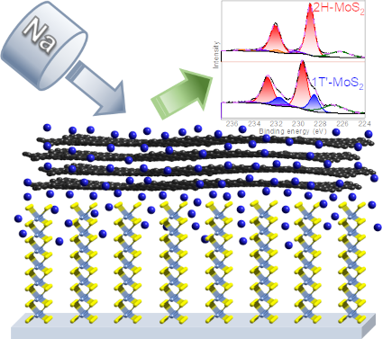
- additives have been proposed as an effective way to solve the problem of electrical conductivity and stability of MoS2 anodes [6]. To date, several hybrid MoS2–carbon anode materials have been developed, which have demonstrated excellent cycling stability and rate performance in SIBs, as well as high
- determination of the surface composition of the films. At 830 eV, the probing depth is about 3 nm, which corresponds to almost the entire volume of the thin films under study. The S/Mo ratio in the MoS2 film is 6 on the surface and 3.1 in the bulk (Figure 4a,b). Excess sulfur in the MoS2 film is associated with
- -MoS2 film determined from the XPS survey spectra measured at 830 eV is about 6 atom % after sodium vapor deposition for 10 min, and this value does not change after an additional deposition of 20 min (Supporting Information File 1, Figure S2). This suggests that in the hybrid film, Na was not trapped


Facile one-step radio frequency magnetron sputtering of Ni/NiO on stainless steel for an efficient electrode for hydrogen evolution reaction
Beilstein J. Nanotechnol. 2025, 16, 837–846, doi:10.3762/bjnano.16.63
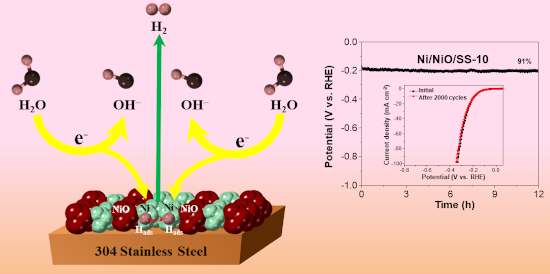
- efficiency compared to gasoline, coal, and natural gas. Currently, hydrogen produced by water electrolysis is well accepted as an ecologically clean, sustainable method compared to other techniques, such as coal gasification and steam methane reforming [5][6][7][8][9][10]. According to reported works, Pt


Synthesis and magnetic transitions of rare-earth-free Fe–Mn–Ni–Si-based compositionally complex alloys at bulk and nanoscale
Beilstein J. Nanotechnol. 2025, 16, 823–836, doi:10.3762/bjnano.16.62
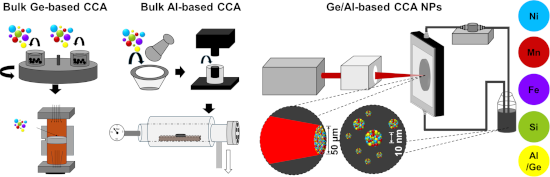
- temperature ranges, such as room-temperature cooling and cryogenic systems [3][4]. The magnetic transition also plays a critical role in the development of temperature-sensitive magnetic sensors and actuators [5][6]. These devices harness the abrupt change in magnetic properties at Tc to detect temperature
- diameter of ∅ = 10 mm. The preparation procedure for the bulk Ge-based CCA is illustrated in Figure 1a. Preparation of bulk Al-based CCAs The bulk Al-based CCA was produced from elemental Mn (99.6%, <10 µm), Fe (99.5%, 6–10 µm), Ni (99.9%, 3–7 µm), Al (99.5%, 44 µm), and Si (99%, 44 µm) powders. The bulk


Supramolecular hydration structure of graphene-based hydrogels: density functional theory, green chemistry and interface application
Beilstein J. Nanotechnol. 2025, 16, 806–822, doi:10.3762/bjnano.16.61
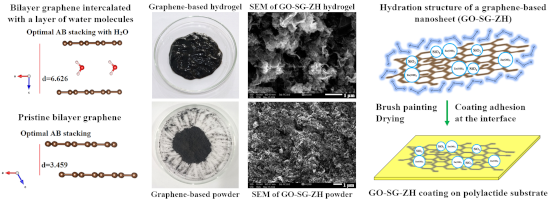
- repulsive hydration forces when another surface perturbs the hydration layers [6][7][8]. Hydration shells and hydration forces keep the hydrated structures stable and functional in the natural concert of biological processes. In the aspect of artificial nanomaterials, it is proposed that hydration also


Morphology and properties of pyrite nanoparticles obtained by pulsed laser ablation in liquid and thin films for photodetection
Beilstein J. Nanotechnol. 2025, 16, 785–805, doi:10.3762/bjnano.16.60
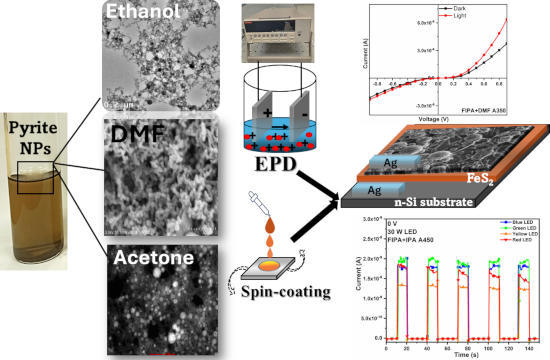
- nanocolloids. The structural, morphological and electrical characterizations of the films are also presented. By sulfurization of the films, phase-pure pyrite thin films are obtained. The photodetection range was up to 785 nm photocurrent in the order of 10−6 to 10−4 A for different annealing conditions and a
- films. The conventional methods reported for the synthesis of pyrite NPs include chemical methods using stabilizing agents [4], high-energy mechanical ball milling [6][7], colloidal pyrite by wet solution/phased chemical approaches [8][9], and hot injection [10][11]. In this study, PLAL was employed to
- morphological differences of the pyrite NPs generated in different solvents such as IPA, DMF, ethanol, methanol and acetone, and their respective TEM, HRTEM, and STEM images, particle size distribution, and SAED patterns are provided in Figures 2–6. The lattice fringes from HRTEM images and the diffraction






Changes of structural, magnetic and spectroscopic properties of microencapsulated iron sucrose nanoparticles in saline
Beilstein J. Nanotechnol. 2025, 16, 762–784, doi:10.3762/bjnano.16.59
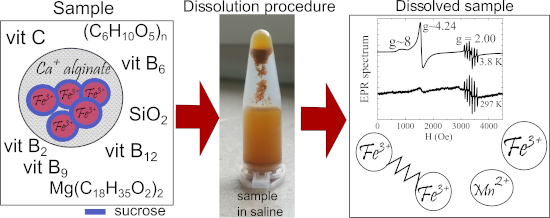
- drugs with different iron agents, such as ferumoxytol [5], iron isomaltoside [5], and iron sucrose [6][7][8]. Such behavior is expected, and not surprising, as in most cases iron agents are systems of noninteracting magnetic nanoparticles. However, more complex process such as two superimposed
- agent called iron sucrose. The original iron sucrose available on the market is the intravenous Venofer® (Vifor, Switzerland), whose physical and chemical properties are thoroughly tested and described in the literature [5][6][7][8][9][13][14]. Generally, iron sucrose originating from Venofer® has a
- nanoparticle with a 3 nm core [7], showed that the core consists of 416 akaganeite (β-FeOOH) and is surrounded by 24 sucrose molecules. However, some studies have shown that iron sucrose contains ferrihydrite [4][6], 2-line ferrihydrite and akaganeite together [13], or even lepidocrocite [15]. Such





Thickness dependent oxidation in CrCl3: a scanning X-ray photoemission and Kelvin probe microscopies study
Beilstein J. Nanotechnol. 2025, 16, 749–761, doi:10.3762/bjnano.16.58
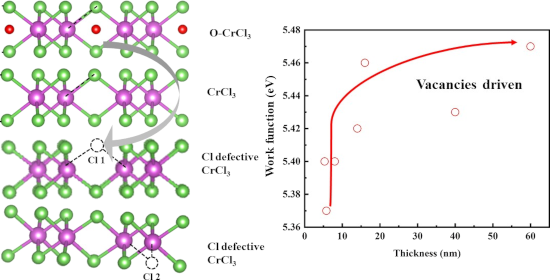
- importance, limited experimental research has been conducted on the electronic structure of CrX3 [5][6]. According to previously published photoelectron spectroscopy results, CrX3 belongs to metal compounds in which the 3d states are very close to the Fermi level, significantly above the 3p/4p/5p states of
- effect) [19][20][21]. A well-known and suitable technique to investigate the electronic structure of surfaces is X-ray photoemission spectro-microscopy [22][6]; in order to obtain the necessary spatial resolution, the beam size must be reduced to tens of nanometers. The Electron Spectroscopy for Chemical
- that the formation of the Cr–O–Cl phase requires a sufficient volume of material, that is, that oxygen-driven phase formation is hindered if there are no specific diffusion processes in the sample. All three SPEM figures (Figure 5, Figure 6, and Figure 7) confirm that the lower-binding-energy component





Serum heat inactivation diminishes ApoE-mediated uptake of D-Lin-MC3-DMA lipid nanoparticles
Beilstein J. Nanotechnol. 2025, 16, 740–748, doi:10.3762/bjnano.16.57
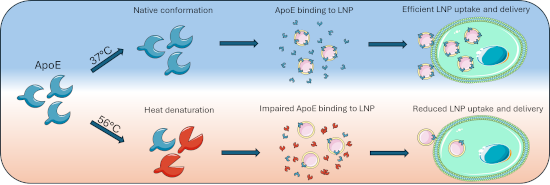
- nanoparticle, reviewed by [6][7][8], as well as the protein source of the corona [9][10][11]. Ultimately, the protein corona can change the uptake [12][13][14], biodistribution [15][16][17][18], immunological responses [19][20] and toxicity [6][21][22] of nanoparticles and its characterization should thus play


Synthesis of a multicomponent cellulose-based adsorbent for tetracycline removal from aquaculture water
Beilstein J. Nanotechnol. 2025, 16, 728–739, doi:10.3762/bjnano.16.56
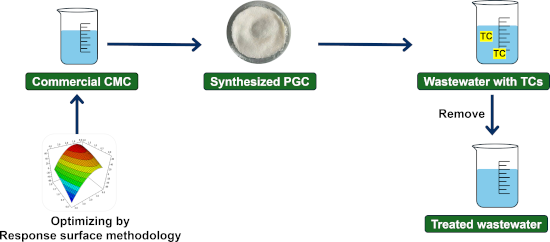
- concentration of 60 mg·L–1 at pH 6–7, reaching equilibrium after 12 h. The surface characteristics and structural properties of PGC were determined using various material characterization techniques, including FTIR, SEM, EDX, and BET. Verification experiments under optimal conditions confirmed that the
- , low adsorption efficiency, water matrices, and secondary pollutant formation, limiting their overall efficiency. A promising method for tackling tetracycline antibiotics involves membrane technologies such as osmosis membrane technology [6][7]. However, this approach presents significant upfront
- repulsive interactions with oxygen-containing functional groups on the PGC surface. Further, at pH 7.5 and above, the chelate complex between Ca2+ and TC preferentially forms at a 1:1 ratio [27]. Hence, the pH range between 6 and 7 is selected as optimal for TC adsorption and will be used in subsequent


Efficiency of single-pulse laser fragmentation of organic nutraceutical dispersions in a circular jet flow-through reactor
Beilstein J. Nanotechnol. 2025, 16, 711–727, doi:10.3762/bjnano.16.55
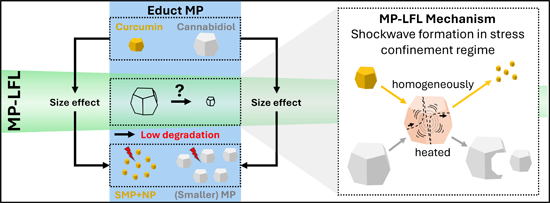
- School in Advanced Optical Technologies (SAOT), Friedrich-Alexander-Universität Erlangen-Nürnberg, Paul-Gordan-Strasse 6, Erlangen 91052, Germany Department of Molecular Food Chemistry and Food Development, Institute of Food and One Health, Gottfried Wilhelm Leibniz University Hannover, Am Kleinen Felde
- colloids, for example, to increase their defect density in favor of electrocatalytic or optical properties without changing their size [6][7][8]. In addition, the acronym PUDEL has recently been used for pulsed laser diffusion enhancement in liquids, which refers to an increase in diffusion without
- increased formation of degradation products, though the total level of degradation is still relatively low. Conventional comminution methods for organic materials such as wet or cryogenic grinding commonly yield 6% to 8% of degradation products when reaching SMP and NP sizes [65][66]. This is by a factor of


Nanostructured materials characterized by scanning photoelectron spectromicroscopy
Beilstein J. Nanotechnol. 2025, 16, 700–710, doi:10.3762/bjnano.16.54
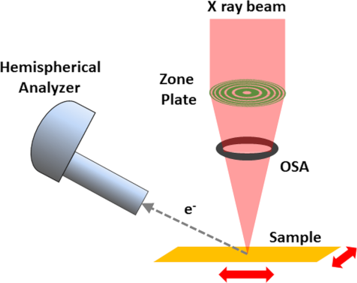
- technologies associated with electronics, energy conversion and storage, and many other fields due to their unique physical properties which may open unforeseen doors for technical and performance advances [5][6][7][8]. The full chain of steps necessary for the implementation of nanostructured materials in