


Search results
Search for 北京利尔2024年钼合金产量 in Full Text gives 181 result(s) in Beilstein Journal of Nanotechnology.
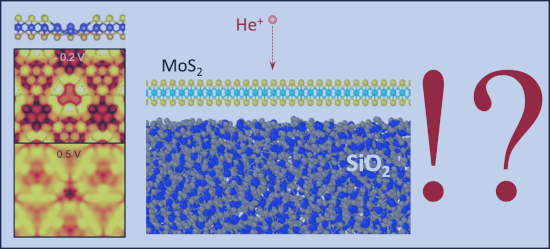
Defects and defect-mediated engineering of two-dimensional materials: challenges and open questions
Beilstein J. Nanotechnol. 2026, 17, 454–488, doi:10.3762/bjnano.17.31





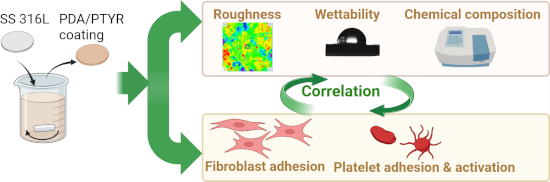
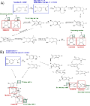
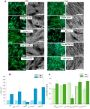
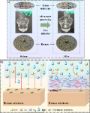
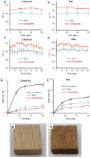
Polycatecholamine nanocoatings on stainless steel: the effect on attachment of human fibroblasts and platelets
Beilstein J. Nanotechnol. 2026, 17, 365–380, doi:10.3762/bjnano.17.25
- Excellence Initiative: Research University (IDUB) programme (agreement no. 1820/332/Z01/POB4/2021), by Warsaw University of Technology within the Excellence Initiative: Research University (IDUB) programme (agreement no. CPR-IDUB/42/Z01/2024) and, in part, by the German Research Foundation (DFG, grant number




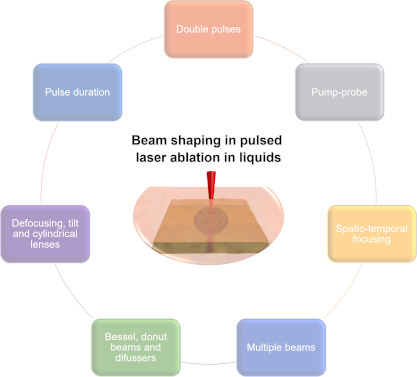
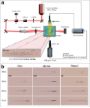
Beam shaping techniques for pulsed laser ablation in liquids: Unlocking tunable control of nanoparticle synthesis in liquids
Beilstein J. Nanotechnol. 2026, 17, 309–342, doi:10.3762/bjnano.17.22







Structure-dependent thermochromism of PAZO thin films: theory and experiment
Beilstein J. Nanotechnol. 2026, 17, 186–199, doi:10.3762/bjnano.17.12
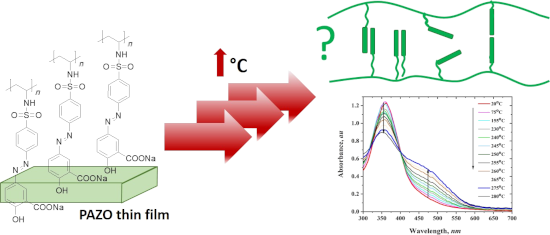
- (2d,p) simulated spectra of PAZO side chain monomer and dimer a–d; Gaussian broadening is applied: band width on 1/2 height: 0.15 eV. (adapted from [20] (© 2024 G. Mateev et al., published by EDP Sciences, distributed under the terms of the Creative Commons Attribution 4.0 International License, https


From shield to spear: Charge-reversible nanocarriers in overcoming cancer therapy barriers
Beilstein J. Nanotechnol. 2026, 17, 159–175, doi:10.3762/bjnano.17.10
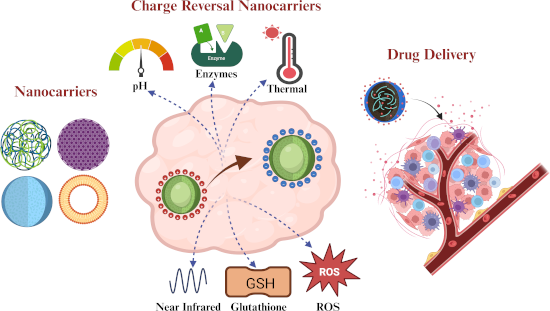
- through macropinocytosis. This strategy effectively activated the STING pathway within the cytosol, leading to a strong adaptive immune response [90]. Charge-reversible nanocarriers are also advancing the field of gene-based immunotherapy. In a 2024 study, Wang et al. developed MSN@MT nanocarriers


Development and in vitro evaluation of liposomes and immunoliposomes containing 5-fluorouracil and R-phycoerythrin as a potential phototheranostic system for colorectal cancer
Beilstein J. Nanotechnol. 2026, 17, 97–121, doi:10.3762/bjnano.17.7
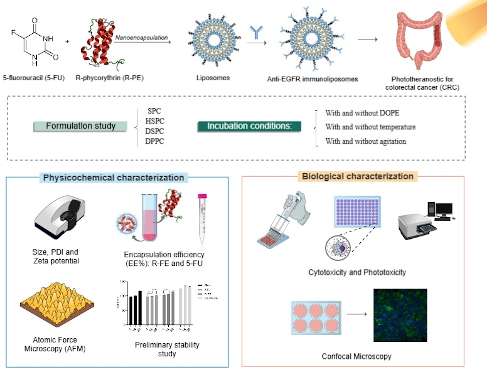
- cetuximab and obtained 14.06% conjugation efficiency with a high percentage of cellular internalization in prostate cancer cells overexpressing EGFR. Souza et al. (2024) [52] also conjugated cetuximab to liposomes based on SPC, cholesterol, and DSPE–PEG–PEG with 40.9% conjugation efficiency. Regarding



Functional surface engineering for cultural heritage protection: the role of superhydrophobic and superoleophobic coatings – a comprehensive review
Beilstein J. Nanotechnol. 2026, 17, 63–96, doi:10.3762/bjnano.17.6
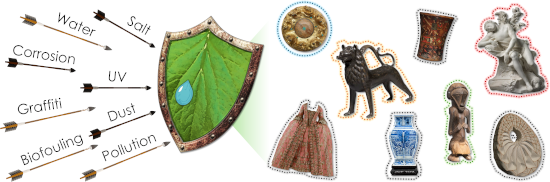
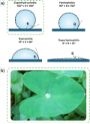
- (Figure 2a), and to superhydrophobic coatings (from 2010 to 2024, Figure 2b), both showing an outstanding increase over time for both topics. In 1964, the modern principles of conservation of cultural heritage were conceived on the occasion of the “2nd International Congress of Architects and Technicians




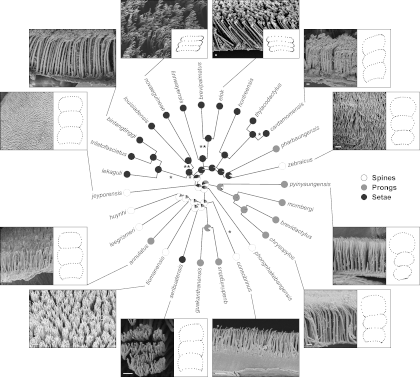
Subdigital integumentary microstructure in Cyrtodactylus (Squamata: Gekkota): do those lineages with incipiently expressed toepads exclusively exhibit adhesive setae?
Beilstein J. Nanotechnol. 2026, 17, 38–56, doi:10.3762/bjnano.17.4


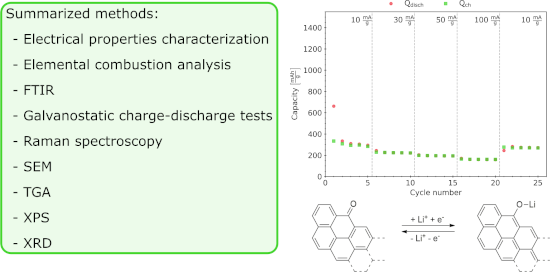
Reduced graphene oxide paper electrode for lithium-ion cells – towards optimized thermal reduction
Beilstein J. Nanotechnol. 2026, 17, 24–37, doi:10.3762/bjnano.17.3
- between 2020 and 2024 in the ScienceDirect database only [1]. Market forecasts predict the growth of the overall rGO market at a compound annual growth rate of 36.5% between 2024 and 2031 [2]. This material owes its popularity in particular to such properties as sufficient electrical conductivity and
- and Photonics, based on statutory grant (2024 and 2025).


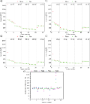

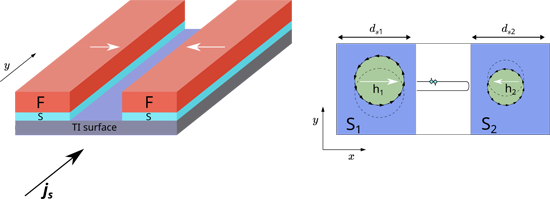
Competitive helical bands and highly efficient diode effect in F/S/TI/S/F hybrid structures
Beilstein J. Nanotechnol. 2026, 17, 15–23, doi:10.3762/bjnano.17.2
- of Russian Federation No. 075-15-2024-632. T. K acknowledge the support from the Foundation for the Advancement of Theoretical Physics and Mathematics “BASIS” via the project number 25-1-4-21-1. T. K. and P. M. acknowledge the support of the HSE University Basic Research Program that was used to


![[Graphic 16]](/bjnano/content/inline/2190-4286-17-2-i31.svg?max-width=637&scale=1.18182)
![[Graphic 17]](/bjnano/content/inline/2190-4286-17-2-i32.svg?max-width=637&scale=1.18182)


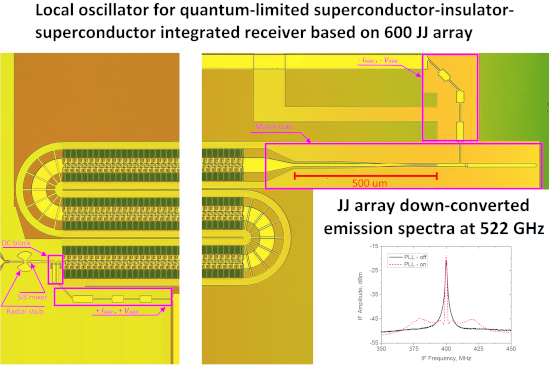
Terahertz-range on-chip local oscillator based on Josephson junction arrays for superconducting quantum-limited receivers
Beilstein J. Nanotechnol. 2025, 16, 2296–2305, doi:10.3762/bjnano.16.158
- Federation (agreement no. 075-15-2024-538).


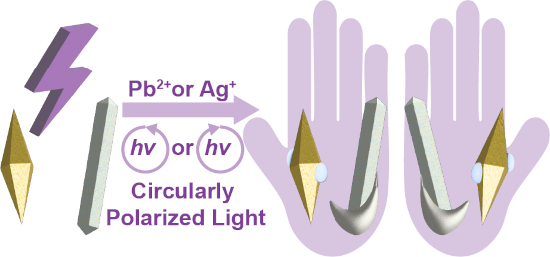
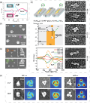
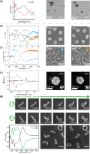
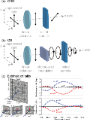
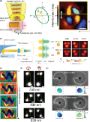
Chiral plasmonic nanostructures fabricated with circularly polarized light
Beilstein J. Nanotechnol. 2025, 16, 2245–2264, doi:10.3762/bjnano.16.154





Optical bio/chemical sensors for vitamin B12 analysis in food and pharmaceuticals: state of the art, challenges, and future outlooks
Beilstein J. Nanotechnol. 2025, 16, 2207–2244, doi:10.3762/bjnano.16.153


Hartree–Fock interaction in superconducting condensate fractals
Beilstein J. Nanotechnol. 2025, 16, 2177–2182, doi:10.3762/bjnano.16.150
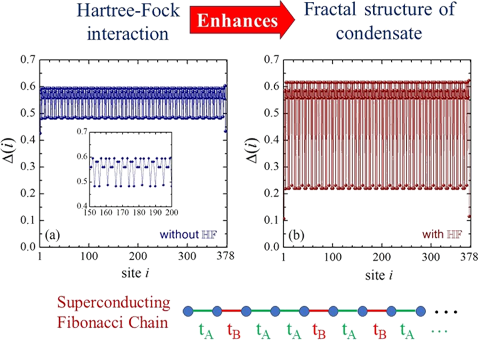
- below a critical temperature of Tc ∼ 0.05 K [12]. More recently, in 2024 and 2025, much higher critical temperatures of Tc ∼ 1 K and Tc ∼ 5.47 K were reported in van der Waals-layered dodecagonal quasicrystals Ta1.6Te [13] and in a monoclinic approximant to the decagonal quasicrystal Al13Os4[14


Missing links in nanomaterials research impacting productivity and perceptions
Beilstein J. Nanotechnol. 2025, 16, 2168–2176, doi:10.3762/bjnano.16.149
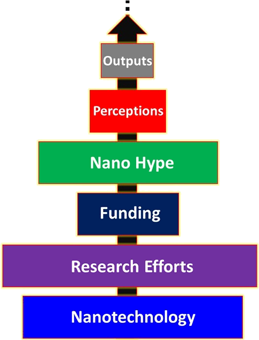
- recent years. As of 2024, global funding in AI including private equity, venture capital, and governmental initiatives has surpassed $1.5 trillion [25]. This comparison often serves to highlight the perceived disparity in returns between generative AI and nanotechnology. Nonetheless, such a juxtaposition
- . The event brought together leading scientists and key stakeholders from the Indian government to deliberate on the impact and potential of carbon nanomaterials. The idea was further refined during the organization of the New Materials in Carbon Capture and Environmental Remediation (NMCCER 2024
Beyond the shell: exploring polymer–lipid interfaces in core–shell nanofibers to carry hyaluronic acid and β-caryophyllene
Beilstein J. Nanotechnol. 2025, 16, 2015–2033, doi:10.3762/bjnano.16.139
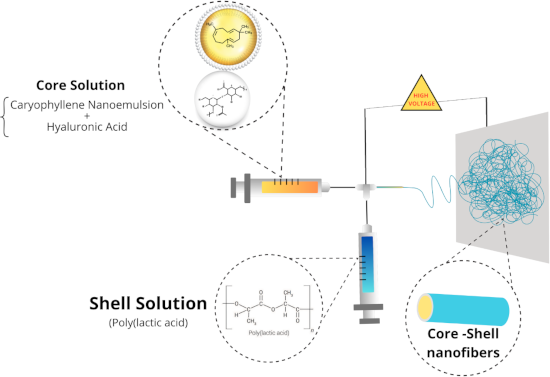
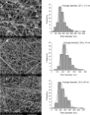
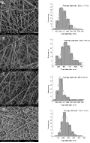
- administration via dressings made of biocompatible polymers containing lipid nanosystems [41][42][43]. Numerous researchers have successfully encapsulated nanoemulsions into nanofibers for diverse applications, including studies by Kaur et al. (2024) showing superior wound healing with bakuchiol nanoemulsion




Quantum circuits with SINIS structures
Beilstein J. Nanotechnol. 2025, 16, 1931–1941, doi:10.3762/bjnano.16.134
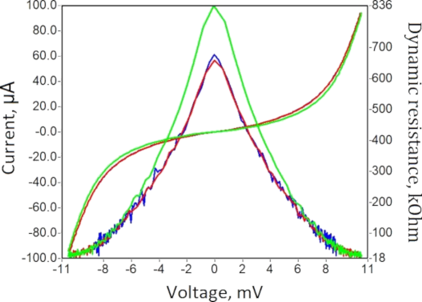
- resistance of series SINIS array and (b) I–V curve without (blue) and with (red) microwave radiation at 95 GHz. Funding Work is supported by grant from Ministry of science and higher education of Russian Federation No:075-15-2024-482.


Targeting the vector of arboviruses Aedes aegypti with nanoemulsions based on essential oils: a review with focus on larvicidal and repellent properties
Beilstein J. Nanotechnol. 2025, 16, 1894–1913, doi:10.3762/bjnano.16.132
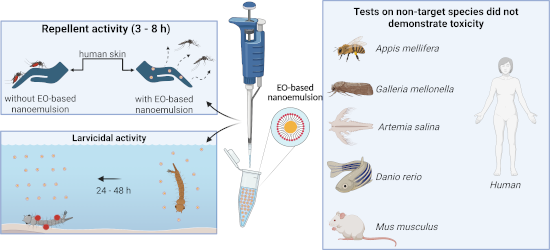
- . Against the Ae. aegypti vector, Duarte et al. (2024) developed NEs loaded with two monoterpenes, cymene and myrcene, and evaluated their larvicidal potential against L3 larvae [36]. The NEs showed significant lethality to Ae. aegypti larvae, with insecticidal activity equal to or greater than that of free
- acetylcholinesterase (Figure 3). In this context, Romano et al. (2024) investigated the use of a nanoemulsion formulated with an essential oil extracted from the leaves of Murraya koenigii to evaluate its efficacy as a larvicide against the Ae. aegypti mosquito [108]. This plant, known as curry in India, is widely
- decrease in cellular proliferation was evidenced. De Sousa dos Santos et al. (2024) investigated the larvicidal effects of a nanoemulsion containing essential oil from Ocimum basilicum [76]. This species is known as basil or alfavaca and it is native to tropical regions of Africa and Asia [110]. It


Phytol-loaded soybean oil nanoemulsion as a promising alternative against Leishmania amazonensis
Beilstein J. Nanotechnol. 2025, 16, 1826–1836, doi:10.3762/bjnano.16.126

- surface curvature and increased solute concentration at the droplet interface in the aqueous phase. Such structural features can promote a higher drug flux and localized delivery in the skin layers [34][35][36]. Chiu et al. (2024) reported a significant increase in curcumin skin permeability when carried
- that observed for free resveratrol. Similarly, a study conducted by Nahanji et al. (2024) [54] achieved comparable success using fluconazole-loaded NEs against L. major, demonstrating a 3-fold and 9-fold reduction in IC50 for the promastigote and amastigote forms, respectively, compared to that of free
- fluconazole. More recently, Cunha et al. (2024) [55] developed NEs containing amphotericin B and paromomycin, and upon evaluating their efficacy against L. amazonensis amastigotes, observed that nanoemulsification did not enhance the activity of amphotericin B. In contrast, paromomycin-loaded NEs outperformed


Advances of aptamers in esophageal cancer diagnosis, treatment and drug delivery
Beilstein J. Nanotechnol. 2025, 16, 1734–1750, doi:10.3762/bjnano.16.121
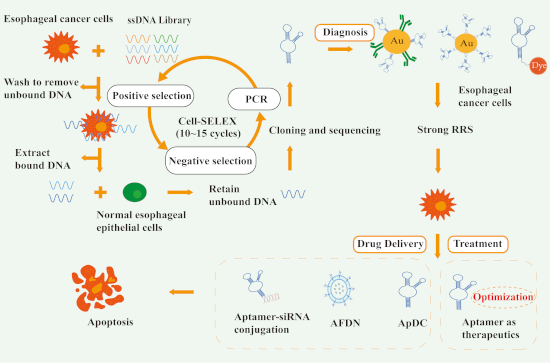
- different treatment strategies. 4 Aptamers as targeted esophageal cancer therapeutics As of 2024, aptamer-based therapeutics remain limited in clinical use, typically represented by the DNA aptamer Pegaptanib and the RNA aptamer Avacincaptad pegol. In December 2004, Pegaptanib [63], the first aptamer as


Beyond the bilayer: multilayered hygroscopic actuation in pine cone scales
Beilstein J. Nanotechnol. 2025, 16, 1695–1710, doi:10.3762/bjnano.16.119
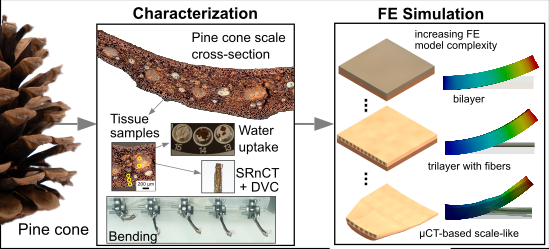
- FEA in Ansys (ver. 2024 R2, Ansys, Inc., Canonsburg, PA, USA). Expansion was modeled using thermal stress analysis (a combination of the steady-state thermal and static structural solvers). The thermal expansion coefficients of the three tissues involved (sclereid layer, sclerenchyma fibers, and brown


Ambient pressure XPS at MAX IV
Beilstein J. Nanotechnol. 2025, 16, 1677–1694, doi:10.3762/bjnano.16.118
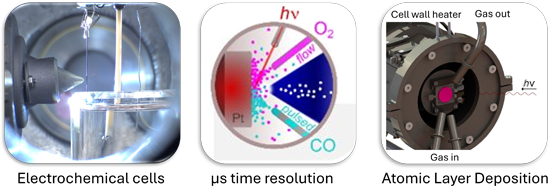
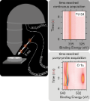
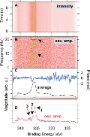
- reproduced from [45] (“Solar light driven atomic and electronic transformations in a plasmonic Ni@NiO/NiCO3 photocatalyst revealed by ambient pressure X-ray photoelectron spectroscopy“, © 2024 M. K. Ghosalya et al., published by The Royal Society of Chemistry, distributed under the terms of the Creative





Prospects of nanotechnology and natural products for cancer and immunotherapy
Beilstein J. Nanotechnol. 2025, 16, 1644–1667, doi:10.3762/bjnano.16.116
- was applied to both surveys, with patents collected from 2016 to 2024. Given that both databases are well established and widely recognized in the field of intellectual property, and to avoid significant data duplication, we considered their inclusion sufficient for the scope of this review. In view
- , covering the period from 2016 to 2024. In the first year, one document was published, a figure that remained consistent until 2021, when there was a decline, with no documents published that year. This decline can be attributed to the global impact of the COVID-19 pandemic, which began in 2020 and
- recovery is evident in 2022 and 2023, with five patents published each year, suggesting a resumption of research efforts and innovation following the pandemic-induced slowdown. In 2024, the number of patents dropped again to one, although it is important to consider that data for this year may be


Nanotechnology-based approaches for the removal of microplastics from wastewater: a comprehensive review
Beilstein J. Nanotechnol. 2025, 16, 1607–1632, doi:10.3762/bjnano.16.114
- in the number of publications related to MP removal from 2015 to 2025. Notably, the number of studies surged from just 80 in 2016 to a peak of 3616 in 2024. A similar trend, though less pronounced, is observed for NP removal, which also showed a steady growth, rising from 48 publications in 2015 to
- 1039 in 2024. This indicates a growing recognition of NPs as emerging contaminants, though they still receive less attention than MPs. In contrast, Figure 1b provides insights from Springer Nature, categorizing the type of publications related to both MP and NP removal between 2015 and 2025. Research


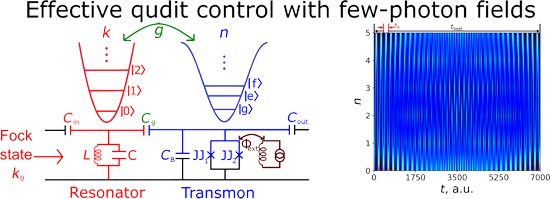
Few-photon microwave fields for superconducting transmon-based qudit control
Beilstein J. Nanotechnol. 2025, 16, 1580–1591, doi:10.3762/bjnano.16.112
- basic element for quantum networking is supported by Ministry of Science and Higher Education of the Russian Federation (agreement No. 075-15-2024-538).





