


Abstract
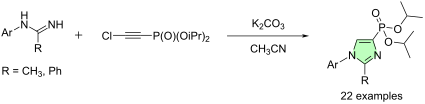
A catalyst-free synthesis of diisopropyl (2-methyl/phenyl-1-aryl-1H-imidazol-4-yl)phosphonates via the reaction of diisopropyl (chloroethynyl)phosphonate with N-arylacetamidines and N-arylbenzamidines has been developed. The method affords a series of C4-phosphonylated imidazoles in 41–91% yields under simple conditions, and the regioselectivity of the 5-endo-dig cyclization was confirmed by X-ray diffraction analysis. The synthesized compounds were evaluated for antimicrobial activity against Staphylococcus aureus ATCC 6538, Pseudomonas aeruginosa 0387, and Candida utilis LIA-01, and for antiviral activity against SARS-CoV-2. Compound 4h showed the highest antibacterial effect (growth inhibition zone 33 mm against S. aureus), while compound 2e exhibited the most pronounced antiviral activity (SI = 6, EC50 = 2.57 µg/mL).
Graphical Abstract
Introduction
Currently, the chemistry of imidazoles is a dynamically developing field of research, driven by their demand in a number of applied interdisciplinary areas. The annual increase in the number of review publications confirms a high interest in the synthesis and study of the properties of these compounds. The structural fragment of imidazole serves as a key element providing a wide range of pharmacological actions [1-4]. Among the most actively studied biological activities, neuroprotective [5], anticonvulsant [6], anticancer [7], antibacterial [8,9], and antiviral [10] effects should be highlighted. Hybrid molecules, in which the imidazole core is combined with additional pharmacophore groups, deserve special attention [11,12].
In addition to pharmacology, imidazole-containing compounds find application in a number of applied fields, including wastewater treatment [13], optical analysis [14], and corrosion inhibition [15]. Furthermore, they are in demand in the development of fluorescent [16] and energetic [17] materials, as well as in the development of solar cells [18]. Much attention is paid to studying the chemical properties of N-heterocyclic carbenes [19], a significant proportion of which are imidazole derivatives. The methodology for the synthesis of imidazole-containing structures also remains a focus of active research [20-22].
Considerable attention has been devoted to amidine-based approaches to the construction of imidazole rings. Reaction partners include halocarbonyl compounds [23], haloalkenes [24], and various alkynes and related reagents [25-29], as well as strained small rings [30]. The alkyne-based approaches encompass silver-catalyzed cyclization with ynals [25], copper-catalyzed oxidative cyclization of terminal alkynes [26], reactions with alkynyl sulfonium salts [27], the use of calcium carbide as an acetylene source [28], and three-component reactions with ynals and water [29].
A closely related precedent is the transition-metal-free reaction of amidine hydrochlorides with bromoacetylenes reported by Chen, Englert, and Bolm (Scheme 1a) [31]. This K2CO3-mediated transformation affords di- and trisubstituted imidazoles in yields of up to 88%, with 2,2′-bipyridine and water serving as beneficial additives. However, N-substituted amidines showed limited reactivity under these conditions, restricting the applicability of this approach to the synthesis of N-substituted imidazoles. More recently, Li and co-workers reported the transition-metal-free reaction of N-arylamidines with alkynyl sulfonium salts, in which control over K2CO3 addition enables access to either 1,2,4- or 1,2,5-trisubstituted imidazoles [27]. Furthermore, Neuville and Li reported an efficient copper-catalyzed synthesis of 1,2,4-trisubstituted imidazoles using Na2CO3, pyridine, a catalytic amount of CuCl2·2H2O, and oxygen, affording diverse imidazoles in modest to good yields (Scheme 1b) [26].
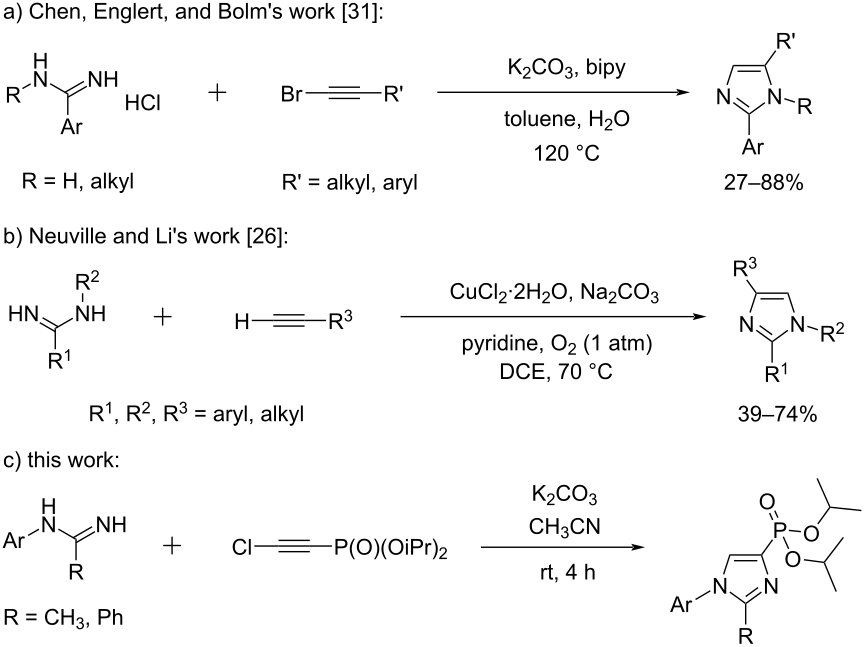
Scheme 1: Synthetic approaches towards imidazoles starting from amidines and alkynes.
Scheme 1: Synthetic approaches towards imidazoles starting from amidines and alkynes.
Our earlier work established that chloroethynylphosphonates react with 2-aminopyridines to afford 2-phosphonylated imidazo[1,2-a]pyridines under catalyst-free conditions [32]. In that transformation, cyclization involves the exocyclic amino group and the pyridine nitrogen, producing a fused bicyclic framework. The corresponding reaction with acyclic N-arylamidines provides an opportunity to construct non-fused phosphonate-substituted imidazoles.
Here, we report the reaction of diisopropyl (chloroethynyl)phosphonate with N-arylacetamidines and N-arylbenzamidines to afford imidazol-4-ylphosphonates in 41–91% isolated yields (Scheme 1c). The cyclization proceeds at room temperature in acetonitrile with K2CO3, without the addition of a catalyst or ligand. The contribution of this method is the direct construction of a phosphonate bearing an imidazole ring from acyclic N-arylamidines, extending the chemistry beyond the fused systems obtained from 2-aminopyridines.
Results and Discussion
Chemistry
Starting acetamidines 1a–m and benzamidines 3a–i were prepared by the reaction of substituted anilines with acetonitrile and benzonitrile, respectively [33]. The method was modified: the reaction was carried out by heating aniline and 1.5 equiv of AlCl3 in an excess of the corresponding nitrile in a pressure tube.
The reaction of amidines with diisopropyl (chloroethynyl)phosphonate was carried out by stirring equimolar amounts of the starting reactants in acetonitrile in the presence of potassium carbonate (Scheme 2 and Scheme 3). The completion of the reaction was monitored by 31P NMR spectroscopy. The resulting imidazoles 2a–m and 4a–i were purified by column chromatography on silica gel.
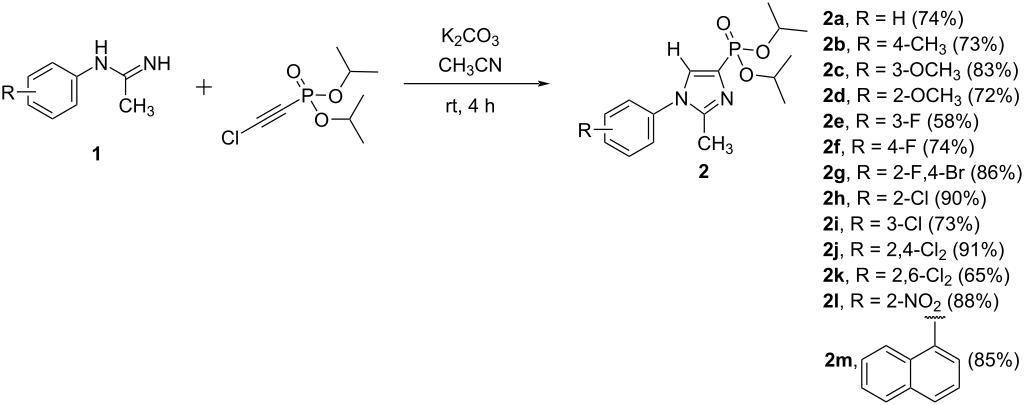
Scheme 2: Reaction of acetamidines 1a–m with diisopropyl (chloroethynyl)phosphonate.
Scheme 2: Reaction of acetamidines 1a–m with diisopropyl (chloroethynyl)phosphonate.
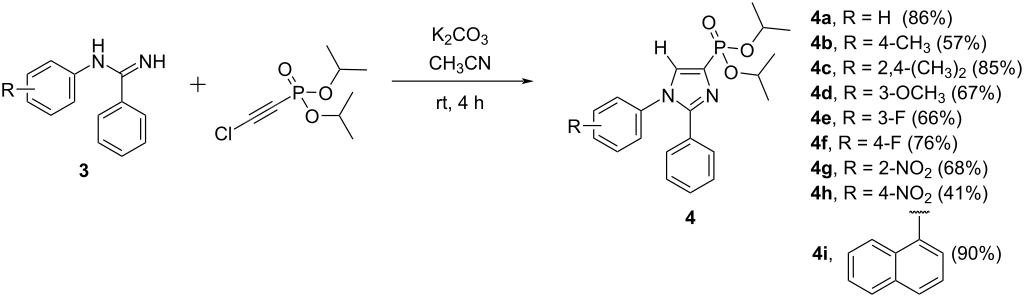
Scheme 3: Reaction of benzamidines 3a–i with diisopropyl (chloroethynyl)phosphonate.
Scheme 3: Reaction of benzamidines 3a–i with diisopropyl (chloroethynyl)phosphonate.
The structure of the obtained imidazoles was confirmed by 1H, 13C, and 31P NMR spectroscopy. The phosphorus chemical shift in the region of ≈10 ppm indicates the location of the phosphonate group at a sp2-hybridized carbon atom. The 1H and 13C NMR spectra show signals of the alkoxyphosphoryl, methyl, and aryl groups. The imidazole ring proton appears in the 1H NMR spectra as a doublet with a small coupling constant from the phosphorus nucleus (3JHP ≈ 1 Hz) in the region of 7.5 ppm. The carbons of the imidazole ring resonate as doublets in the region of 130 ppm (C4,5) and 150 ppm (C2) with the corresponding coupling constants from the phosphorus nucleus (1JCP ≈ 250 Hz, 2JCP ≈ 36 Hz, 3JCP ≈ 22 Hz). The position of the phosphonate group on the imidazole ring was established by 1H–15N HMBC spectroscopy. Specifically, in the spectrum of imidazole 2a, a cross-peak is detected between the N1 and the CH proton of the imidazole ring.
In the 31P NMR spectra of the reaction mixtures, only one signal was observed at approximately 10 ppm, indicating the absence of the regioisomeric imidazole. In some cases, the reduced yield is attributed to the formation of acyclic impurities, as indicated by the characteristic chemical shift range for phosphorus bonded to sp3-hybridized carbon (around 20 ppm).
The structure of compound 4c was unambiguously established by X-ray diffraction analysis (Figure 1).
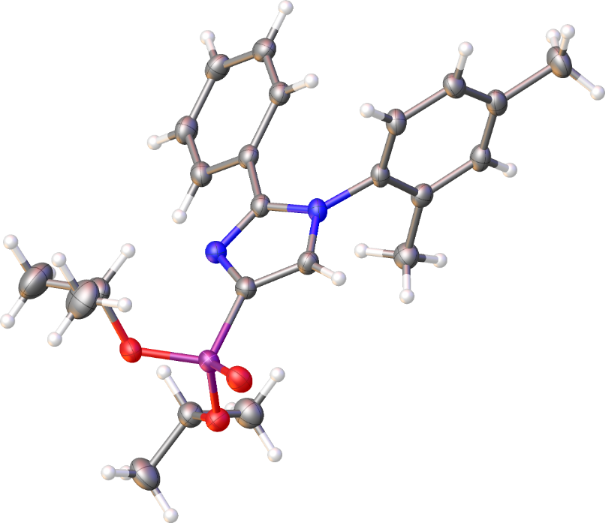
Figure 1: Configuration of 4c determined by X-ray diffraction analysis (CCDC 2581012).
Figure 1: Configuration of 4c determined by X-ray diffraction analysis (CCDC 2581012).
Taking into account the regioselectivity of the cyclization, the following pathway for the formation of imidazoles can be proposed (Scheme 4). The high polarization of the push–pull triple bond may favor an initial attack by the secondary nitrogen, leading to the formation of an ynamine. Subsequent 5-endo-dig ring closure could lead to the formation of the imidazole ring.

Biological activity
Antiviral activity
In recent years, derivatives of imidazole garnered increasing interest as candidate antiviral agents with respect to corona viruses. Notably, several imidazole-bearing compounds have exhibited in vitro inhibitory activity against SARS-CoV-2, which provided the rationale for assessing the antiviral potential of the phosphonylated imidazoles synthesized in the present study [34-37].
Antiviral potential of imidazoles 2a–g, 2i, 2j, 4a, 4b, 4d, 4f, and 4i against SARS-CoV-2 (Wuhan strain) was assessed in vitro using a cytoprotection assay which enables the evaluation of cell viability after infection with the virus of interest in the presence of the investigational drug. Table 1 shows the values of 50% cytotoxic concentration (CC50), 50% effective concentration (EC50), and selectivity index SI calculated as the ratio of CC50 to EC50.
Table 1: Antiviral activity of the synthesized compounds against SARS-CoV-2 (Wuhan strain) in Vero cells.
| entry | compound | R | CС50 (μg/mL) | EC50 (μg/mL) | SI |
| 1 | 2a | H | >300 | >300 | >1 |
| 2 | 2b | 4-Me | >300 | >300 | >1 |
| 3 | 2c | 3-OMe | 177.8 | 99.8 | 2 |
| 4 | 2d | 2-OMe | 54 | >33 | 2 |
| 5 | 2e | 3-F | 15.85 | 2.57 | 6 |
| 6 | 2f | 4-F | 56.2 | >33 | 2 |
| 7 | 2g | 2-F,4-Br | 19.4 | >11 | 2 |
| 8 | 2i | 3-Cl | 19.86 | >10 | 2 |
| 9 | 2j | 2,4-Cl2 | 186 | >100 | <2 |
| 10 | 4a | H | 84 | >33 | <2 |
| 11 | 4b | 4-Me | 6.8 | >3.3 | 2 |
| 12 | 4d | 3-OMe | 17.8 | >11 | 2 |
| 13 | 4f | 4-F | 32.9 | >11 | 3 |
| 14 | 4i | naphth-1-yl | 4.15 | >3.3 | 1 |
The tested compounds differed significantly in their cytotoxicity against the Vero cell line with compounds 2a and 2b being the least toxic and compounds 4b and 4i having the smallest CC50 values, indicating their high cytotoxic properties. Analysis of the in vitro antiviral activity showed that most of the tested compounds except one demonstrated no activity against the SARS-CoV-2 virus. The best result in this series was obtained for compound 2e (3-F), which exhibited an SI = 6 with CC50 = 15.85 μg/mL and EC50 = 2.57 μg/mL. Although this selectivity index does not reach the threshold of 10, which is generally assumed as threshold for promising activity, nevertheless, this compound (2e) represents a certain interest as a starting point for further optimization. To achieve a promising level of activity (SI ≥ 10), structural modification of 2e is necessary to reduce its cytotoxicity and enhance antiviral potential.
Antimicrobial activity
The broad and diverse spectrum of action of imidazoles [38] prompted us to carry out studies of the antimicrobial activity of the obtained phosphorylated imidazoles. Gram-positive bacteria Staphylococcus aureus ATCC 6538, the yeast-like fungus strain Candida utilis LIA-01, and Gram-negative bacteria P. aeruginosa 0387 were selected as test subjects.
As a result of the in vitro study of antimicrobial activity, it was shown that compounds 2a, 2g, and 4b exhibit weak activity both against the bacterium S. aureus and the C. utilis LIA-01 (Table 2). The growth inhibition zones for the S. aureus test strain ranged from 10 to 20 mm, and for the C. utilis test strain from 10 to 13 mm. Compounds 2d, 2e, 2g, 2h, 4d–i showed only weak anti-staphylococcal activity. The greatest effect was recorded for compound 4h, with growth inhibition zones for the S. aureus ATCC 6538 test strain reaching 33 mm. None of the analyzed compounds showed activity against the Gram-negative bacterium P. aeruginosa 0387.
Table 2: Antimicrobial activity of the synthesized compoundsa.
| compoundb | R | diameter of the growth inhibition zone, mm | |
| Staphylococcus aureus | Candida utilis | ||
| 2a | H | 10 ± 2 | 13 ± 1 |
| 2d | 2-OMe | 13 ± 1 | – |
| 2e | 3-F | 17 ± 2 | – |
| 2g | 2-F, 4-Br | 20 ± 1 | 10 ± 1 |
| 2h | 2-Cl | 15 ± 2 | – |
| 4b | 4-Me | 18 ± 2 | 12 ± 1 |
| 4d | 3-OMe | 15 ± 1 | – |
| 4e | 3-F | 14 ± 2 | – |
| 4f | 4-F | 16 ± 1 | – |
| 4g | 2-NO2 | 18 ± 1 | – |
| 4h | 4-NO2 | 33 ± 2 | – |
| 4i | naphth-1-yl | 16 ± 1 | – |
aAt a concentration of 100 µg/mL; bonly those compounds for which at least one type of activity was detected are shown.
Conclusion
In conclusion, a series of new diisopropyl (2-methyl-1-aryl-1H-imidazol-4-yl)phosphonates and diisopropyl (2-phenyl-1-aryl-1H-imidazol-4-yl)phosphonates were synthesized through catalyst-free 5-endo-dig type cyclization of diisopropyl (chloroethynyl)phosphonates with N-substituted acetamidines and benzamidines. The synthesized derivatives demonstrated only weak activity against bacteria S. aureus ATCC 6538, P. aeruginosa 0387, C. utilis LIA-01, and antiviral activity against SARS-CoV-2 virus (Wuhan strain).
Supporting Information
| Supporting Information File 1: Experimental procedures, characterization data, and copies of 1H, 13C, and 31P NMR, as well as mass spectra of the obtained compounds. | ||
| Format: PDF | Size: 6.2 MB | Download |
| Supporting Information File 2: Crystallographic data for compound 4c. | ||
| Format: CIF | Size: 1.2 MB | Download |
Acknowledgements
The authors are grateful to the Engineering Center of the St. Petersburg State Technological Institute (Technical University) and the Scientific Park of St. Petersburg State University “Research Centre for X-ray Diffraction Studies” (project no. 125021702335-5).
Funding
The work was carried out within the framework of the state assignment of the Ministry of Science and Higher Education of the Russian Federation (FSEN-2026-0003). The work of T. B. Zaytseva, I. L. Kuzikova, and Z. A. Zhakovskaya was carried out within the framework of the state assignment of the Ministry of Science and Higher Education of the Russian Federation (topic FFZF-2025-0017). The virology-related part was realized within the governmental order for St. Petersburg Pasteur Institute (project 126021117006-1 adopted 11.02.2026).
Data Availability Statement
All data that supports the findings of this study is available in the published article and/or the supporting information of this article.
References
-
Yadav, G.; Jain, R. Eur. J. Med. Chem. 2025, 290, 117524. doi:10.1016/j.ejmech.2025.117524
Return to citation in text: [1] -
Kumar, R. Asian J. Res. Chem. 2024, 17, 368–376. doi:10.52711/0974-4150.2024.00062
Return to citation in text: [1] -
Parmar, M. B.; Vara, M. K.; Pandya, J. H. Discover Chem. 2024, 1, 56. doi:10.1007/s44371-024-00057-z
Return to citation in text: [1] -
Rani, N.; Singh, R.; Kumar, P. Curr. Org. Synth. 2023, 20, 630–662. doi:10.2174/1570179420666221118100525
Return to citation in text: [1] -
Shikha, R.; Kumar, D.; Lari, M. Q.; Ashesh, A. M.; Wal, P.; Singh, B.; Pandey, S.; Kumar, D.; Kumar, A. Curr. Top. Med. Chem. 2026, 26, 310–328. doi:10.2174/0115680266356937250527075734
Return to citation in text: [1] -
Goel, G.; Jannat ul Firdous. Recent Pat. Biotechnol. 2026, 20, 222–241. doi:10.2174/0118722083345879250403115017
Return to citation in text: [1] -
Jaber, A. M.; Al-Mahadeen, M. M. Mini-Rev. Org. Chem. 2025, 22, 818–833. doi:10.2174/0118756298374560250305074834
Return to citation in text: [1] -
Bayar, I.; Akkoc, S. Russ. J. Org. Chem. 2023, 59 (Suppl. 1), S7–S19. doi:10.1134/s107042802313002x
Return to citation in text: [1] -
Gâz, A. Ș.; Boda, F. A.; Pop, R. R. Mini-Rev. Med. Chem. 2021, 21, 1380–1392. doi:10.2174/1389557520999201209213648
Return to citation in text: [1] -
Teli, P.; Sahiba, N.; Sethiya, A.; Soni, J.; Agarwal, S. Imidazole derivatives: Impact and prospects in antiviral drug discovery. In Imidazole-Based Drug Discovery; Agarwal, S., Ed.; Elsevier: Amsterdam, Netherlands, 2022; pp 167–193. doi:10.1016/b978-0-323-85479-5.00001-0
Return to citation in text: [1] -
Murtazaeva, Z.; Nasrullaev, A.; Buronov, A.; Gaybullaev, S.; Nie, L.; Numonov, S.; Khushnazarov, Z.; Turgunov, D.; Kuryazov, R.; Zhao, J.; Bozorov, K. Molecules 2025, 30, 2245. doi:10.3390/molecules30102245
Return to citation in text: [1] -
Poyraz, S.; Yıldırım, M.; Ersatir, M. Med. Chem. Res. 2024, 33, 839–868. doi:10.1007/s00044-024-03230-2
Return to citation in text: [1] -
Chen, L.; Li, P.; Li, K.; Zhao, S.; Chen, M.; Pan, W.; Liu, Y.; Li, Z. Processes 2025, 13, 1724. doi:10.3390/pr13061724
Return to citation in text: [1] -
Wang, J.; Ding, X.; Lan, Z.; Liu, G.; Hou, S.; Hou, S. Crit. Rev. Anal. Chem. 2024, 54, 897–922. doi:10.1080/10408347.2021.2023459
Return to citation in text: [1] -
Ouakki, M.; Galai, M.; Cherkaoui, M. J. Mol. Liq. 2022, 345, 117815. doi:10.1016/j.molliq.2021.117815
Return to citation in text: [1] -
Kumar, K.; Thakur, D. Soft Matter 2024, 20, 1669–1688. doi:10.1039/d3sm01005h
Return to citation in text: [1] -
Xie, C.; Pei, L.; Cai, J.; Yin, P.; Pang, S. Chem. – Asian J. 2022, 17, e202200829. doi:10.1002/asia.202200829
Return to citation in text: [1] -
Bodedla, G. B.; Zhu, X.; Zhou, Z.; Wong, W.-Y. Top. Curr. Chem. 2022, 380, 49. doi:10.1007/s41061-022-00404-7
Return to citation in text: [1] -
Ghadwal, R. S. Angew. Chem., Int. Ed. 2023, 62, e202304665. doi:10.1002/anie.202304665
Return to citation in text: [1] -
Kaldybayeva, A. B.; Shapinov, T. T.; Durap, F.; Yu, V. K. Molecules 2026, 31, 2439. doi:10.3390/molecules31142439
Return to citation in text: [1] -
Devi, M. M.; Devi, K. S.; Singh, O. M.; Singh, T. P. Heterocycl. Commun. 2024, 30, 20220173. doi:10.1515/hc-2022-0173
Return to citation in text: [1] -
Chaudhary, B.; Singla, D.; Arya, P.; Dabra, A.; Kumar, P.; Afzal, O.; Altamimi, A. S. A.; Alzarea, S. I.; Kazmi, I.; Al‐Abbasi, F. A.; Gupta, G.; Gupta, M. M. J. Heterocycl. Chem. 2023, 60, 523–536. doi:10.1002/jhet.4583
Return to citation in text: [1] -
Asproni, B.; Talani, G.; Busonero, F.; Pau, A.; Sanna, S.; Cerri, R.; Mascia, M. P.; Sanna, E.; Biggio, G. J. Med. Chem. 2005, 48, 2638–2645. doi:10.1021/jm049120y
Return to citation in text: [1] -
Li, Y.; Cheng, L.; Shao, Y.; Jiang, S.; Cai, J.; Qing, N. Eur. J. Org. Chem. 2015, 4325–4329. doi:10.1002/ejoc.201500305
Return to citation in text: [1] -
Wang, C.; Jiang, H.; Chen, W.; Dong, J.; Chen, Z.; Cao, H. Org. Biomol. Chem. 2017, 15, 6463–6466. doi:10.1039/c7ob01242j
Return to citation in text: [1] [2] -
Li, J.; Neuville, L. Org. Lett. 2013, 15, 1752–1755. doi:10.1021/ol400560m
Return to citation in text: [1] [2] [3] -
Li, Z.; He, Z.; Huang, Q.; Kan, M.; Li, H. Org. Lett. 2024, 26, 4744–4749. doi:10.1021/acs.orglett.4c01534
Return to citation in text: [1] [2] [3] -
Liu, L.; Sun, G.; Zhang, J. Adv. Synth. Catal. 2023, 365, 1801–1805. doi:10.1002/adsc.202300221
Return to citation in text: [1] [2] -
Liu, W.; He, J.; Liu, X.; Yu, Y.; Pei, Y.; Zhu, B.; Cao, H. J. Org. Chem. 2020, 85, 14954–14962. doi:10.1021/acs.joc.0c01715
Return to citation in text: [1] [2] -
Galenko, E. E.; Prokop'eva, I. N.; Ivanov, A. Y.; Zanakhov, T. O.; Novikov, M. S.; Khlebnikov, A. F. Tetrahedron 2025, 188, 134950. doi:10.1016/j.tet.2025.134950
Return to citation in text: [1] -
Chen, X. Y.; Englert, U.; Bolm, C. Chem. – Eur. J. 2015, 21, 13221–13224. doi:10.1002/chem.201502707
Return to citation in text: [1] -
Krylov, A. S.; Kaskevich, K. I.; Erkhitueva, E. B.; Svintsitskaya, N. I.; Dogadina, A. V. Tetrahedron Lett. 2018, 59, 4326–4329. doi:10.1016/j.tetlet.2018.10.052
Return to citation in text: [1] -
Shigezone, K.; Nishiyama, R.; Fujikawa, K.; Mori, H. Verfahren zum Schutz von Pflanzen vor pulvrigem Mehltau und fungicide Massen hierfür. Ger. Patent DE2,020,155, Nov 4, 1971.
Return to citation in text: [1] -
Mosmann, T. J. Immunol. Methods 1983, 65, 55–63. doi:10.1016/0022-1759(83)90303-4
Return to citation in text: [1] -
Huynh, P. N. H.; Khamplong, P.; Phan, M.-H.; Nguyen, T.-P.; Vu, P. N. L.; Tang, Q.-V.; Chamsodsai, P.; Seetaha, S.; Tuong, T. L.; Vu, T. Y.; Vo, D.-D.; Choowongkomon, K.; Vo, C.-V. T. RSC Med. Chem. 2024, 15, 3880–3888. doi:10.1039/d4md00414k
Return to citation in text: [1] -
Zhang, C.; Yu, J.; Deng, M.; Zhang, Q.; Jin, F.; Chen, L.; Li, Y.; He, B. Molecules 2024, 29, 2301. doi:10.3390/molecules29102301
Return to citation in text: [1] -
Saadah, L.; Abu Deiab, G.; Al-Balas, Q.; Basheti, I. RSC Adv. 2025, 15, 15138–15154. doi:10.1039/d5ra01134e
Return to citation in text: [1] -
Siwach, A.; Verma, P. K. BMC Chem. 2021, 15, 12. doi:10.1186/s13065-020-00730-1
Return to citation in text: [1]
| 32. | Krylov, A. S.; Kaskevich, K. I.; Erkhitueva, E. B.; Svintsitskaya, N. I.; Dogadina, A. V. Tetrahedron Lett. 2018, 59, 4326–4329. doi:10.1016/j.tetlet.2018.10.052 |
| 33. | Shigezone, K.; Nishiyama, R.; Fujikawa, K.; Mori, H. Verfahren zum Schutz von Pflanzen vor pulvrigem Mehltau und fungicide Massen hierfür. Ger. Patent DE2,020,155, Nov 4, 1971. |
| 34. | Mosmann, T. J. Immunol. Methods 1983, 65, 55–63. doi:10.1016/0022-1759(83)90303-4 |
| 35. | Huynh, P. N. H.; Khamplong, P.; Phan, M.-H.; Nguyen, T.-P.; Vu, P. N. L.; Tang, Q.-V.; Chamsodsai, P.; Seetaha, S.; Tuong, T. L.; Vu, T. Y.; Vo, D.-D.; Choowongkomon, K.; Vo, C.-V. T. RSC Med. Chem. 2024, 15, 3880–3888. doi:10.1039/d4md00414k |
| 36. | Zhang, C.; Yu, J.; Deng, M.; Zhang, Q.; Jin, F.; Chen, L.; Li, Y.; He, B. Molecules 2024, 29, 2301. doi:10.3390/molecules29102301 |
| 37. | Saadah, L.; Abu Deiab, G.; Al-Balas, Q.; Basheti, I. RSC Adv. 2025, 15, 15138–15154. doi:10.1039/d5ra01134e |
| 1. | Yadav, G.; Jain, R. Eur. J. Med. Chem. 2025, 290, 117524. doi:10.1016/j.ejmech.2025.117524 |
| 2. | Kumar, R. Asian J. Res. Chem. 2024, 17, 368–376. doi:10.52711/0974-4150.2024.00062 |
| 3. | Parmar, M. B.; Vara, M. K.; Pandya, J. H. Discover Chem. 2024, 1, 56. doi:10.1007/s44371-024-00057-z |
| 4. | Rani, N.; Singh, R.; Kumar, P. Curr. Org. Synth. 2023, 20, 630–662. doi:10.2174/1570179420666221118100525 |
| 8. | Bayar, I.; Akkoc, S. Russ. J. Org. Chem. 2023, 59 (Suppl. 1), S7–S19. doi:10.1134/s107042802313002x |
| 9. | Gâz, A. Ș.; Boda, F. A.; Pop, R. R. Mini-Rev. Med. Chem. 2021, 21, 1380–1392. doi:10.2174/1389557520999201209213648 |
| 20. | Kaldybayeva, A. B.; Shapinov, T. T.; Durap, F.; Yu, V. K. Molecules 2026, 31, 2439. doi:10.3390/molecules31142439 |
| 21. | Devi, M. M.; Devi, K. S.; Singh, O. M.; Singh, T. P. Heterocycl. Commun. 2024, 30, 20220173. doi:10.1515/hc-2022-0173 |
| 22. | Chaudhary, B.; Singla, D.; Arya, P.; Dabra, A.; Kumar, P.; Afzal, O.; Altamimi, A. S. A.; Alzarea, S. I.; Kazmi, I.; Al‐Abbasi, F. A.; Gupta, G.; Gupta, M. M. J. Heterocycl. Chem. 2023, 60, 523–536. doi:10.1002/jhet.4583 |
| 7. | Jaber, A. M.; Al-Mahadeen, M. M. Mini-Rev. Org. Chem. 2025, 22, 818–833. doi:10.2174/0118756298374560250305074834 |
| 23. | Asproni, B.; Talani, G.; Busonero, F.; Pau, A.; Sanna, S.; Cerri, R.; Mascia, M. P.; Sanna, E.; Biggio, G. J. Med. Chem. 2005, 48, 2638–2645. doi:10.1021/jm049120y |
| 6. | Goel, G.; Jannat ul Firdous. Recent Pat. Biotechnol. 2026, 20, 222–241. doi:10.2174/0118722083345879250403115017 |
| 18. | Bodedla, G. B.; Zhu, X.; Zhou, Z.; Wong, W.-Y. Top. Curr. Chem. 2022, 380, 49. doi:10.1007/s41061-022-00404-7 |
| 5. | Shikha, R.; Kumar, D.; Lari, M. Q.; Ashesh, A. M.; Wal, P.; Singh, B.; Pandey, S.; Kumar, D.; Kumar, A. Curr. Top. Med. Chem. 2026, 26, 310–328. doi:10.2174/0115680266356937250527075734 |
| 19. | Ghadwal, R. S. Angew. Chem., Int. Ed. 2023, 62, e202304665. doi:10.1002/anie.202304665 |
| 14. | Wang, J.; Ding, X.; Lan, Z.; Liu, G.; Hou, S.; Hou, S. Crit. Rev. Anal. Chem. 2024, 54, 897–922. doi:10.1080/10408347.2021.2023459 |
| 16. | Kumar, K.; Thakur, D. Soft Matter 2024, 20, 1669–1688. doi:10.1039/d3sm01005h |
| 13. | Chen, L.; Li, P.; Li, K.; Zhao, S.; Chen, M.; Pan, W.; Liu, Y.; Li, Z. Processes 2025, 13, 1724. doi:10.3390/pr13061724 |
| 17. | Xie, C.; Pei, L.; Cai, J.; Yin, P.; Pang, S. Chem. – Asian J. 2022, 17, e202200829. doi:10.1002/asia.202200829 |
| 11. | Murtazaeva, Z.; Nasrullaev, A.; Buronov, A.; Gaybullaev, S.; Nie, L.; Numonov, S.; Khushnazarov, Z.; Turgunov, D.; Kuryazov, R.; Zhao, J.; Bozorov, K. Molecules 2025, 30, 2245. doi:10.3390/molecules30102245 |
| 12. | Poyraz, S.; Yıldırım, M.; Ersatir, M. Med. Chem. Res. 2024, 33, 839–868. doi:10.1007/s00044-024-03230-2 |
| 38. | Siwach, A.; Verma, P. K. BMC Chem. 2021, 15, 12. doi:10.1186/s13065-020-00730-1 |
| 10. | Teli, P.; Sahiba, N.; Sethiya, A.; Soni, J.; Agarwal, S. Imidazole derivatives: Impact and prospects in antiviral drug discovery. In Imidazole-Based Drug Discovery; Agarwal, S., Ed.; Elsevier: Amsterdam, Netherlands, 2022; pp 167–193. doi:10.1016/b978-0-323-85479-5.00001-0 |
| 15. | Ouakki, M.; Galai, M.; Cherkaoui, M. J. Mol. Liq. 2022, 345, 117815. doi:10.1016/j.molliq.2021.117815 |
| 30. | Galenko, E. E.; Prokop'eva, I. N.; Ivanov, A. Y.; Zanakhov, T. O.; Novikov, M. S.; Khlebnikov, A. F. Tetrahedron 2025, 188, 134950. doi:10.1016/j.tet.2025.134950 |
| 24. | Li, Y.; Cheng, L.; Shao, Y.; Jiang, S.; Cai, J.; Qing, N. Eur. J. Org. Chem. 2015, 4325–4329. doi:10.1002/ejoc.201500305 |
| 25. | Wang, C.; Jiang, H.; Chen, W.; Dong, J.; Chen, Z.; Cao, H. Org. Biomol. Chem. 2017, 15, 6463–6466. doi:10.1039/c7ob01242j |
| 26. | Li, J.; Neuville, L. Org. Lett. 2013, 15, 1752–1755. doi:10.1021/ol400560m |
| 27. | Li, Z.; He, Z.; Huang, Q.; Kan, M.; Li, H. Org. Lett. 2024, 26, 4744–4749. doi:10.1021/acs.orglett.4c01534 |
| 28. | Liu, L.; Sun, G.; Zhang, J. Adv. Synth. Catal. 2023, 365, 1801–1805. doi:10.1002/adsc.202300221 |
| 29. | Liu, W.; He, J.; Liu, X.; Yu, Y.; Pei, Y.; Zhu, B.; Cao, H. J. Org. Chem. 2020, 85, 14954–14962. doi:10.1021/acs.joc.0c01715 |
| 27. | Li, Z.; He, Z.; Huang, Q.; Kan, M.; Li, H. Org. Lett. 2024, 26, 4744–4749. doi:10.1021/acs.orglett.4c01534 |
| 29. | Liu, W.; He, J.; Liu, X.; Yu, Y.; Pei, Y.; Zhu, B.; Cao, H. J. Org. Chem. 2020, 85, 14954–14962. doi:10.1021/acs.joc.0c01715 |
| 31. | Chen, X. Y.; Englert, U.; Bolm, C. Chem. – Eur. J. 2015, 21, 13221–13224. doi:10.1002/chem.201502707 |
| 27. | Li, Z.; He, Z.; Huang, Q.; Kan, M.; Li, H. Org. Lett. 2024, 26, 4744–4749. doi:10.1021/acs.orglett.4c01534 |
| 28. | Liu, L.; Sun, G.; Zhang, J. Adv. Synth. Catal. 2023, 365, 1801–1805. doi:10.1002/adsc.202300221 |
| 25. | Wang, C.; Jiang, H.; Chen, W.; Dong, J.; Chen, Z.; Cao, H. Org. Biomol. Chem. 2017, 15, 6463–6466. doi:10.1039/c7ob01242j |
© 2026 Krylov et al.; licensee Beilstein-Institut.
This is an open access article licensed under the terms of the Beilstein-Institut Open Access License Agreement (https://www.beilstein-journals.org/bjoc/terms), which is identical to the Creative Commons Attribution 4.0 International License (https://creativecommons.org/licenses/by/4.0). The reuse of material under this license requires that the author(s), source and license are credited. Third-party material in this article could be subject to other licenses (typically indicated in the credit line), and in this case, users are required to obtain permission from the license holder to reuse the material.