


Search results
Search for "photochemistry" in Full Text gives 168 result(s) in Beilstein Journal of Organic Chemistry.
Photoorganocatalytic trifluoromethylation of (het)arenes in green conditions
Beilstein J. Org. Chem. 2026, 22, 662–671, doi:10.3762/bjoc.22.50
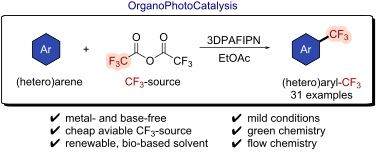
- amenable to scale-up, with continuous-flow operation delivering a significant increase in space–time yield, highlighting its potential for sustainable synthesis of CF3-containing molecules. Keywords: green chemistry; photocatalysis; photochemistry; trifluoromethylation; Introduction Trifluoromethylated




Get a better glimpse on sequential photoreactions of trisnorbornadienes with 19F NMR spectroscopy
Beilstein J. Org. Chem. 2026, 22, 527–534, doi:10.3762/bjoc.22.38
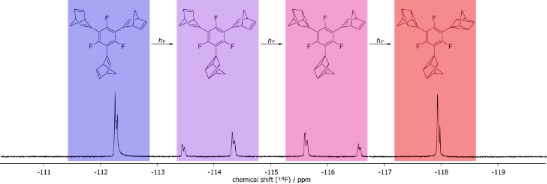
- thermal energy storage; photochemistry; photochromism; quadricyclanes; Introduction Photochromic compounds, which change their physical and chemical properties reversibly upon irradiation, figure as a versatile basis for the development of functional materials, whose performance can be switched or


Total synthesis of natural products based on hydrogenation of aromatic rings
Beilstein J. Org. Chem. 2026, 22, 88–122, doi:10.3762/bjoc.22.4
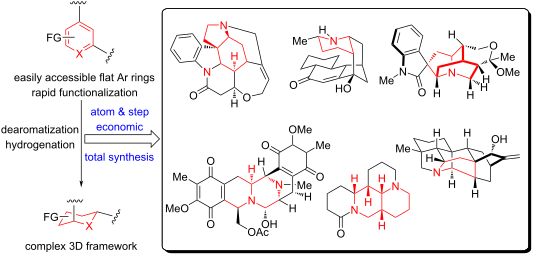
- strategies. The integration of photochemistry [13] and electrochemistry [14] into total synthesis has further extended the realm. Synthesis of complex natural product structures can promote the discovery of new reactions and the generation of new strategies [15]. However, despite careful design, the primary


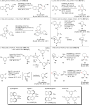
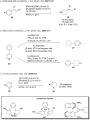
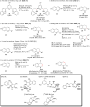
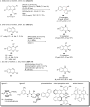
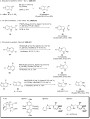
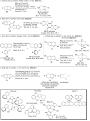


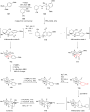


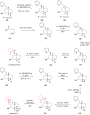


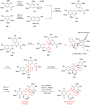


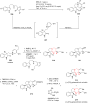

Transformation of the cyclohexane ring to the cyclopentane fragment of biologically active compounds
Beilstein J. Org. Chem. 2025, 21, 2416–2446, doi:10.3762/bjoc.21.185
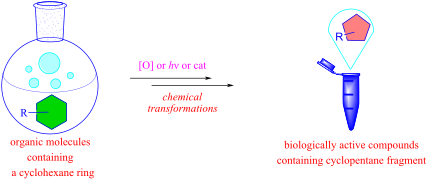
- with a yield of 51% (Scheme 28). As a result of the photolysis of 5,6-epoxy ketones 146 and 152, valuable derivatives of cyclopentane, 147a,b, 151, and 153 were obtained. Photochemistry is an important tool in the synthesis of natural and synthetic biologically active substances based on polycyclic


Rotaxanes with integrated photoswitches: design principles, functional behavior, and emerging applications
Beilstein J. Org. Chem. 2025, 21, 2345–2366, doi:10.3762/bjoc.21.179

- -bonded to a chiral peptide station. This rotaxane works as a chiroptical switch by light-induced macrocycle movement along the axle [65]. The need to understand the photochemistry of fumaramides to aid their usage in various applications led to the design of rotaxanes containing different axles. Both


Enantioselective radical chemistry: a bright future ahead
Beilstein J. Org. Chem. 2025, 21, 2283–2296, doi:10.3762/bjoc.21.174

- catalysts. The drawbacks of chiral Lewis acids have been overcome to an extent using organocatalysis. The use of photochemistry to generate radicals by light-induced electron transfer has resulted in elegant enantioselective radical transformations. Several transition-metal photocatalysts [9] and organo


Understanding the origin of stereoselectivity in the photochemical denitrogenation of 2,3-diazabicyclo[2.2.1]heptene and its derivatives with non-adiabatic molecular dynamics
Beilstein J. Org. Chem. 2025, 21, 2007–2020, doi:10.3762/bjoc.21.156
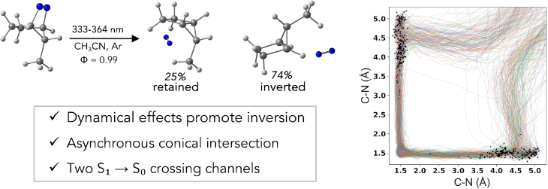
- , thereby explaining the observed selectivities. A minority of trajectories undergo thermal conversion in the ground state, producing the minor retained housane product from inverted housane/diradical. Keywords: non-adiabatic molecular dynamics; photochemistry; quantum mechanical calculations


Photochemical reduction of acylimidazolium salts
Beilstein J. Org. Chem. 2025, 21, 1973–1983, doi:10.3762/bjoc.21.153
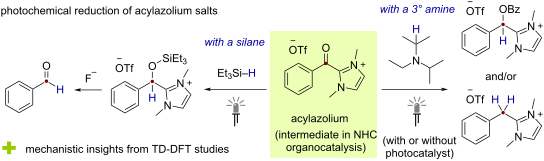
- ; carbonyls; NHCs; photochemistry; reduction; Introduction The introduction and exploration of N-heterocyclic carbenes (NHCs) ranks among the most important developments in chemistry research of the last 30 years [1][2][3]. In addition to their numerous valuable roles as ligands, including for important


Photocatalysis and photochemistry in organic synthesis
Beilstein J. Org. Chem. 2025, 21, 1645–1647, doi:10.3762/bjoc.21.128

- ; photochemistry; Soon after its first reported synthesis in 1936 [1], [Ru(bpy)3]Cl2 (bpy = 2,2'-bipyridine) and its derivatives attracted significant attention due to their photophysical properties [2][3][4]. These complexes can efficiently absorb visible light through a metal-to-ligand charge transfer (MLCT
- implement. Two decades later, photocatalysis and photochemistry remain among the most studied topics in modern organic synthesis. Nowadays, chemists can choose from a wide range of organometallic [12][13], organic [14][15], or heterogeneous photocatalysts [16][17] to trigger visible-light photoredox

Tautomerism and switching in 7-hydroxy-8-(azophenyl)quinoline and similar compounds
Beilstein J. Org. Chem. 2025, 21, 1404–1421, doi:10.3762/bjoc.21.105
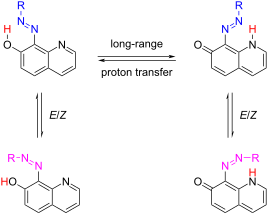
- stabilization of the azo tautomer and making possible long range proton transfer to the quinolyl nitrogen atom. Keywords: azo dyes; E/Z isomerization; DFT; NMR; photochemistry; proton transfer; tautomerism; UV–vis; Introduction Azo compounds have long been utilized as dyes in industries such as textiles




Light-enabled intramolecular [2 + 2] cycloaddition via photoactivation of simple alkenylboronic esters
Beilstein J. Org. Chem. 2025, 21, 854–863, doi:10.3762/bjoc.21.69
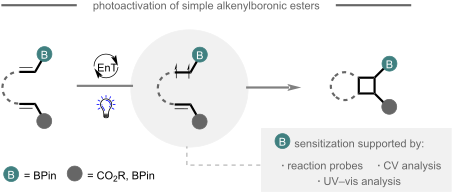
- , and control reactions support sensitization, enabling an intramolecular [2 + 2] cycloaddition to be realized accessing 3D bicyclic fragments containing a boron handle. Keywords: boron; catalysis; [2 + 2] cycloaddition; energy transfer; photochemistry; Introduction The strategic use of a photon to



Substituent effects in N-acetylated phenylazopyrazole photoswitches
Beilstein J. Org. Chem. 2025, 21, 830–838, doi:10.3762/bjoc.21.66

- structural modifications affect the synthesis, photochemical, and thermal behavior of PAP derivatives introducing NAc-PAPs as novel compound set with enhanced photochemical performance. Our findings provide valuable guidance for designing functional PAPs with tailor-made photochemistry and photophysical


Synthesis and photoinduced switching properties of C7-heteroatom containing push–pull norbornadiene derivatives
Beilstein J. Org. Chem. 2025, 21, 807–816, doi:10.3762/bjoc.21.64
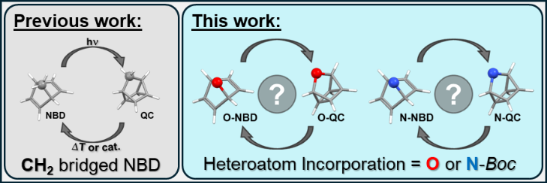
- catalytic back-conversion studies. Keywords: heterocycles; molecular solar thermal systems; norbornadiene; photochemistry; quadricyclane; Introduction In recent decades, the demand for renewable energy has increased tremendously [1]. A promising alternative to fossil fuels is the utilization of so-called




Photocatalyzed elaboration of antibody-based bioconjugates
Beilstein J. Org. Chem. 2025, 21, 616–629, doi:10.3762/bjoc.21.49
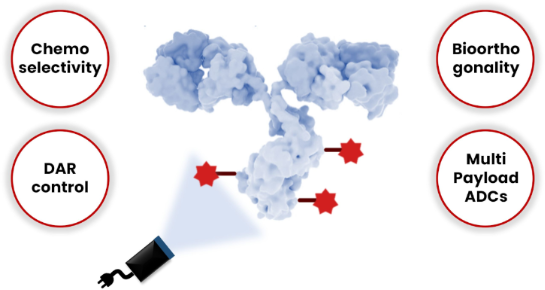
- ; bioorthogonality; chemoselectivity; late-stage functionalization; photochemistry; Introduction Antibodies represent increasingly important tools in several groundbreaking approaches to medical innovation, including basic biomedical research and therapy. One of the most critical requirements for the application of
- perhaps of no surprise that the recent renaissance of synthetic chemistry based on novel photochemical methods has been applied to their functionalization [30]. In the context of photochemistry applied to bioconjugation, photochemical affinity labelling (PAL) is a technique that has been used to create
- photochemistry continues to evolve, these strategies may pave the way for the creation of more homogeneous and optimized ADCs, enhancing their therapeutic outcomes and minimizing off-target effects. This perspective highlights the exciting future of photoredox methods in the development of next-generation ADCs


Deep-blue emitting 9,10-bis(perfluorobenzyl)anthracene
Beilstein J. Org. Chem. 2025, 21, 515–525, doi:10.3762/bjoc.21.39
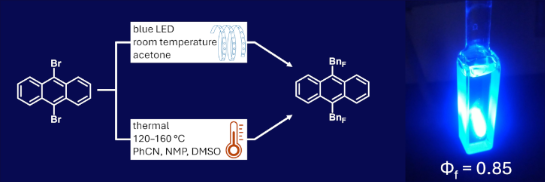
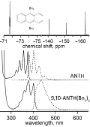
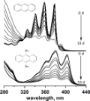
- ; perfluorobenzylation; photochemistry; Introduction The revolution of small organic molecules in the semiconductor industry continues to progress, replacing some silicon and metal-based electronic components. Acenes, such as anthracene (ANTH) and its higher homologues, represent some of the most studied materials that





Unprecedented visible light-initiated topochemical [2 + 2] cycloaddition in a functionalized bimane dye
Beilstein J. Org. Chem. 2025, 21, 500–509, doi:10.3762/bjoc.21.37
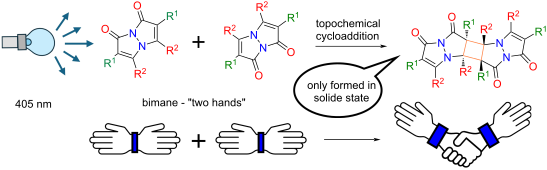
- conventions. Although these dyes have been known since 1978, their photochemistry has only been briefly explored. In this work, during the synthesis of a series of these dyes (Figure 2a), we observed an unprecedented intermolecular [2 + 2] cycloaddition of syn-(ethoxycarbonyl,chloro)bimane (Cl2B), seen in


Photomechanochemistry: harnessing mechanical forces to enhance photochemical reactions
Beilstein J. Org. Chem. 2025, 21, 458–472, doi:10.3762/bjoc.21.33

- transformation from a conceptual standpoint. Another fundamental law in photochemistry is the Beer–Lambert law, which describes a negative exponential correlation between the transmittance of a solution containing chromophores (i.e., a light-absorbing species) and the optical path length (Figure 1). In essence
- the synthesis of novel compounds and materials. While the mechanisms underlying mechanochemical reactions are still under investigation [47][48][49][50], the increasing body of research demonstrates the potential of this technique to revolutionize synthetic chemistry. Combining photochemistry with
- light energy and mechanical forces have been integrated through the years, either in a combined or sequential manner. Our goal is not to provide an exhaustive review on photomechanochemistry [34][42][55], nor a detailed explanation of solid-state photochemistry [56][57], but rather to capture a snapshot




Red light excitation: illuminating photocatalysis in a new spectrum
Beilstein J. Org. Chem. 2025, 21, 296–326, doi:10.3762/bjoc.21.22

- chemistry with significant potential in synthetic and biomedical fields. Keywords: green chemistry; medicinal chemistry; organic photochemistry; photocatalysis; red-light mediated transformations; Introduction Red-light-activated photocatalysis has recently gained significant interest as a tool for
- to narrow both absorption and emission peaks, along with a bathochromic shift in their spectra. Heptamethin cyanins, in particular, are highly relevant for NIR applications, making them valuable in photochemistry. Additionally, their solubilities, redox and photophysical properties can be fine-tuned















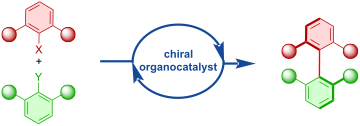
Recent advances in organocatalytic atroposelective reactions
Beilstein J. Org. Chem. 2025, 21, 55–121, doi:10.3762/bjoc.21.6
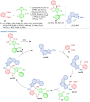
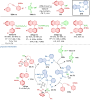
- 219oa (84%, 92% ee). The unique combination of photochemistry and Brønsted acid-catalysis by CPA (R)-C23 was utilized in the cyclization reaction of cinnamates 220 forming N-arylquinolones 221 (Scheme 65) [95]. Optimized reaction conditions led to the formation of products 221 in remarkable yields with






Emerging trends in the optimization of organic synthesis through high-throughput tools and machine learning
Beilstein J. Org. Chem. 2025, 21, 10–38, doi:10.3762/bjoc.21.3
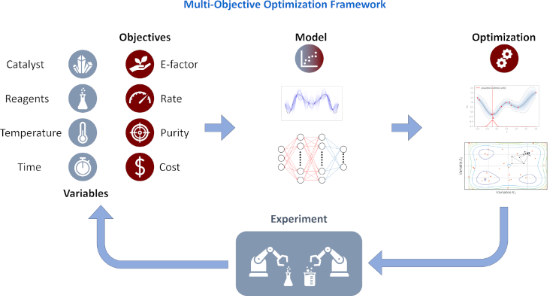
- 16 microreactors capable of executing diverse conditions in parallel, including photochemistry. The temperature of the capillary reactors can be controlled independently, providing flexibility in experimentation. The reservoir-type distributor, featuring a baffle structure, not only ensures uniform


Giese-type alkylation of dehydroalanine derivatives via silane-mediated alkyl bromide activation
Beilstein J. Org. Chem. 2024, 20, 3274–3280, doi:10.3762/bjoc.20.271
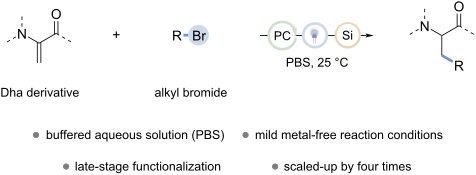
- photochemistry has introduced new ways of generating radicals like photoredox catalysis and via electron donor–acceptor (EDA) complexes [10][11][12][13]. These advances, coupled with modern electrochemical methods, chemical reactor engineering and light emitting diodes (LED), have eliminated the need for thermal



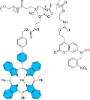
Advances in the use of metal-free tetrapyrrolic macrocycles as catalysts
Beilstein J. Org. Chem. 2024, 20, 3085–3112, doi:10.3762/bjoc.20.257
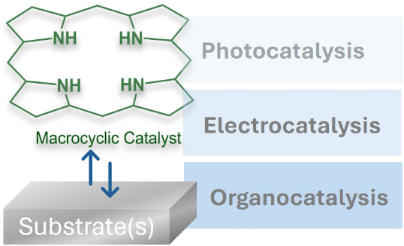
- photochemistry, porphyrins are mainly used for the generation of singlet oxygen (1O2) or other reactive oxygen species. Porphyrins in the triplet excited state can relax to the ground state by transferring energy to molecular oxygen (triplet state) forming 1O2 (Figure 13b) [67]. Photosensitized singlet oxygen
- (1O2) finds many applications in photochemistry and photobiology, e.g., for wastewater treatment, fine chemical synthesis, and photodynamic therapy (PDT) [79][80][81][82][83]. Additionally, after light excitation, porphyrins can also oxidize a substrate by accepting electrons from a substrate molecule


Extension of the π-system of monoaryl-substituted norbornadienes with acetylene bridges: influence on the photochemical conversion and storage of light energy
Beilstein J. Org. Chem. 2024, 20, 3061–3068, doi:10.3762/bjoc.20.254
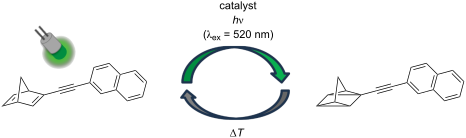
- up to 8 h at room temperature. Furthermore, the norbornadienes were transformed quantitatively into their quadricyclane photoproducts by irradiation with green light (520 nm) in the presence of a photosensitizer. Keywords: light energy conversion; photochemistry; photochromism; quadricyclanes


A review of recent advances in electrochemical and photoelectrochemical late-stage functionalization classified by anodic oxidation, cathodic reduction, and paired electrolysis
Beilstein J. Org. Chem. 2024, 20, 2500–2566, doi:10.3762/bjoc.20.214
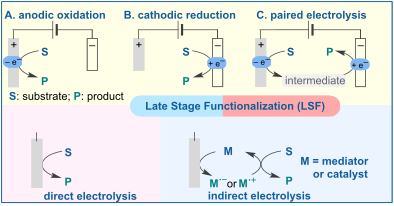
- [3]. Transition-metal-catalyzed LSF strategies have been well-established over the past decades. More recently, with the vigorous development of photochemistry and electrochemistry, numerous innovative reports on LSF using photo-, electro-, and photoelectrochemistry have emerged. These areas have


























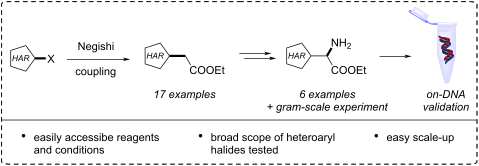
Negishi-coupling-enabled synthesis of α-heteroaryl-α-amino acid building blocks for DNA-encoded chemical library applications
Beilstein J. Org. Chem. 2024, 20, 1922–1932, doi:10.3762/bjoc.20.168
- screening and rapid optimization [46][47]. Homogenous heating and mixing in flow reactors can lead to higher reaction rates and yields. In terms of photochemistry, continuous flow setups provide enhanced light irradiation as well [48][49]. These advantages make flow chemistry a powerful tool for chemical





