


Search results
Search for "reaction mechanisms" in Full Text gives 138 result(s) in Beilstein Journal of Organic Chemistry.
Site-specific labelling of native peptides and proteins: chemical and enzymatic strategies
Beilstein J. Org. Chem. 2026, 22, 857–881, doi:10.3762/bjoc.22.67
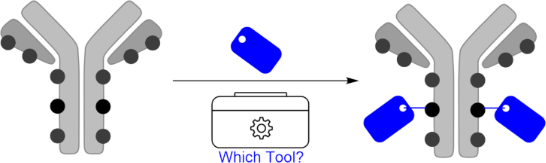
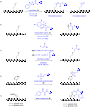
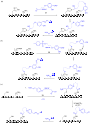
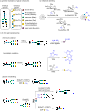
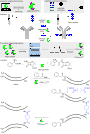
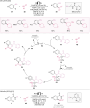
- modifications remains limited. The following examples illustrate recent advances in recruiting enzymes for native-sequence labelling, all of which rely on reaction mechanisms that activate carbonyl groups (Scheme 13). One of the most studied protein-modifying enzymes is sortase A. Recognising the LPXTG motif
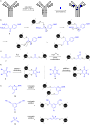
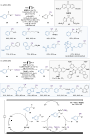
- ), glycosyltransferases (β4GalT1 Y289L) or glycosynthases to install reactive handles on native glycans, enabling precise conjugation for applications such as antibody–drug conjugates (ADCs). Generic reaction mechanisms recruited by various native-sequence modifying enzymes. a,b) Engineered biocatalysts including sortase









The trans-influence in gold chemistry from a catalytic perspective
Beilstein J. Org. Chem. 2026, 22, 838–856, doi:10.3762/bjoc.22.66
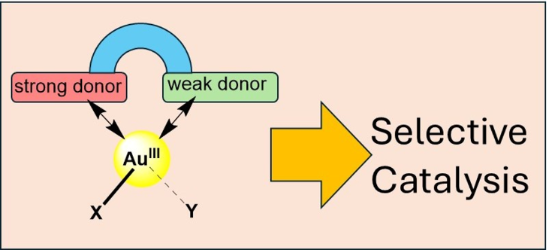
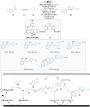
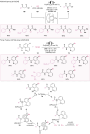
- -mediated reaction mechanisms. Following a brief discussion of general considerations, this Perspective examines how ligand structure and the resulting trans-influence determine reactivity and stability of gold(III) complexes supported by tridentate (pincer) ligands and in bidentate chelates, including


Knoevenagel condensation of 4,5- and 1,8-diazafluorenes
Beilstein J. Org. Chem. 2026, 22, 803–812, doi:10.3762/bjoc.22.62
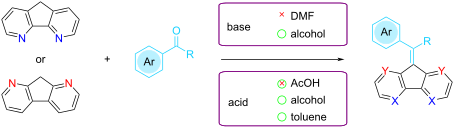
- -diazafluorenes with aromatic aldehydes and evaluated the influence of the diazafluorene nature and solvent on the reaction mechanisms and reactivity. The reactivity of diazafluorenes under basic conditions was demonstrated to be improved in protic solvents due to solvation of ion pairs by these solvents. We




Total syntheses of highly oxidative Ryania diterpenoids facilitated by innovations in synthetic strategies
Beilstein J. Org. Chem. 2025, 21, 2553–2570, doi:10.3762/bjoc.21.198
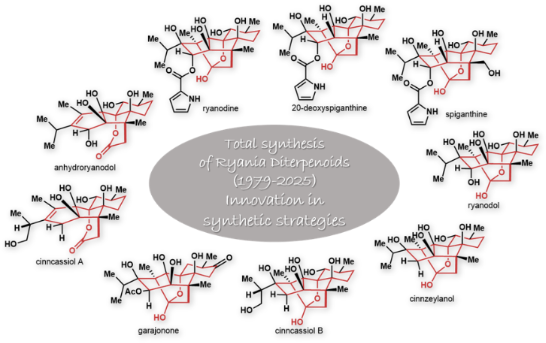
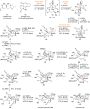
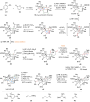
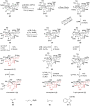
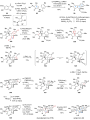
- . This field serves not only as a vital tool for molecular structure validation and the discovery of new reaction mechanisms but also as a fundamental driving force behind advances in related disciplines such as pharmaceutical science. Throughout this endeavor, innovations in methods and strategies







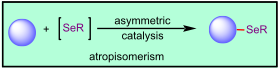
Catalytic enantioselective synthesis of selenium-containing atropisomers via C–Se bond formations
Beilstein J. Org. Chem. 2025, 21, 2447–2455, doi:10.3762/bjoc.21.186
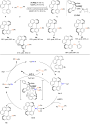
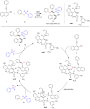
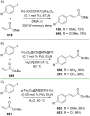
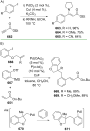
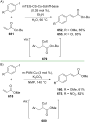
- phenyl-substituted benzoisoquinoline derivatives. Two plausible reaction mechanisms were proposed in the study: one involving oxidative addition of Int 4, a five-membered rhodium cyclic intermediate, followed by reductive elimination and the other proceeding via a bimolecular nucleophilic substitution




Recent advances in Norrish–Yang cyclization and dicarbonyl photoredox reactions for natural product synthesis
Beilstein J. Org. Chem. 2025, 21, 2315–2333, doi:10.3762/bjoc.21.177
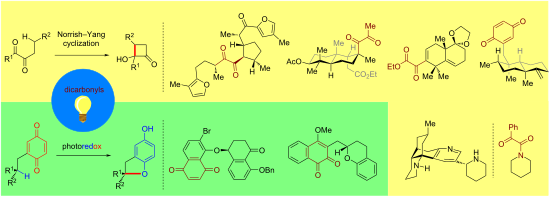
- review, drawing on examples from recently reported natural product syntheses, elaborates on reaction mechanisms, factors governing regioselectivity and stereoselectivity, and the impact of substrate structures on reaction pathways. These reactions not only serve as robust tools for the streamlined




Electrochemical cyclization of alkynes to construct five-membered nitrogen-heterocyclic rings
Beilstein J. Org. Chem. 2025, 21, 2173–2201, doi:10.3762/bjoc.21.166
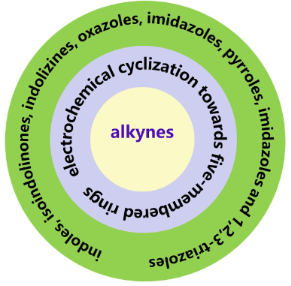
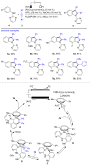
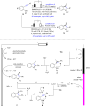
- reaction mechanisms are disclosed if available. Keywords: alkyne; catalysis; cyclization; electrochemistry; five-membered ring; Introduction Organic five-membered rings, an essential class of organic compounds, not only are frequently used as important starting materials, intermediates or ligands in



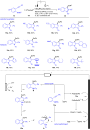


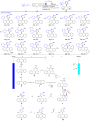


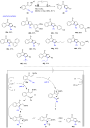


Understanding the origin of stereoselectivity in the photochemical denitrogenation of 2,3-diazabicyclo[2.2.1]heptene and its derivatives with non-adiabatic molecular dynamics
Beilstein J. Org. Chem. 2025, 21, 2007–2020, doi:10.3762/bjoc.21.156
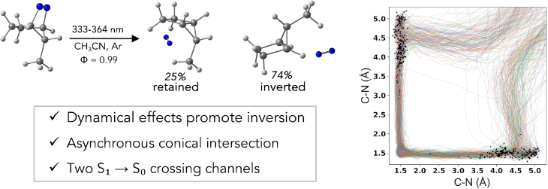
- light source. Electronic transitions to these excited states are impossible in the experiment and thus will not be considered for this photochemical mechanistic study. DBH photodenitrogenation mechanism We then turned our attention to the photochemical reaction mechanisms leading to the formation of


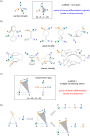
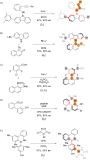
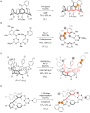
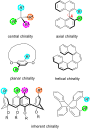
Measuring the stereogenic remoteness in non-central chirality: a stereocontrol connectivity index for asymmetric reactions
Beilstein J. Org. Chem. 2025, 21, 1995–2006, doi:10.3762/bjoc.21.155
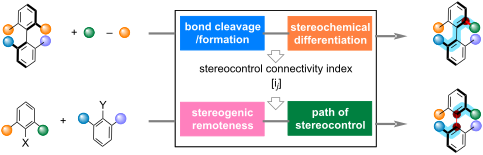
- reaction mechanisms. Particularly, the application to reactions that establish non-central chirality allows a numeric measurement of the stereogenic remoteness – an intrinsic property of non-central chirality reflected by the large values of the indices (i ≥ 3). We anticipate that application of the




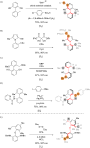

Photochemical reduction of acylimidazolium salts
Beilstein J. Org. Chem. 2025, 21, 1973–1983, doi:10.3762/bjoc.21.153
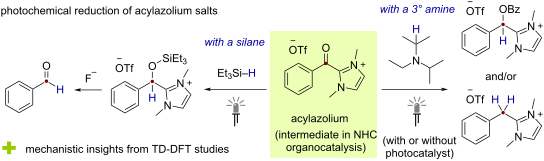
- an O-benzoylated intermediate species also being obtained under some conditions. Supported by TD-DFT studies, plausible reaction mechanisms for both processes were proposed. Moreover, further investigations employing silicon-containing additives allowed for an increase in the reduction yield beyond


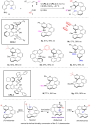
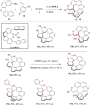
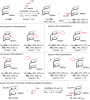
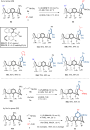
Chiral phosphoric acid-catalyzed asymmetric synthesis of helically chiral, planarly chiral and inherently chiral molecules
Beilstein J. Org. Chem. 2025, 21, 1864–1889, doi:10.3762/bjoc.21.145
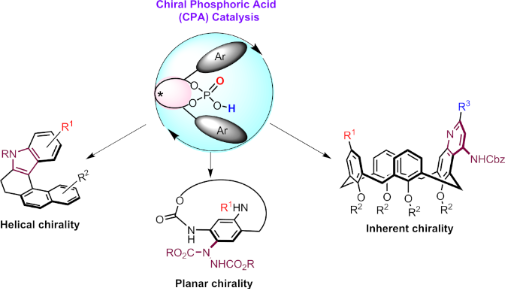
- reaction mechanisms and applications of the chiral products for selected examples. Review Helical chirality Helicenes are a group of rigid polycyclic aromatic compounds composed of ortho-fused aromatic (hetero)cyclic rings, with their helically twisted conformation enforced by steric hindrance between








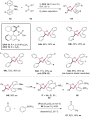
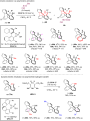

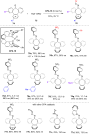
Continuous-flow-enabled intensification in nitration processes: a review of technological developments and practical applications over the past decade
Beilstein J. Org. Chem. 2025, 21, 1678–1699, doi:10.3762/bjoc.21.132
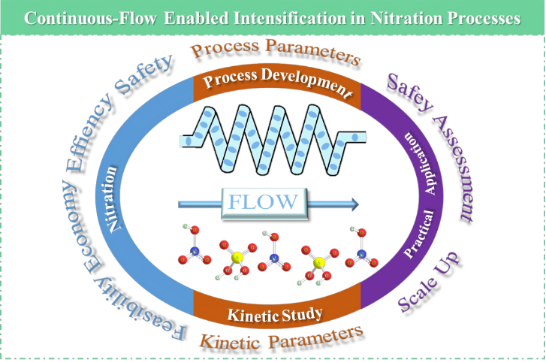
- nitration reactions follow first-order reactions due to the excessive use of nitric acid, which essentially still adhere to second-order reaction mechanisms. In kinetics studies of conventional nitration systems, while these processes usually involve liquid–liquid heterogeneous systems, researchers often




Structural analysis of stereoselective galactose pyruvylation toward the synthesis of bacterial capsular polysaccharides
Beilstein J. Org. Chem. 2025, 21, 1671–1677, doi:10.3762/bjoc.21.131

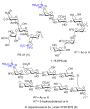
- reaction mechanisms. Through this project, we aimed to explore the practical applications of PS A1 while simultaneously enhancing our understanding of synthetic chemistry. This endeavor reflects our commitment to advancing chemical knowledge and contributing to ongoing research in the field. Next, in-depth


Recent advances in amidyl radical-mediated photocatalytic direct intermolecular hydrogen atom transfer
Beilstein J. Org. Chem. 2025, 21, 1306–1323, doi:10.3762/bjoc.21.100
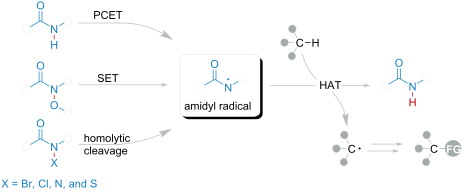
- the research of direct functionalization via HAT processes and the development of green chemistry in photocatalysis, this review will focus on the generation of amidyl radicals and reaction mechanisms and highlight the photocatalyzed reaction characteristics. This review aims to provide researchers




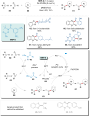


Enhancing chemical synthesis planning: automated quantum mechanics-based regioselectivity prediction for C–H activation with directing groups
Beilstein J. Org. Chem. 2025, 21, 1171–1182, doi:10.3762/bjoc.21.94
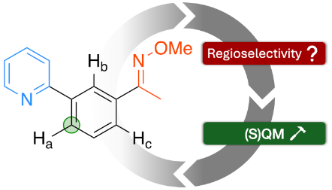
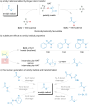
- chemistry’s structural variability. Cao et al. [14] developed an automated workflow that predicts the regioselectivity of C–H activations using extensive DFT calculations on a HPC cluster using up to 600 nodes, each containing 16 Intel Xeon E5-2670 cores. They considered two possible reaction mechanisms, an


A multicomponent reaction-initiated synthesis of imidazopyridine-fused isoquinolinones
Beilstein J. Org. Chem. 2025, 21, 1161–1169, doi:10.3762/bjoc.21.92
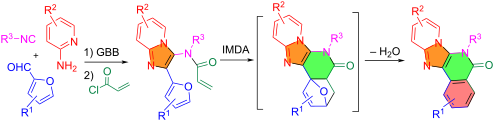
- thiophene to reduce the diene's reactivity or altering the electrophilicity of the dienophile. Based on the computational analysis of the transition states, reaction mechanisms for the IMDA and the dehydration re-aromatization process are proposed in Scheme 5. In the IMDA reaction for the preparation of




Recent advances in synthetic approaches for bioactive cinnamic acid derivatives
Beilstein J. Org. Chem. 2025, 21, 1031–1086, doi:10.3762/bjoc.21.85
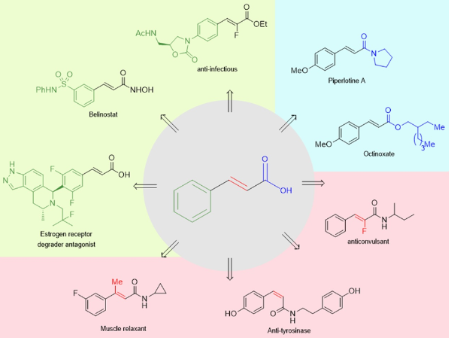
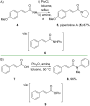
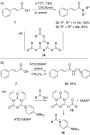
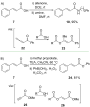
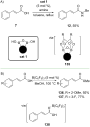
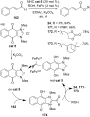
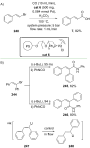
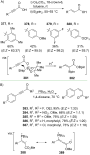
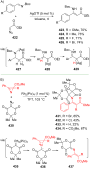
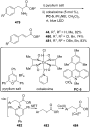
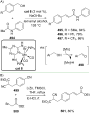
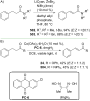
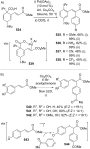
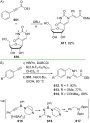
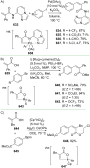
- these derivatives, this study aims to offer direct synthetic guidance and important insights into the rational design of novel cinnamate molecules with promising potential as future drug candidates. The reaction mechanisms will be discussed briefly. 2 Carboxyl group functionalization 2.1 O/N-acylations








































Recent advances in controllable/divergent synthesis
Beilstein J. Org. Chem. 2025, 21, 890–914, doi:10.3762/bjoc.21.73

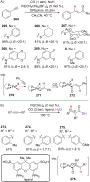
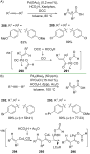
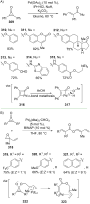
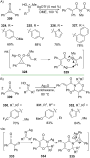
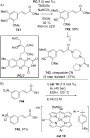
- substrates, both dicarbonylation and monocarbonylation processes occurred simultaneously with Cu(OAc)2, favoring the dicarbonylation process. In contrast, using CuBr(Me2S) the monocarbonylation process was favored. Possible reaction mechanisms: First, CO coordinates with copper salts to form (carbonyl)copper




Formaldehyde surrogates in multicomponent reactions
Beilstein J. Org. Chem. 2025, 21, 564–595, doi:10.3762/bjoc.21.45
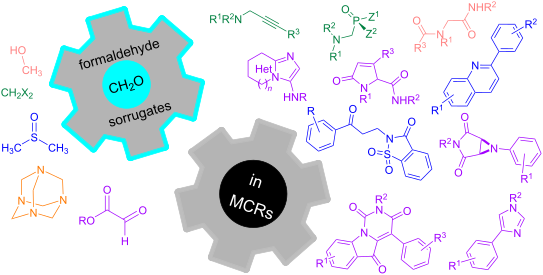
- medium or lead to the formation of the same final product as that achieved with formaldehyde, but through different reaction mechanisms. Due to the importance of this research, this review aims to summarize and analyze the significant efforts made in this regard in recent years. Major emphasis will be


Recent advances in electrochemical copper catalysis for modern organic synthesis
Beilstein J. Org. Chem. 2025, 21, 155–178, doi:10.3762/bjoc.21.9

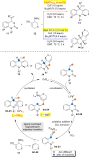
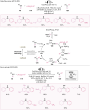
- , and benzamide, however, no relevant competitive oxidation peak was observed with only Cu(OAc)2. These results indicate that Cu(II) intermediate 5 was generated. Based on the mechanistic studies, the authors suggested plausible reaction mechanisms (Figure 4). First, the Cu(II) catalyst coordinates with








Direct trifluoroethylation of carbonyl sulfoxonium ylides using hypervalent iodine compounds
Beilstein J. Org. Chem. 2024, 20, 3182–3190, doi:10.3762/bjoc.20.263
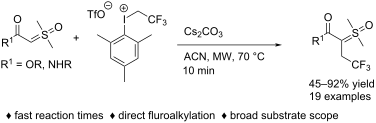
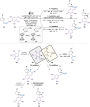
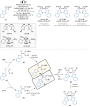
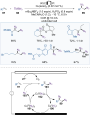
- -mediated and SN2 reaction mechanisms. Ultimately, the nudged elastic band climbing image (NEB-CI) method predicted the SN2 pathway to be favoured, and transition state optimization showed this to possess a Gibbs free energy of activation of 24.3 kcal/mol. This report shows the ease with which sulfoxonium


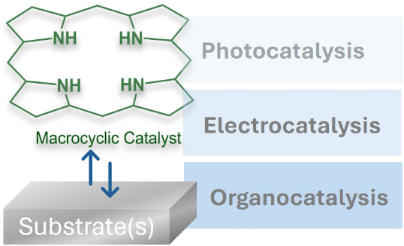
Advances in the use of metal-free tetrapyrrolic macrocycles as catalysts
Beilstein J. Org. Chem. 2024, 20, 3085–3112, doi:10.3762/bjoc.20.257


Synthesis of fluoroalkenes and fluoroenynes via cross-coupling reactions using novel multihalogenated vinyl ethers
Beilstein J. Org. Chem. 2024, 20, 2691–2703, doi:10.3762/bjoc.20.226

- , Suzuki–Miyaura and Sonogashira cross-coupling with 1 has a broad substrate scope and can be used to synthesize various fluoroalkenes 2 and fluoroenyne 3. We speculate that these reaction mechanisms were similar to general cross-coupling mechanisms [45][46]. Conclusion We used Suzuki–Miyaura and


Machine learning-guided strategies for reaction conditions design and optimization
Beilstein J. Org. Chem. 2024, 20, 2476–2492, doi:10.3762/bjoc.20.212

- extensive effort. This involves complex parameter optimization, meticulous validation against experimental data, and careful consideration of diverse reaction conditions and possible reaction mechanisms [28][29]. Although some studies employ transition-state (TS) theory to simulate activation energies and
- reaction mechanisms. These models are particularly valuable in areas where experimental data are sparse or challenging to obtain, thereby extending the range of ML applications in chemistry. Educating the next generation of chemists, engineers, and data scientists in both ML and chemical synthesis is


Regioselective alkylation of a versatile indazole: Electrophile scope and mechanistic insights from density functional theory calculations
Beilstein J. Org. Chem. 2024, 20, 1940–1954, doi:10.3762/bjoc.20.170
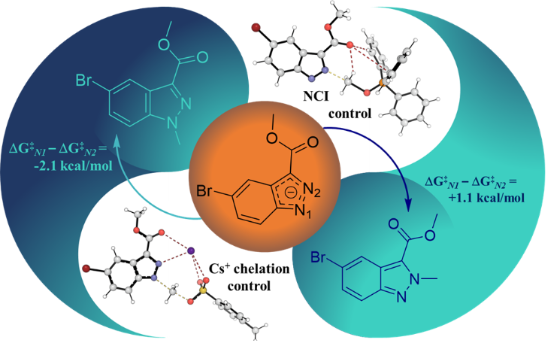
- the N1-pathway by a product ratio of 4.5:1, which supports a pathway producing the observed experimental N2-product ratios with greater than 80% yield. The N1-product was again found to be lower in energy by 4.4 kcal/mol than the N2-product. To further explore whether the reaction mechanisms followed





