Search results
Search for "release" in Full Text gives 604 result(s) in Beilstein Journal of Organic Chemistry. Showing first 200.
Construction of CF2 moieties in FDA-approved drugs (2016–2025): industrial routes, mechanisms, and scale-up considerations
Beilstein J. Org. Chem. 2026, 22, 1122–1150, doi:10.3762/bjoc.22.91
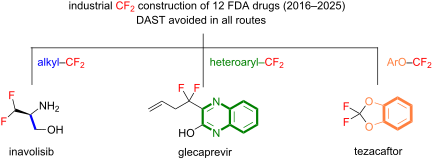
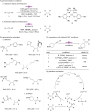
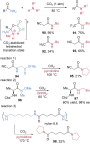
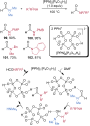
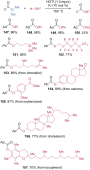
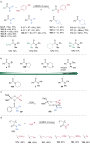
- obtain 133 in 90% yield (reported in 2023) [70]. Furthermore, for the substrate methyl 4-hydroxy-3-iodobenzoate, a difluoromethylation method using ClCF2COONa similar to that in route a has been reported on a 7 kg scale [71]. This process allows precise control of exothermicity and CO2 release, giving a






Synthesis and acaricidal activity against Varroa destructor of α- and γ-costic acid dimers
Beilstein J. Org. Chem. 2026, 22, 1088–1096, doi:10.3762/bjoc.22.87
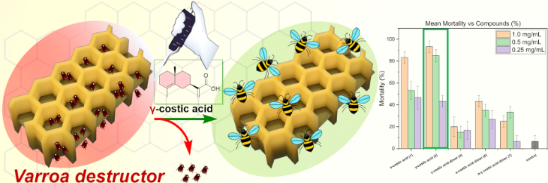
- target cells, resulting in only partial release of the active monomeric forms. Among the compounds tested, γ-costic acid (3), whose acaricidal activity had not been previously reported, demonstrated the highest potency, achieving 93% mortality. This activity surpasses that of the known α-costic acid (1


Synthesis of novel 1,2,4-oxadiazole-isoxazoline hybrids and their in silico potential with adenosine receptors
Beilstein J. Org. Chem. 2026, 22, 1033–1047, doi:10.3762/bjoc.22.82
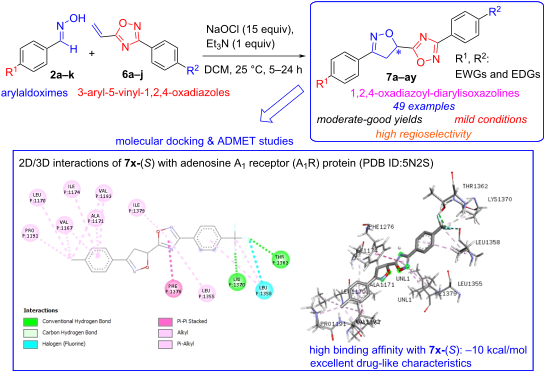
- dehydrohalogenation. This controlled release minimizes the accumulation of free nitrile oxide, thereby suppressing competitive furoxan dimerization, a common yield-limiting pathway in nitrile oxide cycloadditions. Moreover, the presence of triethylamine buffers the reaction medium and scavenges HCl, reducing over


Z-Selective semihydrogenation of alkynes via Ni/Lewis acid synergistic catalyzed system using DMF as hydrogen source and solvent
Beilstein J. Org. Chem. 2026, 22, 1004–1012, doi:10.3762/bjoc.22.79
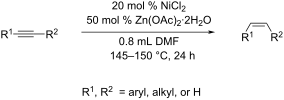
- been documented for both nickel and palladium catalysis in prior literature [11][40][49]. Maintaining an appropriate concentration of HCOOH via its gradual release from DMF hydrolysis thus seems essential for efficient semihydrogenation, a requirement that parallels findings in related transfer
- intermediate C. Following decarboxylation, the resulting dihydrido vinyl-nickel species D undergoes reductive elimination to release the (Z)-alkene product and regenerates the Ni(0) catalyst A, thereby closing the catalytic cycle. Conclusion In summary, we have developed a highly Z-selective semihydrogenation



Novel macrocycles: from synthesis to supramolecular function
Beilstein J. Org. Chem. 2026, 22, 982–985, doi:10.3762/bjoc.22.76
- perspective, Yang, Wang, Yao, and co-workers [37] discuss recent progress in smart supramolecular drug delivery systems. Their Review article highlights the utility of calixarenes and pillararenes as platforms for controlled-release applications due to their hydrophobic cavities, straightforward
- functionalization, and selective host–guest recognition properties. By organizing recent examples by internal and external stimuli, the authors outline how macrocyclic systems can regulate cargo release via supramolecular recognition and nanovalve mechanisms. The Review also discusses current challenges and future
Electrochemical reduction of unsaturated carbon–carbon bonds via 3d transition-metal catalysis
Beilstein J. Org. Chem. 2026, 22, 955–981, doi:10.3762/bjoc.22.75
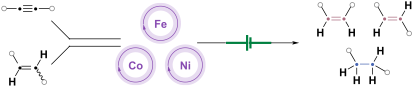
- metal–alkenyl intermediate. In some cases, this organometallic species can further undergo chain walking, where iterative β-hydride elimination and reinsertion enable migration of the metal center along the carbon skeleton before product release, thereby allowing remote hydrogenation or positional








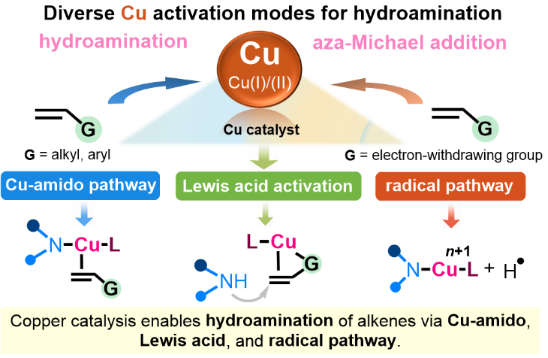
Recent advances in copper-catalyzed direct hydroamination of alkenes with (hetero)aromatic amines
Beilstein J. Org. Chem. 2026, 22, 925–947, doi:10.3762/bjoc.22.73
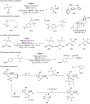
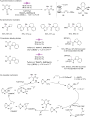
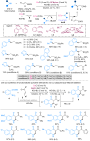
- reaction proceeded through a pathway distinct from the classical metal–amido mediated hydroamination. The combination of copper halide and silver salt generated a cationic copper complex I, which, upon coordination of the amine substrate, led to proton release and formation of a Brønsted acid species in




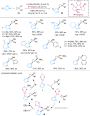


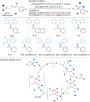

Diastereodivergent electrophilic trapping of α-boryl lithium derivatives
Beilstein J. Org. Chem. 2026, 22, 882–887, doi:10.3762/bjoc.22.68
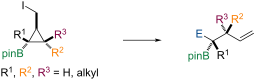
- , this work establishes α-boryl lithium intermediates as valuable stereogenic platforms for conducting highly diastereoselective nucleophilic transformations. The combination of the anion-stabilizing capability of boron with strain-release-driven ring fragmentation provides exceptional chemo- and


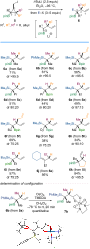


Halogenated azobenzene acrylates: from efficient solution photoswitching to stable solid-state photochromic materials
Beilstein J. Org. Chem. 2026, 22, 782–794, doi:10.3762/bjoc.22.60
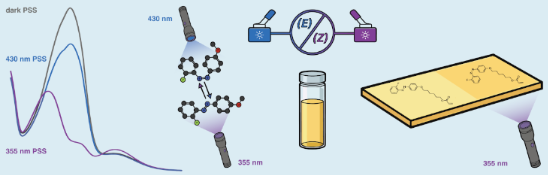
- used to construct a light–heat responsive polyurethane actuator [15], a silicon-based liquid crystalline polyacrylate with photoinduced transition from the smectic mesophase to the isotropic phase [16], a drug delivery system capable to release the drug via E/Z isomerization induced by direct (UV) or


Design, synthesis, and biological evaluation of FXR/ASK1 dual-target modulators
Beilstein J. Org. Chem. 2026, 22, 771–781, doi:10.3762/bjoc.22.59
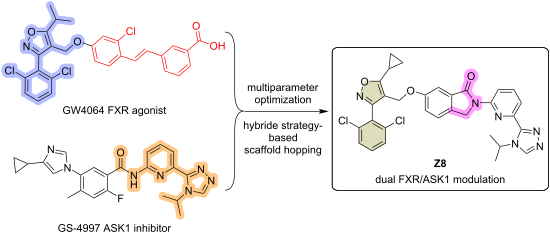
- , inflammation, and myofibroblast activation [18][19][20]. Conversely, intestinal FXR agonism has been demonstrated to promote the release of fibroblast growth factor 19 (FGF19) [21][22], which in turn has been shown to downregulate hepatic bile acid synthesis, lipogenesis, and gluconeogenesis [23][24][25]. A


Harnessing light energy with molecules
Beilstein J. Org. Chem. 2026, 22, 680–682, doi:10.3762/bjoc.22.52
- , recently coined as a “mostophore” [3]. Such energy storage systems have also been referred to as solar thermal fuels or solar thermal batteries. After light harnessing, photoisomerization generates a metastable compound of higher energy. Thermal back-reaction results in the release of the energy again as
- heat. This process is preferably induced by an external stimulus or by a catalyst, which enables a controlled energy release when needed. Overall, the process corresponds to a closed cycle of energy uptake and release. This thematic issue has a strong focus on MOST systems and showcases various
Using generative AI to transform peptide hits into small molecule leads
Beilstein J. Org. Chem. 2026, 22, 672–679, doi:10.3762/bjoc.22.51
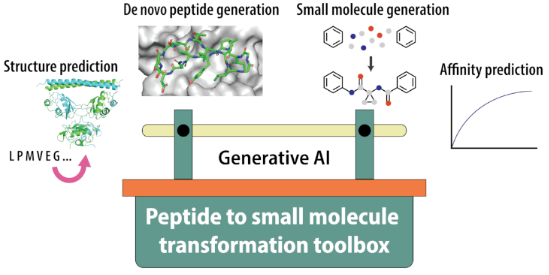
- -based drug design. Generative AI for peptide design Building off the success of structure prediction tools, a major area of growth has been in new AI-based tools for designing de novo protein binders, many of which can be adapted to peptides. The release of RFdiffusion [42] and ProteinMPNN [35] from


Hydrogen production from formic acid catalyzed by NHC–Cu complexes
Beilstein J. Org. Chem. 2026, 22, 620–627, doi:10.3762/bjoc.22.48
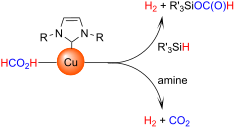
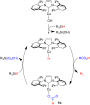
- )] (1a) with formic acid provides the formato species [Cu{OC(O)H}(IPr)] (1b) [52][53]. It was hypothesized that the thermal decarboxylation of 1b would generate in situ a highly reactive hydride species. The reaction of the latter with formic acid would regenerate the formato complex and release H2



Melifoliox B, a novel phloroglucin derivative isolated from Melicope barbigera (Rutaceae) and synthesis of new oxidation products from melifoliones A and B
Beilstein J. Org. Chem. 2026, 22, 535–546, doi:10.3762/bjoc.22.39
- mounting of the crystals, all specimens exhibited weak and diffuse diffraction patterns, which significantly limited data quality. This behavior is attributed to poor crystallinity and partial disorder within the crystal, likely exacerbated by the gradual release of solvent molecules during sample handling



Get a better glimpse on sequential photoreactions of trisnorbornadienes with 19F NMR spectroscopy
Beilstein J. Org. Chem. 2026, 22, 527–534, doi:10.3762/bjoc.22.38
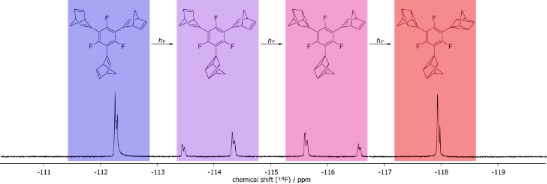
- ] cycloaddition reaction, these compounds are transformed into an energy-rich metastable photoproduct that, upon application of an external stimulus, isomerizes back in a cycloreversion reaction to the starting compound with the release of heat (Scheme 1) [5][7]. In comparison with other photochromic compounds
- the physicochemical parameters of the light energy storage and release, the thermally induced cycloreversion of 2f0,3 was investigated. Analysis of the cycloreversion at different temperatures revealed a half-life, t1/2, of 55 d at 25 °C, an activation enthalpy ΔH = 99.4 kJ/kg, and an activation
- entropy of ΔS = −42 J/K mol (see Supporting Information File 1, Figure S2). The energy density of trisquadricyclane 2f0,3 was determined with simultaneous thermal analysis (STA) with a heat release of 458 kJ/kg. Additionally, a second exothermic peak (>150 °C) correlated with a significant decrease in


Recent advances in the cleavage of non-activated amides
Beilstein J. Org. Chem. 2026, 22, 352–369, doi:10.3762/bjoc.22.23
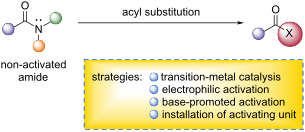
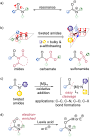
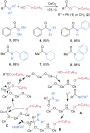
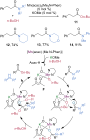
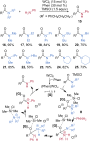
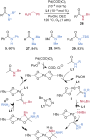
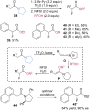
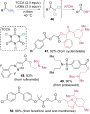
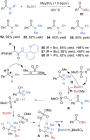
- that coordination of the amide oxygen to the Lewis-acidic sites of Nb activates the amide toward nucleophilic attack. Simultaneously, water is pre-adsorbed on the basic oxygen sites of Nb2O5, enabling nucleophilic attack on the activated carbonyl center (D). Following amine release from the resulting










Arene activation via π-bond localization: concepts and opportunities
Beilstein J. Org. Chem. 2026, 22, 257–273, doi:10.3762/bjoc.22.19
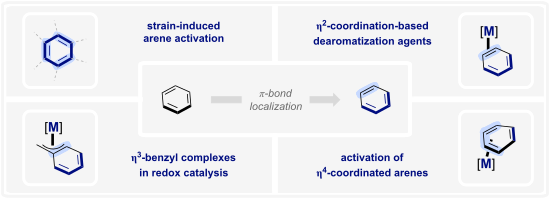
- arene activation offers powerful opportunities in reactivity design. Notably, the small-ring annelation exerts a dual influence: it lowers kinetic barriers and enhances regioselectivity, with strain-release providing the key thermodynamic driving force to overcome aromatic stabilization. Synthetic
- , increases π-bond localization, rendering phenylenes more susceptible to hydrogenation, metal complexation, ring opening, and cycloaddition reactions [39]. Building on these intriguing studies and the ongoing renaissance of strain-release-driven catalysis [40], harnessing small-ring strain to drive




Configuration–packing synergy enabling integrated crystalline-state RTP and amorphous-state TADF
Beilstein J. Org. Chem. 2026, 22, 224–236, doi:10.3762/bjoc.22.16
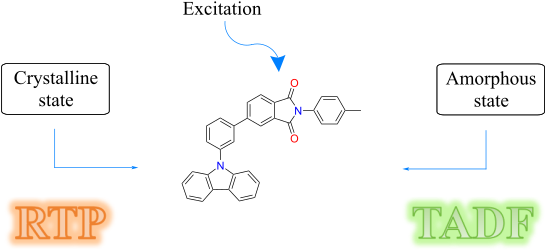
- . On the other hand, the small ΔEST plays a critical role in facilitating the RISC process, as it lowers the thermal activation barrier between the S1 and T1 states. This small energy gap makes it easier for the T1 to upconvert to the S1 through the RISC process, resulting in the release of energy in


Synthesis of diaryl phosphates using phytic acid as a phosphorus source
Beilstein J. Org. Chem. 2026, 22, 213–223, doi:10.3762/bjoc.22.15
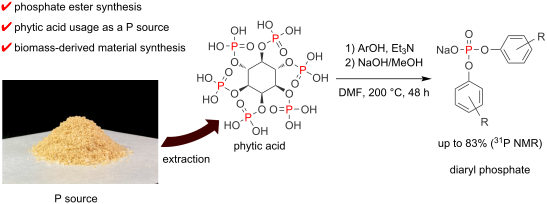
- condense into a myo-inositol skeleton. Phytic acid can be enzymatically hydrolyzed in the presence of phytases, resulting in the release of phosphoric acid molecules [3][4][5]. Plants and microorganisms possess their own phytases and thus utilize phytic acid as a phosphorus source. However, the artificial
- gives a lower yield because the phytic acid forms a syrup-like precipitate in the reaction mixture due to its poor solubility in organic solvents, thereby preventing efficient release of phosphoric acid into the reaction mixture. The plot depicted in Figure 4 shows that there is almost no induction


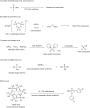


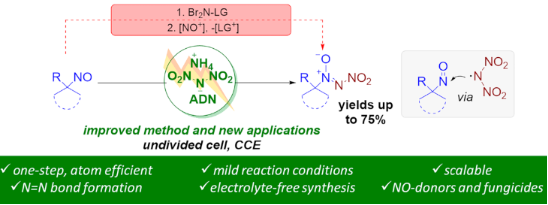
Sustainable electrochemical synthesis of aliphatic nitro-NNO-azoxy compounds employing ammonium dinitramide and their in vitro evaluation as potential nitric oxide donors and fungicides
Beilstein J. Org. Chem. 2025, 21, 2739–2754, doi:10.3762/bjoc.21.211
- -nitrosopropane (1a) is expected to be barrierless with the formation of N-oxyl radical B. The radical B undergoes very low-barrier (ΔG≠ 5.5 kcal/mol) fragmentation with the release of NO2 molecule and formation of the final product 2a. An alternative pathway for the formation of 2a is a direct NO2 extrusion from
- synthesized nitro-NNO-azoxy compounds were tested for fungicidal activity against phytopathogenic fungi and for NO-release activity. Earlier we have demonstrated [87] that nitro-NNO-azoxy arenes were discovered as a novel class of fungicides, with in vitro activity against a broad range of phytopathogenic
- investigated an ability to release NO for the synthesized aliphatic nitro-NNO-azoxy compounds (Figure 4). Well-known NO-donor compounds 3-carbamoyl-4-(hydroxymethyl)furoxan (CAS-1609) [100][101] and nitroglycerin (NG) [102] were used as reference agents. The NO2− assumed to be formed as a result of NO





Mechanistic insights into hydroxy(tosyloxy)iodobenzene-mediated ditosyloxylation of chalcones: a DFT study
Beilstein J. Org. Chem. 2025, 21, 2703–2715, doi:10.3762/bjoc.21.208
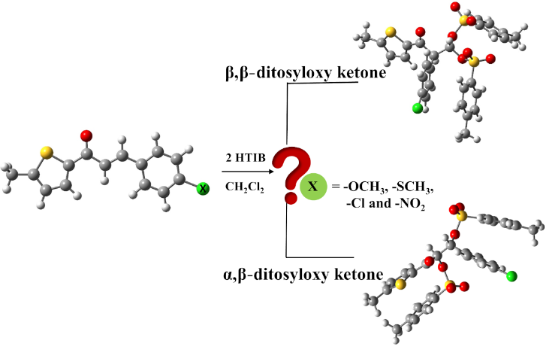
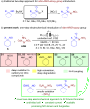
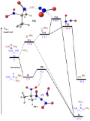
- HTIB attacks at the α-position resulting in release of IPh from Int3. This attack would lead to the formation of α,β-ditosyloxy ketones (vicinal product) (Scheme 4). It is evident from the comparison between reaction profiles shown in Figure 6 and Figure 7 vis-à-vis reaction profile shown in Figure 2


Silica gel with covalently attached bambusuril macrocycle for dicyanoaurate sorption from water
Beilstein J. Org. Chem. 2025, 21, 2604–2611, doi:10.3762/bjoc.21.201
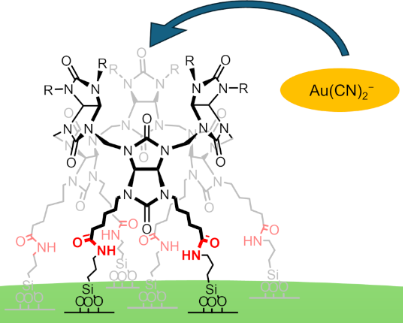
- release any BU1 and therefore, the macrocycle is indeed covalently bound in the SG-NHCO-BU1 material. This is in contrast with the SG-BU1 material, which released BU1 to the KOH solution as evidenced by marked changes of dicyanoaurate in its absorption spectra (Figure 1C). A potential application of these
- presence of salt showing it is suitable for applications in an aqueous environment. SG-BU1 proved to be stable in chloroform, dichloromethane, and methanol even after addition of TBACl or NaCl, respectively. We did not detect any release of BU1 from SG-BU1 in aqueous phosphate buffer by NMR, but we


Total syntheses of highly oxidative Ryania diterpenoids facilitated by innovations in synthetic strategies
Beilstein J. Org. Chem. 2025, 21, 2553–2570, doi:10.3762/bjoc.21.198
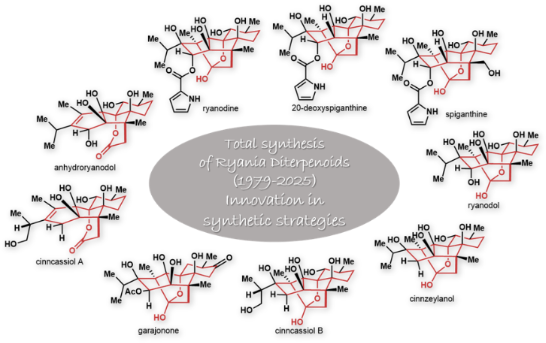
- activities and serves as a potent modulator of intracellular calcium release channels. In contrast to ryanodol (4), compound 1 possesses a pyrrole-2-carboxylate ester moiety at the C3 position. This ester group can be cleaved via hydrolysis to yield 4. However, the reverse transformation – the synthesis of
- )allylium tetrafluoroborate, which was then coupled to the C3 hydroxy group via Yamaguchi esterification. Global deprotection subsequently afforded ryanodine (1) in 10 steps, thus achieving this critical synthetic transformation. Although the interaction of ryanodine with intracellular calcium release







Effect of a photoswitchable rotaxane on membrane permeabilization across lipid compositions
Beilstein J. Org. Chem. 2025, 21, 2498–2512, doi:10.3762/bjoc.21.192
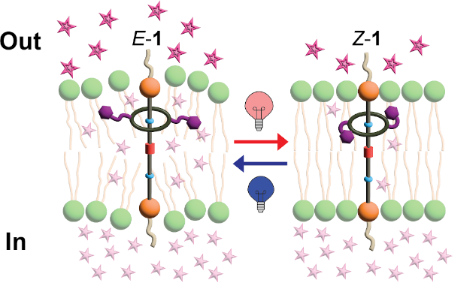
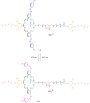
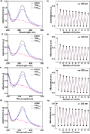
- modulate membrane permeability in large unilamellar vesicles (LUVs) of varying lipid compositions. Upon photoisomerization, the rotaxane significantly enhanced the release of the hydrophilic dye sulforhodamine B in vesicles composed of EYPC/Chol 8:2, with release increasing from 29% (non-irradiated) to 59
- % (irradiated). Moreover, gel-phase DPPC bilayers also exhibited an increase in release from 7% to 14%. On the contrary, highly fluid pure EYPC bilayers showed high baseline release upon rotaxane incorporation (64%), with photoswitching producing only a slight increase (70%), as most dye was released within the
- first minutes of rotaxane insertion. Likewise, azobenzene photoswitching did not induce permeabilization in the more rigid and thicker EYPC/Chol 6:4 bilayers, which showed minimal release (5%). Furthermore, we discovered that when the unthreaded axle is irradiated with light, an unknown, irreversible




Assembly strategy for thieno[3,2-b]thiophenes via a disulfide intermediate derived from 3-nitrothiophene-2,5-dicarboxylate
Beilstein J. Org. Chem. 2025, 21, 2489–2497, doi:10.3762/bjoc.21.191
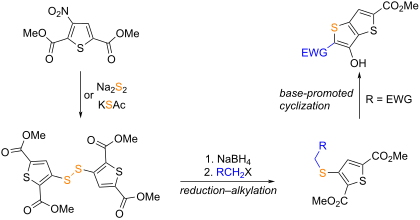
- reaction conditions to release thiolate species capable of reacting separately with ester 1 to form compound 2. Disulfide 3 was found to be an accessible and stable precursor of dimethyl 3-mercaptothiophene-2,5-dicarboxylate, a molecule that is suitable for S-alkylation. In this regard, reductive cleavage