


Search results
Search for "Au(III)" in Full Text gives 32 result(s) in Beilstein Journal of Organic Chemistry.
The role of silver additives in gold-mediated C–H functionalisation
Beilstein J. Org. Chem. 2011, 7, 892–896, doi:10.3762/bjoc.7.102
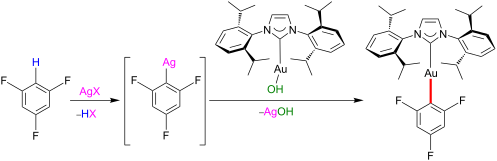
- (Scheme 2) [16]. The observation of a high kinetic isotope effect is suggestive of a concerted metalation–deprotonation mechanism, as first suggested for Pd(II) complexes, in which a pivalate ligand behaves as a proton acceptor via a six-membered transition state [17]. However, addition via a transient Au
- (III) hydride would also be consistent with these observations. Results and Discussion We became interested in understanding the mechanistic details of this transformation by identifying the role of the individual components. Reactions were performed between individual reagents and the formation of


Gold-catalyzed propargylic substitutions: Scope and synthetic developments
Beilstein J. Org. Chem. 2011, 7, 866–877, doi:10.3762/bjoc.7.99

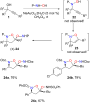
- , allylsilanes, aromatic compounds and nitrogen nucleophiles. Interestingly, these reactions were not limited to monosubstituted propargylic alcohols [19][20][21][22]. In 2005, we described the direct Au(III)-catalyzed substitution of propargylic alcohols in the presence of various nucleophiles (allylsilanes
- room temperature was investigated (Scheme 2, Table 1). Gratifyingly, the reaction proved to be efficient with various Au(III) reagents (at 5% catalyst loading) (Table 1, entries 1–4). The best results were observed with NaAuCl4·2H2O (Table 1, entry 1). In the presence of Au(I) catalysts (Table 1
- allylic and a propargylic alcohol, was submitted to the same reaction conditions. A 2:2:1 inseparable mixture of SN 2p and SN’ 2q and 2r products was obtained (Scheme 3). The Au(III)-catalyzed reaction was next investigated for diverse series of nucleophiles. A large number of nucleophiles are very




Au(I)/Au(III)-catalyzed Sonogashira-type reactions of functionalized terminal alkynes with arylboronic acids under mild conditions
Beilstein J. Org. Chem. 2011, 7, 808–812, doi:10.3762/bjoc.7.92
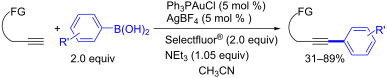
- , Chinese Academy of Sciences, Ling Ling Road 345 Shanghai 200032 (P. R. China) 10.3762/bjoc.7.92 Abstract A straightforward, efficient, and reliable redox catalyst system for the Au(I)/Au(III)-catalyzed Sonogashira cross-coupling reaction of functionalized terminal alkynes with arylboronic acids under
- , this transformation catalyzed by gold, involving Au(I)/Au(III) catalytic cycles has, as yet, been less explored [15][16][17][18][19][20][21][22]. In the few examples already documented some conditions, such as rather high reaction temperatures (130 °C), high catalysis loading or special reagents were
- required [23]. Herein, we report a straightforward, efficient and robust catalyst system for the Sonogashira-type cross-coupling, in which Au(I)/Au(III) catalyzed Csp2–Csp bond formation of terminal alkynes from arylboronic acids under mild conditions. By analogy with other d10 species, Au(I) has the same


Gold-catalyzed heterocyclizations in alkynyl- and allenyl-β-lactams
Beilstein J. Org. Chem. 2011, 7, 622–630, doi:10.3762/bjoc.7.73
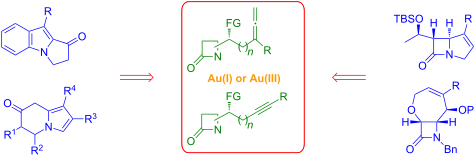
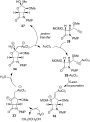
- five-membered oxacycle. A computational study (using density functional theory, DFT) of the above heterocyclization has been carried out [50]. The Au(III)-catalyzed cyclization of γ-allenol I (Figure 1) takes place regio- and stereoselectively through a 5-exo hydroalkoxylation because of a kinetic
- of Au(III)-catalyzed reaction is determined by the presence or absence of a methoxymethyl protecting group at the γ-allenol oxygen atom, thus allenols 8 gave 5-exo hydroalkoxylation whilst γ-allenol derivatives 14 exclusively underwent a 7-endo oxycyclization. Thus, it has been demonstrated that
- would then liberate the compound 15 with concomitant regeneration of the Au(III) species. Probably, the proton in the last step of the catalytic cycle arises from trace amounts of water present in the solvent or the catalyst. In the presence of the MOM group, 5-exo cyclization falters. As calculations



One-pot gold-catalyzed synthesis of 3-silylethynyl indoles from unprotected o-alkynylanilines
Beilstein J. Org. Chem. 2011, 7, 565–569, doi:10.3762/bjoc.7.65
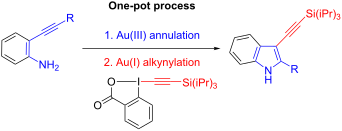
- Jonathan P. Brand Clara Chevalley Jerome Waser Laboratory of Catalysis and Organic Synthesis, Ecole Polytechnique Fédérale de Lausanne, EPFL SB ISIC LCSO, BCH4306, 1015 Lausanne, Switzerland 10.3762/bjoc.7.65 Abstract The Au(III)-catalyzed cyclization of 2-alkynylanilines was combined in a one
- access to 3-silylalkynyl indoles. To the best of our knowledge, this is the first example of a one-pot process combining a Au(III) and a Au(I) catalyst. Findings 2-Alkynylanilines 2 can be efficiently prepared from 2-iodoanilines 4 and terminal alkynes via Sonogashira reaction with Et3N as solvent
- sequential processes using both Au(I) and Au(III) have not yet been reported. AuCl and TIPS-EBX (1) were added when full conversion of the NaAuCl4-catalyzed cyclization was observed. When 2 mol % of NaAuCl4 and 2 mol % AuCl were added, the second step was unsuccessful. However, with 2 mol % of NaAuCl4 and 4


A review of new developments in the Friedel–Crafts alkylation – From green chemistry to asymmetric catalysis
Beilstein J. Org. Chem. 2010, 6, No. 6, doi:10.3762/bjoc.6.6
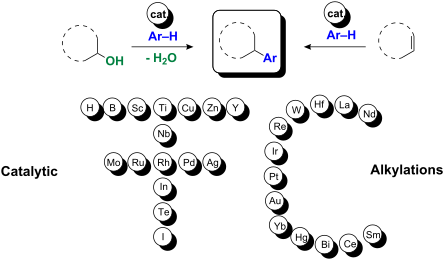
- silicon-based Lewis acids were used as catalysts (Scheme 26). Chan and co-workers developed an efficient Au(III)-catalyzed FC arylation of cinnamyl alcohols 64 and electron-rich arenes such as 2,6-dimethylphenol 65. The authors found that this transformation can be catalyzed by various transition metals
- and Brønsted acids, including Au(III), Ag(I), In(III), Zn(II), Cu(II) salts or sulfonic acids. AuCl3 was the most reactive and was subsequently used for further studies. With 5 mol% of catalyst and performing the reaction at room temperature, the desired allylated arenes and heteroarenes 66 were
- -catalyzed synthesis of methyleugenol. FC allylation/cyclization reaction yielding substituted chromanes. Synthesis of (all-rac)-α-tocopherol utilizing Lewis- and strong Brønsted-acids. Au(III)-catalyzed cinnamylation of arenes. “Exhaustive” allylation of benzene-1,3,5-triol. Palladium-catalyzed allylation


Gold film- catalysed benzannulation by Microwave- Assisted, Continuous Flow Organic Synthesis (MACOS)
Beilstein J. Org. Chem. 2009, 5, No. 35, doi:10.3762/bjoc.5.35
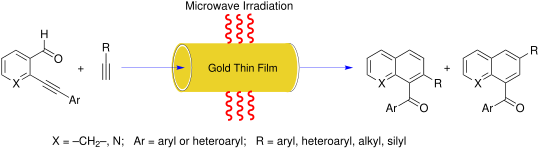
- (I)X, Au(III)X3, [32][33][34] and Au nanoparticles dispersed on different supports. For Au(III) catalysts, the reaction has been proposed to proceed via the formation of no less than four organogold intermediates and/or complexes (Figure 1). Further, it has been shown computationally by Straub that
- Au(I) and Au(III) can perform both this and related catalytic cycles with similar energy profiles [35]. This blurs the distinction of the two pathways and raises the possibility that the actual active species in these transformations could be either species, providing that the possibility exists for
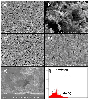
- , 124.6, 122.2, 51.0, 45.7, 20.4. HRMS calcd. for C29H28N2O2: 436.2151; found 436.2147. Mechanism of Au(III)-catalyzed benzannulation between aromatic carbonyls and alkynes. X-ray analysis of the metal films used in this benzannulation study. Panels a–e are scanning-electron micrographs (SEM) of all films


Other Beilstein-Institut Open Science Activities



