


Search results
Search for "acetylcholinesterase" in Full Text gives 32 result(s) in Beilstein Journal of Organic Chemistry.
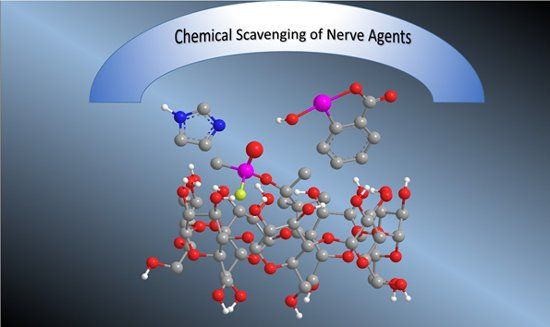
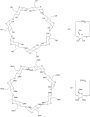
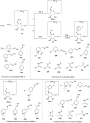
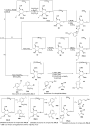
Interactions of cyclodextrins and their derivatives with toxic organophosphorus compounds
Beilstein J. Org. Chem. 2016, 12, 204–228, doi:10.3762/bjoc.12.23






A one-pot multistep cyclization yielding thiadiazoloimidazole derivatives
Beilstein J. Org. Chem. 2014, 10, 2989–2996, doi:10.3762/bjoc.10.317
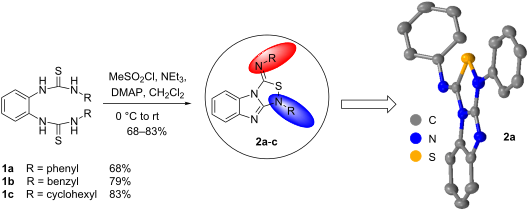
- ], acetylcholinesterase inhibitors [3], and antibacterial agents [4][5]. Due to the strong inhibitory activity of 1,2,4-thiadiazoles against kinase-3β, they can be used for treatment of diabetes (type II) and chronic inflammation [6][7]. Therefore, their synthesis is a field of continuing interest for many chemists [1][8


Aspergiloid I, an unprecedented spirolactone norditerpenoid from the plant-derived endophytic fungus Aspergillus sp. YXf3
Beilstein J. Org. Chem. 2014, 10, 2677–2682, doi:10.3762/bjoc.10.282
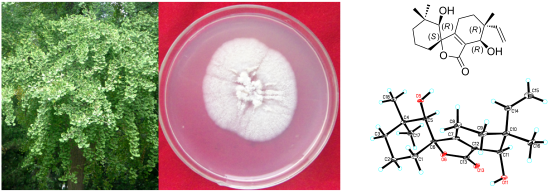
- anti-oxidant, and acetylcholinesterase (AChE), α-glucosidase, and topoisomerase IIα inhibitory activities at a concentration of 50 μg/mL. Antimicrobial activities against a variety of plant pathogenic bacteria (Xanthomonas oryzae pv. oryzae Swings, Xanthomonas oryzae pv. oryzicola Swings, Acidovorax
- biosynthetically derived from hypothetical intermediate pimarane compound 2, the hemiketal lactone ring-opening product of aspergiloid E. In biological tests, 1 showed no cytotoxic, antimicrobial, anti-oxidant, acetylcholinesterase (AChE), α-glucosidase, and topoisomerase IIα inhibitory activities. In order to
- graminearum Schw., Fusarium coeruleum Sacc., Botrytis cinerea Pers., and Fusarium oxysporum f. sp. cubense race 4), and Candida albicans (ATCC 10231), and the antioxidant, acetylcholinesterase (AChE) , α-glucosidase, and topoisomerase IIα inhibitory activities were performed in accordance with the primary


Preparation of neuroprotective condensed 1,4-benzoxazepines by regio- and diastereoselective domino Knoevenagel–[1,5]-hydride shift cyclization reaction
Beilstein J. Org. Chem. 2014, 10, 2594–2602, doi:10.3762/bjoc.10.272
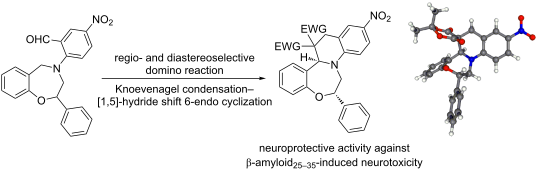
- ) [24] increased cell viability by 17.3% and 22.4% in H2O2 and Aβ25–35 model, respectively. Compounds rac-7a,b and rac-5 did not show acetylcholinesterase inhibitory effect. Conclusion Regioselective domino Knoevenagel–[1,5]-hydride shift cyclization reactions of a 4-aryl-2-phenyl-1,4-benzoxazepine


Multicomponent reactions in nucleoside chemistry
Beilstein J. Org. Chem. 2014, 10, 1706–1732, doi:10.3762/bjoc.10.179
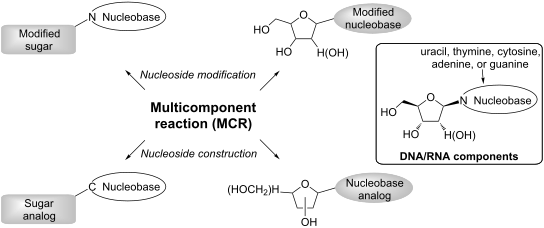
- allowed the authors to perform these reactions with ten times smaller volume of the solvent than that employed in the reactions carried out under conventional heating conditions. Compound 83b showed promising activity against acetylcholinesterase at a concentration of 100 µmol/L. 6. The Hantzsch reaction


Selective copper(II) acetate and potassium iodide catalyzed oxidation of aminals to dihydroquinazoline and quinazolinone alkaloids
Beilstein J. Org. Chem. 2013, 9, 1194–1201, doi:10.3762/bjoc.9.135

- ; quinazoline alkaloid; Introduction Quinazoline alkaloids are a class of naturally occurring compounds with a range of medicinal properties and have been indicated for use as bronchodilators, vasodilators, anti-inflammatory agents and acetylcholinesterase inhibitors [1][2][3][4][5]. Many of the plants these


Highly efficient cyclosarin degradation mediated by a β-cyclodextrin derivative containing an oxime-derived substituent
Beilstein J. Org. Chem. 2011, 7, 1543–1554, doi:10.3762/bjoc.7.182
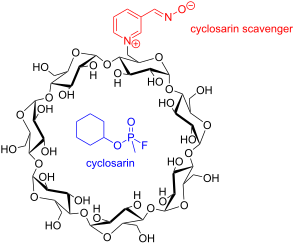
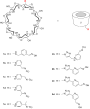
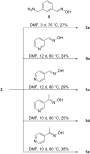
- substituents with an aldoxime or a ketoxime moiety along the narrow opening of the β-cyclodextrin cavity was synthesized, and the ability of these compounds to reduce the inhibitory effect of the neurotoxic organophosphonate cyclosarin on its key target, acetylcholinesterase, was assessed in vitro. All
- the nine compounds investigated, one exhibited remarkable activity, completely preventing acetylcholinesterase inhibition by the (−)-enantiomer of cyclosarin within seconds under the conditions of the assay. Thus, these investigations demonstrate that decoration of cyclodextrins with appropriate
- substituents represents a promising approach for the development of scavengers able to detoxify highly toxic nerve agents. Keywords: acetylcholinesterase; cyclodextrins; cyclosarin; neurotoxic organophosphonates; oximes; Introduction Cyclodextrins, cyclic oligosaccharides composed of α-1,4-linked D-glucose





Other Beilstein-Institut Open Science Activities



