


Search results
Search for "acidic conditions" in Full Text gives 400 result(s) in Beilstein Journal of Organic Chemistry. Showing first 200.
Influence of the cation in hypophosphite-mediated catalyst-free reductive amination
Beilstein J. Org. Chem. 2025, 21, 1661–1670, doi:10.3762/bjoc.21.130
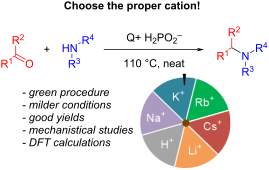
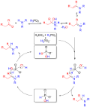
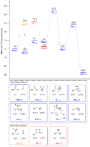
- alkali metals, such as Li, K, Rb, and Cs was studied in the reductive amination for the first time. The reactivity was strongly influenced by acidity and the nature of the alkali metal cation: under neutral conditions, the yield decreased from Na to Cs, while acidic conditions with H3PO2 reversed this


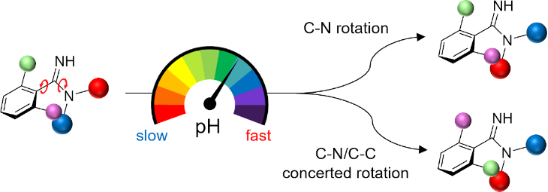
pH-Controlled isomerization kinetics of ortho-disubstituted benzamidines: E/Z isomerism and axial chirality
Beilstein J. Org. Chem. 2025, 21, 1568–1576, doi:10.3762/bjoc.21.120
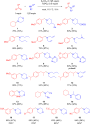
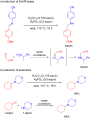
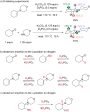
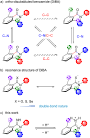
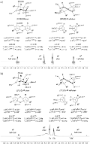
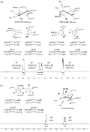
- that the pH dependence was relatively smaller in the case of amidine 7 (X = NMe2). This fact could be rationalized by the existence of different protonation states of amidine 7 (Figure 7b). In the case of amidine 7, both the amidine moiety and the NMe2 group could be protonated under acidic conditions
- , and the NMe2-protonated species has a similar double-bond nature for the C–N bond as the molecular form. Thus, it can be assumed that the presence of the NMe2-protonated species reduced the apparent population of the protonated amidine under acidic conditions, resulting in a decrease in the inhibitory

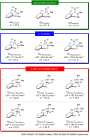


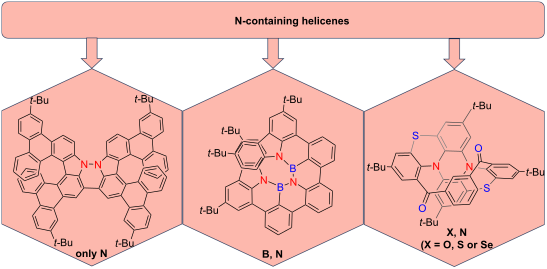
Advances in nitrogen-containing helicenes: synthesis, chiroptical properties, and optoelectronic applications
Beilstein J. Org. Chem. 2025, 21, 1422–1453, doi:10.3762/bjoc.21.106
- ), pronounced chiroptical activity (|gabs| = 0.0054–0.0056), and substantial ΦF of 0.21–0.32 under both neutral and acidic conditions. This work exemplifies the power of transition-metal catalysis for constructing enantioenriched helicenes with tunable photophysical properties. These contributions from 2021

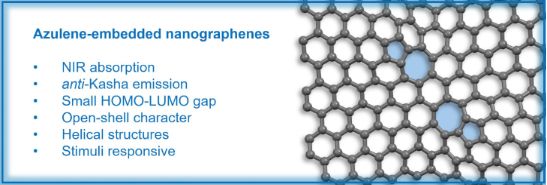
Recent advances and future challenges in the bottom-up synthesis of azulene-embedded nanographenes
Beilstein J. Org. Chem. 2025, 21, 1272–1305, doi:10.3762/bjoc.21.99
- optical absorption. The UV–vis absorption spectra, fluorescence properties and 1H NMR spectroscopy, indicate that 150 and 151 can be protonated to form the corresponding tropylium cation and consecutive dication under acidic conditions, with reversible protonation−deprotonation capabilities. Additionally


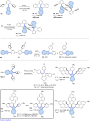


Synthesis of β-ketophosphonates through aerobic copper(II)-mediated phosphorylation of enol acetates
Beilstein J. Org. Chem. 2025, 21, 1192–1200, doi:10.3762/bjoc.21.96
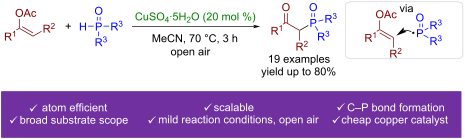
- efficiency, strong basic or acidic conditions, and excess of organohalides as starting materials. Recent years have witnessed the upsurge of free-radical oxidative phosphorylation transformations that became a reliable strategy for the construction of C–P bonds in organophosphorus chemistry [2][32][33][34


Selective monoformylation of naphthalene-fused propellanes for methylene-alternating copolymers
Beilstein J. Org. Chem. 2025, 21, 1183–1191, doi:10.3762/bjoc.21.95
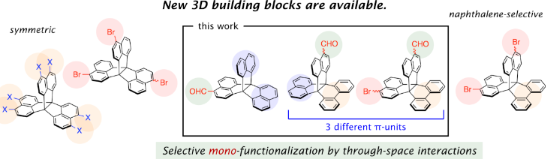
- [3.3.3]_CHO (61%). Although further increase of the equivalents and prolonged reaction time may potentially provide better results for [3.3.3]_2CHO, we gave up such attempts because of the competing decomposition in these strongly acidic conditions. In the case of [4.3.3], diformylation gave only 1.8% of
- % yield. Alcohol products, [4.3.3]_CH2OH and [3.3.3]_CH2OH, were then tested in acidic conditions using anhydrous FeCl3 as a Lewis acid. After the reactions, the alcohol proton signals at 1.54–1.58 ppm disappeared in the 1H NMR spectra, and aliphatic carbon ones at 63.1–63.2 ppm were largely up-field
- -branched linear polymers, macrocyclic compounds, and molecular assemblies that incorporate propellanes as key 3D components. As a proof of concept, the formylated products were reduced to the corresponding alcohols and polymerized in acidic conditions. Although the degrees of polymerization were not high


A versatile route towards 6-arylpipecolic acids
Beilstein J. Org. Chem. 2025, 21, 1104–1115, doi:10.3762/bjoc.21.88
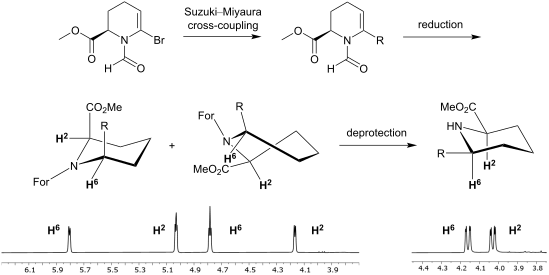
- to investigate how the configuration of the stereocenter in C2 position influences diastereoselectivity. In the first approach, NaBH3CN was used under acidic conditions to reduce the acyliminium intermediate formed from the N-acyl enamine upon protonation at C5, while in the second approach
- . The formyl group can be cleaved under acidic conditions to yield the esters (2R,6S)-11. Treatment of the solution with LiOH at pH 9–10 and at 40 °C leads to saponification of the methyl ester (Scheme 5c and Scheme 6). Conclusion In conclusion, we present a straightforward and efficient method for the





Origami with small molecules: exploiting the C–F bond as a conformational tool
Beilstein J. Org. Chem. 2025, 21, 680–716, doi:10.3762/bjoc.21.54
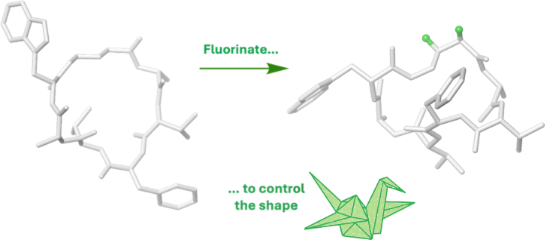
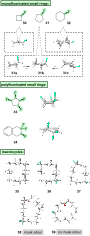
- nearby functionality [110]. Second, if the hydroxy group becomes protonated under acidic conditions, the gauche +O–C–C–F conformation becomes dramatically more favoured over anti (e.g., energy difference between gauche and anti = 7.2 kcal·mol−1). This is due to a new charge-dipole phenomenon (IV, Figure








Total synthesis of (±)-simonsol C using dearomatization as key reaction under acidic conditions
Beilstein J. Org. Chem. 2025, 21, 601–606, doi:10.3762/bjoc.21.47
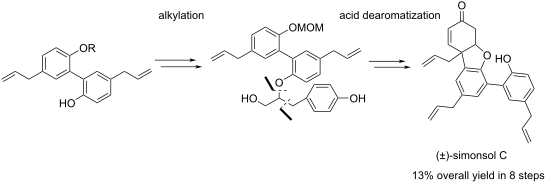
- acidic conditions as key step to construct an aryl-containing quaternary center. The 6/5/6 benzofuran unit was formed through reductive elimination with Zn/AcOH and a spontaneous oxy-Michael addition. This synthesis consists of 8 steps and achieves an overall yield of 13%, making it the shortest known
- and C7 in simonsol C was confirmed by 1H-1H ROESY spectroscopy. Conclusion The total synthesis of (±)-simonsol C was accomplished using a dearomatization reaction under acidic conditions as key step to construct the aryl-containing quaternary center. The 6/5/6 benzofuran unit was formed through


The effect of neighbouring group participation and possible long range remote group participation in O-glycosylation
Beilstein J. Org. Chem. 2025, 21, 369–406, doi:10.3762/bjoc.21.27
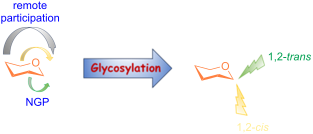
- . The p-methoxyphenyl group 35 can be removed in mild acidic conditions [105] whereas the azido group 36 is cleaved in basic conditions, using a catalytic amount of KOH for optimum results. Three years later, Codée et al. further derivatised the pivalate ester and introduced the cyanopivaloyl ester




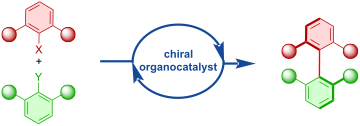
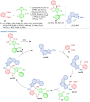
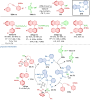
Recent advances in organocatalytic atroposelective reactions
Beilstein J. Org. Chem. 2025, 21, 55–121, doi:10.3762/bjoc.21.6






Synthesis of acenaphthylene-fused heteroarenes and polyoxygenated benzo[j]fluoranthenes via a Pd-catalyzed Suzuki–Miyaura/C–H arylation cascade
Beilstein J. Org. Chem. 2024, 20, 3290–3298, doi:10.3762/bjoc.20.273
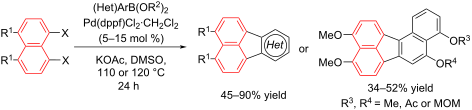
- via the deprotection of the -OTIPS silyl ether under the reaction conditions. A final MOM-deprotection under acidic conditions led to the formation of the desired benzo[j]fluoranthene 28 in 82% yield. Conclusion In conclusion, we have demonstrated the successful synthesis of heterocyclic fluoranthene


Multicomponent reactions driving the discovery and optimization of agents targeting central nervous system pathologies
Beilstein J. Org. Chem. 2024, 20, 3151–3173, doi:10.3762/bjoc.20.261

- eliminated through microwave-assisted treatment under acidic conditions, resulting in the intramolecular cyclization of the amine onto the ketone derived from glyoxaldehyde (Scheme 14). Vézina-Dawod and co-workers [60] introduced a strategy, which consists of two reactions, for synthesizing highly


Advances in the use of metal-free tetrapyrrolic macrocycles as catalysts
Beilstein J. Org. Chem. 2024, 20, 3085–3112, doi:10.3762/bjoc.20.257
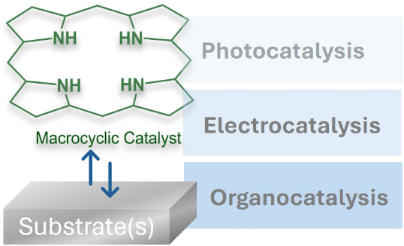
- summarized. In 2014, Kadish and co-workers reported a series of planar and nonplanar metal-free tetraarylporphyrins, indicating the potential of these macrocycles for the generation of molecular hydrogen under acidic conditions [110]. Four years later, Villagrán and co-workers used electron-deficient metal
- , was used for controlling the electrocatalyzed H2 evolution in acidic conditions in acetonitrile [112]. There are not many reported examples of metal-free porphyrin macrocycles as HER electrocatalysts. Metal-free porphyrin macrocycles are capable of multielectron redox processes and have basic amine


N-Glycosides of indigo, indirubin, and isoindigo: blue, red, and yellow sugars and their cancerostatic activity
Beilstein J. Org. Chem. 2024, 20, 2840–2869, doi:10.3762/bjoc.20.240
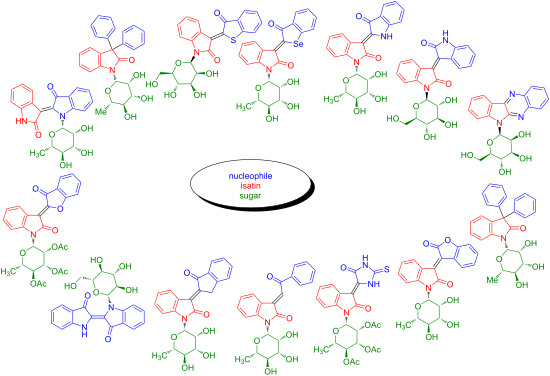
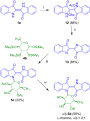
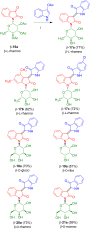
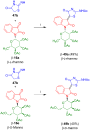
- protective groups had to be employed. The reaction of the 3-iodoindoles β-28a and β-28b with an excess of silver acetate under mild acidic conditions afforded 3-acetoxyindol-N-rhamnosides β-29a and β-29b, respectively. The application of the conditions used for the synthesis of indirubin-N-glycoside 17a
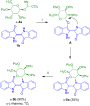
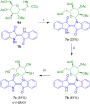
- in case of the oxoindirubins 41 seems to decrease this unfavorable dipol situation in case of the E-configured isomers. It is likely, that an E/Z isomerization takes place under acidic conditions. The barrier of this equilibrium is most likely lowered by the presence of the ring oxygen as it
- pure Z-configured isomers (determination by NMR, the other isomer was not visible, E/Z > 98:2). Deprotection of E-β-43a,b under acidic conditions gave rhamnosides E-β-44a,b in good yields. However, deprotection of E-β-43c–e failed. Kornienko et al. reported the synthesis and antiproliferative activity










Phenylseleno trifluoromethoxylation of alkenes
Beilstein J. Org. Chem. 2024, 20, 2434–2441, doi:10.3762/bjoc.20.207
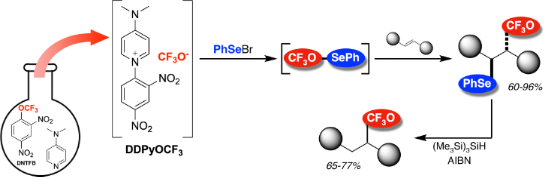
- ). a24 h. b48 h. Degradation of 2a under acidic conditions. Radical deselenylation of 2. Yields determined by 19F NMR spectroscopy with PhCF3 as internal standard (in parentheses isolated yields). Reaction of 1a with PhSeX and DDPyOCF3.a Supporting Information Supporting Information File 116: Additional


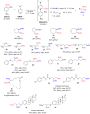


Deuterated reagents in multicomponent reactions to afford deuterium-labeled products
Beilstein J. Org. Chem. 2024, 20, 2270–2279, doi:10.3762/bjoc.20.195
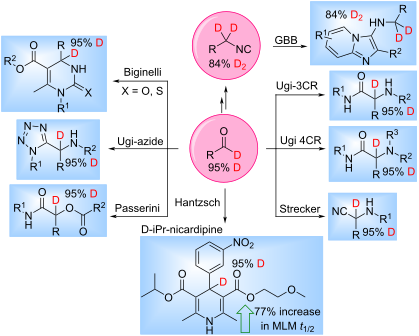
- Strecker reaction [44][45] where a cyanide, aldehyde, and amine react to afford α-aminonitriles. Compound 5c was converted to the deuterated amino acid 5d under acidic conditions. This finding opens up the possibility of scale-production of deuterium-labeled α-amino acids. Deuterated Strecker products are


Novel truxene-based dipyrromethanes (DPMs): synthesis, spectroscopic characterization and photophysical properties
Beilstein J. Org. Chem. 2024, 20, 2163–2170, doi:10.3762/bjoc.20.186
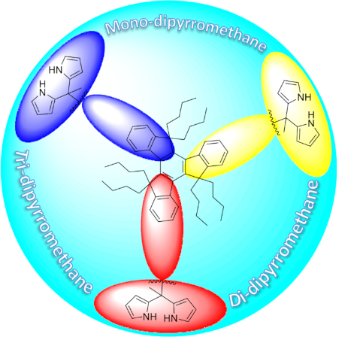
- pointed out, though for the first time truxene was reported in 1894 by Kipping [9], whereby 3‐phenylpropionic acid in situ cyclized under acidic conditions to indan‐1‐one which under the same conditions offered a mixture of both isomers, that is truxene as well as isotruxene. However, the practical


O,S,Se-containing Biginelli products based on cyclic β-ketosulfone and their postfunctionalization
Beilstein J. Org. Chem. 2024, 20, 2143–2151, doi:10.3762/bjoc.20.184
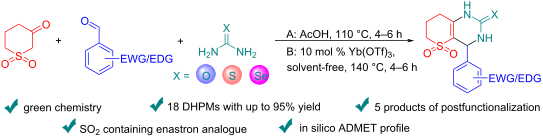
- acidic conditions since such conditions enhance the selectivity, so various catalysts, mainly acidic, were tested for the model Biginelli reaction and the results are shown in Table 1. One of the most effective promoters for this type of reaction is TMSCl [29][30][31] and we also tried to involve TMSCl



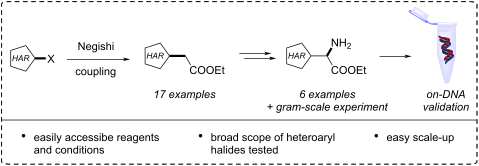
Negishi-coupling-enabled synthesis of α-heteroaryl-α-amino acid building blocks for DNA-encoded chemical library applications
Beilstein J. Org. Chem. 2024, 20, 1922–1932, doi:10.3762/bjoc.20.168
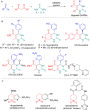
- to proceed using this route. In this study, we explored three distinct approaches commonly employed for the introduction of the oximino group into a molecule. The first approach is based on the generation of the nitrosonium ion from sodium nitrite under acidic conditions (Scheme 5, top) [58][59


Electrochemical radical cation aza-Wacker cyclizations
Beilstein J. Org. Chem. 2024, 20, 1900–1905, doi:10.3762/bjoc.20.165
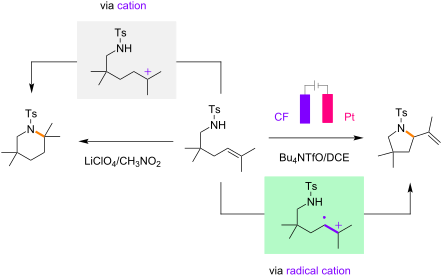
- aza-Wacker cyclizations under acidic conditions, which are expected to proceed via radical cations generated by single-electron oxidation of alkenes. Keywords: alkene; aza-Wacker cyclization; electrochemistry; radical cation; sulfonamide; Introduction Activating bench-stable substrates is the first
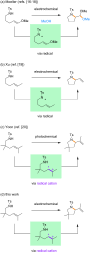
- photochemical reactions under acidic conditions, which were proposed to proceed via radical cations [20]. Since electrochemical and photochemical aza-Wacker cyclizations can offer ring systems that are difficult to construct through state-of-the-art palladium-catalyzed methods, the mechanistic understanding of
- these cyclizations would be of great help to expand their synthetic utility. Described herein are electrochemical aza-Wacker cyclizations under acidic conditions, which are expected to proceed via radical cations. Results and Discussion The present work began by examining the electrochemical aza-Wacker




The Groebke–Blackburn–Bienaymé reaction in its maturity: innovation and improvements since its 21st birthday (2019–2023)
Beilstein J. Org. Chem. 2024, 20, 1839–1879, doi:10.3762/bjoc.20.162
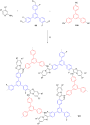
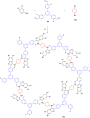
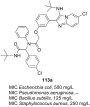
- formation of linked polyheterocycles 75. The authors then decided to perform the reaction using 3 equiv of aldehyde 70 under acidic conditions (Scheme 25, conditions a). The presence of a nucleophilic indole in the GBB adducts 71 induced further additions towards the excess aldehydes 70. The diols 73






Harnessing unprotected deactivated amines and arylglyoxals in the Ugi reaction for the synthesis of fused complex nitrogen heterocycles
Beilstein J. Org. Chem. 2024, 20, 1758–1766, doi:10.3762/bjoc.20.154
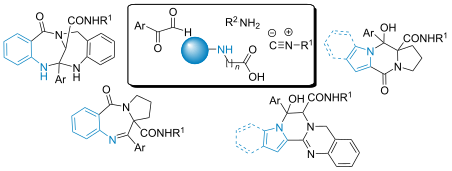
- [29], through post-condensation reactions. Following the methodology previously described in our group [30], the reduction of the nitro group on indole and pyrrole derivatives 9f,g,l–o (Scheme 9, Table 5) employing tin(II) chloride under acidic conditions in boiling n-butanol (120 °C) afforded the


Synthesis of polycyclic aromatic quinones by continuous flow electrochemical oxidation: anodic methoxylation of polycyclic aromatic phenols (PAPs)
Beilstein J. Org. Chem. 2024, 20, 1746–1757, doi:10.3762/bjoc.20.153
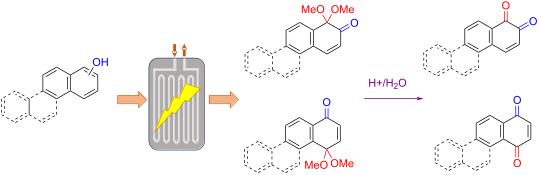
- shown), where methanol further served as nucleophile. Some THF was needed to improve the solubility of some of the substrates. Acidic conditions (Table 1, entry 5) or methanol/water (Table 1, entry 6) gave a complex mixture with overoxidized products. Although the desired oxidation is a 4-electon




Syntheses and medicinal chemistry of spiro heterocyclic steroids
Beilstein J. Org. Chem. 2024, 20, 1713–1745, doi:10.3762/bjoc.20.152
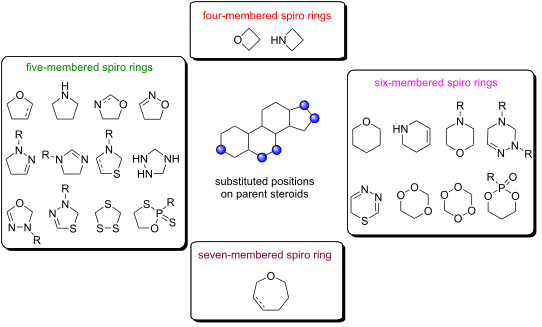
- steroids 124a–e, adducts 125a–d and 126a–e were easily obtained as single diastereomers via a Pictet–Spengler condensation with coumarins A and B (used as fluorophores) under acidic conditions (Scheme 35). Computational binding studies of compound 126c in the ligand-binding pocket of enzyme 17β-HSD5





