Search results
Search for "catalysts" in Full Text gives 1322 result(s) in Beilstein Journal of Organic Chemistry. Showing first 200.
Asymmetric Mannich reaction of aromatic imines with malonates in the presence of multifunctional catalysts
Beilstein J. Org. Chem. 2026, 22, 151–157, doi:10.3762/bjoc.22.8
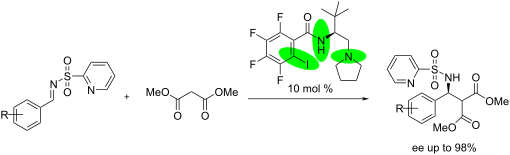
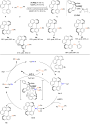
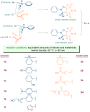
- synthesized and screened in asymmetric Mannich reaction. The reaction of aromatic imines with malonates in the presence of amino acid-derived catalysts gave Mannich adducts in very high enantiomeric purities (up to 98% ee). It is proposed that a network of hydrogen and halogen bonds with Lewis bases, together
- led to the use of multifunctional catalysts of “homocooperativity,” where multiple units of the same catalyst perform different but complementary roles [17]. These catalysts employing noncovalent interactions via hydrogen bonds and also possess Lewis basic and π–π-interaction sites have been highly
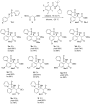
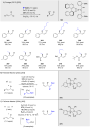
- reactions to imines [27]. The model reaction was performed in the presence of various types of catalysts (Figure 1). The syntheses of the catalysts are described in Supporting Information File 1. All catalysts used are amides containing tertiary amino groups, which are needed for the activation of the


Total synthesis of natural products based on hydrogenation of aromatic rings
Beilstein J. Org. Chem. 2026, 22, 88–122, doi:10.3762/bjoc.22.4
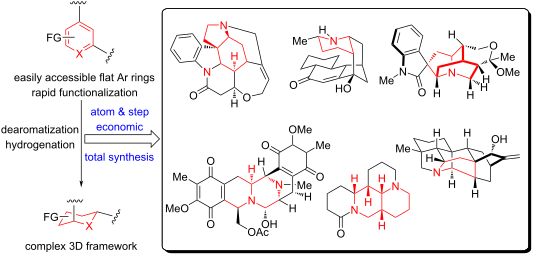
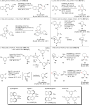
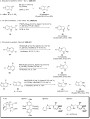
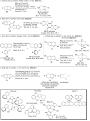
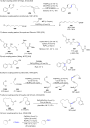
- limitation requires the design of catalysts that achieve precise electronic complementarity, enabling selective activation across a broad spectrum of aromatic compounds (Scheme 2) [32]. From the standpoint of scalable synthesis, catalyst cost is a major bottleneck in aromatic hydrogenation. Most state-of-the
- -art systems depend on expensive transition metals such as platinum, ruthenium, or palladium, inflating the cost of large-scale applications. In addition, precious-metal catalysts often display poor selectivity, while heteroatoms in heteroarenes – acting as Lewis bases – tend to coordinate to the metal
- heterocycles exhibit strong Lewis basicity, potentially complexing and deactivating catalysts. Consequently, the catalytic hydrogenation of six-membered aromatic heterocycles such as pyridine often requires the introduction of substituents or activation of the aromatic heterocycle to facilitate hydrogenation











Advances in Zr-mediated radical transformations and applications to total synthesis
Beilstein J. Org. Chem. 2026, 22, 71–87, doi:10.3762/bjoc.22.3
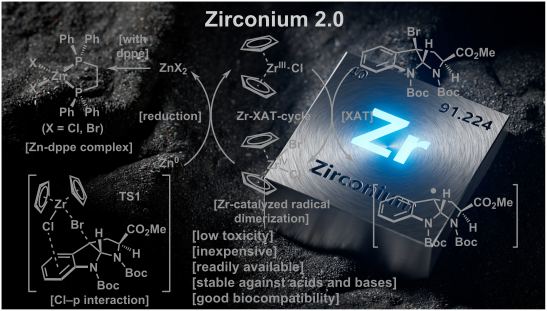
- and accelerating the whole process. Zr-mediated catalytic radical reactions In recent years, numerous chemical transformations employing photoredox catalysts in combination with catalytic amounts of zirconium complexes have been reported. In this section, representative examples of such reactions are
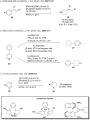
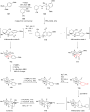
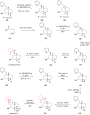
- for further development in this area. In 2022, Ota and Yamaguchi et al. reported the zirconocene-catalyzed ring-opening of epoxides using Cp₂Zr(OTf)2·THF (Scheme 5) [4]. Traditionally, such transformations are carried out with low-valent titanium catalysts, which typically proceed via more substituted
- zirconocene catalysts using substrates 23l–n. In both cases, the regioselectivity was found to be reversed. With titanocene, the reaction proceeds through the more stable, substituted radical, whereas with zirconocene, the high oxygen affinity of zirconium is the key factor driving the opposite








Synthesis and applications of alkenyl chlorides (vinyl chlorides): a review
Beilstein J. Org. Chem. 2026, 22, 1–63, doi:10.3762/bjoc.22.1
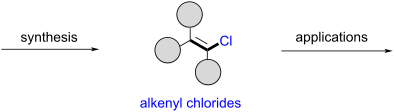
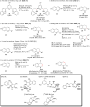
- stereocontrolled olefin metathesis with molybdenum catalysts to access trisubstituted alkenes including alkenyl chlorides (Figure 3H) [39]. Two recent reviews by Lu [40] and Nishiwaki [41] provide overviews of current developments in the hydrochlorination of alkynes, highlighting emerging catalytic strategies
- rapidly decomposes into catalytically inactive species 288 and 289 (Scheme 55). Consequently, metathesis with trans-chloroethylene presents a significant challenge. Grela was the first to demonstrate that metathesis is indeed feasible using phosphine-free catalysts [189]. The formation of the desired
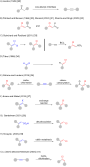
- also be applied to hydroxy- or carboxylic acid-containing olefins by adding 1.1 equivalents of HB(pin) to perform traceless protection of these functional groups, which are otherwise incompatible with molybdenum metathesis catalysts. The in situ-generated boronic ester is conveniently cleaved by silica























Mechanistic insights into hydroxy(tosyloxy)iodobenzene-mediated ditosyloxylation of chalcones: a DFT study
Beilstein J. Org. Chem. 2025, 21, 2703–2715, doi:10.3762/bjoc.21.208
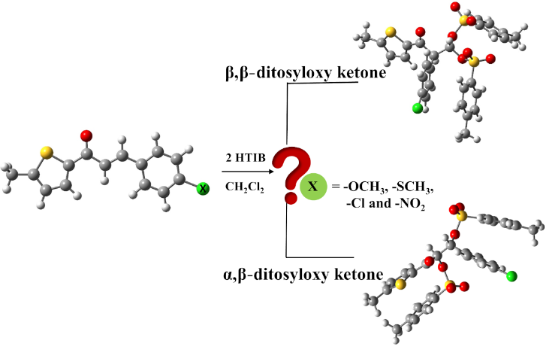
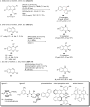
- -substituents; α,β-unsaturated carbonyl compounds; Introduction Hypervalent iodine compounds exhibit a range of bonding patterns which making these compounds powerful reagents or catalysts for a number of organic transformations [1][2][3][4] – oxidation of alcohols [5], epoxidation of alkenes [6], oxidative


Thiazolidinones: novel insights from microwave synthesis, computational studies, and potentially bioactive hybrids
Beilstein J. Org. Chem. 2025, 21, 2618–2636, doi:10.3762/bjoc.21.203
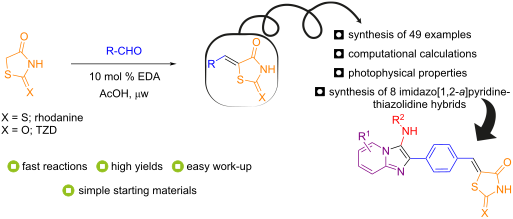
- condensation-type reaction between aromatic aldehydes with rhodanine or thiazolidine-2,4-dione [39]. Various protocols have been reported employing diverse catalyst systems and reaction conditions. Common catalysts include inorganic bases such as sodium acetate (NaOAc) [40], urea/thiourea [41], NaOH [42
- ], diammonium phosphate (DAP) [43], and tetrabutylammonium bromide (TBAB) [44]. Organic bases like morpholine [45], triethylamine [46], ethanolamine, and piperidine [47] and heterogeneous catalysts from Cu [48], Ti [49], and Zn [50] metal compounds have also been used. Common solvents are ethanol [51], toluene






Visible-light-driven NHC and organophotoredox dual catalysis for the synthesis of carbonyl compounds
Beilstein J. Org. Chem. 2025, 21, 2584–2603, doi:10.3762/bjoc.21.200
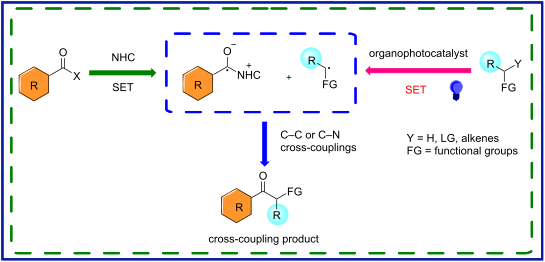
- , Michael additions, cycloadditions, domino reactions, cascade annulations, Diels–Alder reactions, and Michael–Stetter reactions, to name a few [31][32][33][34][35]. Notably, previous reports have demonstrated that the utility of chiral N-heterocyclic carbene (NHC) catalysts permits contracting asymmetric C
- –C, C–HA bond-forming reactions [36][37]. These chiral NHC catalysts, used to access enantiopure alcohol/amine derivatives, particularly 2° and 3° alcohols/amines, are significant structural motifs in numerous drugs and natural products and have found widespread synthetic applications in medicinal
- continued integration of this versatile photocatalytic platform with sustainable methods such as visible-light harvesting and the use of earth-abundant catalysts is expected to further enhance its impact across diverse research fields, including chemical biology, pharmaceuticals, agrochemicals, polymers





Palladium-catalyzed regioselective C1-selective nitration of carbazoles
Beilstein J. Org. Chem. 2025, 21, 2479–2488, doi:10.3762/bjoc.21.190
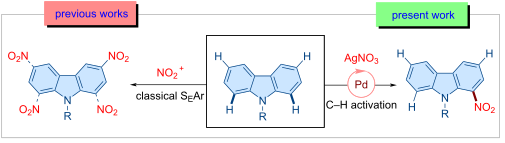
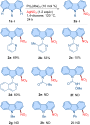
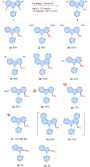
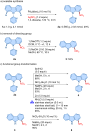
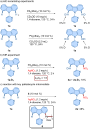
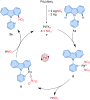
- reagent resulted in complete loss of reactivity (Table 1, entry 12). Further, extending the reaction time had no significant effect on the yield (Table 1, entry 13). Finally, our investigation using various 3d transition metal catalysts such as Ni(OAc)2, Cu(OAc)2, and Co(OAc)2 in place of Pd₂(dba)3 did


Synthesis of the tetracyclic skeleton of Aspidosperma alkaloids via PET-initiated cationic radical-derived interrupted [2 + 2]/retro-Mannich reaction
Beilstein J. Org. Chem. 2025, 21, 2470–2478, doi:10.3762/bjoc.21.189
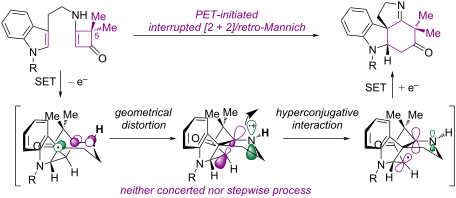
- catalysts that could promote the proposed PET reaction of 9a on the basis of our previous results [15]. The reaction was performed in MeCN in the presence of photocatalysts under blue light-emitting diode (LED) irradiation at 30 °C. The results are listed in Table 1. Catalysts I [28], II [29], and III [30
- ] gave the desired product 10a, with catalyst I giving the best result (Table 1, entries 1–3). The necessities of irradiation and the presence of a photocatalyst were also defined (Table 1, entries 4 and 5). However, use of the other tested catalysts did not give the desired product under the reaction


Catalytic enantioselective synthesis of selenium-containing atropisomers via C–Se bond formations
Beilstein J. Org. Chem. 2025, 21, 2447–2455, doi:10.3762/bjoc.21.186
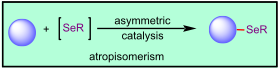
- Atropisomers are not only prevalent in biologically active natural products and pharmaceuticals, but they have also garnered increasing attention for their effectiveness as ligands and catalysts in the field of catalytic asymmetric synthesis. Asymmetric catalysis serves as a key strategy for the
- compounds can participate in asymmetric synthesis reactions and construct chiral molecules with specific stereoconfiguration, which is particularly critical for drug synthesis [9]. In the field of organic catalysis, chiral organic selenium-containing compounds can be used as chiral ligands or catalysts to
- (Scheme 4). In 2025, Yang, Lu, and co-workers employed bifunctional catalysts, including chiral thiourea derivatives or chiral phosphoric acid, to activate alkynes and selenols through multiple hydrogen-bonding interactions, thereby achieving an enantioselective hydroselenation of alkynes [22]. All




Transformation of the cyclohexane ring to the cyclopentane fragment of biologically active compounds
Beilstein J. Org. Chem. 2025, 21, 2416–2446, doi:10.3762/bjoc.21.185
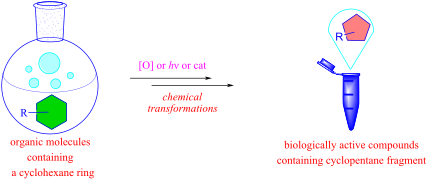
- [52] achieved high regioselectivity and stereospecific construction of contiguous all-carbon quaternary centers through an oxidative ring contraction of cyclic α-formyl ketones by the action of H2O2. This reaction is easy to perform, environmentally friendly, and does not require expensive catalysts
- products of epoxide ring opening. It should be noted that the position of the epoxy ring in the 6-membered ring has a major influence on the composition of reaction products. Catalysts only affect the yield of the reaction. A striking confirmation of this is the work of Berteina-Raboin and co-workers [87
- formation of ketone 191. This was observed when BF3·Et2O, InCl3, TfOH, or ZnBr2 were used as catalysts. Elimination of a proton from C15 led to formation of alcohol 192 with a second exocyclic double bond in reaction mediated by ZnBr2, Bi(OTf)3, p-TSA or TFA. A 1,2-rearrangement or migration of C2 results


The high potential of methyl laurate as a recyclable competitor to conventional toxic solvents in [3 + 2] cycloaddition reactions
Beilstein J. Org. Chem. 2025, 21, 2389–2415, doi:10.3762/bjoc.21.184
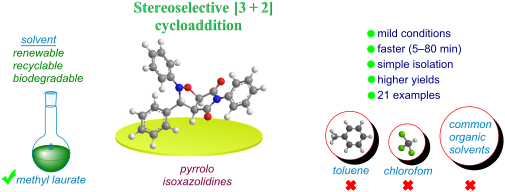
- optimized [3 + 2] cycloaddition conditions. The primary strategy for the selection of these compounds as catalysts is predicated on their capacity to function as H-bond acceptors and/or H-bond donors. As has been documented in previous research, imine-based templates or [2]rotaxane that possess an amide
- in Table 1, entry 9. As illustrated in Table 5, the product yields obtained from the reactions are presented alongside the observed cis/trans diastereoisomer ratios in the presence of the respective catalysts. However, upon examination of the 1H NMR spectra of compound 3a synthesized in the presence
- of the relevant catalysts, it was found that these catalyst molecules had no significant effect on the cis/trans diastereoisomer distribution. Conclusion In conclusion, the present study reveals that methyl laurate is an excellent biocompatible solvent candidate for [3 + 2] cycloaddition reactions






Adaptive experimentation and optimization in organic chemistry
Beilstein J. Org. Chem. 2025, 21, 2367–2368, doi:10.3762/bjoc.21.180
- human–AI synergy emerges repeatedly. The computational design of asymmetric catalysts by Ferrer et al. demonstrates how AI can accelerate discovery while relying on chemical principles to guide the search space [14]. The most successful approaches combine the rapid exploration capabilities of AI with
Recent advances in Norrish–Yang cyclization and dicarbonyl photoredox reactions for natural product synthesis
Beilstein J. Org. Chem. 2025, 21, 2315–2333, doi:10.3762/bjoc.21.177
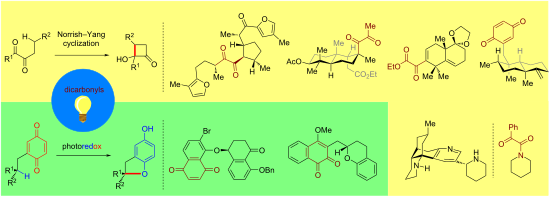
- ingenuity lies in utilizing the inherent conformational constraints of the substrate instead of external chiral catalysts, which not only simplifies the reaction system but also solves the challenge of precisely controlling contiguous chiral centers in polycyclic systems. Conclusion This review




Enantioselective radical chemistry: a bright future ahead
Beilstein J. Org. Chem. 2025, 21, 2283–2296, doi:10.3762/bjoc.21.174
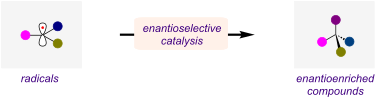
- enantioenriched catalysts ranging from chiral organometallic complexes to organocatalysts (small organic molecules) have been designed, synthesized, and successfully used in several organic transformations [1][2][3]. Despite these advances, catalytic methods involving radical intermediates were very rare until
- include the use of transition metals or photoredox catalysts. In photoredox catalysis, radical generation often involves single-electron transfer (SET) to or from a photoexcited state of a photoredox catalyst, usually a metal complex or organic molecule. Two other notable strategies for radical generation
- catalysts. The drawbacks of chiral Lewis acids have been overcome to an extent using organocatalysis. The use of photochemistry to generate radicals by light-induced electron transfer has resulted in elegant enantioselective radical transformations. Several transition-metal photocatalysts [9] and organo


Pathway economy in cyclization of 1,n-enynes
Beilstein J. Org. Chem. 2025, 21, 2260–2282, doi:10.3762/bjoc.21.173
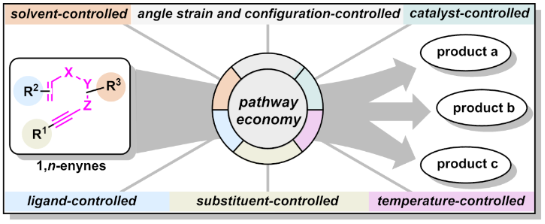
- substrate class. Through mechanistic-guided modulation of catalysts, solvents, ligands, and angle strain, this approach achieves unprecedented reaction pathway control while demonstrating superior temporal and step efficiency compared to conventional methods. The work establishes a sustainable framework for
- components such as solvents, catalysts, ligands and so on. Unlike traditional “one-to-one” reactions, pathway-controlled “one-to-many” transformations synthesize multiple products from single intermediates, dramatically reducing preparation time and reagent requirements (Scheme 1b). As an exceptionally
- ligands could enhance catalytic activity and efficiency while enabling fine control over chemo-, regio-, stereo-, and enantioselectivity of reactions. Ligands enhance both the thermal/chemical stability and solubility profiles of catalysts in specific reaction media. Thus, ligands function as a regulatory


Pd-catalyzed dehydrogenative arylation of arylhydrazines to access non-symmetric azobenzenes, including tetra-ortho derivatives
Beilstein J. Org. Chem. 2025, 21, 2234–2242, doi:10.3762/bjoc.21.170
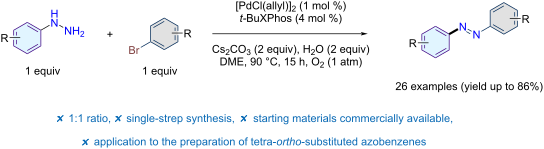
- product and side-products is presented in Figure 2B. The first reaction to be inhibited is the Pd-catalyzed denitrogenative cross-coupling, which leads to the formation of an array of biphenyl products [52][53][54]. This can be controlled by selecting appropriate catalysts and solvents. For instance, PdCl


Electrochemical cyclization of alkynes to construct five-membered nitrogen-heterocyclic rings
Beilstein J. Org. Chem. 2025, 21, 2173–2201, doi:10.3762/bjoc.21.166
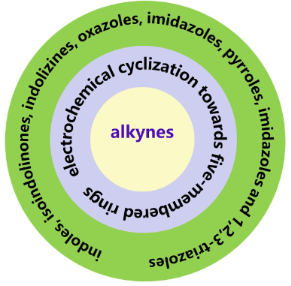
- transformations far from thermodynamic equilibria have emerged abundantly with the consideration of green chemistry [89][90][91][92]. Redox-active organic compounds, transition metal coordinating compounds and even an electrode surface were commonly employed as catalysts in the electrochemical transformations [93
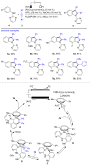
- anodic oxidation and AcO− capture. The hydrolysis of F then occurred to afford the final product 26a. This protocol featured with some advantages such as without any oxidants and metal catalysts, simple operation, good yields, high selectivity and wide substrate scope. Isoindolinone could be also
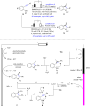
- reduction. The subsequent protonation of F occurred to complete the formation of 28. This approach, applying electrolyte as the proton sources, avoided the use of reductants and metal catalysts efficiently. In 2022, Guo developed an electrochemical intramolecular 1,2-amino oxygenation of alkyne to access









C2 to C6 biobased carbonyl platforms for fine chemistry
Beilstein J. Org. Chem. 2025, 21, 2103–2172, doi:10.3762/bjoc.21.165
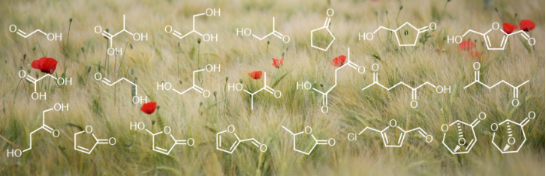
- diverse downstream products from biomass, with efforts for using clean and sustainable conditions in terms of solvents, reagents and catalysts. The topic of biomass conversion has been explored in multiple perspectives [23][24][25][26][27], and the purpose of the present review is to offer a specific
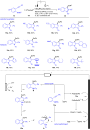
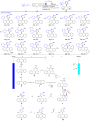
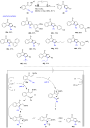
- for the synthesis of GA and GCA using activated carbon deposited Cu catalysts and different biomass-derived polyols as feedstock with exceptionally high atom utilization ≈93% and up to 90% yield (Scheme 1) [28]. Glycolaldehyde (GCA), the smallest sugar molecule, was used by Sels et al. for the
- -Hydroxypropanal (3-HPO) and 2,3-dihydroxypropanal (2,3-HPO) Xu et al. reported the cross-aldol reaction of formaldehyde and acetaldehyde for the synthesis of 3-hydroxypropanal and further reduction to 1,3-propanediol (PDO). The reaction was promoted by X-5Mg/SiO2 and Mg/SiO2 (X = Mn, Co, Ni, Fe) catalysts


The application of desymmetric enantioselective reduction of cyclic 1,3-dicarbonyl compounds in the total synthesis of terpenoid and alkaloid natural products
Beilstein J. Org. Chem. 2025, 21, 2085–2102, doi:10.3762/bjoc.21.164
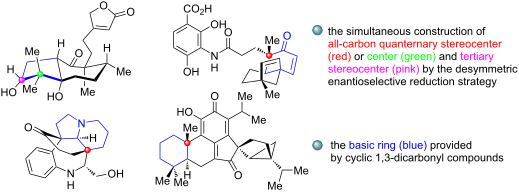
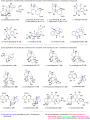
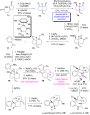
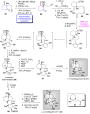
- enantioselective reduction of some complex substrates, as well as suppressing the double reduction by-products and developing new types of catalysts. Moreover, the application of desymmetric enantioselective reduction of chain dicarbonyl compounds in natural products synthesis remains largely undeveloped although







Solar thermal fuels: azobenzene as a cyclic photon–heat transduction platform
Beilstein J. Org. Chem. 2025, 21, 2036–2047, doi:10.3762/bjoc.21.159
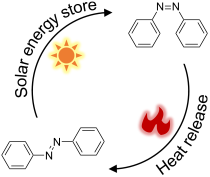
- ) through structural or bond rearrangements, thereby enabling solar energy storage. This reversible process is termed "energy charging", while the subsequent transformation of high-energy photoisomers back to their ground state – triggered by external stimuli such as light, heat, or catalysts – releases




Switchable pathways of multicomponent heterocyclizations of 5-amino-1,2,4-triazoles with salicylaldehydes and pyruvic acid
Beilstein J. Org. Chem. 2025, 21, 2030–2035, doi:10.3762/bjoc.21.158
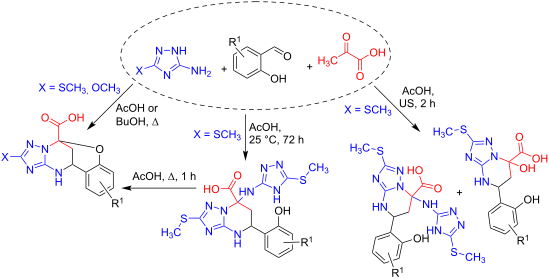
- -1,2,4-triazoles, is important because the formation of different chemotypes of final heterocyclic compounds are possible depending on the structure of the reagents, the solvents and the catalysts, and type of activation methods [7][8][9]. MCRs of aminotriazoles, methylene-active compounds, and


Measuring the stereogenic remoteness in non-central chirality: a stereocontrol connectivity index for asymmetric reactions
Beilstein J. Org. Chem. 2025, 21, 1995–2006, doi:10.3762/bjoc.21.155
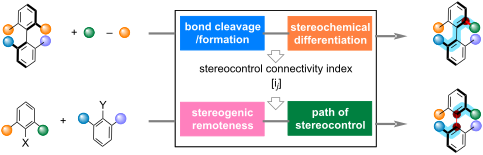
- important in pharmaceuticals, catalysts, and advanced materials due to their unique stereogenic scaffolds and associated properties. Consequently, synthetic chemists have been pursuing molecules featuring these forms of non-central chirality, where the stereogenic elements are not localized on a single
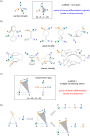
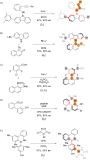
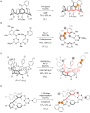
- parameterizing the relay of stereochemical information from the chiral catalysts to the prochiral substrates. In this study, we propose a stereocontrol connectivity index that quantitatively characterizes asymmetric reactions. The index could serve as a basis for classifying asymmetric reactions according to the
- positioning of stereochemically relevant elements, independent of the type of transformation. Additionally, the index enables the identification of the minimal set of structural features in a molecule that are recognized by chiral catalysts to achieve stereocontrol. Results and Discussion We envisaged that




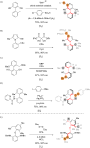

Aryl iodane-induced cascade arylation–1,2-silyl shift–heterocyclization of propargylsilanes under copper catalysis
Beilstein J. Org. Chem. 2025, 21, 1984–1994, doi:10.3762/bjoc.21.154
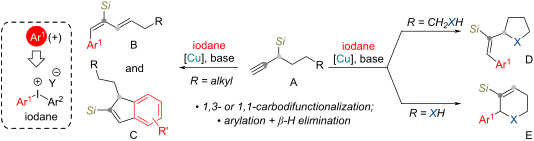
- species are limited to aryl- [7][8][10] or heteroaryl groups [7][8]. In one example methyl ethers were used [9]. Under [Pd]-catalyzed conditions a syn-type addition is observed [8][11], while [Cu] catalysts promote anti-addition [7][10]. In substrates prone to cationic rearrangements (or hydride shifts
- , partial degradation of the starting material 7a was also observed. Among the tested solvents, EtOAc gave the best results (Table 1, entries 1–3, 7–18). As for reaction catalysts, Cu(I) salts demonstrated far better reactivity than Cu(II) salts, likely because the reaction proceeds via the Cu(I/III


Enantioselective desymmetrization strategy of prochiral 1,3-diols in natural product synthesis
Beilstein J. Org. Chem. 2025, 21, 1932–1963, doi:10.3762/bjoc.21.151
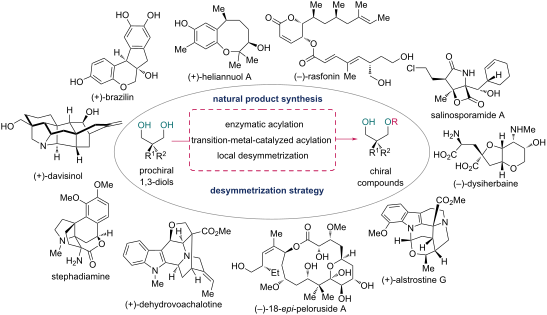
- reactions, chemists have developed a series of catalysts composed of transition-metal cores and chiral ligands, which have been applied to various asymmetric reactions [50][51][52]. Compared to the enzymatic methods, the transition-metal-catalyzed approach may provide an advantage to access both enantiomers
- -catalyzed acylation Zn-based complexes are another class of effective catalysts used in desymmetrization of 1,3-diols, as reported by Trost and co-worker in 2003 [56]. In 2013, Trost et al. developed the synthesis of (−)-18-epi-peloruside A (Scheme 26) [68], and converted diol 204 into enantioenriched
- enantioselective desymmetrization of prochiral 1,3-diols within complex structures can be realized using organometallic catalysts composed of copper or zinc salts and different types of chiral ligands. In general, the ability to control the stereoselectivity of the product by using the enantiomer of the ligand in