Search results
Search for "conjugation" in Full Text gives 446 result(s) in Beilstein Journal of Organic Chemistry. Showing first 200.
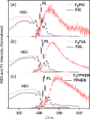
Thermodynamic equilibrium between locally excited and charge transfer states in perylene–phenothiazine dyads
Beilstein J. Org. Chem. 2025, 21, 1577–1586, doi:10.3762/bjoc.21.121
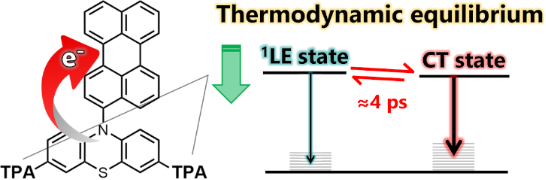
- driven by the enhanced electron-donating ability of the TPA units, but rather by the stabilization of the PTZ 1LE state, which is facilitated by planarization of the PTZ moiety in the excited state and the resulting increase in π-conjugation. This behavior led to the persistent presence of 1LE-state
- simple molecular framework, subtle intramolecular interactions – such as increased conjugation induced by planarization – can have a significant impact on the nature of photoinduced charge separation. Such molecules with finely tunable excited-state dynamics are expected to play an important role in the




pH-Controlled isomerization kinetics of ortho-disubstituted benzamidines: E/Z isomerism and axial chirality
Beilstein J. Org. Chem. 2025, 21, 1568–1576, doi:10.3762/bjoc.21.120
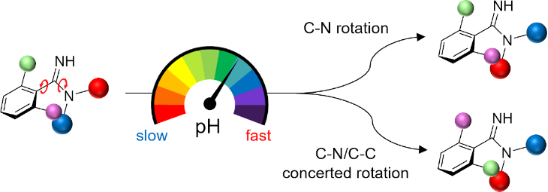
- 0.6 Å and 0.3–0.4 Å, respectively. This result indicates that protonation has a greater impact on the local minimum structures, as the p orbital of the nitrogen atom in the NMe₂ moiety and the C=N π orbital are located in the same plane, allowing for effective conjugation between them. The DFT study



Facile synthesis of hydantoin/1,2,4-oxadiazoline spiro-compounds via 1,3-dipolar cycloaddition of nitrile oxides to 5-iminohydantoins
Beilstein J. Org. Chem. 2025, 21, 1552–1560, doi:10.3762/bjoc.21.118

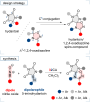
- greater involvement of the N1 electron pair in conjugation with the imide fragment of the dipolarophile and its deactivation in the reaction with nitrile oxide. This pattern is consistent with the one previously observed when studying the reactions of these dipolarophiles with nitrile imines [22]. It is



Wittig reaction of cyclobisbiphenylenecarbonyl
Beilstein J. Org. Chem. 2025, 21, 1454–1461, doi:10.3762/bjoc.21.107
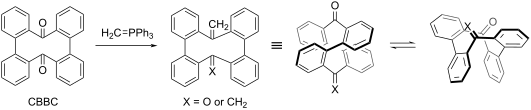
- ]. Various figure-eight π-systems including aromatic hydrocarbons, belt-type extended π-systems, and porphyrinoids have been reported. The structural twisting in figure-eight macrocycles leads to cross-linked conjugation at the molecular center and a highly symmetric chiral structure with D2-symmetry
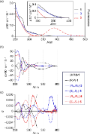
- optical HOMO–LUMO gap of 5 despite the presence of 26 sp2 carbons is due to the cross-conjugation at the exocyclic olefins. Mono-olefin 3 is virtually non-emissive, similarly to CBBC 1, which could originate from the non-radiative decay via intersystem crossing due to the carbonyl group. In sharp contrast



Advances in nitrogen-containing helicenes: synthesis, chiroptical properties, and optoelectronic applications
Beilstein J. Org. Chem. 2025, 21, 1422–1453, doi:10.3762/bjoc.21.106
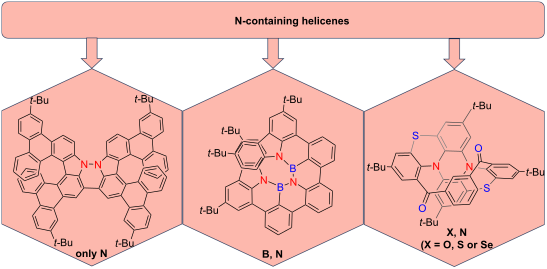
- azahelicenes represent a particularly significant subclass due to their extended π-conjugation and potential for enhanced chiroptical properties. Over the past few years, multiple research groups have investigated their synthesis, structural characteristics, and optoelectronic behavior. Notably, in 2021, Jux
- and 17b, among which compound 17b exhibited red-shifted emission (538–632 nm in CHCl3) and the largest Stokes shift (192 nm), attributed to extended conjugation and sulfur incorporation [30] (Table 4). These findings collectively underscore how structural modulation and heteroatom doping can tailor
- = 2.1 × 10⁻², and BCPL values up to 76 M−1 cm−1. Collectively, these investigations underscore the efficacy of heteroatom doping, extended π-conjugation, and radical design in advancing azahelicene-based systems. These approaches significantly enhance optical and chiroptical performance, paving the way

Recent advances and future challenges in the bottom-up synthesis of azulene-embedded nanographenes
Beilstein J. Org. Chem. 2025, 21, 1272–1305, doi:10.3762/bjoc.21.99
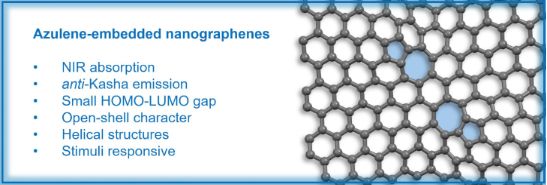
- –base reaction. Cyclization of alkynes: The extension of π-conjugation in polycyclic aromatic hydrocarbons (PAHs) through alkyne-benzannulation reactions has become an increasingly popular method in recent years [91]. Such benzannulations can be mediated by Brønsted acids, Lewis acids or transition




On the photoluminescence in triarylmethyl-centered mono-, di-, and multiradicals
Beilstein J. Org. Chem. 2025, 21, 964–998, doi:10.3762/bjoc.21.80
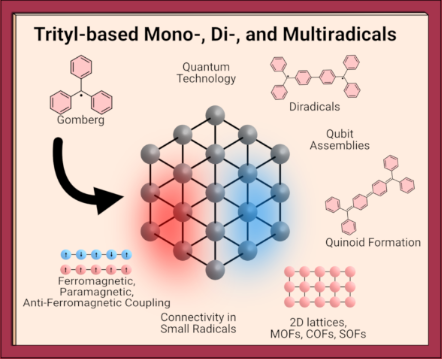
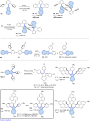
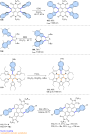
- electronic effects will cause the Cz-unit to twist out of conjugation almost completely with the TTM radical core plane, leading to marginal orbital overlap between the D0 and D1 states. The reason for this increase in fluorescence lifetime τ is not completely understood; however, if the emission involves a
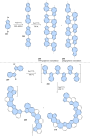
- radicals are connected through the meta-positions of the central phenyl ring, Schlenk-Brauns (m-PTH) diradicals are obtained where no Kekulé-conjugation between the radical centers is possible (see Figure 13) [89]. While the para-coupled Thiele, Chichibabin, and Müller radicals can acquire a closed-shell
- quinodal electronic structure, diradicals with broken Kekulé-conjugation exhibit much stronger diradical character. In accordance with the above-described nomenclature, these diradicals are termed non-Kekulé diradicals. This tendency of diradicals to form a closed-shell electronic configuration can be









Study of tribenzo[b,d,f]azepine as donor in D–A photocatalysts
Beilstein J. Org. Chem. 2025, 21, 935–944, doi:10.3762/bjoc.21.76

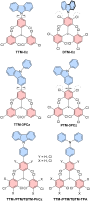
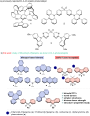
- : diphenyl sulfone (4), dibenzo[b,d]thiophene 5,5-dioxide (5), and 9,9-dimethyl-9H-thioxanthene 10,10-dioxide (6). The selection of these scaffolds was aimed at investigating the effect of conjugation and rigidity/flexibility on the presence of the same donor (TBA, a). In the case of the D–A compounds 4a and
- 6a, we observed a blue-shifted absorption profile due to the break of the conjugation in sulfur-based acceptors. Compounds 4a and 6a presented a similar absorption profile, while molecule 5a showed a red-shifted spectrum tailing up to the visible region (Figure 2a). The lack of a significant charge
- 5a (3.9 eV) as a consequence of the extended π conjugation compared with 4a and 6a (4.4 and 4.4 eV, respectively). Interestingly, compound 6a, which possesses the weakest sulfur-based acceptor, showed an inversion in the LUMO distribution, localizing it in the TBA core – this behavior of the named



Light-enabled intramolecular [2 + 2] cycloaddition via photoactivation of simple alkenylboronic esters
Beilstein J. Org. Chem. 2025, 21, 854–863, doi:10.3762/bjoc.21.69
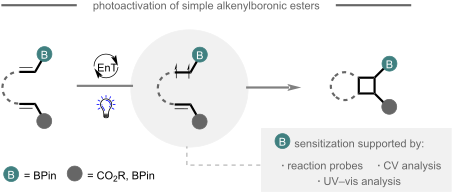
- isomerization of alkenes [18][19], [2 + 2] cycloadditions [20][21][22][23][24], and dearomative [4 + 2] cycloadditions [25][26][27]. When considering conjugated alkenes, the triplet excited state energy and excited state lifetime are intrinsically linked to the degree of conjugation and substitution of a
- more efficiently sensitized (lower T1 excited state) than their alkenylboronic ester counterparts. This is unsurprising given their enhanced conjugation (4π electrons vs 2π electrons and p-orbital). To probe the efficiency of trisubstituted alkenes, vicinal boron precursor 3h was designed (Scheme 1



Orthogonal photoswitching of heterobivalent azobenzene glycoclusters: the effect of glycoligand orientation in bacterial adhesion
Beilstein J. Org. Chem. 2025, 21, 736–748, doi:10.3762/bjoc.21.57
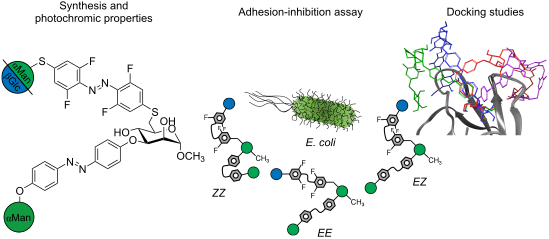
- conjugated to the 3- and the 6-position of a methyl mannoside scaffold (Figure 1, 1 (6βGlc3αMan)) [24]. Orthogonal photoswitching of the two glycoantennas is guaranteed by (i) ortho-fluorination of one azobenzene moiety and (ii) S-azobenzene versus O-azobenzene conjugation, resulting in significantly shifted


Origami with small molecules: exploiting the C–F bond as a conformational tool
Beilstein J. Org. Chem. 2025, 21, 680–716, doi:10.3762/bjoc.21.54
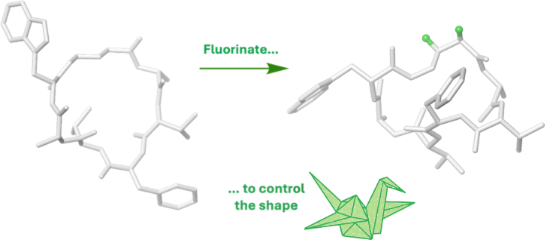
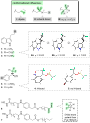
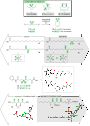
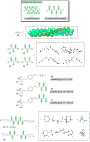
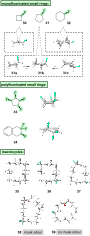
- , Figure 6). This molecule preferentially adopts a planar conformation [80]. The planar conformation suffers slightly from a steric clash between the methyl group and an aryl hydrogen, but this is outweighed by the favourable conjugation of the π-system with the lone pair in the 2p orbital of the sp2








Photochemically assisted synthesis of phenacenes fluorinated at the terminal benzene rings and their electronic spectra
Beilstein J. Org. Chem. 2025, 21, 670–679, doi:10.3762/bjoc.21.53

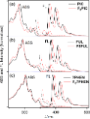
- -extension (ΔλABS = ca. 6 nm per increment of one benzene ring) and the spectral profiles resemble each other irrespective of the length of the phenacene π conjugation and the fluorine substitution. The results suggest that these factors could provide insignificant effects on the apparent electronic spectral





Photocatalyzed elaboration of antibody-based bioconjugates
Beilstein J. Org. Chem. 2025, 21, 616–629, doi:10.3762/bjoc.21.49
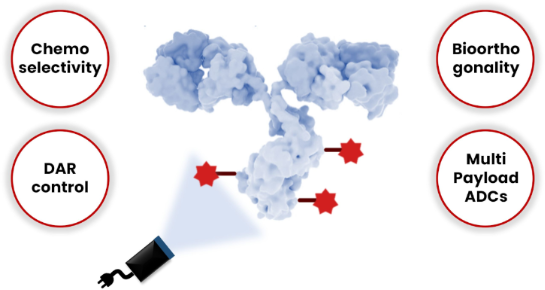
- conjugation methods often face challenges related to site-selectivity and heterogeneous product mixtures, highlighting the need to develop new, innovative chemical strategies. Photoredox chemistry emerges as a powerful tool in this context, enabling precise, mild, and selective modifications of peptides and
- antibodies [11]. In the case of ADCs, conjugation of the linker/payload to the antibody must not drastically alter the pharmacokinetics or physicochemical properties of the antibody [12][13]. Typically, zero to eight payloads are attached to the antibody. Heterogeneous ADCs may thus be a mix of both
- attractive, albeit not without serious obstacles. Among native amino acids, attachment to lysine (Lys) [21] and cysteine (Cys) are the most common. Antibodies typically contain as many as 90 lysine units, many of which are at highly solvent-accessible sites [22][23]. Conjugation to Lys is thus rarely


Cryptophycin unit B analogues
Beilstein J. Org. Chem. 2025, 21, 526–532, doi:10.3762/bjoc.21.40
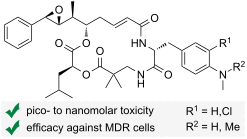
- relationship (SAR) studies between derivatisations of all four units (A to D) (Figure 1A) of cryptophycin-52 analogues with functional groups [8]. While many modifications of cryptophycin decrease the cytotoxicity drastically, some viable attachment points for conjugation were found, mainly including the para
- conjugable payloads by our group. Modifications of unit B with conjugation handles are scarcely explored and mainly include the exchange of the para-methoxy group (Figure 1B). The sole exchange of the para-methoxy group of cryptophycin-52 (IC50 = 22 pM) by a hydroxy group reduces the cytotoxicity by
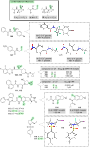
- conjugation handles in unit B. IC50 values given against (a) CCRF-CEM [20] and (b) KB-3-1 [21] cell lines. C: Cryptophycin-52 derivatives synthesised in this work. Molecular structure of Boc-ᴅ-Phe(4-NHMe)-OMe 7 as determined by single-crystal X-ray diffraction measurements. Thermal ellipsoids depicted at 50



Unraveling aromaticity: the dual worlds of pyrazole, pyrazoline, and 3D carborane
Beilstein J. Org. Chem. 2025, 21, 412–420, doi:10.3762/bjoc.21.29
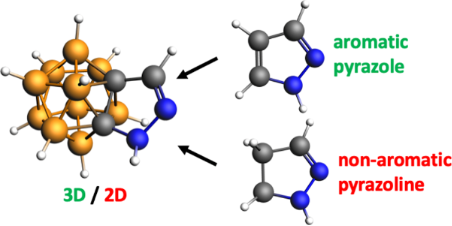
- also applied to o-carboranes fused with five-membered ring systems [39][40]. The positioning of the heteroatom in these exo rings governs bonding, leading to restricted conjugation and, consequently, no aromatic stabilization. Importantly, the magnetic field generated by the 3D cluster influences the
- conjugation and the computed magnetic properties of the fused exo ring [34][38][40], which can lead to the incorrect assignment of aromatic character to this ring. This study aims to determine whether o-carborane-fused pyrazoles can be classified as aromatic 3D/2D systems. While previous research has not


Identification and removal of a cryptic impurity in pomalidomide-PEG based PROTAC
Beilstein J. Org. Chem. 2025, 21, 407–411, doi:10.3762/bjoc.21.28
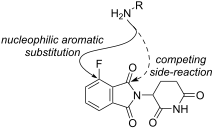
- also be explained by C4 being located near the node of the LUMO. However, SNAr is still favored over glutarimide displacement potentially because the negative charge in the corresponding intermediate is stabilized by an extended conjugation system. In contrast, the negative charge in the carbonyl




Synthesis of new condensed naphthoquinone, pyran and pyrimidine furancarboxylates
Beilstein J. Org. Chem. 2025, 21, 340–347, doi:10.3762/bjoc.21.24
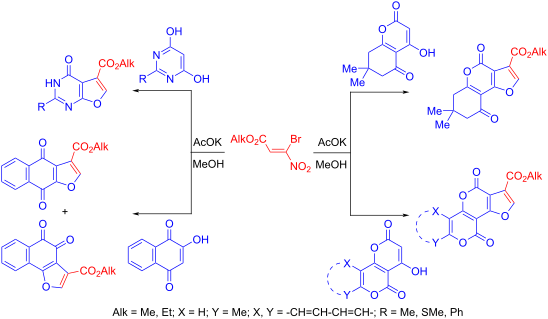
- ethyl esters 5b and 6b is −15.6(2) and −11.5(2)°, respectively, indicating that in the case of methyl esters, the alkoxycarbonyl fragment is less out of plane, causing a greater conjugation with the furan fragment. The possibility of exhibiting fluorescent properties was investigated for tetracyclic


Red light excitation: illuminating photocatalysis in a new spectrum
Beilstein J. Org. Chem. 2025, 21, 296–326, doi:10.3762/bjoc.21.22

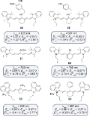
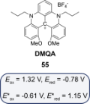
- , making them more oxidizing. Extended conjugation in cyanins (e.g., 53 and 54) further increases their oxidizing nature at the ground state. Overall, both central substitution and extended conjugation play crucial roles in determining the redox behavior of these dyes. Cyanins with an amino group on the















Effect of substitution position of aryl groups on the thermal back reactivity of aza-diarylethene photoswitches and prediction by density functional theory
Beilstein J. Org. Chem. 2025, 21, 242–252, doi:10.3762/bjoc.21.16
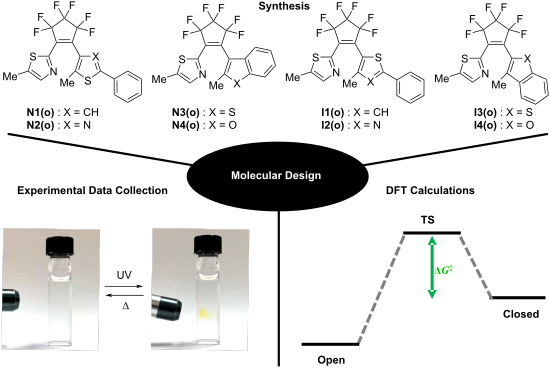
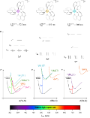
- to N1(c)–N4(c), which is due to the localization of the π conjugation in the central part of the molecular skeleton as reported in inverse-type diarylethenes [64]. Figure 1c and the video (Supporting Information File 2) show the photochromic behavior of N4 at room temperature in n-hexane. It was


Streamlined modular synthesis of saframycin substructure via copper-catalyzed three-component assembly and gold-promoted 6-endo cyclization
Beilstein J. Org. Chem. 2025, 21, 226–233, doi:10.3762/bjoc.21.14
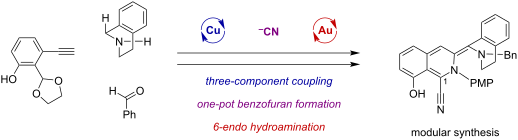
- enamine moiety, would afford the corresponding imidate 18 with incorporation of an extended conjugation system. The oxidation-labile nature of the corresponding C11 position in 12 is consistent with the low bond dissociation energies (BDEs) at both the α-position of the nitrogen, as shown in Supporting


Synthesis, structure and π-expansion of tris(4,5-dehydro-2,3:6,7-dibenzotropone)
Beilstein J. Org. Chem. 2025, 21, 1–7, doi:10.3762/bjoc.21.1
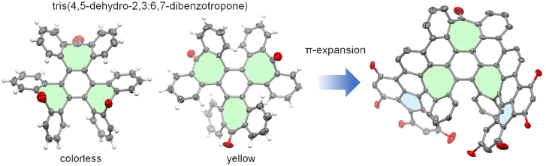
- to Cs-1 (4.37 eV) as calculated at the B3LYP/6-311++G(d,p) level of DFT. The reduced HOMO–LUMO gap of C2-1 can be attributed to the greater conjugation in the essentially flat dibenzotropone moiety. This finding aligns with the fact that the yellow crystal of C2-1 absorbs light of a longer wavelength


Efficient synthesis of fluorinated triphenylenes with enhanced arene–perfluoroarene interactions in columnar mesophases
Beilstein J. Org. Chem. 2024, 20, 3263–3273, doi:10.3762/bjoc.20.270
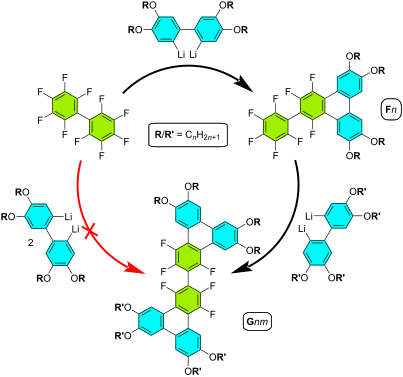
- PH8), with no or little influence of the solvent polarity (Figure 6a). This may suggest that the sigma-bonded F6 and G66 have no conjugation in their ground states, the electron density being located on one triphenylene moiety (see DFT). G66 shows a stronger absorption band than F6, with expected ε
- spectra. Their LUMO electron density maps distribute across to the side arm for F1 (−1.88 eV; −1.78 eV for PH1) and to the other triphenylene core for the dimer G11 (−1.78 eV). The π-conjugation of excited states results in a difference of their HOMO and LUMO energy levels: the fluorine dimer G11




Efficient modification of peroxydisulfate oxidation reactions of nitrogen-containing heterocycles 6-methyluracil and pyridine
Beilstein J. Org. Chem. 2024, 20, 2599–2607, doi:10.3762/bjoc.20.219
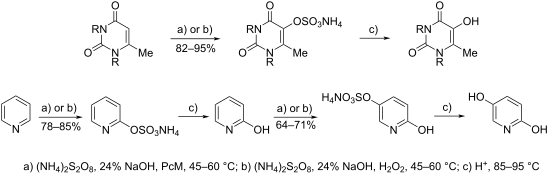
- ][19][20]. The catalytic activity of metallophthalocyanines originates from their planar, cyclic structure with a developed π-conjugation system. This makes the fifth and sixth coordination sites of the central metal ion available for coordination with the reactant molecules of the catalytic reaction
- . Additionally, the π-conjugation system facilitates the redistribution of electron density within the reaction complex, thereby lowering the activation barrier of the reaction [21]. The study employed the following oxidation catalysts for phthalocyanines – PcCo, PcFe(II), PcFe(III), PcMn, PcNi, and PcZn. The


Anion-dependent ion-pairing assemblies of triazatriangulenium cation that interferes with stacking structures
Beilstein J. Org. Chem. 2024, 20, 2567–2576, doi:10.3762/bjoc.20.215
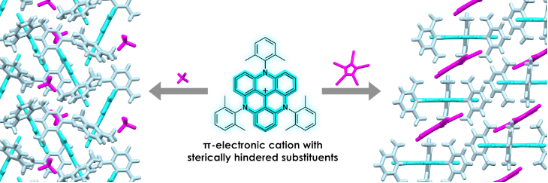
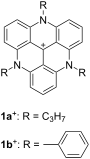
- (Figures S22–25 in Supporting Information File 1) [31]. The absorption band at 524 nm was blue-shifted by 4 nm compared to that of N-phenyl-substituted 1b+-BF4− [15]. This can be ascribed to the lesser conjugation of the core TATA+ unit with the introduced 2,6-dimethylphenyl moieties owing to the more
- Numbers JP22H02067 and JP23K23335 for Scientific Research (B), JP24K08389 for Scientific Research (C), JP23K17951 for Challenging Research (Exploratory), and JP20H05863 for Transformative Research Areas (A) “Condensed Conjugation” and Ritsumeikan Global Innovation Research Organization (R-GIRO) project



Metal-free double azide addition to strained alkynes of an octadehydrodibenzo[12]annulene derivative with electron-withdrawing substituents
Beilstein J. Org. Chem. 2024, 20, 2234–2241, doi:10.3762/bjoc.20.191
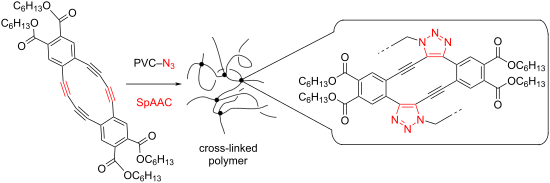
- outer side (in-out-ts), but the thermodynamically stable final product is a regioselective “in-in” adduct, i.e., compound 6a. Optical properties Absorption and emission spectra of 6a were measured in CH2Cl2 (Figure 5). The conjugation is changed and a highly-twisted macrocyle forms by the double azide