


Search results
Search for "ibuprofen" in Full Text gives 31 result(s) in Beilstein Journal of Organic Chemistry.
Electrocarboxylation: towards sustainable and efficient synthesis of valuable carboxylic acids
- Roman Matthessen,
- Jan Fransaer,
- Koen Binnemans and
- Dirk E. De Vos
Beilstein J. Org. Chem. 2014, 10, 2484–2500, doi:10.3762/bjoc.10.260
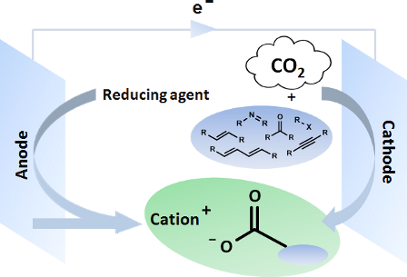
- ibuprofen. A nafion membrane is used, allowing a selective passage of protons and tetraalkylammonium cations from the anolyte to the catholyte. Cyclohexene is added to the anolyte to scavenge the anodically formed bromine. A current efficiency of up to 90% was reached with a copper cathode and graphite

Graphical Abstract

Scheme 1: Synthesis of salicylic acid and p-hydroxybenzoic acid via Kolbe–Schmidt reaction [16-20].

Scheme 2: Electroreduction of carbon dioxide to formic acid, methanol or methane.

Scheme 3: Electrochemical fixation of CO2 in olefins.

Scheme 4: Electrohydrodimerisation of acrylonitrile to adiponitrile [32].

Scheme 5: Parallel paired electrosynthesis of phthalide and tert-butylbenzaldehyde dimethylacetal [34].

Scheme 6: Overview of electrocarboxylation setups using (a) a sacrificial anode, (b) an inert anode, generati...

Scheme 7: General mechanism of the electrochemical dicarboxylation of conjugated dienes [49].

Scheme 8: Reported anodic reactions for the electrocarboxylation of 1,3-butadiene.

Scheme 9: General mechanism for electrocarboxylation of alkynes.

Scheme 10: Electrocarboxylation of ethyl cinnamate [70].

Scheme 11: General electrocarboxylation mechanism for carbonyl compounds (Y = O) and imines (Y = NH) [75-77].

Scheme 12: Electrocarboxylation mechanism of butyraldehyde proposed by Doherty [78].

Scheme 13: Electrocarboxylation of AMN to HN using a sacrificial aluminum anode [86].

Scheme 14: Electrocarboxylation of benzalaniline using a sacrificial aluminum anode [105].

Scheme 15: Electrocarboxylation of p-isobutylacetophenone with stable electrodes [94,95].

Scheme 16: Electrochemical carboxylation of MMP to MHA [110,111].

Scheme 17: General mechanism for electrocarboxylation of alkyl halides [122,124-126,128].

Scheme 18: Electrocarboxylation of benzylic chlorides as synthesis route for NSAIDs.

Scheme 19: Electrocarboxylation of 1,4-dibromo-2-butene [144].

Scheme 20: Convergent paired electrosynthesis of cyanoacetic acid, with X− = F4B−, ClO4−, HSO4−, Cl−, Br− [147].

Scheme 21: General scheme of carboxylation of weak acidic hydrocarbons with electrogenerated bases. RH: weakly...

Scheme 22: Electrocarboxylation of N-methyldiglycolimide to methoxymethane-1,1,1’-tricarboxylate precursors. R1...

Scheme 23: Electrochemical dimerization of CO2 with stable electrodes [153].
Synthesis and quantitative structure–activity relationship study of substituted imidazophosphor ester based tetrazolo[1,5-b]pyridazines as antinociceptive/anti-inflammatory agents
- Wafaa M. Abdou,
- Neven A. Ganoub and
- Eman Sabry
Beilstein J. Org. Chem. 2013, 9, 1730–1736, doi:10.3762/bjoc.9.199

- our products. Antinociceptive evaluation para-Benzoquinone (p-BQ)-induced writhing test The evaluation of antinociceptive activity of the synthesized compounds was assessed in vivo in mice by using the p-benzoquinone-induced writhing test [26]. Ibuprofen was used as a positive control in our
- , while the azido substrate 1 showed only a weak antinociceptive effect (14%), the eight phosphor compounds demonstrated higher capacity than the reference ibuprofen drug (69.9%) at the same dose of 50 mg per kilogram body weight. Anti-inflammatory screening Carrageenan-induced hind paw edema test Anti
- the most antinociceptive/anti-inflammatory activity, even higher than the references ibuprofen and indomethacin; (2) there is a parallel correlation between the anti-inflammatory activities and the antinociceptive activity results (Table 1); (3) the amino group substituent has a positive effect (see 7

Graphical Abstract
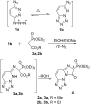
Scheme 1: Synthesis of substituted diethyl oxophosphonate 4.

Scheme 2: Synthesis of substituted diethyl aminophosphonate 7.

Scheme 3: Synthesis of fused diazaphospholo-substituted compounds 10a, 10b.

Scheme 4: Synthesis of fused imidazophosphono-substituted compound 13.

Scheme 5: Synthesis of β-enaminobisphosphonate 15.

Scheme 6: Synthesis of fused imidazophosphono-substituted compounds 17 and 19.

Scheme 7: Isomeric forms of diethyl 2-methylallylphosphonate (18).

Figure 1: Percentage inhibition of granuloma for the tested compounds at a dose of 50 mg per kilogram body we...
The conjugation of nonsteroidal anti-inflammatory drugs (NSAID) to small peptides for generating multifunctional supramolecular nanofibers/hydrogels
- Jiayang Li,
- Yi Kuang,
- Junfeng Shi,
- Yuan Gao,
- Jie Zhou and
- Bing Xu
Beilstein J. Org. Chem. 2013, 9, 908–917, doi:10.3762/bjoc.9.104
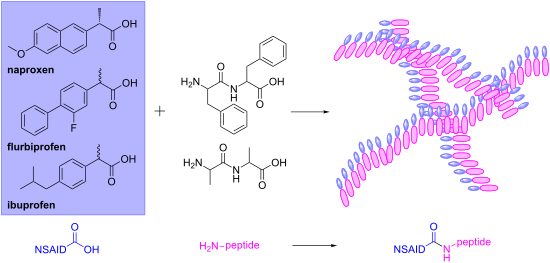
- acting as a general motif, enables enzymatic hydrogelation in which the precursor turns into a hydrogelator upon hydrolysis catalyzed by a phosphatase at physiological conditions. The conjugates of Phe–Phe with other NSAIDs, such as (R)-flurbiprofen (2), racemic flurbiprofen (3), and racemic ibuprofen (4
- phosphatase and results in a hydrogel of 1d under physiological conditions. In addition to naproxen, we evaluate the abilities of other NSAIDs (Scheme 1) as building blocks of hydrogelators and find that the conjugates of FF and (R)-flurbiprofen (2), racemic flurbiprofen (3) or racemic ibuprofen (4) form
- -enantiomer 2 or racemic 3) conjugates with L- or D-diphenylalanine to afford compounds (R)-Fbp-FF (2a), (R)-Fbp-ff (2b), and (RS)-Fbp-FF (3a) (Fbp = flurbiprofen). The attachment of racemic ibuprofen to L-diphenylalanine yields compound (RS)-Ibp-FF (4a) (Ibp = ibuprofen). Since the direct use of

Graphical Abstract
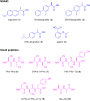
Scheme 1: The structures of the NSAIDs and peptides explored as the building blocks of hydrogelators in this ...

Scheme 2: The synthetic route of the naproxen-containing hydrogelators and the corresponding precursors: (i) ...

Figure 1: Optical images of the hydrogels formed by (A) 1a (0.8 wt %, pH 7.0); (B) 1b (0.8 wt %, pH 4.0); (C) ...
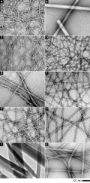
Figure 2: The TEM images of the matrices of the hydrogels formed by (A) 1a (0.8 wt %, pH 7.0); (B) 1b (0.8 wt...

Figure 3: Recovery of the storage moduli of the gels formed by 0.8 wt % of 1a at pH 7.0 and 1.5 wt % of 1d fo...

Figure 4: The IC50 values of 1a, 1c and 1d incubated with HeLa cells after 72 h.
Functionalization of heterocyclic compounds using polyfunctional magnesium and zinc reagents
- Paul Knochel,
- Matthias A. Schade,
- Sebastian Bernhardt,
- Georg Manolikakes,
- Albrecht Metzger,
- Fabian M. Piller,
- Christoph J. Rohbogner and
- Marc Mosrin
Beilstein J. Org. Chem. 2011, 7, 1261–1277, doi:10.3762/bjoc.7.147
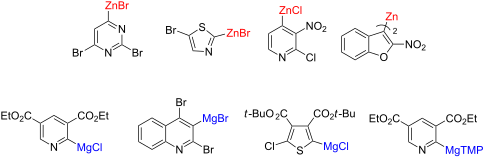
- the synthesis of the blockbuster drug ibuprofen (170). To achieve this, the secondary benzylic zinc reagent 169 was reacted with CO2 gas to provide the phenylacetic acid 170 in 89% yield. Conclusion We have summarized the most important procedures for the preparation of functionalized organzinc and

Graphical Abstract

Scheme 1: Preparation of polyfunctional heteroarylzinc reagents.

Scheme 2: LiCl-mediated insertion of zinc dust to aryl and heteroaryl iodides.

Scheme 3: Selective insertions of Zn in the presence of LiCl.

Scheme 4: Chemoselective insertion of zinc in the presence of LiCl.

Scheme 5: Preparation and reactions of benzylic zinc reagents.

Scheme 6: Ni-catalyzed cross-coupling of benzylic zinc reagent 34 with ethyl 2-chloronicotinate.

Scheme 7: In situ generation of arylzinc reagents using Mg in the presence of LiCl and ZnCl2.

Scheme 8: Zincation of heterocycles with TMP2Zn (42).

Scheme 9: Preparation of highly functionalized zincated heterocycles using TMP2Zn·2MgCl2·2LiCl (42).

Scheme 10: Microwave-accelerated zincation of heterocycles using TMP2Zn·2MgCl2·2LiCl (42).

Scheme 11: The I/Mg-exchange as a metal-metathesis reaction.

Scheme 12: Regioselective Br/Mg-exchange of dibromoquinolines 65 and 68.

Scheme 13: Improved reagents for the regioselective Br/Mg-exchange on bromoquinolines.

Scheme 14: Synthesis of ellipticine (83) using an I/Mg-exchange reaction.

Scheme 15: An oxidative amination leading to the biologically active adenine, purvalanol A (84).

Scheme 16: Preparation of polyfunctional arylmagnesium reagents using Mg in the presence of LiCl.

Scheme 17: Preparation of polyfunctional magnesium reagents starting from organic chlorides.

Scheme 18: Selective multiple magnesiation of the pyrimidine ring.

Scheme 19: Synthesis of a p38 kinase inhibitor 119 and of a sPLA2 inhibitor 123.

Scheme 20: Synthesis of highly substituted indoles of type 128.

Scheme 21: Efficient magnesiations of polyfunctional aromatics and heterocycles using TMP2Mg·2LiCl (129).

Scheme 22: Negishi cross-coupling in the presence of substrates bearing an NH- or an OH-group.

Scheme 23: Negishi cross-coupling in the presence of a serine moiety.

Scheme 24: Radical catalysis for the performance of very fast Kumada reactions.

Scheme 25: MgCl2-mediated addition of functionalized aromatic, heteroaromatic, alkyl and benzylic organozincs ...
An overview of the key routes to the best selling 5-membered ring heterocyclic pharmaceuticals
- Marcus Baumann,
- Ian R. Baxendale,
- Steven V. Ley and
- Nikzad Nikbin
Beilstein J. Org. Chem. 2011, 7, 442–495, doi:10.3762/bjoc.7.57
- Selective inhibitors of cyclooxygenase-2 (COX-2) are widely used for their anti-inflammatory effects and have shown less gastrointestinal side effects when compared to other anti-inflammatory agents, notably non-steroidal anti-inflammatory drugs (NSAIDs) such as aspirin and ibuprofen, which inhibit both COX

Graphical Abstract
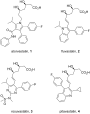
Figure 1: Structures of atorvastatin and other commercial statins.

Figure 2: Structure of compactin.

Scheme 1: Synthesis of pentasubstituted pyrroles.

Scheme 2: [3 + 2] Cycloaddition to prepare 5-isopropylpyrroles.

Scheme 3: Regiospecific [3 + 2] cycloaddition to prepare the pyrrole scaffold.

Scheme 4: Formation of the pyrrole core of atorvastatin via [3 + 2] cycloaddition.

Scheme 5: Formation of pyrrole 33 via the Paal–Knorr reaction.

Scheme 6: Convergent synthesis towards atorvastatin.

Figure 3: Binding pocket of sunitinib in the TRK KIT.

Scheme 7: Synthesis of sunitinib.

Scheme 8: Alternative synthesis of sunitinib.

Scheme 9: Key steps in the syntheses of sumatriptan and zolmitriptan.

Scheme 10: Introduction of the N,N-dimethylaminoethyl side chain.

Scheme 11: Japp–Klingemann reaction in the synthesis of sumatriptan.

Scheme 12: Synthesis of the intermediate sulfonyl chlorides 62 and 63.

Scheme 13: Alternative introduction of the sulfonamide.

Scheme 14: Negishi-type coupling to benzylic sulfonamides.

Scheme 15: Heck reaction used to introduce the sulfonamide side chain of naratriptan.

Scheme 16: Synthesis of the oxazolinone appendage of zolmitriptan.

Scheme 17: Grandberg indole synthesis used in the preparation of rizatriptan.

Scheme 18: Improved synthesis of rizatriptan.

Scheme 19: Larock-type synthesis of rizatriptan.

Scheme 20: Synthesis of eletriptan.

Scheme 21: Heck coupling for the indole system in eletriptan.

Scheme 22: Attempted Fischer indole synthesis of elatriptan.

Scheme 23: Successful Fischer indole synthesis for eletriptan.

Scheme 24: Mechanistic rationale for the Bischler–Möhlau reaction.

Scheme 25: Bischler-type indole synthesis used in the fluvastatin sodium synthesis.

Scheme 26: Palladium-mediated synthesis of ondansetron.

Scheme 27: Fischer indole synthesis of ondansetron.

Scheme 28: Optimised Pictet–Spengler reaction towards tadalafil.

Figure 4: Structures of carvedilol 136 and propranolol 137.

Scheme 29: Synthesis of the carbazole core of carvedilol.

Scheme 30: Alternative syntheses of 4-hydroxy-9H-carbazole.

Scheme 31: Convergent synthesis of etodolac.

Scheme 32: Alternative synthesis of etodolac.

Figure 5: Structures of imidazole-containing drugs.

Scheme 33: Synthesis of functionalised imidazoles towards losartan.

Scheme 34: Direct synthesis of the chlorinated imidazole in losartan.

Scheme 35: Synthesis of trisubstituted imidazoles.

Scheme 36: Preparation of the imidazole ring in olmesartan.

Scheme 37: Synthesis of ondansetron.

Scheme 38: Alternative route to ondansetron and its analogues.

Scheme 39: Proton pump inhibitors and synthesis of esomeprazole.

Scheme 40: Synthesis of benzimidazole core pantoprazole.

Figure 6: Structure of rabeprazole 194.

Scheme 41: Synthesis of candesartan.

Scheme 42: Alternative access to the candesartan key intermediate 216.

Scheme 43: .Medicinal chemistry route to telmisartan.

Scheme 44: Improved synthesis of telmisartan.

Scheme 45: Synthesis of zolpidem.

Scheme 46: Copper-catalysed 3-component coupling towards zolpidem.

Figure 7: Structure of celecoxib.

Scheme 47: Preparation of celecoxib.

Scheme 48: Alternative synthesis of celecoxib.

Scheme 49: Regioselective access to celecoxib.

Scheme 50: Synthesis of pazopanib.

Scheme 51: Syntheses of anastrozole, rizatriptan and letrozole.

Scheme 52: Regioselective synthesis of anastrozole.

Scheme 53: Triazine-mediated triazole formation towards anastrozole.

Scheme 54: Alternative routes to 1,2,4-triazoles.

Scheme 55: Initial synthetic route to sitagliptin.

Figure 8: Binding of sitagliptin within DPP-IV.

Scheme 56: The process route to sitagliptin key intermediate 280.

Scheme 57: Synthesis of maraviroc.

Scheme 58: Synthesis of alprazolam.

Scheme 59: The use of N-nitrosoamidine derivatives in the preparation of fused benzodiazepines.

Figure 9: Structures of itraconazole, ravuconazole and voriconazole.

Scheme 60: Synthesis of itraconazole.

Scheme 61: Synthesis of rufinamide.

Scheme 62: Representative tetrazole formation in valsartan.

Figure 10: Structure of tetrazole containing olmesartan, candesartan and irbesartan.

Scheme 63: Early stage introduction of the tetrazole in losartan.

Scheme 64: Synthesis of cilostazol.

Figure 11: Structure of cefdinir.

Scheme 65: Semi-synthesis of cefdinir.

Scheme 66: Thiazole syntheses towards ritonavir.

Scheme 67: Synthesis towards pramipexole.

Scheme 68: Alternative route to pramipexole.

Scheme 69: Synthesis of famotidine.

Scheme 70: Efficient synthesis of the hyperuricemic febuxostat.

Scheme 71: Synthesis of ziprasidone.

Figure 12: Structure of mometasone.

Scheme 72: Industrial access to 2-furoic acid present in mometasone.

Scheme 73: Synthesis of ranitidine from furfuryl alcohol.

Scheme 74: Synthesis of nitrofurantoin.

Scheme 75: Synthesis of benzofuran.

Scheme 76: Synthesis of amiodarone.

Scheme 77: Synthesis of raloxifene.

Scheme 78: Alternative access to the benzo[b]thiophene core of raloxifene.

Scheme 79: Gewald reaction in the synthesis of olanzapine.

Scheme 80: Alternative synthesis of olanzapine.
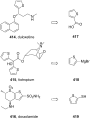
Figure 13: Access to simple thiophene-containing drugs.

Scheme 81: Synthesis of clopidogrel.

Scheme 82: Pictet–Spengler reaction in the preparation of tetrahydrothieno[3,2-c]pyridine (422).

Scheme 83: Alternative synthesis of key intermediate 422.

Figure 14: Co-crystal structures of timolol (left) and carazolol (right) in the β-adrenergic receptor.

Scheme 84: Synthesis of timolol.

Scheme 85: Synthesis of tizanidine 440.

Scheme 86: Synthesis of leflunomide.

Scheme 87: Synthesis of sulfamethoxazole.

Scheme 88: Synthesis of risperidone.

Figure 15: Relative abundance of selected transformations.

Figure 16: The abundance of heterocycles within top 200 drugs (5-membered rings).
Miniemulsion polymerization as a versatile tool for the synthesis of functionalized polymers
- Daniel Crespy and
- Katharina Landfester
Beilstein J. Org. Chem. 2010, 6, 1132–1148, doi:10.3762/bjoc.6.130
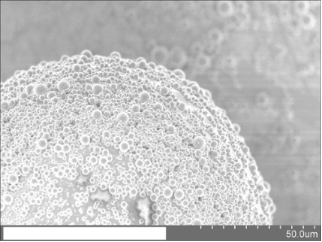
- encapsulation of ibuprofen [115]. Interfacial polyaddition in inverse miniemulsions is becoming especially popular since it allows the encapsulation of hydrophilic substances in various polymeric capsules. The method allows the formation of particles with capsular morphology consisting of a liquid core and a

Graphical Abstract

Figure 1: Copolymerization of 2 monomers A and B with different polarities in direct miniemlusions with the d...

Figure 2: Interfacial alternating radical copolymerization between dibutyl maleate and vinyl gluconamide for ...

Figure 3: Chemical structures of the surfmers for radical polymerization in miniemulsions: a: sodium vinylben...

Scheme 1: Synthesis of the macroinitiator for ROMP in direct miniemulsion [71].

Figure 4: Monomers used in ionic miniemulsion polymerization. a: octamethylcyclotetrasiloxane [9,74], b: 1,3,5-tris...
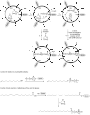
Figure 5: Enzymatic reactions in miniemulsion droplets (reproduced with permission from [91]. Copyright (2003) Wi...

Figure 6: Chemical structure of a: polyaniline (leucoemeraldine), b: polypyrrole, c: poly(ethylene dioxythiop...
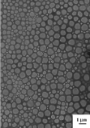
Figure 7: Transmission electron micrograph of polyurethane capsules synthesized by interfacial polyaddition i...

Figure 8: Schematics for the polycondensation reaction between hydrophobic alcohols and carboxylic acids surr...

Scheme 2: Polyimide from the reaction performed in the ionic liquid 1-ethyl-3-methylimidazolium bis(trifluoro...

Figure 9: a: TEM micrograph of the cubic structures, b: proposed mechanism for the production of the nanocube...



