


Search results
Search for "identification" in Full Text gives 459 result(s) in Beilstein Journal of Organic Chemistry. Showing first 200.
Recent advances in total synthesis of illisimonin A
Beilstein J. Org. Chem. 2025, 21, 2571–2583, doi:10.3762/bjoc.21.199
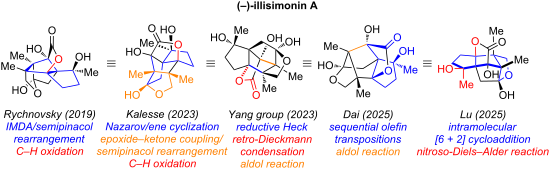
- seco-prezizaane-type Illicium sesquiterpenes have attracted significant interest from synthetic chemists, resulting in numerous elegant total syntheses of molecules within this family. The recent identification of illisimonin A has further expanded the structural diversity of Illicium sesquiterpenes






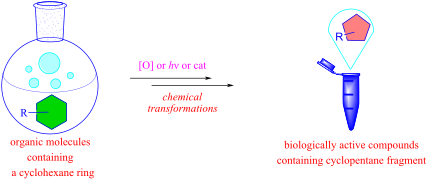
Transformation of the cyclohexane ring to the cyclopentane fragment of biologically active compounds
Beilstein J. Org. Chem. 2025, 21, 2416–2446, doi:10.3762/bjoc.21.185
- 90% yield to (+)-stephadiamine (71). The authors noted that the identification of the structure of (+)-stephadiamine (71) was carried out without purification of the reaction mixture due to its instability on a silica gel column under acidic or basic conditions. Zhang et al. [47] proposed an


The high potential of methyl laurate as a recyclable competitor to conventional toxic solvents in [3 + 2] cycloaddition reactions
Beilstein J. Org. Chem. 2025, 21, 2389–2415, doi:10.3762/bjoc.21.184
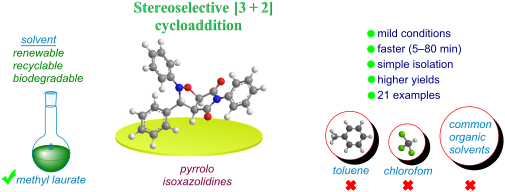
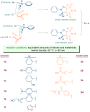
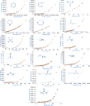
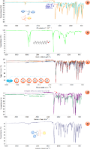
- similarity in solubility properties can be obtained from the distance between solvents. The identification of problematic and non-problematic solvents is facilitated by the size and color of the specific sphere representing a particular solvent. As demonstrated by the figure, the position of methyl laurate






Adaptive experimentation and optimization in organic chemistry
Beilstein J. Org. Chem. 2025, 21, 2367–2368, doi:10.3762/bjoc.21.180

- limitations and outline future opportunities for this emerging field. Fralish and Reker demonstrate how active learning on molecular pairs can improve the identification of potent drug candidates [9]. Their ”ActiveDelta” method outperforms standard approaches while maintaining chemical diversity. Schmid et al
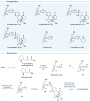
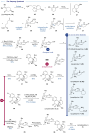
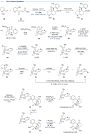
Comparative analysis of complanadine A total syntheses
Beilstein J. Org. Chem. 2025, 21, 2334–2344, doi:10.3762/bjoc.21.178
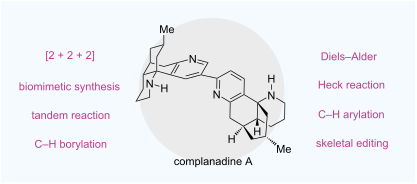
- catalysis, C–H activation methods, biomimetic synthesis, classic rearrangements, skeletal editing logic, and others. In addition, these efforts enabled the identification of the potential cellular target of complanadine A, validation of its neurotrophic activity, establishment of preliminary structure



Multicomponent reactions IV
Beilstein J. Org. Chem. 2025, 21, 2082–2084, doi:10.3762/bjoc.21.163
- science. Chemistry is not only concerned with understanding and modifying chemical bonds but also with creating enabling technologies that help to address challenges at the interface of materials science and the life sciences. The growing need to provide substance libraries for the identification and
α-Ketoglutaric acid in Ugi reactions and Ugi/aza-Wittig tandem reactions
Beilstein J. Org. Chem. 2025, 21, 2021–2029, doi:10.3762/bjoc.21.157
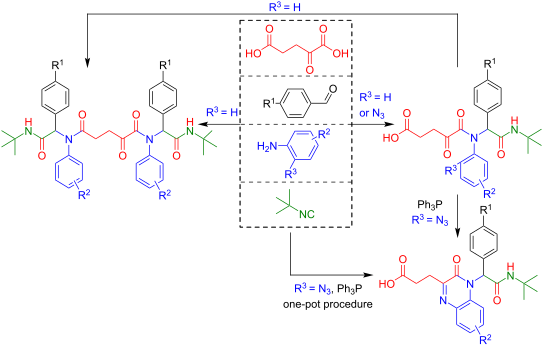
- hours. The solvent was then evaporated, the residue dissolved in DCM, and stirred in the presence of Ph3P for 12 hours at 20 °C to give compounds 9c–e in 35–51% yields (Table 3). Identification and structure determination of the compounds obtained was based on elemental analysis, mass spectrometry, 1H


Measuring the stereogenic remoteness in non-central chirality: a stereocontrol connectivity index for asymmetric reactions
Beilstein J. Org. Chem. 2025, 21, 1995–2006, doi:10.3762/bjoc.21.155
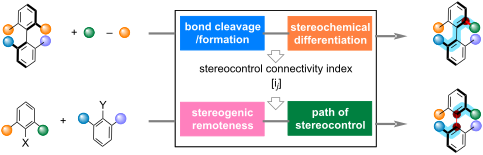
- positioning of stereochemically relevant elements, independent of the type of transformation. Additionally, the index enables the identification of the minimal set of structural features in a molecule that are recognized by chiral catalysts to achieve stereocontrol. Results and Discussion We envisaged that
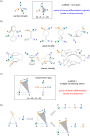
- : Identification of atoms involved in bond changes. 1.1 Determine which bonds are newly formed and which are cleaved in the transformation. 1.2 Label all atoms directly involved in these bond changes. Step 2: Identification of atoms responsible for stereochemical outcome. 2.1 Identify the new stereogenic element




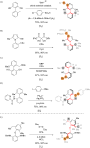

Photochemical reduction of acylimidazolium salts
Beilstein J. Org. Chem. 2025, 21, 1973–1983, doi:10.3762/bjoc.21.153
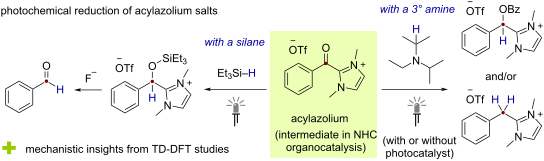
- Information File 1) allowed for the unambiguous identification of this product as the 2-benzylimidazolium compound 2. The formation of this species results from an overall 4-electron-reduction process, indicating that the photocatalytic system with DIPEA as the terminal reductant is capable of facilitating


Asymmetric total synthesis of tricyclic prostaglandin D2 metabolite methyl ester via oxidative radical cyclization
Beilstein J. Org. Chem. 2025, 21, 1964–1972, doi:10.3762/bjoc.21.152
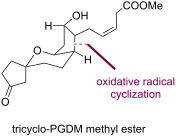
- methods for sensitive detection of endogenous PGD2 production and its stereoisomers are clinically important [5]. However, PGD2 is rapidly metabolized with a short half-life, making the identification and quantification of its downstream metabolites a promising and reliable diagnostic tool. Tricyclic



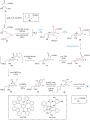
Continuous-flow-enabled intensification in nitration processes: a review of technological developments and practical applications over the past decade
Beilstein J. Org. Chem. 2025, 21, 1678–1699, doi:10.3762/bjoc.21.132
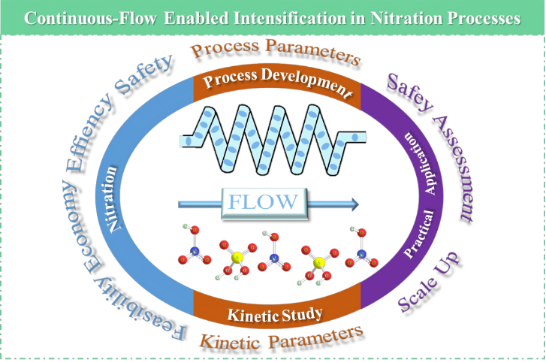
- nitration scale-up processes. HAZOP (hazard and operability study) also serves as a pivotal safety assessment methodology in continuous-flow nitration process development, leveraging its systematic framework for risk identification and process safety optimization. For instance, the nitration of toluene is



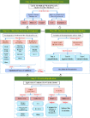
Azide–alkyne cycloaddition (click) reaction in biomass-derived solvent CyreneTM under one-pot conditions
Beilstein J. Org. Chem. 2025, 21, 1544–1551, doi:10.3762/bjoc.21.117
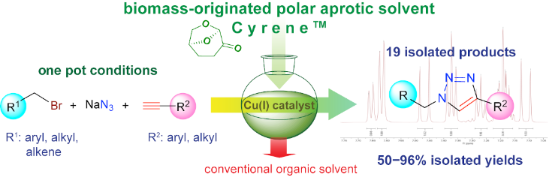
- should be strictly limited, particularly in the pharmaceutical industry. To develop an environmentally benign alternative to this useful method, the identification of an alternative reaction medium is highly desired. Among the recently characterized biomass-based potential solvents dihydrolevoglucosenone


Heterologous biosynthesis of cotylenol and concise synthesis of fusicoccane diterpenoids
Beilstein J. Org. Chem. 2025, 21, 1489–1495, doi:10.3762/bjoc.21.111
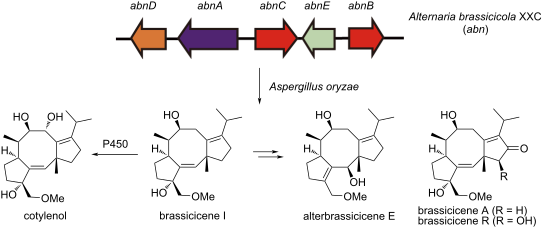
- biosynthetic pathway for brassicicenes, which share the same carbon skeleton and similar oxidation and unsaturation states as cotylenol and cotylenin A [36]. In a previous study, Oikawa and co-workers reported the identification of brassicicene BGC in Pseudocercospora fijiensis [37]. By heterologous expression


N-Salicyl-amino acid derivatives with antiparasitic activity from Pseudomonas sp. UIAU-6B
Beilstein J. Org. Chem. 2025, 21, 1388–1396, doi:10.3762/bjoc.21.103
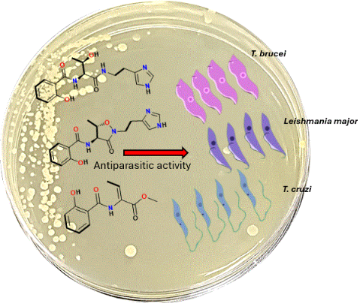
- Compact Data Analyst (Bruker software) to provide accurate and high-resolution mass per charge of molecular ions in the sample and generate molecular formulae using a Bruker Smart Formula manually. Microbial isolation and identification The Pseudomonas sp. UIAU-6B strain was isolated from a sediment
- sample collected off the heavy metal-contaminated Oyun River in Nigeria. The isolation and identification of the bacterial strain UIAU-6B has been previously reported [15]. Small-scale culture Pure colonies of the Pseudomonas sp. UIAU-6B were inoculated into 100 mL of SGG (10 g of glucose, 10 g of


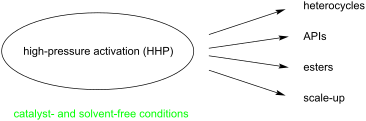
High-pressure activation for the solvent- and catalyst-free syntheses of heterocycles, pharmaceuticals and esters
Beilstein J. Org. Chem. 2025, 21, 1374–1387, doi:10.3762/bjoc.21.102
- , known entities and they were identified based on their high-resolution mass spectra. The mass spectrometric identification and purity determination of the products have been carried out by using an Agilent 7250 GC-QTOF mass spectrometer operated in electron impact ionization (EI, 70 eV) mode using a 30m


Recent total synthesis of natural products leveraging a strategy of enamide cyclization
Beilstein J. Org. Chem. 2025, 21, 999–1009, doi:10.3762/bjoc.21.81
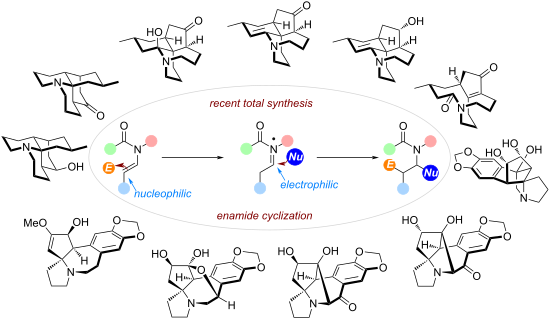
- well-established that it is featured in nearly every organic chemistry textbook. However, despite their versatility, enamines themselves are not easily handling compounds in experimental settings. Their sensitivity to hydrolysis complicates their isolation and identification, and following the




Study of tribenzo[b,d,f]azepine as donor in D–A photocatalysts
Beilstein J. Org. Chem. 2025, 21, 935–944, doi:10.3762/bjoc.21.76

- diverse scaffolds have been reported in the literature, the identification and use of novel PCs with tunable and diverse optical and redox properties can pave the way to uncharted reactivity. In this context, sulfur-based cores, widely used as acceptors in photoelectric materials [9][10][11][12][13][14



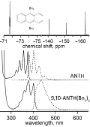
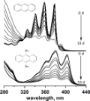
Deep-blue emitting 9,10-bis(perfluorobenzyl)anthracene
Beilstein J. Org. Chem. 2025, 21, 515–525, doi:10.3762/bjoc.21.39
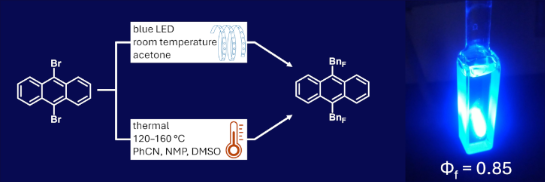
- (C8F17)2 [36]. These results make it clear that monitoring photoirradiated solutions by UV–vis spectroscopy must be accompanied by complementary analyses to enable accurate interpretation of the changes in the UV–vis spectra and identification of the photoproducts. The next comparative photostability





Synthesis of electrophile-tethered preQ1 analogs for covalent attachment to preQ1 RNA
Beilstein J. Org. Chem. 2025, 21, 483–489, doi:10.3762/bjoc.21.35
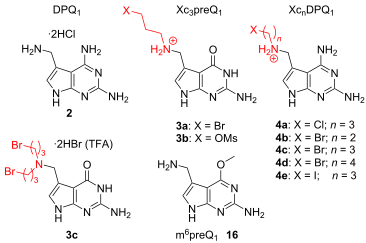
- biotechnological applications, including the identification of queuosinylation sites in cellular RNA [13], RNA and DNA labeling [14][15], and mRNA photocaging [16]. The latter applications rely on the promiscuity of the tRNA-modifying enzyme tRNA-guanine transglycosylase (TGT), which can incorporate functionalized
- protein – this concept is underexplored in the field of RNA drugging [37]. Recent studies suggest that the validation of RNA–small molecule interactions [38][39][40], drug efficacy or the identification of off-target effects of approved drugs on the transcriptome [41][42] could greatly benefit from


New tandem Ugi/intramolecular Diels–Alder reaction based on vinylfuran and 1,3-butadienylfuran derivatives
Beilstein J. Org. Chem. 2025, 21, 444–450, doi:10.3762/bjoc.21.31
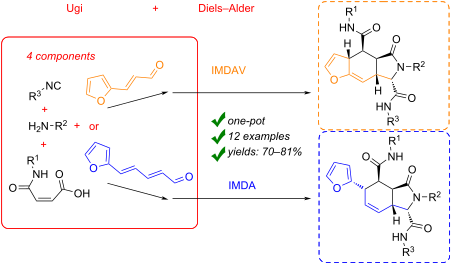
- reactions, for instance, have contributed to high-throughput screening for drug discovery, facilitating the identification of new therapeutic compounds. [9][10]. A notable example is ivosidenib, approved in 2018, which was synthesized using the Ugi reaction to target mutated IDH1 in acute myeloid leukemia




Beyond symmetric self-assembly and effective molarity: unlocking functional enzyme mimics with robust organic cages
Beilstein J. Org. Chem. 2025, 21, 421–443, doi:10.3762/bjoc.21.30
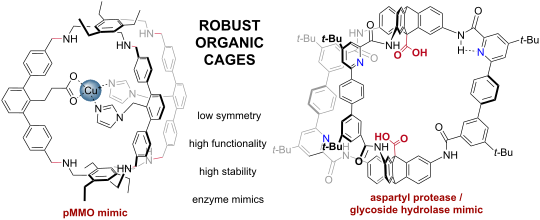
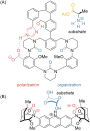
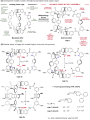
- exploiting emergent geometric rules and post-assembly modifications; (3) improved screening and collection of detailed structure–activity-relationship (SAR) data for modular systems to allow systematic design, rational and computational development, and identification of novel activity. These developments




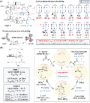
Identification and removal of a cryptic impurity in pomalidomide-PEG based PROTAC
Beilstein J. Org. Chem. 2025, 21, 407–411, doi:10.3762/bjoc.21.28
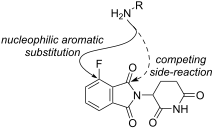
- drug”) class of PROTAC molecules with a PEG linker is frequently used to promote targeted protein degradation. The standard protocol for their synthesis involves nucleophilic aromatic substitution of 4-fluorothalidomide with a PEG-amine. We report herein the identification of a commonly ignored
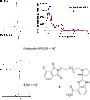
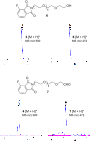
- sulfonate to the byproduct by reacting it with taurine allows for easy decontamination. This method may facilitate the purification of other similar reactions and improve the quality of related pomalidomide derivatives. The structures of veliparib and iVeliparib-AP6. Identification of the cryptic impurity




Emerging trends in the optimization of organic synthesis through high-throughput tools and machine learning
Beilstein J. Org. Chem. 2025, 21, 10–38, doi:10.3762/bjoc.21.3
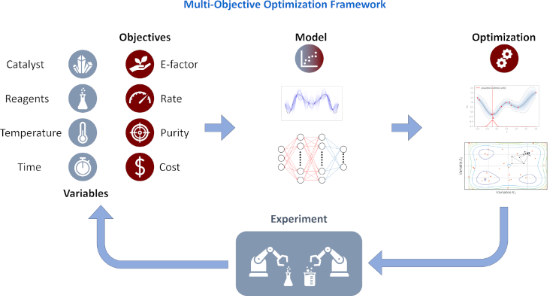
- with feedback DOE facilitated the rapid identification of appropriate solvents. Notably, the use of DMSO, DMF, and pyridine led to an enhanced yield of the monoalkylated product. An experimental setup was developed for single-droplet studies of visible-light photoredox catalysis using an oscillatory


Discovery of ianthelliformisamines D–G from the sponge Suberea ianthelliformis and the total synthesis of ianthelliformisamine D
Beilstein J. Org. Chem. 2024, 20, 3205–3214, doi:10.3762/bjoc.20.266
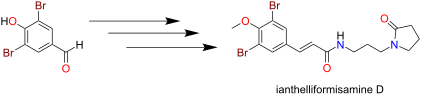
- ], therefore it is no surprise that sponges are highly sought after for novel bioactive metabolites and have been a major focus of marine natural product drug discovery for over 70 years. The identification of ianthelliformisamines A–C from the Australian marine sponge Suberea ianthelliformis, which displayed
- available [16] but neither of these compounds has been fully characterised with only the total synthesis of 7 being reported in the literature [8]. Our study reports the first identification of 6 and 7 from a natural origin and the first full characterisation of these molecules using NMR, UV, and MS data
- commercially available primary amine, 1-(3-aminopropyl)pyrrolidin-2-one completed the total synthesis of the natural product in an overall yield of 1.5%. The NMR data comparison of the natural product and our synthetic compound was essentially identical. Due to our interest in the identification of potential


![[Graphic 1]](/bjoc/content/inline/1860-5397-20-266-i2.svg?max-width=637&scale=1.18182)
![[Graphic 2]](/bjoc/content/inline/1860-5397-20-266-i3.svg?max-width=637&scale=1.18182)
![[Graphic 3]](/bjoc/content/inline/1860-5397-20-266-i4.svg?max-width=637&scale=1.18182)

![[Graphic 4]](/bjoc/content/inline/1860-5397-20-266-i5.svg?max-width=637&scale=1.18182)
![[Graphic 5]](/bjoc/content/inline/1860-5397-20-266-i6.svg?max-width=637&scale=1.18182)

Multicomponent reactions driving the discovery and optimization of agents targeting central nervous system pathologies
Beilstein J. Org. Chem. 2024, 20, 3151–3173, doi:10.3762/bjoc.20.261

- makes them invaluable in accelerating drug discovery processes. The synergy between multicomponent chemistry and medicinal chemistry offers a highly attractive and competitive approach to accelerate drug discovery and development, facilitating the identification and the optimization of novel therapeutic





