


Search results
Search for "redox chemistry" in Full Text gives 29 result(s) in Beilstein Journal of Organic Chemistry.
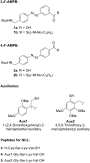
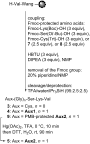
Building photoswitchable 3,4'-AMPB peptides: Probing chemical ligation methods with reducible azobenzene thioesters
Beilstein J. Org. Chem. 2012, 8, 890–896, doi:10.3762/bjoc.8.101
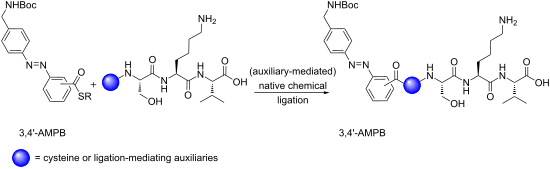
- ; molecular switches; peptides; redox chemistry; Introduction Optical switches not only offer the advantage to elucidate, but also to control biological processes with high spatial and temporal resolution by using light, either in vitro or in vivo [1]. In this context, azobenzenes remain a privileged class
- -terminal thioester peptide and either an N-terminal cysteine peptide or Nα-auxiliary-capped peptides. However, for elucidating the complex redox chemistry of the two azobenzene building blocks under the reducing conditions of ligation methods, we solely applied the Boc-protected azobenzene ω-amino acid





When gold can do what iodine cannot do: A critical comparison
Beilstein J. Org. Chem. 2011, 7, 847–859, doi:10.3762/bjoc.7.97
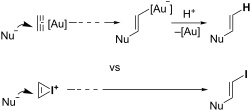
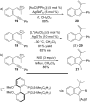
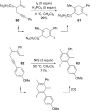
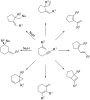
- led to numerous elegant contributions in both heterocycle and carbocycle syntheses [14][15][16][17][18][19][20]. In general, these processes are easy to perform under simple reaction conditions: Significant redox chemistry is not involved. Since gold complexes show outstanding functional group






Structure and reactivity in neutral organic electron donors derived from 4-dimethylaminopyridine
Beilstein J. Org. Chem. 2010, 6, No. 73, doi:10.3762/bjoc.6.73
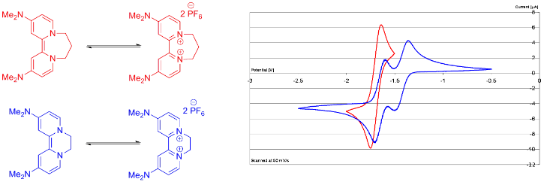
- the disalts. All of the cyclic voltammograms showed reversible redox chemistry, featuring the transfer of two electrons, as indicated by calibration with ferrocene/ferrocenium (Fc/Fc+). Restricting the bridge length to two carbons made donor 14 a less effective reducing agent (Figure 3) compared to 8


Synthesis and redox behavior of new ferrocene- π-extended- dithiafulvalenes: An approach for anticipated organic conductors
Beilstein J. Org. Chem. 2009, 5, No. 6, doi:10.3762/bjoc.5.6
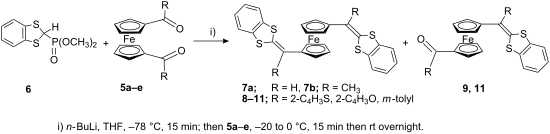
- multicomponent electron donor systems by the Wittig–Horner reaction of the respective phosphonate ester 6 with different ferreocenylketones using the modifications introduced onto the reaction. The redox chemistry of the ferreocenylketones and these new π-conjugated hybrids 8, 10 and 11 has been studied using


Other Beilstein-Institut Open Science Activities



