


Search results
Search for "alcohols" in Full Text gives 873 result(s) in Beilstein Journal of Organic Chemistry. Showing first 200.
A convergent synthetic approach to the tetracyclic core framework of khayanolide-type limonoids
- Zhiyang Zhang,
- Jialei Hu,
- Hanfeng Ding,
- Li Zhang and
- Peirong Rao
Beilstein J. Org. Chem. 2025, 21, 926–934, doi:10.3762/bjoc.21.75
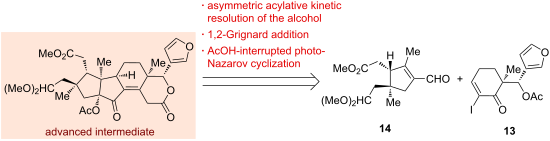
- 4.4:1 mixture of regioisomeric alcohols with the desired isomer being the major component, presumably due to the considerable steric hindrance from the quaternary carbon at C4. However, decagram-scale separation of these two isomers by chromatography proved troublesome. Fortunately, the distinct
- reactivity of those two alcohols toward oxidation allowed for the selective conversion of desired alcohol to ketone 24 using PCC, producing a 50% overall yield, while the recovered undesired alcohol could be reverted to 21 by Swern oxidation. Direct enol triflation (Et3N/Tf2O, NaH/PhNTf2, DTBMP/Tf2O, etc

Graphical Abstract

Figure 1: Representative limonoid triterpenes.
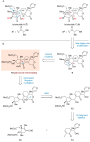
Scheme 1: Structures and retrosynthetic analysis of krishnolides A (7) and C (8).

Scheme 2: Construction of α-iodoenone 13.

Scheme 3: Construction of aldehyde 14.
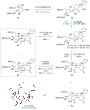
Scheme 4: Synthesis of the advanced intermediate 10 (in the X ray structure of 10 solvent molecule is omitted...
Recent advances in controllable/divergent synthesis
- Jilei Cao,
- Leiyang Bai and
- Xuefeng Jiang
Beilstein J. Org. Chem. 2025, 21, 890–914, doi:10.3762/bjoc.21.73

- and n-BuLi, followed by a reaction with ZnCl2 at room temperature. The product is then hydrolyzed with a NaOH solution of H2O2 to yield amino alcohols. The mechanism involves the formation of borate intermediate Int-79 from substrate 83 under the action of CH2BrLi. This is followed by an N-1,2

Graphical Abstract

Scheme 1: Ligand-controlled regiodivergent C1 insertion into arynes [19].

Scheme 2: Ligand effect in homogenous gold catalysis enabling regiodivergent π-bond-activated cyclization [20].

Scheme 3: Ligand-controlled palladium(II)-catalyzed regiodivergent carbonylation of alkynes [21].
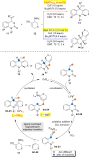
Scheme 4: Catalyst-controlled annulations of strained cyclic allenes with π-allyl palladium complexes and pro...

Scheme 5: Ring expansion of benzosilacyclobutenes with alkynes [23].

Scheme 6: Photoinduced regiodivergent and enantioselective cross-coupling [24].

Scheme 7: Catalyst-controlled regiodivergent and enantioselective formal hydroamination of N,N-disubstituted ...

Scheme 8: Catalyst-tuned regio- and enantioselective C(sp3)–C(sp3) coupling [31].

Scheme 9: Catalyst-controlled annulations of bicyclo[1.1.0]butanes with vinyl azides [32].

Scheme 10: Solvent-driven reversible macrocycle-to-macrocycle interconversion [39].

Scheme 11: Unexpected solvent-dependent reactivity of cyclic diazo imides and mechanism [40].

Scheme 12: Palladium-catalyzed annulation of prochiral N-arylphosphonamides with aromatic iodides [41].

Scheme 13: Time-dependent enantiodivergent synthesis [42].

Scheme 14: Time-controlled palladium-catalyzed divergent synthesis of silacycles via C–H activation [43].

Scheme 15: Proposed mechanism for the time-controlled palladium-catalyzed divergent synthesis of silacycles [43].

Scheme 16: Metal-free temperature-controlled regiodivergent borylative cyclizations of enynes [45].

Scheme 17: Nickel-catalyzed switchable site-selective alkene hydroalkylation by temperature regulation [46].

Scheme 18: Copper-catalyzed decarboxylative amination/hydroamination sequence [48].

Scheme 19: Proposed mechanism of copper-catalyzed decarboxylative amination/hydroamination sequence [48].

Scheme 20: Enantioselective chemodivergent three-component radical tandem reactions [49].

Scheme 21: Substrate-controlled synthesis of indoles and 3H-indoles [52].

Scheme 22: Controlled mono- and double methylene insertions into nitrogen–boron bonds [53].

Scheme 23: Copper-catalyzed substrate-controlled carbonylative synthesis of α-keto amides and amides [54].

Scheme 24: Divergent sulfur(VI) fluoride exchange linkage of sulfonimidoyl fluorides and alkynes [55].

Scheme 25: Modular and divergent syntheses of protoberberine and protonitidine alkaloids [56].
Recent advances in the electrochemical synthesis of organophosphorus compounds
- Babak Kaboudin,
- Milad Behroozi,
- Sepideh Sadighi and
- Fatemeh Asgharzadeh
Beilstein J. Org. Chem. 2025, 21, 770–797, doi:10.3762/bjoc.21.61
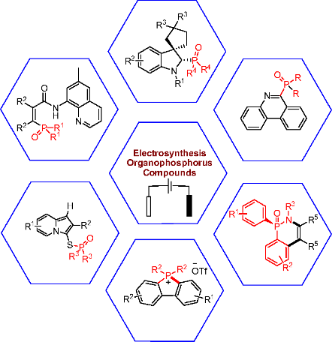
- first due to its lowest oxidation potential among the species. In 2024, Zhu et al. [63] reported an electrochemical transition-metal and additive-free synthesis of phosphorylated propargyl alcohols at room temperature. The reaction is carried out in an undivided cell using glassy carbon (GC) as an anode
- corresponding phosphorylated propargyl alcohols (Scheme 19). The reaction yield showed that this method is not sensitive to electron-withdrawing or electron-donating groups at different positions on the aromatic ring. Most likely, the 3-substituted pyridine substrate and the enynes with nitro or carbonyl groups
- . In this method, they have reported an electrochemical reaction of alcohols (aliphatic and aromatic) and diphenylphosphine in an undivided cell, using carbon and nickel electrodes as the anode and cathode, respectively, at a constant current for 4 h in the presence of cesium carbonate as a base

Graphical Abstract

Scheme 1: Electrosynthesis of phenanthridine phosphine oxides.

Scheme 2: Electrosynthesis of 1-aminoalkylphosphine oxides.

Scheme 3: Various electrochemical C–P coupling reactions.

Scheme 4: Electrochemical C–P coupling reaction of indolines.

Scheme 5: Electrochemical C–P coupling reaction of ferrocene.

Scheme 6: Electrochemical C–P coupling reaction of acridines with phosphites.

Scheme 7: Electrochemical C–P coupling reaction of alkenes.

Scheme 8: Electrochemical C–P coupling reaction of arenes in a flow system.

Scheme 9: Electrochemical C–P coupling reaction of heteroarenes.

Scheme 10: Electrochemical C–P coupling reaction of thiazoles.

Scheme 11: Electrochemical C–P coupling reaction of indole derivatives.

Scheme 12: Electrosynthesis of 1-amino phosphonates.

Scheme 13: Electrochemical C–P coupling reaction of aryl and vinyl bromides.

Scheme 14: Electrochemical C–P coupling reaction of phenylpyridine with dialkyl phosphonates in the presence o...

Scheme 15: Electrochemical P–C bond formation of amides.

Scheme 16: Electrochemical synthesis of α-hydroxy phosphine oxides.

Scheme 17: Electrochemical synthesis of π-conjugated phosphonium salts.

Scheme 18: Electrochemical phosphorylation of indoles.

Scheme 19: Electrochemical synthesis of phosphorylated propargyl alcohols.

Scheme 20: Electrochemical synthesis of phosphoramidates.

Scheme 21: Electrochemical reaction of carbazole with diphenylphosphine.

Scheme 22: Electrochemical P–N coupling of carbazole with phosphine oxides.

Scheme 23: Electrochemical P–N coupling of indoles with a trialkyl phosphite.

Scheme 24: Electrochemical synthesis of iminophosphoranes.

Scheme 25: Electrochemical P–O coupling of phenols with dialkyl phosphonate.

Scheme 26: Electrochemical P–O coupling of alcohols with diphenylphosphine.

Scheme 27: Electrochemical P–S coupling of thiols with dialkylphosphines.

Scheme 28: Electrochemical thiophosphorylation of indolizines.

Scheme 29: Electrosynthesis of S-heteroaryl phosphorothioates.

Scheme 30: Electrochemical phosphorylation reactions.

Scheme 31: Electrochemical P–Se formation.

Scheme 32: Electrochemical selenation/halogenation of alkynyl phosphonates.

Scheme 33: Electrochemical enantioselective aryl C–H bond activation.
Development and mechanistic studies of calcium–BINOL phosphate-catalyzed hydrocyanation of hydrazones
- Carola Tortora,
- Christian A. Fischer,
- Sascha Kohlbauer,
- Alexandru Zamfir,
- Gerd M. Ballmann,
- Jürgen Pahl,
- Sjoerd Harder and
- Svetlana B. Tsogoeva
Beilstein J. Org. Chem. 2025, 21, 755–765, doi:10.3762/bjoc.21.59
- ; hydrazones; isocyanides; Introduction Catalytic applications of non-toxic earth abundant metals like calcium are currently on the rise [1][2][3][4]. Prominent recent examples that witness the versatility of calcium catalysis include calcium-catalyzed amination of π-activated alcohols [5], the Beckmann
- of alcohols as additives has a negative effect on both yield and enantioselectivity. The enantioselectivity was generally low (Table 2, entries 4–9) and with preference for the S-configured hydrocyanide employing the pre-formed Ca complex 6. In addition, product 2 was obtained with absolute

Graphical Abstract

Figure 1: Crystal structure of the calcium diphenyl phosphate complex 4. Hydrogen atoms are omitted for clari...

Scheme 1: Synthesis of the calcium diphenyl phosphate model complex 4 from phosphoric acid 3 and Ca(OiPr)2.

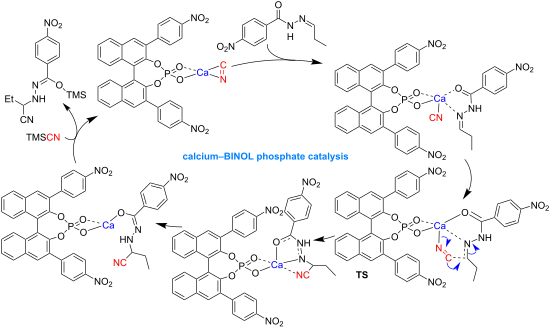
Figure 2: (A) Proposed catalytic cycle for the hydrocyanation of hydrazones with the Ca–BINOL phosphate catal...

Figure 3: Reaction energy profile for the hydrocyanation of Z-hydrazone 1, (depicted is the pathway that give...

Figure 4: Transition-state structure TS 8 for internal rotation, mixing conformational (Z/E)-pathways with op...

Figure 5: Replacement step after internal rotation in 11 via TS8 and reaction with TMSCN to give adduct 13 (s...
Origami with small molecules: exploiting the C–F bond as a conformational tool
- Patrick Ryan,
- Ramsha Iftikhar and
- Luke Hunter
Beilstein J. Org. Chem. 2025, 21, 680–716, doi:10.3762/bjoc.21.54
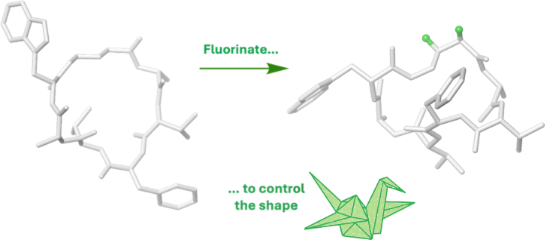
- scaffolds – alkanes – then we will progress to ethers, alcohols, sugars, amines (and their derivatives), carbonyl compounds, peptides, and finally sulfur-containing compounds. By arranging the material in this way, we hope that newcomers to the field might be able to readily envisage ways to apply these
- suffers from Lewis F···O repulsion. In contrast, the ga and ag conformers have less hyperconjugation but also less F···O repulsion, and are less polar. Since all three conformers are close in energy, the difluoroethyl ether moiety in 51 can be considered to have chameleonic polarity. 3 Alcohols We now
- progress from ethers (section 2) to a closely related class of molecules, namely, the alcohols. The focus here in section 3 will be mostly on simple examples; more complex poly-ol examples will be discussed in section 4 (sugars). Taking the example of a simple alcohol such as ethanol, consider what happens

Graphical Abstract

Figure 1: Fundamental characteristics of the C–F bond.
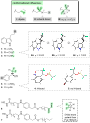
Figure 2: Incorporation of fluorine at the end of an alkyl chain.
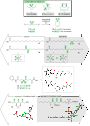
Figure 3: Incorporation of fluorine into the middle of a linear alkyl chain.
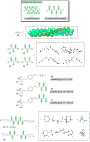
Figure 4: Incorporation of fluorine across much, or all, of a linear alkyl chain.
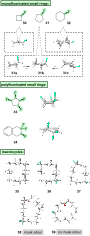
Figure 5: Incorporation of fluorine into cycloalkanes.

Figure 6: Conformational effects of introducing fluorine into an ether (geminal to oxygen).

Figure 7: Conformational effects of introducing fluorine into an ether (vicinal to oxygen).

Figure 8: Effects of introducing fluorine into alcohols (and their derivatives).
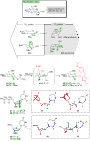
Figure 9: Controlling the ring pucker of sugars through fluorination.
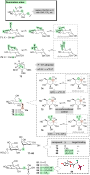
Figure 10: Controlling bond rotations outside the sugar ring through fluorination.
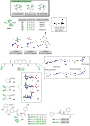
Figure 11: Effects of incorporating fluorine into amines.
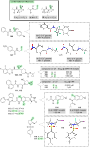
Figure 12: Effects of incorporating fluorine into amine derivatives, such as amides and sulfonamides.

Figure 13: Effects of incorporating fluorine into organocatalysts.

Figure 14: Effects of incorporating fluorine into carbonyl compounds, focusing on the “carbon side.”

Figure 15: Fluoroproline-containing peptides and proteins.
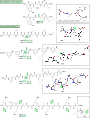
Figure 16: Further examples of fluorinated linear peptides (besides fluoroprolines). For clarity, sidechains a...

Figure 17: Fluorinated cyclic peptides.

Figure 18: Fluorine-derived conformational control in sulfur-containing compounds.
Asymmetric synthesis of fluorinated derivatives of aromatic and γ-branched amino acids via a chiral Ni(II) complex
- Maurizio Iannuzzi,
- Thomas Hohmann,
- Michael Dyrks,
- Kilian Haoues,
- Katarzyna Salamon-Krokosz and
- Beate Koksch
Beilstein J. Org. Chem. 2025, 21, 659–669, doi:10.3762/bjoc.21.52
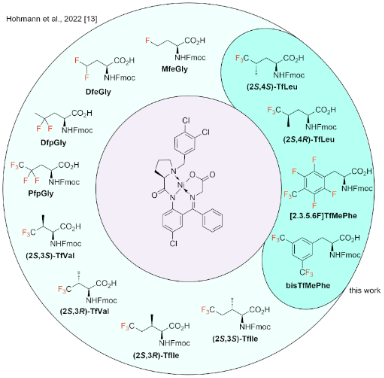
- iodides can be efficiently synthesized in gram-scale from the respective fluorinated alcohols using alkyl nonaflates as a key intermediate [13]. Based on these results, 3,3,3-trifluoro-2-methylpropan-1-ol (8) was selected as the starting material. We started our efforts by screening the reaction

Graphical Abstract

Scheme 1: Previous work for obtaining different fluorinated amino acids and target fluorinated amino acids de...

Scheme 2: Synthesis of fluorinated aromatic amino acids 2 and 3.

Scheme 3: a) Gram-scale synthesis of fluorinated alkyl iodide precursor 10; b) Synthesis of trifluorinated le...
Recent advances in allylation of chiral secondary alkylcopper species
- Minjae Kim,
- Gwanggyun Kim,
- Doyoon Kim,
- Jun Hee Lee and
- Seung Hwan Cho
Beilstein J. Org. Chem. 2025, 21, 639–658, doi:10.3762/bjoc.21.51
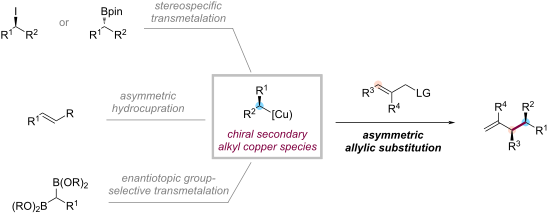
- reaction, catalyzed by a sulfonate-containing chiral NHC–Cu complex, proceeded with excellent chemo-, regio- (SN2'-), diastereo-, and enantioselectivity to afford homoallylic boronates 36. The resulting organoboron compounds could be oxidized to secondary homoallylic alcohols, providing an alternative to
- showed a broad scope, tolerating both 1,1-diborylalkanes with N-tosyl-protected amines and TBS-protected alcohols, as well as substrates containing alkenes and alkynes. Various allylic bromides 46 with electron-rich and electron-deficient aryl substituents worked well, giving homoallylic boronic esters

Graphical Abstract

Scheme 1: Representative transition-metal catalysis for allylic substitution.

Scheme 2: Formation of stereogenic centers in copper-catalyzed allylic alkylation reactions.

Scheme 3: Copper-mediated, stereospecific SN2-selective allylic substitution through retentive transmetalatio...

Scheme 4: ZnCl2-promoted stereospecific SN2' allylic substitution of secondary alkylcopper species via sequen...

Scheme 5: Temperature and time-dependent configurational stability of chiral secondary organocopper species.

Scheme 6: DFT analysis of B–C bond lengths in various boronate complexes and correlation with reactivity.

Scheme 7: Copper-catalyzed stereospecific allylic alkylation of secondary alkylboronic esters via tert-butyll...

Scheme 8: Copper-catalyzed stereospecific allylic alkylation of chiral tertiary alkylboronic esters via adama...

Scheme 9: DFT-calculated energy surface for boron-to-copper transmetalation of either the tert-butyl group or...

Scheme 10: CuH-catalyzed enantioselective allylic substitution and postulated catalytic cycle.

Scheme 11: CuH-catalyzed enantioselective allylic substitution of vinylarenes.

Scheme 12: CuH-catalyzed stereoselective allylic substitution of vinylboronic esters.

Scheme 13: (a) Generation of chiral copper species via enantioselective CuH addition to vinylBpin. (b) Regardi...

Scheme 14: CuH-catalyzed enantioselective allylic substitution of 1‐trifluoromethylalkenes with 18-crown-6.

Scheme 15: CuH-catalyzed enantioselective allylic substitution of terminal alkynes.

Scheme 16: Copper-catalyzed enantiotopic-group-selective allylic substitution of 1,1-diborylalkanes.
Scheme 17: (a) Computational and (b) experimental studies to elucidate the mechanistic details of the enantiot...

Scheme 18: Copper-catalyzed regio-, diastereo- and enantioselective allylic substitution of 1,1-diborylalkanes....

Scheme 19: (a) Experimental and (b) computational studies to understand the stereoselectivities in oxidative a...
Formaldehyde surrogates in multicomponent reactions
- Cecilia I. Attorresi,
- Javier A. Ramírez and
- Bernhard Westermann
Beilstein J. Org. Chem. 2025, 21, 564–595, doi:10.3762/bjoc.21.45
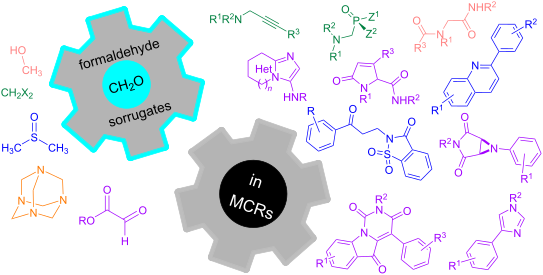
- devoted to dimethyl sulfoxide, dihalomethanes, hexamethylene tetramine, and glyoxylates as C1-building blocks, substituting formaldehyde. Review Methanol as a source of formaldehyde There are several reports on the use of alcohols under oxidative conditions as aldehyde surrogates in Ugi and Passerini

Graphical Abstract

Scheme 1: Features of the ideal reaction (redrawn from P. A. Wender et al. [1]).

Scheme 2: Some of the most popular MCRs with formaldehyde as the carbonyl component.

Scheme 3: Ugi reaction under a catalyzed electro-oxidation process using TEMPO (2,2,6,6-tetramethyl-1-piperid...

Scheme 4: Examples of different products obtained by MCRs in which DMSO serves as -SCH3 source.

Scheme 5: Mechanism of the decomposition of DMSO under acidic or thermal conditions. a) In situ generation of...

Scheme 6: Povarov multicomponent reaction to quinolines.

Scheme 7: Example of the Povarov reaction with formaldehyde with a julolidine derivative as main product.

Scheme 8: Povarov multicomponent reaction to quinoline derivatives I and II using DMSO as formaldehyde surrog...

Scheme 9: Example of a Povarov three-component reaction with change of catalyst, yielding regioisomer III. In...

Scheme 10: The Povarov three-component reactions carried out under acidic catalysis to afford quinoline regios...

Scheme 11: Different MCR routes involving DMSO to synthesize complex heterocycles such as diarylpyridines and ...

Scheme 12: Pyrazole synthesis by a three-component reaction using DMSO as a source of a C-1 unit.

Scheme 13: Three-component reactions for the synthesis of aliphatic heterocycles 13 and 14 using DMSO as a for...

Scheme 14: Proposed mechanism for the 3CR between homoallylic amines, disulfides, and DMSO.

Scheme 15: Mannich-type reaction using DMSO as formaldehyde surrogate.

Scheme 16: Mechanism for the 3CR-Mannich-type reaction between aryl ketone 18, saccharine (19), and DMSO. The ...

Scheme 17: Mannich-type reaction using DMSO as formaldehyde surrogate and under oxidative activation.

Scheme 18: Three-component reaction between an indazole, a carboxylic acid, and DMSO.

Scheme 19: Amine–aldehyde–alkyne (AAA) coupling reaction and plausible mechanism.

Scheme 20: AHA coupling for the synthesis of propargylamines using dihalomethanes as C1 building blocks.

Scheme 21: AHA coupling using CH2Cl2 as both solvent and methylene source.

Scheme 22: Examples of propargylamines synthesized under catalytic AHA protocols.

Scheme 23: Proposed mechanism for the synthesis of propargylamines using dichloromethane as a C1 source.

Scheme 24: Mechanism proposed for the generation of the aminal intermediate E by Buckley et al. [68].

Scheme 25: Pudovic and Kabachnik–Fields reactions for the synthesis of α-aminophosphonates.

Scheme 26: a) Abramov side reaction that generates α-hydroxy phosphonate as a byproduct during the Kabachnik-F...

Scheme 27: Catalyst-free three component reaction to afford α-amino phosphorus product 35 using 1,1-dihaloalka...

Scheme 28: a) Proposed mechanism for the three-component reaction of dichloromethane, amine and phosphorus com...

Scheme 29: Ugi-ammonia strategy using HMTA as a formaldehyde surrogate.

Scheme 30: Glyoxylate and its derivatives as C1 building blocks.

Scheme 31: The Groebke–Blackburn–Bienaymé multicomponent reaction (GBB) and its mechanism.

Scheme 32: a) Byproducts in the GBB multicomponent reaction (GBB) when formaldehyde is used as the carbonyl co...

Scheme 33: Possible regioisomers in the GBB multicomponent reaction when formaldehyde is used as the carbonyl ...

Scheme 34: The multicomponent GBB reaction yields 2-unsubstituted 3-aminoimidazo heterocycles 42a using MP-gly...

Scheme 35: GBB multicomponent reaction to 2-unsubstituted 3-amino imidazo heterocycles 42a using glyoxylic aci...

Scheme 36: GBB reaction using glyoxylic acid immobilized on silica as formaldehyde surrogate.

Scheme 37: Bioactive products synthesized by the GBB reaction using glyoxylic acid.

Scheme 38: van Leusen three-component reaction to imidazoles.

Scheme 39: Side reaction during the synthesis of imidazoles with formaldehyde as the carbonyl compound.

Scheme 40: Optimization of the van Leusen three component reaction to 1,4-disubstituted imidazoles 43 using gl...

Scheme 41: Application of the Sisko strategy [96] for the synthesis of CB1 receptor antagonist compounds [97].

Scheme 42: Side reaction, when NH4OH is used as amine component.

Scheme 43: Ugi-type adducts with the ester moiety and the acidic CH to be used for post-cyclization sequences.

Scheme 44: Ugi/cycloisomerization process to pyrrolones 51, butenolides 52, and pyrroline 53.

Scheme 45: Radical cyclization reactions from Ugi adducts promoted by TEMPO.

Scheme 46: Hydrolysis and decarboxylation reactions to products with incorporation of a C1 unit of ethyl glyox...

Scheme 47: One-step synthetic route to pyrrolones 60 using phenylglyoxal.

Scheme 48: Ugi-pseudo-Knoevenagel-pseudo-Dieckmann cascade sequence for the synthesis of fused heterocycles.

Scheme 49: Ugi-pseudo-Knoevenagel reaction from ethyl glyoxylate.
Asymmetric synthesis of β-amino cyanoesters with contiguous tetrasubstituted carbon centers by halogen-bonding catalysis with chiral halonium salt
- Yasushi Yoshida,
- Maho Aono,
- Takashi Mino and
- Masami Sakamoto
Beilstein J. Org. Chem. 2025, 21, 547–555, doi:10.3762/bjoc.21.43
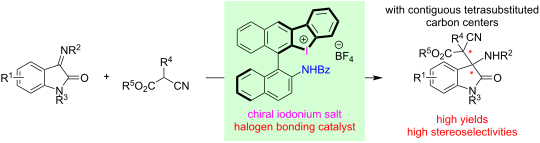
- , Chiba 263-8522, Japan 10.3762/bjoc.21.43 Abstract β-Amino cyanoesters are important scaffolds because they can be transformed into useful chiral amines, amino acids, and amino alcohols. Halogen bonding, which can be formed between halogen atoms and electron-rich chemical species, is attractive because
- alcohols [38]. In this context, their asymmetric syntheses are important and have also been researched mainly using chiral catalysts [39][40]. Previously, the Mannich reaction has been applied in the construction of contiguous stereogenic centers (Figure 2). In 2005, Jørgensen and co-workers reported the

Graphical Abstract

Figure 1: Selected examples and applications of chiral halogen-bonding catalysts.

Figure 2: Selected examples for the construction of contiguous tetrasubstituted carbon centers via the Mannic...

Scheme 1: Catalyst screening for the asymmetric Mannich reaction. All yields were determined by 1H NMR spectr...

Scheme 2: N-Protecting group optimization for the asymmetric Mannich reaction. All yields were determined by 1...

Scheme 3: Catalyst screening using 7b as a substrate. All yields were determined by 1H NMR spectroscopy using...

Scheme 4: Substrate scope for the asymmetric Mannich reaction using 0.06 mmol of 7. Isolated product yields a...

Figure 3: Plausible reaction mechanism.
Vinylogous functionalization of 4-alkylidene-5-aminopyrazoles with methyl trifluoropyruvates
- Judit Hostalet-Romero,
- Laura Carceller-Ferrer,
- Gonzalo Blay,
- Amparo Sanz-Marco,
- José R. Pedro and
- Carlos Vila
Beilstein J. Org. Chem. 2025, 21, 533–540, doi:10.3762/bjoc.21.41
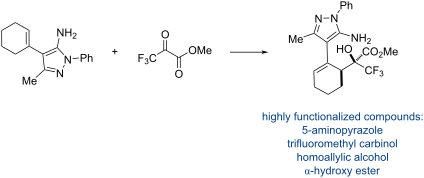
- between 4-alkylidene-5-aminopyrazoles and alkyl trifluoropyruvates leading to highly functionalized tertiary alcohols bearing a trifluoromethyl group and a pyrazole ring is presented. The corresponding trifluoromethyl alcohols are obtained in moderate to good yields (up to 80%) and high
- diastereoselectivity (up to 7:1). Keywords: alcohols; diastereoselectivity; nitrogen heterocycles; pyrazoles; vinylogous reaction; Introduction Vinylogy refers to the transmission of electronic effects through a conjugated π-system, enabling the extension of a functional group's nucleophilic or electrophilic
- compounds is a significant and important reaction for the selective synthesis of homoallylic alcohols in an efficient and sustainable way [2][3]. As carbonyl compounds, alkyl trifluoropyruvates [4][5] are an interesting class of compounds that have been used in addition reactions of different nucleophiles

Graphical Abstract

Figure 1: Biologically active compounds featuring a trifluoromethyl carbinol motif.

Figure 2: Nucleophilic sites of 5-aminopyrazoles and 4-alkenyl-5-aminopyrazoles. Stereoselective synthesis of...

Scheme 1: Synthesis of the starting materials 3.
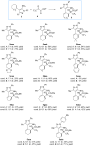
Scheme 2: Scope of the reaction. Reaction conditions A: 3 (0.2 mmol) and 4 (0.6 mmol) in 2 mL of toluene at 7...

Scheme 3: Plausible mechanism and X-ray structure of compound 5aca.
Synthesis of the aggregation pheromone of Tribolium castaneum
- Biyu An,
- Xueyang Wang,
- Ao Jiao,
- Qinghua Bian and
- Jiangchun Zhong
Beilstein J. Org. Chem. 2025, 21, 510–514, doi:10.3762/bjoc.21.38
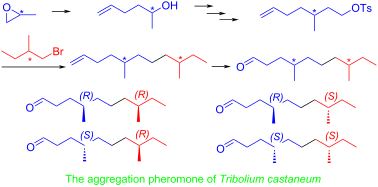
- )-10. Synthesis of the aggregation pheromone of Tribolium castaneum. Supporting Information Supporting Information File 6: General information, synthesis of compounds 1–12, research on the optical purity of chiral alcohols (R)- and (S)-4, and copies of 1H, 13C and 19F NMR spectra. Funding This

Graphical Abstract

Figure 1: The aggregation pheromone of Tribolium castaneum.

Scheme 1: Retrosynthetic analysis of the aggregation pheromone (4R,8R)-1.

Scheme 2: Synthesis of chiral tosylate (S)-10.

Scheme 3: Synthesis of chiral tosylate (R)-10.

Scheme 4: Synthesis of the aggregation pheromone of Tribolium castaneum.
Synthesis of electrophile-tethered preQ1 analogs for covalent attachment to preQ1 RNA
- Laurin Flemmich and
- Ronald Micura
Beilstein J. Org. Chem. 2025, 21, 483–489, doi:10.3762/bjoc.21.35
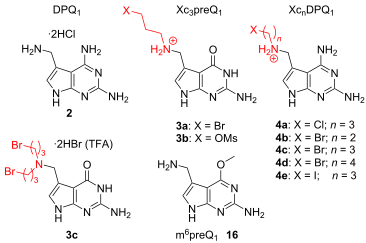
- . First, the alkyl handles bearing a primary hydroxy group were introduced and then converted into the electrophile of choice. More specifically, to furnish compounds 4b–d, precursor 9 was treated with the corresponding amino alcohols in the presence of a desiccant. The imines formed were subjected to
- mild reduction with methanolic sodium borohydride. Upon purification by reversed-phase chromatography using aqueous hydrobromic acid as eluent (0.5% in H2O), a considerable fraction of the alcohols was already converted to the desired bromides 4c,d. Only in the case of 4b, no deoxygenative bromination

Graphical Abstract

Scheme 1: A) Chemical structures of hypermodified nucleobase queuine and nucleoside queuosine (Q) occurring a...

Scheme 2: Three-step syntheses of preQ1 (1) and DPQ1 (2). For the synthesis of m6preQ1 (16) see Supporting Information File 1.

Scheme 3: Syntheses of haloalkyl- and mesyloxyalkyl-modified preQ1 as and DPQ1 ligands.
Organocatalytic kinetic resolution of 1,5-dicarbonyl compounds through a retro-Michael reaction
- James Guevara-Pulido,
- Fernando González-Pérez,
- José M. Andrés and
- Rafael Pedrosa
Beilstein J. Org. Chem. 2025, 21, 473–482, doi:10.3762/bjoc.21.34
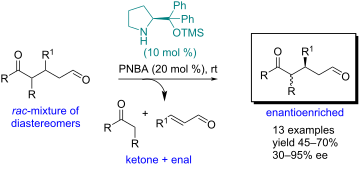
- processes with low catalyst loading. It involves the kinetic resolution of alcohols, amines, and esters using chiral phosphoric acids [6][7][8][9][10][11][12][13] and sulfoximines with enals using chiral N-heterocyclic carbene (NHC) catalysts [14]. Additionally, these processes have been conducted using

Graphical Abstract

Scheme 1: Previous work.

Scheme 2: Hypothesis, retro-Michael reaction, and its application in kinetic resolution.

Scheme 3: Model reaction.

Scheme 4: Kinetic resolution of the Michael adduct 1.

Scheme 5: Chemical correlation of 3 with 19.

Scheme 6: Epimerization of the anti-1 adduct promoted by A.
Photomechanochemistry: harnessing mechanical forces to enhance photochemical reactions
- Francesco Mele,
- Ana M. Constantin,
- Andrea Porcheddu,
- Raimondo Maggi,
- Giovanni Maestri,
- Nicola Della Ca’ and
- Luca Capaldo
Beilstein J. Org. Chem. 2025, 21, 458–472, doi:10.3762/bjoc.21.33
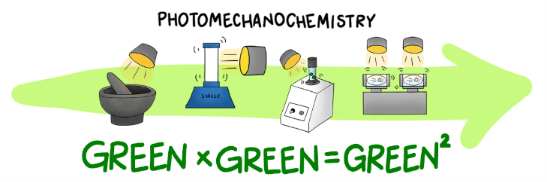
- exposing fresh material to light. In 2016, König and co-workers exploited rod milling to develop a photomechanochemical approach for the riboflavin tetraacetate (RFTA)-catalyzed photocatalytic oxidation of alcohols to the corresponding carbonyl compounds upon irradiation with five LEDs (λ = 455 nm) [69
- oxidation of alcohols. The photos in Scheme 6 were reproduced from [69] (© 2016 M. Obst et al., published by Beilstein-Institut, distributed under the terms of the Creative Commons Attribution 4.0 International License, https://creativecommons.org/licenses/by/4.0). Photomechanochemical oxidation of 1,2

Graphical Abstract

Figure 1: The Grotthuss–Draper, Einstein–Stark, and Beer–Lambert laws. T: transmittance; ε: molar attenuation...

Figure 2: The benefits of merging photochemistry with mechanochemical setups (top). Most common setups for ph...

Scheme 1: Mechanochemically triggered pedal-like motion in solid-state [2 + 2] photochemical cycloaddition fo...
Scheme 2: Mechanically promoted [2 + 2] photodimerization of trans-1,2-bis(4-pyridyl)ethylene (2.1) via supra...

Scheme 3: Photo-thermo-mechanosynthesis of quinolines [65].

Scheme 4: Study of the mechanically assisted [2 + 2] photodimerization of chalcone [66].

Scheme 5: Liquid-assisted vortex grinding (LAVG) for the synthesis of [2.2]paracyclophane [68].

Scheme 6: Photomechanochemical approach for the riboflavin tetraacetate-catalyzed photocatalytic oxidation of...

Scheme 7: Photomechanochemical oxidation of 1,2-diphenylethyne to benzil. The photo in Scheme 7 was republished with ...

Scheme 8: Photomechanochemical borylation of aryldiazonium salts. The photo in Scheme 8 was reproduced from [72] (© 2017 ...

Scheme 9: Photomechanochemical control over stereoselectivity in the [2 + 2] dimerization of acenaphthylene. ...

Scheme 10: Photomechanochemical synthesis of polyaromatic compounds using UV light. The photo in Scheme 10 was reproduc...

Scheme 11: Mechanically assisted photocatalytic reactions: A) atom-transfer-radical addition, B) pinacol coupl...

Scheme 12: Use of mechanoluminescent materials as photon sources for photomechanochemistry. SAOED: SrAl2O4:Eu2+...

Figure 3: SWOT (strengths, weaknesses, opportunities, threats) analysis of photomechanochemistry.
The effect of neighbouring group participation and possible long range remote group participation in O-glycosylation
- Rituparna Das and
- Balaram Mukhopadhyay
Beilstein J. Org. Chem. 2025, 21, 369–406, doi:10.3762/bjoc.21.27
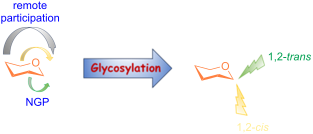
- the extremes of SN1 and SN2 pathway by employing the effect of counter ions, showing close resemblance with the SNi mechanism [41], conforming to the famous Winstein’s ion-pair theory [42] and draws analogy with chlorination of alcohols by thionyl chloride [43]. Incorporating the role of counter ion

Graphical Abstract

Scheme 1: Continuum in the mechanistic pathway of glycosylation [32] reactions ranging between SN2 and SN1.

Scheme 2: Formation of 1,2-trans glycosides by neighbouring group participation with acyl protection in C-2 p...

Scheme 3: Solvent-free activation [92] of disarmed per-acetylated (15) and per-benzoylated (18) glycosyl donors.

Scheme 4: Synthesis of donor 2-(2,2,2-trichloroethoxy)glucopyrano-[2,1-d]-2-oxazoline 22 [94] and regioselective ...

Scheme 5: The use of levulinoyl protection for an orthogonal glycosylation reaction.

Figure 1: The derivatives 32–36 of the pivaloyl group.

Scheme 6: Benzyl and cyanopivalolyl ester-protected hexarhamnoside derivative 37 and its global deprotection ...

Scheme 7: Orthogonal chloroacetyl group deprotection in oligosaccharide synthesis [113].

Figure 2: The derivatives of the chloroacetyl group: CAMB protection (41) [123], CAEB protection (42) [124], POMB prote...

Scheme 8: Use of the (2-nitrophenyl)acetyl protecting group [126] as the neighbouring group protecting group at th...

Scheme 9: Neighbouring group participation protocol by the BnPAc protecting group [128] in the C-2 position.

Scheme 10: Glycosylation reaction with O-PhCar (54) and O-Poc (55) donors showing high β-selectivity [133].

Scheme 11: Neighbouring group participation rendered by an N-benzylcarbamoyl (BnCar) group [137] at the C-2 positio...

Scheme 12: Stereoselectivity obtained from glycosylation [138] with 2-O-(o-trifluoromethylbenzenesulfonyl)-protecte...

Scheme 13: (a) Plausible mechanistic pathway for glycosylation with C-2 DMTM protection [139] and (b) example of a ...

Scheme 14: Glycosylation reactions employing MOM 78, BOM 81, and NAPOM 83-protected thioglycoside donors. Reag...

Scheme 15: Plausible mechanistic pathway for alkoxymethyl-protected glycosyl donors. Path A. Expected product ...

Scheme 16: Plausible mechanistic pathway for alkoxymethyl-protected glycosyl donors [147].

Scheme 17: A. Formation of α-glycosides and B formation of β-glycosides by using chiral auxiliary neighbouring...

Scheme 18: Bimodal participation of 2-O-(o-tosylamido)benzyl (TAB) protecting group to form both α and β-isome...

Scheme 19: (a) 1,2-trans-Directing nature using C-2 cyanomethyl protection and (b) the effect of acceptors and...

Scheme 20: 1,3-Remote assistance by C-3-ester protection for gluco- and galactopyranosides to form 1,2-cis gly...

Scheme 21: 1,6-Remote assistance by C-6-ester protection for gluco- and galactopyranosides to form 1,2-cis gly...

Scheme 22: 1,4-Remote assistance by C-4-ester protection for galactopyranosides to form 1,2-cis glycosidic pro...

Scheme 23: Different products obtained on activation of axial 3-O and equatorial 3-O ester protected glycoside...

Scheme 24: The role of 3-O-protection on the stereochemistry of the produced glycoside [191].

Scheme 25: The role of 4-O-protection on the stereochemistry of the produced glycosides.

Scheme 26: Formation and subsequent stability of the bicyclic oxocarbenium intermediate formed due to remote p...

Scheme 27: The role a C-6 p-nitrobenzoyl group on the stereochemistry of the glycosylated product [196].

Scheme 28: Difference in stereoselectivity obtained in glycosylation reactions by replacing non-participating ...

Scheme 29: The role of electron-withdrawing and electron-donating substituents on the C-4 acetyl group in glyc...

Scheme 30: Effect of the introduction of a methyl group in the C-4 position on the glycosylation with more rea...

Figure 3: Remote group participation effect exhibited by the 2,2-dimethyl-2-(o-nitrophenyl)acetyl (DMNPA) pro...
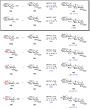
Scheme 31: The different stereoselectivities obtained by Pic and Pico donors on being activated by DMTST.

Figure 4: Hydrogen bond-mediated aglycon delivery (HAD) in glycosylation reactions for 1,2-cis 198a and 1,2-t...

Scheme 32: The role of different acceptor with 6-O-Pic-protected glycosyl donors.

Scheme 33: The role of the remote C-3 protection on various 4,6-O-benzylidene-protected mannosyl donors affect...

Scheme 34: The dual contribution of the DTBS group in glycosylation reactions [246,247].
Red light excitation: illuminating photocatalysis in a new spectrum
- Lucas Fortier,
- Corentin Lefebvre and
- Norbert Hoffmann
Beilstein J. Org. Chem. 2025, 21, 296–326, doi:10.3762/bjoc.21.22

- organoboron substrates 31, including -B(OH)2, -Bpin, -BF3K, and -Bneo (neopentyl borate) derivatives noted as “-[B]” in Scheme 11, to produce aliphatic alcohols and phenols 32 with moderate to excellent yields. The versatility of this method is highlighted by the broad substrate scope of more than 50 examples
- , which includes various aryl- and alkylboronates, showcasing its applicability across a range of chemical transformations. For example, phenylboronic acids with diverse substitution patterns (such as electron-donating and electron-withdrawing groups) were smoothly converted to the corresponding alcohols
- alcohols 32. Notably, this protocol is both energy-efficient and operationally simple, with the reaction being carried out under air in ethanol, a low-toxicity solvent. Moreover, the scalability of the reaction was demonstrated with larger-scale experiments (up to 5 mmol), achieving excellent yields and

Graphical Abstract
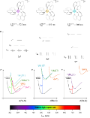
Figure 1: Influence of the metal center M (Fe, Ru, Os) on the position of the MLCT and MC (metal-centered) ab...

Scheme 1: Red-light-mediated ring-closing metathesis through activation of a ruthenium catalyst by an osmium ...

Scheme 2: Photocatalyzed polymerization of dicylopentadiene mediated with red or blue light.

Figure 2: Comparison between [Ru(bpy)3]2+ and [Os(tpy)2]2+ in a photocatalyzed trifluoromethylation reaction:...

Scheme 3: Red-light photocatalyzed C–N cross-coupling reaction by T. Rovis et al. (SET = single-electron tran...

Figure 3: Red-light-mediated aryl oxidative addition with a bismuthinidene complex.

Scheme 4: Red-light-mediated reduction of aryl derivatives by O. S. Wenger et al. (PC = photocatalyst, anh = ...
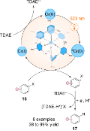
Scheme 5: Red-light-mediated aryl halides reduction with an isoelectronic chromium complex (TDAE = tetrakis(d...

Scheme 6: Red-light-photocatalyzed trifluoromethylation of styrene derivatives with Umemoto’s reagent and a p...
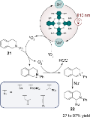
Scheme 7: Red-light-mediated energy transfer for the cross-dehydrogenative coupling of N-phenyltetrahydroisoq...
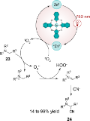
Scheme 8: Red-light-mediated oxidative cyanation of tertiary amines with a phthalocyanin zinc complex.

Scheme 9: Formation of dialins and tetralins via a red-light-photocatalyzed reductive decarboxylation mediate...
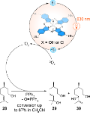
Scheme 10: Oxidation of β-citronellol (28) via energy transfer mediated by a red-light activable silicon phtha...

Scheme 11: Formation of alcohol derivatives 32 from boron compounds 31 using chlorophyll (chl) as a red-light-...

Scheme 12: Red-light-driven reductive dehalogenation of α-halo ketones mediated by a thiaporphyrin photocataly...

Figure 4: Photoinduced electron transfer-reversible addition-fragmentation chain transfer polymerization medi...
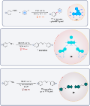
Figure 5: Recent examples of red-light-mediated photocatalytic reactions with traditional organic dyes.

Figure 6: Squaraine photocatalysts used by Goddard et al. and aza-Henry reaction with squaraine-based photoca...

Figure 7: Reactions described by Goddard et al. involving 40 as the photocatalyst.

Figure 8: Various structures of squaraine derivatives used to initiate photopolymerizations.
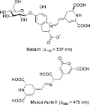
Figure 9: Naturally occurring cyanins.

Figure 10: Influence of the structure on the photophysical properties of a cyanin dye.

Figure 11: NIR-light-mediated aza-Henry reaction photocatalyzed by 46.

Scheme 13: Photocatalyzed arylboronic acids oxidation by 46.
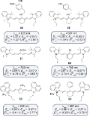
Figure 12: Cyanin structures synthetized and characterized by Goddard et al. (redox potentials given against s...
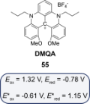
Figure 13: N,N′-Di-n-propyl-1,13-dimethoxyquinacridinium (55) with its redox potentials at its ground state an...
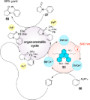
Scheme 14: Dual catalyzed C(sp2)–H arylation of 57 using DMQA 55 as the red-light-absorbing photocatalyst.

Scheme 15: Red-light-mediated aerobic oxidation of arylboronic acids 59 into phenols 60 via the use of DMQA as...

Figure 14: Red-light-photocatalyzed reactions proposed by Gianetti et al. using DMQA as the photocatalyst.

Scheme 16: Simultaneous release of NO and production of superoxide (O2•−) and their combination yielding the p...
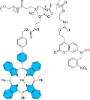
Figure 15: Palladium porphyrin complex as the photoredox catalyst and the NO releasing substrate are linked in...

Scheme 17: Uncaging of compound 69 which is a microtubule depolymerizing agent using near IR irradiation. The ...

Scheme 18: Photochemical uncaging of drugs protected with a phenylboronic acid derivative using near IR irradi...

Scheme 19: Photoredox catalytical generation of aminyl radicals with near IR irradiation for the transfer of b...

Scheme 20: Photoredox catalytical fluoroalkylation of tryptophan moieties.

Figure 16: Simultaneous absorption of two photons of infrared light of low energy enables electronic excitatio...

Scheme 21: Uncaging Ca2+ ions using two-photon excitation with near infrared light.
Dioxazolones as electrophilic amide sources in copper-catalyzed and -mediated transformations
- Seungmin Lee,
- Minsuk Kim,
- Hyewon Han and
- Jongwoo Son
Beilstein J. Org. Chem. 2025, 21, 200–216, doi:10.3762/bjoc.21.12
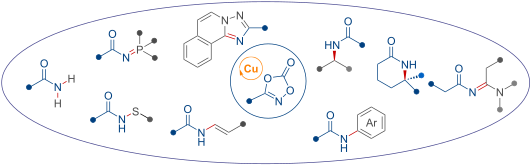
- conventionally challenging functionalizations, such as N- or O-arylations using aryl halides [29][30][31][32][33][34][35][36][37][38] or arylboronic acids [39][40][41][42], hydrofunctionalizations of unsaturated motifs [25][43][44][45][46][47][48][49][50][51][52][53][54][55][56], the oxidation of alcohols [57

Graphical Abstract

Scheme 1: Formation of isocyanates and amidated arenes from dioxazolones.

Scheme 2: Copper-catalyzed synthesis of δ-lactams via open-shell copper nitrenoid transfer. aCuBr (10 mol %) ...

Figure 1: Proposed reaction pathway for the copper-catalyzed synthesis of δ-lactams from dioxazolones.

Scheme 3: Copper(II)-catalyzed synthesis of 1,2,4-triazole derivatives.

Figure 2: Proposed reaction mechanism for the copper-catalyzed synthesis of 1,2,4-triazole analogues from dio...

Scheme 4: Copper(I)-catalyzed synthesis of N-acyl amidines from dioxazolones, acetylenes, and amines. aPerfor...

Figure 3: Proposed reaction mechanism for the copper(I)-catalyzed synthesis of N-acyl amidines.

Scheme 5: Preparation of N-arylamides from dioxazolones and boronic acids using a copper salt.

Figure 4: Proposed reaction pathway for the copper-mediated synthesis of N-arylamides from dioxazolones.

Scheme 6: Copper-catalyzed preparation of N-acyl iminophosphoranes from dioxazolones.

Figure 5: Proposed reaction pathway for the copper-catalyzed synthesis of N-acyl iminophosphoranes from dioxa...

Scheme 7: Copper-catalyzed synthesis of N-acyl sulfenamides. a1.0 equiv of 18 and 2.0 equiv of 19 were used. b...

Figure 6: Proposed reaction mechanism for the copper-catalyzed S-amidation of thiols.

Scheme 8: Copper-catalyzed asymmetric hydroamidation of vinylarenes. a4 mol % + 2 mol % catalyst was used. b4...

Figure 7: Proposed reaction mechanism for the copper-catalyzed hydroamidation of vinylarenes.

Scheme 9: Copper-catalyzed anti-Markovnikov hydroamidation of alkynes.

Figure 8: Proposed reaction mechanism for the copper-catalyzed amidation of alkynes.

Scheme 10: Copper-catalyzed preparation of primary amides through N–O bond reduction using reducing agent.

Figure 9: Proposed catalytic cycle for the copper-catalyzed reduction of dioxazolones.
Cu(OTf)2-catalyzed multicomponent reactions
- Sara Colombo,
- Camilla Loro,
- Egle M. Beccalli,
- Gianluigi Broggini and
- Marta Papis
Beilstein J. Org. Chem. 2025, 21, 122–145, doi:10.3762/bjoc.21.7

- cascade reaction for the preparation of α-alkoxy-N-alkyltriazoles 44 that was developed starting from aliphatic aldehydes, alcohols, TMSN3 as azide source and alkynes (Scheme 33) [52]. The reaction occurs under mild conditions in acetonitrile at room temperature but is inhibited when using aromatic
- aldehydes and phenols. The mechanism involves the reaction of the azide with the hemiacetal XLII generated in situ from the aldehydes and alcohols, followed by coupling with the alkynes to form the triazole ring. Both, copper triflate and copper metal are essential for the success of the reaction. On the

Graphical Abstract

Figure 1: Plausible general catalytic activation for ionic or radical mechanisms.

Scheme 1: Synthesis of α-aminonitriles 1.

Scheme 2: Synthesis of β-amino ketone or β-amino ester derivatives 3.

Scheme 3: Synthesis of 1-(α-aminoalkyl)-2-naphthol derivatives 4.

Scheme 4: Synthesis of thioaminals 5.

Scheme 5: Synthesis of aryl- or amine-containing alkanes 6 and 7.
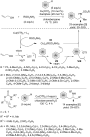
Scheme 6: Synthesis of 1-aryl-2-sulfonamidopropanes 8.

Scheme 7: Synthesis of α-substituted propargylamines 10.

Scheme 8: Synthesis of N-propargylcarbamates 11.

Scheme 9: Synthesis of (E)-vinyl sulfones 12.

Scheme 10: Synthesis of o-halo-substituted aryl chalcogenides 13.

Scheme 11: Synthesis of α-aminophosphonates 14.

Scheme 12: Synthesis of unsaturated furanones and pyranones 15–17.
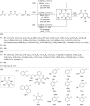
Scheme 13: Synthesis of substituted dihydropyrimidines 18.

Scheme 14: Regioselective synthesis of 1,4-dihydropyridines 20.

Scheme 15: Synthesis of tetrahydropyridines 21.

Scheme 16: Synthesis of furoquinoxalines 22.

Scheme 17: Synthesis of 2,4-substituted quinolines 23.

Scheme 18: Synthesis of cyclic ether-fused tetrahydroquinolines 24.

Scheme 19: Practical route for 1,2-dihydroisoquinolines 25.

Scheme 20: Synthesis of 2,3-dihydroquinazolin-4(1H)-one derivatives 26.

Scheme 21: Synthesis of polysubstituted pyrroles 27.

Scheme 22: Enantioselective synthesis of polysubstituted pyrrolidines 30 directed by the copper complex 29.

Scheme 23: Synthesis of 4,5-dihydropyrazoles 31.

Scheme 24: Synthesis of 2 arylisoindolinones 32.

Scheme 25: Synthesis of imidazo[1,2-a]pyridines 33.

Scheme 26: Synthesis of isoxazole-linked imidazo[1,2-a]azines 35.

Scheme 27: Synthesis of 2,3-dihydro-1,2,4-triazoles 36.

Scheme 28: Synthesis of naphthopyrans 37.

Scheme 29: Synthesis of benzo[g]chromene derivatives 38.

Scheme 30: Synthesis of naphthalene annulated 2-aminothiazoles 39, piperazinyl-thiazoloquinolines 40 and thiaz...

Scheme 31: Synthesis of furo[3,4-b]pyrazolo[4,3-f]quinolinones 42.

Scheme 32: Synthesis of spiroindoline-3,4’-pyrano[3,2-b]pyran-4-ones 43.

Scheme 33: Synthesis of N-(α-alkoxy)alkyl-1,2,3-triazoles 44.

Scheme 34: Synthesis of 4-(α-tetrasubstituted)alkyl-1,2,3-triazoles 45.
Recent advances in organocatalytic atroposelective reactions
- Henrich Szabados and
- Radovan Šebesta
Beilstein J. Org. Chem. 2025, 21, 55–121, doi:10.3762/bjoc.21.6
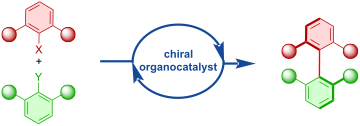
- prochiral 2-aryloxyisophthalaldehydes 57a,b with a range of aliphatic and aromatic alcohols 58a–g, as well as heteroaromatic amines 60 (Scheme 19). Chiral diaryl ethers of this type received increased attention lately. Biju, Gao, Zhang, and Zeng groups all reported high degrees of yields and
- enantioselectivity during the nucleophilic addition, and the subsequent aromatization completes central-to-axial chirality conversion delivering products 68. Dynamic kinetic resolution of naphthylindoles 69 was performed by reaction with bulky electrophiles such as azodicarboxylates 70 or o-hydroxybenzyl alcohols 72
- of products in low to satisfactory yields, but having high enantiomeric purities. An organocatalytic asymmetric (3 + 2) cyclization of 3-arylindoles 154 with either achiral 155 or racemic 157 propargylic alcohols was reported by Wu et al. (Scheme 46) [74]. Utilizing CPA C37 with 3-arylindoles 154 and

Graphical Abstract

Scheme 1: Formation of axially chiral styrenes 3 via iminium activation.

Scheme 2: Synthesis of axially chiral 2-arylquinolines 6.

Scheme 3: Atroposelective intramolecular (4 + 2) annulation leading to aryl-substituted indolines.

Scheme 4: Atroposelective formation of biaryl via twofold aldol condensation.

Scheme 5: Strategy towards diastereodivergent formation of axially chiral oligonaphthylenes.

Scheme 6: Atroposelective formation of chiral biaryls based on a Michael/Henry domino reaction.

Scheme 7: Organocatalytic Michael/aldol cascade followed by oxidative aromatization.

Scheme 8: Atroposelective formation of C(sp2)–C(sp3) axially chiral compounds.

Scheme 9: NHC-catalyzed synthesis of axially chiral styrenes 26.

Scheme 10: NHC-catalyzed synthesis of biaxial chiral pyranones.

Scheme 11: Formation of bridged biaryls with eight-membered lactones.

Scheme 12: The NHC-catalyzed (3 + 2) annulation of urazoles 37 and ynals 36.

Scheme 13: NHC-catalyzed synthesis of axially chiral 4‑aryl α‑carbolines 41.

Scheme 14: NHC-catalyzed construction of N–N-axially chiral pyrroles and indoles.

Scheme 15: NHC-catalyzed oxidative Michael–aldol cascade.

Scheme 16: NHC-catalyzed (4 + 2) annulation for the synthesis of benzothiophene-fused biaryls.
Scheme 17: NHC-catalyzed desymmetrization of N-aryl maleimides.

Scheme 18: NHC-catalyzed deracemization of biaryl hydroxy aldehydes 55a–k into axially chiral benzonitriles 56a...

Scheme 19: NHC-catalyzed desymmetrization of 2-aryloxyisophthalaldehydes.

Scheme 20: NHC-catalyzed DKR of 2-arylbenzaldehydes 62.

Scheme 21: Atroposelective biaryl amination.

Scheme 22: CPA-catalyzed atroposelective amination of 2-anilinonaphthalenes.

Scheme 23: Atroposelective DKR of naphthylindoles.

Scheme 24: CPA-catalyzed kinetic resolution of binaphthylamines.

Scheme 25: Atroposelective amination of aromatic amines with diazodicarboxylates.

Scheme 26: Atroposelective Friedländer heteroannulation.

Scheme 27: CPA-catalyzed formation of axially chiral 4-arylquinolines.

Scheme 28: CPA-catalyzed Friedländer reaction of arylketones with cyclohexanones.

Scheme 29: CPA-catalyzed atroposelective Povarov reaction.

Scheme 30: Atroposelective CPA-catalyzed Povarov reaction.

Scheme 31: Paal–Knorr formation of axially chiral N-pyrrolylindoles and N-pyrrolylpyrroles.

Scheme 32: Atroposelective Paal–Knorr reaction leading to N-pyrrolylpyrroles.

Scheme 33: Atroposelective Pictet–Spengler reaction of N-arylindoles with aldehydes.

Scheme 34: Atroposelective Pictet–Spengler reaction leading to tetrahydroisoquinolin-8-ylanilines.

Scheme 35: Atroposelective formation of arylindoles.

Scheme 36: CPA-catalyzed arylation of naphthoquinones with indolizines.

Scheme 37: Atroposelective reaction of o-naphthoquinones.

Scheme 38: CPA-catalyzed formation of axially chiral arylquinones.

Scheme 39: CPA-catalyzed axially chiral N-arylquinones.

Scheme 40: Atroposelective additions of bisindoles to isatin-based 3-indolylmethanols.

Scheme 41: CPA-catalyzed synthesis of axially chiral arylindolylindolinones.

Scheme 42: CPA-catalyzed reaction between bisindoles and ninhydrin-derived 3-indoylmethanols.

Scheme 43: Atroposelective reaction of bisindoles and isatin-derived imines.

Scheme 44: CPA-catalyzed formation of axially chiral bisindoles.

Scheme 45: Atroposelective reaction of 2-naphthols with alkynylhydroxyisoindolinones.

Scheme 46: CPA-catalyzed reaction of indolylnaphthols with propargylic alcohols.

Scheme 47: Atroposelective formation of indolylpyrroloindoles.

Scheme 48: Atroposelective reaction of indolylnaphthalenes with alkynylnaphthols.

Scheme 49: CPA-catalyzed addition of naphthols to alkynyl-2-naphthols and 2-naphthylamines.

Scheme 50: CPA-catalyzed formation of axially chiral aryl-alkene-indoles.

Scheme 51: CPA-catalyzed formation of axially chiral styrenes.

Scheme 52: Atroposelective formation of alkenylindoles.

Scheme 53: Atroposelective formation of axially chiral arylquinolines.

Scheme 54: Atroposelective (3 + 2) cycloaddition of alkynylindoles with azonaphthalenes.

Scheme 55: CPA-catalyzed formation of axially chiral 3-(1H-benzo[d]imidazol-2-yl)quinolines.

Scheme 56: Atroposelective cyclization of 3-(arylethynyl)-1H-indoles.

Scheme 57: Atroposelective three-component heteroannulation.

Scheme 58: CPA-catalyzed formation of arylbenzimidazols.

Scheme 59: CPA-catalyzed reaction of N-naphthylglycine esters with nitrosobenzenes.

Scheme 60: CPA-catalyzed formation of axially chiral N-arylbenzimidazoles.

Scheme 61: CPA-catalyzed formation of axially chiral arylbenzoindoles.

Scheme 62: CPA-catalyzed formation of pyrrolylnaphthalenes.

Scheme 63: CPA-catalyzed addition of naphthols and indoles to nitronaphthalenes.

Scheme 64: Atroposelective reaction of heterobiaryl aldehydes and aminobenzamides.

Scheme 65: Atroposelective cyclization forming N-arylquinolones.

Scheme 66: Atroposelective formation of 9H-carbazol-9-ylnaphthalenes and 1H-indol-1-ylnaphthalene.

Scheme 67: CPA-catalyzed formation of pyrazolylnaphthalenes.

Scheme 68: Atroposelective addition of diazodicarboxamides to azaborinephenols.

Scheme 69: Catalytic formation of axially chiral arylpyrroles.

Scheme 70: Atroposelective coupling of 1-azonaphthalenes with 2-naphthols.

Scheme 71: CPA-catalyzed formation of axially chiral oxindole-based styrenes.

Scheme 72: Atroposelective electrophilic bromination of aminonaphthoquinones.

Scheme 73: Atroposelective bromination of dienes.

Scheme 74: CPA-catalyzed formation of axially chiral 5-arylpyrimidines.

Scheme 75: Atroposelective hydrolysis of biaryloxazepines.

Scheme 76: Atroposelective opening of dinaphthosiloles.

Scheme 77: Atroposelective reduction of naphthylenals.

Scheme 78: Atroposelective allylic substitution with 2-naphthols.

Scheme 79: Atroposelective allylic alkylation with phosphinamides.

Scheme 80: Atroposelective allylic substitution with aminopyrroles.

Scheme 81: Atroposelective allylic substitution with aromatic sulfinamides.

Scheme 82: Atroposelective sulfonylation of naphthylynones.

Scheme 83: Squaramide-catalyzed reaction of alkynyl-2-naphthols with 5H-oxazolones.

Scheme 84: Formation of axially chiral styrenes via sulfonylative opening of cyclopropanols.

Scheme 85: Atroposelective organo-photocatalyzed sulfonylation of alkynyl-2-naphthols.

Scheme 86: Thiourea-catalyzed atroposelective cyclization of alkynylnaphthols.

Scheme 87: Squaramide-catalyzed formation of axially chiral naphthylisothiazoles.

Scheme 88: Atroposelective iodo-cyclization catalyzed by squaramide C69.

Scheme 89: Squaramide-catalyzed formation of axially chiral oligoarenes.

Scheme 90: Atroposelective ring-opening of cyclic N-sulfonylamides.

Scheme 91: Thiourea-catalyzed kinetic resolution of naphthylpyrroles.

Scheme 92: Atroposelective ring-opening of arylindole lactams.

Scheme 93: Atroposelective reaction of 1-naphthyl-2-tetralones and diarylphosphine oxides.

Scheme 94: Atroposelective reaction of iminoquinones with indoles.

Scheme 95: Kinetic resolution of binaphthylalcohols.

Scheme 96: DKR of hydroxynaphthylamides.

Scheme 97: Atroposelective N-alkylation with phase-transfer catalyst C75.

Scheme 98: Atroposelective allylic substitution via kinetic resolution of biarylsulfonamides.

Scheme 99: Atroposelective bromo-functionalization of alkynylarenes.
Scheme 100: Sulfenylation-induced atroposelective cyclization.

Scheme 101: Atroposelective O-sulfonylation of isochromenone-indoles.

Scheme 102: NHC-catalyzed atroposelective N-acylation of anilines.

Scheme 103: Peptide-catalyzed atroposelective ring-opening of lactones.

Scheme 104: Peptide-catalyzed coupling of 2-naphthols with quinones.

Scheme 105: Atroposelective nucleophilic aromatic substitution of fluoroarenes.
Non-covalent organocatalyzed enantioselective cyclization reactions of α,β-unsaturated imines
- Sergio Torres-Oya and
- Mercedes Zurro
Beilstein J. Org. Chem. 2024, 20, 3221–3255, doi:10.3762/bjoc.20.268
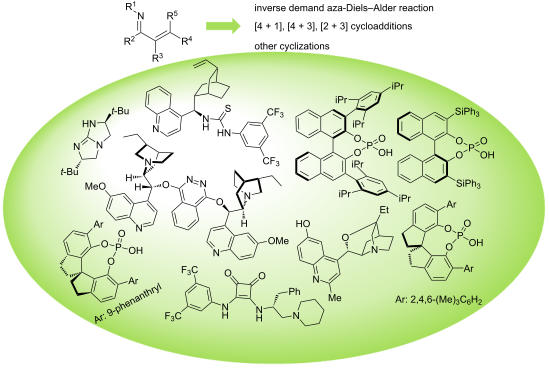
- dihydropyridinones 49 and 51 in moderate to good yields (45–76%), excellent diastereoselectivities and high enantioselectivities (85–94% ee) (Scheme 18). The reaction was also compatible with 1,1-dialkyl-substituted 3-amidoallylic alcohols 50 as precursors of α,β-unsaturated N–H ketimines; in this case the chiral

Graphical Abstract

Figure 1: Reactivity of α,β-unsaturated imines and variety of structures.

Figure 2: The hetero-Diels–Alder and inverse electron demand hetero-Diels–Alder reactions.

Figure 3: Different strategies to promote the activation of dienes and dienophiles in IEDADA reactions.

Figure 4: Examples of non-covalent interactions in organocatalysis.

Scheme 1: Enantioselective bifunctional thiourea-catalyzed inverse electron demand Diels–Alder reaction of N-...

Scheme 2: Cinchona-derived thiourea-catalyzed stereoselective (3 + 2) reaction of α,β-unsaturated imines and ...

Scheme 3: Cinchona-derived thiourea-catalyzed stereoselective (3 + 2)/(4 + 2) cascade reaction of α,β-unsatur...
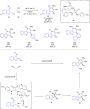
Scheme 4: Enantioselective bifunctional squaramide-catalyzed formal [4 + 2] cycloaddition of malononitrile wi...
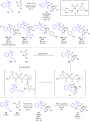
Scheme 5: Bifunctional squaramide-catalyzed IEDADA reaction of saccharin-derived 1-azadienes and azlactones.

Scheme 6: Chiral guanidine-catalyzed enantioselective (4+1) cyclization of benzofuran-derived azadienes with ...
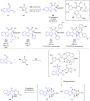
Scheme 7: Bifunctional squaramide-catalyzed [4 + 2] cyclization of benzofuran-derived azadienes and azlactone...
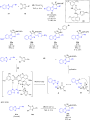
Scheme 8: Chiral bifunctional squaramide-catalyzed domino Mannich/formal [4 + 2] cyclization of 2-benzothiazo...
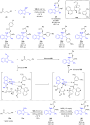
Scheme 9: Chiral bifunctional thiourea-catalyzed formal IEDADA reaction of β,γ-unsaturated ketones and benzof...

Scheme 10: Dihydroquinine-derived squaramide-catalyzed (3 + 2) cycloaddition reaction of isocyanoacetates and ...

Scheme 11: Enantioselective squaramide-catalyzed asymmetric IEDADA reaction of benzofuran-derived azadienes an...

Scheme 12: Scale up and derivatizations of benzofuran-fused 2-piperidinol derivatives.

Scheme 13: Dihydroquinine-derived squaramide-catalyzed Mannich-type reaction of isocyanoacetates with N-(2-ben...

Figure 5: Structure of a cinchona alkaloid and (DHQD)2PHAL.

Scheme 14: Enantioselective modified cinchona alkaloid-catalyzed [4 + 2] annulation of γ-butenolides and sacch...

Scheme 15: Chiral tertiary amine-catalyzed [2 + 4] annulation of cyclic 1-azadiene with γ-nitro ketones.

Scheme 16: Inverse electron demand aza-Diels–Alder reaction (IEDADA) of 1-azadienes with enecarbamates catalyz...

Scheme 17: Phosphoric acid-catalyzed enantioselective [4 + 2] cycloaddition of benzothiazolimines and enecarba...

Scheme 18: Phosphoric acid-catalyzed enantioselective inverse electron demand aza-Diels–Alder reaction of in s...

Scheme 19: Proposed reaction mechanism for the phosphoric acid-catalyzed enantioselective inverse electron dem...

Scheme 20: Enantioselective dearomatization of indoles by a (3 + 2) cyclization with azoalkenes catalyzed by a...

Scheme 21: Synthetic applicability of the pyrroloindoline derivatives.

Scheme 22: Chiral phosphoric acid-catalyzed (2 + 3) dearomative cycloaddition of 3-alkyl-2-vinylindoles with a...
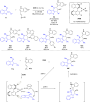
Scheme 23: Chiral phosphoric acid-catalyzed asymmetric [4 + 2] cycloaddition of aurone-derived 1-azadienes and...

Scheme 24: Phosphoric acid-catalyzed enantioselective formal [4 + 2] cycloaddition of dienecarbamates and 2-be...

Scheme 25: Chiral phosphoric acid-catalyzed asymmetric inverse electron demand aza-Diels–Alder reaction of 1,3...

Scheme 26: Chiral phosphoric acid-catalyzed asymmetric Attanasi reaction between 1,3-dicarbonyl compounds and ...

Scheme 27: Synthetic applicability of the NPNOL derivatives.
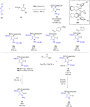
Scheme 28: Chiral phosphoric acid-catalyzed asymmetric intermolecular formal (3 + 2) cycloaddition of azoalken...

Scheme 29: Enantioselective [4 + 2] cyclization of α,β-unsaturated imines and azlactones.

Scheme 30: Catalytic cycle for the chiral phosphoric acid-catalyzed enantioselective [4 + 2] cyclization of α,...
Synthesis of 2H-azirine-2,2-dicarboxylic acids and their derivatives
- Anastasiya V. Agafonova,
- Mikhail S. Novikov and
- Alexander F. Khlebnikov
Beilstein J. Org. Chem. 2024, 20, 3191–3197, doi:10.3762/bjoc.20.264
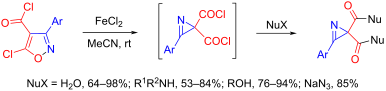
- a 4 mmol scale gave dimethyl ester 11a in 99% yield. Unexpectedly, the reaction of branched alcohols with diacyl chloride 2a failed. For example, the reaction with benzyl alcohol resulted in the formation of an overly complex mixture of products. Adding bases to trap HCl did not improve the
- reaction of more branched alcohols failed. Such esters could be prepared from the dicarboxylic acids using traditional activation or OH-insertion reaction of carbenes formed by irradiation of the appropriate diazo compound. Approaches to 2H-azirine-2,2-dicarboxylic acid derivatives. Synthesis of 2H-azirine

Graphical Abstract

Scheme 1: Approaches to 2H-azirine-2,2-dicarboxylic acid derivatives.
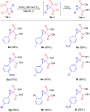
Scheme 2: Synthesis of 2H-azirine-2,2-dicarboxylic acids 6.

Scheme 3: Transformations of 3-(tert-butyl)-5-chloroisoxazole-4-carbonyl chloride (1j).

Scheme 4: Synthesis of amides 10. aFiltration through celite after reaction with amine (without aqueous worku...

Scheme 5: Synthesis of esters 11.

Scheme 6: Synthesis of dicarbonyl azide 12.
Hypervalent iodine-mediated intramolecular alkene halocyclisation
- Charu Bansal,
- Oliver Ruggles,
- Albert C. Rowett and
- Alastair J. J. Lennox
Beilstein J. Org. Chem. 2024, 20, 3113–3133, doi:10.3762/bjoc.20.258
- nucleophiles In 2000, Hara and co-workers reported the fluorocyclisation of unsaturated alcohols and carboxylic acids promoted by HVI reagents (Scheme 11) [36]. Using 4-tolyl difluoroiodane 10 as the reaction promoter, and pyridine·6HF as a source of fluoride, a range of unsaturated alcohols 23 to fluorinated
- tetrahydrofurans 25 and tetrahydropyrans 26. Unsaturated carboxylic acids 24 was also cyclised to form 5-membered fluorinated lactones 27. The mechanisms proposed for the cyclisation of unsaturated alcohols and carboxylic acids both proceed first through the activation of the alkene by the iodane (Scheme 11). The
- the oxyfluorination of alkenes in 2015 [31]. Under identical conditions to the aminofluorination using 1-fluoro-3,3-dimethylbenziodoxole (12) with Zn(BF4)2 catalyst, unsaturated alcohols were cyclised to fluorinated tetrahydropyrans 26 and oxepanes 28 (Scheme 12) in 1–2 hours in good yields. Gulder

Graphical Abstract

Figure 1: Example bioactive compounds containing cyclic scaffolds potentially accessible by HVI chemistry.

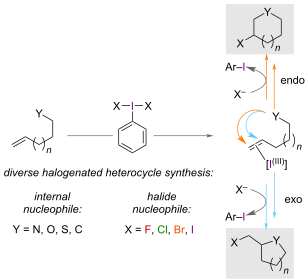
Figure 2: A general mechanism for HVI-mediated endo- or exo-halocyclisation.

Scheme 1: Metal-free synthesis of β-fluorinated piperidines 6. Ts = tosyl.

Scheme 2: Intramolecular aminofluorination of unactivated alkenes with a palladium catalyst.

Scheme 3: Aminofluorination of alkenes in the synthesis of enantiomerically pure β-fluorinated piperidines. P...

Scheme 4: Synthesis of β-fluorinated piperidines.

Scheme 5: Intramolecular fluoroaminations of unsaturated amines published by Li.

Scheme 6: Intramolecular aminofluorination of unsaturated amines using 1-fluoro-3,3-dimethylbenziodoxole (12)...
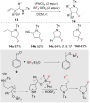
Scheme 7: 3-fluoropyrrolidine synthesis. aDiastereomeric ratio (cis/trans) determined by 19F NMR analysis.

Scheme 8: Kitamura’s synthesis of 3-fluoropyrrolidines. Values in parentheses represent the cis:trans ratio.
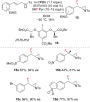
Scheme 9: Jacobsen’s enantio- and diastereoselective protocol for the synthesis of syn-β-fluoroaziridines 15.
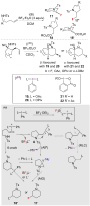
Scheme 10: Different HVI reagents lead to different diastereoselectivity in aminofluorination competing with c...
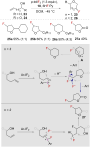
Scheme 11: Fluorocyclisation of unsaturated alcohols and carboxylic acids to make tetrahydrofurans, fluorometh...

Scheme 12: Oxyfluorination of unsaturated alcohols.
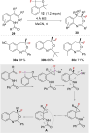
Scheme 13: Synthesis and mechanism of fluoro-benzoxazepines.
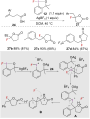
Scheme 14: Intramolecular fluorocyclisation of unsaturated carboxylic acids. Yield of isolated product within ...

Scheme 15: Synthesis of fluorinated tetrahydrofurans and butyrolactone.

Scheme 16: Synthesis of fluorinated oxazolines 32. aReaction time increased to 40 hours. Yields refer to isola...
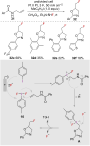
Scheme 17: Electrochemical synthesis of fluorinated oxazolines.

Scheme 18: Electrochemical synthesis of chromanes.

Scheme 19: Synthesis of fluorinated oxazepanes.
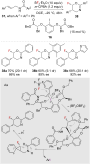
Scheme 20: Enantioselective oxy-fluorination with a chiral aryliodide catayst.
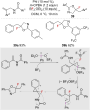
Scheme 21: Catalytic synthesis of 5‑fluoro-2-aryloxazolines using BF3·Et2O as a source of fluoride and an acti...

Scheme 22: Intramolecular carbofluorination of alkenes.

Scheme 23: Intramolecular chlorocyclisation of unsaturated amines.
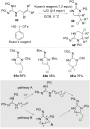
Scheme 24: Synthesis of chlorinated cyclic guanidines 44.
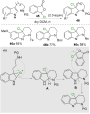
Scheme 25: Synthesis of chlorinated pyrido[2,3-b]indoles 46.

Scheme 26: Chlorolactonization and chloroetherification reactions.
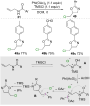
Scheme 27: Proposed mechanism for the synthesis of chloromethyl oxazolines 49.

Scheme 28: Oxychlorination to form oxazine and oxazoline heterocycles promoted by BCl3.

Scheme 29: Aminobromocyclisation of homoallylic sulfonamides 53. The cis:trans ratios based on the 1H NMR of t...
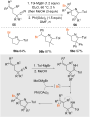
Scheme 30: Synthesis of cyclic imines 45.

Scheme 31: Synthesis of brominated pyrrolo[2,3-b]indoles 59.

Scheme 32: Bromoamidation of alkenes.

Scheme 33: Synthesis of brominated cyclic guanidines 61 and 61’.
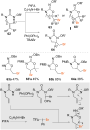
Scheme 34: Intramolecular bromocyclisation of N-oxyureas.
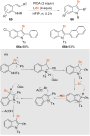
Scheme 35: The formation of 3-bromoindoles.

Scheme 36: Bromolactonisation of unsaturated acids 68.

Scheme 37: Synthesis of 5-bromomethyl-2-oxazolines.
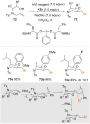
Scheme 38: Synthesis of brominated chiral morpholines.
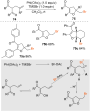
Scheme 39: Bromoenolcyclisation of unsaturated dicarbonyl groups.

Scheme 40: Brominated oxazines and oxazolines with BBr3.

Scheme 41: Synthesis of 5-bromomethtyl-2-phenylthiazoline.

Scheme 42: Intramolecular iodoamination of unsaturated amines.

Scheme 43: Formation of 3-iodoindoles.

Scheme 44: Iodoetherification of 2,2-diphenyl-4-penten-1-carboxylic acid (47’) and 2,2-diphenyl-4-penten-1-ol (...

Scheme 45: Synthesis of 5-iodomethyl-2-oxazolines.

Scheme 46: Synthesis of chiral iodinated morpholines. aFrom the ʟ-form of the amino acid starting material. Th...

Scheme 47: Iodoenolcyclisation of unsaturated dicarbonyl compounds 74.

Scheme 48: Synthesis of 5-iodomethtyl-2-phenylthiazoline (87).
Enantioselective regiospecific addition of propargyltrichlorosilane to aldehydes catalyzed by biisoquinoline N,N’-dioxide
- Noble Brako,
- Sreerag Moorkkannur Narayanan,
- Amber Burns,
- Layla Auter,
- Valentino Cesiliano,
- Rajeev Prabhakar and
- Norito Takenaka
Beilstein J. Org. Chem. 2024, 20, 3069–3076, doi:10.3762/bjoc.20.255
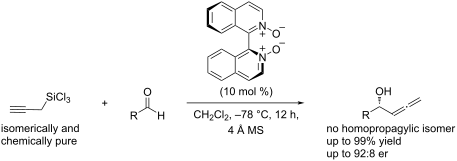
- systematic catalyst structure–reactivity and selectivity relationship study. The observed catalyst structure–enantioselectivity relationship of the present allenylation reaction was found exactly opposite to that of the analogous allylation reaction. The method provided eleven α-allenic alcohols in 22–99
- ; Introduction Enantioenriched α-allenic alcohols are an important class of chiral building blocks used for the chemical synthesis of biologically relevant molecules [1][2][3][4][5]. Their strength comes from the rich synthetic versatility [6][7][8][9] and biological relevance [10] of the allene functionality
- . Accordingly, the development of efficient access to optically active chiral α-allenic alcohols continues to be of significant interest in organic chemistry [11][12][13]. The asymmetric catalytic addition of allenylation reagents to aldehydes provides direct access to chiral α-allenic alcohols in an

Graphical Abstract

Scheme 1: Metallotropic rearrangement and regioselectivity issues.

Scheme 2: Asymmetric catalytic allenylation of aldehydes.

Scheme 3: Selective preparation of propargyltrichlorosilane.

Scheme 4: Evaluation of C2-symmetric catalysts with benzaldehyde (1a) as a model aldehyde. Reaction condition...

Scheme 5: Evaluation of the extent to which (S)-8 catalyzed the allenylation reaction. Reaction conditions: a...

Figure 1: A potential energy surface (PES) for the proposed mechanism for (a) isomerization of propargyltrich...
Advances in radical peroxidation with hydroperoxides
- Oleg V. Bityukov,
- Pavel Yu. Serdyuchenko,
- Andrey S. Kirillov,
- Gennady I. Nikishin,
- Vera A. Vil’ and
- Alexander O. Terent’ev
Beilstein J. Org. Chem. 2024, 20, 2959–3006, doi:10.3762/bjoc.20.249
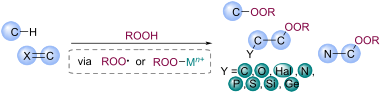
- further attacked by TBHP to give product 61. Benzyl alcohols 62 were also converted into tert-butyl perbenzoates 63 under the action of the TBAI/TBHP system (Scheme 22) [65][66]. During the process, TBHP oxidizes TBAI into iodine, which reacts with the second TBHP to generate tert-butylperoxy radical B
- , which is captured by TBHP. Pathway II: the recombination of the C-centered radical C and tert-butylperoxy radical B. The three-component approach to 4-(tert-butylperoxy)-5-phenyloxazol-2(3H)-ones 82 from benzyl alcohols 80 and isocyanates 81 using the Cu(II)/TBHP system was developed (Scheme 29) [76
- provides radical E. tert-Butylperoxy group transfer from Co(III)OO-t-Bu A to E gives the coupling product F, which gives the final three-component product 118 and releases the Co(II) catalyst. A copper(0)- and cobalt(II)-catalyzed difunctionalization of enynes 119 with the sp3 α-carbon of alcohols 120 and

Graphical Abstract

Scheme 1: Organic peroxide initiators in polymer chemistry.

Scheme 2: Synthesis of organic peroxides.

Scheme 3: Richness of radical cascades with species formed from hydroperoxides in redox conditions.
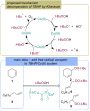
Scheme 4: Co-catalyzed allylic peroxidation of alkenes 1 and 3 by TBHP.

Scheme 5: Allylic peroxidation of alkenes 6 by Pd(II)TBHP.
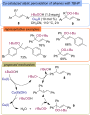
Scheme 6: Cu(I)-catalyzed allylic peroxidation.

Scheme 7: Enantioselective peroxidation of alkenes 10 with TBHP in the presence of copper(I) compounds.

Scheme 8: Oxidation of α-pinene (12) by the Cu(I)/TBHP system.

Scheme 9: Introduction of the tert-butylperoxy fragment into the α-position of cyclic ketones 15 and 17.
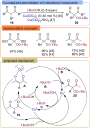
Scheme 10: α-Peroxidation of β-dicarbonyl compounds 19 using the Cu(II)/TBHP system.
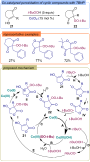
Scheme 11: Co-catalyzed peroxidation of cyclic compounds 21 with TBHP.

Scheme 12: Co-, Mn- and Fe-catalyzed peroxidation of 2-oxoindoles 23, barbituric acids 25, and 4-hydroxycoumar...

Scheme 13: Cu-catalyzed and metal-free peroxidation of barbituric acid derivatives 31 and 3,4-dihydro-1,4-benz...

Scheme 14: Electrochemical peroxidation of 1,3-dicarbonyl compounds 35.

Scheme 15: Peroxidation of β-dicarbonyl compounds, cyanoacetic esters and malonic esters 37 by the TBAI/TBHP s...
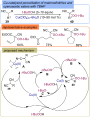
Scheme 16: Cu-catalyzed peroxidation of malonodinitriles and cyanoacetic esters 39 with TBHP.

Scheme 17: Mn-catalyzed remote peroxidation via trifluromethylation of double bond.

Scheme 18: Cu-catalyzed remote peroxidation via trifluromethylthiolation of double bond.

Scheme 19: Fe-, Mn-, and Ru-catalyzed peroxidation of alkylaromatics 45, 47, 49, and 51 with TBHP.

Scheme 20: Cu-catalyzed peroxidation of diphenylacetonitrile (53) with TBHP.
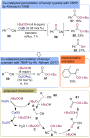
Scheme 21: Cu-catalyzed peroxidation of benzyl cyanides 60 with TBHP.
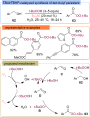
Scheme 22: Synthesis of tert-butylperoxy esters 63 from benzyl alcohols 62 using the TBAI/TBHP system.

Scheme 23: Enantioselective peroxidation of 2-phenylbutane (64) with TBHP and chiral Cu(I) complex.
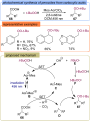
Scheme 24: Photochemical synthesis of peroxides 67 from carboxylic acids 66.
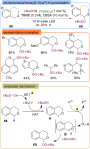
Scheme 25: Photochemical peroxidation of benzylic C(sp3)–H.

Scheme 26: Cu- and Ru-catalyzed peroxidation of alkylamines with TBHP.

Scheme 27: Peroxidation of amides 76 with the TBAI/TBHP system.
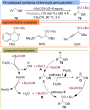
Scheme 28: Fe-catalyzed functionalization of ethers 78 with TBHP.

Scheme 29: Synthesis of 4-(tert-butylperoxy)-5-phenyloxazol-2(3H)-ones 82 from benzyl alcohols 80 and isocyana...

Scheme 30: Fe- and Co-catalyzed peroxidation of alkanes with TBHP.
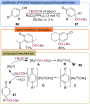
Scheme 31: Rh-catalyzed tert-butylperoxy dienone synthesis with TBHP.

Scheme 32: Rh- and Cu-catalyzed phenolic oxidation with TBHP.

Scheme 33: Metal-free peroxidation of phenols 94.

Scheme 34: Cu-catalyzed alkylation–peroxidation of acrylonitrile.

Scheme 35: Cu-catalyzed cycloalkylation–peroxidation of coumarins 99.

Scheme 36: Metal-free cycloalkylation–peroxidation of coumarins 102.

Scheme 37: Difunctionalization of indene 104 with tert-butylperoxy and alkyl groups.

Scheme 38: Acid-catalyzed radical addition of ketones (108, 111) and TBHP to alkenes 107 and acrylates 110.

Scheme 39: Cu-catalyzed alkylation–peroxidation of alkenes 113 with TBHP and diazo compounds 114.

Scheme 40: Cobalt(II)-catalyzed addition of TBHP and 1,3-dicarbonyl compound 116 to alkenes 117.

Scheme 41: Cu(0)- or Co(II)-catalyzed addition of TBHP and alcohols 120 to alkenes 119.

Scheme 42: Fe-catalyzed functionalization of allenes 122 with TBHP.

Scheme 43: Fe-catalyzed alkylation–peroxidation of alkenes 125 and 127.

Scheme 44: Fe- and Co-catalyzed alkylation–peroxidation of alkenes 130, 133 and 134 with TBHP and aldehydes as...
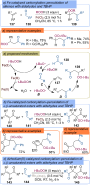
Scheme 45: Carbonylation–peroxidation of alkenes 137, 140, 143 with hydroperoxides and aldehydes.

Scheme 46: Carbamoylation–peroxidation of alkenes 146 with formamides and TBHP.

Scheme 47: TBAB-catalyzed carbonylation–peroxidation of alkenes.

Scheme 48: VOCl2-catalyzed carbonylation–peroxidation of alkenes 152.
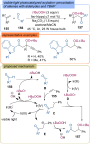
Scheme 49: Acylation–peroxidation of alkenes 155 with aldehydes 156 and TBHP using photocatalysis.
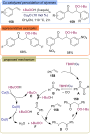
Scheme 50: Cu-catalyzed peroxidation of styrenes 158.

Scheme 51: Fe-catalyzed acylation-peroxidation of alkenes 161 with carbazates 160 and TBHP.

Scheme 52: Difunctionalization of alkenes 163, 166 with TBHP and (per)fluoroalkyl halides.

Scheme 53: Difunctionalization of alkenes 169 and 172 with hydroperoxides and sodium (per)fluoromethyl sulfina...
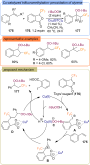
Scheme 54: Trifluoromethylation–peroxidation of styrenes 175 using MOF Cu3(BTC)2 as a catalyst.
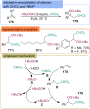
Scheme 55: Difunctionalization of alkenes 178 with tert-butylperoxy and dihalomethyl fragments.

Scheme 56: Difunctionalization of alkenes 180 with the tert-butylperoxy and dihalomethyl moieties.
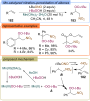
Scheme 57: The nitration–peroxidation of alkenes 182 with t-BuONO and TBHP.
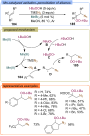
Scheme 58: Azidation–peroxidation of alkenes 184 with TMSN3 and TBHP.

Scheme 59: Co-catalyzed bisperoxidation of butadiene 186.

Scheme 60: Bisperoxidation of styrene (189) and acrylonitrile (192) with TBHP by Minisci.

Scheme 61: Mn-catalyzed synthesis of bis(tert-butyl)peroxides 195 from styrenes 194.

Scheme 62: Bisperoxidation of arylidene-9H-fluorenes 196 and 3-arylidene-2-oxoindoles 198 with TBHP under Mn-c...

Scheme 63: Synthesis of bisperoxides from styrenes 200 and 203 using the Ru and Rh catalysis.
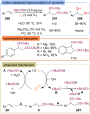
Scheme 64: Iodine-catalyzed bisperoxidation of styrenes 206.
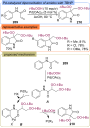
Scheme 65: Synthesis of di-tert-butylperoxyoxoindoles 210 from acrylic acid anilides 209 using a Pd(II)/TBHP o...

Scheme 66: Pinolation/peroxidation of styrenes 211 catalyzed by Cu(I).
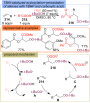
Scheme 67: TBAI-catalyzed acyloxylation–peroxidation of alkenes 214 with carboxylic acids and TBHP.

Scheme 68: Difunctionalization of alkenes 217 with TBHP and water or alcohols.

Scheme 69: TBAI-catalyzed hydroxyperoxidation of 1,3-dienes 220.

Scheme 70: Hydroxyperoxidation of 1,3-dienes 220.

Scheme 71: Iodination/peroxidation of alkenes 223 with I2 and hydroperoxides.

Scheme 72: The reactions of cyclic enol ethers 226 and 228 with I2/ROOH system.

Scheme 73: Synthesis of 1-(tert-butylperoxy)-2-iodoethanes 231.

Scheme 74: Synthesis of 1-iodo-2-(tert-butylperoxy)ethanes 233.
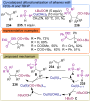
Scheme 75: Cu-catalyzed phosphorylation–peroxidation of alkenes 234.
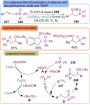
Scheme 76: Co-catalyzed phosphorylation–peroxidation of alkenes 237.
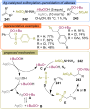
Scheme 77: Ag-catalyzed sulfonylation–peroxidation of alkenes 241.

Scheme 78: Co-catalyzed sulfonylation–peroxidation of alkenes 244.

Scheme 79: Synthesis of α/β-peroxysulfides 248 and 249 from styrenes 247.

Scheme 80: Cu-catalyzed trifluoromethylthiolation–peroxidation of alkenes 250 and allenes 252.

Scheme 81: Photocatalytic sulfonyl peroxidation of alkenes 254 via deamination of N-sulfonyl ketimines 255.

Scheme 82: Photoredox-catalyzed 1,4-peroxidation–sulfonylation of enynones 257.

Scheme 83: Cu-catalyzed silylperoxidation of α,β-unsaturated compounds 260 and enynes 261.

Scheme 84: Fe-catalyzed silyl peroxidation of alkenes.

Scheme 85: Cu-catalyzed germyl peroxidation of alkenes 267.
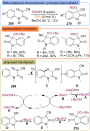
Scheme 86: TBAI-catalyzed intramolecular cyclization of diazo compounds 269 with further peroxidation.

Scheme 87: Co-catalyzed three-component coupling of benzamides 271, diazo compounds 272 and TBHP.

Scheme 88: Co-catalyzed esterification-peroxidation of diazo compounds 274 with TBHP and carboxylic acids 275.

Scheme 89: Cu-catalyzed alkylation–peroxidation of α-carbonylimines 277 or ketones 280.

Scheme 90: Mn-catalyzed ring-opening peroxidation of cyclobutanols 282 with TBHP.

Scheme 91: Peroxycyclization of tryptamines 284 with TBHP.

Scheme 92: Radical cyclization–peroxidation of homotryptamines 287.
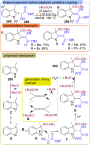
Scheme 93: Iodine-catalyzed oxidative coupling of indoles 288, cyanoacetic esters and TBHP.

Scheme 94: Summary of metal-catalyzed peroxidation processes.
Synthesis of fluorinated acid-functionalized, electron-rich nickel porphyrins
- Mike Brockmann,
- Jonas Lobbel,
- Lara Unterriker and
- Rainer Herges
Beilstein J. Org. Chem. 2024, 20, 2954–2958, doi:10.3762/bjoc.20.248
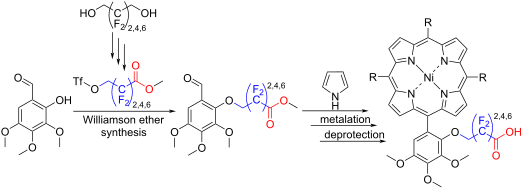
- converted into the methyl esters 10 (54%), 11 (52%), and 12 (46%). The benzyl-protecting group was removed hydrogenolytically to give products 13 (85%), 14 (65%), and 15 (99%). The alcohols were then converted to the triflates 16 (28%), 17 (41%), and 18 (63%). We have chosen 3,4,5-trimethoxybenzaldehyde (19

Graphical Abstract

Scheme 1: Synthesis of the starting materials 16, 17, and 18 for the subsequent Williamson ether synthesis wi...

Scheme 2: Synthesis of perfluoroalkyl ester-functionalized aldehydes 22, 23, and 24. Conditions: a) NIS, TFA,...
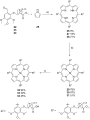
Scheme 3: Porphyrin synthesis. a) Rothemund porphyrin synthesis of metal-free porphyrins 26, 27, and 28; b) m...



