


Search results
Search for "anthraquinone" in Full Text gives 54 result(s) in Beilstein Journal of Organic Chemistry.
Cyclodextrin-induced host–guest effects of classically prepared poly(NIPAM) bearing azo-dye end groups
Beilstein J. Org. Chem. 2012, 8, 1929–1935, doi:10.3762/bjoc.8.224
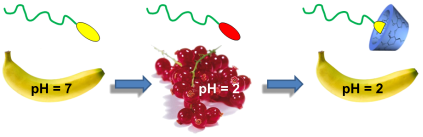
- Polymers bearing dyes, such as azo, stilbene, anthraquinone or fluorescence dyes, in the main or side chain have been widely described and investigated [1][2][3][4][5][6][7][8][9][10][11][12][13][14][15]. A few examples of dyes located at the end group of polymers are prepared preferably under anionic or


Directed aromatic functionalization in natural-product synthesis: Fredericamycin A, nothapodytine B, and topopyrones B and D
Beilstein J. Org. Chem. 2011, 7, 1475–1485, doi:10.3762/bjoc.7.171
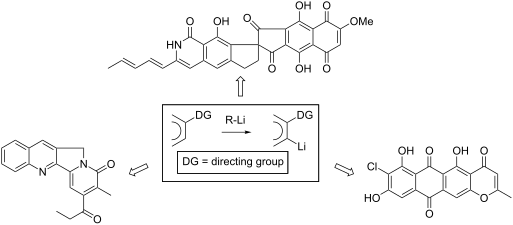
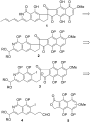
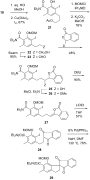
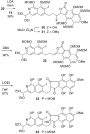
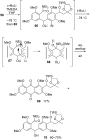
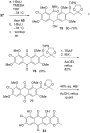
- . Aqueous workup arguably converted 68 into a dihydroanthraquinone, which upon exposure to the atmosphere was rapidly oxidized to the desired anthraquinone 69. The yield of this material was a modest 17% after purification, the remaining balance of the initial mass of 65 being the debrominated material 70
- ) regardless of the length of time (from 3 to 12 h) over which the reaction mixture was allowed to evolve following the addition of t-BuLi to 66. As a control experiment, we examined the preparation of the simpler anthraquinone 72 by the same method (Scheme 14). This exercise established that 72 formed
- upon CD3OD quench). Accordingly, the organolithium species thus generated was processed as detailed earlier in Scheme 14, leading to a mixture of the desired anthraquinone 76, obtained in 20% yield after chromatography, along with desbromo product 75, again isolated in 60–70% yield (Scheme 16). The







Hyperbranched polyethylenimine bearing cyclodextrin moieties showing temperature and pH controlled dye release
Beilstein J. Org. Chem. 2011, 7, 1130–1134, doi:10.3762/bjoc.7.130
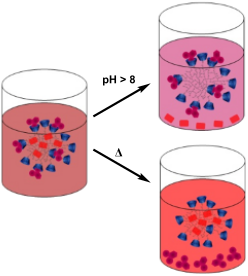
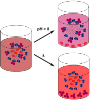
- Indra Bohm Susanne Katharina Kreth Helmut Ritter Institut für Organische und Makromolekulare Chemie II, Heinrich-Heine-Universität Düsseldorf, Universitätsstraße 1, D-40225 Düsseldorf, Germany Fax: (+49) 211 8115840 10.3762/bjoc.7.130 Abstract The release of anthraquinone dyes from β-cyclodextrin
- : anthraquinone; cyclodextrin; drug delivery; polyethylenimine; release; Introduction The development of novel materials and their use as drug delivery systems has gained increased interest in the last few decades [1][2][3]. In this context, certain stimuli responsive behaviors are required [4][5]. Hence, the
- heating [25]. For optical visualization of the attachment and release of suitable molecules, two anthraquinone dyes were chosen as model compounds in the present work [26]. Results and Discussion 5,8-Dichloro-1,4-dihydroxyanthraquinone (1) and 1,4-bis-N-adamantylaminoanthraquinone (2) were used as model


Functionalization of anthracene: A selective route to brominated 1,4-anthraquinones
Beilstein J. Org. Chem. 2011, 7, 1036–1045, doi:10.3762/bjoc.7.118

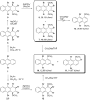
- constitute potentially important keys for the synthesis of pharmaceutical chemicals [4][5][6][7], natural products [8][9] and donor properties [10][11]. Anthraquinone 28 may be used as precursor for 9,10-disubstituted-2-phenoxy-anthracene-1,4-dione derivatives that are difficult to synthesize by other routes
- . There has been much interest in the preparation of phenoxy-1,4-anthraquinone derivatives due to their anti-trypanosomal activity. Bolognesi et al. designed and synthesized a small library of 2-phenoxy-1,4-anthraquinone derivatives, all of which showed inhibitory activity toward either Trypanosoma or




Other Beilstein-Institut Open Science Activities



