Search results
Search for "assembly" in Full Text gives 648 result(s) in Beilstein Journal of Organic Chemistry. Showing first 200.
Beyond symmetric self-assembly and effective molarity: unlocking functional enzyme mimics with robust organic cages
Beilstein J. Org. Chem. 2025, 21, 421–443, doi:10.3762/bjoc.21.30
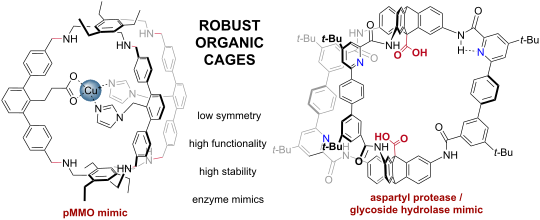
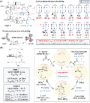
- symmetry to enable promising catalytic modes. Keywords: cavity confinement catalysis; enzyme mimicry; robust organic cages; self-assembly; supramolecular catalysis; Introduction I frequently introduce my research on organic cage enzyme mimics with the following observation. For hundreds of years
- precision. In this perspective, I identify three clear areas for increased focus to achieve this ambition: (1) the development of modular cavities featuring sub-Ångstrom-confined bifunctionality (including frustrated charges); (2) improved access to stable cavities with reduced symmetry via self-assembly by
- exploiting emergent geometric rules and post-assembly modifications; (3) improved screening and collection of detailed structure–activity-relationship (SAR) data for modular systems to allow systematic design, rational and computational development, and identification of novel activity. These developments




Streamlined modular synthesis of saframycin substructure via copper-catalyzed three-component assembly and gold-promoted 6-endo cyclization
Beilstein J. Org. Chem. 2025, 21, 226–233, doi:10.3762/bjoc.21.14
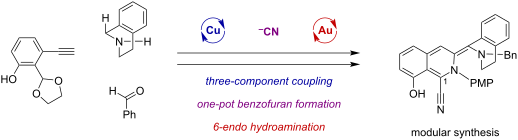
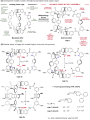
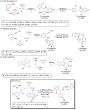
- coupling with gold(I)-mediated 6-endo cyclization streamlines the rapid and modular assembly of the substructure of bis-tetrahydroisoquinoline (THIQ) alkaloids. The design of the key synthetic intermediate bearing a 2,3-diaminobenzofuran moiety allows both gold(I)-mediated regiocontrolled 6-endo
- hydroamination and temporary protection of nitrile and phenolic hydroxy groups. The synthetic strategy enabled the efficient synthesis of the substructure of saframycins bearing isoquinoline and THIQ units in just four steps from the modular assembly of the three components. We also found the unexpected
- modular synthetic strategy involving the cascading assembly of the left THIQ segment. A concise modular synthetic process was developed to construct the substructure 14 of saframycin A (1), featuring copper(I)-catalyzed three-component coupling, and subsequent tandem 2,3-diaminobenzofuran formation


Hydrogen-bonded macrocycle-mediated dimerization for orthogonal supramolecular polymerization
Beilstein J. Org. Chem. 2025, 21, 179–188, doi:10.3762/bjoc.21.10
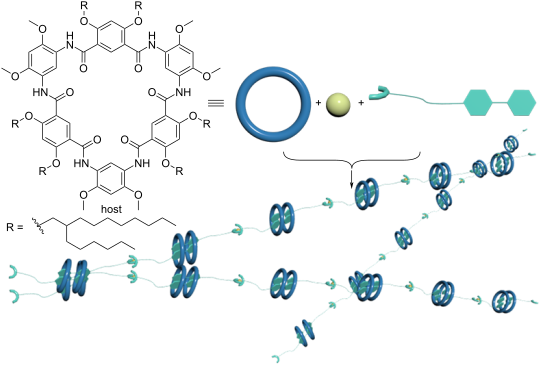
- Wentao Yu Zhiyao Yang Chengkan Yu Xiaowei Li Lihua Yuan College of Chemistry, Sichuan University, Chengdu 610064, China 10.3762/bjoc.21.10 Abstract Orthogonal self-assembly represents a useful methodology to construct supramolecular polymers with AA- and AB-type monomers, as commonly used for
- materials. Keywords: hydrogen-bonded macrocycle; orthogonal self-assembly; shape-persistent; supramolecular polymer; Introduction Host–guest interactions, particularly those involving macrocycles as hosts [1], have found a myriad of applications in supramolecular chemistry [2][3][4] owing to their ability
- to create noncovalent, dynamic, yet in some cases strong forces between molecules. Adding an additional element of interactions to supramolecular systems endows them with a feature of “orthogonal self-assembly”, a process in which molecular species are assembled into aggregates by two or more types



Hot shape transformation: the role of PSar dehydration in stomatocyte morphogenesis
Beilstein J. Org. Chem. 2025, 21, 47–54, doi:10.3762/bjoc.21.5
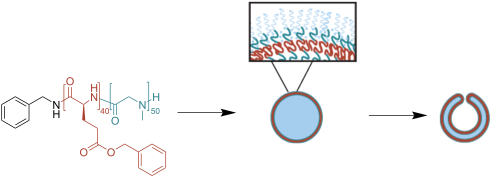
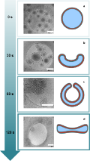
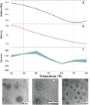
- ) in biomedical applications, boasting advantages in biocompatibility and degradability. While the self-assembly behavior of block copolymers containing polysarcosine-containing polymers has been reported, their potential for shape transformation remains largely untapped, limiting their versatility
- glutamate); polysarcosine; shape transformation; stomatocyte; supramolecular chemistry; Introduction Polymeric vesicles represent a promising candidate for usage in drug delivery systems due to their facile assembly and ability to provide a stable soft interface. Among these materials, polyethylene glycol
- -polystyrene block copolymers (PEG-PS) stand out for their versatility and adaptability. These copolymers exhibit a remarkable propensity for self-assembly, allowing the formation of vesicles capable of undergoing diverse shape transformations. Notably, they can adopt the distinctive stomatocyte morphology


Chemical glycobiology
Beilstein J. Org. Chem. 2025, 21, 8–9, doi:10.3762/bjoc.21.2
- glycan assembly [9]. Target-directed synthetic strategies are being developed by Reihill et al. [10] and Karak et al. [11], exploring the syntheses of the linker-displaying, sulfated TF disaccharide and lipid II analogues, respectively. The direct application of synthetic glycans is shown by Fan et al
Efficient synthesis of fluorinated triphenylenes with enhanced arene–perfluoroarene interactions in columnar mesophases
Beilstein J. Org. Chem. 2024, 20, 3263–3273, doi:10.3762/bjoc.20.270
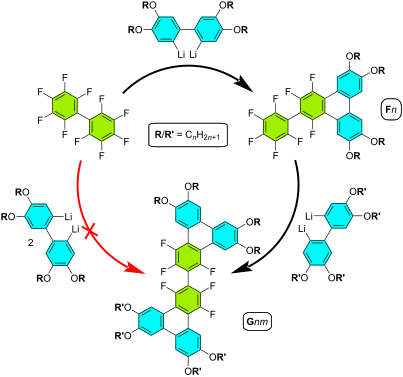
- -67034 Strasbourg, France 10.3762/bjoc.20.270 Abstract The high potential of non-covalent arene–fluoroarene intermolecular interactions in the design of liquid crystals lies in their ability to strongly promote self-assembly, improve the order and stability of the supramolecular mesophases, and enable


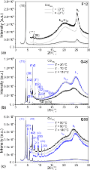


Multicomponent reactions driving the discovery and optimization of agents targeting central nervous system pathologies
Beilstein J. Org. Chem. 2024, 20, 3151–3173, doi:10.3762/bjoc.20.261

- years, the Ugi reaction has emerged as a highly considered reaction due to its mild conditions, broad applications, and product diversity. It enables the selective assembly of precursors, facilitating various post-reaction transformations such as deprotection cyclization, 1,3-dipolar cycloaddition, and


Controlled oligomerization of [1.1.1]propellane through radical polarity matching: selective synthesis of SF5- and CF3SF4-containing [2]staffanes
Beilstein J. Org. Chem. 2024, 20, 3134–3143, doi:10.3762/bjoc.20.259
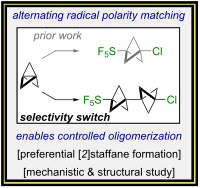
- substituted BCPs [25][26][27] or photochemical appendage of 1 onto an extant BCP [28][29][30][31] are relatively effective tactics for the selective assembly of certain [n]staffanes; the main caveat is that multiple synthetic steps are required. On the other hand, while a one-pot radical chain oligomerization
- a single oligomer across a panoply of different transformations typically range from <1% to ≈30% when n > 1 is desired [35]. To the best of our knowledge, the assembly of functionalized [n]staffanes from 1 in high yield/selectivity and in one step via controlled radical oligomerization remains a


Synthesis of the 1,5-disubstituted tetrazole-methanesulfonylindole hybrid system via high-order multicomponent reaction
Beilstein J. Org. Chem. 2024, 20, 3077–3084, doi:10.3762/bjoc.20.256
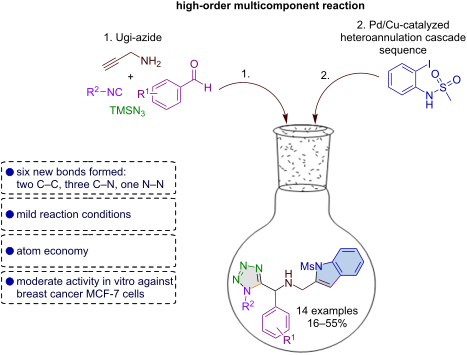
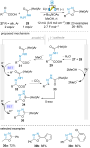
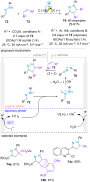
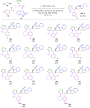
- aimed at inhibiting tubulin assembly, N-mesyl-2-(1-phenylvinyl)indoles were active against HCT-116 cells on the order of a GI50 of 10 mM, although the mechanism originally sought was not demonstrated [39]. Therefore, in this work, the cytotoxic activity of methanesulfonylindoles 18a–j was explored



Chemical structure metagenomics of microbial natural products: surveying nonribosomal peptides and beyond
Beilstein J. Org. Chem. 2024, 20, 3050–3060, doi:10.3762/bjoc.20.253

- megaenzyme machinery that contains multiple modules arranged in an assembly line fashion, each of which is responsible for incorporating a single BB into the growing peptide intermediate (Figure 3a). One module typically contains one adenylation (A) domain that folds and operates semi-autonomously, which
- ) throughout biosynthesis (Figure 5a). The NRP intermediate is passed from one module to the next as BBs are incorporated one at a time into this growing peptide chain. The very last step in NRP biosynthesis – offloading the final product from the enzymatic assembly line – is usually catalyzed by the
- ]. Type I PKs are also constructed in a modular assembly line biosynthetic logic and may be amenable to chemical structure metagenomic approaches described herein [82]. In fact, the software suite antiSMASH can already predict the substrate specificity of individual polyketide synthase (PKS) modules, i.e


Tailored charge-neutral self-assembled L2Zn2 container for taming oxalate
Beilstein J. Org. Chem. 2024, 20, 3007–3015, doi:10.3762/bjoc.20.250
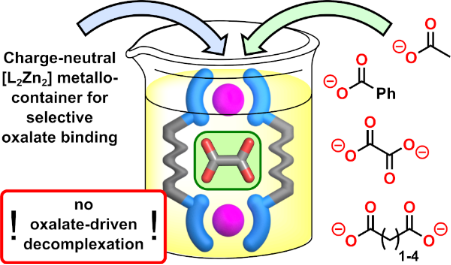
- metallocontainers which are formed by metal-driven self-assembly have become especially popular to bind various kinds of anions since such systems offer easy to tune confinements. Usually, the utilized complexes are net positive which makes them ideal hosts for anions [56][57][58][59][60][61][62][63]. However, the
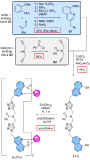
- positively charged or charge-neutral, is their metal-driven self-assembly. Unfortunately, this can also be their Achilles' heel, as the underlying coordination bonds are fragile compared to covalent bonds. For example, metallocages can easily break apart by the addition of competitive anions which are highly
- assembly is maintained. The undesired outcome is free ligand strands accompanied by simple metal oxalate complexes or unidentifiable mixtures of aggregates (Figure 1a). We observed this issue by ourselves for a self-assembled charge-neutral zinc-based container which proved otherwise to be an excellent




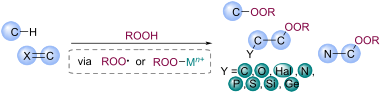
Advances in radical peroxidation with hydroperoxides
Beilstein J. Org. Chem. 2024, 20, 2959–3006, doi:10.3762/bjoc.20.249
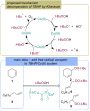
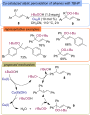
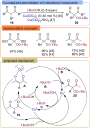
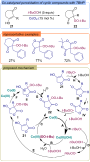
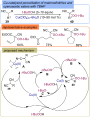
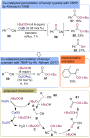
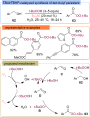
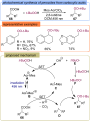
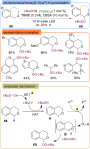
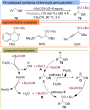
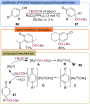
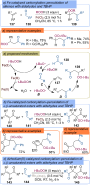
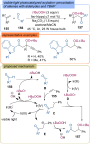
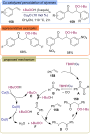
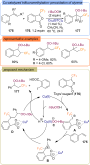
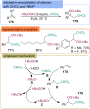
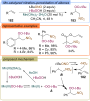
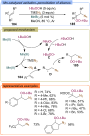
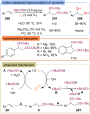
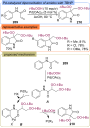
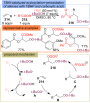
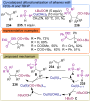
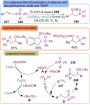
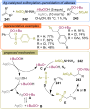
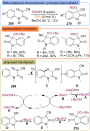
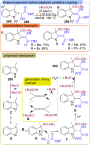
- -unsaturated esters 143 and TBHP to afford α-peroxy-γ-diketones 145 was also disclosed under the catalysis of dirhodium(II) complex Rh2(esp)2 (esp = α,α,α′,α′-tetramethyl-1,3-benzenedipropanoate) (Scheme 45c) [109]. A three-component radical coupling reaction has been established for the assembly of β































C–C Coupling in sterically demanding porphyrin environments
Beilstein J. Org. Chem. 2024, 20, 2784–2798, doi:10.3762/bjoc.20.234
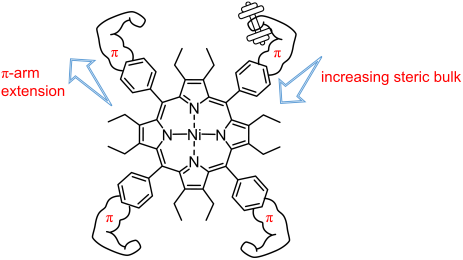
- structure is quite similar to the supramolecular assembly of borylated porphyrin 5,10,15,20-tetrakis(5,5-dimethyl-1,3,2-dioxaborinan-2-yl)porphyrin, where nitrobenzene accommodated tunnels of width of 7–8 Å [61]. The assembly of compound 46 also presents channel-type voids, making it part of only a few


Computational design for enantioselective CO2 capture: asymmetric frustrated Lewis pairs in epoxide transformations
Beilstein J. Org. Chem. 2024, 20, 2668–2681, doi:10.3762/bjoc.20.224
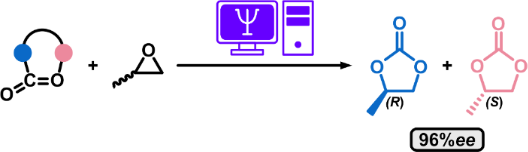
- to consider involved the energy of pre-TS01 assembly, which is the non-covalent complex formed between the FLP and the CO2 molecule, and the energy of the intermediate Min2 (Figure 5). Correlating these parameters with the energy span yields an R2 value of 0.79, a mean absolute error (MAE) of 2.59
- assembly) and ΔG(Min2)) and identifies a catalyst worthy of special consideration, that is, F3_NB_C5_CF3. Additionally, it is observed that an efficient catalyst for this reaction should have an unstable pre-TS assembly, pre-TS01 assembly, (E1 > 0), and an intermediate Min2 with an energy close to 0
- utilised. The same variables (energy of pre-TS01 assembly and Min2) were considered, which yielded a correlation with a R2 value of 0.71. As depicted in Figure 7A, it is clear that the best family for this mechanism is family 2, followed by families 3 and 4. Family 1, similar to the previous group


Applications of microscopy and small angle scattering techniques for the characterisation of supramolecular gels
Beilstein J. Org. Chem. 2024, 20, 2608–2634, doi:10.3762/bjoc.20.220

- that the hierarchal molecular self-assembly of these materials into larger structures directly influences behaviours such as performance and stability. It is therefore imperative that these materials are characterised effectively over multiple length scales. Two effective methods of achieving this are
- utilise the self-assembly of small molecules into a network of long anisotropic structures which can entangle or cross-link. This network can immobilise the solvent, resulting in a material with both solid-like and liquid-like characteristics. The versatility of these compounds arises from their self
- -assembly across many length scales (Figure 1), allowing for the control of properties through not only chemical modifications on the monomer, but also changes to the gelation process [2]. Whilst this tunability is advantageous in that it allows for a wide range of functionality and applications, this also


Anion-dependent ion-pairing assemblies of triazatriangulenium cation that interferes with stacking structures
Beilstein J. Org. Chem. 2024, 20, 2567–2576, doi:10.3762/bjoc.20.215
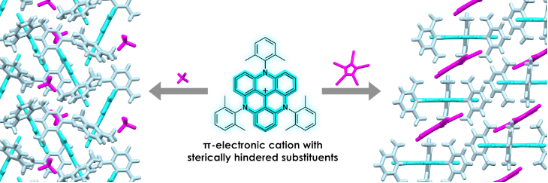
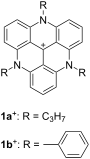
- synthesized to investigate the interactions for the bulky cation. Single-crystal X-ray analysis of the TATA+ ion pairs revealed solid-state ion-pairing assemblies without stacking at the cationic π-planes. The TATA+ cation showed counteranion-dependent assembly structures, with smaller counteranions located



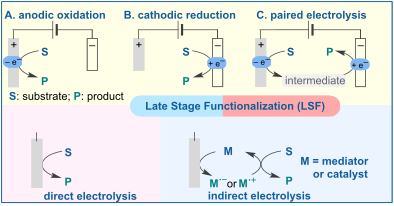
A review of recent advances in electrochemical and photoelectrochemical late-stage functionalization classified by anodic oxidation, cathodic reduction, and paired electrolysis
Beilstein J. Org. Chem. 2024, 20, 2500–2566, doi:10.3762/bjoc.20.214
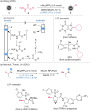
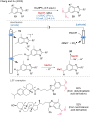
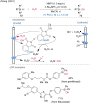
- alternative to the harsh Pummerer rearrangement. Methanol played a crucial role in achieving the desired transformation and it was suggested to promote the self-assembly of reagents 24 and 25 for the formation of 27, which allows the selective abstraction of H+ from the less sterically hindered side








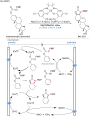


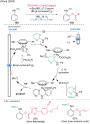
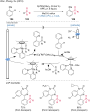


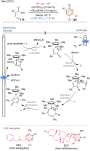














HFIP as a versatile solvent in resorcin[n]arene synthesis
Beilstein J. Org. Chem. 2024, 20, 2469–2475, doi:10.3762/bjoc.20.211
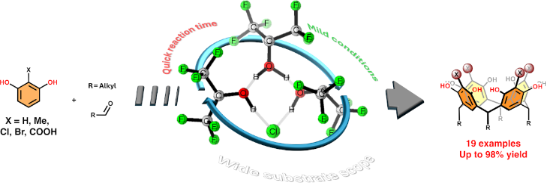
- unique bowl-shape structures and self-assembly in solution have facilitated their widespread use as building blocks in nanomaterials [61][62]. Nevertheless, precisely due to their vast number of applications, functionalized resorcin[n]arenes are needed that meet the needs of the desired function. For


Cell-free protein synthesis with technical additives – expanding the parameter space of in vitro gene expression
Beilstein J. Org. Chem. 2024, 20, 2242–2253, doi:10.3762/bjoc.20.192
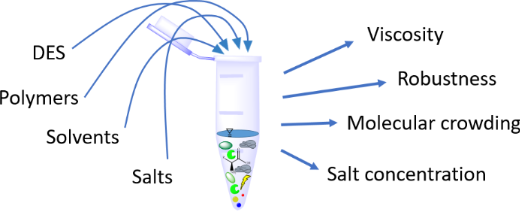
- volume of 4.4 µm³ per E. coli cell [65] and the intracellular concentration of macromolecules, the range for the total amount of macromolecules extracted from the culture was determined. The volume of buffer, dilution at CFPS assembly and PEG-8000, tRNA and plasmid as further macromolecules were included


Novel truxene-based dipyrromethanes (DPMs): synthesis, spectroscopic characterization and photophysical properties
Beilstein J. Org. Chem. 2024, 20, 2163–2170, doi:10.3762/bjoc.20.186
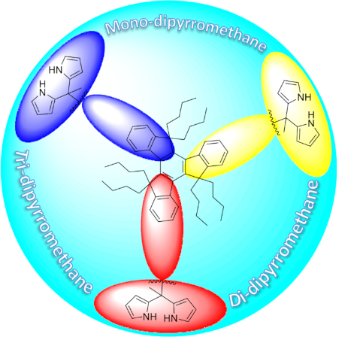
- ), organogels, molecular wires, self-assembly and so forth [14][15][16][17][18][19][20][21][22][23][24][25]. Moreover, nowadays these invaluable compounds have also received great attention of supramolecular chemists, and finds applications in sensing, catalysis, donor–acceptor systems, energy transfer and
- in addition to the stimulating photophysical properties and distinct architectures emerging from the self-assembly processes [42]. Noticeably, most extensively used DPMs belong to the 4,4-difluoro-4-bora-3a,4a-diaza-s-indacene (BODIPY), owing to their high propensity toward chemical manipulations and
- potential applications in the arena of supramolecular chemistry in general, sensing, molecular recognition and self-assembly in particular in has yet to be explored. Moreover, applications of the truxene derivatives in catalysis are also scared, and needs to be advanced in future research. Experimental


Computational toolbox for the analysis of protein–glycan interactions
Beilstein J. Org. Chem. 2024, 20, 2084–2107, doi:10.3762/bjoc.20.180
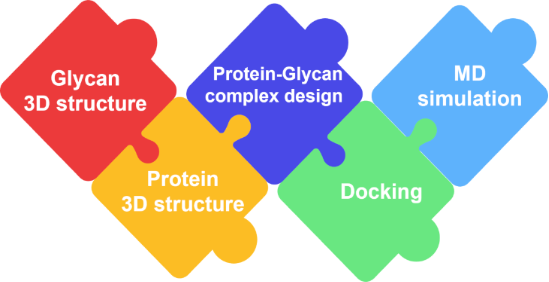
- angles, bond length and bond angles), distance constraints (according to laws of physics) and gives an output with the structure with the minimised energy (https://alphafold.ebi.ac.uk/). 2. I-TASSER [89]: Iterative Threading ASSEmbly Refinement is a free online server that combines ab initio protein


Cage-like microstructures via sequential Ugi reactions in aqueous emulsions
Beilstein J. Org. Chem. 2024, 20, 2078–2083, doi:10.3762/bjoc.20.179
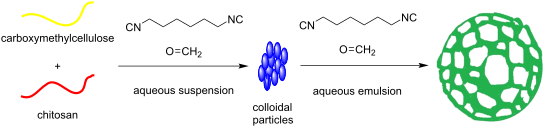
- obtain colloidosomes covered with fissures of a controlled size [10]. A simpler method recently proposed involves the self-assembly of starch granules on the surface of emulsion droplets. However, this approach did not allow the pore size to be controlled [14]. Thus, the currently available methods for


Multicomponent syntheses of pyrazoles via (3 + 2)-cyclocondensation and (3 + 2)-cycloaddition key steps
Beilstein J. Org. Chem. 2024, 20, 2024–2077, doi:10.3762/bjoc.20.178

- agrochemical uses of pyrazoles [13] include insecticides [14], herbicides [15], and fungicides [16]. Furthermore, they are widely applied for the assembly of supramolecular ensembles [17] and molecular systems capable of photoinduced electron transfer [18]. Due to their pertinent photophysical properties [19




Understanding X-ray-induced isomerisation in photoswitchable surfactant assemblies
Beilstein J. Org. Chem. 2024, 20, 2005–2015, doi:10.3762/bjoc.20.176
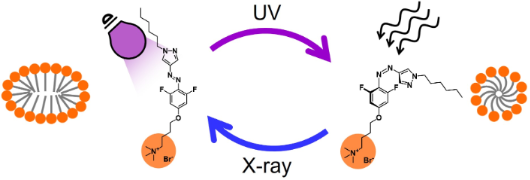
- hydrophilicity [6]. This, in turn, affects the interfacial and self-assembly properties of the PS [4][5][6]. The uniquely tuneable properties of these photoswitchable molecules have led to their successful application in areas such as DNA compaction [8], photorheological fluids [9][10] and micellar catalysis [11
- phototuneable interfacial [16][17][18] and self-assembly properties [19][20]. However, further understanding of factors which affect the isomerisation of these new surfactants, and the effect this has on their self-assembled structures, is still needed to tailor them towards application. Small-angle scattering
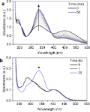
- acidification effect from radiolytic D+ formation [43]. The change from H2O to D2O may also affect the surfactant self-assembly due to the change in hydrogen-bond strength [44]. Fitting to the SAXS data shows that AzoTAB and AAPTAB in the E-isomeric forms form elliptical cylindrical and ellipsoidal micelles



Harnessing the versatility of hydrazones through electrosynthetic oxidative transformations
Beilstein J. Org. Chem. 2024, 20, 1988–2004, doi:10.3762/bjoc.20.175
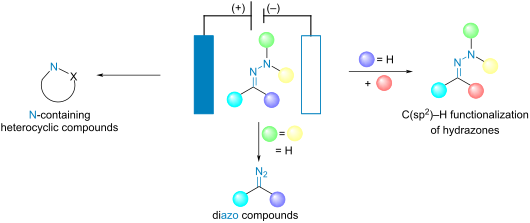
- the partner might be investigated offering numerous possibilities for the assembly of heterocycles. As early as 1988, Tabaković and Gunić examined the anodic oxidation of aldehyde-derived NH-arylhydrazones 44 in the presence of pyridine and (iso)quinolone derivatives 45 in acetonitrile