Search results
Search for "bilayer" in Full Text gives 70 result(s) in Beilstein Journal of Organic Chemistry.
Aggregation behaviour of amphiphilic cyclodextrins: the nucleation stage by atomistic molecular dynamics simulations
Beilstein J. Org. Chem. 2015, 11, 2459–2473, doi:10.3762/bjoc.11.267
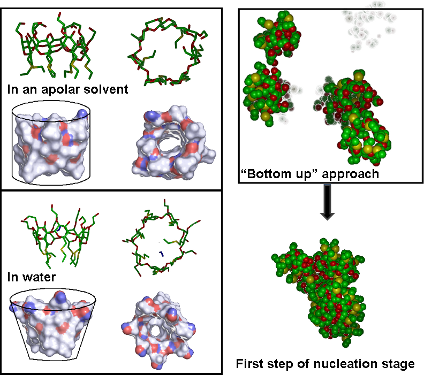
- for instance the wormlike micelles formed by the cetyltrimethylammonium cations, investigated at various salt concentrations to assess their stability against rupture in smaller spherical micelles [36], or more recently a bilayer of aCDs functionalized through an anthraquinone moiety mimicking a small
- or bilayer, or vesicles and nanospheres at appropriate concentrations. In the recent past, some of these structures have been selected to yield versatile and reliable carriers for drug delivery [3][50], and even for molecular recognition of polymers [51]. In this scenario, the proposed study can open


Synthesis, antimicrobial and cytotoxicity evaluation of new cholesterol congeners
Beilstein J. Org. Chem. 2015, 11, 1922–1932, doi:10.3762/bjoc.11.208
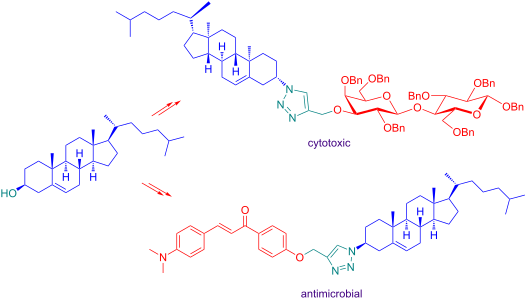
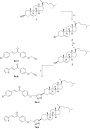
- peptides (AMPs) [4] and ceragenins I (Figure 1) [5]. These CSAs selectively bind to the over expressed negatively charged peripheral phospholipids on the internal bacterial cell membranes. Following membrane association, deformation occurs causing bilayer destabilization and cell lysis [6]. According to




Terminal lipophilization of a unique DNA dodecamer by various nucleolipid headgroups: Their incorporation into artificial lipid bilayers and hydrodynamic properties
Beilstein J. Org. Chem. 2015, 11, 913–929, doi:10.3762/bjoc.11.103
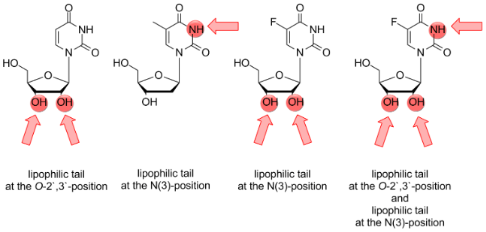
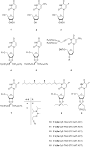
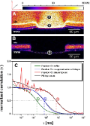
- oligonucleotides (LONs 10–15), each terminally lipophilized with different nucleolipid head groups, were synthesized using the recently prepared phosphoramidites 4b–9b. The insertion of the LONs within an artificial lipid bilayer, composed of 1-palmitoyl-2-oleoyl-sn-glycero-3-phosphocholine (POPC) and 1-palmitoyl
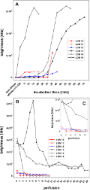
- -2-oleoyl-sn-glycero-3-phosphoethanolamine (POPE), was studied by single molecule fluorescence spectroscopy and microscopy with the help of an optically transparent microfluidic sample carrier with perfusion capabilities. The incorporation of the lipo-oligonucleotides into the bilayer was studied
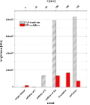
- with respect to efficiency (maximal bilayer brightness) as well as stability against perfusion (final stable bilayer brightness). Attempts to correlate these parameters with the log P values of the corresponding nucleolipid head groups failed, a result which clearly demonstrates that not only the






Potential of acylated peptides to target the influenza A virus
Beilstein J. Org. Chem. 2015, 11, 589–595, doi:10.3762/bjoc.11.65
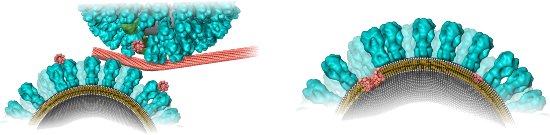
- have been partially neutralized by the liposomes, either by attachment and/or incorporation into the lipid bilayer. Very likely, in case of stearylated peptides, we surmise incorporation into the bilayer via the fatty acyl chain. To verify the association with lipid membranes exemplarily, we


Synthesis of uniform cyclodextrin thioethers to transport hydrophobic drugs
Beilstein J. Org. Chem. 2014, 10, 2920–2927, doi:10.3762/bjoc.10.310
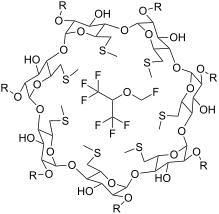
- either nearly insoluble in water or the binding constants are rather low [32][33][34]. We focussed our effort on the design of hydrophilic and/or amphiphilic CD thioethers, because only amphiphilic molecules can form [35][36] or incorporate into bilayer membranes [37][38]. Amphiphilic CD carriers can
- enter a bilayer membrane to support the API to overcome cellular barriers, such as the intestinal barrier [39] or the blood-brain barrier (BBB) [40]. Long alkyl chains (C4–C12) have already been attached via thioether or sulfoxide linkages to all primary positions by Kawabata and Ling et al. to form




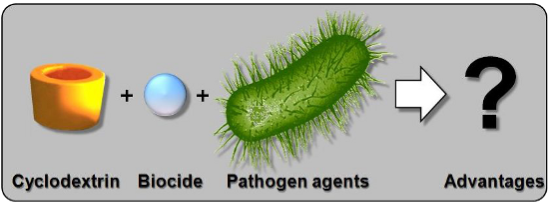
Encapsulation of biocides by cyclodextrins: toward synergistic effects against pathogens
Beilstein J. Org. Chem. 2014, 10, 2603–2622, doi:10.3762/bjoc.10.273
- interaction of the nonionic surfactants with lipid membranes by formation of channels through the membrane [68]. More recently, Groot and Rabone claimed that the inclusion of nonionic surfactants reduces the extensibility and the maximum stress that the bilayer can withstand [69]. These modifications bring


Specific DNA duplex formation at an artificial lipid bilayer: fluorescence microscopy after Sybr Green I staining
Beilstein J. Org. Chem. 2014, 10, 2307–2321, doi:10.3762/bjoc.10.240
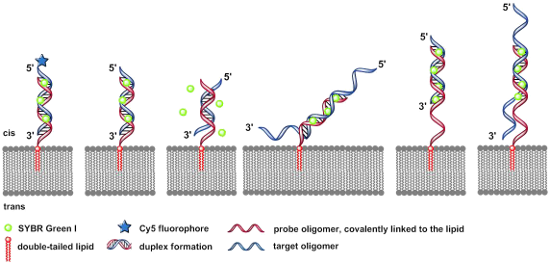
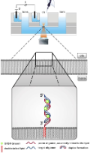
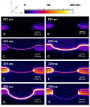
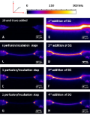
- describes the immobilization of different probe oligonucleotides (4, 7, 10) carrying each a racemic mixture of 2,3-bis(hexadecyloxy)propan-1-ol (1a) at the 5’-terminus on a stable artificial lipid bilayer composed of 1-palmitoyl-2-oleoyl-sn-glycero-3-phosphoethanolamine (POPE) and 1-palmitoyl-2-oleoyl-sn
- -glycero-3-phosphocholine (POPC). The bilayer separates two compartments (cis/trans channel) of an optical transparent microfluidic sample carrier with perfusion capabilities. Injection of unlabeled target DNA sequences (6, 8, or 9), differing in sequence and length, leads in the case of complementarity to
- the formation of stable DNA duplexes at the bilayer surface. This could be verified by Sybr Green I double strand staining, followed by incubation periods and thorough perfusions, and was visualized by single molecule fluorescence spectroscopy and microscopy. The different bilayer-immobilized








Bis(β-lactosyl)-[60]fullerene as novel class of glycolipids useful for the detection and the decontamination of biological toxins of the Ricinus communis family
Beilstein J. Org. Chem. 2014, 10, 1504–1512, doi:10.3762/bjoc.10.155
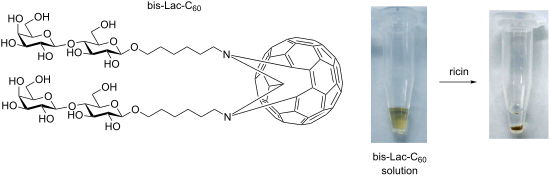
- mono- and bis(α-D-mannopyranosyl)-[60]fullerenes in both AFM (atomic force microscopy) and DLS analyses. Probably, the smaller particles are bilayer vesicles that are stable in DMSO and pyridine while they can be destructed in parts by treatment with surfactants such as Triton-X [25]. These nano-sized


Biantennary oligoglycines and glyco-oligoglycines self-associating in aqueous medium
Beilstein J. Org. Chem. 2014, 10, 1372–1382, doi:10.3762/bjoc.10.140
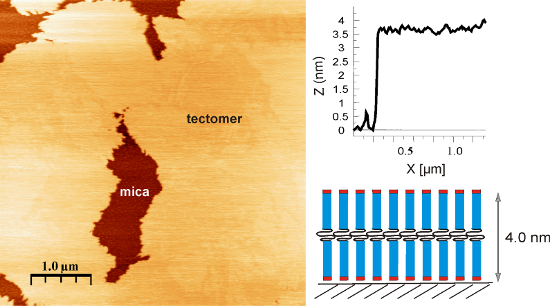
- washing with buffer solution (рН 6.5 or 9.0). The morphology of the first layer remains unchanged and the available defects (‘holes’) are preserved. The layer height is 3.7–4.0 nm, which may correspond to both mono- and bilayer (conformations “1 + 1” and “2 + 0”, respectively, see Figure 4). The dynamics
- of Н-Gly4NH(СН2)10NHGly4-Н association was studied in more detail in a liquid cell (Figure 6). After 3 min the surface was virtually completely covered with a uniform defect-free layer. It should be noted that the stepwise surface profile (typical for bilayer structures) was not observed in a liquid
- supports the model ”1 + 1”: 1) the steps typical for a bilayer profile are not present in the SFM images, 2) intense washing does not lead to the formation of half-height structures, 3) the lack of any association on a graphite surface where the formation of ”2 + 0” is expected to be preferable (see below





Unusual polymorphism in new bent-shaped liquid crystals based on biphenyl as a central molecular core
Beilstein J. Org. Chem. 2014, 10, 794–807, doi:10.3762/bjoc.10.75
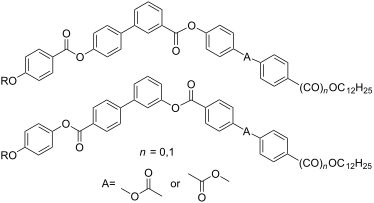
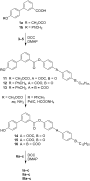
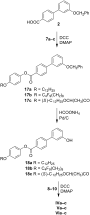
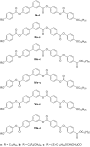
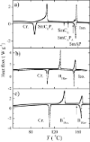
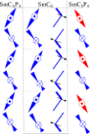
- freedom for building the bilayer structure–polarization vectors in consecutive layers can be synleaning or antileaning. Only few experimental studies have been reported regarding the realization of the SmCG phase in bent-shaped molecules [12]. From the above mentioned it follows that bent-shaped mesogens
- , two columns show the top and side view of molecules of the SmCG phase (bilayer character is pointed out). From the electro-optical and the dielectric data it follows that chirality changes at the SmCG –SmCSPA phase transition on cooling. Series III–VI All compounds of series III–VI, except for non
- an additional polar mode in the SmCAPA and the modulated SmCG phase shows that most probably both have complex structure involving the simultaneous tilting and leaning of molecules. We can speculate that the SmCAPA phase has also triclinic synleaning structure, although no bilayer structure is seen





A peptidic hydrogel that may behave as a “Trojan Horse”
Beilstein J. Org. Chem. 2013, 9, 417–424, doi:10.3762/bjoc.9.44
- drugs, which should be sufficiently polar for ease of administration and successful distribution in the organism, but also adequately hydrophobic so as to traverse the lipid bilayer of the cell membrane. Because they do not fulfill these physical properties, a large number of drug leads fail to make it


A new family of four-ring bent-core nematic liquid crystals with highly polar transverse and end groups
Beilstein J. Org. Chem. 2013, 9, 26–35, doi:10.3762/bjoc.9.4
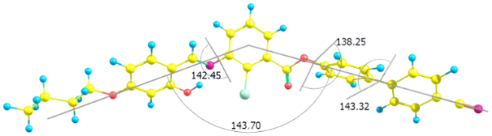
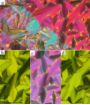
- with respect to mesogenicity to exhibit an anticlinic bilayer smectic phase (SmAPA), and to its stability towards hydrolysis. The mesomorphic behaviour of compounds 1a–1c was characterized by polarized optical microscopy (POM), and the samples, on cooling from the isotropic phase, exhibited marble or


Mannose-decorated cyclodextrin vesicles: The interplay of multivalency and surface density in lectin–carbohydrate recognition
Beilstein J. Org. Chem. 2012, 8, 1543–1551, doi:10.3762/bjoc.8.175
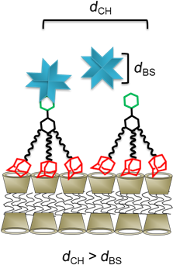
- Ulrike Kauscher Bart Jan Ravoo Organic Chemistry Institute, Westfälische Wilhelms-Universität Münster, Correnstraße 40, 48149 Münster, Germany 10.3762/bjoc.8.175 Abstract Cyclodextrin vesicles are versatile models for biological cell membranes since they provide a bilayer membrane that can easily
- development of drug-delivery systems [3]. Synthetic bilayer vesicles are a versatile model for biological cell membranes, and there are a substantial number of reports on synthetic glycolipids that mimic the glycocalyx [4][5][6][7][8][9][10][11][12][13][14][15][16][17][18][19][20][21][22][23]. Multivalent
- guest interaction with the surface of the vesicles has become a useful system to investigate recognition, adhesion and fusion of biological cell membranes [24][25][26]. In this context, amphiphilic cyclodextrins are a promising platform due to their ability to form stable bilayer vesicles that can be





Design of a novel tryptophan-rich membrane-active antimicrobial peptide from the membrane-proximal region of the HIV glycoprotein, gp41
Beilstein J. Org. Chem. 2012, 8, 1172–1184, doi:10.3762/bjoc.8.130
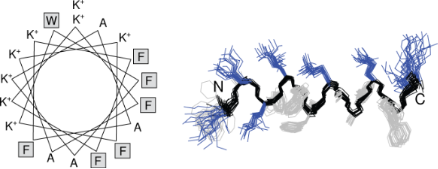
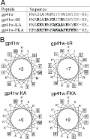
- with enhanced antimicrobial potency and weak cytotoxic activity. The first step in this process was to select an appropriate sequence to serve as the peptide scaffold. Many linear AMPs are unstructured in aqueous solution and only adopt a well-defined structure in the presence of a lipid bilayer [1
- ]. This binding event is integral to the mechanism of action of the peptide, either through direct damage to the phospholipid bilayer or by allowing the peptide to cross the bacterial membrane to reach intracellular targets [2]. A number of AMPs form amphipathic α-helices when bound to lipid bilayers with
- the hydrophilic residues clustering on one face of the peptide, while hydrophobic residues appear on the opposite face [3]. This amphipathic structure allows the peptide to embed itself into the interfacial region of a phospholipid membrane and it anchors the peptide to the surface of the bilayer




Binding of group 15 and group 16 oxides by a concave host containing an isophthalamide unit
Beilstein J. Org. Chem. 2012, 8, 11–17, doi:10.3762/bjoc.8.2
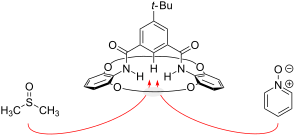
- applied to chloride-loaded liposomes [22], it showed twice as much transmembrane chloride transport with respect to acyclic compound 2 (see Supporting Information File 1). Even if the chloride binding is lower for concave host 1, the transport through a bilayer membrane is faster. Additional transport


Sexithiophenes as efficient luminescence quenchers of quantum dots
Beilstein J. Org. Chem. 2011, 7, 1722–1731, doi:10.3762/bjoc.7.202
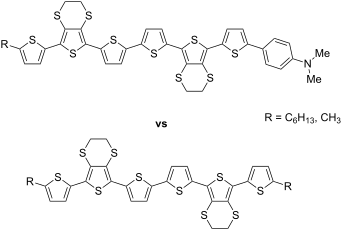
- perfluoroalkyl groups for n-type semiconductors [12][13]. Previously, we reported the synthesis and properties of alkyl end-capped oligothiophenes 2 (Figure 1), which incorporate the ethylene dithiothiophene (EDTT) unit, including their performance as the electron donor material in a bilayer photovoltaic device


Planar-bilayer activities of linear oligoester bolaamphiphiles
Beilstein J. Org. Chem. 2011, 7, 1562–1569, doi:10.3762/bjoc.7.184
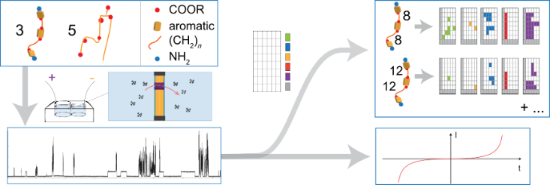
- assays [8]; the results obtained are comparable under identical conditions, but often incommensurate with different variants of the method. The voltage-clamp technique, on the other hand, reports absolute flux under defined conditions [9]. In this method, a planar bilayer is formed in an aperture between
- compounds is limited by their solubility: Water-soluble compounds (4–8) were generally introduced as a solution to the bathing electrolyte, sparingly soluble 2 and 3 by injection close to the proximity of the bilayer, and the insoluble compound 1 was added by physical transfer from a brush. Physical
- species, presumed to be the protonated anilinium head groups, must move in response to the applied potential through some significant portion of the bilayer thickness. Neither the pre-exponential nor the exponent appears to be a characteristic solely of the compound. Concentration of the compound in the



Gelation or molecular recognition; is the bis-(α,β-dihydroxy ester)s motif an omnigelator?
Beilstein J. Org. Chem. 2010, 6, 1079–1088, doi:10.3762/bjoc.6.123
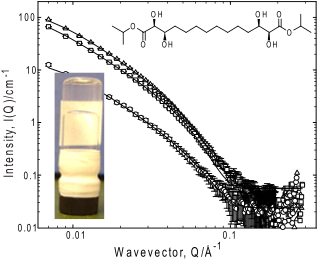
- increasing gelator length, as might be expected were a bilayer structure present. In all cases, the fitting procedure was tested to ensure that the best fit observed was a global minimum, especially since there is some coupling of the parameters m and ℓ. The internal morphology of the structures may be




Pyridinium based amphiphilic hydrogelators as potential antibacterial agents
Beilstein J. Org. Chem. 2010, 6, 859–868, doi:10.3762/bjoc.6.101
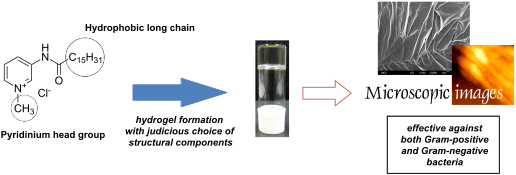
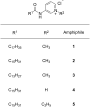
- originates from the interdigitated bilayer packing of the amphiphile leading to the development of an efficient hydrogel. Interestingly, the presence of the pyridinium scaffold along with the long alkyl chain render these amphiphiles inherently antibacterial. The amphiphilic hydrogelators exhibited high
- antibacterial activity against both Gram-positive and Gram-negative bacteria with minimum inhibitory concentration (MIC) values as low as 0.4 μg/mL. Cytotoxicity tests using MTT assay showed 50% NIH3T3 cell viability with hydrogelating amphiphile 2 up to 100 μg/mL. Keywords: antibacterial; bilayer structure
- possibly forming repeating bilayers in which the molecules are connected by intermolecular hydrogen bonding and hydrophobic interaction. The probable interdigitated bilayer packing of the amphiphile 2 is represented in Figure 8 [39]. As noted earlier the pyridinium component is well known to impart



1-(4-Alkyloxybenzyl)-3-methyl-1H-imidazol-3-ium organic backbone: A versatile smectogenic moiety
Beilstein J. Org. Chem. 2009, 5, No. 62, doi:10.3762/bjoc.5.62
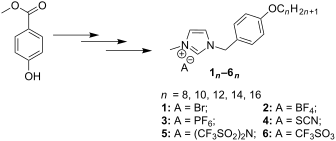
- mesogens impose a bilayer (N = 2) type of organisation on these sublayers, consisting of two head-to-head facing ionic monolayers. The resulting variations of S versus temperature T within the analogous series of various anions but constant chain length (see Figure 7) consist of steep increases