


Search results
Search for "building blocks" in Full Text gives 940 result(s) in Beilstein Journal of Organic Chemistry. Showing first 200.
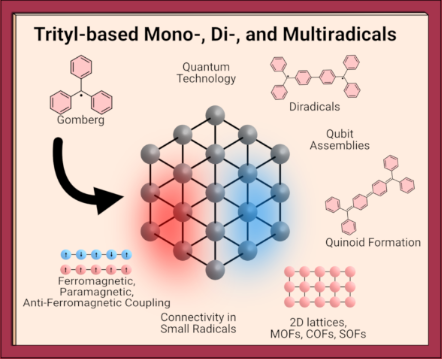
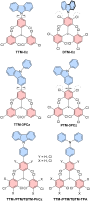
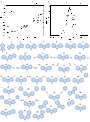
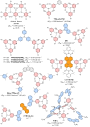
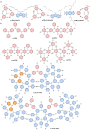
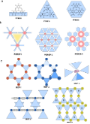
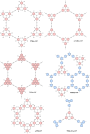
On the photoluminescence in triarylmethyl-centered mono-, di-, and multiradicals
Beilstein J. Org. Chem. 2025, 21, 964–998, doi:10.3762/bjoc.21.80









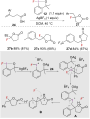
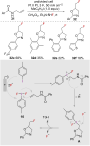
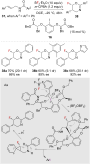
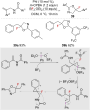
Silver(I) triflate-catalyzed post-Ugi synthesis of pyrazolodiazepines
Beilstein J. Org. Chem. 2025, 21, 915–925, doi:10.3762/bjoc.21.74
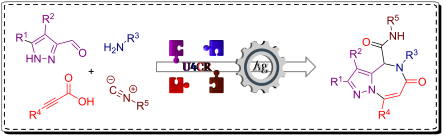
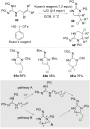
- to obtain non-epimerized diastereomers of the resulting pyrazolodiazepine 18 as the major reaction products. Conclusion We have developed a straightforward, diversity-oriented approach for the synthesis of a novel pyrazolo[1,5-a][1,4]diazepine scaffold starting from readily available building blocks




Cu–Bpin-mediated dimerization of 4,4-dichloro-2-butenoic acid derivatives enables the synthesis of densely functionalized cyclopropanes
Beilstein J. Org. Chem. 2025, 21, 877–883, doi:10.3762/bjoc.21.71
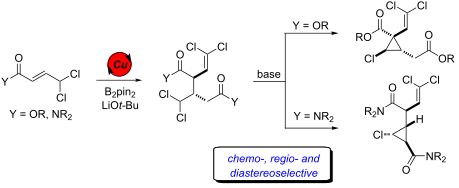
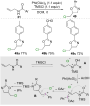
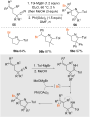
- versatile building blocks for the stereoselective synthesis of chlorocyclopropanes. Keywords: chlorocyclopropanes; copper; cyclization; 4,4-dichloro-2-butenoic acid derivatives; dimerization; Introduction In the last years our group has been focused on the development of catalytic methodologies for the


Orthogonal photoswitching of heterobivalent azobenzene glycoclusters: the effect of glycoligand orientation in bacterial adhesion
Beilstein J. Org. Chem. 2025, 21, 736–748, doi:10.3762/bjoc.21.57
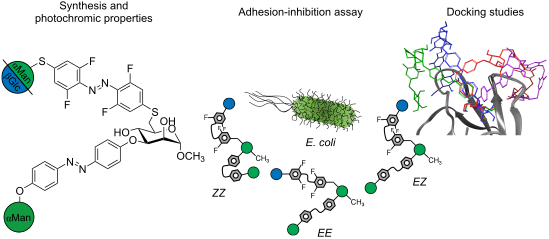
- and tested to investigate the details of carbohydrate recognition [1][2][3][4][5][6][7]. It has turned out that carbohydrate–lectin interactions are orchestrated by a multitude of structural parameters. In addition to the configurational characteristics of specific carbohydrate building blocks, homo


Photochemically assisted synthesis of phenacenes fluorinated at the terminal benzene rings and their electronic spectra
Beilstein J. Org. Chem. 2025, 21, 670–679, doi:10.3762/bjoc.21.53

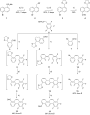
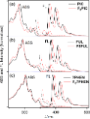
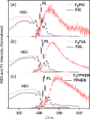
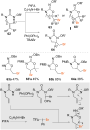
- the corresponding parent phenacenes PIC, FUL, and 7PHEN to reveal the effects of the fluorination at the terminal rings. Results and Discussion Synthesis of F8-phenacenes The synthetic routes to building blocks 10, 13, and 15 and those to the desired F8PIC, F8FUL, and F87PHEN are respectively shown in
- state. The orange and blue sites, respectively, indicate negative and positive regions (−0.02 ≈ 0.02 hartree). Synthesis of building blocks 10, 13, and 15. Reagents and conditions: a) NaBH4, MeOH, THF, reflux; b) PBr3, reflux; c) N-methylmorpholine-N-oxide, THF, reflux; d) ethylene glycol, p-TsOH





Asymmetric synthesis of fluorinated derivatives of aromatic and γ-branched amino acids via a chiral Ni(II) complex
Beilstein J. Org. Chem. 2025, 21, 659–669, doi:10.3762/bjoc.21.52
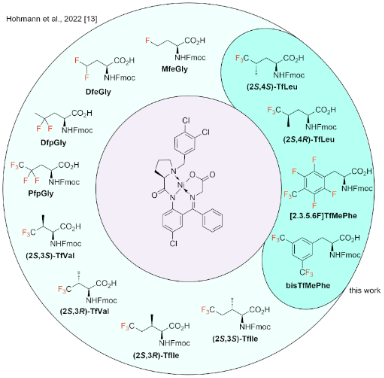
- Maurizio Iannuzzi Thomas Hohmann Michael Dyrks Kilian Haoues Katarzyna Salamon-Krokosz Beate Koksch Institute of Chemistry and Biochemistry, Freie Universität Berlin, Arnimallee 20, 14195 Berlin, Germany 10.3762/bjoc.21.52 Abstract Fluorinated amino acids are essential building blocks in the
- -natural amino acids are pivotal in protein engineering and drug development. Over 30% of approved small‑molecule drugs today contain non‑canonical amino acid building blocks [1][2]. In peptide and protein engineering, non‑natural amino acids significantly increase the respective range of tools used to
- hydrophobicity, alter the folding properties, and improve cell permeability [3][4][5]. Despite the evidence that unnatural amino acids play a significant role in the mentioned areas, synthesizing these building blocks can still be a major challenge [6]. A potent strategy in this regard is the utilization of


Sequential two-step, one-pot microwave-assisted Urech synthesis of 5-monosubstituted hydantoins from L-amino acids in water
Beilstein J. Org. Chem. 2025, 21, 596–600, doi:10.3762/bjoc.21.46
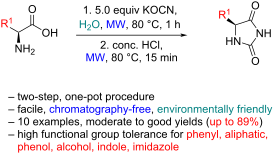
- ]. Furthermore, several methods for hydantoin synthesis have been reported. The modified Bucherer–Bergs reaction using nitriles or methyleneaziridines with organometallic reagents gave moderate yields of 40–77% and 48–75%, respectively [7][8]. Amino acids remain key building blocks, with approaches involving
- reagents in the procedures mentioned above. Amino acids can be procured from natural sources by enzymatic synthesis [21], as well as synthetically accessed from aldehyde building blocks via the Strecker synthesis [22], making them attractive starting materials for hydantoin synthesis. Results and


Formaldehyde surrogates in multicomponent reactions
Beilstein J. Org. Chem. 2025, 21, 564–595, doi:10.3762/bjoc.21.45
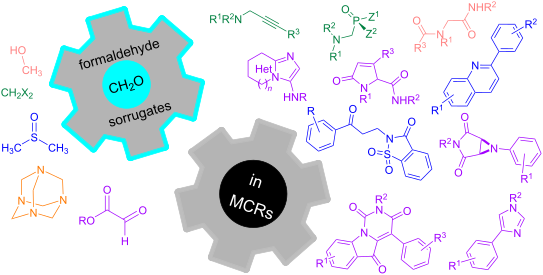
- controlling the formation of undesired byproducts during its reactions. This review explores alternative C1-building blocks that serve as surrogates for formaldehyde, aiming to mitigate some of the challenges associated with its use in multicomponent reactions. By identifying these alternatives, toxicity
- devoted to dimethyl sulfoxide, dihalomethanes, hexamethylene tetramine, and glyoxylates as C1-building blocks, substituting formaldehyde. Review Methanol as a source of formaldehyde There are several reports on the use of alcohols under oxidative conditions as aldehyde surrogates in Ugi and Passerini
- et al. developed a three-component Mannich-type reaction under oxidative and catalytic conditions that allows the coupling of aryl ketones 18 and saccharine (19) using DMSO as the solvent and the source for a methylene bridge linking the two building blocks (Scheme 15) [49]. Following this strategy


Cryptophycin unit B analogues
Beilstein J. Org. Chem. 2025, 21, 526–532, doi:10.3762/bjoc.21.40
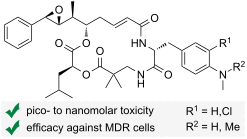
- macrolactamisation [21]. The syntheses of required unit A [28], C [29][30], and D [31] building blocks were accomplished as described previously. tert-Butyl-protected leucic acid 14 and Fmoc-β-aminopivalic acid (15) were connected by Steglich esterification (Scheme 2) and after cleavage of the tert-butyl ester group



Synthesis of the aggregation pheromone of Tribolium castaneum
Beilstein J. Org. Chem. 2025, 21, 510–514, doi:10.3762/bjoc.21.38
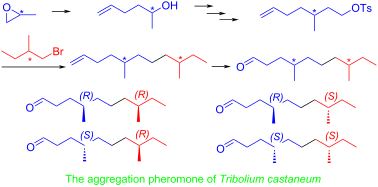
- inductive methylation [24]. To research further the bioactivity of the pheromone, herein, we report an effective synthesis of the aggregation pheromone of T. castaneum, which uses the cheap (R)- and (S)-2-methyloxirane as chiral sources, connects two chiral building blocks through Li2CuCl4-catalyzed
- ]. Similarly, chiral tosylate (R)-10 could be prepared from (S)-2-methyloxirane ((S)-2) through the ring-opening reaction, tosylation, stereospecific inversion, hydrolysis, decarboxylation, reduction, and second tosylation (Scheme 3). With two the chiral building blocks (R)-10 and (S)-10 in hand, we next
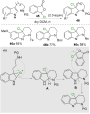
- the aggregation pheromone (4R,8S)-1, (4S,8R)-1, and (4S,8S)-1 were prepared through Li2CuCl4-catalyzed coupling and oxidation with RuCl3/NaIO4 from chiral building blocks (R)-10, (S)-10, (R)-11 and (S)-11, which were characterized by NMR spectroscopy and HRMS. Conclusion In summary, we have achieved a


Synthesis of N-acetyl diazocine derivatives via cross-coupling reaction
Beilstein J. Org. Chem. 2025, 21, 490–499, doi:10.3762/bjoc.21.36
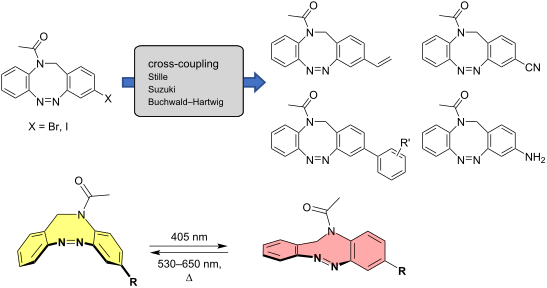
- substitution. Substituents such as halogen atoms must be introduced into the N-acetyl diazocine structure during the synthesis of the building blocks. In the present work we start from mono- and dihalogenated N-acetyl diazocine 2–4 (Figure 2) and focus on the further derivatization via cross-coupling reactions


The effect of neighbouring group participation and possible long range remote group participation in O-glycosylation
Beilstein J. Org. Chem. 2025, 21, 369–406, doi:10.3762/bjoc.21.27
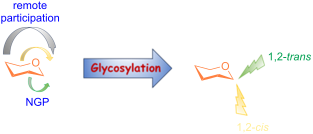
- glycochemists. The protecting building blocks on the glycosides contribute significantly in attaining the required stereochemistry of the resulting glycosides. Strategic installation of suitable protecting groups in the C-2 position, vicinal to the anomeric carbon, renders neighbouring group participation
- huge interest in the study of ‘Glycomics’ or ‘Carbohydrate Chemistry.’ These truly elevated the recognition of carbohydrates from being mere building blocks to a frontier research topic towards the development of drugs and pharmaceuticals [12][13], diagnostic tools [14], artificial sweeteners [15
- are various studies both supporting and refuting the concept of long-distance participation of building blocks. We will first give an overview of how neighbouring group participation of different protecting groups affects the stereochemistry of the glycoside bonds followed by the role of the same




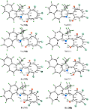
Synthesis, structure, ionochromic and cytotoxic properties of new 2-(indolin-2-yl)-1,3-tropolones
Beilstein J. Org. Chem. 2025, 21, 358–368, doi:10.3762/bjoc.21.26
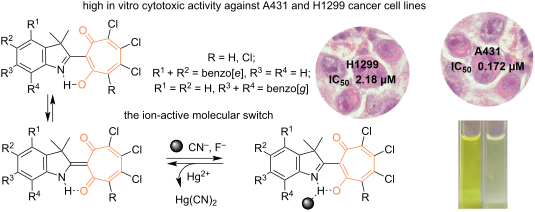
- ; Introduction 1,2-Benzoquinones represent unique building blocks for various classes of heterocyclic systems. Their structure depends on the reactivity of the initial heterocycles and 1,2-benzoquinones, as well as on the reaction conditions. In the series of 2-methylquinolines [1], 2-methylquinoxalines [2], 2




Molecular diversity of the reactions of MBH carbonates of isatins and various nucleophiles
Beilstein J. Org. Chem. 2025, 21, 286–295, doi:10.3762/bjoc.21.21
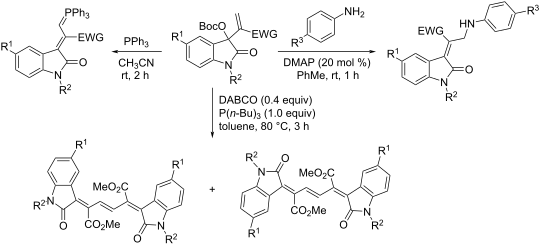
- have made them to become valuable building blocks in organic synthesis. Nucleophilic additions or spiroannulation of the highly reactive carbonyl group at the C-3 position of isatins have various fascinating applications in organic synthesis, which allowed transformation of isatins into various




Streamlined modular synthesis of saframycin substructure via copper-catalyzed three-component assembly and gold-promoted 6-endo cyclization
Beilstein J. Org. Chem. 2025, 21, 226–233, doi:10.3762/bjoc.21.14
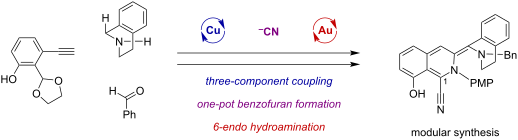
- coupling of alkyne 8, THIQ segment 9, and benzaldehyde would enable convergent assembly of the building blocks to produce 10 [43][44][45][46]. Removal of the cyclic acetal in 10 followed by Strecker-type conversion leading to an α-amino nitrile would enable tandem intramolecular cyclization with phenol to


Heteroannulations of cyanoacetamide-based MCR scaffolds utilizing formamide
Beilstein J. Org. Chem. 2025, 21, 217–225, doi:10.3762/bjoc.21.13
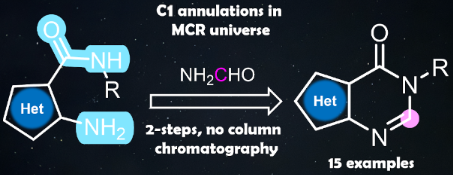
- utilized numerous times in medicinal chemistry campaigns as hits, leads and eventually even drugs, such as 2-aminothiophenes, -quinolines and -indoles [42][43][44][45]. Synthetic exploitation The synthesis of the key cyanoacetamide building blocks was our primary objective. In a parallel setup, a variety
- Gewald three-component reactions. Our focus was to create a representative, diverse and structurally complex library of building blocks, covering a range of shapes and chemical spaces, to facilitate formamide-based heteroannulation for the synthesis of the desired adducts. Thus, we employed aliphatic and
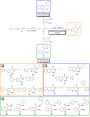
- anthranilic acid and B) access to heteroannulated pyrimidones by MCRs of suitably substituted heterocycles and formamide as C1 source. Access to the key building blocks 2–4 by employing three different nonisocyanide-based MCRs. Diversity and complexity were the essential features of our library of starting




Hydrogen-bonded macrocycle-mediated dimerization for orthogonal supramolecular polymerization
Beilstein J. Org. Chem. 2025, 21, 179–188, doi:10.3762/bjoc.21.10
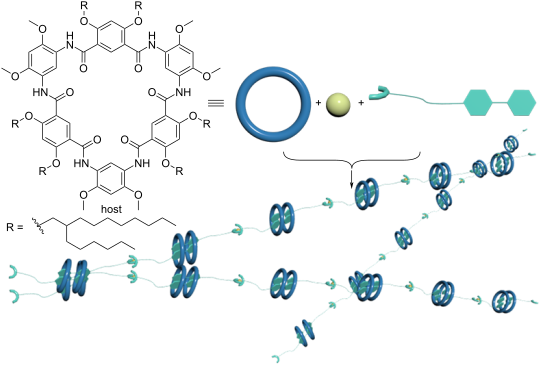
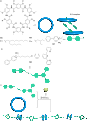
- polymerization concentration of 17 μM. These polymers were highly concentration-dependent. Establishing this new dimerization motif with shape-persistent H-bonded macrocycles widens the scope of noncovalent building blocks for supramolecular polymers and augurs well for the future development of functional



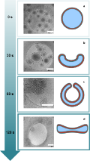
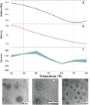
Hot shape transformation: the role of PSar dehydration in stomatocyte morphogenesis
Beilstein J. Org. Chem. 2025, 21, 47–54, doi:10.3762/bjoc.21.5
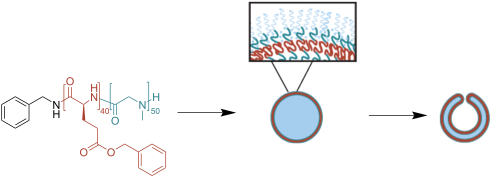
- properties. Moreover, these materials offer versatility in their synthesis, allowing for the incorporation of various building blocks to tailor the polymers to desired specifications. Additionally, they lend themselves well to the synthesis of block copolymers, further expanding their potential applications


Synthesis, structure and π-expansion of tris(4,5-dehydro-2,3:6,7-dibenzotropone)
Beilstein J. Org. Chem. 2025, 21, 1–7, doi:10.3762/bjoc.21.1
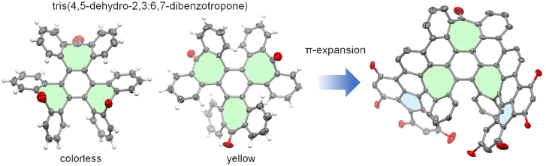
- ]. These are three-dimensional molecular nanocarbons that include heptagons [10][11][12][13][14], octagons [15][16][17][18], or even larger carbocycles. In theory, these fragments can serve as building blocks in a bottom-up approach to constructing carbon schwarzites [19][20]. To validate this concept, we


Giese-type alkylation of dehydroalanine derivatives via silane-mediated alkyl bromide activation
Beilstein J. Org. Chem. 2024, 20, 3274–3280, doi:10.3762/bjoc.20.271
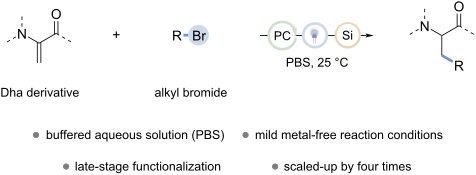
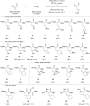
- building blocks like organohalides can be converted into alkyl radicals by means of photoinduced silane-mediated halogen-atom transfer (XAT) to offer a mild and straightforward methodology of alkylation. In this research, we present a metal-free strategy for the photochemical alkylation of dehydroalanine



Synthesis of 2H-azirine-2,2-dicarboxylic acids and their derivatives
Beilstein J. Org. Chem. 2024, 20, 3191–3197, doi:10.3762/bjoc.20.264
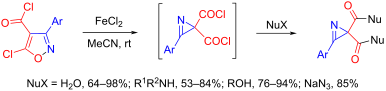
- -carboxylic acid derivatives are not only valuable synthetic building blocks [3][4][5][6][7][8][9][10][11] but also show useful biological activities [12][13][14][15][16][17][18]. Although many 2,2-bifunctionalized azirines have been synthesized [3][4][5][6][7][8][9][10][11], the synthesis of only one 2H




Synthesis of extended fluorinated tripeptides based on the tetrahydropyridazine scaffold
Beilstein J. Org. Chem. 2024, 20, 3174–3181, doi:10.3762/bjoc.20.262
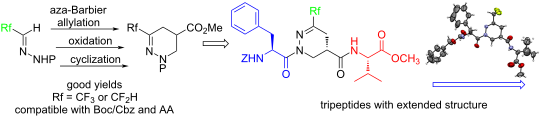
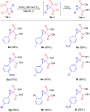
- carbazate (NH2-NHCbz/NH2-NHBoc) were chosen as starting materials in order to obtain final building blocks suitable for peptide synthesis. While the synthesis of compound 3a was already reported [28], compounds 3b–f are not described in the literature. All the fluorinated hydrazones were obtained in good


Multicomponent reactions driving the discovery and optimization of agents targeting central nervous system pathologies
Beilstein J. Org. Chem. 2024, 20, 3151–3173, doi:10.3762/bjoc.20.261
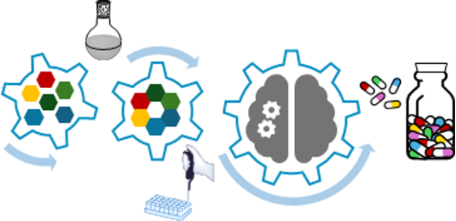
- ] developed artificial, ‘natural-like’ polyphenols, using the Ugi reaction, since it leads to mixed polyphenol–peptidomimetic structures (Scheme 4). The procedure involved an Ugi reaction using phenolic building blocks protected as allyl ethers, followed by deprotection, acetylation, and high-yielding


Hypervalent iodine-mediated intramolecular alkene halocyclisation
Beilstein J. Org. Chem. 2024, 20, 3113–3133, doi:10.3762/bjoc.20.258
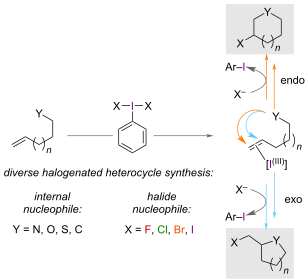
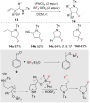
- , including ligand coupling, oxidative addition, intermolecular nucleophilic attack, 1,2-aryl migration, reductive elimination, and intramolecular nucleophilic attack. This approach offers a rapid and effective way to produce 5-fluoro-2-aryloxazoline compounds, which are valuable building blocks in organic



















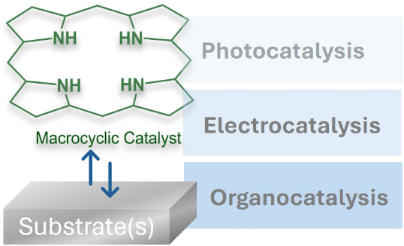
Advances in the use of metal-free tetrapyrrolic macrocycles as catalysts
Beilstein J. Org. Chem. 2024, 20, 3085–3112, doi:10.3762/bjoc.20.257
- or transform into a long-lived radical cation by substrate reduction, which are the fundamentals of photoredox catalysis (Figure 13a). Monomeric porphyrins and supramolecular porous frameworks composed of porphyrin building blocks, such as metal-organic frameworks (MOF) and covalent organic





